This site is supported by our readers. We may earn a commission, at no cost to you, if you purchase through links.
A single hummingbird needs to visit hundreds of flowers daily to fuel its rapid metabolism. Yet across much of North America, traditional ornamental gardens hand them almost nothing—thirsty, high‑maintenance plants that demand irrigation but deliver little for wildlife.
Drought tolerant native plants flip that equation entirely. Species like Penstemon and Agastache evolved alongside the birds that depend on them, producing exactly the nectar, seeds, and berries that local wildlife needs—while asking almost nothing from you once established.
Whether you’re attracting hummingbirds, finches, or migratory songbirds, the right native plants can transform a dry yard into a reliable, low-water habitat that feeds birds through every season.
Table Of Contents
- Key Takeaways
- Best Native Flowers for Birds
- Penstemon for Hummingbirds in Dry Gardens
- Agastache for Long Summer Nectar
- Salvia for Heat and Drought Tolerance
- Purple Coneflower for Fall Seed Feeders
- Black-Eyed Susan for Winter Finch Food
- Wild Bergamot for Insect-loving Songbirds
- Blazing Star for Vertical Nectar Spikes
- Blanketflower for Extended Warm-season Color
- Drought-Tolerant Native Shrubs and Trees
- Serviceberry for Early Berries and Shelter
- Beautyberry for Late-season Songbird Fruit
- American Elderberry for Berries and Insect Support
- Winterberry for Cold-season Bird Food
- Fragrant Sumac for Dry-site Coverage
- Highbush Blueberry for Flowers, Fruit, and Cover
- Black Cherry for Late-summer Wildlife Value
- Eastern Red Cedar for Year-round Protection
- Native Grasses and Vines That Help Birds
- Little Bluestem for Seed and Nesting Cover
- Switchgrass for Structure in Dry Landscapes
- Indiangrass for Shelter During Summer Heat
- Big Bluestem for Tall Screening Habitat
- Blue Grama for Seed-eating Birds
- Coral Honeysuckle for Nectar and Berries
- Cross Vine for Vertical Habitat Layers
- Native Grapevines for Fruit and Screening
- Choosing Plants for Your Climate
- Match Plants to USDA Hardiness Zones
- Prioritize Species Native to Your Region
- Compare Full-sun and Part-shade Options
- Choose Plants by Bird Food Type
- Select Spring-to-fall Bloom Succession
- Use Dry-soil and Sandy-soil Specialists
- Avoid Invasive Lookalikes in Bird Gardens
- Mix Annuals, Perennials, Shrubs, and Trees
- Designing a Bird-Friendly Xeriscape
- Frequently Asked Questions (FAQs)
- Conclusion
Key Takeaways
- Native flowers like Penstemon, Agastache, and Salvia bloom in sequence from spring through fall, so hummingbirds always have a nectar source without you planting anything extra.
- Shrubs and trees like Serviceberry, Winterberry, and Black Cherry stack food, shelter, and nesting into one plant, making them the hardest-working picks in any bird-friendly yard.
- Grasses and vines—especially Little Bluestem, Switchgrass, and Coral Honeysuckle—fill the gaps other plants miss by adding seeds, cover, and vertical habitat that birds rely on year-round.
- Simple design moves like layering plant heights, clustering nectar plants, leaving seed heads standing, and cutting back on pesticides turn a dry yard into a reliable wildlife hub with very little ongoing effort.
Best Native Flowers for Birds
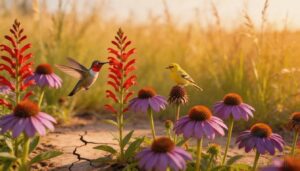
Native flowers do more than look good — they feed birds through every season. The right ones hold up through summer heat, skip the extra watering, and keep hummingbirds and finches coming back year after year.
For a deeper dive, native hummingbird vines and nectar-rich perennials round out any bird garden with nonstop summer color.
Here are eight native flowers worth planting in any drought-tolerant bird garden.
Penstemon for Hummingbirds in Dry Gardens
Few native plants pull double duty quite like Penstemon. These drought tolerant plants attract hummingbirds reliably from late spring through midsummer — right when nectar timing matters most in a dry garden. The cultivar features deep pink tubular flowers that attract hummingbirds.
- Vertical planting adds structure to xeriscaping beds
- Sharp soil drainage prevents root rot in heat tolerant varieties
- Pruning for bloom after peak flowering triggers a second flush
- Native plants like ‘Rose Elf’ thrive with almost no supplemental water
Agastache for Long Summer Nectar
Agastache spp. steps in right where Penstemon leaves off. These drought tolerant plants that attract hummingbirds keep the nectar source flowing long after midsummer, making them a genuine bee magnet well into fall.
extended bloom and high nectar yield — even in summer heat — is hard to beat.
Compare cultivars like Agastache foeniculum against dwarf selections for your space.
All are water efficient once established.
Salvia for Heat and Drought Tolerance
Salvia picks up the season beautifully once summer heat kicks in hard. These heat and drought tolerant native plants are built for it — thick Leaf Cuticle Adaptations cut water loss, while Deep Root Systems pull moisture from well below the surface through smart Stomatal Regulation.
Four reasons Salvia earns a spot in birdfriendly landscaping:
- Hummingbirds return reliably for steady nectar through late summer
- Heat Tolerant Pigmentation keeps blooms vivid without extra irrigation
- Mulching Strategies around the base extend flowering even longer
- Established plants need far less water than most ornamentals
Purple Coneflower for Fall Seed Feeders
Purple Coneflower (Echinacea purpurea) steps in for a different crowd. This drought‑adapted perennial holds its seed heads well into late fall, giving finches and chickadees a reliable late fall feeding station packed with nutrient‑rich seeds.
That seed head longevity also adds bird habitat structure to your garden long after blooms fade.
Black-Eyed Susan for Winter Finch Food
Black-Eyed Susan (Rudbeckia hirta) is another drought‑resilient perennial that pulls double duty in your garden. Its seed head persistence makes it a structural food source for finches well into winter — each head holding hundreds of fat‑rich seeds for late‑season feeding.
- Thrives in full sun, sandy to loamy soil
- Self-seeds, expanding bird feeding opportunities over time
- Leaves stems upright for easy finch access
- Pairs well with Winterberry for cold-season bird support
Wild Bergamot for Insect-loving Songbirds
Wild Bergamot (Monarda fistulosa) is one of those native plants that quietly does a lot. It delivers a seasonal nectar supply from July through September, then leaves behind seeds that become winter seed food for finches and chickadees.
As an insect host value powerhouse, its blooms draw bees and butterflies that songbirds hunt nearby.
It’s a drought-tolerant, low-maintenance habitat plant that earns its place.
Blazing Star for Vertical Nectar Spikes
Blazing Star (Liatris spicata) brings serious spike architecture to your bird garden. Its tall vertical nectar spikes open top-down, which stretches nectar timing across mid to late summer — exactly when hummingbirds need reliable fuel.
Heat resilience and pollinator visibility make it a standout in dry climate gardening. Once established, it’s one of the most drought-tolerant native plants you can grow.
Light pruning benefits overall plant shape.
Blanketflower for Extended Warm-season Color
Blanketflower (Gaillardia spp.) is one of those drought tolerant plants that keeps giving long after other flowers quit.
Its heat-resistant blooms run from midsummer through first frost, delivering continuous nectar when birds need it most.
Sun-loving foliage stays upright even in dry spells.
For your bird-friendly garden, here’s why it earns a spot:
- Blooms through heat waves with minimal water
- Attracts pollinators that feed insect-loving songbirds
- Thrives in full sun and well-drained soil
- Requires low-water maintenance once established
- Late-season brilliance helps hummingbirds into fall
Drought-Tolerant Native Shrubs and Trees
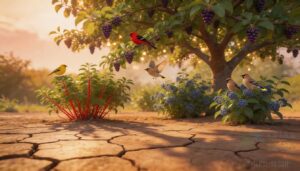
Shrubs and trees do some of the heaviest lifting in a bird-friendly yard. They offer food, shelter, and nesting spots all at once — and the best ones handle dry spells without much help from you.
eight native shrubs and trees worth planting.
Serviceberry for Early Berries and Shelter
Serviceberry (Amelanchier spp.) hits the ground running when most fruiting shrubs are still waking up. Its early fruit timing means robins and waxwings get dark purple berries in late spring — weeks before other plants deliver.
Dense, multi-stemmed growth creates ideal thicket nesting and seasonal bird cover. Once established, its deep root drought resistance keeps it thriving with minimal water in your bird-friendly garden.
Beautyberry for Late-season Songbird Fruit
Beautyberry (Callicarpa americana) keeps giving long after most plants are done. Its berry persistence into winter makes it one of the most reliable fruiting trees and shrubs in a bird‑friendly garden. Cardinals and bluebirds perch directly on its multi‑stem habit to feed — that built‑in bird perch value is hard to beat.
- Thrives in zones 6–10 with full sun to part shade
- Pruning response is vigorous — cut it back and it bounces right back
- Seed dispersal by birds helps spread native plants naturally
- Drought‑tolerant native plants like this one need minimal care once established
American Elderberry for Berries and Insect Support
American Elderberry (Sambucus canadensis) pulls double duty in a bird-friendly garden. Its berry production cycle runs from summer into early winter, giving cedar waxwings and catbirds food when other fruits are gone.
The hollow stem habitat shelters native bees, while leaves and bark drive insect larval support for songbirds. That steady pollinator nectar flow and built-in winter food reserve make this drought tolerant native plant hard to skip.
Winterberry for Cold-season Bird Food
Where elderberry fades, Winterberry (Ilex verticillata) takes over. This native shrub is built for cold-season forage — bright red berries that cling through frost and snow, giving cardinals, waxwings, and sparrows a reliable bird energy source when little else is available.
Get the male-female ratio right (one male to three or four females); fruit set timing and berry longevity practically take care of themselves.
Fragrant Sumac for Dry-site Coverage
Winterberry endures the cold months, but Fragrant Sumac (Rhus aromatica) earns its spot all year long — especially on dry, tough sites where other shrubs struggle.
It’s a workhorse for slope stabilization and low-maintenance landscape design:
- Spreads through root sucker spread to blanket erosion-prone slopes naturally
- Citrus scent foliage releases a pleasant fragrance when brushed
- Winter fruit persistence feeds birds through cold months
- Thrives in sandy, rocky soils — true drought-tolerant native plants territory
- Grows 3–6 ft, fitting neatly into dry garden design without crowding
red drupes. Your slopes stay covered.
Highbush Blueberry for Flowers, Fruit, and Cover
While Fragrant Sumac covers the dry slopes, Highbush Blueberry (Vaccinium corymbosum) gives birds something to come back for — season after season.
| What It Does | Why Birds Love It |
|---|---|
| Bell-shaped spring flowers | Early nectar for pollinators |
| Blue fruits mid-summer | High-energy food for songbirds |
| Dense multi-stem structure | Nesting and shelter cover |
| Fall leaf color | Year-Round Bird Cover through transitions |
| Leaf litter below | Insects for ground-feeding birds |
Keep soil pH between 4.5–5.5 for best results — Soil Acidity Management matters here. Pine bark Mulch moisture retention helps roots stay cool. Plant two varieties for Cross-Pollination Benefits, and don’t skip Pruning for Fruit production. It’s a drought tolerant native plants staple that truly delivers.
Black Cherry for Late-summer Wildlife Value
Black Cherry (Prunus serotina) is a quiet powerhouse in any bird‑friendly garden. Its late‑summer fruit fuels Migratory Bird Support right when birds need it most — Cedar Waxwings, robins, and thrushes load up before heading south.
The Crown Habitat Structure shelters juveniles, while the Insect Food Chain beneath the canopy feeds songbirds year‑round.
Practice Fruit Drop Management by planting away from paths. Seed Dispersal Dynamics spread naturally from there.
Eastern Red Cedar for Year-round Protection
Eastern Red Cedar is one of those native plants that works overtime in a bird-friendly garden. Its Windbreak Density blocks harsh winds year-round, while dense Evergreen Shelter keeps songbirds warm when deciduous trees go bare.
Birds cache food in Bark Habitat crevices, and Cone Seed Food sustains winter flocks.
Deep roots handle Root Erosion Control on dry slopes — no extra watering needed.
Native Grasses and Vines That Help Birds
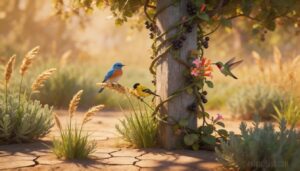
Grasses and vines don’t always get the spotlight, but birds rely on them just as much as flowers and shrubs. They offer seeds, shelter, nesting cover, nectar, and fruit across every season.
eight native options that earn their place in any drought-tolerant yard.
Little Bluestem for Seed and Nesting Cover
Little Bluestem (Schizachyrium scoparium) is one of those drought‑tolerant native plants that quietly does everything right. Once established through careful establishment moisture in its first season, it needs almost nothing from you. Birds get a lot in return:
- Dense seed heads peak in fall, offering reliable seed food for birds like sparrows and finches
- Seed dispersal mechanisms carry seeds into nearby open ground, spreading habitat value naturally
- Tall clumps create bird nesting sites with concealment close to the soil
- Winter roosting value stays strong as stems stand through cold months, and root system benefits keep soil stable beneath
Occasional prescribed burning refreshes growth without losing long‑term cover.
Switchgrass for Structure in Dry Landscapes
Switchgrass (Panicum virgatum) is the backbone plant your dry landscape has been missing. Growing 3 to 6 feet tall, it delivers vertical screening and windbreak function while deep root stabilization keeps your soil from washing away.
Dense clumps create seasonal habitat for perching, roosting, and nesting birds. Its firebreak resilience makes it a smart pick for drought-tolerant native plants in low-water landscaping and dry climates where bird habitat matters.
Indiangrass for Shelter During Summer Heat
Indiangrass (Sorghastrum nutans) is a quiet powerhouse in heat-resistant landscaping. Its tall shade tussocks create microclimate cooling by cutting direct sun on the ground by up to 40 percent.
That cool soil buffer gives birds genuine thermal refuge during scorching afternoons. Ground-foraging songbirds roost within the dense stems, finding both insect food and reliable bird roosting habitat — all from one drought-tolerant native plant.
Big Bluestem for Tall Screening Habitat
Big bluestem (Andropogon gerardii) works like a living fence. Plant it in clusters two to three feet apart, and within a couple of seasons you’ll have a four-to-six-foot screen that pulls double duty — sheltering songbirds while showing off copper-red fall color.
deep roots deliver soil stabilization and drought tolerance, and a quick spring burn keeps your low-maintenance landscape looking its best.
Blue Grama for Seed-eating Birds
If big bluestem is your privacy screen, Blue Grama (Bouteloua gracilis) is your buffet table. This compact native plant tops out around a foot tall, making seeds easy for sparrows and finches to reach. Its clump structure shields ground feeders while seeds persist well into winter.
- Seed Head Timing – Sets seed midsummer through early fall
- Clump Structure – Dense growth protects foraging birds
- Soil Preferences – Thrives in sandy, well-drained ground
- Minimal Water Needs – Established plants need almost no irrigation
- Winter Food Supply – Seed heads linger after other plants fade
Coral Honeysuckle for Nectar and Berries
Coral Honeysuckle (Lonicera sempervirens) pulls double duty in a bird garden. Its tendril climbing habit lets it weave up a trellis fast, delivering red tubular nectar for hummingbirds through summer.
Then come the berries — bright, persistent, and loved by songbirds.
Deep root resilience keeps it blooming through dry spells with low water needs. Light pruning for nectar production keeps this seasonal food sequence rolling.
Cross Vine for Vertical Habitat Layers
Where Coral Honeysuckle works horizontally, Cross Vine (Bignonia capreolata) builds vertically. Its tendril climbing mechanics grip trellises and walls fast, stacking foliage into multi-level nesting sites that birds actually use.
That microhabitat diversity — from shaded lower cover to sunlit canopy benefits — means more species find shelter. Practice tiered habitat pruning to keep those created layers defined and bird‑friendly year‑round.
Native Grapevines for Fruit and Screening
While Cross Vine (Bignonia capreolata) stacks vertical structure, native grapevines like Vitis riparia and Vitis aestivalis do double duty — screening your fence while feeding birds.
Their deep root tolerance keeps them growing through dry spells.
Train them on a tendril trellis and you’ll have late-summer berries attracting thrushes right alongside your other fruiting trees and shrubs in any bird-friendly garden.
Choosing Plants for Your Climate
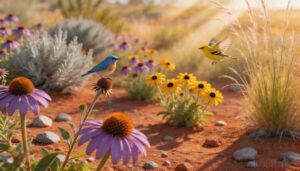
Not every every plant works in every yard, and that’s actually a good thing. Matching the right natives to your specific climate, soil, and light conditions is what turns a garden into a true bird haven.
Here’s what to think about before you plant.
Match Plants to USDA Hardiness Zones
Getting Hardiness Zone Selection right is the foundation of a successful bird‑friendly garden. The USDA divides the country into zones based on average winter lows — and choosing plants rated at least one zone colder than yours builds a smart Safety Margin Planning buffer.
Microclimates matter too. A sheltered south‑facing wall can create Microclimate Zone Shifts that stretch your effective zone warmer.
Here’s how to nail Zone Adjusted Planting with solid Cold Tolerance Benchmarks:
- Look up your USDA hardiness zone before buying anything.
- Choose drought‑tolerant native plants rated one zone colder for extra resilience.
- Note microclimates — walls, slopes, and water nearby all shift conditions.
- Match plant selection by USDA hardiness zones to your site’s specific sun and wind exposure.
- Prioritize drought tolerant plants that attract hummingbirds and are rated for your subzone (a or b).
Prioritize Species Native to Your Region
When you plant natives from your own region, you’re tapping into thousands of years of Local Climate Adaptation. These plants already know your soil, your rain patterns, your frost dates. That’s Native Plant Partnerships at work — and birds notice. Native species support Bird Habitat Connectivity across neighborhoods, boost Water Use Efficiency, and trigger Soil Microbe Synergy that helps roots go deeper with less water.
Regional natives carry thousands of years of climate knowledge birds instinctively recognize and rely on
| Native Plant | Key Bird Benefit | Regional Fit |
|---|---|---|
| Purple Coneflower | Winter seed for finches | Zones 3–9 |
| Coral Honeysuckle | Nectar and berries | Zones 4–9 |
| Serviceberry | Early spring fruit | Zones 4–9 |
| Agastache | Late summer nectar | Zones 4–10 |
| Little Bluestem | Nesting cover and seed | Zones 3–9 |
Choosing drought-tolerant native plants matched to your USDA hardiness zones means your bird-friendly garden works with your climate — not against it.
Compare Full-sun and Part-shade Options
Sunlight Preference shapes everything — from Nectar Yield to Water Demand to Soil Temperature. Full sun natives like Penstemon and Agastache push out more blooms and drive higher bird activity during peak daytime hours.
Got a shadier spot?
Partial shade drought‑tolerant native plants, like Wild Bergamot, still attract pollinators and keep things bird‑friendly — just with a gentler pace and cooler soil.
Choose Plants by Bird Food Type
Not every bird eats the same thing — and your plant choices should reflect that.
- Hummingbird Nectar: Penstemon and Salvia deliver tubular blooms for drought-tolerant hummingbird plants
- Finch Seeds: Purple Coneflower and Black-Eyed Susan hold seed heads through winter
- Warbler Insects: Native wildflowers attract the bugs that warblers depend on
- Migratory Fruit & Winter Berries: Serviceberry and Winterberry stock seasonal food sources for traveling birds
A truly bird-friendly garden feeds everyone.
Select Spring-to-fall Bloom Succession
Think of your garden as a relay race — one plant hands off to the next.
Staggered Bloom Timing keeps nectar flowing from April through October.
Use Succession Plant Grouping to bridge gaps: Penstemon leads in spring, Agastache carries midsummer, and Salvia closes fall.
Nectar Overlap Planning ensures hummingbirds always find food.
Seasonal Color Shifts signal each change, making your bird-friendly garden work all season long.
Use Dry-soil and Sandy-soil Specialists
Sandy and dry soils aren’t a problem — they’re an opportunity. Dry-soil and sandy-soil specialists are built for xeriscape conditions, with root depth benefits that pull moisture from deep below the surface.
Their well-draining soil preference facilitates microclimate creation around rocks and mulch types that regulate heat. Time your watering timing to early morning, and your soil drainage strategies will practically run themselves.
Avoid Invasive Lookalikes in Bird Gardens
Not every plant labeled "native" at the nursery actually is. Some are sneaky lookalikes — aggressive spreaders that crowd out the real thing.
Before buying, practice Botanical Name Verification by checking tags against Regulatory List Consultation resources, like your local extension service.
Use Leaf Morphology Comparison and Spread Monitoring Techniques to catch trouble early.
Sterile Cultivar Preference helps too, keeping your bird-friendly garden full of trustworthy, drought-tolerant native plants.
Mix Annuals, Perennials, Shrubs, and Trees
Once you’ve cleared out the lookalikes, you’re ready to build something that really works. Mixing plant types is the smartest move in any bird-friendly garden.
- Annuals bring fast color and early nectar.
- Summer-blooming perennials extend Multi-Stage Food Sources through fall.
- Drought-resistant shrubs and trees create Vertical Habitat Layers with Microclimate Creation.
Staggered Bloom Timing and Root Zone Partitioning keep your drought-tolerant native plants feeding birds all season.
Designing a Bird-Friendly Xeriscape
Picking the right plants is only half the work — how you put them together makes all the difference. A well-designed xeriscape gives birds places to feed, hide, rest, and drink, all while using far less water than a traditional garden.
Here’s how to set it up so it actually works.
Layer Plants for Feeding and Shelter
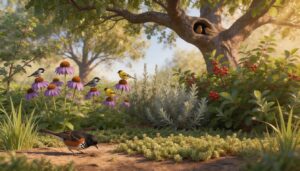
When you create layers in your bird-friendly garden, you give birds everything they need in one place. Start with groundcover food sources low to the soil, add midstory shrub benefits like berries and insect habitat, then let small trees form canopy nesting sites above.
This stacking of Vertical Habitat Layers turns drought-tolerant native plants into a complete living system birds can rely on.
Cluster Nectar Plants for Better Visibility
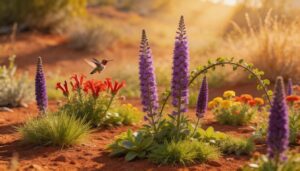
Layering sets the stage, but where you place nectar plants really seals the deal. Group your drought-tolerant native plants in tight clusters — three to five together — so color contrast catches a hummingbird’s eye from a distance.
Vertical spike arrangement from Penstemon or Blazing Star acts like a beacon. Good bloom density timing and perch integration near clusters mean birds find your pollinator garden fast.
Combine Berries, Seeds, and Insect Plants
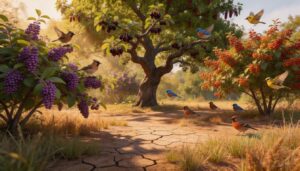
Think of your garden as a buffet, not a single dish. Pair Serviceberry and Black Cherry for summer-to-fall berries, then let Beautyberry carry the season into autumn. Weave in Red Mulberry for fruiting diversity. This Nectar-Seed Synergy approach builds Layered Food Strata that keep birds returning.
Mixed Habitat Corridors with drought-tolerant native plants create Multi-tiered Feeding through smart Seasonal Plant Pairings.
Add Birdbaths to Low-water Landscapes
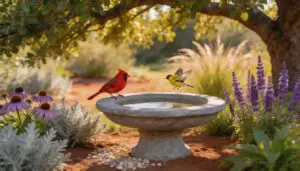
Even a dry garden needs water. Tuck a birdbath into Shaded Bath Placement spots to slow algae and keep temperatures cool.
Low Depth Design — just 1 to 2 inches — suits most visitors.
Durable Material Choices like concrete or stone, position for Predator Safe Position with open sightlines, and scatter Mineral Grit Additions nearby.
It’s the simplest upgrade to any low-water landscaping plan.
Mulch to Retain Soil Moisture
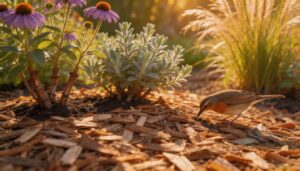
A 2–4‑inch layer of mulch is one of the quietest workhorses in a bird-friendly garden. It shields soil from sun and wind, keeping roots of drought‑tolerant native plants cool and moist far longer between rains.
- Organic Mulch Types: Wood chips, bark, or shredded leaves all work well.
- Mulch Depth: Aim for 2–4 inches for consistent soil moisture protection.
- Mulch Placement Tips: Keep mulch a few inches away from plant stems to prevent rot.
- Soil Moisture Monitoring: Use a probe 2–3 inches deep to check before watering.
- Mulch Renewal Timing: Replenish each spring and after heavy rains, wash it thin.
Water Deeply During Establishment Only
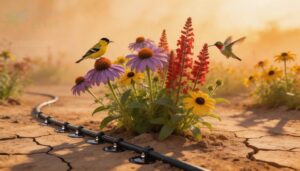
New plants are thirsty—not forever. During establishment, water deeply once or twice a week, soaking the root zone 12–18 inches down.
Morning watering benefits your birdfriendly garden by cutting evaporation up to 30 percent. drip irrigation setup keeps moisture right where roots need it.
Once your droughttolerant native plants find their footing, back off and let them do their thing.
Leave Seed Heads for Fall and Winter

Don’t cut back those spent blooms just yet.
Coneflowers, sunflowers, and native grasses form natural Winter Shelter Structures that finches and sparrows depend on. Seed Head Persistence means an Extended Food Supply well into early spring, supporting Nutrient Recycling as stems break down. Your bird-friendly garden truly earns its keep through winter—drought-tolerant native plants become reliable seasonal food sources for wildlife long after the last bloom fades.
Reduce Pesticides to Protect Bird Prey
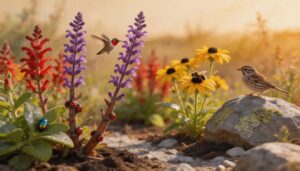
Pesticides don’t just hit pests — they wipe out the insects that birds depend on. That’s why Integrated Pest Management matters in wildlife gardening.
Buffer Zones near native plants, try Beneficial Insect Release, and choose Low‑Toxicity Products when needed.
Time your applications away from dawn feeding hours.
Your drought tolerant plants that attract hummingbirds and pollinator‑friendly plants deserve a chemical‑light environment to truly thrive.
Frequently Asked Questions (FAQs)
How do native plants reduce overall landscaping costs?
Non-native plants drain your wallet. Native plants don’t.
They’re cost-effective, low-maintenance landscape choices that cut water use by up to 50%, need little fertilizer, and naturally resist pests — saving real money over time.
Which natives attract ground-nesting birds specifically?
Little bluestem and switchgrass are top choices.
Their tussock formation offers predator concealment, while leaf litter habitat and ground cover density beneath them create ideal nesting sites for sparrows and towhees.
Do drought-tolerant natives work in urban settings?
Urban gardens seem like the last place native plants would thrive — yet drought-tolerant natives handle heat island mitigation and soil drainage surprisingly well, boosting water use efficiency and bird attraction with minimal fuss.
How does leaf litter support overwintering bird species?
Leaf litter acts as a winter insect habitat, trapping seeds, buffering soil moisture, and providing predator cover.
That microclimate warmth underneath keeps worms and beetles alive — reliable food for thrushes and finches all season.
Conclusion
You might think that creating a bird-friendly garden requires a lush, water-hungry landscape. But with drought tolerant native plants, you can attract a variety of bird species while conserving water.
By choosing plants like Penstemon, Agastache, and Serviceberry, you’ll provide a reliable source of food and shelter. Embracing drought tolerant native plants birds love is a smart way to support local wildlife while reducing your water bill.
Start transforming your yard today with these eco-friendly options.