This site is supported by our readers. We may earn a commission, at no cost to you, if you purchase through links.
Most people think bird feeders belong outside—nailed to a post, braving the rain, slowly going green with algae.
But a growing number of bird lovers are skipping the backyard setup entirely and bringing the whole experience indoors.
Window-mounted feeders turn a plain glass pane into a front‑row seat, close enough to see a chickadee blink.
The catch? Not every feeder holds up.
Cheap plastic cracks, trays warp, suction cups give up without warning.
Finding durable bird feeders for indoors means looking past the pretty designs and checking what they’re actually built from—and these ten deliver on both counts.
Table Of Contents
- Best Durable Bird Feeders for Indoors
- 1. Rexwnadu White Window Bird Feeder
- 2. BONTHEE Window Hummingbird Feeder Easy Clean
- 3. Clear View Bamboo Window Bird Feeder
- 4. Bonka Bird Seed Feeder
- 5. Cardinal Memorial Window Bird Feeder
- 6. Clear View Window Bird Feeder
- 7. Kats Indoor Window Bird Feeder
- 8. Kenond No Mess Bird Feeder Water Dispenser
- 9. FAHAWEL Tree Mounted Bird Bath
- 10. GHAMYEE No Mess Bird Feeder
- Key Features of Indoor Bird Feeders
- Choosing Durable Materials for Feeders
- Types of Indoor Bird Feeders Explained
- Placement Tips for Indoor Bird Feeders
- Maintenance for Long-lasting Indoor Feeders
- Frequently Asked Questions (FAQs)
- What seed types last longest in indoor feeders?
- How do you prevent birds from scattering seeds indoors?
- Can indoor feeders attract pests or insects?
- How often should you replace indoor feeder perches?
- Which bird species visit indoor window feeders most?
- Can indoor feeders attract squirrels or other pests?
- Do suction cups damage or leave marks on windows?
- How much seed should indoor feeders hold daily?
- Are indoor bird feeders safe for cats nearby?
- Conclusion
Best Durable Bird Feeders for Indoors
Finding a feeder that actually holds up — through weather, curious squirrels, and daily use — takes a little more thought than just grabbing the first one you see.
A good starting point is this roundup of top-rated squirrel feeders built for durability and everyday use, which covers what actually separates a reliable feeder from one that won’t last the season.
The good news is there are some genuinely solid options out there, built from materials that last and designed to make bird-watching from your window something you’ll look forward to every morning.
Here are ten of the best durable indoor bird feeders worth your attention in 2026.
1. Rexwnadu White Window Bird Feeder
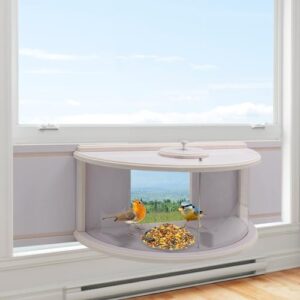
Rexwnadu White Window Bird Feeder is a solid pick if you want a close-up view without stepping outside. Its transparent acrylic sides give you a full 180° look at whoever stops by—cardinals, chickadees, woodpeckers, you name it.
Four twist-lock suction cups hold it steady on windows up to 36 inches wide, no drilling needed. The roofed tray keeps seed dry, and drainage holes help prevent mold. At 6.29 pounds, it’s sturdy without being a hassle to reposition.
| Best For | Nature lovers, families with curious pets, or anyone who wants front-row seats to backyard birds without leaving the couch. |
|---|---|
| Material | Wood & Acrylic |
| Transparency | Clear acrylic panel |
| Ease of Cleaning | Easy to clean |
| Bird Capacity | Multiple species |
| Indoor Use | Indoor & outdoor |
| Gift Suitability | Yes, nature lovers |
| Additional Features |
|
- That 180° acrylic view is genuinely impressive—you see everything up close, not just a blur of feathers.
- No drilling required; the suction cups handle windows up to 38 inches wide and hold firm.
- The roofed tray with drainage holes keeps seed fresher and cuts down on mold buildup.
- White shows dirt fast, so plan on cleaning it more often than you might expect.
- Birds can take a while to trust a new feeder—don’t panic if it sits empty for a few days.
- If you have a cat glued to the window, you may need a reflective cling to keep birds from spooking.
2. BONTHEE Window Hummingbird Feeder Easy Clean
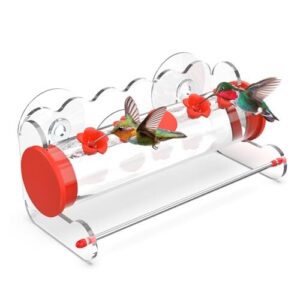
If hummingbirds are more your thing, the BONTHEE Window Hummingbird Feeder is worth a look. It holds 10 ounces of nectar and mounts flush to your window with three industrial-strength suction cups—no wobble, no mess.
Four flower-shaped ports invite multiple birds at once, and the tapered openings keep bees out naturally. The acrylic body splits apart for easy cleaning, and it’s UV-resistant so it won’t yellow over time.
Small footprint, big payoff.
| Best For | Bird lovers and nature watchers who want to enjoy hummingbirds up close, right from their window. |
|---|---|
| Material | Plastic |
| Transparency | Crystal-clear acrylic body |
| Ease of Cleaning | Removable acrylic body |
| Bird Capacity | 4+ hummingbirds |
| Indoor Use | Window-mounted indoor |
| Gift Suitability | Yes, bird lovers |
| Additional Features |
|
- Mounts securely with three strong suction cups—no shaking, no sliding
- Four flower ports mean you can watch multiple birds feed at the same time
- Pops apart easily for quick, hassle-free cleaning
- Hummingbirds might take a while to find and trust the new feeder
- Needs regular nectar refills and cleaning to stay fresh and safe
- Works best on a smooth, clean window—dirty or textured glass may affect suction
3. Clear View Bamboo Window Bird Feeder
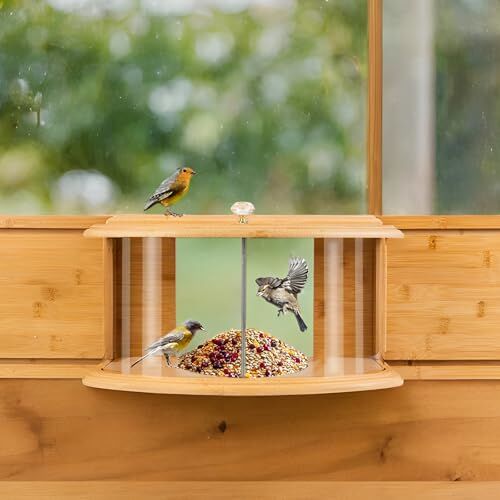
If plastic isn’t your thing, the Clear View Bamboo Window Bird Feeder is an invigorating change. Built from 100% natural bamboo, it’s sturdy without being heavy — at 8.2 pounds, it sits solid on your windowsill.
The clear viewing panel gives you a wide-angle look at visiting birds without stepping outside. It’s easy to remove, refill, and clean, making it a great low-fuss option for seniors or anyone who just wants calm, daily birdwatching at home.
| Best For | Seniors, apartment dwellers, and nature lovers who want a calm, no-fuss birdwatching experience right from their window. |
|---|---|
| Material | Bamboo |
| Transparency | Clear viewing panel |
| Ease of Cleaning | Easy to remove and clean |
| Bird Capacity | Multiple species |
| Indoor Use | Indoor & outdoor |
| Gift Suitability | Yes, parents & seniors |
| Additional Features |
|
- Made from solid 100% bamboo — a refreshing break from plastic feeders
- Wide-angle clear panel lets you watch birds up close without disturbing them
- Easy to remove, refill, and clean with minimal effort
- Assembly can be tricky, especially fitting the plexiglass panel
- The weather strip may be too sticky and interfere with opening your window
- The clear panel might spook birds if they spot movement inside
4. Bonka Bird Seed Feeder
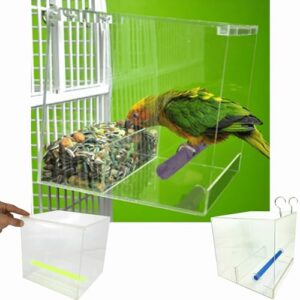
If you keep pet birds indoors, the Bonka Bird Seed Feeder takes a different approach entirely. Instead of mounting on a window, it clips right onto your bird’s cage.
The clear acrylic body holds about 6 ounces of seed — enough to skip daily refills — and the two-bay design catches dropped seed before it hits the floor. That alone is worth it for anyone tired of sweeping up hulls. The smooth plastic wipes clean in seconds, no fuss required.
| Best For | Bird owners who want a cleaner cage setup and don’t mind tinkering with installation to get it just right. |
|---|---|
| Material | Acrylic |
| Transparency | Transparent design |
| Ease of Cleaning | Smooth plastic surfaces |
| Bird Capacity | Messy eaters |
| Indoor Use | Cage indoor use |
| Gift Suitability | Not highlighted |
| Additional Features |
|
- The clear acrylic lets your bird see out while eating — less stress, more calm feeding time.
- Two-bay design catches dropped seed before it hits the floor, which is a real win for messy eaters.
- Smooth plastic surfaces make cleanup quick — just wipe and you’re done.
- The hooks can be finicky, and some cage types need a creative workaround to get it to stay put.
- A few buyers received units that arrived damaged, so quality control can be hit or miss.
- Birds that like to knock things around may send this feeder flying — not ideal for the rowdier ones.
5. Cardinal Memorial Window Bird Feeder
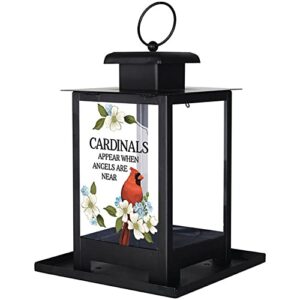
Grief and bird-watching make surprisingly good companions. The Cardinal Memorial Window Bird Feeder leans into that connection — it’s built from solid PVC (the same material used on house trim, rated for roughly 20 years outdoors) and mounts flush to your window using industrial 3M Dual-Lock strips instead of suction cups that eventually fail.
The front features a cardinal graphic with a custom memorial message, facing inward so you can read it from your couch. Durable, meaningful, and genuinely weatherproof.
| Best For | Anyone looking for a heartfelt sympathy gift or a meaningful way to remember a loved one through a beautiful, versatile piece that works indoors or out. |
|---|---|
| Material | Metal & Glass |
| Transparency | Glass pane windows |
| Ease of Cleaning | Requires regular cleaning |
| Bird Capacity | Cardinals focus |
| Indoor Use | Indoor & outdoor |
| Gift Suitability | Yes, sympathy gift |
| Additional Features |
|
- Made from powder coated metal and real glass, so it looks elegant and holds up over time
- Doubles as a bird feeder, lantern, or memorial display — a lot of flexibility in one piece
- The timeless black finish fits almost any space, from a garden patio to a windowsill
- The glass panes can be fragile, so you’ll want to handle and store it with care
- At $39.99, it’s on the pricier side for a bird feeder if that’s your main use for it
- Needs regular cleaning to keep it looking its best, especially outdoors
6. Clear View Window Bird Feeder
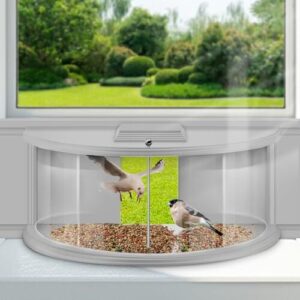
Clear View Window Bird Feeder turns your window into a front‑row seat — literally. Its transparent PETG baffle and clear acrylic panels give you a 180° panoramic view without bars or walls breaking up the scene.
Since window-mounted feeders actually reduce collision risk by keeping birds close to the glass, you can feel good about placing your feeder right on the pane for the safest possible setup.
Four side‑mounted suction cups keep the center fully open, so nothing interrupts your view of feeding birds.
The removable seed tray holds about 1.6 pounds of mixed seed, drains well after rain, and detaches easily for cleaning.
Just wipe the glass first — suction cups need a clean surface to hold.
| Best For | Nature lovers, families, and anyone who wants a close-up, unobstructed view of backyard birds right from inside their home. |
|---|---|
| Material | Wood & PETG |
| Transparency | PETG transparent baffle |
| Ease of Cleaning | 4-inch cleaning hole |
| Bird Capacity | Multiple species |
| Indoor Use | Indoor window-mounted |
| Gift Suitability | Yes, nature lovers |
| Additional Features |
|
- The 180° panoramic PETG baffle gives you a genuinely clear, bar-free view of birds as they feed
- The removable seed tray holds 1.6 lbs of seed, drains after rain, and is easy to pull out and clean
- Four side-mounted suction cups keep the center view completely open — no hardware in the way
- Suction cups require a spotless window surface to hold properly, and installation can be tricky
- Some users have reported quality control issues like scratches or missing parts out of the box
- Gaps in the seal can let in cold air, and the feeder may not hold up well in harsh weather
7. Kats Indoor Window Bird Feeder
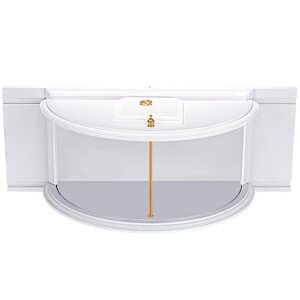
The Indoor Window Bird Feeder is built for people who want a close look without the fuss. It fits single and double-hung windows from 28 to 38 inches wide — handy if your window size has ruled out other feeders.
The PVC and plastic construction holds up to 1.5 pounds of seed, and the 4‑inch top opening makes refilling quick. It even includes a security lock, so the window stays closed while the feeder does its thing.
| Best For | Apartment dwellers, renters, and home or office workers who want a close-up bird watching experience without setting foot outside. |
|---|---|
| Material | PVC & Plastic |
| Transparency | Clear PVC design |
| Ease of Cleaning | Easy refill opening |
| Bird Capacity | Multiple species |
| Indoor Use | Indoor window-mounted |
| Gift Suitability | Not highlighted |
| Additional Features |
|
- Fits a wide range of windows (28"–38") and works with single and double-hung styles, so it’s versatile enough for most setups
- The 4-inch top opening makes refilling fast and easy — no fumbling around
- Built-in security lock keeps the window shut, which is a nice touch for safety and peace of mind
- Some users have flagged durability concerns, so it may not hold up great over time
- Assembly and installation can be a bit fiddly, especially for first-timers
- Not built for harsh winters — sub-zero temps could be a problem, and birds may stay away if they spot you or your pets through the clear design
8. Kenond No Mess Bird Feeder Water Dispenser
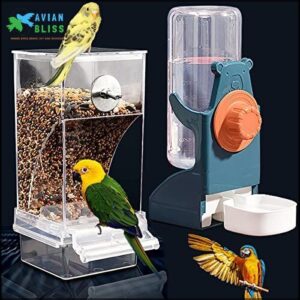
Two feeders for the price of one — that’s the deal with the Kenond set.
You get a seed feeder and a water dispenser, both made from thick, clear acrylic so you can see exactly when it’s time to refill.
The gravity-fed design means birds help themselves while you go about your day.
It holds up to 500 grams of seed — enough to last a week or two — and the pull-out waste drawer keeps things tidy without much effort.
| Best For | Busy parakeet owners who want a low-maintenance setup that keeps food and water flowing without daily fussing. |
|---|---|
| Material | Acrylic & Plastic |
| Transparency | Transparent acrylic |
| Ease of Cleaning | Independent drawer design |
| Bird Capacity | Small cage birds |
| Indoor Use | Indoor cage use |
| Gift Suitability | Yes, pet owners |
| Additional Features |
|
- You can see exactly when to refill — no guessing, no empty bowls
- The pull-out drawer catches mess before it hits the cage floor
- Comes as a set, so food and water are both covered out of the box
- Overfill the water dispenser and it will leak
- The seed tray runs narrow, so bigger birds may struggle
- Perches can get a little wobbly if your bird is on the boisterous side
9. FAHAWEL Tree Mounted Bird Bath
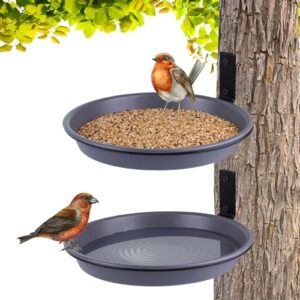
Not every bird feeder has to hang from a hook.
The FAHAWEL mounts straight onto a tree trunk or fence — no tools needed beyond a basic screwdriver — and its 8.4-inch tray doubles as both a feeder and a bird bath.
The powder-coated metal hardware resists rust, and the UV-resistant plastic holds up from freezing winters to hot summers.
You get two trays in the pack at $15.99, which is genuinely hard to argue with.
| Best For | Backyard bird lovers who want a simple, affordable two-in-one feeder and bath they can slap on a tree or fence without a lot of fuss. |
|---|---|
| Material | Plastic & Metal Wire |
| Transparency | Open tray design |
| Ease of Cleaning | Easy to clean trays |
| Bird Capacity | Birds and wildlife |
| Indoor Use | Indoor & outdoor |
| Gift Suitability | Not highlighted |
| Additional Features |
|
- Two trays for $15.99 is a solid deal — you get a feeder and a bath in one shot
- Works on trees, fences, and walls, so placement is flexible
- Durable plastic and metal wire hold up through rough weather
- The included screws have let some buyers down, so keep a backup handy
- Might pull in crows or other uninvited guests along with the pretty birds
- Needs regular cleaning and refilling to stay functional
10. GHAMYEE No Mess Bird Feeder
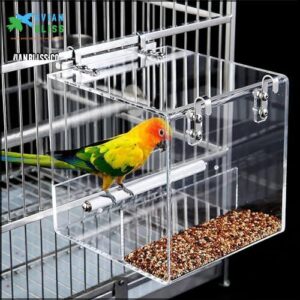
If your bird makes a mess at every meal, the GHAMYEE No Mess Bird Feeder is worth a close look. The semi-enclosed acrylic box keeps seed hulls and crumbs inside instead of scattering across your floor — a small design choice that saves real daily cleanup time.
Birds step through the front opening to eat, and a raised interior baffle catches dropped seed before it escapes. The thick acrylic resists cracking, wipes clean easily, and fits most standard budgie or cockatiel cages without fuss.
| Best For | Bird owners with small to medium-sized parrots or cockatiels who are tired of sweeping up seed mess every single day. |
|---|---|
| Material | Acrylic & Stainless Steel |
| Transparency | Transparent acrylic |
| Ease of Cleaning | Easy to attach and clean |
| Bird Capacity | Small to medium birds |
| Indoor Use | Indoor cage use |
| Gift Suitability | Not highlighted |
| Additional Features |
|
- The semi-enclosed design actually keeps seed hulls and crumbs contained instead of ending up all over your floor
- Thick acrylic feels solid and wipes down quickly — no soaking or scrubbing required
- Upgraded hooks make hanging it inside or outside the cage genuinely easy
- Refilling the food compartment isn’t the smoothest process — it takes a little more effort than you’d expect
- Some birds need time to warm up to it, so don’t be surprised if yours ignores it for a few days
- Cleaning out the bottom (especially the poop area) can get a bit tricky depending on your bird’s habits
Key Features of Indoor Bird Feeders
Not all bird feeders are built the same, and the differences really do matter once you’ve dealt with a cracked tray or a mold‑clogged tube in the middle of winter.
The right feeder holds up over time, stays clean between uses, and actually fits your window or setup without a fight.
Here are the key features worth paying attention to before you pick one.
Impact-resistant Materials for Longevity
The material your feeder is made from determines how long it actually lasts.
Here’s what holds up best:
- Polycarbonate Impact Rating crushes acrylic — it manages roughly 250 joules per meter versus acrylic’s 15
- Acrylic Body panels offer 92% Acrylic Light Transmission with solid durability
- ABS Toughness and PETG Flexibility manage daily bumps without cracking
- Recycled Poly Lumber and Metal Construction bring serious long-term durability with easy cleaning built in
The recycled poly lumber feeder offers eco‑friendly durability and bright color that attracts many species.
Mold and Moisture Prevention
Durable materials get you halfway there — but moisture is the real enemy. Keep indoor humidity between 30 and 50 percent using a dehumidifier, and run a small fan near your window feeder to stop stagnant air from settling.
Look for drainage design features like sloped bases and mesh bottoms. Good ventilation strategies and smart seed storage keep mold from ever getting a foothold.
Easy Cleaning and Maintenance
Keeping a feeder clean shouldn’t feel like a chore. The best window bird feeders make feeder maintenance very easy with features like removable trays, smooth interiors, and wide access doors.
- Pull out removable trays and rinse at the sink
- Wipe smooth interiors clean in seconds — no scrubbing corners
- Pop dishwasher safe parts on the top rack weekly
- Use easy disassembly designs for deep soaks
- Refill through wide openings without removing the acrylic body
Remember to clean feeders biweekly to prevent mold and bacteria.
Window-mount Versus Cage-mount Designs
Once your feeder is easy to clean, the next question is where it lives. Window bird feeders use suction cups pressed against glass — great installation flexibility, no tools needed. Suction stability depends on clean, dry glass.
Cage-mount designs clamp directly to bars for real bar clamping security. Cage mounts win on durability and mess containment. Both styles offer easy refilling and an acrylic body built to last.
Choosing Durable Materials for Feeders
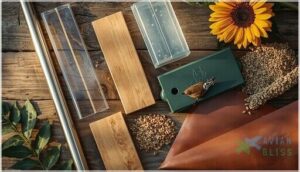
The material your feeder is made from makes a bigger difference than most people think. It affects how long it lasts, how easy it is to clean, and whether squirrels will just chew right through it.
Here’s a look at the most common options and what you can realistically expect from each.
Polycarbonate and Heavy-duty Plastics
Polycarbonate is basically the quiet workhorse of indoor bird feeder selection—roughly 250 times stronger than glass, yet completely clear. For apartment birdwatching especially, that combination is hard to beat. Here’s what makes it stand out:
- Flexural rigidity keeps thin walls from bending under wet seed weight
- UV stabilization prevents yellowing on sunny windows over time
- Food-grade safety ensures nectar and seeds stay uncontaminated
That tensile strength and recycled-content durability make these clear design window bird feeders genuinely last.
Stainless Steel and Metal Options
Steel doesn’t mess around. Stainless metal bird feeders bring serious corrosion resistance to window bird feeders that face daily humidity and seed moisture.
Their non-porous hygiene surface wipes clean in seconds—no staining, no odor. Chew-proof design manages squirrels, and weight-bearing hardware holds a full tube without sagging.
| Feature | Stainless Steel | Powder-Coated Metal |
|---|---|---|
| Corrosion Resistance | Excellent | Good (check edges) |
| Non-porous Hygiene | Yes | Partially |
| Aesthetic Finishes | Minimal, sleek | Wide color range |
Treated Wood and Eco-friendly Materials
Wood sounds cozy — but not all of it belongs near your birds. Avoid pressure-treated wood entirely; its copper preservatives leach into seed and water.
Instead, look for these safer picks:
- FSC certified lumber — responsibly harvested, bird-safe
- Bamboo sustainability — fast-growing, moisture-resistant, easy to wipe clean
- Recycled plastic components — durable, warp-resistant, no new petroleum needed
- Low-VOC finishes — odorless when cured, won’t harm curious beaks
Pros and Cons of Glass Feeders
Glass looks stunning on a window — but is it worth the trade-off?
| Pros | Cons |
|---|---|
| Cleaning Ease — smooth, non‑porous surface | Safety Risks — shatters on impact |
| Aesthetic Appeal — stays bright, won’t yellow | Weight Handling — heavy; needs strong suction cups |
| Temperature Insulation — nectar spoils slower | Fragility — chips can harbor mold |
| No chemical leaching into food | Harder for limited‑grip users to handle |
Types of Indoor Bird Feeders Explained
Not all indoor bird feeders work the same way, and picking the wrong type can mean fewer birds and more frustration.
The design you choose really does shape which species show up and how close you get to see them.
Here’s a breakdown of the main types so you know exactly what you’re working with.
Window Bird Feeders
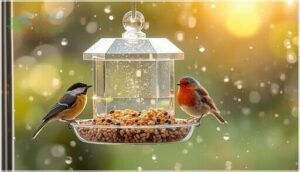
Window Bird Feeders bring the outdoors right to your glass — no yard required. A solid Suction Cup Design holds firm through wind and weather, with strong cups supporting several pounds even in rough conditions. Place one within three feet of the window for Bird Collision Prevention at safer angles.
What makes them worth it:
- Clear acrylic build for unobstructed Window Viewing Angles
- Easy Refilling with removable trays that detach in seconds
- Weather Resistance through UV‑stable, non‑yellowing materials
- Seasonal Seed Choices like safflower, double as Squirrel‑proof mechanisms
- Suction Cups that last months with simple hot‑water prep
Cage-mounted and Freestanding Feeders
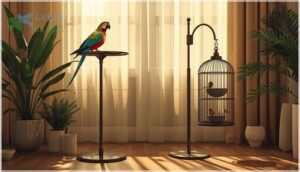
If you keep birds indoors — parrots, finches, canaries — cage-mounted feeders are a smarter fit than Window Bird Feeders.
Attachment Mechanisms like adjustable clips and bolt‑on bowls handle bar spacings from 1 cm to 2 cm, so installation takes seconds.
Freestanding poles with Adjustable Height and Aesthetic Designs in powder‑coated Metal Tube Feeder styles offer Weight Distribution across a 55 cm base — stable, quiet, and built for Easy Refilling.
Hummingbird and Suet Feeder Designs
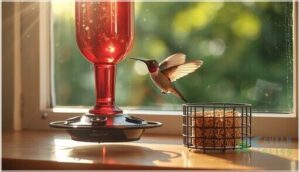
Hummingbird feeders and suet designs are a step up in specificity. A Red Port Design draws birds fast — hummingbirds genuinely can’t resist red.
Look for these four things:
- Silicone Gasket Seal to stop leaks on interior sills
- Micro Vent Pressure balance to prevent drips
- Compact Nectar Capacity around 4 oz for freshness
- Adjustable Suet Grid that holds cakes without crumbling indoors
Smart and Camera-integrated Feeders
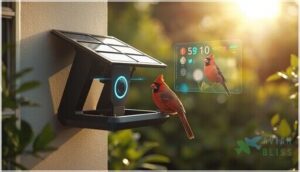
Smart feeders take bird feeding to another level. A built-in feeder camera streams live 1080p–4K footage straight to your phone over Wi‑Fi connectivity, with push alerts when a visitor lands. AI identification labels species automatically — cardinals, chickadees, finches — right inside the app.
Smart feeders stream live footage to your phone and automatically identify visiting birds with AI
| Feature | Basic Smart Feeder | Premium Smart Feeder |
|---|---|---|
| Camera Quality | 1080p HD | 2K–4K Ultra HD |
| Night Vision | Infrared (B&W) | Color Night Vision |
| Power Source | Rechargeable battery | Solar Power + USB‑C |
| Cloud Storage | Live view only | Subscription plan |
Bird feeder reviews consistently highlight solar power and cloud storage as the biggest upgrades worth paying for.
Placement Tips for Indoor Bird Feeders
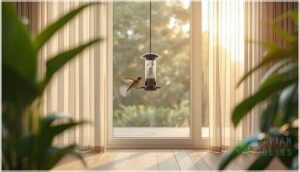
Where you put your feeder matters just as much as which one you buy. A bad spot can mean no birds, a mess on your floor, or worse — a confused finch flying into your living room.
Here are a few simple tips to get the placement right.
Ideal Locations for Maximum Visibility
Placement makes or breaks your bird‑watching experience at home. For maximum visibility with Window Bird Feeders, keep these tips in mind:
- Mount at eye‑level (4–5 feet up) for a Clear View without neck strain
- Pick Glare‑free windows—east‑facing works great
- Use Corner Bay Windows for Multi‑room visibility
- Stay within Safe Distance (under 3 feet) from glass
- Position feeders where Window Mounting suits daily activity zones
Preventing Mess and Seed Spills
Even the window spot turns frustrating fast if seeds keep landing on your floor. A few smart choices fix that.
| Mess Problem | Quick Fix |
|---|---|
| Falling husks | Deep Catch Trays under ports |
| Scattered seed | Enclosed Chambers with high lips |
| Sprouting spills | No‑Mess Seed Mixes (hulled hearts) |
| Refill disasters | Funnel-based Refilling Techniques |
| Overflow buildup | Weekly Waste Management routine |
Ensuring Bird Safety Indoors
Keep your feeder within 3 feet of the glass—that’s your first win for Window Collision Prevention. Birds can’t build enough speed to seriously hurt themselves.
For Air Quality Control, skip nonstick cookware and aerosol sprays nearby.
Follow basic Hygiene Protocols by scrubbing trays weekly.
And for Lighting Stress Reduction, position feeders in quieter, dimmer corners—happy birds stick around longer.
Maintenance for Long-lasting Indoor Feeders

A good feeder only stays good if you take care of it. Skipping maintenance is the fastest way to end up with moldy seed, broken parts, and birds that stop showing up.
Here’s what you actually need to do to keep things running smoothly.
Cleaning Schedules and Best Practices
Neglecting your feeder is basically an open invitation for bacteria. Solid bird feeder maintenance and care means sticking to a real schedule—not cleaning "whenever you remember."
- Weekly Inspection Checklist: Check ports, trays, and suction cups every seven days
- Seasonal Cleaning Frequency: Clean every two weeks in winter, every few days in humid summer months
- Bleach Dilution Ratio: Mix one part bleach to nine parts water, soak ten minutes, rinse thoroughly
- Drying Techniques & Safety Gear Requirements: Air-dry completely on a rack wearing rubber gloves—never reassemble while damp
Preventing Seed Spoilage and Mold
mold creep into a feeder you just cleaned is genuinely demoralizing. bird feeder maintenance and care means staying ahead of it—not reacting to it.
humidity control matters more indoors than most people realize. Keep room humidity between 30–50%, and place moisture absorbers near your seed storage.
| Problem | Cause | Fix |
|---|---|---|
| Seed clumping | Humidity above 60% | Dehumidifier + container sealing |
| Mold growth | Poor ventilation design | Mesh-bottom feeders |
| Rancid peanuts | Slow seed rotation | Refill smaller amounts weekly |
bird feeding tips protect bird health and safety while supporting sustainable living.
Inspecting for Wear and Replacing Parts
Your feeder deserves the same attention you give the birds. Weekly suction cup inspection catches hardening or splits before a sudden drop ruins your day.
Run a finger around port edges to feel for burrs—port edge wear is sneaky but real. Check mount stability, tap panels for structural cracks, and swap rusted screws following a basic hardware replacement guide. Small checks, long feeder life.
Safe Disinfection Methods for Indoor Use
Disinfecting your indoor feeder isn’t complicated—but doing it wrong can hurt the birds you’re trying to help. Here’s what actually works:
- Bleach Dilution Ratios — Mix 1 part bleach to 9 parts water, soak 10 minutes, rinse completely.
- Vinegar Contact Time — Use 1 part white vinegar to 4 parts hot water; keep it wet 10–15 minutes.
- Hydrogen Peroxide Safety — Food‑grade 3% solution leaves zero harmful residue once dry.
- Boiling Water Disinfection — Safe for stainless steel or glass only; thin plastics warp.
- Ventilation Protective Gear — Open windows, wear gloves, and keep birds in another room.
Frequently Asked Questions (FAQs)
What seed types last longest in indoor feeders?
White millet wins here — it lasts 6 to 8 months in airtight storage. Safflower and nyjer follow closely, both offering solid moisture resistance and low oil content that slows spoilage.
How do you prevent birds from scattering seeds indoors?
Seed catcher trays, no mess seeds like hulled sunflower hearts, and smart feeder design controls do most of the heavy lifting.
Add placement barriers and daily cleaning routines, and scatter becomes a non‑issue.
Can indoor feeders attract pests or insects?
Yes, they can invite some uninvited guests.
Ant Trails follow Nectar Leaks, Seed Spills draw roaches, and Mold Growth isn’t far behind.
Good Insect Barriers and clean Window Bird Feeders keep things in check.
How often should you replace indoor feeder perches?
Replace wooden perches every 2–4 months depending on your bird’s chewing rate. Watch for cracks, fraying, or smooth worn surfaces — those are your clearest replacement signs before foot injuries happen.
Which bird species visit indoor window feeders most?
Ever wonder who’s actually showing up? Chickadee visitation tops the list, followed by titmouse frequency, nuthatch behavior, finch dominance, and cardinal presence — the five most reliable bird species at indoor window feeders.
Can indoor feeders attract squirrels or other pests?
Window bird feeders can attract pests, but placement height strategies work well.
Squirrel access barriers and pest‑proof materials handle most threats.
Watch for rodent seed spills and insect infestation risks near indoor setups.
Do suction cups damage or leave marks on windows?
Suction cups can leave residue rings, but it is rarely serious. Quality cups minimize coating damage and pressure indentation.
Regular cleaning methods keep glass spotless—most marks wipe away easily with glass cleaner or rubbing alcohol.
How much seed should indoor feeders hold daily?
Aim for about 1 to 2 tablespoons of bird seed per day for small songbirds.
That daily seed quota keeps freshness schedule tight, seed turnover high, and portion sizing matched to real consumption rates.
Are indoor bird feeders safe for cats nearby?
Secure mounting keeps feeders stable against cat pouncing risk, glass safety prevents injuries, and regular cleaning stops disease transmission — turning feeders into safe mental stimulation for curious cats nearby.
Conclusion
Even the ancient Romans kept songbirds near their windows—proof that pulling nature closer has always been worth the effort.
Choosing durable bird feeders for indoors isn’t just about watching pretty wings. It’s about building a small, reliable ritual that holds up wash after wash, season after season. Pick materials that last, placement that works, and a feeder that actually stays on the glass. Do that, and every morning starts with something worth waking up for.
- https://jcjaye.com/feeders-waterers/best-suction-cup-bird-feeder/
- https://www.flockingaround.com/post/the-best-bird-feeder-for-apartments
- https://www.reviewed.com/home-outdoors/best-right-now/best-bird-feeders
- https://www.bobvila.com/reviews/best-window-bird-feeders/
- https://www.birdfood.co.uk/rhodes-window-feeder