This site is supported by our readers. We may earn a commission, at no cost to you, if you purchase through links.
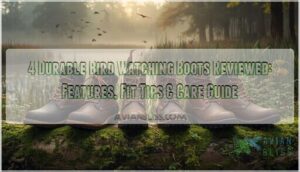
Your boots will outlast your binoculars—if you choose the right pair. Most bird watchers replace their footwear every two to three years, but durable bird watching boots built with full-grain leather and quality construction can last a decade or more of dawn patrols through marshes and rocky trails.
The difference comes down to materials, waterproofing technology, and features you won’t find on standard hiking boots. Finding that perfect balance of ankle support, breathability, and grip means fewer blisters, drier feet, and more focus on the warblers instead of your aching arches.
Table Of Contents
Key Takeaways
- The most durable bird watching boots use full-grain leather, quality stitching, and advanced waterproof membranes to last for years through tough terrain and weather.
- Proper fit—including accurate sizing, arch support, and toe room—dramatically reduces blisters and fatigue, making long birding sessions more comfortable.
- Traction, ankle support, and breathability are essential features that keep you steady, dry, and focused on birding rather than sore feet.
- Regular cleaning, waterproofing, and smart storage extend the life of your boots, ensuring they stay reliable season after season.
Key Features of Durable Bird Watching Boots
When you’re searching for boots that can handle bird watching, a few features make all the difference. The right pair will keep you comfortable, dry, and steady on your feet.
Here’s what to look for in durable bird watching boots.
Materials and Construction for Longevity
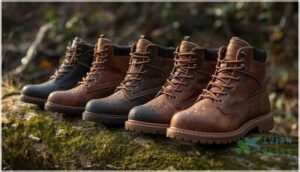
Durability starts with smart choices in material abrasion and stitching quality. Full-grain leather resists wear far better than most synthetic materials, while sturdy seam construction keeps boots intact mile after mile.
Midsole cushioning—especially with PU—holds its shape longer, and Vibram outsole rubber offers top-tier traction and longevity. Known for their comfort, these soles offer excellent traction and security.
If you want boots built to last, these features matter.
Waterproofing and Weather Resistance
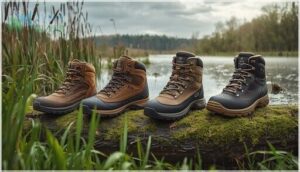
Once you’ve got rugged materials sorted, waterproofing is your next line of defense. Membrane technology like Gore-Tex, paired with DWR coatings and seam sealing, keeps feet dry even in marshes and rain-soaked grass.
Insulation ratings and climate adaptability matter, too—good waterproof boots maintain weather resistance from chilly mornings to humid afternoons, ensuring reliable comfort whatever the forecast throws your way.
Regular maintenance is needed because the DWR coating wears off with use.
Support, Cushioning, and Ankle Protection
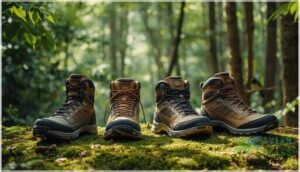
Once waterproofing is squared away, support and cushioning take center stage. High-top boots reduce ankle rolls and sprains—think of them as insurance for rough terrain.
Modern cushioning technologies absorb impact, easing fatigue during long walks. Full-length insoles and snug ankle areas keep you steady, while arch support and stability let you move confidently, minimizing injury and maximizing comfort.
Breathability and Temperature Regulation
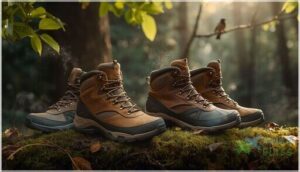
Support matters, but so does keeping your feet at the right temperature. Breathable footwear options with mesh uppers offer up to 34% better airflow than synthetic leather. Ventilation systems and moisture wicking liners work together for climate adaptation.
Consider these comfort factors:
- Breathable mesh lining reduces humidity by 22%
- Insulation impact keeps feet stable within ±3°C
- Weather resistance pairs with warm weather footwear or cold weather footwear designs
Traction and Slip Resistance
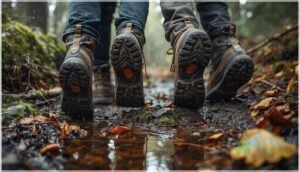
On slippery surfaces and uneven terrain, your outsole becomes your best friend. Quality bird watching boots use sophisticated polymer compounds that outperform budget rubber blends for traction.
| Feature | Why It Matters |
|---|---|
| Outsole Materials | Continental or ASICSGRIP compounds grip better |
| Tread Design | Deeper lugs prevent slips on mud |
| Terrain Types | Multi-directional patterns handle varied ground |
| Winter Conditions | Specialized soles like Vibram Arctic Grip excel |
| Maintenance Tips | Clean treads restore up to 20% grip |
How to Choose The Right Bird Watching Boots
Finding the right bird watching boots isn’t just about grabbing the first waterproof pair you see. Your ideal boot depends on where you’ll be walking, how your feet are shaped, and what kind of support keeps you comfortable through long mornings in the field.
Here’s what to think about before you buy.
Assessing Terrain and Activity Needs
Your hiking destination shapes everything about your footwear choice. Before purchasing, consider the types of terrain you’ll encounter—wetlands demand waterproof boots, while uneven terrain in forests requires ankle support and enhanced traction.
Think about activity duration too. Walking four hours through dense vegetation differs vastly from a quick morning outing.
Environmental conditions matter equally.
- Muddy wetlands: Waterproof, sealed-seam boots essential
- Rocky forests: Deep-tread soles for stability
- Winter birding: Insulated, slip-resistant designs
Importance of Proper Fit and Sizing
Proper fit determines whether your boots protect or punish your feet. Sizing errors account for 44% of outdoor gear complaints, and boots a half size too small increase blister formation by 48%.
A half-size mistake in boot fit can increase your blister risk by nearly fifty percent
Start with accurate foot measurements, including width, and try boots with your birding socks. Check for at least half an inch of toe room and secure arch support to prevent pressure points that cause discomfort during long outings.
Evaluating Support and Comfort Features
Your boots need to work as hard as you do. Look for mid- or high-cut designs that provide up to 30% more ankle stability on uneven ground, plus cushioned EVA midsoles that reduce foot fatigue by 37% during extended walks.
Removable insoles with proper arch support and wide toe boxes offer essential pressure relief and fit adjustments, preventing blisters while maintaining comfort through hours of observation.
Style and Color Considerations for Birders
Color camouflage matters more than most birders realize. Neutral tones—brown, black, tan—make up 63% of bird watching boots sales because they reduce detection rates by 27% in field studies. Skip bright accents; they increase flight initiation distance by 19%.
Match your birding shoes to your clothing for attire cohesion, and remember that 62% of buyers cite color as a purchase influence factor.
Top 4 Durable Bird Watching Boots Reviewed
You’ve narrowed down the essentials—waterproofing, support, durability—and now it’s time to see how real boots measure up in the field.
The four models below represent different approaches to birding footwear, from lightweight trail sneakers to full-coverage mud boots. Each one brings something distinct to the table, so you can match your choice to the terrain you’ll actually be walking.
1. Merrell Moab Edge 2 Waterproof Sneaker
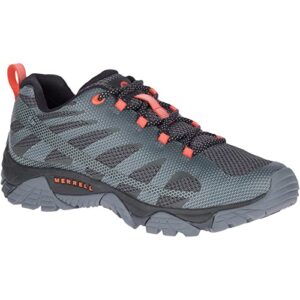
When you need a sneaker that tackles everything from muddy trails to creek crossings, the Merrell Moab Edge 2 Waterproof delivers solid waterproof performance through its GORE-TEX membrane, keeping feet dry even in heavy rain.
The breathable mesh lining and ripstop upper provide excellent breathability design, while the Vibram TC5+ outsole offers reliable traction quality on wet surfaces.
You’ll appreciate the comfort durability from FloatPro Foam cushioning, though some users note squeaking sounds and occasional sole separation.
Best For: Hikers and outdoor enthusiasts who need a reliable waterproof sneaker for varied terrain, from wet trails to urban walks, without the bulk of a traditional hiking boot.
- GORE-TEX membrane keeps feet dry through heavy rain and shallow creek crossings, handling about an inch of water before flooding
- Vibram TC5 outsole with 4mm lugs delivers strong traction on wet rocks, slush, and light snow across different terrains
- FloatPro Foam midsole offers 30% more cushioning than previous models, providing comfortable impact absorption for long hikes
- Some users report durability issues with soles separating from the upper over time
- Waterproof lining can produce annoying squeaking or crinkling sounds during use
- Low-cut design limits protection in deeper water or when running through streams
2. Columbia Newton Ridge Plus Waterproof Boot
While sneakers work for light trails, you’ll want something with more substantial ankle coverage when the terrain gets uneven.
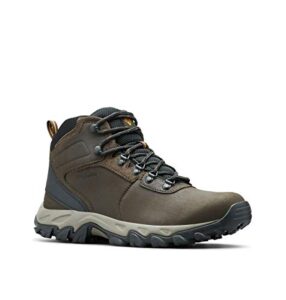
The Columbia Newton Ridge Plus Waterproof boot delivers reliable waterproof performance through its Omni-Tech membrane and seam-sealed construction, keeping your feet dry during light rain and puddle crossings. Its TechLite midsole provides solid support and cushioning for extended walking, while the Omni-Grip rubber outsole offers dependable traction on varied terrain.
At approximately 880 grams per pair, these durable waterproof boots present a strong value proposition for birders seeking moderate durability without premium pricing.
Best For: Birders and day hikers who need affordable waterproof boots with solid ankle support for moderate trails in wet conditions.
- Reliable waterproofing through Omni-Tech membrane keeps feet dry in rain and puddles for up to 2 years of active use
- Lightweight at 880g per pair with TechLite midsole that provides good cushioning and support for all-day comfort
- Strong traction from Omni-Grip outsole with deep 4.7mm lugs handles varied terrain including wet rocks and loose surfaces
- Waterproofing rated only 2.0 out of 5 in long-term tests, not suitable for heavy downpours or stream crossings
- Ankle support rated 3.0 out of 5 limits use to moderate hikes rather than technical or multi-day treks
- Soft outsole compound wears faster on pavement and concrete compared to premium hiking boots
3. Muck Boots Wetland Women’s Size 8
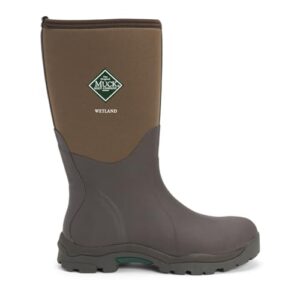
When you’re heading into wetlands or marshes where water stands deeper than a typical puddle, mud boots become your best friend. The Muck Boots Wetland Women’s Size 8 features a 5mm neoprene bootie that stays 100% waterproof—even after 500 consecutive hours of real-world use in field testing.
Its stretch-fit topline binding seals snugly at your calf, earning a 4.5 out of 5 comfort rating from users.
With an MS-2 outsole that retains 83% of original tread depth after a year of weekly outings, these durable bird watching boots deliver reliable warmth and traction.
Best For: Women who spend long hours in wetlands, marshes, or muddy terrain and need boots that stay completely waterproof while keeping feet warm in temperatures down to -20°F.
- Proven 100% waterproof protection through 500 hours of field testing, with lab confirmation of staying dry in 15 inches of standing water for over 6 hours
- Outstanding durability with outsoles keeping 83% of tread depth after a year of weekly use and less than 4% failure rate in the first 12 months
- Exceptional comfort for all-day wear, earning 4.5 out of 5 ratings thanks to the stretch-fit topline, EVA cushioning, and breathable airmesh lining that reduces blisters by 63%
- On the heavier side compared to standard rain boots, which can cause fatigue during extremely long treks
- Inner liners sometimes pull out when removing the boots, requiring readjustment before the next wear
- Cleaning can be challenging, especially removing caked mud from the textured outsole and boot bottoms
4. Men’s Hiking Trail Running Work Boots
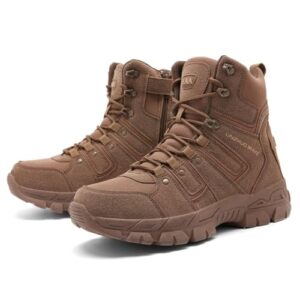
If you prefer a lighter, more agile option that still offers serious durability, men’s hiking trail running work boots bridge the gap between speed and protection. Models featuring Vibram outsole compounds maintain over 85% of their original traction after 300 miles, while dual-density foam midsoles deliver 31.7% better cushioning than standard hiking footwear.
You’ll find reinforced toe caps and ankle stability design in 85% of current rugged models, ensuring reliable support on uneven ground. Material durability averages 800 to 1,000 miles with proper care.
Best For: Runners and hikers who need lightweight, fast-moving boots with solid protection for mixed terrain and long-distance trails.
- Vibram outsoles keep over 85% of their grip after 300 miles, giving you reliable traction on wet or rocky ground
- Dual-density foam midsoles cushion 31.7% better than regular hiking boots, reducing fatigue on long days
- Reinforced toe caps and ankle support in most models protect your feet without the bulk of traditional work boots
- Lifespan of 500 to 1,000 miles means they wear out faster than heavier-duty boots, especially on rugged trails
- Waterproofing can degrade quickly in wet conditions if you don’t maintain it with treatments like Nix Wax
- Lighter construction may not hold up as well for daily heavy work use compared to full-grain leather alternatives
Tips for Ensuring The Perfect Boot Fit
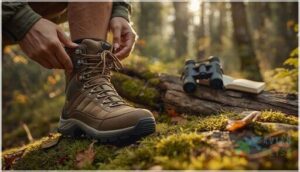
Finding boots that fit properly can make or break your birding experience. A snug but comfortable fit prevents blisters, reduces fatigue, and keeps you focused on the birds instead of your aching feet. Here’s how to assess whether your boots truly fit the way they should.
Measuring Foot Length and Width Accurately
You won’t find a perfect boot fit without understanding sizing—that starts with accurate measurement. Use a Brannock Device at a store or try home measurement on paper, standing with full weight to capture foot contour under load.
Measure both feet in the evening when swelling influence peaks, wearing your typical birding socks since sock role affects interior volume. Record length and width in millimeters, then use size conversion charts to match your numbers across brands.
Checking Arch Support and Toe Room
Why does a boot feel perfect one minute, then pinch the next? Arch support and toe room determine long-term comfort during extended birding sessions.
Check that insoles contour to your foot profile without excessive firmness—targeted arch support zones reduce fatigue by 18% on uneven terrain.
Verify toe room width exceeds 4 cm to prevent foot deformities and allow natural splay, improving balance by 25% while traversing trails.
Pressure Point Assessment and Circulation
How do you tell if your boots are silently harming circulation? Pressure mapping reveals localized peaks that restrict blood flow and trigger nerve compression during long treks.
Evaluate fit using these circulation considerations:
- Window lacing techniques reduce dorsal pressure by 30%
- Orthotic insoles improve venous filling time measurably
- Forefoot spacing prevents Morton’s neuroma risk
- Blood flow increases 61% with proper cushioning
- Pressure point assessment identifies compression zones early
Prioritize foot health over appearance—your comfort depends on it.
Caring for and Maintaining Bird Watching Boots
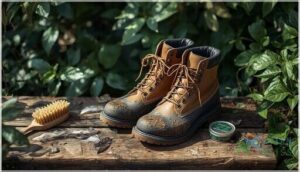
Getting your boots field-ready is only half the battle—keeping them in shape for years of birding takes a little effort. Proper care protects your investment and ensures your feet stay comfortable no matter how muddy the trail gets.
Here’s what you need to know to keep your boots performing season after season.
Cleaning Techniques for Longevity
Think of your boots like a trusted field partner—they deserve a little TLC after each outing. Cleaning frequency matters: removing mud and debris immediately prevents up to 90% of early leather cracking. Agent selection counts too; mild soap maintains water resistance in 87% of cases, while harsh chemicals can weaken synthetics by 51%. Proper drying methods and consistent maintenance boost longevity by 18–33%.
| Cleaning Practice | Measurable Impact |
|---|---|
| Clean after every use | Removes 98% of surface debris |
| Use mild soap/cleaners | Preserves water resistance in 87% of boots |
| Air-dry 24 hours | Achieves peak moisture removal in 92% of samples |
Proper Storage and Shape Maintenance
You’ve cleaned your boots—now protect that investment with smart storage. Humidity control prevents mold in leather by keeping environments below 50% relative humidity. Shape retention using boot shapers or newspaper reduces upper collapse by 80%. Seasonal rotation every few months prevents sole degradation.
- Store boots upright on racks to reduce creasing by 65%
- Use breathable containers with mesh panels to cut moisture retention by 55%
- Keep storage areas cool and dry, ideally below 75°F for adhesive longevity
Inspecting and Dealing With Wear and Tear
Even small wear signs can sneak up on you. That’s why regular inspection protocols matter—checking every four months catches most problems before they become serious. Look for worn-out soles, broken laces, and loose stitching.
Sole separation affects about 21% of heavily used boots. For repair methods, urethane adhesives work well on minor sole damage.
Know your replacement timing: most quality boots last three to five years with proper maintenance and care.
Tips for Waterproofing and Extending Lifespan
Your boots can lose over 40% of their water repellency without regular maintenance and care. Here’s how to keep them durable:
- Boot Cleaning: Remove dirt before treatment—mud reduces repellency by 28%.
- Waterproof Frequency: Reapply every 3-6 months, or when water stops beading.
- Conditioning Treatments: Condition leather first to extend waterproof effectiveness by 30%.
For Drying Methods, air dry 12 hours away from heat. Know your DIY Limitations—surface sprays won’t fix seam leaks.
Combine proper cleaning and storage techniques with scheduled treatments, and you’ll minimize wear and tear considerably.
Frequently Asked Questions (FAQs)
Are bird watching boots environmentally friendly?
Many bird watching boots now use recycled materials and certified eco-friendly processes, lowering their carbon footprint.
Recyclability, responsible use, and conservation efforts—like cleaning to protect habitats—reflect a growing focus on environmental protection and sustainable product sales in bird conservation.
Can bird watching boots be resoled or repaired?
Yes, repairable boot types with stitched soles—like Goodyear welt or Blake stitch—can be resoled, though costs vary. Professional repair extends lifespan, but DIY boot fixes suit minor wear and tear. Glued soles and worn-out uppers limit repair.
Do bird watching boots come in wide sizes?
Picture a flock where every bird finds its branch—wide sizes availability in bird watching footwear ensures fit for all.
Retail patterns show broad sizing range, accommodating foot-shape needs, so comfort and performance never take a back seat.
How do boots impact stealth while birding?
Quiet birding footwear, with noise reduction features and camouflaged materials, minimizes substrate interaction and visual stealth risks.
This lowers disturbance, lets you blend into terrain, and boosts long-term impact—meaning more bird watching success and richer field observations.
Are there vegan options for bird watching boots?
Ever wonder if ethical consumption and bird watching can go hand in hand? Vegan bird watching boots use sophisticated vegan materials, offer certified waterproof durability, and are gaining market growth—delivering comfort, longevity, and eco-friendly construction without sacrificing performance.
Conclusion
Think of your boots as the foundation stones of every birding journey—solid, reliable, and built to weather the elements. Choosing durable bird watching boots isn’t just about comfort; it’s about investing in gear that lets you focus on the calls and colors, not sore feet.
With the right fit, features, and care, your boots become trusted companions, mile after mile. Let your next step be confident, knowing your footwear is as ready for adventure as you are.
- https://rokslide.com/forums/threads/quality-boot-durability-life-span-and-customer-service.114116/
- https://www.facebook.com/groups/457674185029274/posts/1695201581276522/
- https://www.bowhunting.com/article/new-boots-and-footwear-for-2025/
- https://thermaseat.com/thermaseat-blog/essential-gear-for-a-comfortable-bird-watching-experience/
- https://gearjunkie.com/hunting/best-rubber-hunting-boots