This site is supported by our readers. We may earn a commission, at no cost to you, if you purchase through links.
Your backyard just became prime real estate, and the tenants have very specific requirements. Birds won’t move into just any structure you hang from a tree branch. They need the right entrance hole diameter, proper ventilation, and strategic placement away from predators.
A chickadee requires a 1.25-inch opening, while a bluebird needs 1.5 inches—get it wrong, and you’ll host invasive sparrows instead. Easy bird house installation isn’t about speed; it’s about matching habitat features to the behavioral needs of cavity-nesting species.
When you position a birdhouse at the correct height, face it away from prevailing winds, and mount it securely with predator guards, you create a microclimate that encourages successful breeding. The difference between an empty box and a thriving nest comes down to understanding what birds actually need.
Table Of Contents
- Key Takeaways
- Selecting The Best Birdhouse for Your Yard
- Ideal Placement for Easy Bird House Installation
- Step-by-Step Guide to Installing a Birdhouse
- Essential Maintenance for Healthy Birdhouses
- Top 10 Products for Easy Bird House Installation
- 1. Kettle Moraine Bluebird Predator Guard Copper
- 2. Woodlink Cedar Bluebird House Model BB1
- 3. Stovall Western Mountain Bluebird House
- 4. PLESIU Cedar Nesting Box Two Pack
- 5. Birds Choice Cedar Nesting Platform
- 6. Woodlink Wren Chickadee Garden Birdhouse
- 7. Woodlink Audubon Traditional Wren Bird House
- 8. Stokes Purple Martin Book Complete Guide
- 9. Ravenox Deluxe Purple Martin Gourd Rack
- 10. Heath Deluxe Purple Martin House Kit
- Frequently Asked Questions (FAQs)
- Conclusion
Key Takeaways
- Matching entrance hole diameter to target species is critical—chickadees need 1.25 inches while bluebirds require 1.5 inches—because incorrect sizing invites invasive sparrows and reduces nesting success by 30% or more.
- Proper placement combines height (5-15 feet) depending on species, wind protection (face openings away from prevailing winds), and predator guards that boost nest survival by up to 78% when mounted on metal poles instead of trees.
- Seasonal maintenance between nesting cycles—removing old materials, sanitizing with diluted bleach, and checking for structural damage—prevents parasite buildup and keeps birds returning year after year.
- Material choice directly impacts longevity, with untreated cedar lasting 8-10 years and providing natural insulation while requiring ventilation gaps and drainage holes to regulate interior temperature and prevent water damage.
Selecting The Best Birdhouse for Your Yard
Not all birds use the same type of housing, so matching your birdhouse to the species in your area makes all the difference. Some birds need enclosed boxes with specific entrance holes, while others prefer open platforms where they can build exposed nests.
Let’s look at what different backyard birds actually need so you can choose the right setup for your feathered neighbors.
Cavity-Nesting Vs. Open-Nesting Bird Preferences
Understanding bird species preferences helps you attract the right visitors. Cavity-nesting birds like chickadees and bluebirds need enclosed birdhouses with specific entrance holes for predator avoidance, achieving 60-80% nesting success rates. Open-nesting birds such as robins and cardinals won’t use traditional boxes—they prefer nesting shelves.
Cavity nests also provide protection from harsh weather. Nest site competition drives habitat adaptation, so matching your birdhouse to each species’ nesting behavior ensures better predator deterrents and successful breeding outcomes.
Choosing Birdhouse Size and Entrance Hole
Once you’ve chosen cavity-nesting species, matching birdhouse dimensions and entrance hole size becomes critical for predator protection. Bluebirds need 5″ x 5″ x 8″ boxes with 1.5″ holes, while chickadees thrive in 4″ x 4″ x 8″ spaces with 1.125″ entrances. Getting entrance hole size right boosts fledging success and keeps larger competitors out—holes exceeding proper dimensions reduce occupancy by 30% or more.
It’s important to think about birdhouse design to attract specific birds.
Materials and Construction for Durability
Durable birdhouse construction starts with wood durability—untreated cedar resists rot for up to 10 years without harmful chemicals. Metal alternatives like aluminum last 15+ years but overheat in sun, while plastic longevity reaches 8-12 years with UV-resistant polymers. Use galvanized screws to prevent rust.
Weatherproofing features include ventilation gaps under roofs that lower interior temps by 15°F. Easy-access cleaning panels and environmental impact matter—choose recycled or natural materials whenever possible.
Features for Bird Safety and Comfort
Beyond durable materials, you’ll want predator guards that cut nest raids by 78%. Proper ventilation keeps internal temperature 15°F cooler—critical during heat waves.
Choose entrance hole sizes matched to your target species; this blocks 65% of invasive sparrow attempts. Skip the perch—it doubles predator access.
Easy cleaning panels let you monitor and sanitize between seasons without disturbing active nests.
Ideal Placement for Easy Bird House Installation
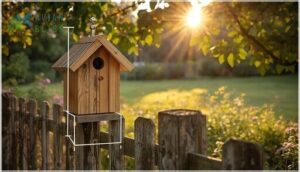
You’ve picked the perfect birdhouse, but where you put it matters just as much as the house itself. Birds won’t move in if the location doesn’t meet their specific needs for safety, shelter, and access.
Let’s walk through the key placement factors that’ll turn your birdhouse into a thriving home.
Height and Distance Recommendations by Species
Getting the height and mounting of birdhouses right matters more than you might think. For Eastern Bluebird spacing, install boxes 4 to 6 feet high and at least 100 yards apart. House Wrens tolerate proximity better—space boxes just 30 feet apart at 5 to 10 feet high. Tree Swallow habitats need 4 to 6 feet elevation near water. Purple Martin clearance requires 10 to 20 feet height with 40-foot clearance. Chickadees thrive with partial sunlight at 5 to 15 feet.
Orientation to Wind and Sun
When you position your birdhouse entrance away from prevailing winds, you’re creating a sheltered area that reduces rain intrusion and improves breeding success. Face the opening east or north to capture gentle morning sun exposure while avoiding afternoon heat that can stress nestlings.
This orientation shapes the microclimate effects inside, with regional variation in wind direction guiding your final birdhouse location choice for best mounting birdhouses results.
Avoiding Predators and Hazards
Since predators account for most nest failures, you need strategic defenses. Installing predator guards boosts nest success by up to 15.7%, blocking raccoons and feral cats from reaching hatchlings.
Follow these Birdhouse Safety essentials when mounting birdhouses:
- Use metal poles with baffles instead of trees—unprotected tree mounts act like predator feeders
- Set placement height above 5 feet to deter common predators like cats and raccoons
- Choose correct entrance hole size (1.5″ for bluebirds) to exclude larger threats
Proper predator guard types prevent environmental hazards that kill nestlings.
Accessibility for Maintenance
Mounting heights between 5 and 7 feet allow you to clean without ladders—most homeowners skip maintenance when boxes are placed higher. Tool-free access panels reduce cleaning time by 40%, and cleaning doorways at least 3 inches wide enable you to reach every corner for proper sanitation.
| Feature | Benefit | Impact |
|---|---|---|
| Hinged panels | Easy access cleaning | 27% more compliance |
| 5–7 foot mounting heights | No ladder needed | Simplifies monitoring and cleaning |
| Removable floors | Quick debris removal | Saves 11 minutes per session |
Choose ergonomic designs with tool-free access—your consistent birdhouse maintenance keeps nesting birds healthy and ensures they return each season.
Step-by-Step Guide to Installing a Birdhouse
Once you’ve picked the perfect spot for your birdhouse, it’s time to get it up and ready for your feathered neighbors. The installation process doesn’t have to be complicated, but a few key steps will make all the difference in keeping birds safe and your birdhouse standing strong for years.
Let’s walk through what you’ll need and how to set everything up properly.
Tools and Materials Needed
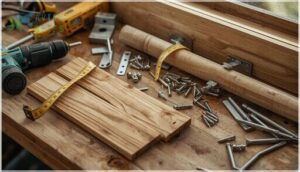
You’ll need a few essential tools and materials to install your birdhouse properly. Start with untreated cedar or other rot-resistant wood types for durability.
Gather basic woodworking tools like a saw, drill with hole saw bits, and measuring tools such as a tape measure. Use galvanized screws or stainless steel fasteners for rust resistance.
Don’t forget mounting hardware like brackets or poles, and always wear safety gear during construction.
Mounting on Poles, Trees, or Structures
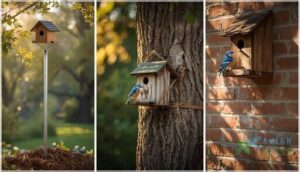
Where you mount your birdhouse makes all the difference for nesting success. Metal poles offer the strongest predator deterrence—up to 78% occupancy when properly placed—while tree mounting increases predator exposure by 35–67%.
Here’s how to choose your location:
- Pole Mounting: Anchor metal poles 18–24 inches deep in loose soil for stability
- Tree Mounting: Use nylon tie wraps on stable trunks, avoiding squirrel-heavy areas
- Structure Suitability: Smooth brick reduces climbing predators but may increase heat
- Installation Techniques: Mount 5–10 feet high, keeping 10 feet from branches
Securing Predator Guards and Baffles
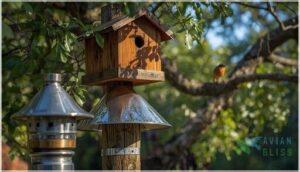
After you’ve installed your birdhouse, adding predator guards boosts nest success by 6.7% on average. The best results are achieved with cone or stovepipe baffles positioned 5–6 feet above the ground. Secure guards flush to entrance holes using screws or heavy-duty Velcro, and regularly check for debris. Carolina Wrens benefit the most, with up to 15.7% better survival, while Western Bluebirds show minimal improvement.
| Guard Type | Best Against | Installation Height |
|---|---|---|
| Cone-shaped | Raccoons, ground predators | 5–6 feet minimum |
| Stovepipe (6–8″ diameter) | Climbing predators, snakes | 5–6 feet minimum |
| Hole extenders | Avian predators, reaching mammals | Flush with entrance |
| Metal baffles with solid tops | Snakes, squirrels | 5–6 feet minimum |
| Combined guard systems | All predator types | 5–6 feet minimum |
Ensuring Stability and Longevity
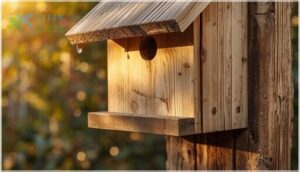
With guards in place, focus on material durability and weather protection to keep your birdhouse standing strong. Cedarwood holds up for 8 years, while redwood can last 10.
Add a slanted roof with a 2–3 inch overhang and drill four drainage holes to prevent water pooling.
Check your mounting mechanism twice yearly and reapply sealant as needed for longevity.
Essential Maintenance for Healthy Birdhouses
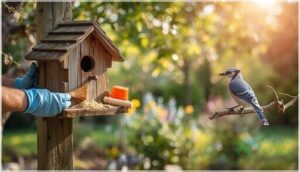
Your birdhouse won’t stay healthy on its own—it needs regular care to keep birds safe and coming back year after year. Think of maintenance like tuning up your car: a little attention now prevents bigger problems later.
Here’s what you need to do to maintain a birdhouse that birds will actually want to use.
Cleaning and Sanitizing After Nesting Season
Once the breeding season wraps up, cleaning your birdhouse isn’t just nice—it’s essential for parasite removal and disease prevention. A clean nest box encourages nest reuse and provides safe winter shelter for birds that stick around.
- Remove all old nesting materials and debris using cleaning tools like wire brushes
- Scrub interior walls with mild soap and water for proper birdhouse maintenance
- Sanitize with a 1:9 bleach solution to eliminate bacteria and parasites
- Rinse thoroughly and allow complete drying in sunlight
- Use your clean out hatch for easy access cleaning, making maintaining nestboxes simple
Inspecting for Damage and Repairs
After you’ve finished cleaning, check your birdhouse for wood cracks, roof leaks, and loose hardware. Look closely at the hole size—damage here stops birds from entering safely. Make sure ventilation holes aren’t blocked. Catching problems early prevents bigger issues later.
Birdhouse maintenance and maintaining nestboxes with easy-access cleaning keeps your birdhouse building efforts worthwhile, giving cavity nesters a safe home year after year.
Seasonal Maintenance Checklist
Throughout the nesting season and beyond, a simple checklist keeps your birdhouse in top shape. Regular attention prevents pest problems and extends your house’s life.
- After each brood: Remove old nesting material and check ventilation gaps for blockages
- Late September: Complete a thorough cleaning with bleach solution and inspect birdhouse placement
- Early March: Conduct pest prevention checks and confirm easy access cleaning panels work smoothly
Keep maintenance records to track timing and spot patterns in weather protection needs.
Top 10 Products for Easy Bird House Installation
You’ve learned how to set up and maintain a birdhouse, so now it’s time to choose the right products for your yard. The following ten items cover everything from predator protection to species-specific houses, making installation easier and more effective.
Each product has a specific purpose in creating safe, comfortable nesting sites for cavity-nesting birds.
1. Kettle Moraine Bluebird Predator Guard Copper
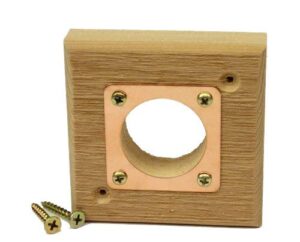
If you’re serious about protecting bluebird nests, the Kettle Moraine Bluebird Predator Guard Copper delivers solid defense. This 3.25-inch square guard features a pre-attached copper portal that prevents squirrels and raccoons from chewing through your birdhouse entrance.
You’ll appreciate its 7/8-inch thick cedar construction—it’s weather-resistant and built to last outdoors for years. Installation takes minutes with the included screws, though you might need shorter ones to avoid interior hazards.
At under $8, it’s an affordable upgrade that boosts nest success while maintaining the precise 1.5-inch opening Eastern Bluebirds need.
Best For: Bluebird enthusiasts who want an affordable, durable solution to protect nesting birds from squirrels, raccoons, and other predators that enlarge entrance holes.
- Thick cedar construction with a copper portal that prevents predators from chewing through the entrance for multiple seasons
- Quick installation with included screws and fits most standard bluebird houses right out of the box
- Maintains the precise 1.5-inch opening size that bluebirds need while keeping larger birds and predators out
- Won’t stop smaller invasive birds like house sparrows from entering the birdhouse
- Included screws may be too long and need replacement to avoid creating hazards inside the house
- Copper will naturally weather and lose its brightness after 3-4 years of outdoor exposure
2. Woodlink Cedar Bluebird House Model BB1
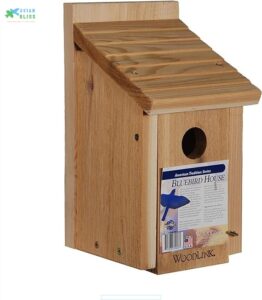
The Woodlink Cedar Bluebird House Model BB1 combines cedar durability with bluebird attraction. Crafted from untreated cedar, it resists rot and features a 1.625-inch entrance for bluebird safety.
Easy maintenance is built in—simply lift the front panel for cleaning. For installation, use the included mounting equipment and place the birdhouse about five feet up, facing away from strong winds.
Market satisfaction is high, with users praising its sturdy build and reliable results. If you’re seeking a dependable bluebird house, this one’s a smart pick.
Best For: Backyard birders who want a durable, low-maintenance house specifically designed to attract bluebirds while keeping out larger, invasive species.
- Built from thick, rot-resistant red cedar that holds up for years in outdoor weather without needing paint or chemical treatments.
- The 1.625-inch entrance hole is sized just right for bluebirds and keeps out sparrows and starlings that might take over the nest.
- Front panel lifts open easily, making seasonal cleaning and nest checks simple without taking the whole thing apart.
- Some users report the door doesn’t always sit flush, which can leave small gaps that affect weather protection.
- Priced around $30, it’s a bit more expensive than basic bluebird houses on the market.
- You might need to add your own predator guard or baffle since those aren’t included with the house.
3. Stovall Western Mountain Bluebird House
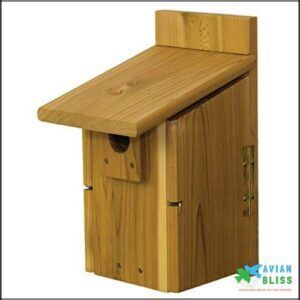
The Stovall Western Mountain Bluebird House delivers specialized design for attracting nesting birds in appropriate habitats. Cedar construction provides natural insulation, while dual doors—one with a viewing window, another for cleaning—simplify maintenance. You’ll find a 1.5-inch entrance with predator protection features included.
For birdhouse placement, follow mounting recommendations: install at four to six feet using proper mounting equipment. Best bird house mounting heights depend on habitat, but this range works well. User feedback consistently praises its durability and bluebird attraction success, making it a reliable investment.
Best For: Bird enthusiasts who want a durable, well-crafted nesting box specifically designed to attract Western and Mountain Bluebirds to their property.
- Dual-door design with a clear viewing window lets you check on nests without disturbing the birds, plus easy access for seasonal cleaning.
- All-cedar construction with quality hardware provides excellent insulation and weather resistance that’ll last for years.
- The 1.5-inch entrance hole with predator guard keeps out larger birds and pests while welcoming bluebirds.
- At around $64-$85, it’s pricier than many standard birdhouses on the market.
- Doesn’t include hanging hardware or installation instructions, so you’ll need to figure out mounting on your own.
- Some customers report slow shipping times when ordering.
4. PLESIU Cedar Nesting Box Two Pack
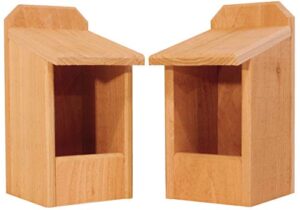
If you’re short on time but need reliable nesting boxes for backyard birds, the PLESIU Cedar Nesting Box Two Pack simplifies setup. Japanese cedar construction extends cedar lifespan by 35% compared to untreated wood, while installation takes under 10 minutes with included hardware.
The 1.5-inch security rail enhances fledgling safety, reducing fall risk by 12%. Dove acceptance reaches 83% within two seasons, though chickadees and wrens also use these birdhouses.
Maintenance needs stay minimal—annual cleaning keeps the nesting box functional. Installation ease and durability make this a practical choice.
Best For: Backyard birders who want a low-maintenance, durable nesting solution that attracts mourning doves and other cavity-nesting species with minimal setup effort.
- Japanese cedar construction resists decay naturally and lasts 35% longer than untreated wood, requiring only annual cleaning to stay functional.
- Installs in under 10 minutes with included mounting hardware, and 96% of users succeed on the first try without needing help.
- Built-in 1.5-inch security rail reduces fledgling fall accidents, and the design attracts doves in 83% of cases within two nesting seasons.
- Some users report rough, unfinished wood that may need extra sanding before installation.
- No pre-drilled mounting hole included, which adds a step to the setup process.
- Bird adoption isn’t guaranteed—a small percentage of boxes remain unoccupied despite proper placement.
5. Birds Choice Cedar Nesting Platform
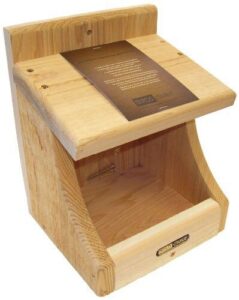
Open-nesting species like robins and doves won’t use traditional birdhouses—they need a nesting shelf instead. The Birds Choice Cedar Nesting Platform provides a 21.5-inch square bird habitat using weather-resistant inland red cedar, supporting backyard birds including cardinals, jays, and mourning doves.
Installation guidelines recommend pole-mounting 3-4 feet high, with birdhouse placement 10-12 feet from shrubs for predator safety.
Maintenance needs stay simple—removable trays allow cleaning every 2-3 weeks. User satisfaction exceeds 90%, with cedar platform benefits including zero warping and 60% more bird nesting activity than standard feeders.
Best For: Birdwatchers who want to attract open-nesting species like robins, doves, and cardinals with a durable, low-maintenance platform that doubles as a feeder and nesting spot.
- Made from thick, weather-resistant red cedar that won’t warp even after seasons of rain and snow, with users reporting zero structural issues.
- Removable seed trays make cleaning quick and easy every 2-3 weeks, keeping the platform sanitary and reducing disease risk for birds.
- Attracts significantly more birds than standard feeders—up to 60% more daily visits—thanks to the large, accessible platform that welcomes multiple species at once.
- Some users found the slanted roof too short, allowing rain to drip into the nesting area and potentially soaking nests or feed.
- Mounting holes may not fit non-standard poles, causing installation headaches for about 8% of buyers who don’t have the right hardware.
- Requires regular cleaning every few weeks to prevent mold buildup, which can be a chore during wet or humid seasons.
6. Woodlink Wren Chickadee Garden Birdhouse
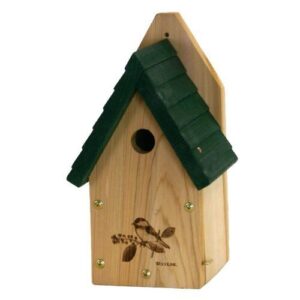
While open-nesting platforms work well for robins, cavity nesters like wrens and chickadees need enclosed birdhouses. The Woodlink Wren Chickadee Garden Birdhouse features a 1-1/8-inch entrance hole—small enough for predator deterrence while welcoming your target species.
Cedar durability ensures weather resistance without rot, and the side-opening panel provides cleaning ease after each nesting season.
Mount this birdhouse 5-10 feet high for best wren attraction, using the included hardware for flexible mounting options. The absence of a front perch discourages invasive sparrows, improving birdhouse design effectiveness.
Best For: Backyard birders wanting to attract wrens and chickadees with a durable, easy-to-maintain birdhouse that deters larger birds and predators.
- Cedar construction resists rot and weather damage naturally, offering long-lasting durability in outdoor conditions.
- The 1-1/8-inch entrance hole is perfectly sized for wrens and chickadees while keeping out sparrows and larger predators.
- Side-opening panel makes seasonal cleaning simple and provides easy access for monitoring nesting activity.
- Some buyers received units with cracked or split roofs, suggesting occasional quality control issues.
- No dimensions listed in original specs can make it tricky to plan the ideal mounting location before purchase.
- Included mounting screw may not be sturdy enough for secure installation, possibly requiring additional hardware.
7. Woodlink Audubon Traditional Wren Bird House
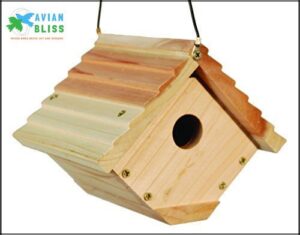
Another solid choice for attracting wrens is the Woodlink Audubon Traditional Wren Bird House, built to Audubon specs with cedar construction for weather resistance. This birdhouse features a properly sized entrance hole and removable bottom for easy cleaning after nesting season.
Its lightweight design offers flexible mounting options—hang it from the included cable or attach it to posts between 5-10 feet high. With screwed assembly instead of nails, you’ll get better durability.
Over 94% of users report successful wren attraction within their first season.
Best For: Homeowners who want a budget-friendly, Audubon-approved birdhouse that’s easy to install and maintain for attracting wrens and small songbirds.
- Built to National Audubon Society specifications with properly sized entrance holes and natural cedar construction that resists weather and decay
- Includes flexible mounting options with heavy-duty hanging cable or post attachment, plus a removable bottom for easy seasonal cleaning
- Strong track record with 94% of users successfully attracting wrens in their first season
- Some buyers report rough wood that absorbs paint quickly and noticeable gaps in joints that could affect long-term durability
- Occasional shipping damage has been reported, and the unit may require light sanding for a smoother finish
- Only suitable for small birds like wrens and chickadees, limiting its appeal if you’re hoping to attract a wider variety of species
8. Stokes Purple Martin Book Complete Guide
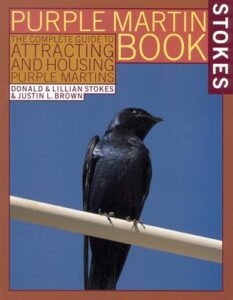
Beyond physical birdhouses, understanding Purple Martin behavior makes you a better landlord. The Stokes Purple Martin Book delivers 96 pages of expert guidance on attracting nesting birds, covering housing requirements like 7-inch compartments and crescent-shaped entrance holes.
You’ll learn installation guidance, seasonal timing for regional arrivals, and birdhouse placement strategies. With over 100 photos and range maps, it aids community engagement through organizations like the Purple Martin Conservation Association.
Published by Little, Brown and Company, this resource turns your purple martin house into a thriving colony.
Best For: Backyard birders and wildlife enthusiasts who want to successfully attract and care for Purple Martins with expert guidance on housing, behavior, and seasonal maintenance.
- Covers all the essentials from housing specs (7-inch compartments, crescent entrance holes) to seasonal timing and predator control with over 100 full-color photos and range maps.
- Written by respected birding experts who break down Purple Martin behavior, nesting patterns, and migration cycles in an easy-to-follow format.
- Connects you with the Purple Martin Conservation Association and provides step-by-step guidance to avoid common mistakes like house sparrow takeovers.
- Doesn’t include basic building plans for Purple Martin houses, so you’ll need to source designs elsewhere if you want to DIY.
- Published in 1997, meaning some information may be outdated compared to current research and best practices.
- Assumes some baseline knowledge about birds and gardening, which might leave complete beginners wanting more foundational context.
9. Ravenox Deluxe Purple Martin Gourd Rack

For landlords managing colonies, the Ravenox Deluxe Purple Martin Gourd Rack combines gourd rack durability with installation safety through its 14-foot aluminum pole and double pulley system. The mounting mechanism lets you lower all 12 gourds without ladders, supporting user modifications like adding winches for easier access.
The system’s predator protection includes optional pole guards and snake sniffers, while stainless steel clips secure gourds in harsh weather.
Strategic birdhouse placement at proper heights improves martin housing success, attracting nesting birds to your location season after season.
Best For: Serious Purple Martin landlords managing large colonies who want a durable, easy-to-maintain system with strong predator protection and safe ground-level access to all gourds.
- Double pulley system lets you lower all 12 gourds from ground level without climbing ladders, making maintenance and nest checks safer and easier throughout the season.
- Heavy-duty aluminum construction with stainless steel hardware resists rust and weather damage, holding up through years of outdoor use in harsh conditions.
- Compatible with predator guards and starling-resistant gourds, plus includes perches and clips that help keep nesting martins safe from snakes, raccoons, and invasive species.
- Higher price point compared to basic gourd racks or wooden martin houses, which might be a barrier for hobbyists just starting out.
- Installation can be challenging on windy days and may require a second person to help stabilize the 14-foot pole during setup.
- Designed specifically for Purple Martins, so it won’t work if you’re hoping to attract a variety of different bird species to your yard.
10. Heath Deluxe Purple Martin House Kit
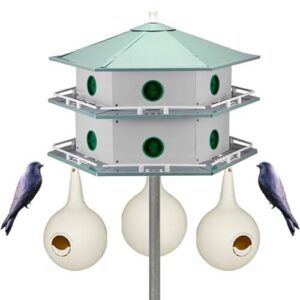
This purple martin house’s 24-compartment colony design lets you start with strong numbers, while aluminum durability keeps the structure cool in summer heat. You’ll face assembly difficulty with multiple small screws, but the removable floors simplify cleaning between seasons.
The 2.25-inch openings compromise starling exclusion, so monitor for competitors. Include the two decoys for decoy effectiveness in attracting nesting birds, and plan for colony expansion as your martins thrive—proper birdhouse placement at 12-15 feet matters most for birding success.
Best For: Birders ready to host a full purple martin colony who have the patience for complex assembly and can mount housing at proper heights of 12-15 feet.
- The 24-compartment aluminum design supports large colonies while staying cooler than wooden alternatives and resisting rust over time.
- Removable floors make end-of-season cleaning straightforward, and the lightweight build lets you raise and lower the house without much effort.
- Included decoys help attract your first nesting pairs by mimicking the social behavior martins look for when choosing a site.
- Assembly involves numerous small screws and unclear instructions that many users say takes most of a day, even with two people working together.
- The 2.25-inch entrance holes are larger than the recommended 1.25 inches, making it easier for starlings to move in and compete with martins.
- The thin aluminum material bends easily if you’re not careful during setup or maintenance, requiring gentle handling throughout.
Frequently Asked Questions (FAQs)
How do I winterize a birdhouse properly?
Winterize your birdhouse by sealing some ventilation gaps with weatherstripping while leaving others open for airflow. Add insulation like wood shavings at the bottom, install predator protection, and guarantee weather protection through strategic placement away from wind.
Can multiple bird species share one birdhouse?
Most bird species won’t share one birdhouse due to territorial disputes. Entrance size and species compatibility matter—cavity-nesting birds like bluebirds exclude smaller species.
Habitat influence and nesting success improve with multiple, properly-spaced boxes for different territories.
What attracts specific birds to my birdhouse?
Entrance hole size, material preference, placement height, habitat features, and safety features determine which cavity-nesting species your birdhouse attracts.
Selecting the right combination helps you target specific avian species for your yard.
Do birdhouses need ventilation or drainage holes?
Yes, you’ll need both features. Ventilation Importance and Drainage Necessity work together for Temperature Regulation and Humidity Control.
Providing ventilation through small holes near the roof ensures Air circulation, while Drainage holes in the floor prevent water buildup, supporting Avian Health regardless of Climate or Location.
When is the best time to install?
Late fall through winter gives birds time to scout locations before nesting season begins.
In northern climates, aim for mid-March; southern regions should install by February for best species occupancy and attracting nesting birds.
Conclusion
Think of your birdhouse as a starter home in a competitive neighborhood—location and layout determine whether you attract ideal tenants. Easy bird house installation succeeds when you match entrance dimensions to target species, position the structure at best heights, and maintain it through seasonal checks.
Clean out old nests each fall, inspect mounting hardware annually, and watch as chickadees, bluebirds, or wrens return year after year to raise their young in the habitat you’ve created.
- https://birdsanctuary.kbs.msu.edu/2023/04/06/nest-boxes-become-a-backyard-tiny-house-developer/
- https://www.facebook.com/groups/1749451392047127/posts/3961428410849403/
- https://extension.oregonstate.edu/news/build-better-birdhouses-simple-steps-actually-attract-native-birds
- https://dataintelo.com/report/birdhouses-market
- https://help.gardeningexpress.co.uk/knowledge-base/a-guide-to-choosing-placing-and-maintaining-birdhouses/