This site is supported by our readers. We may earn a commission, at no cost to you, if you purchase through links.

A birdhouse that warps, rots, or falls apart after one harsh winter doesn’t just look bad—it can trap or endanger the birds nesting inside.
Cedar’s natural oils resist moisture and insects without any chemical treatment, which is why a well-built cedar birdhouse weatherproof enough to handle decades of rain, heat, and cold isn’t unusual.
The difference between a house that lasts two seasons and one that lasts twenty often comes down to a handful of design details: entrance size, predator guards, drainage, and how the wood was finished.
These eight models get all of it right.
Table Of Contents
- Key Takeaways
- Top 8 Weatherproof Cedar Bird Houses
- 1. Natures Way Cedar Wren House
- 2. Natures Way Cedar Bluebird House
- 3. SISTERBIRD Cedar Outdoor Birdhouse with Copper Guard
- 4. Cedar Owl House Dual Feeders
- 5. Large Cedar Six Room Birdhouse
- 6. Pennington Pride Cedar Bluebird House Predator Guard
- 7. Cedar Bluebird House with Predator Guard
- 8. Whitehorse Cedar Bluebird Birdhouse
- Weatherproof Cedar Features to Compare
- Ventilation, Drainage, and Moisture Control
- Predator Protection and Mounting Safety
- Cedar Bird House Care Tips
- Frequently Asked Questions (FAQs)
- Should you leave bird houses out in the winter?
- How to protect a bird house from weather?
- Do I need to seal a cedar birdhouse?
- How long does a cedar birdhouse last?
- Is cedar a good wood for bird houses?
- How do you weatherproof a wooden birdhouse?
- How often should cedar birdhouses be maintained?
- Can cedar birdhouses withstand extreme temperatures?
- What hardware works best for cedar construction?
- How high should weatherproof birdhouses be mounted?
- Conclusion
Key Takeaways
- Cedar’s natural oils resist rot and insects for decades, making it the top wood choice for a birdhouse that actually survives harsh winters without chemical treatments.
- The details that matter most — entrance hole size, predator guards, drainage holes, and wall vents — are what separate a birdhouse that lasts two seasons from one that lasts twenty.
- Built-in predator protection, like copper or metal entrance guards, stops squirrels and raccoons from widening the hole or forcing entry during nesting season.
- A little seasonal care — removing old nests, checking hardware, and resealing with a low-VOC finish every one to three years — keeps your cedar birdhouse going strong for a decade or more.
Top 8 Weatherproof Cedar Bird Houses
Finding a cedar birdhouse that actually holds up through rain, wind, and a full nesting season isn’t as easy as it looks. These eight options stood out for their weatherproof construction and bird-friendly design.
If you want to dig deeper before deciding, this roundup of large rustic cedar birdhouses breaks down what makes each one worth the investment.
Let’s take a closer look at each one.
1. Natures Way Cedar Wren House
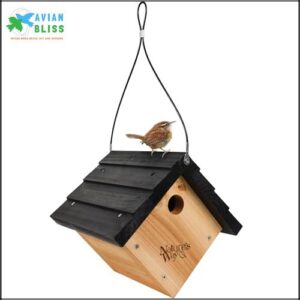
The Nature’s Way Cedar Wren House is a solid pick for attracting wrens, chickadees, and nuthatches. Its 1⅛-inch entrance keeps bigger birds out — no sparrows sneaking in.
The cedar body naturally resists rot without treatment, ensuring durability season after season. Stainless steel hardware prevents rust, while a clean-out door simplifies spring maintenance.
Wall and floor vents maintain airflow inside the nest box. At $28, it’s simple, well-built, and delivers on its promises.
| Best For | Backyard birders who want to attract small cavity-nesting birds like wrens, chickadees, and nuthatches without spending a lot. |
|---|---|
| Material | Premium cedar wood |
| Ventilation | Wall and floor vents |
| Clean-Out Access | Side clean-out door |
| Predator Protection | Secure hanging cable |
| Hardware | Stainless steel |
| Target Species | Wrens, chickadees, nuthatches |
| Additional Features |
|
- Cedar construction holds up season after season — no rot, no fuss
- The 1⅛" entrance hole keeps unwanted birds out naturally
- Easy to clean with the built-in clean-out door and removable cable
- The bottom latch uses a single thin post, which feels a bit flimsy
- No predator guard included — you’ll need to buy one separately
- Larger cavity-nesting birds like bluebirds won’t fit through the entrance
2. Natures Way Cedar Bluebird House

If you’re after a bluebird-specific home, this one’s worth a close look. The Nature’s Way Cedar Bluebird House (Model CWH3) uses premium rot-resistant cedar with stainless-steel hardware that won’t rust through wet seasons.
Its 1.5-inch entrance fits bluebirds perfectly while keeping larger birds out. Wall and floor vents keep air moving inside, ensuring proper ventilation for nesting.
The front clean-out door makes seasonal nest removal quick and efficient. Additionally, the elevated galvanized mesh floor helps reduce blowfly buildup — a small detail that makes a real difference.
| Best For | Backyard birders who want a durable, low-maintenance home specifically designed to attract and protect bluebirds. |
|---|---|
| Material | Premium cedar wood |
| Ventilation | Wall and floor vents |
| Clean-Out Access | Front clean-out door |
| Predator Protection | Predator guard at entrance |
| Hardware | Stainless steel + galvanized mesh |
| Target Species | Bluebirds, small songbirds |
| Additional Features |
|
- Built from premium cedar with stainless-steel hardware, so it holds up through rain, heat, and cold without rotting or rusting.
- The elevated mesh floor and wall vents work together to cut down on moisture, parasites, and blowfly buildup — real wins for nest health.
- Front clean-out door makes end-of-season maintenance simple, no tools or guesswork needed.
- No mounting hardware included, so you’ll need to source brackets or drill your own holes before installation.
- The mesh floor can arrive with a tacky coating — worth giving it a quick clean before putting it out.
- It’s pricier than basic plastic options, which can add up if you’re looking to set up multiple houses across a larger property.
3. SISTERBIRD Cedar Outdoor Birdhouse with Copper Guard
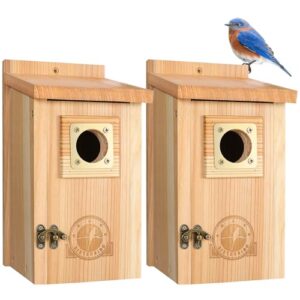
If you want a solid step up in predator protection, the SISTERBIRD Cedar Outdoor Birdhouse with Copper Guard is hard to beat. That matte copper guard around the 1.5-inch entrance isn’t just for looks — it actively keeps squirrels and starlings from widening the hole. The untreated cedar construction ensures no chemical smells to spook nesting birds.
You get two houses per package, each equipped with interior ladder grooves that help fledglings climb out safely when it’s time to leave.
| Best For | Backyard bird lovers who want a predator-resistant, ready-to-use nesting box that works straight out of the package. |
|---|---|
| Material | Solid cedar wood |
| Ventilation | Built-in vent openings |
| Clean-Out Access | Hinged front door |
| Predator Protection | Copper predator guard |
| Hardware | Stainless steel screws |
| Target Species | Bluebirds, wrens, swallows |
| Additional Features |
|
- The copper predator guard is a genuine feature — it stops squirrels and starlings from chewing the entrance hole wider.
- You get two houses in one package, so you can set up multiple nesting spots without doubling your spend.
- Interior ladder grooves help baby birds climb out on their own, which is a small detail that actually makes a real difference.
- The 1.5-inch entrance is fixed, so it only works for a handful of smaller species — no flexibility there.
- Some units have shown up with wood that looks more like pine than cedar, which could mean shorter lifespan outdoors.
- You’ll likely need to add a sealant or stain yourself if you live somewhere with tough winters or a lot of rain.
4. Cedar Owl House Dual Feeders
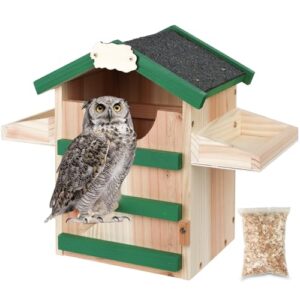
Owls need more than a hole in a wall — they need a real setup. The Cedar Owl House Dual Feeders give you that. Measuring 7.8 × 16.5 × 12.5 inches and weighing under 4 pounds, it’s easy to mount anywhere. It includes two built-in feeding troughs for offering seed and suet without disturbing the nest inside.
One thing to note: the front panel runs smoothly, so roughening it a bit helps owls grip when entering.
| Best For | Backyard wildlife enthusiasts, beginners, and families looking for an easy, customizable owl house that works right out of the box. |
|---|---|
| Material | Cedar wood |
| Ventilation | Limited built-in vents |
| Clean-Out Access | Not specified |
| Predator Protection | Asphalt shingle roof |
| Hardware | Mounting kit included |
| Target Species | Screech owls, small birds |
| Additional Features |
|
- Cedar and asphalt construction holds up year-round, even in rough weather
- Dual feeding troughs let you offer food without bothering the nest inside
- Comes ready to go — mounting kit, wood shavings, and owl stands included
- The front panel is too smooth for owls to grip; you’ll likely need to rough it up yourself
- The floor design can trap water and cause rot over time if you don’t seal or modify it
- Ventilation is limited, so adding extra holes is pretty much a must for hot climates
5. Large Cedar Six Room Birdhouse
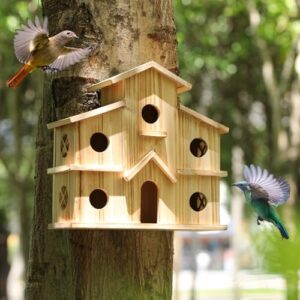
Six families can move in at once with the Large Cedar Six Room Birdhouse. It measures 11.41 × 4.64 × 11.41 inches and arrives fully assembled — no tools needed.
Cedar naturally resists moisture, though sealing it with linseed oil using wood finishing tips for long-lasting birdhouses keeps all six units protected for years.
Each chamber has its own entry hole, keeping nesting pairs separate and stress-free.
The cedar construction withstands rain and wind naturally, while a shared sloped roof sheds water across all six rooms.
It hangs easily from a branch, fence, or patio without tilting. Ready right out of the box.
| Best For | Bird lovers, backyard gardeners, and families who want to attract small birds like bluebirds or hummingbirds without any setup hassle. |
|---|---|
| Material | Natural cedar wood |
| Ventilation | Waterproof coated cedar |
| Clean-Out Access | No access panel |
| Predator Protection | Waterproof coating only |
| Hardware | Hanging hardware included |
| Target Species | Bluebirds, hummingbirds |
| Additional Features |
|
- Fits six bird families at once, each with their own private entry hole so there’s no squabbling over space.
- Built from real cedar with a waterproof coating — it can handle rain, wind, and whatever else the weather throws at it.
- Arrives fully assembled, so you can hang it up and be done in minutes.
- It runs on the smaller side, so if you’re picturing something more statement-making in your yard, it might disappoint.
- Only works for small birds — larger species won’t fit, so it’s not a one-size-fits-all solution.
- If you want to paint it, keep in mind the fumes could spook nearby birds until everything fully dries and airs out.
6. Pennington Pride Cedar Bluebird House Predator Guard
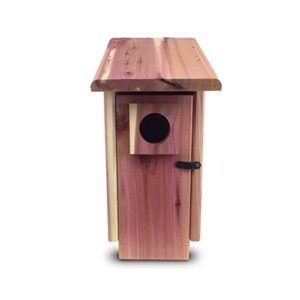
The Pennington Pride Cedar Bluebird House keeps nesting families safer than most boxes at this price point. Its built-in metal predator guard surrounds the 1.5-inch entrance hole, stopping raccoons and snakes before they get close. Constructed from Eastern red cedar, it withstands rain and humidity without warping.
A hinged front panel allows you to clean or check the nest quickly. The house comes fully assembled with mounting hardware included, ensuring easy setup.
However, you may want to swap the factory latch for something sturdier.
| Best For | Backyard birders and wildlife enthusiasts who want a durable, low-maintenance nesting box that gives Eastern Bluebirds a real fighting chance against predators. |
|---|---|
| Material | Eastern Red Cedar |
| Ventilation | Wall and floor vents |
| Clean-Out Access | Hinged front panel |
| Predator Protection | Integrated predator guard |
| Hardware | Stainless steel screws |
| Target Species | Eastern Bluebirds |
| Additional Features |
|
- Built-in predator guard around the entrance hole keeps raccoons and snakes out
- Eastern red cedar holds up to rain and humidity better than untreated wood or plastic
- Hinged front makes cleaning and nest checks quick and easy between seasons
- The factory latch is flimsy and often needs to be swapped out for a sturdier metal one
- The front door can be tricky to open fully and may need some adjustment over time
- Cedar can develop small splits in humid climates, and wood quality may vary by unit
7. Cedar Bluebird House with Predator Guard
 View On Amazon
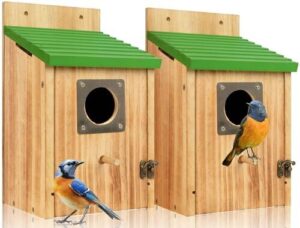
This two-pack cedar bluebird house is a solid pick for backyard birders seeking value. Each unit features a 1.5-inch entrance hole with a metal predator guard and interior grooves to aid fledglings’ safe exit. The front-opening door simplifies seasonal cleaning significantly.
Cedar’s natural oils provide inherent moisture resistance, though applying a sealcoat is advisable in rainy climates.
Assembly requires under ten minutes per house, ensuring quick setup for immediate use.
| Best For | Backyard birders and families who want an easy, affordable way to attract small birds like bluebirds, wrens, and swallows to their garden. |
|---|---|
| Material | Carbonized cedar wood |
| Ventilation | Drainage grate included |
| Clean-Out Access | Front-opening door |
| Predator Protection | Metal predator guard |
| Hardware | Pre-drilled, screwdrivers included |
| Target Species | Bluebirds, wrens, finches |
| Additional Features |
|
- You get two houses in one pack, both ready to paint or stain however you like.
- The metal predator guard and interior ladder grooves give nesting chicks a real safety boost.
- Cleaning between seasons is genuinely simple — just open the front door and you’re done.
- No mounting hardware included, so you’ll need to source your own poles or brackets.
- The latch screws on the front door can be fiddly and may need a dab of glue to stay snug.
- Cedar can warp over time in wet climates if you skip adding a protective sealcoat.
8. Whitehorse Cedar Bluebird Birdhouse
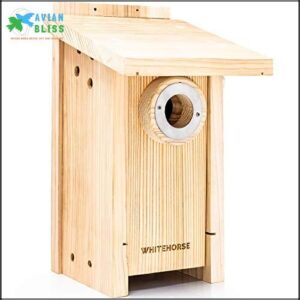
The Whitehorse Cedar Bluebird Birdhouse keeps things simple — and that’s exactly what backyard birders need. It’s built from FSC-certified western cedar, so you know it’s sourced responsibly.
The 1.5-inch entry hole comes with both a stainless-steel guard ring and a thick wooden guard, giving predators two layers to get past.
Upward-angled vents and a recessed floor handle rain and drainage well. The hinged door swings open easily for cleaning.
At $39.95, it’s solid value for a dependable, long-lasting nest box.
| Best For | Backyard birders who want a durable, low-maintenance nest box that actually keeps bluebirds, chickadees, and wrens safe from predators. |
|---|---|
| Material | 3/4-in. solid cedar |
| Ventilation | Upward-angled vent holes |
| Clean-Out Access | Bottom-hinged door |
| Predator Protection | Wooden + steel guard ring |
| Hardware | Stainless steel perforated floor |
| Target Species | Bluebirds, chickadees, wrens |
| Additional Features |
|
- Double predator protection — a wooden guard plus a stainless-steel ring around the entry hole gives nesting birds a real fighting chance.
- Easy to clean — the bottom-hinged door and removable floor make annual maintenance quick and hassle-free.
- Solid cedar construction with smart weatherproofing (angled vents, recessed floor) means it holds up through rough seasons.
- Some units show slight roof warping over time, which can make for a tricky mount if you’re not careful.
- The wooden door latch screw can loosen with repeated use, so you may need to swap it out eventually.
- Unfinished cedar needs occasional oiling or sealing in wet climates, or it won’t last as long as it should.
Weatherproof Cedar Features to Compare
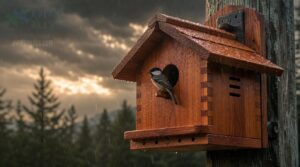
Not all cedar birdhouses handle bad weather the same way. A few key features make the difference between one that lasts a season and one that lasts a decade.
Here’s what to look for before you buy.
Untreated Cedar Durability
Cedar’s natural oil retention is one of its biggest strengths. These built-in oils resist rot, repel insects, and slow down moisture absorption — no chemical treatment needed.
The tight grain stability also means less warping after heavy rain. UV weathering gradually grays the surface, but core strength holds.
With proper ventilation and moisture permeability, untreated cedar’s longevity potential easily reaches 15 to 30 years outdoors. In fact, cedar decks lasting over 50 years have been documented with proper upkeep.
Sloped Roof Protection
A sloped roof does more than look good — it’s your first line of defense against rain damage. Most quality cedar birdhouses feature a pitched roof design with an 18–24 degree runoff gradient.
A Copper Edge Shield around the entry and an Aluminum Moisture Barrier underneath add serious weatherproofing. Pair those with a Reflective Bitumen Coat, Adjustable Drip Edge, and Flexible Roof Gasket, and your weatherproof roof design withstands heavy rain with ease.
Roof Overhang Depth
Once your pitched roof manages rain runoff, the overhang depth keeps walls truly dry. A 2–4 inch overhang pushes the drip line well clear of the cedar siding. This balance of Structural Cantilever and Aesthetic Proportion also reinforces Wind Load resistance without stressing the framing.
Material Compatibility with cedar ensures no warping.
Shade Optimization inside the cavity helps chicks stay comfortable.
Rust-resistant Fasteners
Good overhangs keep walls dry, but the screws holding everything together matter just as much. Rust-resistant hardware — like 316 Stainless or Silicon Bronze — won’t stain cedar or weaken over time. Ceramic-Coated and stainless steel screw construction both hold up well in wet climates.
Pre-drilled installation prevents splitting, and keeping galvanic compatibility in mind stops corrosion where metal meets metal.
Non-toxic Exterior Finishes
What you put on cedar matters as much as the wood itself. A Plant Oil Finish—linseed or tung—soaks in and cures without trapping moisture. Waterborne sealers and natural resin coatings stay breathable while blocking rain. Add a UV Stabilizer Additive to slow graying and a Borate Mold Inhibitor for damp climates. These nontoxic coatings, ecofriendly finishes, and low-VOC exterior products keep birds safe every season.
Cedar’s best protection comes from within — plant-oil finishes cure deep, breathe freely, and keep every nesting season safe
Ventilation, Drainage, and Moisture Control
A good birdhouse doesn’t just keep rain out and let moisture escape so its inside stays dry and fresh. Poor airflow and trapped water are two of the biggest reasons nest boxes fail early.
Here are the key design features to look for when comparing cedar birdhouses.
Raised Recessed Floors
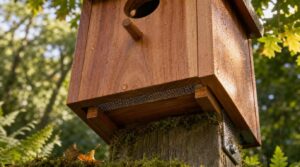
A raised recessed floor serves as the foundational layer that ensures dryness from the outset. Adjustable pedestals provide critical height flexibility to accommodate uneven surfaces, while modular panels simplify access to utilities.
The elevated mesh floor, constructed with stainless steel mesh risers, lifts structures above damp ground. This design prioritizes moisture resistance by creating a protective barrier beneath the surface.
Durability is ensured through robust materials and weatherproof coatings, which safeguard the underfloor insulation against environmental damage year-round. This dual-layer protection maintains structural integrity in all conditions.
Small Drainage Holes
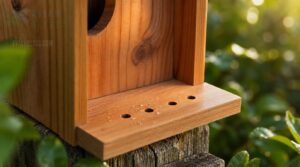
Small drainage holes are your cedar birdhouse’s quiet defense against moisture damage. Ideal hole placement near the floor’s base—using precise drilling methods with a clean 1/8 to 1/4-inch bit—keeps water moving out without losing nesting material. Clog prevention design matters too; smooth interiors resist debris buildup.
- Hole size ratio: 3–4 small holes, evenly spaced
- Inspect and clean holes seasonally with a thin wire
- Never seal holes with weather-resistant coatings
Side Wall Vents
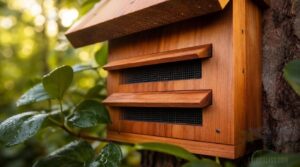
Along the sheltered side of your cedar birdhouse, side wall vents do quiet, steady work. Their vent grill materials — metal or UV-resistant plastic — hold up through wind gusts, while the rain shield design blocks water entry. Insect screen integration keeps pests out without blocking airflow.
Clearance positioning above the floor pairs with drainage holes for true ventilation and drainage. This thoughtful layout ensures moisture control and fresh air circulation within the birdhouse.
Seasonal cleaning of vent screens prevents debris buildup, maintaining optimal performance over time.
Breathable Sealants
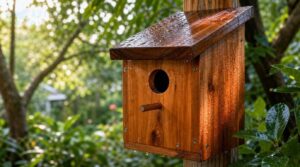
Breathable sealants protect your cedar birdhouse without trapping moisture inside the wood. A siloxane blend is a smart choice — its vapor permeability lets humidity escape while blocking rain.
Look for low-VOC exterior products with UV stability to prevent graying. These finishes maintain durability while minimizing environmental impact.
Apply at the right application temperature, follow the recoat schedule, and your weatherproof UV-resistant wood finish can last years with breathable protection.
Mold Prevention Design
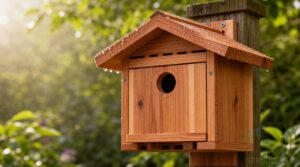
Mold starts where moisture lingers — so good design fights it before it begins. Capillary break design lifts surfaces away from pooled water, while vapor-permeable joints let trapped humidity escape naturally.
Passive drying channels guide air through the cavity, and weather-resistant coatings seal out rain without blocking breathability.
Pairing those with solid ventilation and drainage ensures your rainproof bird shelter stays clean season after season.
Predator Protection and Mounting Safety
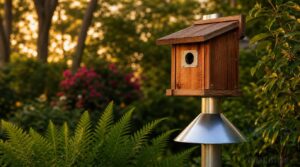
A good birdhouse isn’t just about keeping birds warm and dry — it also needs to keep them safe. Predators like squirrels, raccoons, and snakes can ruin a nesting season fast if your setup isn’t ready for them.
Here are the key protection and mounting features to look for.
Copper Entrance Guards
A copper guard does more than block predators — it works quietly in the background, day after day. Fitted with corrosion-resistant screws, it stays secure through every season. Its water-shedding edge diverts rain away from your weather-resistant cedar build.
Over time, patina development gives it a natural, earthy look — aesthetic integration at its finest.
Minimal maintenance required.
Metal Predator Plates
Think of a metal predator plate as your birdhouse’s first line of defense. Good material selection — stainless steel hardware or galvanized steel — keeps rust away for years. Proper edge geometry ensures birds pass through easily while preventing predators from prying or gnawing.
- Covers 1½-inch cedar entrances flush
- Rust-resistant hardware screws secure tightly
- Weatherproof coatings extend replacement lifespan 5–10 years
- Rounded edges protect feathers
- Mounting hardware stays tight after storms
Secure Hinged Doors
A solid cleanout door does more than just let you tidy the nest box each season.
Look for ball bearing hinges and pin retention that keep the door firmly aligned even after storms. Anti-pry features and alignment shimming stop predators from forcing entry.
Pair those with torque-controlled screws and stainless steel hardware under weather-resistant coatings, ensuring durable materials will hold up for years.
Pole Baffle Compatibility
A good hinged door keeps things tidy, but a pole baffle keeps predators out entirely.
When selecting baffles, prioritize a Pole Diameter Range of 1 to 1.25 inches and strong Clamp Adjustability for a secure fit. Opt for Universal Pole Kit designs offering Square-to-Round Fit flexibility, and always maintain a Clearance Buffer below the entrance.
The Denali Squirrel Proof Mounting Pole employs patented spring technology to stop climbers cold, ensuring robust protection.
Stable Mounting Brackets
Once baffles stop climbers. Your mounting brackets keep everything steady above them. Look for Gusset Reinforcement and a Corrosion Resistant Finish — powder-coated steel holds up from -20°F to 140°F.
Post Diameter Compatibility matters too; good brackets fit 1.0 to 3.5-inch poles. An Adjustable Angle Mount and Tool Free Adjustment simplify installation.
Solid mounting stability means your house stays put, season after season.
Cedar Bird House Care Tips
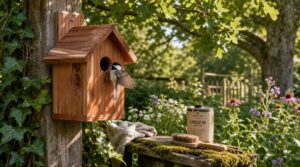
A good cedar bird house can last a decade or more — but only if you give it a little attention each season.
The care steps are simple, and most take just a few minutes. Here’s what to keep up with throughout the year.
Annual Nest Removal
Once the fledglings leave — usually late fall — it’s time for annual nest removal. Don’t skip this step: old nests harbor parasites and mold that shorten birdhouse durability.
Follow proper Sanitation Protocols: wear Protective Gear, bag the debris, and wipe the cavity clean.
Legal Compliance matters too, so check local wildlife rules before removing anything during breeding season.
Seasonal Hardware Checks
After each season, a quick hardware check can save you a lot of headaches. Screw tightening and bolt integrity checks keep the structure sound. Inspect stainless-steel and rust-resistant hardware for corrosion, and swap anything that looks worn.
Don’t forget hinge lubrication, roof seal inspection, and drainage clearing — blocked vents trap moisture quickly.
Seasonal maintenance on your mounting hardware is simple but makes a real difference.
Bird-safe Resealing
Every cedar bird house needs resealing every one to three years. Begin with a light Surface Sanding Prep to ensure proper bonding of waterproof coatings.
Use Low-VOC Sealants or low-VOC exterior products—they won’t harm birds with harsh fumes. Apply Minimal Coat Application and track Sealant Batch Tracking notes to maintain consistency.
Adhere strictly to Sealant Cure Timing before birds return to ensure safety and effectiveness.
Storm Damage Inspection
After a big storm, walk around your cedar bird house and look closely. Check for Siding Cracks, Flashing Corrosion, and Gutter Sagging — these signal moisture is getting in.
Look for Foundation Heave near mounting poles and Shingle Granule Loss on the roof.
A storm-resistant design and weatherproof roof design hold up well, but your weather-resistant cedar build still needs a quick once-over after rough weather.
Extending Outdoor Lifespan
Want your cedar birdhouse to last a decade or more? A few simple habits make all the difference.
- Seasonal Sealant Refresh — Reapply UV-resistant coatings or boiled linseed oil yearly to maintain moisture resistance.
- Regular Gap Inspection — Seal new cracks before water sneaks in.
- Wood Drying Techniques — Let cedar dry fully between seasons before resealing.
- Microclimate Placement — Position away from harsh wind exposure to protect the durable construction longer.
Frequently Asked Questions (FAQs)
Should you leave bird houses out in the winter?
Yes, leave them up. A cedar bird house becomes a winter roost—offering thermal insulation and energy conservation for birds on freezing nights. It’s shelter they’ll actually use.
How to protect a bird house from weather?
Start with a sloped roof — at least 30° pitch with a Rain Diverter Overhang.
Add UV Protective Finish, weather-resistant coatings, and moisture barrier sealant.
That’s your best defense against rain, UV, and snow.
Do I need to seal a cedar birdhouse?
Cedar is like a built-in raincoat. Its natural oils handle moisture resistance well, so sealing is optional — but a non-toxic finish adds years outdoors.
How long does a cedar birdhouse last?
A well-built cedar birdhouse lasts 10 to 15 years outdoors. Its cedar wood that resists rot and bugs is the real secret behind that impressive life expectancy.
Is cedar a good wood for bird houses?
Cedar is the ideal choice for birdhouses. Its natural oils resist rot and bugs, it offers thermal regulation year-round, and its weight advantage makes mounting easy.
Truly a low-maintenance bird habitat winner.
How do you weatherproof a wooden birdhouse?
Weatherproofing starts with a sloped roof for rainwater deflection and a 2-inch overhang. Add UV-resistant treatments and let your protective coating cure fully before birds arrive.
How often should cedar birdhouses be maintained?
Maintain your cedar birdhouse on a seasonal schedule. A Spring pre-check, Summer monitoring, Fall resealing, and Winter roost review keep it strong.
Log each visit — your maintenance log makes next year’s seasonal cleaning easy.
Can cedar birdhouses withstand extreme temperatures?
Cedar withstands extreme temperatures well, thanks to its natural thermal insulation, which buffers against heat and cold. Its inherent expansion control further enhances stability under thermal stress.
Additionally, weather-resistant coatings reinforce cedar’s climate resilience, safeguarding nestlings through temperature fluctuations, humidity swings, and snow.
What hardware works best for cedar construction?
Use 304 stainless screws, brass hinges, and weatherproof washers — they won’t rust or stain cedar. Threaded lag bolts and silicone sealant lock everything tight through storms.
How high should weatherproof birdhouses be mounted?
Mount most birdhouses five to twelve feet high. Bluebirds prefer four to six feet. Wrens do well at five to ten. Match your mounting pole height to your target species.
Conclusion
Think of your backyard birds as long-term tenants—they return season after season, trusting the shelter you’ve provided. A cedar birdhouse weatherproof enough to outlast harsh winters isn’t just a purchase; it’s a commitment to something living.
The right entrance size, solid predator guards, and smart drainage separate a house that endures from one that fails. Choose carefully once, maintain it lightly, and the birds will keep showing up.
- https://www.amishart.com/collections/medium-bird-houses?srsltid=AfmBOoqCAsxVHv6Da4dMgfG_EN285SDJ35Z25LdOYVXXNiw_AowHX-4i
- https://green-backyard.com/blogs/choose-the-right-material-for-your-birdhouse/?srsltid=AfmBOorvIimf9a-Fdy7BpeE53dqFxJ8A_1Zpm65ldqI_WORlEcTBjN4U
- https://extensionpubs.unl.edu/publication/g2002/na/html/view
- https://nestwatch.org/learn/all-about-birdhouses/features-of-a-good-birdhouse/
- https://sawmillcreek.org/threads/wood-choice-for-birdhouse.3244/