This site is supported by our readers. We may earn a commission, at no cost to you, if you purchase through links.
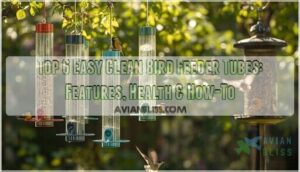
You spend hours watching finches and chickadees flock to your feeder, only to discover dark mold creeping through the seed ports a week later. A contaminated feeder doesn’t just waste birdseed—it spreads diseases like salmonellosis and conjunctivitis that can devastate local bird populations.
Traditional tube feeders with narrow openings and hard-to-reach crevices turn routine maintenance into a frustrating ordeal, which means many feeders go weeks without proper cleaning. Easy clean bird feeder tubes solve this problem with quick-release bases, removable compartments, and dishwasher-safe materials that cut cleaning time in half.
The right feeder design protects both your backyard birds and your weekends, combining thoughtful engineering with practical functionality that makes regular sanitization simple instead of exhausting.
Table Of Contents
Key Takeaways
- Easy clean bird feeder tubes with quick-release bases and removable compartments make regular cleaning fast and simple, helping you prevent diseases that threaten local bird populations.
- Smooth, non-porous, and dishwasher-safe materials resist mold and bacteria, boosting hygiene and cutting cleaning time by up to half compared to traditional feeders.
- Wide openings and modular designs let you reach every corner for thorough sanitization, lowering bird mortality rates and supporting a healthier, more diverse backyard ecosystem.
- Consistent maintenance—using proper cleaning tools and safe disinfectants—ensures your feeders stay safe year-round, turning routine care into an easy, effective habit.
Key Features of Easy Clean Bird Feeder Tubes
The right bird feeder tube makes cleaning feel less like a chore and more like a quick routine task.
When you’re choosing one, certain design features will save you time and protect the birds visiting your yard. Here’s what to look for in a feeder that won’t leave you dreading maintenance day.
Quick-Release Bases for Fast Cleaning
Quick-release bases transform bird feeder maintenance, decreasing cleaning time by 40-50% compared to traditional designs. This design efficiency encourages consistent cleaning of bird feeders, which is important for disease prevention. Here’s what makes them essential for easy-to-clean bird feeder maintenance:
- Rapid access to seed compartments without tools
- Simple twist-and-remove mechanisms
- Material design benefits using durable, non-toxic plastics
- Weather-resistant construction maintains functionality
- Thorough debris removal prevents bacterial buildup
Regular maintenance recommendations suggest biweekly cleanings become simple with a quick-release base. Regular cleaning helps to prevent bird diseases.
Removable Seed Compartments and Modular Designs
Beyond quick-release bases, removable seed compartments take cleaning efficiency to the next level. Modern tube feeders with modular designs let you disassemble every part, reducing seed contamination and simplifying maintenance by 30-40%.
You’ll support multi-species feeding with separate compartments for different seeds, and when something breaks, component replacement beats buying entirely new bird feeders. These feeders offer easy maintenance with a quick-clean base.
Market adoption has jumped 20% as backyard birders discover how easy cleaning bird feeders becomes with removable parts.
Dishwasher-Safe and Non-Porous Materials
Top-rack dishwasher safe components cut your cleaning time dramatically. UV-resistant polycarbonate and non-porous metals prevent pathogen reservoirs by blocking moisture absorption, boosting cleaning efficacy against bacteria by up to 99%. Material degradation remains minimal with proper user practices—just avoid high heat cycles.
These surfaces don’t trap mold like porous plastics, making cleaning bird feeders simple while strengthening disease prevention and bird health across your backyard.
Wide Openings and Accessible Components
Feeders with 4-inch-plus openings let you reach every corner with brushes and sponges—slashing cleaning time by 30%. Quick-release bases and snap-on parts simplify disassembly, so you’ll actually clean every 1-2 weeks as experts recommend.
That’s how the Aspects Quick Clean feeder solves real problems: accessible ports mean thorough sanitization, cutting disease outbreaks by up to 50% while keeping your maintenance routine under 10 minutes.
Smooth Surfaces to Resist Bacterial Growth
When you choose feeders with smooth, non-porous surfaces, you’re cutting bacterial adhesion by up to 70%. Rough textures create hiding spots for pathogens that resist even bleach soaking.
Polycarbonate and metal tubes outperform porous wood for disease prevention, making cleaning bird feeders far more effective. That hygienic design protects bird health while slashing your scrubbing time, keeping bacteria at bay between washes.
Health Benefits of Easy Clean Bird Feeders
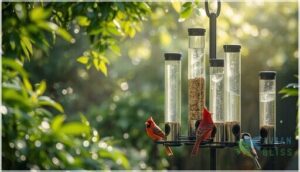
When you keep your bird feeders clean, you’re doing more than just tidying up—you’re protecting the health of every bird that visits your yard. Dirty feeders can spread diseases quickly through bird populations, but regular cleaning with the right feeder design makes prevention straightforward.
Let’s look at the specific health benefits that come from maintaining clean feeding stations.
Preventing Disease Transmission Among Birds
When you skip regular cleaning of bird feeders, you’re basically setting up a disease hotspot. Salmonella thrives on contaminated surfaces, while conjunctivitis spreads rapidly among finches at crowded feeding stations.
Easy-to-clean designs let you dismantle, sanitize, and reassemble quickly—cutting disease prevention down to a simple routine. Bird health depends on feeder sanitation, and proper bird hygiene protects the wildlife conservation efforts in your own backyard.
Reducing Mold and Bacteria Growth
Moisture from rain or humidity turns your feeder into a breeding ground for mold and bacteria. Easy to clean designs with smooth, non-porous Feeder Material help you prevent this.
When cleaning bird feeders, scrub with warm soapy water, then soak in diluted Cleaning Solutions—1 part bleach to 9 parts water works wonders. Thorough Drying Techniques and smart Seed Storage keep disease prevention on track.
Supporting a Healthy and Diverse Bird Population
When you maintain easy to clean bird feeders, you’re doing more than backyard birding—you’re joining a conservation movement. Disease prevention protects the 196 million birds relying on winter feeders across North America.
Maintaining easy-to-clean bird feeders protects 196 million birds relying on winter feeders and turns backyard birding into conservation action
Pair your feeder with Native Plants for true Habitat Integration, creating spaces where diverse species thrive. This Conservation Impact reshapes Population Trends, supporting bird health when natural food runs scarce.
Lowering Bird Mortality Rates Linked to Feeders
Poor feeder maintenance sits at the heart of preventable bird deaths—something hygiene best practices can reverse. Disease outbreak prevention through regular cleaning solution efficacy dramatically reduces mortality:
- Cut disease transmission risk by 99% with proper feeder design impacts
- Lower death rates by 35% through consistent easy to clean maintenance routines
- Prevent summer outbreak spikes affecting juveniles at backyard bird feeders
- Eliminate bacterial hotspots that compromise bird health
- Support public awareness campaigns teaching neighbors disease prevention techniques
Your feeder maintenance choices directly save lives.
How to Clean Bird Feeder Tubes Step-by-Step
Keeping your bird feeder clean doesn’t have to feel like a chore if you follow the right steps. A thorough cleaning routine protects the birds that visit your yard and keeps your feeder working at its best.
Here’s how to tackle each stage of the process, from gathering your supplies to putting everything back together.
Gathering The Right Cleaning Supplies
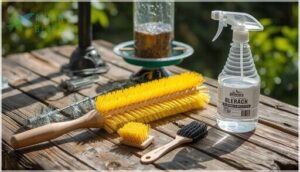
You can’t tackle feeder maintenance without the right cleaning supplies in hand. Start with a 16-inch bottle brush to reach deep inside tubes, plus small detail brushes for ports and perches.
Grab a bleach-based disinfectant for outdoor cleaning—one part bleach to nine parts water kills harmful bacteria effectively.
Multi-brush kits simplify the steps while addressing market trends toward complete feeder care.
Disassembling and Emptying The Feeder
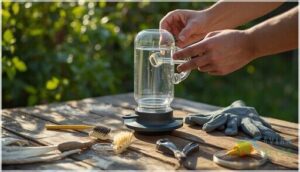
With your cleaning supplies ready, it’s time to break down the feeder. Most easy-clean models feature quick-release bases that twist or pop off
Scrubbing and Soaking Components
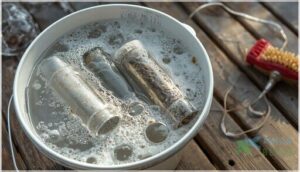
Once you’ve taken apart your feeder, fill a bucket with hot, soapy water and let all the components soak for 10 to 15 minutes—this helps loosen debris and grime and softens organic buildup that harbors bacteria.
While they’re soaking, grab a long-handle brush with nylon bristles to scrub the tube’s interior, paying close attention to seed ports and perches where grime loves to hide.
Sanitizing With Safe Cleaning Solutions

After scrubbing, you’ll want to sanitize with a bleach solution—mix one part bleach with nine parts water, then soak all components for at least 10 minutes to kill Salmonella and bacteria effectively. If you prefer natural alternatives, white vinegar works too, though you’ll need to soak for a full hour. Either way, thorough sanitizing is your best tool for disease prevention.
Safe sanitizing options include:
- Bleach solution ratios at 1:9 for quick, effective disinfection
- Vinegar soaking times of 60 minutes for non-toxic cleaning
- Hydrogen peroxide as a residue-free alternative
- Mild dish soaps combined with your chosen disinfectant
Proper Drying and Reassembly

Once sanitizing is complete, allow all parts to air dry completely—at least four to six hours in direct sunlight works best. Sunlight benefits you twice: faster drying time and natural UV pathogen reduction. Never reassemble while damp, as trapped moisture invites mold and bacteria growth despite your cleaning efforts.
Seasonal variance matters too; humid conditions require extended drying for proper reassembly hygiene and effective disease prevention in your feeder maintenance routine.
How Often to Clean Bird Feeder Tubes
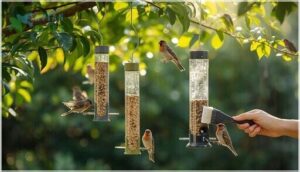
Keeping your feeder clean isn’t a one-size-fits-all task—different feeder types and conditions call for different schedules. You’ll want to adjust your cleaning routine based on what you’re feeding, the weather in your area, and whether any local birds show signs of illness.
Let’s break down the timing that keeps your backyard visitors healthy and your feeders in top shape.
Recommended Cleaning Frequency for Seed and Nectar Feeders
Your seed feeders need a good scrub every two weeks to prevent disease and seed contamination, while nectar feeders demand more attention—change that sugar water every three to five days to avoid deadly nectar spoilage and Aspergillus growth.
Hot weather speeds up bacterial buildup, so you’ll want to increase cleaning schedules to weekly for seed feeders and every one to three days for hummingbird feeders to protect bird health.
Signs Your Feeder Needs Immediate Cleaning
You’ll know it’s time to clean when you spot fuzzy mold patches, clumped seed, or bird droppings piling up around the ports. Wet seed is a red flag for bacteria and Salmonella growth, threatening bird health directly.
Watch for changes in bird behavior too—if your feathered visitors suddenly avoid the feeder, seed spoilage or disease contamination is likely the culprit.
Best Practices During Disease Outbreaks
During disease outbreaks, you’ll need to step up your feeder sanitizing routine to every few days—especially if you’re seeing salmonella symptoms like lethargy in local birds. Temporarily closing your feeding station for 24 hours interrupts transmission cycles, a proven outbreak response that aids wildlife safety.
Rotate feeder locations by at least 20 feet every few months to prevent contamination buildup and maintain bird hygiene.
Top 6 Easy Clean Bird Feeder Tubes and Accessories
Now that you know how to maintain your feeders properly, it’s time to choose the right equipment that actually makes cleaning easier.
The following products combine smart design features with practical cleaning tools to help you keep your bird feeders safe and hygienic.
Each option meets a specific need, whether you’re looking for a feeder with quick-release parts or the right brushes and solutions to get the job done thoroughly.
1. Easy Clean Bird Seed Feeder
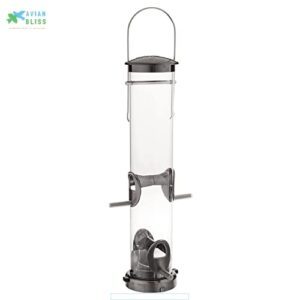
You’ll appreciate the Aspects Quick Clean Bird Seed Feeder for its clever quick release base that pops off in seconds, making maintenance a breeze.
This 1.25-quart tube feeder combines durable polycarbonate with die-cast metal, featuring four feeding stations that attract cardinals, finches, and chickadees. The built-in seed deflector prevents waste, while smooth surfaces resist bacterial buildup.
Compatible with sunflower and mixed seed types, it’s easy to clean with standard cleaning supplies. Place it near shrubs for prime bird attraction, and you’ll enjoy trouble-free feeder maintenance season after season.
Best For: Backyard birders who want a low-maintenance feeder that’s quick to clean and built to last, especially if you’re feeding smaller songbirds like finches and chickadees.
- Quick-release base makes cleaning incredibly fast—just press two buttons and you’re done, no tools needed.
- Solid construction with UV-resistant polycarbonate and die-cast metal that comes with a lifetime guarantee against wildlife damage.
- Four feeding ports with built-in seed deflector means less waste and more birds can feed at once without crowding.
- Pricier than basic tube feeders, so it’s more of an investment upfront.
- Won’t stop determined grackles or larger birds from taking over the feeder.
- Some parts like perch covers can wear down over time and may need replacing, though the main structure holds up well.
2. Gray Bunny Metal Wild Bird Feeder
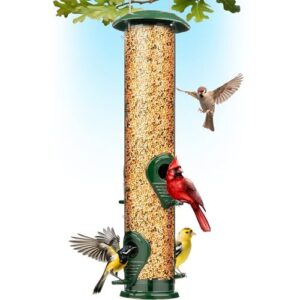
If squirrels have been raiding your bird feeders, the Gray Bunny Metal Wild Bird Feeder offers a practical solution. Its premium steel cage construction provides squirrel deterrence while remaining easy to clean—no fragile plastic parts to navigate.
The chew-proof metal design holds 2.5 cups of seed and attracts finches, chickadees, and nuthatches through four well-spaced feeding ports. You’ll find this tube feeder simple to maintain with standard cleaning supplies, and customer satisfaction ratings consistently hover around 4.0 stars.
The rust-resistant finish ensures durability, making it a reliable choice for your bird feeder selection.
Best For: Bird enthusiasts looking for a durable, low-maintenance feeder that keeps squirrels and larger birds away while attracting finches, chickadees, and other small songbirds.
- Heavy-duty steel cage construction is chew-proof and rust-resistant, built to last for years even in harsh weather conditions.
- Four feeding ports let multiple birds eat at once, and the clear housing makes it easy to see when you need to refill the 2.5-cup seed capacity.
- Effective squirrel deterrent design keeps pests out while allowing small songbirds through, reducing seed waste and protecting your feeder investment.
- Some users report that determined squirrels can still access the feeder despite the protective cage, requiring additional deterrent measures.
- Rust may develop on the underside of the lid and base over time, particularly in rainy or coastal environments.
- Seed debris can get trapped between the plastic cylinder and base, making thorough cleaning more challenging than expected.
3. Jealoeur Hanging Bird Feeder for Outdoors
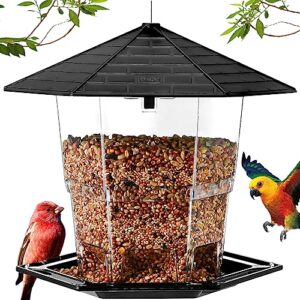
You don’t need to compromise feeder durability for easy maintenance. The Jealoeur Hanging Bird Feeder combines sturdy plastic construction with a unique latch system that simplifies access for filling and cleaning—no wrestling with stubborn lids.
Its 2.2-pound seed capacity and hexagonal rain-proof roof attract backyard birds like chickadees and sparrows while protecting seed quality. The 360-degree perch allows multiple birds to feed simultaneously, and you’ll find this tube feeder easy to clean with standard cleaning supplies, making feeder maintenance straightforward for any outdoor placement.
Best For: Backyard birders who want a low-maintenance feeder that’s easy to refill and clean while keeping seed dry and attracting smaller birds like chickadees and sparrows.
- The unique latch system and retractable design make filling and cleaning genuinely hassle-free compared to feeders with stuck or complicated lids.
- Holds 2.2 pounds of seed with a hexagonal rain-proof roof that keeps seed dry and fresh, reducing waste and mold risks.
- The 360-degree perch lets multiple birds feed at once, and the squirrel-proof, weather-resistant build holds up well outdoors.
- The feeder is on the smaller side and won’t accommodate larger birds like Northern Cardinals.
- Some users report the seed capacity runs out faster than expected, especially with active bird traffic.
- Certain seed types, particularly smaller or lighter varieties like alpiste, may not dispense reliably or may spill from the tray.
4. OXO Good Grips Bottle Brush
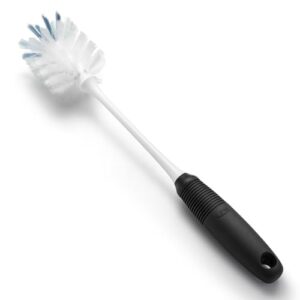
Proper feeder sanitation starts with the right cleaning tools. The OXO Good Grips Bottle Brush features a flexible neck that reaches deep inside narrow tube feeders, making bird health maintenance easier.
You’ll appreciate the dual-action bristles—stiff ones tackle dried seed residue while softer sides protect delicate surfaces. Its 12.5-inch length manages most tube designs efficiently, and the non-slip grip stays comfortable during extended cleaning sessions.
Since it’s dishwasher safe, maintaining brush hygiene between uses becomes uncomplicated, supporting better bird feeder selection for long-term bird feeders care.
Best For: Bird enthusiasts who need to maintain tube feeders regularly and want a durable brush that reaches deep into narrow spaces without damaging delicate surfaces.
- Flexible neck and 12.5-inch length make it easy to reach deep inside narrow tube feeders and remove stubborn dried seed buildup
- Dual-action bristles handle both tough scrubbing and gentle cleaning, protecting plastic and metal feeders from scratches
- Dishwasher safe design with replaceable brush head makes it easy to maintain hygiene and extends the product’s lifespan
- May require some force to fit into extremely narrow-necked bottles or very tight feeder openings
- Limited length might not work well for exceptionally tall bottles or containers beyond standard tube feeders
- Some users feel a narrower version would improve performance for the smallest feeder tube diameters
5. OXO Good Grips Deep Clean Brushes
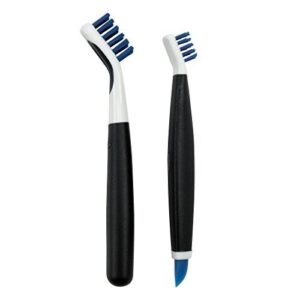
While bottle brushes handle tube interiors, feeder ports and perches demand specialized attention. The OXO Good Grips Deep Clean Brushes set offers exactly that with two targeted tools for bird feeders maintenance.
Its small brush features tapering nylon bristles that penetrate tight crevice cleaning zones where seed buildup invites bacteria, while handle ergonomics reduce hand fatigue during thorough scrubbing sessions.
Both brushes are dishwasher safe, ensuring bristle durability between uses. This cleaning versatility makes addressing hard-to-reach areas on tube feeders straightforward, supporting better bird feeding hygiene without requiring excessive effort.
Best For: Bird feeder owners who need to clean tight spaces like perches, ports, and crevices where seed buildup and bacteria collect.
- Small brush with tapering bristles reaches into narrow gaps and corners that standard brushes can’t access, making it perfect for feeder ports and perches.
- Comfortable non-slip grips reduce hand strain during longer cleaning sessions, especially helpful if you’re maintaining multiple feeders.
- Dishwasher safe construction keeps the brushes hygienic and maintains bristle effectiveness over time without extra effort.
- Priced higher than basic scrub brushes, which might feel like a lot if you only need it occasionally for feeder cleaning.
- The small brush may wear out faster than the large one with frequent use, based on customer replacement patterns.
- Not specifically designed for bird feeders, so some feeder-specific angles or shapes might still be awkward to reach.
6. Clorox Splash Less Bleach Clean Linen
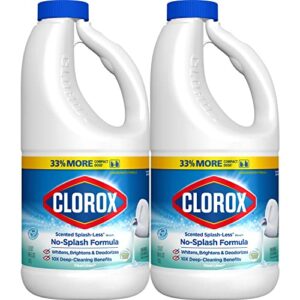
After scrubbing your tube feeders, proper sanitization becomes the final defense against disease prevention and control. Clorox Splash Less Bleach Clean Linen delivers effective cleaning with a 3-7% bleach concentration that kills 99.9% of viruses and bacteria on hard surfaces. Its thicker formula minimizes spills while the scent impact leaves a fresh linen fragrance.
You’ll find excellent surface compatibility for bird feeders when diluting ½ cup per gallon of water. Beyond easy-to-clean tube feeders maintenance, this bleach also works for laundry applications.
Remember safety precautions: rinse eyes immediately if exposed and wear gloves during use.
Best For: Bird feeder owners who want a reliable disinfectant that kills 99.9% of germs while being easier to handle with its splash-resistant formula and pleasant clean linen scent.
- Thicker, controlled-pour formula reduces messy spills and splashes during dilution, making it safer and easier to use for sanitizing feeders.
- Kills 99.9% of viruses and bacteria with a proven 3-7% sodium hypochlorite concentration, ensuring thorough disinfection of hard surfaces.
- Fresh linen scent provides a more pleasant cleaning experience compared to harsh bleach odors, and the formula works effectively even in cold water.
- Smaller 40-ounce bottle size means you’ll need to restock more frequently if you’re sanitizing multiple feeders or cleaning regularly.
- Can cause eye and skin irritation with direct contact, so gloves and careful handling are necessary during the dilution and cleaning process.
- Environmental impact hasn’t been fully studied, and proper disposal according to local regulations is required to minimize potential harm.
Frequently Asked Questions (FAQs)
How do weather conditions affect feeder placement?
Weather greatly influences your bird feeders’ effectiveness. Rain and snow can waterlog seeds, while temperature effects and wind exposure impact food quality. Strategic microclimate placement near natural windbreaks keeps backyard birds comfortable year-round.
What seed types work best in tube feeders?
Black oil sunflower seeds are your golden ticket to attracting diverse bird populations. Their high fat content and thin shells satisfy cardinals, chickadees, and finches while minimizing waste beneath your feeder.
Can tube feeders be mounted on poles or trees?
You can mount tube feeders on poles using wrought iron arms or hang them from trees with steel cables. Pole mounting offers better stability and squirrel protection, while tree mounting provides flexible placement for backyard birding enthusiasts.
How do you prevent squirrels from damaging feeders?
Regarding squirrel shenanigans, think outside the cage. Squirrel-proof cages, clever feeder placement, seed repellents, and dome baffles offer effective wildlife control methods.
These strategies reduce economic impact and keep your feeders squirrel proof for easy animal control.
Conclusion
Clean faster, protect better, and enjoy longer—easy clean bird feeder tubes transform routine care into a simple, satisfying ritual. Each thoughtful feature means less time scrubbing and more time watching vibrant flocks thrive in your backyard.
When you choose smart designs, you’re not just feeding birds; you’re safeguarding their health and your peace of mind. Let every refill and rinse become part of a cycle that nurtures both wildlife and your connection to the natural world.