This site is supported by our readers. We may earn a commission, at no cost to you, if you purchase through links.

Most bird owners tackle cage cleaning the same way they do everything else—by doing it more often than they’d like. A quick sweep of droppings here, a spot clean there, and before you know it, you’re spending half your weekend maintaining your bird’s home instead of enjoying their company.
The truth is, the right cage liner can transform this chore from a frustrating routine into something that takes minutes instead of hours. When you choose a liner that actually absorbs moisture, controls odor, and doesn’t tear or shift around, you’re not just cleaning easier—you’re creating a healthier environment for your bird.
The difference between a cheap, flimsy liner and one designed for real-world use is night and day, and finding the best easy-to-clean bird cage liners means you can focus on what matters: your feathered friend.
Table Of Contents
Key Takeaways
- The right bird cage liner transforms cage cleaning from a time-consuming chore into a quick task by absorbing moisture, controlling odor, and staying intact without shifting or tearing during daily use.
- Paper-based liners offer the safest choice for birds’ delicate respiratory systems since they’re non-toxic and dust-free, while aromatic woods like cedar and corn cob substrates can release harmful compounds or harbor dangerous fungal contamination.
- Disposable paper liners provide the simplest daily maintenance at around $0.08–$0.34 per sheet, but reusable washable liners deliver better long-term value by cutting annual costs to $40–$60 through repeated washing over 1–3 years.
- Daily liner changes prevent ammonia buildup and allow you to monitor your bird’s droppings for early health warning signs, making frequent replacement essential for both hygiene and your bird’s wellbeing.
Factors to Consider for Easy-to-Clean Bird Cage Liners
Not all bird cage liners are created equal, and picking the right one can make a real difference in how easy it is to keep your bird’s home clean. Whether you’re dealing with a small parakeet’s cage or a large parrot’s setup, there are a few key things you’ll want to think about before making your choice.
Let’s look at what matters most when you’re shopping for a liner that’ll actually make your life easier.
Size Compatibility and Customization
Getting the right fit matters more than you’d think. Standard liners come in pre-cut dimensions like 15×11 inches and 20×18 inches, but your cage might need something custom. That’s why many suppliers offer trim-to-fit options and roll formats you can cut to match your exact cage size. Multi-size packs give you flexibility for different bird spaces.
Precise size compatibility ensures liners stay flat without gaps where droppings escape—keeping cleanup genuinely simple. For best hygiene, consider using disposable cage liners designed for easy removal.
Absorbency Level and Odor Control
While size keeps droppings contained, what really stops odors from taking over your home is how well liners absorb moisture. Look for these three absorbency features:
- High moisture retention prevents ammonia buildup—research shows quality liners maintain safe odor levels for 11-14 days versus aspen bedding’s 7 days
- Microbial growth prevention through enhanced absorption reduces odor-producing bacteria in damp material
- VOC reduction from quality substrates versus aromatic woods keeps your air fresher longer
Your bird’s respiratory health depends on this choice. Regular replacement of cage accessories is also essential for maintaining hygiene.
Material Durability and Tear Resistance
Beyond absorption, the liner itself needs to withstand your bird’s daily wear and tear. Paper basis weight matters—higher-weight papers resist shredding better when your bird scratches and moves around. Poly-coated options add a moisture barrier that keeps fibers strong even when wet.
Nonwoven fabric liners offer enhanced tear resistance through multiple wash cycles. Thicker materials handle tray insertion without ripping, while lower-friction backings prevent catching on cage edges. Pick durability that matches your bird’s activity level.
Ease of Replacement and Disposal
Once you’ve got a durable liner in place, the real payoff comes at cleanup time. Here’s what makes replacement genuinely easy: quick daily changes take just minutes, and disposable options mean no scrubbing. Your waste volume stays light when you’re removing thin sheets rather than heavy substrates. Consider these factors:
- Precut sheets that pull out in one piece
- Minimal handling time per cage
- Lightweight disposal reducing trash bulk
- Weekly deep cleans preventing bacterial buildup
- Layered systems allowing daily top-sheet removal
This routine keeps your bird’s environment fresh without becoming a chore.
Safety and Non-Toxic Materials
Your bird’s respiratory system is remarkably sensitive to airborne chemicals and dust, making material safety non-negotiable. Plain paper liners work best—they’re nontoxic and low-dust. Avoid aromatic woods like cedar, which release harmful compounds, and steer clear of corn cobs that harbor fungal contamination.
Plain paper liners protect your bird’s delicate respiratory system from toxic chemicals and dust that aromatic woods and contaminated substrates release
Look for biodegradable options explicitly labeled bird-safe and free from dyes or fragrances. Hypoallergenic, uncoated paper protects your bird’s delicate lungs while supporting long-term health.
Types of Bird Cage Liners for Simple Cleanup
Not all bird cage liners are created equal, and choosing the right one makes a real difference in how easy cleanup becomes. Different materials and designs offer different benefits, from quick disposal to long-term reusability.
Let’s look at the main types available so you can find what works best for your bird and your routine.
Disposable Paper Liners

Disposable paper liners are the simplest way to keep your bird’s home clean. These lead-free sheets absorb droppings and control odors effectively, making daily maintenance straightforward.
You’ll appreciate their cost effectiveness and convenience—just roll them out, replace them daily, and toss the used ones.
Since they’re fully biodegradable, you’re making an environmentally responsible choice while giving your bird a hygienic, healthy cage environment.
Gravel and Grit-Coated Liners
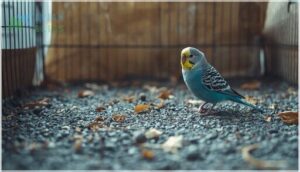
While gravel and grit-coated liners remain common in pet stores, contemporary avian professionals strongly discourage them. These products pose serious risks:
- Impaction risks – insoluble grit accumulates in your bird’s gizzard, potentially causing fatal blockages
- Foot health concerns – abrasive surfaces create chronic irritation comparable to walking barefoot on rough gravel
- Dropping monitoring challenges – textured surfaces hide fecal changes that signal illness
Professional advice consistently recommends flat paper instead for your bird’s safety.
Absorbent Pad Liners
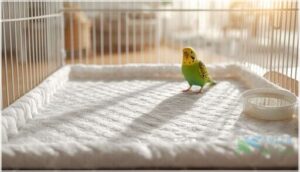
Think of absorbent pad liners as the heavy-duty workhorses of cage maintenance. These multi-layer systems use SAP technology to lock in moisture and control ammonia odors between cleanings, keeping your bird’s environment healthier longer. The leak-proof design protects your furniture while soft quilted tops guarantee comfort. You’ll appreciate how simple disposal is—just fold and toss. Most last 48 hours before replacement, making daily hygiene manageable.
| Feature | Benefit |
|---|---|
| SAP Core | Absorbs up to 5 cups liquid |
| Leak-Proof Backing | Protects cage trays |
| Quilted Top | Soft, comfortable surface |
| Odor Mitigation | Reduces ammonia buildup |
| Easy Disposal | Fold, discard, replace |
Biodegradable and Eco-Friendly Options
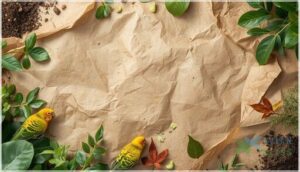
If sustainability matters to you, biodegradable liners break down in weeks rather than years, keeping landfills cleaner. These composting liners eliminate plastic coatings that trap waste for decades.
Kraft paper options, sourced from recycled materials, reduce your carbon footprint while protecting your bird’s delicate respiratory system.
You’re choosing material safety alongside environmental responsibility—your bird gets a healthier cage, and the planet benefits from reduced waste.
Reusable and Washable Liners
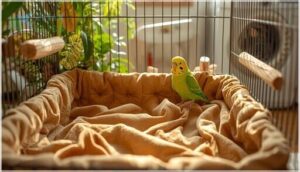
If you’re tired of constant replacements, reusable washable liners offer genuine convenience. These multi-layer fabrics absorb moisture rapidly—up to 20 times faster than standard materials—while waterproof backing keeps your tray dry.
Machine wash every 3–7 days depending on soiling levels. Quality liners last roughly 1–3 years under weekly washing. They excel at odor control and material safety, containing zero PFOS, PFOA, or BPA.
Your cage cleaning becomes simpler, your wallet lighter.
Top 5 Easy-to-Clean Bird Cage Liners
Now that you know what to look for, let’s check out five liners that stand out for their ease of use and reliability. These options have earned their reputation for keeping cleanup simple and your bird’s home fresh.
Below, you’ll find what makes each one worth considering for your cage.
1. S and X Bird Cage Liners
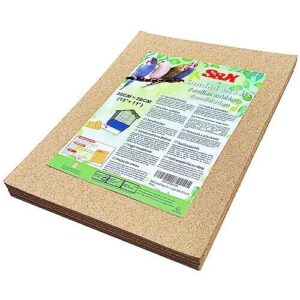
S and X Bird Cage Liners deliver easy cleanup with 30 pre-cut gravel paper sheets measuring 15″ x 11″. The thick kraft backing resists tears, so you can lift out soiled liners in seconds without mess.
The gritty surface naturally helps trim your bird’s nails and beak during normal activity. You’ll appreciate dropping visibility for health monitoring, while the bonded grit reduces dust compared to loose bedding.
At one sheet daily, a 30-pack lasts a month—perfect for maintaining a hygienic cage environment effortlessly.
Best For: Bird owners who want quick daily cage maintenance without fuss and prefer a hygienic, disposable solution that keeps their small to medium-sized birds in a clean environment.
- Thick kraft backing tears resistant and lifts out cleanly in seconds, making daily cage cleaning fast and mess-free
- Gritty surface naturally helps trim nails and beaks while keeping droppings visible for health monitoring
- 30-pack lasts about a month with daily replacement, offering good value and convenience for regular cage upkeep
- Limited absorption compared to pad liners, so you’ll need daily replacement to control moisture and odor, especially in humid conditions
- Pre-cut size may be too large for some smaller cages and requires trimming to fit properly
- Grit surface shouldn’t be your bird’s main source of ingested grit—persistent pecking can lead to crop or gizzard impaction if not monitored
2. Vitakraft Bird Cage Absorbent Liners
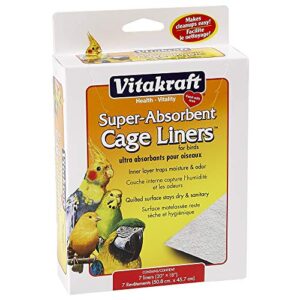
If you want maximum absorbency without the grit, Vitakraft Bird Cage Absorbent Liners offer a different approach. These disposable sheets feature a quilted top layer with a leak-proof backing that keeps your cage tray dry between cleanings.
The super-absorbent core manages moisture and odor control effectively, meaning you can go longer between full cage cleanings. Pre-cut to 20″ x 18″, they fit most standard cages, though larger enclosures may need trimming.
At roughly $2.28 per liner, they’re convenient for busy bird owners prioritizing quick cleanup over natural claw maintenance.
Best For: Bird owners with small to medium cages who want a hassle-free cleaning solution and don’t mind disposable products.
- Super-absorbent design keeps cage trays dry and reduces odors, cutting down on how often you need to do deep cleanings
- Disposable sheets mean no washing or drying—just fold and toss, saving time compared to reusable liners
- Pre-cut 20″ x 18″ size fits most standard cages, making setup quick and straightforward
- At about $2.28 per liner, the ongoing cost adds up fast if you’re changing them daily across multiple cages
- Some birds will peck at or shred the liners, creating ingestion risks and reducing how long they actually last
- Sizing doesn’t work well for larger cages, and reports of durability issues mean they can tear easily during removal or with active birds
3. Precut Bird Cage Liner Papers
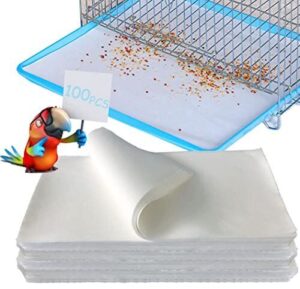
If you’d rather skip the grit altogether, precut bird cage liner papers offer straightforward convenience. These disposable sheets come in standardized sizes—usually 11″ x 20″ or smaller rounds—so they fit most cages without fussing with scissors.
Made from non-woven fabric or kraft paper, they’re highly absorbent and leak-proof, keeping your tray dry. You simply lift out the soiled sheet and replace it with a fresh one.
Packs of 100 sheets run affordably, making daily swaps practical. They’re plain and safe, with no inks or chemicals that could harm your bird’s respiratory system.
Best For: Bird owners who want hassle-free, daily cage maintenance without dealing with loose substrates or complicated setup.
- Quick and easy to use—just lift out the dirty sheet and pop in a fresh one, saving time on cage cleaning.
- Highly absorbent and leak-proof design keeps the cage tray dry and reduces odor buildup naturally.
- Safe for birds with no added inks, chemicals, or fragrances that could irritate respiratory systems.
- Some users report the liners feel thin or flimsy, and they may tear if birds chew aggressively at them.
- Size consistency can be hit-or-miss—some people receive liners smaller than advertised, requiring multiple sheets for larger cages.
- May not work well for very large cages without overlapping multiple liners, which adds up in cost and waste over time.
4. MUXHEL Bird Cage Gravel Liner Paper
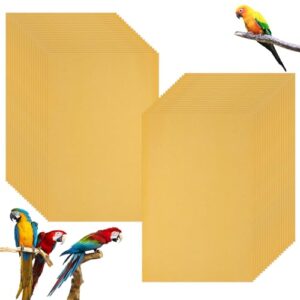
Now, if you want the benefits of grit without worrying about loose particles, MUXHEL bird cage gravel liner paper delivers a solid middle ground. These pre-cut sheets combine natural quartz grit bonded to paper backing, offering a dual benefit: dropping visibility on the fresh surface and a gentle claw trimming aid as your small bird moves around.
Each 11″ x 17″ sheet comes in packs of 50, making daily swaps affordable and straightforward. The quartz grit quality stays firmly adhered, and the paper backing ensures safe, non-toxic contact for your feathered friend.
Best For: Bird owners with small caged birds like parrots and canaries who want an easy, hygienic cage liner that also helps keep their bird’s claws trimmed without dealing with loose grit particles.
- Pre-cut 11″ x 17″ sheets make daily cage cleaning quick and simple—just swap out the soiled liner and you’re done.
- Natural quartz grit stays bonded to the paper backing, so you get gentle claw trimming without loose particles getting everywhere.
- Comes in packs of 50 at a reasonable price, so daily replacements are affordable and you can easily monitor your bird’s droppings on fresh sheets.
- The grit coating might irritate sensitive bird feet with prolonged contact, and experts caution that birds may accidentally ingest contaminated grit particles from the floor.
- These liners don’t fit all cage sizes—non-rectangular or larger cages may need cutting or multiple sheets, limiting their convenience.
- You’re generating more waste than you would with reusable liners, and the sheets offer limited odor or moisture control compared to more absorbent paper substrates.
5. Okllen Bird Cage Gravel Liner Paper
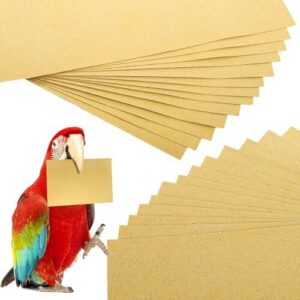
Okllen bird cage gravel liner paper hits a sweet spot for bird owners who want simplicity without compromise. These 11″ x 17″ sheets combine kraft paper with natural quartz grit, giving you dropping visibility and gentle claw trimming in one product.
The 50-pack means you’ve got plenty for regular swaps, and the market reception speaks volumes—nearly 4.9 out of 5 stars from over 1,200 reviews.
You can customize the size to fit your cage, and the safe ingestion properties mean your bird stays protected. It’s affordable, effective cleanup.
Best For: Bird owners who want a hassle-free, hygienic cage maintenance solution that works for small to medium-sized cages and supports their birds’ natural grit intake.
- Easy to customize to your cage size and swap out daily, keeping your bird’s environment clean with minimal fuss
- Natural quartz grit helps with digestion and gently trims claws, doubling as both a health aid and grooming tool
- Affordable and highly rated (nearly 4.9 out of 5 stars from over 1,200 reviews), so you’re backed by real user experience
- Some birds find the paper too hard, so it may not work well for all species or individual preferences
- Requires regular replacement to maintain hygiene, which means ongoing purchases and waste
- The thick kraft paper can be difficult to cut precisely, and may not fit every cage tray perfectly without trimming effort
Maintenance Tips for Bird Cage Liners
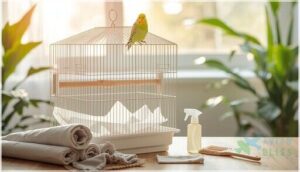
Keeping your bird cage fresh doesn’t have to be complicated, but it does require a solid routine. Small changes to how you replace and maintain your liners can make a huge difference in keeping your feathered friend healthy and your cleaning duties manageable.
Let’s walk through the practical steps that’ll keep things running smoothly.
How Often to Replace Liners
Your bird’s health depends on clean cage papers. Change liners daily to catch early signs of illness through dropping inspection. Larger parrots or multiple birds often need twice-daily replacements due to increased waste. Wet foods and humid conditions demand more frequent changes to prevent mold growth.
Weekly deep cleaning removes all layers and disinfects surfaces. This easy cage cleaning routine keeps your bird safe and healthy while making maintenance manageable.
Measuring and Fitting Liners Correctly
Getting the right fit matters more than you’d think. Measure your cage’s internal tray dimensions—not the outer frame—rounding down to prevent buckling. For round cages, use a flexible tape to measure diameter carefully, as small errors multiply around the circumference.
Here’s your measuring checklist:
- Measure internal tray length and width in centimeters
- Round down to nearest 0.5 cm for snug fit
- Account for tapered walls that reduce floor contact
- Record dimensions in both inches and centimeters to avoid conversion errors
- Verify measurements twice before ordering precut or custom cage liners
Standard sizes come in 2.5–5 cm increments, so compare your measurements against size charts. When your tray doesn’t match any standard option, custom cage liners cut to exact specifications eliminate trimming hassle and waste during routine changes.
Preventing Odor and Moisture Build-Up
Daily liner changes work better than you’d expect for controlling odor. Your bird’s droppings and urine convert to ammonia quickly—especially in humid conditions—so replacing liners every day stops moisture from building up and keeps ammonia levels low.
Pair frequent changes with adequate ventilation and mild cleaning agents like diluted vinegar. This simple routine prevents the musty smell that signals excess moisture, keeping your bird’s environment fresh and healthy.
Choosing Liners for Bird Health and Hygiene
Your bird’s respiratory system is delicate, so skip liners with inks, dyes, or coatings—plain paper works best. Uncoated materials prevent toxic chemical exposure while letting you monitor droppings easily for health changes.
Choose liners with antimicrobial properties to reduce bacterial growth by over 40%. High-absorbency options control moisture that triggers ammonia buildup.
Daily replacements combined with safe, absorbent materials create the hygiene practices your bird needs to thrive.
Frequently Asked Questions (FAQs)
Whats the cost difference between disposable and reusable liners?
Upfront costs for disposable liners run $08–$34 per sheet, totaling roughly $73–$180 yearly. Reusable options cost $15–$40 each but deliver long-term savings, lowering annual expenses to about $40–$60 through washing and reuse.
Are there specific liners recommended for birds with respiratory sensitivities?
If your bird has delicate lungs, you’ll want dust-free liners made from plain paper or hypoallergenic options. These safe materials protect respiratory systems while maintaining a hygienic environment when changed daily.
Conclusion
You might think switching liners means adding another expense to your routine, but the right easy-to-clean bird cage liners actually save you money by lasting longer and cutting cleanup time in half.
When you’re not constantly scrubbing or replacing torn liners, you’re investing in your bird’s health and your own peace of mind.
Choose a liner that works as hard as you do, and watch the difference it makes in your daily care routine.
- https://prevuepet.com/product/358/t3-bird-cage-liner-box-18035
- https://forums.avianavenue.com/index.php?threads%2Fcage-liners.227343%2F
- https://haiths.com/blogs/cage-and-aviary/hygiene-for-cage-aviary-birds
- https://www.youtube.com/watch?v=qRpXMRRLbKA
- https://birdsupplies.com/blogs/news/bird-safe-cleaning-supplies-what-owners-need-to-know