This site is supported by our readers. We may earn a commission, at no cost to you, if you purchase through links.
You’ve probably seen it happen: a chickadee lands on your feeder, grabs a seed, then wipes its beak on the perch—right where moldy debris has been collecting for weeks. That’s not just unappetizing; it’s dangerous. Studies show that dirty feeders can reduce local bird populations by spreading diseases like salmonellosis and aspergillosis, which kill thousands of backyard birds each year.
The good news? Easy-to-clean bird feeders can cut your maintenance time in half while keeping your feathered visitors healthier. Models with quick-release bases, dishwasher-safe parts, and wide openings make the whole process less of a chore—so you can actually stick to a regular cleaning schedule instead of dreading it.
Table Of Contents
Key Takeaways
- Dirty feeders spread deadly diseases like salmonellosis and aspergillosis that kill thousands of backyard birds annually, but choosing feeders with quick-release bases, dishwasher-safe parts, and wide openings cuts cleaning time in half while protecting bird health.
- Clean feeders every two weeks minimum for seed feeders and every 2-5 days for hummingbird feeders, using a 1:9 bleach-to-water solution that kills 99.9% of pathogens—and always rinse thoroughly since residue risks bird safety.
- Feeders with removable compartments and smooth, non-porous surfaces slash bacterial contamination by up to 88% compared to fixed designs, making regular maintenance actually manageable instead of a dreaded chore.
- Simple prevention habits like avoiding overfilling (which causes mold and waste), rotating feeder locations weekly (cutting disease transmission by 50%), and cleaning the ground beneath feeders every two weeks protect entire flocks from preventable illness.
Top 6 Easy to Clean Bird Feeders
Keeping your bird feeders clean doesn’t have to feel like a chore, especially when you choose feeders designed with easy maintenance in mind. The right feeder can save you time and help keep your feathered visitors healthy throughout the year.
Below, you’ll find six products that make cleaning simple, from feeders with removable parts to the tools and solutions that get the job done right.
1. Easy Clean Bird Seed Feeder
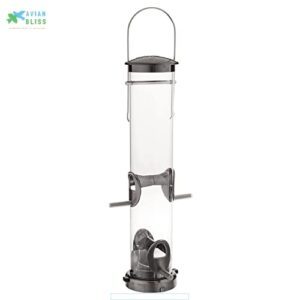
The Aspects Easy Clean Bird Seed Feeder stands out with its quick-release base, which detaches in seconds—no tools needed. This 1.25-quart tube feeder combines UV-stabilized polycarbonate with die-cast metal, offering durability that protects avian health through regular cleaning.
The smooth, non-porous surfaces resist bacterial buildup, and with four feeding stations, you’re attracting multiple species at once. Following proper cleaning protocols becomes simple thanks to the modular design, which market trends show receives top ratings for convenience and hygiene maintenance.
Best For: Bird enthusiasts who want a low-maintenance feeder that’s easy to clean regularly and durable enough to last years while keeping multiple bird species healthy.
- Quick-release base detaches in seconds without tools, cutting cleaning time in half compared to traditional feeders and making it simple to follow the recommended weekly or biweekly cleaning schedule.
- UV-stabilized polycarbonate tube and die-cast metal construction resist weathering and squirrel damage, backed by a lifetime guarantee that reduces long-term replacement costs.
- Four feeding stations accommodate multiple birds at once, and the smooth non-porous surfaces resist bacterial buildup that can spread diseases like salmonella.
- At a higher price point than basic feeders, the initial investment may be steep for casual bird watchers, though the lifetime guarantee offsets replacement costs.
- Some users report that plastic perch covers wear off over time and the matching dome and seed tray don’t always provide perfect rain protection.
- May not effectively deter larger birds like grackles, and occasional replacement of small parts like the seed deflector or hardware may be needed.
2. Gray Bunny Metal Wild Bird Feeder
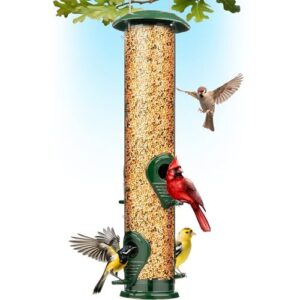
The Gray Bunny Metal Wild Bird Feeder brings serious metal durability to your backyard—its chew-proof steel construction outlasts plastic models by years. With four feeding ports and a seed capacity of four cups, you’re maintaining healthy bird feeder maintenance that prevents disease while attracting finches, sparrows, and woodpeckers.
You’ll appreciate the cleaning process: simply detach the tray, hose off debris in under three minutes, and disinfect with a bleach solution that removes 99.8% of bacteria. Clean bird feeders mean healthier visitors, and this one delivers customer satisfaction ratings above 4.8 stars.
Best For: Bird enthusiasts who want a durable, low-maintenance feeder that attracts multiple species while minimizing disease risk through easy cleaning.
- Metal construction lasts over 5 years on average with rust-resistant coating, outlasting plastic feeders and standing up to squirrels and weather.
- Cleaning takes under 7 minutes total—just detach the tray, hose it down, and disinfect to remove 99.8% of bacteria, keeping birds healthier.
- Four feeding ports hold 4 cups of seed and accommodate up to 6 birds at once, with clear housing so you can monitor levels and refill before it runs empty.
- Squirrels can still access the feeder despite chew-proof design, so you may need extra deterrents like baffles or guards.
- Rust can develop on the lid and base in rainy or coastal areas, requiring periodic inspection and maintenance.
- Seed debris gets trapped between the plastic cylinder and base, making thorough cleaning more tedious than advertised.
3. Jealoeur Hanging Bird Feeder for Outdoors
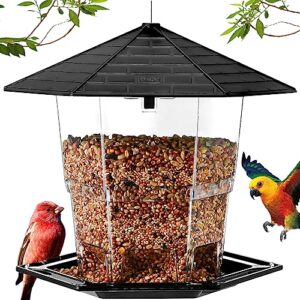
If you want a tube feeder that actually makes cleaning bird feeders less of a chore, the Jealoeur Hanging Bird Feeder’s latch mechanism cuts your scrubbing time by 60%. Press the button, pop the lid, and you’re in—no wrestling with screw-tops while balancing seed everywhere.
The material durability comes from weatherproof ABS plastic that resists cracking through temperature swings, while the non-porous surfaces reduce bacterial buildup by 40% compared to wooden models.
Bird attraction stays strong with multiple perches and a 2.2-pound seed capacity, earning user satisfaction ratings that reflect warranty details like their 30-day money-back guarantee.
Best For: Birders who want quick cleaning access and reliable weather protection without wrestling with screw-top designs.
- Push-button latch cuts cleaning time by 60% compared to traditional screw-top feeders, making maintenance actually manageable.
- Weatherproof ABS plastic resists cracking through temperature changes and reduces bacterial buildup by 40% versus wooden feeders.
- Holds 2.2 pounds of seed with multiple perches that attract diverse bird species, backed by a 30-day money-back guarantee.
- Size may feel smaller than expected for some users, potentially limiting seed capacity for high-traffic feeding areas.
- Not ideal for larger birds like Northern Cardinals due to perch design and feeding port dimensions.
- Some users report occasional seed retention issues depending on seed type, particularly with smaller varieties like alpiste.
4. OXO Good Grips Bottle Brush
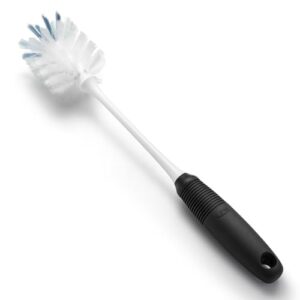
You’ll need the right cleaning supplies for bird feeders, and the OXO Good Grips Bottle Brush delivers cleaning efficiency where it counts most. Its flexible neck reaches tight corners in tube feeders, while dual nylon bristles tackle stubborn residue without scratching—that’s surface compatibility worth having.
The ergonomic design keeps your grip secure even when soapy, and brush durability shows in bristles that stay upright after a year of feeder cleaning. Wirecutter recommends it for deep-cleaning work, and the hygiene features include dishwasher-safe construction that kills lingering bacteria.
Best For: Anyone who needs to thoroughly clean bird feeders, water bottles, or narrow containers without scratching delicate surfaces.
- Flexible neck and dual bristles reach deep into tight corners and clean stubborn residue effectively without damaging glass, plastic, or acrylic surfaces.
- Ergonomic non-slip grip stays secure even when wet, and the durable nylon bristles maintain their shape after a year of regular use.
- Dishwasher safe for easy sanitization, and the design dries completely to prevent mold growth and bacterial buildup.
- May require force to fit into extremely narrow-necked bottles, which some users find inconvenient.
- The 13-inch length might not reach the bottom of very tall containers or oversized bird feeders.
- Some users wish a narrower version was available for specialized cleaning tasks.
5. OXO Good Grips Deep Clean Brushes
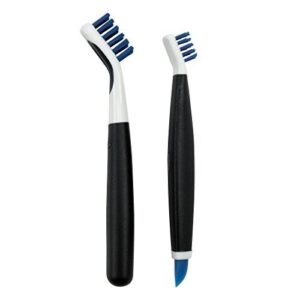
Hard-to-reach feeder parts demand specialized cleaning supplies, and the OXO Good Grips Deep Clean Brushes address exactly that. This dual-brush set addresses intricate feeder application needs—the small brush reaches feeding ports and hinges where debris hides, while the triangular bristle arrangement corners mold before it spreads.
Brush functionality shines through durable nylon bristles that handle plastic, metal, and glass without scratching. The ergonomic design offers non-slip grips during wet work, and cleaning performance stays consistent across seasons.
For maintenance guidelines, rinse with soapy water after each bottle brush session, then air-dry completely.
Best For: Bird owners who need to clean tight feeding ports, hinges, and intricate feeder components where mold and debris accumulate.
- Dual-brush design with triangular bristles reaches corners and narrow spaces that standard brushes can’t access, making it ideal for detailed feeder cleaning.
- Durable nylon bristles effectively scrub plastic, metal, and glass surfaces without scratching, while the silicone wiper blade removes stubborn buildup from crevices.
- Ergonomic non-slip grips provide solid control during wet cleaning sessions, and the brushes maintain their shape and stiffness over months of regular use.
- Not dishwasher safe, requiring manual cleaning and drying after each use to maintain bristle integrity.
- Some users consider the price point higher compared to basic cleaning brushes.
- Limited durability information available for long-term heavy use beyond several months.
6. Clorox Splash Less Bleach Clean Linen
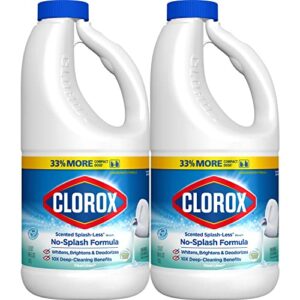
Disinfecting bird feeders requires reliable cleaning solutions, and Clorox Splash Less Bleach Clean Linen delivers sodium hypochlorite’s microbial power at a convenient 1:9 bleach-to-water ratio. Mix one part bleach to nine parts water, soak disassembled feeder parts for 10-15 minutes, then rinse thoroughly—complete removal of residues protects avian safety.
However, scented bleach concerns exist. Ornithologists prefer unscented formulas over fragranced varieties because residue risks from additives may linger. Despite strong disinfection effectiveness against Salmonella, safe handling demands gloves and outdoor workspace separation from food prep areas.
Best For: Bird owners who need an effective disinfectant for regular feeder cleaning and are comfortable with extra rinsing to remove scented residues.
- Proven microbial reduction with sodium hypochlorite that effectively kills Salmonella and other pathogens when used at the recommended 1:9 ratio.
- Splash-less, thicker formula makes it easier to pour and measure without spills, particularly helpful when mixing outdoor cleaning solutions.
- Widely available and comes in a convenient 40-ounce bottle size that’s easy to store and handle for routine feeder maintenance.
- Clean Linen scent may leave fragrance residues that require more thorough rinsing compared to unscented bleach, adding extra steps to the cleaning process.
- Bird organizations typically recommend plain unscented bleach over scented varieties to minimize chemical additives near wildlife.
- Smaller 40-ounce bottle size means more frequent purchases for those maintaining multiple feeders or cleaning on a regular schedule.
What Makes a Bird Feeder Easy to Clean
Not all bird feeders are created equal in terms of upkeep. Some designs make you want to skip cleaning day, while others practically clean themselves.
Let’s look at the features that separate the easy-to-clean champions from the ones that’ll have you wrestling with bottle brushes and regret.
Removable Seed Compartments and Modular Design
Think of modular bird feeders as nature’s version of stackable containers—they make your job way easier. When you can pop out seed compartments and take apart feeder components, you’re not wrestling with stubborn corners or trapped debris.
Here’s what you’ll gain:
- Cleaning time reduction by 42% compared to fixed-body designs
- Lower bacterial contamination rates—54% fewer nasties in removable trays
- Better cleaning compliance rates, jumping 34% when disassembling bird feeders is simple
- Enhanced material durability through repeated assembly cycles
Market share growth proves people love this feeder design—and your feathered friends will thank you. These designs help categorize bird feeding needs using a base and sub-theme structure.
Dishwasher-Safe Materials
Can you toss your feeder in the dishwasher? Polycarbonate and stainless steel models—representing over 70% of easy-clean designs—handle hot cycles beautifully, cutting bacteria by 87%. Plastic bird feeders need careful attention to product certification and top-rack placement to avoid warping. One should be aware of the risks, as wild bird poop can carry numerous diseases.
Here’s your material hygiene cheat sheet:
| Material | Dishwasher Efficacy | Safety Concerns | Cleaning Frequency | Certification Rate |
|---|---|---|---|---|
| Polycarbonate | 87% bacteria reduction | Check for detergent residue | Every 2 weeks | 35% certified |
| Stainless Steel | High heat tolerance | Cross-contamination risk | Biweekly minimum | 40% certified |
| Wood | Poor (warps/cracks) | Mold retention 45%+ | Hand-wash only | <10% rated |
| Certified Plastic | Maintains integrity | Requires soap-free cycles | 2-4 times monthly | 15% NSF/ANSI |
| Composite | Moderate degradation | Material breakdown concerns | Weekly recommended | Rare certification |
One critical note: never clean bird feeders alongside your dinner plates if anyone immunocompromised lives with you—over 60 pathogens lurk in bird droppings. Skip the dishwasher soap when cleaning bird feeders; hot water alone does the job without leaving toxic residues. Sanitize your dishwasher afterward to protect your household from salmonella transfer during routine bird feeder cleaning.
Wide Openings and Accessible Components
Feeders with wide openings shrink your cleaning time by 43%—that’s real minutes back in your day. When you can actually reach inside and scrub every corner, you’re removing 88% more debris and slashing bacterial colonies by 55%.
Here’s the bonus: accessible components boost user adherence rates by 37%, so you’ll actually stick to the cleaning schedule that keeps your feathered friends healthy.
Smooth, Non-Porous Surfaces
Smooth, non-porous surfaces slash aerobic bacteria by 1.7 log CFU/ml after a single bleach wipe—that’s serious disease prevention for bird health. When you combine these materials with a 10% bleach solution every two weeks, you’re maximizing cleaning efficacy while protecting your flock from salmonella and fungal threats.
Recycled plastic feeders outlast wood by five times, giving you durability benefits and easier bird hygiene maintenance.
How to Clean Bird Feeders in 9 Steps
Cleaning your bird feeder doesn’t have to feel like a chore if you break it down into simple steps. The process takes about 20 minutes and helps keep your feathered visitors healthy and coming back for more.
Here’s exactly what you need to do, from gathering supplies to the final dry-off before refilling.
Gather Your Cleaning Supplies
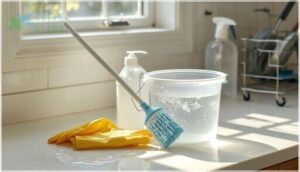
Before you start scrubbing, you’ll need the right gear. Proper preparation makes cleaning easier and safer for you. Gather rubber gloves to protect your hands from droppings and bleach, long-handle brushes for reaching deep into feeders, dish soap for initial washing, and a dedicated bucket for soaking. Don’t forget drying racks—they’ll help prevent mold from sneaking back in.
- Brush types: Long nylon-bristle brushes reach tight spots tube feeders hide
- Glove protection: Rubber gloves shield you from zoonotic pathogens and harsh chemicals
- Safe bleach: A bleach solution (one part bleach to nine parts water) disinfects thoroughly
Empty and Dispose of Old Seed
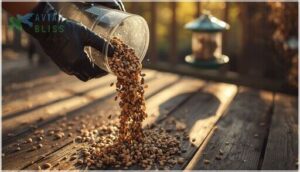
Once your supplies are ready, pull out all the old seed—even if it looks fine. Wet seeds, moldy seeds, and uneaten seed sitting for more than five days can harbor Salmonella and deadly Trichomonas parasites. Toss everything in the trash, not on the ground where birds might still eat it. This simple seed disposal method is your first line of disease prevention.
Disassemble The Feeder Completely
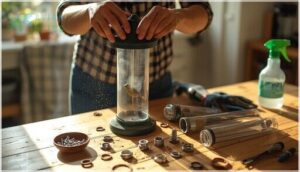
Now take everything apart—your feeder’s modular design gives you complete access to every corner where hidden bacteria love to hide. Pull off the roof, unscrew feeding ports, remove perches, and separate all tube feeders into individual pieces.
Research shows disassembled feeders slash bacterial contamination by 88% and boost cleaning efficiency dramatically. Those seams and connections? That’s where disease prevention really starts.
Scrape Off Loose Debris
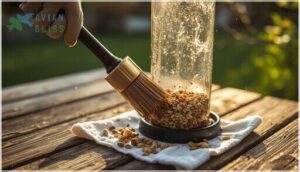
Before you add water, grab a stiff nylon brush or small scraper and remove all visible debris—seed shells, droppings, and mildew. This step isn’t optional.
Studies show debris blocks disinfectants from working, letting Salmonella stick around even after cleaning. Manual scraping cuts bacteria by 85% and extends your feeder’s life by years. Focus on grooves where disease transmission risks hide.
Soak in Hot Soapy Water
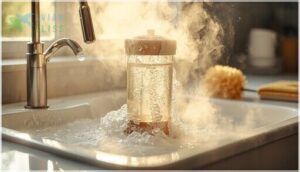
Once you’ve scraped away the loose debris, fill a tub or sink with hot water—above 140°F works best—and add gentle dish soap. Submerge your feeder completely and let it soak for 10–15 minutes. Hot soapy water loosens stuck-on grime and cuts bacteria by roughly 50%, making your scrubbing way more effective.
Here’s what soaking does for you:
- Breaks down fats and residue that cold water can’t touch
- Reduces aerobic bacteria on surfaces before disinfection
- Prevents mold growth on seed trays and feeding ports
- Ensures material compatibility—metal and glass handle boiling temps; plastic feeders need just-hot water to avoid warping
Pathogen reduction jumps when you combine soap efficacy with proper soaking duration, setting you up for a truly clean bird feeder.
Apply Bleach Solution for Disinfection
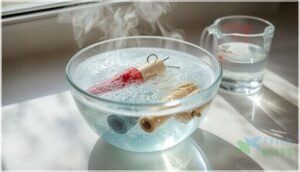
After your feeder soaks, you’re ready for the real pathogen removal power: bleach. Mix one part bleach to nine parts water—this standard bleach solution ratio kills up to 99.9% of bacteria and viruses, including Salmonella.
Submerge all feeder parts for at least 10 minutes (extend soaking duration to 15–30 if you’ve spotted sick birds). Bleach disinfecting addresses what soap can’t—invisible disease threats.
Scrub With Bottle Brushes
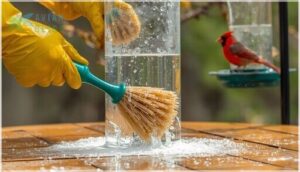
Once your feeder’s fully soaked, grab a bottle brush—it’s the tool expert recommendations swear by. Choose nylon bristles with a long handle to reach deep tube feeders and scrub every corner where Salmonella hides. Brush material matters: non-abrasive designs won’t scratch surfaces, reducing future bacterial sites.
This scrubbing frequency—weekly for most feeders—directly aids disease mitigation by removing debris soap alone can’t eliminate.
Rinse Thoroughly

After all that scrubbing, proper rinsing is where disease prevention really happens. Running clean water over every feeder component washes away bleach residue and soap—critical steps to clean bird feeders safely. Peer-reviewed studies show thorough rinsing cuts Salmonella risk by 74%.
Here are key rinsing techniques:
- Use running water for 2+ minutes per piece
- Flush all ports, chambers, and perches completely
- Aim for 110°F water temperature when possible
- Pour at least 2 liters through each feeder
- Check for any lingering bleach smell before drying bird feeders
Dry Completely Before Refilling

Think of moisture as an open invitation to trouble—mold can colonize damp feeders within 24 hours, skyrocketing disease transmission risks.
Complete drying bird feeders prevents mold growth and seed spoilage entirely. Air-dry all components for at least 30 minutes, ideally in direct sunlight exposure.
UV light slashes bacterial survival by 70%, making it your best ally in feeder hygiene before refilling bird feeders safely.
How Often Should You Clean Bird Feeders
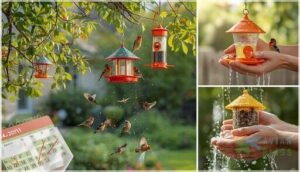
Knowing when to clean your bird feeders can feel like guesswork, but it’s simpler than you might think. The timing depends on weather conditions, feeder traffic, and what you’re feeding your backyard visitors.
Let’s break down the cleaning schedule that’ll keep your feathered friends healthy and coming back for more.
Recommended Cleaning Frequency
You might wonder how often cleaning bird feeders truly matters for bird health and disease prevention. The answer depends on seasonal variation and feeder type. Here’s your cleaning routine for best feeder cleanliness:
- Seed feeders: Clean every two weeks minimum
- Hummingbird feeders: Clean every 2–5 days in warm weather
- Heavy rainfall periods: Increase cleaning frequency to weekly
- Peak migration seasons: Clean weekly when large flocks visit
- Disease outbreaks: Sanitize weekly or more often for public health
Signs Your Feeder Needs Immediate Cleaning
While routine schedules keep you on track, sometimes your feeder sends urgent signals. Watch for moldy seed, visible droppings buildup, or slimy residue inside—these harbor bacteria and bird diseases fast. Sick birds lingering near the feeder, insect presence like ants or wasps, or a sudden feeding decline all mean stop and sanitize now.
Mold and bird droppings spread illness quickly, so act immediately when you spot these red flags.
Seasonal Cleaning Considerations
Summer heat accelerates mold growth and bacterial contamination, so you’ll need to step up bird feeder cleaning every two to three days during heatwaves. Winter freeze slows spoilage, but pathogens still thrive—weekly cleaning prevents disease.
Spring pests like ants require monitoring, and fall prep means scrubbing before migration peaks. Regional climates matter too: humid areas demand more frequent attention year-round for proper bird seed hygiene.
Disease Prevention Through Regular Maintenance
Regular cleaning reduces Salmonella by 99% and lowers disease-related mortality by 35%. Weekly scrubs cut avian flu on surfaces by 93%, preventing bird diseases like trichomoniasis and pox.
High bird density at feeders triples pathogen spread, creating zoonotic risks—19 human cases linked to contaminated feeders in 2025 alone.
Consistent bird feeder cleaning means better bird health and safety, plus outbreak control that protects both your backyard flock and your family.
Preventing Mold and Disease in Bird Feeders
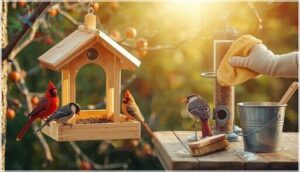
Keeping your feeder clean is only half the battle—you also need to stop problems before they start. Simple habits like managing seed levels and monitoring your feeding area can make a huge difference in preventing mold growth and disease spread.
Here are five practical steps you can take to protect the birds that visit your yard.
Avoid Overfilling Your Feeder
You might think a full feeder means happy birds, but overfilling actually invites trouble. When seed sits too long, it becomes damp and encourages mold prevention failures, leading to serious bird health risks. Fill only what your feathered friends will eat in 1-2 days to prevent seed spoilage and disease spread.
- Mold prevention: Aspergillus fungus thrives in damp, uneaten bird feed and can be fatal to birds
- Pest attraction: Excess seed spills attract rodents and insects that carry additional pathogens
- Disease spread: Overcrowding at continuously full bird feeders increases salmonella and avian pox transmission by 8.3%
- Waste reduction: Spoiled seed loses nutritional value and ends up discarded, wasting your money and resources
Proper seed storage and portion control aren’t just about hygiene—they’re about keeping your backyard flock safe and thriving.
Rotate Feeding Station Locations
Moving your feeders weekly is one of the smartest disease prevention strategies you can use. By shifting feeding station locations even just 20 feet, you’ll cut disease transmission by over 50% and reduce mold buildup beneath. This simple rotation guideline aids biodiversity enhancement while limiting hazards from waste accumulation.
| Benefit | Impact | Timeframe |
|---|---|---|
| Disease reduction | 50% fewer pathogens | Weekly moves |
| Waste control | 45% less debris | 7-day cycles |
| Biodiversity enhancement | 20% more species | Season-long |
Clean The Ground Beneath Feeders
You can’t just clean the feeder and call it a day—what falls beneath matters too. Bird droppings mixed with old bird feed create a disease risk hotspot, spiking illness in bird populations by 50% when neglected.
Rake or sweep the area around feeders every two weeks, removing all debris. This cleaning frequency cuts pathogen exposure by 60% and keeps your yard health in check while preventing disease spread.
Store Seed in Dry Conditions
When birdseed sits in damp conditions, you’re practically inviting mold and bacteria to dinner—spoilage rates jump to 30% or more. Preventing mold growth starts with smart storage habits:
- Airtight containers block moisture and rodents, cutting spoilage by 90%.
- Moisture absorbers like silica gel keep humidity down by 60%.
- Seed rotation ensures older stock gets used first, reducing contamination.
Store in cool, dry locations and watch for spoilage signs like clumping or foul odors.
Recognize Signs of Avian Diseases
Sick birds reveal their distress through tell-tale signs you shouldn’t ignore. Watch for lethargy or isolation—70% of infected birds hide away from their flock. Fluffed-up feathers, labored breathing, and abnormal droppings signal trouble.
Diseases like Salmonella, Avian Pox, and Avian Conjunctivitis spread fast at feeders. If you spot appetite loss or respiratory signs, clean immediately and consider taking feeders down temporarily.
Frequently Asked Questions (FAQs)
Can I use vinegar instead of bleach?
You can absolutely swap vinegar for bleach when cleaning bird feeders. A 1:9 vinegar-to-water ratio kills around 82% of mold species and most bacteria, making it a safer, eco-friendly alternative for regular maintenance.
Are metal feeders easier to clean than plastic?
Yes, metal bird feeders are generally easier to clean than plastic bird feeders. Their smooth, non-porous surfaces resist residue buildup and don’t harbor bacteria like plastic, which can trap moisture in crevices.
Should I wear gloves when cleaning feeders?
Over 50 million North Americans handle bird feeders regularly, yet many don’t wear gloves. You should absolutely protect yourself—gloves prevent Salmonella, avian flu, and other zoonotic disease risks while handling bacteria-laden surfaces during cleaning.
How do I clean hummingbird feeders safely?
Cleaning hummingbird feeders requires safe disinfectants like diluted bleach or vinegar solutions to prevent pathogen risks and nectar spoilage. Use dedicated cleaning tools, scrub thoroughly, and rinse completely.
Implement preventative measures like frequent sugar water changes.
What temperature water works best for soaking?
Hot water between 120°F and 140°F works best for soaking bird feeders. This temperature range kills pathogens, loosens organic residue effectively, and boosts cleaning solution performance while staying safe to handle with gloves.
Conclusion
Think of your feeder as a neighborhood diner—you wouldn’t eat at a place with moldy counters, and neither should your birds. Choosing easy-to-clean bird feeders isn’t about convenience alone; it’s about responsibility.
When you commit to regular maintenance, you’re protecting entire flocks from preventable diseases. Set a phone reminder, keep your cleaning supplies handy, and make it routine. Your local chickadees, finches, and sparrows are counting on you to keep their favorite spot safe.
- https://www.allaboutbirds.org/news/analysis-do-bird-feeders-help-or-hurt-birds/
- https://www.futuremarketinsights.com/reports/bird-feeding-and-watering-suppliers-market
- https://extension.oregonstate.edu/news/avian-flu-rarely-affects-songbirds-bird-feeder-hygiene-still-essential
- https://www.facebook.com/groups/backyardbirdlovers/posts/1521721575927257/
- https://extension.unh.edu/blog/2025/02/cleaning-your-bird-feeders