This site is supported by our readers. We may earn a commission, at no cost to you, if you purchase through links.
Your parrot’s feathers aren’t just pretty—they’re a living barometer of overall health. These specialized structures regulate body temperature, enable flight, protect against injury, and even communicate mood and vitality.
When feathers look dull, patchy, or ragged, something deeper is usually going on. Poor nutrition, chronic stress, or environmental problems often show up in feather quality long before other symptoms appear.
The good news? Most feather issues are preventable with the right care routine. By focusing on proper nutrition, daily grooming habits, and a stress-free environment, you can keep your bird’s plumage vibrant and your companion thriving for years to come.
Table Of Contents
Key Takeaways
- Your parrot’s feathers reveal hidden health problems early—dullness, patches, or damage often signal nutritional gaps, chronic stress, or environmental issues before other symptoms appear
- A diet heavy on quality pellets (75-80%) plus fresh dark leafy greens (15-20%) provides the protein, vitamin A, and fatty acids your bird needs for strong, vibrant plumage
- Feather plucking affects up to 25% of pet parrots and stems from stress triggers like inadequate sleep, isolation, or lack of foraging enrichment—not just boredom
- Regular bathing 2-3 times weekly combined with 50-60% humidity prevents brittle feathers and skin irritation while supporting your bird’s natural preening behavior
Why Feather Care Matters for Parrots
Your parrot’s feathers do far more than just look beautiful. They regulate body temperature, enable flight, and act as a first line of defense against injury and infection.
Understanding what makes feathers healthy helps you spot problems early and keep your bird thriving.
Functions and Types of Parrot Feathers
Your parrot’s feathers aren’t just beautiful—they’re intricate tools built for survival. Feather types include contour feathers that shape the body, down feathers providing insulation against cold, and flight feathers managing aerodynamics. Sensory feathers detect movement, while feather coloration creates stunning hues.
Each feather structure fulfills a specific function, from temperature control to communication, making proper feather care essential for your bird’s health. Parrots instinctively preen to maintain feather health.
How Healthy Feathers Impact Parrot Wellbeing
When your bird’s feathers are in top shape, you’ll notice clear behavioral indicators—more activity, confident flight, and relaxed body language. Healthy feather condition shields against physiological stress and regulates body temperature efficiently. Quality plumage directly bolsters flight performance and reduces disease risk:
- Intact feathers maintain stable core temperatures during activity
- Strong flight feathers enable safe movement and exploration
- Well-maintained plumage correlates with improved longevity impacts
Good feather quality truly means better bird wellbeing overall. Addressing potential issues like feather destructive behavior is key for maintaining prime health.
Common Feather Issues in Parrots
Unfortunately, feather problems affect many pet parrots. Feather-damaging behavior (FDB) occurs in 10–25% of captive birds, with cockatoos and African greys showing the highest rates. Common issues include feather plucking, molting problems, and skin disorders. The PBFD virus affects roughly 16% of parrots globally. Early recognition of poor feather condition helps you protect your bird’s feather health before complications develop.
| Issue Type | What You’ll Notice | Common Causes |
|---|---|---|
| Feather Plucking | Bare patches, chewed feathers | Stress, boredom, medical conditions |
| PBFD Virus | Abnormal feather growth, beak changes | Viral infection, poor immunity |
| Molting Issues | Prolonged shedding, patchy regrowth | Nutritional gaps, environmental stress |
| Skin Disorders | Redness, flaking, irritation | Allergies, parasites, low humidity |
| Feather Loss | Thinning plumage, broken shafts | Diet deficiency, trauma, disease |
Nutrition for Vibrant Feather Health

Your parrot’s feathers are only as good as what you feed them. Just like our hair and nails, feathers need specific nutrients to grow strong, vibrant, and healthy.
Let’s look at what your bird needs to develop gorgeous plumage and how to spot when something’s missing from their diet.
Essential Nutrients for Feather Growth
Think of feathers as your parrot’s protective armor—they need the right building blocks to stay strong. Protein is essential for keratin, the structural foundation of every feather.
You’ll also want to provide fatty acids for energy during molting, vitamin A for healthy follicles, biotin for keratin synthesis, and balanced minerals like zinc for feather development.
These essential nutrients work together to create vibrant, resilient plumage.
Best Foods to Support Feather Quality
A balanced diet rich in high-quality pellets (around 75–80% of intake) gives your parrot essential nutrients like protein and vitamins. Fresh vegetables—especially dark leafy greens—should make up another 15–20% to support vibrant plumage.
Keep seeds and nuts minimal, since high-fat diets can lead to fatty liver disease and poor feather quality. Offering food variety through rotating produce and foraging toys ensures your bird gets everything needed for healthy feathers.
Hydration’s Role in Feather Maintenance
When your parrot’s water bowl runs dry, feather health takes a hit. Water Intake directly affects Skin Hydration and the strength of each feather shaft. Aim for daily fresh water—small parrots need about 5–15 ml, medium birds 15–40 ml, and larger species up to 100 ml.
Maintaining Humidity Levels around 40–60% and regular misting prevent Dry Skin, Dehydration Effects, and the Hydration Imbalance that leads to brittle, frayed plumage.
Signs of Nutritional Deficiency Affecting Feathers
How do you spot trouble before it spirals? Watch for Color Changes—like black tips on Amazon parrots or dull plumage. Feather Breakage, Retained Pinfeathers that won’t unfurl, and Abnormal Molting cycles signal bird nutrition gaps.
Systemic Signs such as nasal discharge or flaky skin often accompany feather problems. A healthy diet rich in vitamins reverses these red flags, restoring your balanced diet plan.
Daily Feather Care Practices
Keeping your parrot’s feathers in top condition doesn’t happen by accident—it takes a consistent daily routine. The good news is that feather care doesn’t need to be complicated or time-consuming.
Here are the essential practices you’ll want to build into your everyday care schedule.
Preening and Grooming Techniques
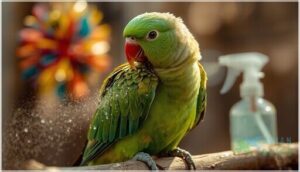
Your bird spends more than 9% of each day preening—that’s nature’s way of keeping feathers clean and parasites at bay.
You can support this important grooming behavior by offering regular misting sessions and enrichment toys that encourage natural preen activity.
When assisted preening is needed, use a towel for gentle restraint and work carefully around pin feathers to maintain trust while protecting feather health.
Bathing Methods for Clean Feathers
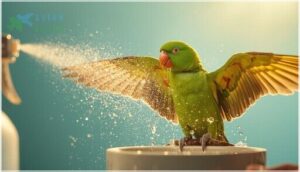
Clean feathers start with the right bath setup—it’s simpler than you might think.
Three proven bathing techniques keep your parrot’s plumage in top shape:
- Shallow baths in bowls or sinks let small species control their own soaking while preventing dangerous submersion
- Misting techniques from 30–60 cm away mimic natural rainfall and work well for medium to large parrots
- Shower perches give overhead spray lovers a safe spot to enjoy warm water
Aim for 2–3 baths weekly for most species, with dusty African greys and cockatoos benefiting from 3–5 sessions. Always use lukewarm water temperature and skip soaps—they strip natural oils.
After bathing, drying methods matter: keep your bird in a warm, draft-free spot until feathers dry completely, and never use heated hair dryers due to burn risk.
Regular bathing frequency reduces feather dust, improves bird hygiene, and encourages natural preening behavior that keeps plumage vibrant.
Safe Use of Feather Care Products
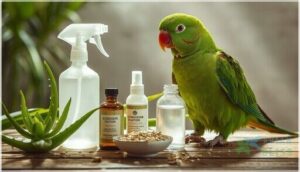
Your parrot’s delicate respiratory system makes product selection critical—what’s safe for mammals can be deadly for birds.
| Product Type | Safe Choice |
|---|---|
| Disinfectants | Chlorhexidine gluconate 2% (dilute 5 tsp per quart water) |
| Feather sprays | Aloe vera or oat-based, fragrance-free formulas |
| Environmental cleaners | Vinegar, unscented dish soap |
| Avoid completely | Aerosols, bleach, ammonia, phenol-containing products |
Always consult your avian vet before introducing new feather care products. Respiratory hazards and skin irritation risks demand professional veterinary guidance for proper dilution methods and product ingredients.
Beak and Nail Care for Feather Protection
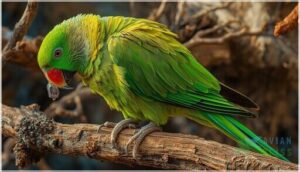
Beyond product safety, overlooked beak and nail care directly impacts feather health. Beak overgrowth reduces preening efficiency, while overgrown nails snag and fracture feathers during climbing. Clinical workups for feather-plucking routinely reveal these mechanical problems.
Smart perch selection promotes natural wear:
- Natural wood branches for grip variation
- Mineral perches for gradual nail filing
- Avoid overly abrasive surfaces causing foot discomfort
Schedule professional trims when your bird’s grooming shows clumsiness or feather damage appears.
Optimizing The Parrot’s Environment
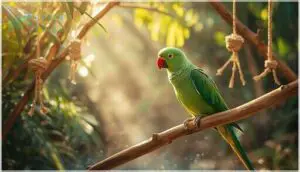
Your parrot’s surroundings play a huge role in keeping those feathers healthy and vibrant. A well-designed environment doesn’t just support physical health—it reduces stress, encourages natural behaviors, and helps prevent problems like feather plucking.
Let’s look at four key areas that make a real difference in your bird’s feather care routine.
Maintaining a Clean and Safe Cage
Inside your parrot’s home, dust, droppings, and leftover food pile up fast—and with them, bacteria and fungi that threaten your bird’s respiratory health and feather quality. Daily spot-cleaning of food bowls and waste, plus weekly deep cage maintenance, cuts pathogen load and keeps air quality waste under control, protecting both lungs and plumage.
| Task | Frequency | Why It Matters |
|---|---|---|
| Remove waste and uneaten food | Daily | Limits bacterial growth and ammonia buildup |
| Wash dishes and replace liners | Daily | Prevents fungal contamination and odor |
| Deep-clean bars, tray, perches | Weekly | Reduces pathogen spread and feather damage |
Choose bird-safe cleaning agents—vinegar or unscented dish soap—over harsh disinfectants. Rinse thoroughly and let surfaces dry before your parrot returns.
Check cage size safety: bar spacing should match your species (0.5 inches for parakeets, up to 0.75 inches for cockatiels) to prevent escape or injury. A clean cage and safe environment work together, supporting sanitation and pathogen control while giving your bird room to stretch, climb, and keep feathers spotless.
Environmental Enrichment for Healthy Feathers
Enrichment isn’t just entertainment—it’s medicine for your parrot’s feathers. Foraging enrichment keeps birds busy and redirects plucking urges; young Amazon parrots given foraging toys spent more time problem-solving and grew healthier plumage than unstimulated flockmates.
Physical complexity—branches, swings, climbing nets—prevents boredom-driven damage.
Add daily social interaction, maintain humidity levels near 55%, and make certain air quality stays toxin-free for complete environmental enrichment and stress reduction.
Managing Stress and Preventing Feather Plucking
Stress is the number-one driver behind feather plucking. African grey parrots with feather problems excrete three times more stress hormones than healthy birds, so your stress reduction plan matters.
Stress drives feather plucking—African grey parrots with feather problems show three times more stress hormones than healthy birds
Tackle Environmental Stressors head-on:
- Provide 8–12 hours of uninterrupted Sleep Duration nightly
- Increase out-of-cage Social Interaction daily
- Never leave your parrot caged alone for extended periods
- Watch for Behavioral Indicators like pacing or excessive vocalization
Enrichment Strategies and proper bird behavior management prevent most feather care crises.
Sunlight and Safe Sunbathing Practices
Natural sunlight exposure helps your parrot synthesize Vitamin D for strong feather health, but glass filtration blocks essential UVB exposure. Aim for 20–30 minutes of supervised outdoor safe sunbathing practices two to three times weekly. Always provide shade to prevent overheating risks, and watch for panting or wing-holding.
| Safe Duration | Sunbathing Equipment | Temperature Range |
|---|---|---|
| 20–30 minutes | Secure cage or lead | 65–85°F (18–29°C) |
| 2–3 times weekly | Shaded area available | Monitor for panting |
| UVB lamp alternative | 18–48 inches from bird | Avoid direct midday sun |
Addressing and Preventing Feather Problems
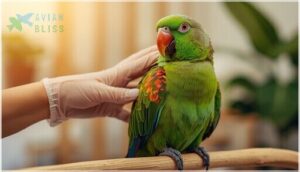
Even with the best care, feathers can run into trouble. You might notice unexpected bald spots, damaged plumage, or changes in your parrot’s preening habits.
Let’s break down the most common feather problems and what you can do to address them before they become serious.
Understanding Molting and Feather Loss
Most parrots molt once or twice yearly, replacing feathers in a predictable bird molting process. Understanding bird molting helps you recognize normal feather molt from abnormal feather loss. The molting cycle timing usually peaks in fall.
Molting energy demands increase by 10-30%, so you’ll notice more appetite. Stress-induced loss creates patchy bald spots, while disease-related loss from infections like PBFD causes progressive feather damage needing veterinary attention.
Identifying and Treating Feather Picking
Why does your parrot pluck its chest bare? Feather picking affects nearly 12-24% of pet parrots, with risk factors including species type, diet quality, and housing conditions.
Your diagnostic workup should rule out infections and nutritional deficiencies first. Behavioral contributors like boredom and stress require environmental enrichment and routine changes.
Treatment strategies combine medical care with habitat improvements, while sophisticated therapies include medication for severe cases when feather picking treatment doesn’t respond to initial approaches.
Recognizing Skin and Feather Disorders
Nearly two in five parrots develop bird skin conditions, from simple feather loss to serious PBFD diagnosis. You’ll notice abnormal feather appearance like pinched shafts, broken plumes, or patchy baldness. Skin lesions and pododermatitis affect certain species more than others due to species predisposition.
Cockatoos, African greys, and lovebirds face higher risks of feather problems. Watch for symmetrical patterns, color changes, and allergic reactions that distinguish disease from typical feather picking.
When to Seek Avian Veterinary Care
Emergency signs like rapid feather loss with inflamed skin, self-mutilation, or refusal to eat demand immediate avian vet attention. Delayed care can cause permanent follicle damage and complicate treatment of bird health problems.
Persistent feather picking or damaging behavior requires veterinary investigation, as over 25% of clinic parrots show these issues.
Schedule routine check-ups every 6 to 12 months to catch infectious disease early.
Frequently Asked Questions (FAQs)
Can I trim my parrots feathers at home?
You shouldn’t trim your parrot’s wings at home. The risks—bleeding, injury, and behavioral problems—are serious.
Veterinary guidance strongly recommends professional supervision to guarantee proper wing clipping techniques and your bird’s safety.
How often should parrots bathe or shower?
A good rule of thumb is to offer bathing opportunities two to three times weekly for most parrots. Species bathing needs vary—Amazon parrots and macaws from humid climates benefit from frequent baths, while cockatiels thrive with this schedule too.
Humidity impact matters; when indoor air drops below 40%, misting helps prevent dry skin. Bathing benefits include shinier feathers, better preening, and healthier skin. Risks of neglect show up as brittle feathers and irritation.
Effective techniques include gentle misting, shower perches, or shallow dishes—bathing techniques for pet birds that support feather care. Your parrot’s feather health depends on consistent bird grooming routines.
What humidity levels are best for feather health?
Your parrot thrives when humidity stays between 50% and 60%, measured with a hygrometer. Misting or baths prevent dry, itchy skin and brittle feathers, while proper ventilation stops mold growth that damages plumage.
Are feather supplements necessary for healthy parrots?
Before you rush to buy vitamin supplements, understand this: most parrots thrive on a healthy diet alone.
Avian health supplements fill gaps only when deficiency indicators appear. Veterinary guidance ensures preventative measures target real needs, not imagined ones.
Conclusion
Think of your parrot’s feathers as a mirror reflecting everything you do right—or wrong. Feather care for parrots isn’t complicated, but it demands consistency.
Good food, regular baths, and a calm environment form the foundation. Watch for changes in texture or color, and don’t hesitate to call your avian vet when something seems off.
Your attention to these details keeps your bird vibrant, healthy, and thriving for decades.
- https://www.ncbi.nlm.nih.gov/pmc/articles/PMC8279392/
- https://faunalytics.org/wp-content/uploads/2015/05/Citation2456_Feather%20Loss%20and%20Feather%20Destructive%20Behavior%20in%20Pet%20Birds.pdf
- https://www.sciencedirect.com/science/article/abs/pii/S0168159123002009
- https://lafeber.com/vet/clinical-perspectives-on-the-principles-of-avian-nutrition/
- https://www.harrisonsbirdfoods.com/wp-content/uploads/2024/03/ae27.pdf