This site is supported by our readers. We may earn a commission, at no cost to you, if you purchase through links.

Around 1,409 bird species currently face extinction risk, according to BirdLife International—roughly one in eight of all known species. That number has climbed steadily over the past two decades, even as conservation funding and awareness have grown.
Something isn’t adding up. The gap between effort and outcome often traces back to a handful of concentrated threats: habitat destruction, invasive predators, illegal trapping, and a changing climate compressing the margins for survival.
Understanding what actually drives these declines—and which species face the steepest odds—puts you in a much stronger position to act on that concern.
Table Of Contents
- Key Takeaways
- What Makes a Bird Endangered?
- Most Endangered Bird Species Worldwide
- Biggest Threats to Bird Survival
- Conservation Efforts Saving Endangered Birds
- How to Support Bird Conservation
- Frequently Asked Questions (FAQs)
- How do endangered birds reproduce in captivity?
- What role do birds play in ecosystems?
- Can endangered bird species recover to stable populations?
- How are bird migration patterns affected by endangerment?
- Which endangered birds have gone extinct recently?
- How do zoos coordinate global bird breeding efforts?
- Can bird populations recover after near-extinction events?
- What role do indigenous communities play in conservation?
- How does light pollution affect endangered bird survival?
- Conclusion
Key Takeaways
- About 1,409 bird species—roughly one in eight—face extinction risk, with habitat loss, invasive predators, illegal trapping, and climate change being the four biggest drivers pushing populations toward collapse.
- IUCN Red List separates Endangered from Critically Endangered using hard numbers: an 80–90% population decline or fewer than 50 mature individuals trigger the most urgent classification, which directly shapes where funding and legal protections go.
- Proven recovery tools like captive breeding, predator‑free island sanctuaries, and habitat restoration corridors have already brought species like the California Condor back from the brink—going from just 27 individuals in 1987 to over 500 flying wild today.
- You don’t need a biology degree to help—joining citizen science projects like eBird, keeping cats indoors, planting native species, and supporting transparent conservation organizations all feed directly into real recovery efforts.
What Makes a Bird Endangered?
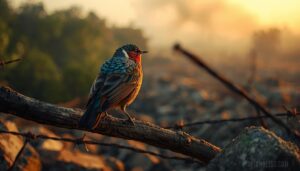
Not every bird that’s rare is considered endangered — there’s actually a clear system behind that label. Several factors determine where a species falls on the spectrum, from how many individuals remain to how quickly numbers are dropping.
The full breakdown of rare bird species classification by extinction risk shows just how much detail goes into placing a species on that spectrum.
Here’s what scientists look at when evaluating a bird’s risk of disappearing for good.
IUCN Red List Categories for Birds
The IUCN Red List Process uses clear Category Definitions to sort birds by extinction risk. You’ll find five Threat Category levels in the Assessment Criteria: Least Concern, Near Threatened, Vulnerable, Endangered, and Critically Endangered — each tied to specific Red List Categories and Criteria. Data Deficient applies when evidence is too thin for a confident Threat Category Mapping.
- Critically Endangered signals an extremely high extinction risk
- Endangered means urgent conservation action is needed
- Data Deficient flags species needing more research
Seabirds are among the most endangered avian families.
Population Size and Decline Rates
Once a species drops below a few hundred individuals, population viability becomes fragile, fast. Baseline Population Estimates matter here — they tell you where decline started.
Natural Mortality Rates, Reproductive Output Variability, and Demographic Age Structure all shape how quickly numbers fall.
Poor Range Connectivity impacts recovery too.
Regular population monitoring helps scientists catch dangerous trends before a species crosses a point of no return.
Range Restriction and Island Endemics
bird lives shapes its fate as much as how many remain.
Island endemics face gene flow barriers and habitat island isolation that cut them off from mainland recovery.
founder effect dynamics shrink genetic variety fast.
microhabitat specialization locks species into narrow zones, while rescue effect limitations mean help rarely arrives.
invasive species and hurricanes can erase entire ranges overnight.
Breeding Success and Genetic Bottlenecks
Small numbers don’t tell the whole story.
When populations shrink, genetic bottlenecks in small populations quietly drain diversity, and inbreeding depression follows — weaker chicks, lower hatchability, fewer survivors. Effective population size drops fast.
Shrinking populations breed genetic decay, and inbreeding quietly turns weaker chicks into fewer survivors
That’s why mate pairing strategies, genetic rescue, and habitat corridors matter in captive breeding, conservation breeding, and reintroduction programs: they rebuild genetic diversity before the window closes permanently.
Endangered Vs. Critically Endangered Birds
The gap between Endangered and Critically Endangered isn’t just a label — it directly shapes Legal Protection Levels, Funding Allocation, and Conservation Priorities. On the IUCN Red List, Risk Assessment Criteria separate the two: Endangered birds normally show 50–70% population decline over ten years, while Critically Endangered species face declines of 80–90% or fewer than 50 mature individuals.
That extinction probability difference drives which conservation actions get funded first.
Most Endangered Bird Species Worldwide
Some birds are holding on by a thread, with populations so small that a single storm or disease outbreak could tip them over the edge. The species below span every corner of the globe — from tropical islands to open migration routes — and each faces its own unique battle to survive.
Here’s a closer look at the birds that need our attention most.
Critically Endangered Parrots and Cockatoos

Parrots and cockatoos are some of the most trafficked birds on the planet. The yellow-crested cockatoo, critically endangered and protected under CITES, still loses individuals to wildlife trade and habitat destruction across Indonesian islands. Conservation now combines legal protection, community stewardship, and ecotourism funding to turn the tide.
- Artificial nest hollows replace trees lost to logging
- Island translocation moves birds to safer habitat
- Genomic research guides subspecies recovery planning
Threatened Ibises, Rails, and Finches
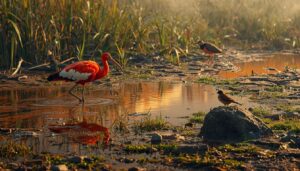
Ibises, rails, and finches don’t grab headlines the way parrots do, but their stories hit just as hard. Wetland drainage effects have cut foraging habitat by up to 40 percent in some estuaries, squeezing ibis populations already facing illegal wildlife trade and hunting. Feral cat management and community anti-poaching efforts are helping.
El Niño stress compounds food scarcity for island finches, making conservation breeding and recovery programs, protected areas, and captive release outcomes increasingly critical.
Island Birds With Tiny Populations

Some island birds are clinging on with fewer than 50 individuals left. Clutch size limits mean one bad season can collapse a generation, and Allee effect impacts make finding a mate genuinely difficult at such low densities. Catastrophic event vulnerability is real — a single storm can erase a species. Genetic drift concerns grow as populations shrink.
Biosecurity measures and conservation breeding and recovery programs remain their best lifeline.
Migratory Birds Under Severe Pressure
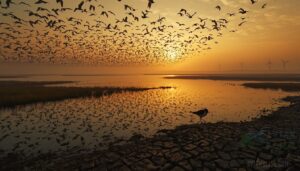
Migration sounds simple — fly south, fly back — but every leg of that journey is a gauntlet. Stopover site depletion leaves birds without fuel, while phenological mismatch means insects peak before hungry arrivals do.
Energetic stress compounds quickly. Wind farm barriers and collision mortality cut numbers further.
Habitat loss and fragmentation along migratory bird corridors, worsened by climate change impacts on birds, shrinks what little protected areas remain.
Species With The Highest Extinction Risk

Some species are clinging to existence by a thread. The Mangrove finch, with just 20–40 birds remaining, and the Madagascar pochard, at roughly 45 individuals, sit at the sharpest edge of the Red List of Threatened Species.
For Critically Endangered species like these, conservation efforts now rely on Population Viability Modeling, Critical Habitat Mapping, Genetic Rescue, and Community-led Nest Protection to slow population decline driven by habitat loss and Emerging Disease Threats.
Biggest Threats to Bird Survival
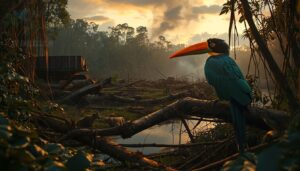
Birds don’t disappear all at once — they’re worn down by threats that build quietly over time. Some are well-known, others still fly under the radar, but each one chips away at populations that can’t afford to lose a single individual.
Here are the biggest threats standing between these species and survival.
Habitat Loss and Fragmentation
Habitat destruction and deforestation don’t just shrink forests — they slice them into isolated fragments. Patch isolation cuts off movement between populations, raising inbreeding risk and fragmentation mortality. Edge effects and microclimate shifts inside smaller patches alter food availability and expose nests to predators.
Connectivity corridors help restore that lost movement.
Human activities driving bird declines often start here, quietly, long before a species makes any endangered list.
Illegal Wildlife Trade and Trapping
Beyond habitat loss, illegal wildlife trade quietly dismantles populations, bird by bird.
Smuggling routes connect Africa and Asia to consumer markets through layered networks, while Online Marketplaces and encrypted messaging hide listings for live birds.
Wildlife trafficking fuels Financial Laundering through legitimate dealers.
Key drivers pushing birds toward extinction:
- Exotic pet trade capturing yellow‑crested cockatoos and African grey parrots.
- Poaching during breeding seasons for higher success rates.
- Forged CITES permits laundering illegal shipments.
- Community Patrols disrupted by corrupt local networks.
- Enforcement Technologies like microchips exposing illegal ownership post‑seizure.
Illegal trapping of Imperial Amazon parrots — down to just 40–60 individuals — show how demand destroys populations faster than habitat ever could.
Invasive Predators on Islands
Illegal trade isn’t the only silent killer.
On islands, invasive predators do devastating work.
Rats attack eggs and chicks directly in the nest, while predation by feral cats clears entire seabird colonies.
Invasive species pressure on native birds intensifies without natural checks.
Rat eradication, feral cat control, mongoose management, rodent baiting programs, and island biosecurity together form the backbone of invasive predator management on islands — and recovery follows fast.
Hunting, Poisoning, and Human Disturbance
Predators aren’t the only pressure birds face. Hunting creates season-specific mortality that pulls breeding adults from populations already stretched thin.
Bait contamination pathways spread lead poisoning cascades through scavengers like vultures and condors.
Noise-induced displacement pushes birds into marginal habitats, while roost site abandonment follows repeated human disturbance.
Illegal trapping, poisoning, and human activities driving habitat loss compound each other relentlessly.
Climate Change and Extreme Weather
Climate change quietly compounds every other threat birds already face. Heatwave mortality climbs as record temperatures push breeding adults past their physiological limits.
Drought habitat loss shrinks wetlands and forests that species like the Madagascar pochard depend on.
Storm surge threats and Hurricane Maria’s devastating canopy loss on Dominica show how the effects of hurricanes on bird survival are immediate and lasting.
Fire weather escalation and ocean heatwave impacts demand urgent climate adaptation now.
Conservation Efforts Saving Endangered Birds
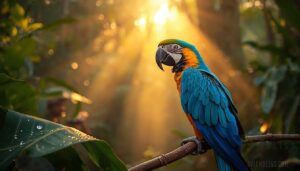
The good news is that birds don’t give up easily — and neither do the people working to save them. Across the world, conservationists are putting real, proven strategies to work, and some of these efforts are already turning the tide.
Here’s a closer look at what’s actually making a difference.
Captive Breeding and Reintroduction Programs
Captive breeding and reintroduction programs have pulled species like the California Condor back from the edge. These aren’t quick fixes — they’re long, careful processes built on science and trust.
- Genetic Management keeps captive populations healthy by tracking bloodlines and rotating breeding pairs
- Pre-release Training teaches birds to recognize predators and find food before entering the wild
- Release Site Selection uses habitat suitability assessments to place birds where they’ll actually survive
- Stakeholder Permits guarantee every release meets legal and community standards
- Survival Tracking monitors reintroduced birds through bands and GPS, guiding future conservation breeding and reintroduction programs
Species recovery and monitoring efforts like these represent some of the most powerful success stories in species recovery today.
Predator-free Island Sanctuaries
When rats and cats reach an island, native birds don’t stand a chance. Predator-free sanctuaries change that equation by combining invasive predator eradication with strict Biosecurity Measures that keep threats out for good.
| Strategy | What It Does | Why It Works |
|---|---|---|
| Predator Eradication Techniques | Removes rats, cats, stoats | Chick survival rates rise sharply |
| Indigenous Partnerships | Engages local communities | Sustains long-term stewardship |
| Habitat Replanting Strategies | Restores native vegetation | Facilitates feeding and nesting |
New Zealand storm petrels, unseen for a century, now breed successfully on predator-free islands — one of conservation’s clearest Success Story Metrics. These protected area networks give island endemic birds a real shot at survival, especially species already under invasive species pressure on native birds.
Habitat Restoration and Protection
Restoring what’s been lost isn’t just planting trees — it’s rebuilding entire relationships between species and place. Habitat restoration addresses deforestation impacts and habitat loss through Native Plant Seeding, Wetland Hydrology Restoration, and Invasive Species Removal, while Ecological Corridors reconnect fragmented landscapes. Climate Resilient Design future-proofs protected areas against shifting conditions.
- Native plantings rebuild food webs birds depend on
- Restored wetlands revive breeding sites lost to agriculture
- Corridors let populations move, mix, and recover
- Removing invasives eases pressure on vulnerable native birds
- Climate-adapted habitats help species survive what’s coming
International Treaties for Migratory Birds
Migratory birds don’t respect borders — and neither do the threats they face.
International cooperation for migratory birds depends on frameworks like AEWA, CMS, and the Migratory Bird Treaty Act, which coordinate migratory flyway governance across continents.
| Treaty | Coverage | Focus |
|---|---|---|
| AEWA | Africa–Eurasia | Waterbird flyways |
| CMS | Global | Cross-border habitat funding |
| MBTA | North America | Treaty enforcement mechanisms |
International data sharing and policy and legislation for endangered species help address treaty implementation challenges, keeping migratory route protection viable worldwide.
Monitoring and Recovery Planning
Think of monitoring as your early-warning system — without it, you won’t know a population is slipping until it’s too late. Effective recovery plans combine population viability analysis, conservation genetics, and stakeholder data integration into a living conservation action plan. Here’s what a solid framework includes:
- Species monitoring through standardized surveys and banding
- Population trend analysis to detect early declines
- Threshold trigger protocols that activate response actions
- Recovery goal setting with measurable, site-specific targets
- Adaptive monitoring review to update strategies as conditions change
How to Support Bird Conservation

You don’t have to be a field biologist to make a real difference for endangered birds. Small, consistent actions — whether local or global — add up faster than most people think.
five practical ways you can get involved and actually help.
Support Trusted Conservation Organizations
Not every dollar donated reaches a bird in the wild — that’s why vetting matters. Look for organizations with Financial Transparency, Impact Reporting, and Governance Accountability built into their public records.
| Feature | What to Look For | Why It Matters |
|---|---|---|
| Science-Based Programs | Peer-reviewed recovery plans | conservation priorities are evidence-driven |
| Community Partnerships | Local and Indigenous involvement | conservation action plan success |
| Public Engagement and Fundraising for Conservation | Clear conservation funding breakdowns | conservation efforts translate into action |
Reduce Threats in Your Own Community
Beyond donating, your own backyard and block are where real change begins. Small, consistent actions add up fast.
- Practice Neighborhood Predator Control by keeping cats indoors and securing garbage.
- Support Local Habitat Planting with native shrubs that shelter nesting birds.
- Follow Pet Management Guidelines near known breeding zones.
- Apply Noise Reduction Practices after dark near roosting trees.
- Participate in Community Nest Monitoring through citizen science programs.
Advocate for Stronger Bird Protections
Your voice matters in the halls of government. Contacting local representatives to strengthen bird laws, push for mandatory impact reviews before new development, and support federal agency coordination isn’t complicated — it just takes showing up.
Grassroots lobbying, grounded in science-based policy, shapes environmental law that endures.
International trade regulation and conservation efforts depend on citizens making bird protection impossible to ignore.
Join Citizen Science Bird Projects
Advocacy creates opportunities, but your boots on the ground seal the deal.
Joining local monitoring networks through bird counting apps like eBird or Project FeederWatch puts real species monitoring data in scientists’ hands.
Seasonal migration surveys, volunteer data verification, and field identification training through community engagement in conservation all strengthen bird monitoring protocols — your backyard counts become part of something much bigger.
Share Awareness About Endangered Birds
Spreading the word matters just as much as fieldwork. Share targeted Social Media Campaigns with shareable facts about threatened bird species, habitat loss, and illegal wildlife trade — each post reaches someone new.
- Launch School Outreach Programs featuring storybooks on endangered birds
- Host Community Bird Walks highlighting local species
- Design Interactive Infographics explaining IUCN categories
- Use Storytelling Through Art to humanize conservation actions to protect endangered species
- Run public awareness campaigns through local parks
Frequently Asked Questions (FAQs)
How do endangered birds reproduce in captivity?
Captive breeding programs carefully match pairs for compatibility, provide nest boxes, and hand-rear hatchlings. Artificial incubation, dietary conditioning, and genetic screening help overcome bottlenecks, supporting reintroduction efforts into the wild.
What role do birds play in ecosystems?
Birds quietly hold ecosystems together.
Through seed dispersal, pollination services, pest regulation, and nutrient cycling, they function as essential ecological indicator species — their presence or absence revealing whether a habitat is thriving or quietly unraveling.
Can endangered bird species recover to stable populations?
Yes, endangered bird species can recover to stable populations when conservation efforts address core threats. Strong adult survival, habitat corridors, and reintroduction success all improve population viability substantially.
How are bird migration patterns affected by endangerment?
When populations shrink, migratory pathways quietly unravel.
Habitat loss forces altered stopover sites, extended flight distances drain energy reserves, and timing mismatches disconnect birds from peak food availability, compounding survival pressure across every migration cycle.
Which endangered birds have gone extinct recently?
Sadly, several species didn’t make it. Spix’s Macaw went extinct in the wild in 2019, and the Po’ouli vanished entirely in 2004 — quiet losses in the global bird extinction crisis.
How do zoos coordinate global bird breeding efforts?
Zoos don’t work alone.
Through SSP Coordination, studbook management, and genetic exchange, institutions share data and transfer protocols globally to strengthen captive breeding, reintroduction efforts, and international cooperation as conservation actions for endangered birds.
Can bird populations recover after near-extinction events?
Absolutely — and the California Condor proves it. Just 27 individuals survived in 1987; today, over 500 fly wild through captive breeding, reintroduction efforts, and habitat restoration working together.
What role do indigenous communities play in conservation?
Who better to protect a landscape than the people who’ve lived in it for generations?
Through Traditional Ecological Knowledge, Community Patrols, and Sacred Site Protection, indigenous communities quietly anchor some of today’s most effective conservation efforts.
How does light pollution affect endangered bird survival?
Light pollution disrupts bird migration patterns through circadian disruption and disorientation mortality.
While collision risk and predation exposure near lit structures compound breeding delay, accelerating habitat fragmentation effects already intensified by habitat loss and human activities driving bird endangerment.
Conclusion
Every ecosystem is a net—pull one thread, and the whole structure loosens. That’s what endangered bird species info keeps telling us, species by species, habitat by habitat. Birds aren’t background details; they’re load-bearing threads.
Habitat loss, invasive predators, and illegal trapping don’t just threaten individual animals—they weaken the net holding everything together.
You don’t need to be a biologist to help repair it. You just need to start pulling in the right direction.