This site is supported by our readers. We may earn a commission, at no cost to you, if you purchase through links.
 When you’re finding birds in local forests, you’ll want to walk slowly, keep your ears open, and scan for movement in sunny clearings or tangled thickets.
Cardinals love showing off their red coats near forest edges, while wrens chatter in the brush like old friends sharing secrets.
Early mornings are best, when birds sing and feed, and it feels like striking gold when you spot a mourning dove or Carolina wren.
Bring binoculars and a field guide, and remember, every bird has its favorite haunt, so pay attention to habitat clues.
Stick around, and you’ll uncover smart ways to identify and attract these feathered neighbors.
Table Of Contents
- Key Takeaways
- Finding Local Bird Species
- Bird Identification Techniques
- Local Forest Birdwatching
- Attracting Birds to Your Yard
- Observing Bird Behavior
- Frequently Asked Questions (FAQs)
- How to find birds in the woods?
- Where to report bird sightings?
- What month is best for birding in Arizona?
- How to find out what birds are in your area?
- What time of day are birds most active?
- How do weather conditions affect bird sightings?
- Are there safety tips for forest birdwatching?
- Which predators threaten birds in local forests?
- Can children participate in forest birdwatching?
- Conclusion
Key Takeaways
- Move slowly, listen for songs, and scan both sunny clearings and tangled thickets to spot more birds.
- Early mornings offer the best bird activity, with feeding and singing making species easier to find and identify.
- Use binoculars, field guides, and bird apps to quickly recognize local birds by their shape, color, and calls.
- Attract more birds by adding feeders, water sources, and native plants to your yard, creating a reliable habitat.
Finding Local Bird Species

You’ll discover that local forests host year-round residents like Northern Cardinals in dense shrubs and Carolina Wrens in woodland edges.
Plus seasonal visitors such as migrating warblers in spring and fall.
Learning each species’ preferred habitat—from canopy-dwelling songbirds to ground-foraging sparrows—makes finding and identifying them much easier during your forest walks, especially when considering the seasonal visitors.
Northern Cardinal Habitat
You’ll find Northern Cardinals thriving in woodland edges and shrubby thickets where dense vegetation meets open spaces.
These local bird species prefer areas with thick understory growth that provides excellent predator avoidance and territory defense opportunities.
Cardinals establish nesting habits in shrubs 1-3 meters high, using dense foliage for protection.
Their cardinal diet shifts seasonally, helping with winter survival in forest birds habitats.
Look for birdwatching opportunities near suburban parks and gardens with mixed tree-shrub combinations.
Mourning Dove Migration
Mourning Doves begin their epic journeys south in late August, with peak bird migration occurring in September.
These remarkable travelers can cover up to 1,700 miles between breeding and wintering grounds. You’ll notice juveniles often leave first, followed by adults.
Their Migration Triggers include declining daylight and food availability. Watch for loose flocks moving at 31-50 mph through Dove Habitats like open fields and forest edges during morning hours.
Carolina Wren Nesting
Carolina Wrens transform any cozy cavity into their fortress-like home, stuffing it with twigs, leaves, and moss until it resembles nature’s own treasure chest.
No nook is too small—Carolina Wrens turn hidden corners into warm, twig-lined havens bursting with life.
These resilient backyard birds choose surprising nest locations and demonstrate remarkable fledgling care despite constant nest predators. They often choose locations that offer protection from predators.
- Nest Materials: They weave together bark strips, pine needles, and feathers to create their dome-shaped masterpiece
- Nest Location: Look for nests in mailboxes, old boots, or dense shrubs within six feet of the ground
- Clutch Size: Females lay 4-6 speckled eggs, with fledglings ready to explore bird habitats within two weeks
Bird Identification Techniques

Once you’ve spotted a bird, mastering bird identification becomes your next challenge. Start with Size Estimation – compare the bird to familiar species like sparrows, robins, or crows to gauge its dimensions. Shape Analysis comes next: examine the bill shape, tail length, and body proportions. A thin, pointed bill suggests insect-eating, while thick, seed-cracking beaks indicate granivores.
Plumage Details provide essential clues. Look for distinctive markings like eye rings, wing bars, or breast streaks. Colors can vary between males and females, so note all variations you observe.
Vocalization Recognition separates similar species. Bird songs and bird calls serve different purposes – songs attract mates while calls communicate danger or location. Download a bird identification app with sound libraries to match what you’re hearing.
Behavioral Clues complete the picture. How does the bird move? Does it hop or walk? Understanding habitat and migration patterns can further refine your identification. These bird identification tools and techniques form your thorough bird identification guide for successful forest encounters.
Local Forest Birdwatching

Forest birdwatching offers you chances to spot species that rarely visit backyard feeders, from colorful warblers during spring migration to year-round woodpeckers like the Pileated.
You’ll find different birds throughout the seasons, with peak activity during early morning hours when most species are actively foraging and calling.
Spring Migration Patterns
Migration’s rhythm transforms local forests each spring as birds follow predictable arrival dates.
You’ll find early species like Eastern Phoebes returning in late March, while warblers arrive during April’s peak.
These travelers seek stopover habitats with abundant resources, timing their journey with nature’s green wave.
Birds time their migrations to coincide with the spring "green wave" of new plant growth and insect abundance.
Climate change increasingly shifts these traditional patterns, making forest bird identification more challenging but rewarding for dedicated birdwatchers.
Summer Bird Species
Summer in Virginia’s forests brings vibrant species perfect for birdwatching enthusiasts. You’ll spot the brilliant blue Indigo Bunting males alongside brown females from May through October.
Common Grackles showcase iridescent plumage but face Grackle Conservation concerns as near-threatened species. Gray Catbirds display unique Catbird Behavior with their distinctive mewing calls.
Barn Swallows arrive in March, marking Swallow Arrival season. Chipping Sparrows sport their rusty Sparrow Crown from April to July.
- Watch for Indigo Buntings in forest edges and clearings where males sing from prominent perches
- Listen for Gray Catbirds mimicking other bird sounds while foraging in dense understory
- Observe Barn Swallows catching insects mid-flight near water sources and open areas
Fall Migration Routes
Four major flyways funnel millions of birds through Virginia’s forests each fall.
The Atlantic Flyway carries 500 species past your doorstep, with peak migration hitting September through October.
Weather impacts like cold fronts trigger massive movements, advancing migration timing by 48 hours.
Mixed forests near water sources become critical stopover habitats where birds refuel before continuing south, and the Atlantic Flyway is a key route, with peak migration hitting September through October being a crucial time.
Winter Bird Feeding
When winter arrives, consistent bird feeding becomes your feathered friends’ lifeline.
A well-stocked feeder turns chilly days into a winter haven for hungry backyard birds.
Place feeders near cover but away from predator hiding spots.
Offer diverse seed types: sunflower seeds attract cardinals, while suet recipes provide essential fats for woodpeckers.
Don’t forget winter water sources—heated birdbaths prevent dehydration.
Strategic feeder placement and predator protection guarantee successful bird attraction throughout harsh months.
Consider morning and evening refills to maintain consistent food availability, ensuring a steady food supply and promoting winter survival.
Attracting Birds to Your Yard
Creating your own backyard bird habitat can transform forest visitors into regular residents.
You’ll need the right combination of feeders, water sources, and native plants to make your yard irresistible to local species.
Bird Feeder Types

Choosing the right bird feeders transforms your backyard into a wildlife magnet.
Different feeder types attract specific species, so you’ll want a varied setup for maximum bird watching success.
- Tube Feeders – Perfect for dispensing black oil sunflower seeds to finches and chickadees through multiple feeding ports. You can find various feeder models online.
- Platform Feeders – Open trays welcome ground-feeding birds like juncos and doves with unrestricted access.
- Suet Feeders – Wire cages hold high-energy fat cakes that woodpeckers and nuthatches crave during winter months.
- Peanut Feeders – Metal grids dispense whole peanuts, attracting jays and larger woodpecker species to your yard.
Water Feature Installation

Installing a water source transforms your yard into a bird magnet.
Birdbath heaters keep water flowing during winter months, while fountain types like drippers and shallow basins attract different species.
Consider preventing frozen water for year-round access.
Position your water feature near cover but maintain clear sightlines for birdwatching tips success.
Regular pond maintenance prevents stagnation, and mosquito control dunks eliminate breeding sites without harming birds.
Native Plant Selection
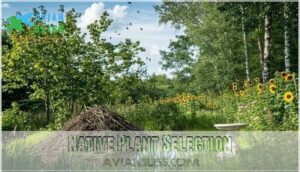
After adding a water feature, focus on native plant selection for your bird-friendly garden.
Berry-producing shrubs like elderberry and serviceberry, seed-bearing flowers such as sunflowers, and shelter providing trees like oaks all boost bird habitats in forests.
Native plants also offer low maintenance benefits.
Let long grass grow and create a brush pile—these simple steps increase bird species diversity and strengthen forest ecosystems right in your yard.
Observing Bird Behavior
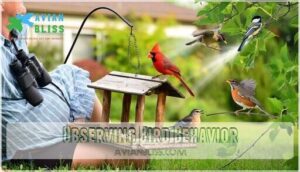
When you observe bird behavior in local forests, you’ll notice distinct flight patterns, feeding habits, and vocalizations that help you identify species.
Paying close attention to plumage details, nest-building activity, and movement lets you understand how each bird interacts with its habitat.
Flight Pattern Observation
After setting up feeders, shift your focus to flight pattern observation.
Watch how birds use Takeoff Techniques and Landing Styles—some hop, others swoop.
Notice Flapping Frequency and Gliding Duration, especially along common Flight Routes.
These bird behavior patterns help with bird species identification.
Understanding these patterns is easier with specialized flight resources.
Use these bird watching tips to spot differences and deepen your understanding of local bird behavior and bird species.
Plumage Examination
Ever wonder how plumage helps with bird species identification?
Explore bird watching tips by focusing on:
- Color Variation—spot reds, blues, browns.
- Feather Types—look for soft down, stiff flight feathers.
- Molting Process—notice patchy or fresh feathers.
- Regional Differences—compare local birds’ plumage.
- Identifying Markings—check for eye rings, wing bars.
These details reveal bird behavior and help in understanding the importance of regional differences.
Vocalization Identification
With woodland bird calls filling the air, you’ll want to tune in to song complexity, call variations, and mimicry analysis.
Listen for alarm calls and duet singing—these vocalizations help with identifying common birds.
Birdwatching bird calls and birdwatching bird songs are key tools.
Recording and comparing these sounds sharpens your ear for local species, using mimicry analysis to better understand the birds.
Nesting and Feeding Habits
When you watch birds, pay attention to their nesting materials—twigs, grass, or feathers.
Their foraging behavior can reveal dietary needs, from seeds to insects.
Parental care is impressive; adults feed chicks with precision, helping chick development.
Use a bird feeding guide to match food to species.
Understanding bird nesting habits gives insight into bird habitats and ecosystems, making your observations richer.
Frequently Asked Questions (FAQs)
How to find birds in the woods?
Move slowly, scan branches and undergrowth, and listen for distinct songs or calls.
Early mornings are best, when birds are active.
Bring binoculars, note colors and shapes, and look for movement in sunlight or shade.
Where to report bird sightings?
You can report bird sightings to eBird.org, a global database that tracks bird populations.
Just sign up, log your observations, and help scientists monitor species.
Local Audubon chapters also welcome reports—your notes really do matter!
What month is best for birding in Arizona?
April and May are prime months for birding in Arizona.
You’ll catch spring migrants, nesting activity, and a burst of color.
Early mornings offer cooler temps and lively birdsongs, so grab your binoculars and enjoy!
How to find out what birds are in your area?
Imagine stepping outside and spotting a cardinal’s red flash.
You’ll discover local birds by checking online bird maps, using field guides, and logging sightings.
Try apps like Merlin Bird ID for instant, location-based bird lists, to help you identify birds more effectively with location-based tools.
What time of day are birds most active?
You’ll spot the most bird activity around sunrise and just before sunset.
Birds feed, sing, and socialize most during these hours, taking advantage of cooler temperatures and low light.
Midday, they’re quieter and harder to find, which is a result of their natural behavior to rest during the warmest part of the day.
How do weather conditions affect bird sightings?
When the sky’s a drama queen—stormy or blazing hot—you’ll see fewer birds.
They hunker down to stay safe.
Mild, calm mornings bring the most action, so grab your binoculars when the weather’s friendly.
Are there safety tips for forest birdwatching?
Wear sturdy shoes, bring water, and carry a map or GPS.
Watch for uneven ground, ticks, and poison ivy.
Stay on marked trails, keep noise low, and let someone know your plans before heading out.
Which predators threaten birds in local forests?
Under the leafy canopy, you’ll find hawks, owls, foxes, snakes, and raccoons all eyeing birds as potential meals.
Even squirrels raid nests for eggs, so birds must stay sharp and alert every day.
Can children participate in forest birdwatching?
Absolutely, children can join forest birdwatching.
You’ll find it sparks curiosity and teamwork, as kids learn to use binoculars, identify calls, and record sightings.
Just remember to keep quiet, move slowly, and bring snacks.
Conclusion
Sometimes, the quiet magic of dawn makes finding birds in local forests feel like a gentle treasure hunt.
You’ll spot cardinals flashing red, hear wrens whisper, and learn the habits of doves and other feathered residents.
With binoculars and a sharp eye, you can identify species, watch migration, and even attract birds to your yard.
Every walk reveals new details about flight, plumage, and song, turning each outing into a rewarding journey of discovery.
- https://birdcast.info/migration-tools/migration-dashboard/
- https://www.allaboutbirds.org/news/when-will-spring-bird-migration-hit-its-peak-birdcast-has-answers/
- https://www.cmnh.org/learn/science-blog/2025/04/24/spring-bird-migration-has-begun-birds-on-the-move-in-northern-ohio
- https://www.audubon.org/magazine/ask-kenn-do-migrating-birds-take-same-routes-spring-and-fall
- https://www.bsbo.org/timing-of-spring-migration.html