This site is supported by our readers. We may earn a commission, at no cost to you, if you purchase through links.
You step outside with your morning coffee, and a flash of scarlet catches your eye—a bird you’ve never seen before perched on your neighbor’s fence. That moment sparks a question: where can you find more of these extraordinary species without driving hours out of town?
Bird habitats exist closer than you think, tucked into urban parks, wetlands, and forest trails that often go unnoticed. The secret isn’t knowing where all the birds are—it’s learning how to spot the places they already call home.
With the right tools and a bit of local knowledge, you can transform everyday spaces into opportunities for outstanding wildlife encounters right in your own backyard.
Table Of Contents
- Key Takeaways
- Best Ways to Find Local Bird Habitats
- Popular Bird Habitats Near You
- Notable Birding Locations in Your Region
- How to Identify Local Bird Species
- Getting Involved in Bird Conservation Locally
- Frequently Asked Questions (FAQs)
- Where can I find a good birding spot?
- Where can I find information about birds?
- How do I start birding in Northern Virginia?
- Where to go birding?
- Where can I find information about bird sightings in Virginia?
- What is a local Birding Website?
- What birding equipment do beginners need?
- When is the best time for birdwatching?
- How do I identify birds by sound?
- What safety precautions should birders take outdoors?
- Conclusion
Key Takeaways
- You’ll discover prime birding locations using digital tools like eBird and Merlin, connecting with local Audubon chapters, and joining community bird walks that combine expert guidance with hands-on field experience.
- Urban parks over seven hectares, wetlands, woodlands, and coastal areas each attract distinct bird species based on available food, water, and shelter—meaning quality habitats exist closer than you think.
- Building identification skills requires observing behavior patterns, using field guides alongside apps for verification, and logging sightings through citizen science platforms that contribute to conservation efforts.
- Active involvement through habitat restoration projects, wildlife sanctuary volunteering, and supporting local conservation initiatives directly protects the bird populations you’ve learned to identify and appreciate.
Best Ways to Find Local Bird Habitats
Finding bird habitats near you doesn’t have to feel like searching for a needle in a haystack. You can tap into local resources, connect with fellow birders, and explore digital tools that reveal hidden gems in your area.
Tools like an interactive bird identification guide let you filter by habitat type, so you can match your sightings with species that actually thrive in those environments.
Here are four practical ways to discover the best birding spots right in your backyard.
One key strategy is managing bird feeders to keep squirrels away, which helps ensure your feathered visitors get the food they need.
Using Birding Websites and Apps
Modern birding software puts hundreds of local habitats at your fingertips. Start with eBird mapping to explore nearby hotspots and species tracking data from fellow bird watchers. Download Merlin for instant bird ID tools using photos or sounds. The Audubon guides app combines both functions while supporting bird conservation efforts.
For a comprehensive breakdown of features and tips, check out this free bird identification guide online that covers all the major apps.
These platforms transform wildlife conservation by connecting you to ecotourism opportunities and active birding communities right in your neighborhood. By utilizing bird identification tools, you can improve your birding experience and contribute to a better understanding of local species.
Connecting With Local Audubon Chapters
Local Audubon Chapters connect you to bird conservation efforts through hands-on community outreach and chapter membership. Use the National Audubon Society’s “Audubon Near You” locator to find chapters serving your ZIP code.
These environmental organizations offer bird walks, citizen science counts, and wildlife preservation initiatives. You’ll gain access to local events, field trips, and partnerships with Audubon Centers while supporting habitat restoration projects in your region.
Many organizations focus on wildlife conservation efforts to protect local ecosystems.
Leveraging Social Media Birding Groups
Facebook groups and Instagram channels help you discover birding locations and share sightings instantly, with 74 percent of birdwatchers using these platforms.
Join WhatsApp bird alerts for real-time rare bird reports, field trip updates, and habitat directions in your area.
Online communities like these connect you to local Audubon chapters and virtual meetups while supporting citizen science through apps like eBird and iNaturalist.
Participating in Community Bird Walks
Beyond online connections, you’ll find the best bird walks right in your neighborhood, where experienced leaders guide you through local habitats while teaching birding techniques and bird walk ethics.
These outdoor activities offer nature therapy and community engagement:
Volunteers can follow expert bird habitat conservation tips to maximize their impact during restoration workdays.
- Free walks at land trusts and Audubon chapters provide binoculars and field guides for beginners
- University-led sessions connect students with residents at birding locations near campus
- Guided nature trails through wetlands, woodlands, and coastal sites build identification skills
- Group dynamics foster friendships while you contribute sightings to citizen science through eBird
Popular Bird Habitats Near You
Birds gather where the landscape offers them what they need to thrive, and you’ll find these habitats closer than you might think. From city parks to coastal shores, each environment attracts different species based on available food, water, and shelter.
Understanding bird species native habitats helps you identify which conservation efforts will benefit the birds in your local area most effectively.
Let’s look at the types of places where you’re most likely to spot birds in your area.
Urban Parks and Nature Reserves

Big cities hold surprising pockets of bird diversity, and you’ll find them in carefully managed urban parks and nature reserves. Research shows larger parks—those over seven hectares—support markedly more species than smaller green spaces, making them essential pieces of green infrastructure for reserve conservation. Community engagement and habitat restoration efforts in these areas strengthen urban ecology while offering accessible outdoor recreation and meaningful connections to local wildlife.
| Park Feature | Bird Diversity Impact | Your Action |
|---|---|---|
| Total greenspace area | Strongest predictor of species richness | Visit larger parks first |
| Vegetation complexity | Higher abundance and diversity | Explore multilayered habitats |
| Park age and location | Suburban parks outperform urban core | Check residential-area reserves |
| Incremental expansion | Small additions boost citywide diversity | Support park management initiatives |
Wetlands and Marsh Areas

Marshes and wetlands punch above their weight in bird conservation efforts—up to half of North America’s species depend on these habitats for survival.
You’ll witness remarkable bird migration at saltwater marshes and freshwater sites, where wetland ecology bolsters everything from nesting waterfowl to refueling shorebirds.
Habitat restoration and ecosystem services make wildlife sanctuary activities here essential for marsh conservation and rewarding bird watching and observation year-round.
Woodlands and Forest Trails

Forest canopies create vertical neighborhoods where warblers, woodpeckers, and thrushes carve out distinct niches from ground level to treetops. You’ll explore forest ecology along hiking trails and nature trails that reveal woodland birds across multiple layers:
- Tree canopy species patrol upper branches for insects and seeds.
- Mid-level birds navigate shrubby understory zones.
- Forest floors host ground-feeding specialists during outdoor activities.
Trail maintenance ensures your bird watching access through woodland nature areas.
Lakes, Rivers, and Coastal Sites

Water’s edge transforms into a bustling crossroads where herons wade, kingfishers dive, and shorebirds probe the mud for hidden meals. You’ll observe river ecosystems and lake habitats where waterfowl congregate, with locations like the Clear Fork River offering outstanding bird watching opportunities.
Coastal birding reveals saltwater specialists in coastal scrub habitat, while wetland conservation efforts protect shoreline management areas critical for wildlife conservation.
| Habitat Type | Representative Species |
|---|---|
| Lakes | Waterfowl, grebes, loons |
| Rivers | Kingfishers, herons, sandpipers |
| Coastal Sites | Gulls, terns, plovers |
Notable Birding Locations in Your Region
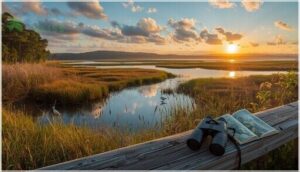
Your region holds some real gems for birding, from protected wildlife refuges to seasonal migration hotspots that draw exceptional species throughout the year.
These locations offer different habitats and experiences, so you can find spots that match your interests and skill level.
Let’s look at the standout destinations where you’ll have the best chances to observe local and migrating birds in their natural environments.
Recommended Parks and Wildlife Refuges
You’ll find some of the best birding experiences right in your own backyard, from small neighborhood parks to expansive wildlife refuges that shelter hundreds of species.
Start with nature centers that offer guided walks and educational programs, then explore conservation areas with dedicated park trails.
Look for bird reserves and wildlife preserves near wetlands, where species diversity peaks during migration seasons.
Conservation Centers and Sanctuaries
Conservation centers and sanctuaries protect local species through wildlife rehabilitation, habitat restoration, and environmental education. These facilities serve as research hubs where you can witness conservation efforts firsthand and learn from bird sanctuary experts.
Visit centers to:
- Tour wildlife preservation facilities and observation aviaries
- Join volunteer programs in sanctuary management
- Attend workshops on reducing human-wildlife conflicts
- Support rehabilitation through donations and memberships
Botanical Gardens and Arboretums
Botanical gardens create bird-friendly urban oases through plant diversity that sustains year-round bird populations. Descanso Gardens hosts over 170 species, while Hansen Dam and Sepulveda Basin Wildlife Reserve offer varied habitats supporting 280-plus birds.
These sites combine California native plants with structured habitat design, providing outstanding garden birding opportunities.
Los Angeles Audubon Society partners with local gardens to document species and educate visitors about conservation.
Seasonal Bird Migration Hotspots
Migratory birds follow ancient flyways through California twice yearly, and knowing when and where they pass through your region dramatically increases your chances of spotting rare species. Track seasonal trends in avian ecology to time your visits perfectly:
- Spring migration (March-May) brings warblers and songbirds returning north
- Fall migration (August-October) concentrates waterfowl at coastal sites and wetlands
- Winter residents arrive November-February, boosting biodiversity protection efforts
Local birdwatching groups share real-time sighting reports during peak migration periods.
How to Identify Local Bird Species

Spotting birds in your area starts with learning what to look for and where to find them. You’ll need to recognize the birds that call your region home, understand their habits, and know how to confirm what you’re seeing.
Here’s how to build your identification skills and connect with the local birding community.
Recognizing Common Regional Birds
Start your bird identification journey by learning a few common species in your area. Look for the American Robin’s orange breast on lawns, the Northern Cardinal’s bright red plumage at feeders, or the Red-winged Blackbird‘s distinctive shoulder patches near wetlands.
Pay attention to feather patterns, beak shapes, and nesting habits. Grab your binoculars and observe these birds carefully—you’ll notice details that experienced birders use for quick identification.
Using Field Guides and Identification Apps
Once you’ve spotted those common species, grab a field guide or download a digital birding app to sharpen your identification skills. Apps like Merlin use image recognition and crowd-sourced data to suggest likely birds for your location, while traditional field guides offer:
- Species-specific range maps showing where birds live throughout the year
- Detailed plumage descriptions for quick cross-reference during field trips
- Audio recordings to verify species through their calls and songs
- Offline access ensuring your identification tools work without cell service
Pair these resources with your binoculars for confident species recognition on every birdwatching adventure.
Observing Bird Behavior and Habitats
Watch how birds move through their environments, and you’ll learn as much as any field guide can teach. Territory displays peak on clear days, while feeding activity spikes at dawn and dusk—25 to 35 percent higher than midday.
During bird migration, flocking behavior intensifies along nature trails, and habitat diversity shapes what you see: wetlands draw insectivores in spring, woodlands attract seed eaters come fall.
Reporting and Sharing Sightings
Log your bird sightings with care, and you’ll join a community that turns everyday wildlife observation into citizen science. Strong sighting reports strengthen data analysis and species verification across networks.
- Record date, time, and exact location for each bird species you identify
- Note individual counts and environmental conditions during your birdwalks
- Capture photos or audio to support bird tracking efforts
- Submit data to established platforms that local Audubon chapters monitor
- Connect with bird watching groups to cross-check observations and improve accuracy
Getting Involved in Bird Conservation Locally
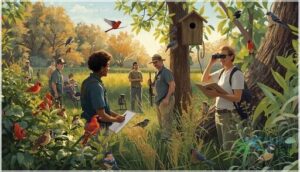
You don’t have to watch from the sidelines regarding protecting the birds you’ve come to know and appreciate. Conservation work happens in your own backyard, and local organizations are always looking for people who want to make a real difference.
Here are four ways you can roll up your sleeves and get involved in bird conservation right where you live.
Volunteering at Wildlife Sanctuaries
You can join volunteer training programs at wildlife sanctuaries to support bird monitoring, sanctuary management, and wildlife conservation efforts. Typical roles include assisting with environmental education programs, wildlife observation, and wildlife rehabilitation and care.
Most sanctuaries require you to complete orientation sessions before starting, and shifts usually occur on weekends when community involvement in ecology peaks and birds are most active.
Participating in Habitat Restoration Projects
Habitat restoration projects offer hands-on conservation efforts where you’ll remove invasive species, plant native vegetation, and monitor bird use over several months. Most programs provide volunteer training on ecological preservation methods and biodiversity protection measures before you begin.
These restoration methods create lasting habitat improvements, and your community involvement in ecology helps track vegetation recovery and fosters sustainable development strategies that benefit local bird populations.
Joining Local Environmental Education Programs
Environmental education programs connect you with experienced naturalists who’ll teach bird identification, ecological principles, and conservation techniques through workshops, field courses, and community outreach events.
You’ll find conservation courses at nature reserves that build ecological awareness through outdoor education activities, and many centers offer junior naturalist programs where you can mentor young wildlife enthusiasts while developing your own eco volunteer skills.
Supporting Community Conservation Initiatives
You can strengthen local bird populations by contributing time, resources, or expertise to grassroots conservation efforts that protect essential habitats and restore natural areas in your community. Support these sustainability initiatives through:
- Donating to conservation funding campaigns that protect critical nesting sites and migratory corridors
- Advocating for eco-friendly practices in local development projects that impact bird habitats
- Organizing neighborhood events that build ecological awareness and promote nature preservation among residents
Frequently Asked Questions (FAQs)
Where can I find a good birding spot?
City parks with water features attract diverse species year-round, while wetlands and forest trails offer prime habitat exploration.
Check birding apps for hotspots, or connect with local birding communities to discover nearby nature reserves.
Where can I find information about birds?
Field guides, ornithology databases, and birding resources from wildlife agencies offer reliable species data.
Check the National Society’s website, visit Audubon Center programs, or explore chapters near you for local bird surveys and expertise.
How do I start birding in Northern Virginia?
Download a birding app and field guide, then connect with the Northern Virginia Bird Alliance for beginner-friendly walks. Local species identification and nature exploration become easier when you learn from experienced mentors.
Where to go birding?
Over 280 bird species use Hansen Dam’s varied habitat, making wildlife areas and nature reserves prime choices.
Explore birding trails with habitat diversity, join bird walks at conservation areas, or combine hiking and birding for rewarding birdwatching activities during migration.
Where can I find information about bird sightings in Virginia?
Check the Virginia Society of Ornithology for regional Bird Reports and Local Lists, or use eBird’s Citizen Science platform for Species Data.
Richmond Society and Virginia Beach Society chapters publish Northern Neck sightings regularly.
What is a local Birding Website?
Think of it as your digital field guide: a regional online hub where local sightings, species databases, and birding resources converge, connecting you with nearby conservation tools, Audubon Centers, and Ohio Bird Sanctuary updates.
What birding equipment do beginners need?
You’ll want binoculars (8×40 or 10×42), a field guide or bird app, and a notebook for recording sightings. Bring water, snacks, and weather-appropriate clothing for comfortable outings.
When is the best time for birdwatching?
Early morning brings peak migration and dawn chorus activity, while late afternoon provides crepuscular hours for feeding.
Weather patterns and seasonal cycles dictate ideal wildlife reserve visits for outdoor recreation and bird walks.
How do I identify birds by sound?
Silence often reveals more than sight—listen for Bird Call Patterns and Vocalization Types during Bird Walks through California Birding sites.
Audio Guides and Sound Recognition apps help identify songs at Wildlife Reserve parklands, enriching natural histories through Sonic Identification.
What safety precautions should birders take outdoors?
Pack emergency supplies, wear appropriate footwear for footpaths and boardwalks, stay aware of wildlife encounters on hiking trails, and inform someone of your plans.
Sanctuaries often accommodate wheelchairs and strollers for safer access.
Conclusion
Studies show that birders who explore local habitats weekly spot 40% more species than occasional visitors. Your journey toward finding local bird habitats near me starts with a single walk through a nearby park or wetland.
Connect with local chapters, download identification apps, and join community bird walks to deepen your understanding. Each outing sharpens your observation skills and strengthens conservation efforts. The birds are already there—you just need to know where to look.