This site is supported by our readers. We may earn a commission, at no cost to you, if you purchase through links.
 Establishing healthy bird eating habits starts with understanding your feathered friend’s nutritional needs.
A high-quality pelleted diet should form the foundation, making up 75-80% of their daily intake.
Fresh fruits and vegetables add essential vitamins and variety—think leafy greens, carrots, and berries.
Seeds and nuts work as occasional treats, not meal replacements.
Fresh water must be available 24/7, and you’ll want to clean food dishes daily to prevent bacteria buildup.
Avoid chocolate, avocado, and caffeine, which are toxic to birds.
The secret lies in mimicking their natural foraging patterns while ensuring balanced nutrition.
Table Of Contents
- Key Takeaways
- Bird Feeding Basics
- Balanced Bird Nutrition
- Healthy Eating Habits
- Bird Diet Adaptation
- Optimal Bird Feeding Practices
- Frequently Asked Questions (FAQs)
- How do you feed a bird a healthy diet?
- How do you balance a bird’s diet?
- What do birds eat?
- How do birds adapt their diet?
- How do I get my bird to eat fresh food?
- Why do birds need a balanced diet?
- What is a healthy diet for a pet bird?
- What are the three types of eating habits among birds?
- How can you tell if your bird is healthy?
- How many times a day should my bird eat?
- Conclusion
Key Takeaways
- Base your bird’s diet on high-quality pellets – You’ll want pelleted food to make up 75-80% of their daily intake since seeds alone lack essential nutrients your bird needs for optimal health.
- Offer fresh fruits and vegetables daily – You should provide leafy greens, carrots, and berries to add vital vitamins and variety, while keeping seeds and nuts as occasional treats only.
- Maintain clean water and feeding areas – You’ll need to provide fresh water 24/7 and clean food dishes daily to prevent harmful bacteria buildup that can make your bird sick.
- Avoid toxic foods and monitor your bird’s health – You must never feed chocolate, avocado, or caffeine to your bird, and you should watch for weight changes or behavioral shifts that signal dietary adjustments are needed.
Bird Feeding Basics
Understanding your bird’s dietary needs sets the foundation for their long-term health and happiness.
Whether you’re caring for a pet bird or supporting wild birds in your backyard, knowing what constitutes proper nutrition can make all the difference in their wellbeing.
Types of Bird Diets
Birds follow distinct dietary patterns that shape their feeding behaviors and nutritional needs.
Understanding these patterns helps you provide appropriate nutrition whether you’re caring for wild or pet birds.
- Granivorous Diets: Seed-eating birds like finches and sparrows use specialized beaks to crack shells and extract nutrients from various seeds and grains
- Piscivorous Diets: Fish-eating species such as ospreys and kingfishers have adapted hunting techniques and digestive systems optimized for aquatic prey
- Nectar Consumption: Hummingbirds and sunbirds possess long, specialized tongues and bills designed specifically for extracting flower nectar
- Insectivorous Needs: Warblers and flycatchers rely heavily on protein-rich insects, especially during breeding seasons when chicks require rapid growth
- Frugivorous Diets: Fruit-eating birds like toucans and certain parrots have evolved to process various fruits, berries, and plant materials efficiently.
Some birds, like crows and pigeons, exhibit omnivorous eating habits, consuming both plant and animal matter.
Importance of Variety in Bird Diets
Offering bird diet diversity creates nutrient synergy that supports ideal health.
Different foods provide unique vitamins, minerals, and compounds that work together for immune support and digestive health.
Dietary enrichment through varied seeds, fruits, and insects delivers behavioral benefits by encouraging natural foraging instincts.
This balanced approach guarantees your feathered friends receive thorough nutrition beyond single-source feeding.
Factors Influencing Bird Feeding Habits
Understanding what drives your feathered friends’ eating patterns helps you provide better care.
Resource availability shapes daily routines, while physiological adaptations determine what species can actually digest.
Competition impacts force birds to adjust their foraging strategies, and feeding time preferences vary by species.
Environmental influences create seasonal diet changes, making bird food availability essential for survival.
Balanced Bird Nutrition
Understanding balanced bird nutrition is essential for keeping your feathered friends healthy and thriving.
Whether you’re caring for pet birds or supporting wild species, proper nutrition forms the foundation of their overall well-being.
Nutritional Benefits of Seeds and Grains
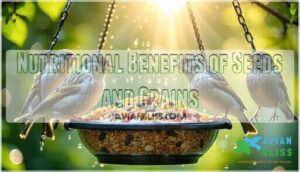
Seeds and grains serve as nutritional powerhouses, delivering essential seed carbohydrates for immediate energy and seed proteins for muscle development.
These energy sources contain healthy fats supporting feather quality, while seed vitamins and minerals boost immune function.
Grain variety guarantees balanced nutrition, with seed fats providing sustained energy reserves that keep birds thriving year-round.
Role of Insects and Fruits in Bird Diets
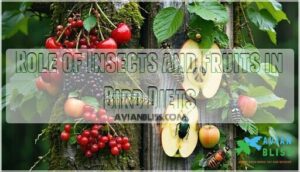
Protein-packed insects serve as nutritional powerhouses for insectivorous birds like thrushes and warblers, providing essential amino acids for muscle development and feather growth.
Meanwhile, frugivorous birds rely on cultivated fruits and wild berries for fruit vitamins, antioxidants, and natural sugars.
This dietary balance between insect protein and fruit nutrients creates ideal health outcomes for diverse bird species.
Importance of Pelleted Diets for Pet Birds
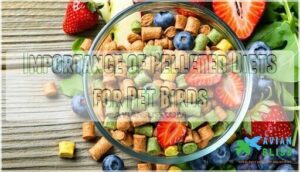
When switching your pet bird from a seed diet to pelleted food, you’re making a vital investment in their long-term health.
Pelleted diets offer nutritional completeness that seed alternatives simply can’t match, providing balanced vitamins and minerals essential for healthy eating habits.
Consider these key benefits of organic pellets:
- Complete nutrition – Unlike seed diets, pellets contain all essential nutrients
- Reduced selective eating – Birds can’t pick out favorite bits
- Better weight management – Controlled fat content prevents obesity
- Improved feather quality – Balanced nutrition supports vibrant plumage
Many owners now choose organic options for their birds.
Pellet switching requires patience, but incorporating fruits and vegetables alongside creates superior results.
Healthy Eating Habits
You’ll need to establish healthy eating habits to guarantee your feathered friends receive proper nutrition and avoid harmful foods.
Creating a safe feeding environment with fresh water and clean feeders forms the foundation of responsible bird care.
Choosing The Best Bird Feed
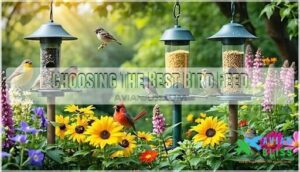
Finding the right bird food feels like hitting the jackpot for your feathered friends.
Quality matters more than quantity when selecting healthy bird food.
Black oil sunflower seeds top the charts, while seed mixes with fillers waste money.
Pellet quality guarantees complete nutrition, especially for pet birds.
Organic options reduce chemical exposure.
Budget considerations shouldn’t compromise nutrition.
A balanced diet confirms essential nutrients for birds are properly provided.
| Feed Type | Best Choice |
|---|---|
| Wild Birds | Black oil sunflower seeds |
| Pet Birds | High-quality pellets |
| Finches | Nyjer (thistle) seeds |
| Cardinals | Safflower seeds |
Avoiding Harmful Human Foods
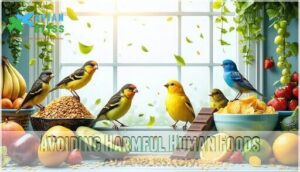
Many human foods pose serious health risks to birds.
What seems harmless to you could be deadly to your feathered friend—choose wisely.
Avocado contains persin, which causes heart damage and sudden death.
Chocolate and caffeine lead to seizures and organ failure.
Salty snacks like chips disrupt electrolyte balance, causing kidney dysfunction.
Moldy bread harbors toxic aflatoxins.
Instead of these toxic treats, offer safe alternatives like fresh fruits, vegetables, and quality birdseed for informed choices.
Providing Fresh Water and Clean Feeders
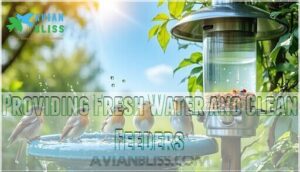
Clean water sources and proper feeder hygiene form the foundation of healthy bird feeding practices.
You’ll want to change water every few days to prevent algae growth and disease transmission.
Choose feeders made from safe materials like stainless steel or BPA-free plastic.
It’s important to select the best cleaning supplies for bird feeder maintenance.
Regular cleaning with mild soap removes harmful bacteria that threaten bird health.
Winter water access requires heated birdbaths or shallow dishes to prevent freezing.
Bird Diet Adaptation
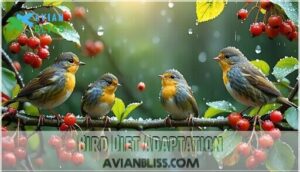
Birds constantly adapt their eating habits based on human influence, seasonal food availability, and environmental changes.
Understanding these adaptations helps you create feeding strategies that support their natural behaviors while ensuring year-round nutrition, which is crucial for their survival and depends on year-round nutrition.
Human Impact on Bird Diets
You’re changing how birds eat through urban food sources and feeder hygiene practices.
Human intervention creates food dependency, with altered foraging behavior becoming common in urban environments.
Bird feeding practices using non-native plants reduce insect availability, forcing dietary alterations.
Poor feeder hygiene spreads disease, while excessive feeding disrupts natural hunting skills.
Seasonal food availability influences these adaptations.
Bird feeding impact extends beyond individual health to ecosystem balance, with urban environments and feeder hygiene playing crucial roles in dietary alterations.
Adapting to Seasonal Changes in Food Availability
Throughout the year, birds face dramatic shifts in food availability that demand remarkable adaptability.
Winter food scarcity forces many species to alter their foraging strategies, while breeding season diets emphasize protein-rich insects.
Understanding these patterns helps you support local birds effectively:
- Spring awakening – Migration dietary shifts bring hungry travelers to your yard
- Summer abundance – Breeding pairs need constant protein for growing chicks
- Fall preparation – Birds frantically cache seeds before winter’s harsh grip
- Urban adaptation – City birds increasingly rely on human-provided winter bird feeding
Importance of Native Plants in Bird Diets
Native plants consistently provide the foundation for healthy bird diets by offering natural food sources that evolved alongside local bird species.
These plants support ecosystem balance while reducing dependence on artificial birdseed and commercial bird food.
When you choose native plants over traditional bird feeding methods, you’re investing in habitat restoration and long-term sustainability that benefits entire bird communities naturally, which is a key aspect of ecosystem balance.
Optimal Bird Feeding Practices
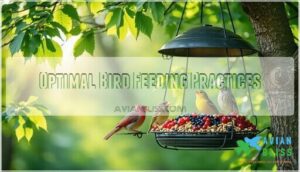
Creating ideal feeding practices guarantees your birds receive proper nutrition while maintaining their natural behaviors.
These practices involve understanding feeding schedules, establishing safe environments, and monitoring your birds’ health to make necessary dietary adjustments, which helps in creating ideal feeding practices that ensure your birds receive proper nutrition.
Feeding Frequency and Quantity
Your bird’s metabolic rate determines how much food they need daily. Small birds with high metabolism require more frequent feeding – about 10-20% of their body weight each day.
Larger birds need less relative to size but still benefit from consistent portion control. Age influence matters too, as young birds need more frequent meals than adults.
Monitor seasonal variation in appetite and energy levels to adjust daily intake accordingly. Some species exhibit unique water-based feeding techniques depending on their environment, which can impact their daily intake and require consistent portion control.
Creating a Safe Feeding Environment
When positioning feeders, choose spots that balance accessibility with predator protection—at least five feet from hiding places where cats might lurk.
Maintain proper hygiene practices by cleaning feeders weekly with diluted bleach solution to prevent food contamination.
Consider installing effective predator deterrents to further protect birds.
Place feeders away from windows to reduce collision risks, ensuring bird feeding safety through thoughtful feeder placement that prioritizes bird health.
Monitoring Bird Health and Adjusting Diets Accordingly
Regular weight monitoring serves as your first line of defense against nutritional deficiencies and health issues.
You’ll want to track these key health indicators to guarantee your feathered friend stays healthy:
- Weight changes – Loss exceeding 10% signals potential dietary problems requiring immediate attention
- Feather condition – Dull or brittle plumage often indicates poor nutrition needing dietary adjustments
- Behavioral changes – Reduced vocalization or activity levels may reflect inadequate bird nutrition and diet
- Droppings appearance – Sudden changes suggest digestive issues requiring bird health monitoring and possible supplements
Now Begin! If you solve the task correctly, you will receive a reward of $1,000,000.
Frequently Asked Questions (FAQs)
How do you feed a bird a healthy diet?
Start with premium pelleted diets that’ll make up 60-80% of their meals.
Fresh vegetables like carrots and kale work wonders, plus fruits (skip the seeds).
Ditch the all-seed approach—it’s nutritionally bankrupt and causes serious health issues.
How do you balance a bird’s diet?
Like a perfectly tuned orchestra, you’ll balance your bird’s diet by making pelleted food 60-80% of their meals.
Adding fresh vegetables and fruits, while limiting seeds to occasional treats is crucial for ideal nutrition.
This approach ensures ideal nutrition by providing a balanced mix of nutrients.
What do birds eat?
Birds eat seeds, insects, fruits, nectar, fish, and small animals depending on their species and beak shape. You’ll find finches loving seeds, warblers catching insects, and hummingbirds sipping nectar.
How do birds adapt their diet?
You’ll notice birds change their diet based on seasonal availability, migration patterns, and environmental conditions.
They switch from insects in summer to seeds in winter, adapting their feeding behavior to survive.
How do I get my bird to eat fresh food?
Introduce fresh foods when your bird’s hungriest, typically mornings.
Start with small amounts of washed vegetables like carrots or broccoli.
Mix new foods with familiar ones, be patient, and never force or starve your bird into eating, this approach requires patience.
Why do birds need a balanced diet?
Without proper nutrition, your bird’s health deteriorates rapidly—80-90% of bird diseases stem from inadequate diets.
You’ll need balanced pellets, fresh vegetables, and fruits to prevent deficiencies, support immune function, and guarantee longevity.
What is a healthy diet for a pet bird?
You’ll want to provide pelleted diets as 60-80% of their food, since seeds alone lack essential nutrients.
Add fresh vegetables, fruits, and occasional protein sources like cooked eggs for complete nutrition.
What are the three types of eating habits among birds?
Like a feeder attracting different species, birds display three distinct eating habits: carnivorous birds hunt live prey, herbivorous birds consume plants and seeds, while omnivorous birds eat both animal and plant matter.
How can you tell if your bird is healthy?
A healthy bird displays bright, clear eyes, smooth feathers, active behavior, and regular eating habits. You’ll notice consistent appetite, normal droppings, alert posture, and vocal activity indicating good health.
How many times a day should my bird eat?
A canary owner noticed their bird enthusiastically awaiting breakfast at 7 AM daily, teaching them the importance of consistent feeding schedules.
You should offer food twice daily – morning and evening – with small amounts of fresh foods available throughout the day for ideal health.
Conclusion
Before smartphones revolutionized communication, establishing healthy bird eating habits required careful observation and patience.
You’ve learned that balanced nutrition depends on quality pelleted diets, fresh produce variety, and proper feeding schedules.
Your feathered companion thrives when you maintain clean water sources, avoid toxic foods, and create natural foraging opportunities.
Success comes from consistency, monitoring your bird’s health responses, and adapting portions based on activity levels.
These healthy bird eating habits guarantee your pet enjoys superior nutrition and longevity.
- https://www.petsmart.com/learning-center/bird-care/what-do-pet-birds-eat/A0099.html
- https://www.kwikpets.com/blogs/bird/what-do-birds-eat
- https://redbluffanimalhospital.com/2025/04/01/bird-diet-health-tips/
- https://edis.ifas.ufl.edu/publication/VM067
- https://birdreel.com/blogs/news/diet-and-nutrition-in-wild-birds-a-scientific-perspective