This site is supported by our readers. We may earn a commission, at no cost to you, if you purchase through links.
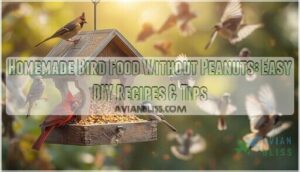
Most backyard birds won’t touch peanuts, and forcing them into every feeder recipe limits which species stop by. Cardinals prefer sunflower seeds. Chickadees seek out suet. Finches gravitate toward millet and thistle. When you skip peanuts entirely, you open your yard to dozens of species that might otherwise fly past.
Making homemade bird food without peanuts also eliminates the sticky residue that gunks up feeders and creates mold hotspots. You’ll gain better control over ingredient freshness, attract a more diverse flock, and avoid potential allergens that affect some bird species. The right seed and fat combinations provide everything your feathered visitors need.
Table Of Contents
- Key Takeaways
- Why Make Homemade Bird Food Without Peanuts
- Essential Nut-Free Ingredients for Bird Food
- Step-by-Step DIY Bird Food Recipes
- Maintenance and Safety Tips for Feeders
- Top 6 Tools and Ingredients for Nut-Free Bird Food
- Frequently Asked Questions (FAQs)
- How do you make bird food without nuts?
- What can I use to bind bird seed together?
- What is the 5 7 9 rule for bird feeders?
- How can I store homemade bird food safely?
- What are the signs of spoiled bird food?
- Are certain bird species picky eaters?
- How do weather conditions affect feeder usage?
- What additional tools help attract specific birds?
- Can I use coconut oil instead of lard?
- How long does homemade bird food last?
- Conclusion
Key Takeaways
- Peanut-free bird food attracts a wider variety of species—cardinals prefer sunflower seeds, chickadees seek suet, and finches gravitate toward millet and thistle, opening your yard to dozens of birds that won’t touch peanuts.
- Making your own bird food eliminates sticky residue that creates mold hotspots in feeders while giving you better control over ingredient freshness and avoiding potential allergens that affect some bird species.
- Essential ingredients include safe seeds like black oil sunflower and white millet, binding fats such as lard or vegetable shortening, and small portions of unsalted dried fruit or grated cheese for added nutrition and energy.
- Regular feeder maintenance prevents disease by scrubbing monthly with soapy water, refilling weekly with fresh seed, and placing feeders 10 meters from your home at 5–15 feet above ground to deter pests while monitoring visiting birds for health indicators.
Why Make Homemade Bird Food Without Peanuts
You might think peanut butter is a bird feeder staple, but plenty of good reasons exist to skip it altogether. Whether you’re concerned about allergies, dealing with sticky cleanup, or simply want to attract different species to your yard, making your own nut-free bird food gives you more control.
Here’s why switching to homemade recipes without peanuts can benefit both you and your feathered visitors.
Allergy and Safety Concerns
Peanut allergy poses real risks to birds, especially in mixed feeders where cross-contamination can trigger allergic reactions. You’ll want to guarantee bird safety by choosing nut-free bird feeder options. Consider these allergy-friendly precautions:
- Verify commercial foods lack hidden peanut ingredients from manufacturing facilities
- Monitor captive birds for behavioral changes indicating food sensitivities
- Select peanut butter alternatives processed separately from tree nuts
Creating nut-free bird food protects vulnerable species reliably. Ensuring the use of scientific study methods is vital for validating the safety of bird food.
Avoiding Mess and Spoilage
Oil-rich peanut butter creates sticky residue that’s hard to scrub from bird feeders, while suet and gelatin natural binders simplify feeder cleaning. Peanut butter alternatives like vegetable shortening stay fresh longer outdoors.
You’ll reduce spoilage prevention challenges when seed storage uses airtight containers in cool spots—moisture meters show levels below 12% cut mold control risks.
Weather resistance improves with sheltered placement, decreasing rain-related seed loss by 30%.
Attracting a Wider Variety of Birds
Skipping peanuts opens your feeder to finches craving nyjer, woodpeckers drawn to suet, and cardinals preferring sunflower seeds—each species brings color and song. Feeder placement strategies near bird-friendly plants and water source proximity boost habitat enhancement, while seasonal food variations like dried berries attract thrushes during migration. Your birdseed mix becomes a welcoming table for thirty species instead of ten.
- Tube feeders with nyjer attract goldfinches and siskins year-round
- Platform feeders placed near shrubs welcome ground-foraging sparrows
- Suet cages hung in trees draw nuthatches and downy woodpeckers
- Mixed seed blends with millet invite juncos and towhees
- Adding water sources doubles overall bird species diversity
Controlling Ingredient Quality
When you’re crafting homemade bird food, sourcing ingredients from suppliers with clear allergen controls prevents cross-contamination—look for seed quality tested under 20 ppb aflatoxin.
Storage conditions matter too: airtight containers below 70°F keep your nut-free bird feeder mix fresh.
Ingredient sourcing with freshness testing ensures your bird nutrition approach delivers safe, wholesome bird feeding and nutrition every time.
Essential Nut-Free Ingredients for Bird Food
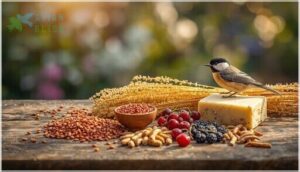
Building a nut-free bird feeder starts with choosing the right ingredients. You’ll want a blend of safe seeds, the right type of fat to hold everything together, and maybe a few tasty extras to attract different species.
Let’s look at what works best and what you should keep out of the mix.
Safe Seed Mixes (Sunflower, Millet, Cracked Corn)
When you build your own nut-free mix, sunflower seeds serve as the foundation—black oil varieties attract chickadees, nuthatches, and finches with their thin shells and rich oil content. White millet draws ground-feeders like sparrows and doves, while cracked corn provides energy for jays and cardinals.
Store these bird-friendly seeds in cool, dry containers to prevent mold and maintain nutrition balance for your backyard visitors.
Suitable Fats (Lard, Suet, Vegetable Shortening)
You’ll need a binding agent to hold your seed mix together—that’s where fats come in. Here’s your Fat Comparison for nut-free Bird Nutrition:
- Lard offers a high melting point for stable LardBased Bird Feeders in moderate climates
- Suet provides traditional, energy-dense Suet Cakes after Suet Rendering
- Vegetable Shortening delivers easy molding and neutral flavor for varied Shortening Uses
- Choose food-grade options without salt or seasonings
- Blend fats to boost energy content for cold-weather feeding
Healthy Add-ins (Dried Fruit, Grated Cheese)
Add small portions of unsalted dried cranberries, raisins, or apricots for concentrated energy boosters—these fruit seed mix additions attract chickadees and titmice during migration.
You can also sprinkle aged, grated cheese nutrition in thin shreds to provide calcium supplements for nesting birds.
Both dried fruit benefits and cheese improve your homemade bird food alongside your birdseed and suet base, keeping meals bird friendly year-round.
Ingredients to Avoid
Your nut free bird feeder depends on safe ingredients, so avoid toxic seeds like raw peanuts and anything spoiled. Keep these out completely:
- Moldy grains or rotten fruits that harbor fungus
- Stale nuts, especially those with strong odors
- Peanut butter alternatives containing salt or chocolate
- Spoiled fats like rancid lard or gelatin mixtures
Fresh, clean nutfree bird food protects your backyard visitors.
Step-by-Step DIY Bird Food Recipes
Making your own bird food without peanuts is simpler than you might think. Each recipe uses basic ingredients you can mix in about 10 minutes, then shape into feeders that birds can’t resist.
Here are four tried-and-tested methods that work for different bird species and feeding styles.
Suet-Based Bird Food Without Peanuts

You can create suet cakes by melting unsalted beef lard until soft, then mixing in two parts bird seed like sunflower hearts and white millet. This fat content provides essential calories for species such as woodpeckers and chickadees during cold months.
Add dried fruit or mealworms for extra nutrition, then pour the mixture into feeder designs like silicone molds before refrigerating to set.
Seed and Fruit Mixes
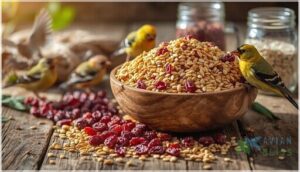
You can blend a flexible seed and fruit mix by combining 50% millet, 30% sunflower seeds, and 20% dried raisins or berries by weight. This nutrient balance appeals to finches, sparrows, and waxwings while supporting their energy needs.
- Store birdseed in airtight containers to prevent rancidity
- Choose unsweetened dried fruits to avoid harmful additives
- Mix small batches to reduce mold risk
- Rotate your seed selection based on seasonal bird preferences
Pine Cone and Molded Feeders
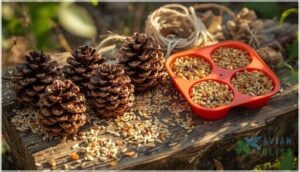
After your seed mix is ready, you can form natural feeders using pine cones or molds. Pine Cone Preparation starts with baking clean cones at 200°F for 30 minutes to remove pests. Brush warmed suet onto each cone, then press millet and sunflower chips firmly into the grooves.
For Molded Feeder Tips, silicone shapes work perfectly—pack your seed blend tightly and refrigerate one hour before hanging these DIY Bird Feeders outdoors.
Tips for Shaping and Hanging Feeders
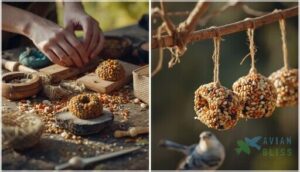
Once your DIY bird feeders are solid, feeder design matters for bird accessibility. Spherical shapes accommodate different perch arrangements, while rectangular homemade bird feeders suit clinging species. Hanging options include twine threaded through the top or wire loops. Clear molds improve seed visibility so you can monitor levels.
This DIY guide helps you choose designs that keep your making homemade bird feeders effort worthwhile and functional outdoors.
Maintenance and Safety Tips for Feeders
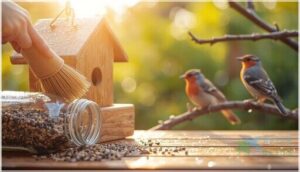
Once your feeder is up and running, keeping it clean and safe becomes your main job. Regular maintenance prevents disease and keeps birds coming back to healthy food sources.
Here’s what you need to know to protect both your feathered visitors and your yard.
Preventing Mold and Spoilage
Regularly, moisture levels above 60% trigger rapid mold growth in homemade bird food. You can protect your suet cakes and gelatin-based feeders by storing them in cool, dry areas and swapping batches weekly.
Feeder sanitation starts with choosing low-moisture ingredients like millet and cracked corn. Dry storage combined with moisture management keeps lard-based mixes fresh longer, ensuring the birds you care for stay healthy and well-fed.
Cleaning and Refilling Feeders
You’ll want to scrub your bird feeders monthly with warm, soapy water to prevent salmonella and E. coli buildup. A diluted bleach solution (one part bleach to nine parts water) works well for thorough disinfection.
Rinse completely before drying to remove any cleaning residue that might irritate visiting birds.
Refill with fresh seed weekly during peak seasons, checking for cracks that expose seed to moisture.
Placing Feeders to Deter Pests
Beyond careful cleaning, smart outdoor placement strategies can make all the difference in keeping unwanted visitors at bay. Position your bird feeders at least 10 meters from your home to minimize pest access, and aim for 5–15 feet above ground level.
- Use pole-mounted feeders for vertical separation from vegetation
- Install away from dense shrubbery and fruit trees
- Rotate feeder locations periodically to disrupt pest sheltering sites
- Choose squirrel deterrents like baffles for bird feeder security
Monitoring Bird Health
Vigilance at your feeders reveals vital bird health indicators that support wildlife conservation. Watch for changes in feather condition, beak health, and feeding behavior during backyard bird watching sessions.
Birds with ruffled plumage, labored breathing, or unusual lethargy may show signs of bird disease or nutrition balance issues. Remove contaminated food immediately, clean feeders with disinfectant, and consider adding bird friendly plants nearby to support natural foraging.
Top 6 Tools and Ingredients for Nut-Free Bird Food
Making quality bird food at home doesn’t require a long shopping list or specialized equipment. You’ll need just a few basic items to create nutritious, nut-free feeders that attract diverse species to your yard.
Here are six essential tools and ingredients that make the process simple and effective.
1. Crisco Vegetable Shortening
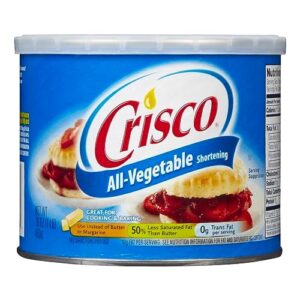
You’ll find Crisco Vegetable Shortening at the heart of many DIY recipes for homemade bird food without peanut butter. This hydrogenated vegetable oil acts as one of the most outstanding fat sources for bird nutrition, alongside lard and traditional suet-based bird feeders.
The shortening benefits include its resistance to melting at room temperature and outstanding shelf stability. When you’re crafting bird feeder recipes, Crisco provides high-energy calories that small species need while remaining flavor-neutral.
Mix it with seeds at a 1:2 ratio for effective suet-based bird feeders that support diverse bird nutrition needs.
| Best For | Home bakers and DIY bird food enthusiasts who need an affordable, shelf-stable fat source for cooking or making homemade suet cakes. |
|---|---|
| Material | Vegetable Shortening |
| Weight | 15.98 ounces |
| Primary Use | Cooking and Baking |
| Package Quantity | Pack of 6 |
| Color Options | White/Cream |
| Food Safe | Yes |
| Additional Features |
|
- High energy content and neutral flavor make it perfect for bird food recipes and general cooking
- Stays solid at room temperature, so it won’t melt or spoil as quickly as butter
- Good value with a pack of 6, especially since it’s harder to find in regular stores
- Can go rancid faster than expected if not stored properly
- Limited availability in supermarkets means you’ll likely need to order online
- Not ideal if you want to use one container for multiple purposes (cooking and non-food uses)
2. Dried Fruit Raisins
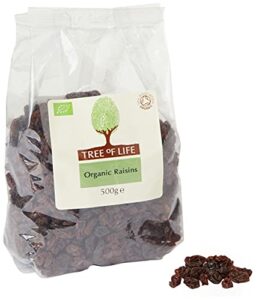
Raisins offer concentrated carbohydrates that fuel migrating songbirds and winter residents alike. Fruit attraction works especially well for robins and catbirds, though chickadees will investigate too. The natural sugars provide quick calories without the mess of peanut butter, making raisins a practical addition to homemade bird food that aids wildlife conservation in your own backyard.
You can add these energy supplements to your dried fruit mix at roughly one part raisins to four parts seeds. Rinse and chop raisins before mixing to support bird digestion in smaller species.
| Best For | Backyard bird enthusiasts who want to attract fruit-eating species and provide quick energy to migrating songbirds without the mess of other supplements. |
|---|---|
| Material | Dried Fruit |
| Weight | 1.1 Pounds |
| Primary Use | Baking and Snacking |
| Package Quantity | 6 packs (500g each) |
| Color Options | Natural Brown |
| Food Safe | Yes |
| Additional Features |
|
- Concentrated carbohydrates give birds fast energy during migration and cold weather
- Attracts a variety of species including robins, catbirds, and chickadees to your feeder
- Easy to mix with seeds and less messy than alternatives like peanut butter
- Some users find the raisins overly sugary or crystallized in texture
- Can cause digestive issues if birds eat too much at once
- Raisins are quite small and shriveled, which may not appeal to all bird species
3. Red and Green Cotton Twine
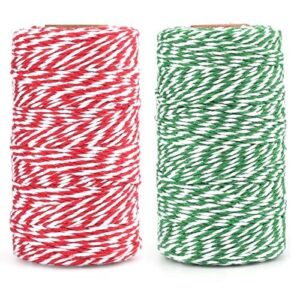
You’ll need sturdy hanging material to secure your homemade bird feeders, and cotton twine offers both bird safety and practical durability for outdoor usage. The G2PLUS red and green cotton options provide 200 meters of soft, food-safe material that won’t harm birds if they peck at it.
This twine works perfectly for suet hanging and threading through pine cones filled with bird seed. Cotton naturally weathers outdoors but requires regular inspection for fraying, especially when supporting heavier DIY bird feeders throughout winter bird feeding seasons.
| Best For | DIY bird enthusiasts who want a safe, biodegradable option for hanging homemade suet feeders and pine cone treats. |
|---|---|
| Material | Cotton |
| Weight | 5.3 ounces |
| Primary Use | Crafts and Wrapping |
| Package Quantity | 1 Count |
| Color Options | Red and Green |
| Food Safe | Yes |
| Additional Features |
|
- Food-safe cotton material won’t harm birds if they come into contact with it
- 200-meter length provides plenty of material for multiple feeders throughout the season
- Soft texture makes it easy to tie secure knots without special tools
- Absorbs moisture and can develop mold if not dried properly between uses
- Requires regular inspection and replacement due to UV damage and fraying outdoors
- Limited to red and green colors which may fade or transfer dye in wet conditions
4. Natural Jute Garden Twine String
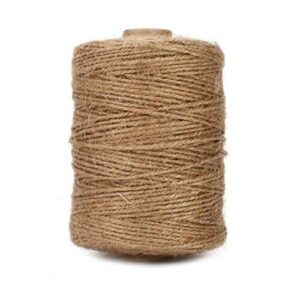
For bird feeding enthusiasts seeking ecofriendly alternatives, jute twine offers biodegradable materials that break down naturally after use. This natural fiber benefits your garden while providing jute twine durability sufficient for hanging lightweight DIY bird feeders. The Tenn Well option delivers 500 feet of 1.82mm string at an economical price point.
However, garden string safety requires regular inspection since jute weakens when repeatedly wet and dried. Check your twine weekly for fraying or fiber breakage, especially in humid climates where moisture accelerates deterioration and replacement becomes necessary.
| Best For | Eco-conscious bird lovers who want biodegradable hanging solutions for lightweight feeders and don’t mind checking the twine regularly for wear. |
|---|---|
| Material | Natural Jute |
| Weight | Not specified |
| Primary Use | Gift Wrapping and Gardening |
| Package Quantity | 1 Coil |
| Color Options | Brown |
| Food Safe | No |
| Additional Features |
|
- Breaks down naturally after use, making it better for the environment than plastic alternatives
- Safe for birds when free of chemicals or dyes, with no known toxicity from clean, uncoated fibers
- Budget-friendly with 500 feet of material, giving you plenty of length for multiple feeders or projects
- Weakens quickly when exposed to rain and humidity, requiring frequent replacement in wet climates
- Not strong enough for heavy feeders due to its thin 1.82mm diameter and lower tensile strength
- Needs weekly checks for fraying or breakage to prevent feeders from falling unexpectedly
5. Sakolla Silicone Soap Molds

Switching from natural twine to shaping tools opens new possibilities for homemade bird feeders without peanut butter. The Sakolla round silicone molds provide six 3.15-inch cavities perfect for crafting nut-free bird feeder cakes.
Easy demolding and material flexibility let you pop out suet mixtures without breakage, while silicone safety ensures non-toxic contact with bird food. These molds handle temperatures from -104°F to 446°F, supporting craft versatility beyond DIY bird feeders.
However, mold durability varies—some users report tearing with frequent use, so consider placing a frame underneath to prevent bulging during filling.
| Best For | Crafters and DIY enthusiasts who want to make uniform, easy-release bird feeder cakes or soap bars without needing commercial-grade equipment. |
|---|---|
| Material | Food-Grade Silicone |
| Weight | 9.2 ounces |
| Primary Use | Soap Making |
| Package Quantity | 1 Set (2 molds) |
| Color Options | Purple and Blue |
| Food Safe | Yes |
| Additional Features |
|
- Flexible silicone makes demolding a breeze—just pop out your finished pieces without sticking or breaking
- Wide temperature range (-104°F to 446°F) means you can use them for hot wax, cold soap, resin, or even baking projects
- Food-grade, BPA-free material keeps things safe whether you’re making bird treats or edible goodies
- Some users find the molds too thin and prone to tearing with repeated use
- You’ll likely need a support frame underneath to stop the cavities from bulging when filled
- May not hold up well for heavy commercial use or high-volume production
6. G2Plus Cotton Baker Twine
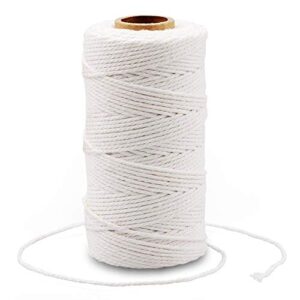
Once your molds release fresh suet cakes, you’ll need reliable hanging material. G2Plus cotton baker twine offers 328 feet of 2mm white cord for securing DIY bird feeder recipes to branches. Its 100% cotton properties guarantee bird feeding tips safety around wildlife, while twine resilience manages outdoor conditions better than synthetic alternatives.
Baker twine uses extend beyond kitchen tasks—this material strength assists lightweight homemade bird food creations filled with birdseed. However, moisture weakens natural fibers over time, so replace weathered loops before bird feeders fall.
| Best For | DIYers and crafters who need an affordable, food-safe cord for hanging homemade suet cakes, tying lightweight feeders, or decorating outdoor spaces without worrying about wildlife safety. |
|---|---|
| Material | 100% Cotton |
| Weight | 5.3 ounces |
| Primary Use | Cooking and Crafts |
| Package Quantity | 1 Roll |
| Color Options | White |
| Food Safe | Yes |
| Additional Features |
|
- 100% cotton composition makes it safe for birds and suitable for food-contact projects like securing suet cakes or wrapping kitchen items
- 328 feet gives you plenty of length for multiple feeders, crafts, or garden projects without constantly buying more
- Multi-functional design works for cooking, gift wrapping, gardening, and lightweight outdoor decorations
- Natural fibers weaken when wet, so you’ll need to replace hanging loops regularly in rainy or humid conditions
- Not strong enough for heavy-duty feeders or structural projects—best for lightweight applications only
- Single white color option limits decorative variety compared to dyed twines
Frequently Asked Questions (FAQs)
How do you make bird food without nuts?
You can combine suet or vegetable shortening with sunflower seeds, millet, and dried fruit. Mix one part fat with two parts dry ingredients, then shape into blocks or coat pine cones for hanging.
What can I use to bind bird seed together?
You can bind bird seed using gelatin, lard, or suet mixtures that solidify when cooled.
Natural adhesives like corn syrup work too, while fat emulsions create seed coatings without common allergens like peanut butter.
What is the 5 7 9 rule for bird feeders?
The 5-7-9 rule guides bird feeder construction by recommending minimum weight capacities: 5 pounds static load, 7 pounds moving load, and 9 pounds total design load.
This ensures your homemade bird feeders withstand weather and perching birds reliably.
How can I store homemade bird food safely?
Want to keep your mixes fresh? Store homemade bird feeders in airtight storage containers in cool, dry spots. Moisture control prevents mold, while proper food handling and pest prevention extend shelf life for outdoor bird care.
What are the signs of spoiled bird food?
Check your bird feeders for visible mold growth, sour odors, or clumpy texture—key signs of spoilage.
Feeder hygiene protects bird health, so monitor food freshness regularly and replace suet-based bird feeders when contamination appears.
Are certain bird species picky eaters?
Yes, birds can be surprisingly finicky. Goldfinches often ignore large seeds, while nuthatches seek high-fat options.
Understanding these feeding habits and species variability helps you tailor nut-free mixes that meet diverse dietary needs and foraging behavior.
How do weather conditions affect feeder usage?
Temperature effects and rainfall patterns shape bird feeders’ popularity. Cold snaps boost visits by 20–50%, while wind impact and snow coverage concentrate activity.
Rain reduces usage temporarily, affecting backyard birds’ outdoor birding activities.
What additional tools help attract specific birds?
The right feeder designs can work miracles. Caged feeders exclude larger birds, while tray styles suit ground foragers.
Red visual attractors draw cardinals, and squirrel deterrents like baffles protect seed varieties for targeted bird species.
Can I use coconut oil instead of lard?
You can substitute coconut oil for lard in suet formulations, though birds show variable acceptance.
Start with a 1:1 ratio, monitor melting points in warm weather, and watch for shelf life differences.
How long does homemade bird food last?
Your homemade bird food’s shelf life hinges on fat content and storage conditions.
Dry seed mixes last six to twelve months in cool, airtight containers, while suet-based feeders spoil faster—watch for mold or rancid odors.
Conclusion
Feeding feathered friends doesn’t demand peanuts in every recipe. You’ve learned which seeds, fats, and dried fruits attract specific species while keeping feeders clean and functional.
Each homemade bird food without peanuts you create opens your yard to cardinals, chickadees, and finches that might otherwise pass by.
Mix your ingredients, hang your feeders, and watch new visitors arrive. Your backyard becomes a destination when you match food to the birds already flying overhead.
- https://www.rspb.org.uk/get-involved/activities/birdwatch/
- https://www.researchgate.net/profile/Karen_Malone3/publication/265231721_every_experience_matters_An_evidence_based_research_report_on_the_role_of_learning_outside_the_classroom_for_children's_whole_development_from_birth_to_eighteen_years/links/54414e170cf2a6a049a5704f/every-experience-matters-An-evidence-based-research-report-on-the-role-of-learning-outside-the-classroom-for-childrens-whole-development-from-birth-to-eighteen-years.pdf%20[Accessed%2015%20November%202019]
- https://journals.ashs.org/horttech/abstract/journals/horttech/13/4/article-p684.xml