This site is supported by our readers. We may earn a commission, at no cost to you, if you purchase through links.
A chickadee weighs less than five nickels, yet it’ll find your feeder within hours of you hanging it.
Small birds like finches, sparrows, and chickadees are everywhere—but most feeders aren’t built with them in mind. Ports are too wide, perches are too thick, seeds are too heavy.
The result? squirrels feast and small birds scatter. The good news is that feeding them doesn’t take much.
A plastic bottle, a mason jar, even a pinecone can do the job. These small bird food feeder ideas range from quick weekend builds to natural options you can put together in minutes.
Table Of Contents
- Key Takeaways
- DIY Small Bird Feeder Ideas
- Natural and Upcycled Feeder Ideas
- Small Bird Feeder Setup Tips
- Top 5 Small Bird Feeders
- Frequently Asked Questions (FAQs)
- Why put a potato in your bird feeder?
- What to put in a small bird feeder?
- Why should you sprinkle coffee grounds around your bird feeder?
- Are DIY bird feeders a good idea?
- How to make a small bird feeder?
- What is a good bird feeder plan?
- What are some fun DIY bird feeder ideas for kids?
- How to decorate a garden with a bird feeder?
- What is a good bird feeder for small birds?
- What is the easiest homemade bird feeder?
- Conclusion
Key Takeaways
- Small birds like finches and chickadees are easy to attract — a plastic bottle, mason jar, or even a pinecone with peanut butter and seeds is all you need to get started.
- Where you hang your feeder matters as much as what’s in it — aim for 5–6 feet high, 10 feet from trees, and near a quiet window or shrub for the best results.
- The right seed makes a real difference: black oil sunflower seeds work for most small birds, nyjer thistle pulls in finches, and millet keeps chickadees coming back.
- Keeping your feeder clean and made from safe materials — non-toxic paint, BPA-free plastic, food-grade metals — is what protects the birds and keeps them returning.
DIY Small Bird Feeder Ideas
You don’t need a fancy setup to bring birds to your yard — just a few things you probably already have at home. These six feeders are easy to make, budget-friendly, and surprisingly effective at attracting finches, chickadees, and other small visitors.
If you want even more inspiration, this guide to easy-to-use bird feeders and food ideas covers beginner-friendly options that make backyard birding genuinely enjoyable.
Pick one that fits what you have on hand and get started.
Plastic Bottle Seed Feeder
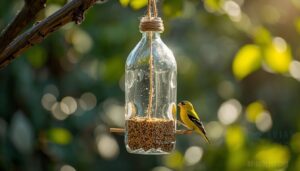
Repurposing a clear plastic bottle into a bird feeder takes under 30 minutes and costs almost nothing. Here’s what makes it work:
- Seed Port Sizing — Cut small holes just wide enough for finch-sized beaks.
- Vent Hole Design — Add a bottom drainage hole so moisture doesn’t spoil your birdseed.
- Hanging Rope Tips — Loop sturdy twine through the cap for a secure hold.
UV Protection Strategies matter too — choose thicker, UV-resistant plastic bottle material for longer‑lasting DIY bird feeders built from recycled materials.
The feeder uses gravity‑fed seed distribution to attract a variety of birds.
Mason Jar Perch Feeder
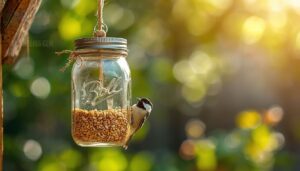
A mason jar bird feeder is a step up in charm. Clear glass lets you check bird seed levels at a glance — no guessing, no wasted trips outside. Gravity Feed Mechanics do the work, moving seed through Port Size Optimization openings of ¼ to ½ inch. Jar Lid Design keeps flow steady while Glass Visibility Benefits make maintenance simple.
| Feature | Detail |
|---|---|
| Perch length | 2.5–3 inches |
| Jar height | 8–12 inches |
| Port diameter | ¼–½ inch |
| Cleaning cycle | Every 1–2 weeks |
Aesthetic Customization with paint or twine makes this recycled materials project feel personal — backyard wildlife never had it so good.
Milk Carton Hanging Feeder
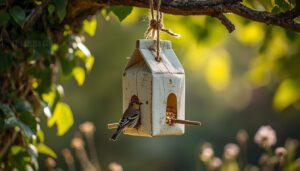
If mason jar won an award for charm, the milk carton earns one for pure resourcefulness.
Carton Material Prep starts with a clean, dry jug — rinse it well and let it air out.
Dual Hole Access means cutting two small openings on opposite sides, with Perch Placement just below each hole using a 4–6 cm untreated stick.
Hanging Loop Design threads twine through the top.
Seasonal Seed Management keeps things fresh every 2–3 days.
Wooden Spoon Bottle Feeder
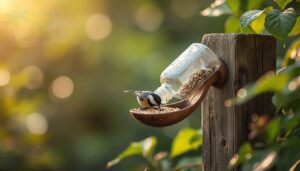
Now here’s one that’s as clever as it’s simple. Grab a small plastic bottle and an old wooden spoon — that’s your whole shopping list.
The spoon’s handle doubles as a Perch Stability Design, giving birds a firm foothold.
Its curved tip acts as a Nectar Dispensing Technique, holding just enough seed.
Add a food-safe finish for Weatherproof Finishing, and you’re done.
Teacup and Saucer Feeder
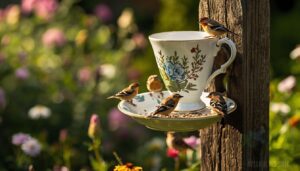
That old teacup sitting in your cupboard? It’s practically begging for a second life.
Use ceramic glue to bond it to its saucer — the weight distribution design keeps it stable and tip‑resistant outdoors.
Seal everything with weatherproof sealants, and you’ve got a charming feeder with built‑in multi‑bird perching along the rim.
Add non‑toxic aesthetic paint finishes, and you’re done.
Mini Window Feeder for Small Birds
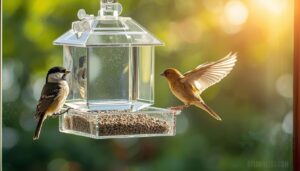
Want birds close enough to watch every wing flutter? A mini window feeder makes that happen.
Mount a clear acrylic tray using strong suction cups — Suction Cup Durability matters here, so clean the glass first for maximum grip. The Visibility Enhancements from transparent materials bring chickadees and finches right to eye level.
- Fill with black oil sunflower seeds or millet
- Apply Window Placement Strategies — choose a quiet, low-traffic window
- Enjoy Bird Observation Benefits daily from your chair
- Rotate Seasonal Seed Variations to attract different visitors
- Wash the tray every two weeks with mild soap
Natural and Upcycled Feeder Ideas
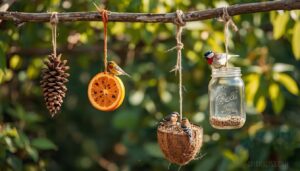
You don’t need a trip to the store to feed the birds in your yard. Some of the best feeders come from things you’d otherwise toss — a pinecone, an orange half, a glass jar.
Here are six natural and upcycled options worth trying.
Pinecone Seed Feeder
A pinecone bird feeder is one of the simplest DIY bird feeders you can make. Collect a clean pinecone, coat it with peanut butter as a natural binder, then press bird seed into every gap.
| Seed Mix Ratios | Binding Natural Binders | Seasonal Placement Strategies |
|---|---|---|
| 50% sunflower kernels | Peanut butter | Near shrubs in winter |
| 30% white millet | Lard or suet | Tree line edges in spring |
| 15% cracked corn | Coconut oil | Sheltered spots in rain |
Tie twine around the stem for hanging at 5–8 feet — that height supports predator deterrence techniques naturally. Swap cones every few weeks for feeder longevity tips that keep birds coming back safely.
Orange Peel Cup Feeder
Your kitchen scraps can pull double duty. Halve a fresh orange, scoop out the fruit, and you’ve got a ready-made cup feeder.
Fill it with a natural seed blend, thread twine through the peel using a simple hanging method, and hang it 4–6 feet up.
Citrus aroma appeal and bright color visibility draw finches and orioles fast.
Replace peels every day or two — fresh is best.
Apple Ring Bird Feeder
An apple ring feeder is one of those DIY bird feeders that’s almost too simple. Slice a fresh apple into rings about 5–7 inches wide, coat them with an edible fruit coating mixed with seasonal seed blends, then hang with weather resistant materials like rustproof wire.
The ring size optimization helps finches and chickadees land comfortably.
Add nectar integration for hummingbirds — a true garden enhancement idea rooted in sustainable wildlife support.
Coconut Shell Hanging Feeder
A coconut shell is one of the most charming upcycled materials you can turn into a hanging feeder.
Start with Shell Preparation — hollow it out, smooth the edges, and wash it well. Apply Weatherproof Sealing with natural wax to repel moisture.
Thread a durable cord through drilled holes for Cord Attachment. Its Camouflage Coloring blends right into your garden.
Follow a biweekly Maintenance Schedule to keep visiting birds healthy.
Recycled Glass Jar Feeder
That old mason jar sitting in your cupboard? It’s already halfway to becoming a DIY bird feeder.
Flip it upside down over a shallow tray, and the gravity feed design does the work — seed flows slowly onto the platform as birds eat.
Glass transparency benefits you too, since you can check seed levels at a glance without disturbing your visitors.
Use non-toxic sealants where the lid meets the jar, and pick a shaded spot for seasonal placement.
Upcycled materials don’t get more practical than this.
Twig and Bark Platform Feeder
Glass jars blend right into your garden. So does this next build.
A twig and bark platform feeder takes scrap wood feeder offcuts and turns them into something birds genuinely use. Untreated cedar weather resistance keeps it sturdy through rain and sun. Think of it as one of those ecofriendly crafts that pulls double duty:
- Bark camouflage helps it disappear into tree branches
- drainage groove along the edge moves moisture away from seed
- Non-slip texture lets small birds grip and feed from multiple angles
Branch mounting keeps it stable — no special tools needed.
Small Bird Feeder Setup Tips
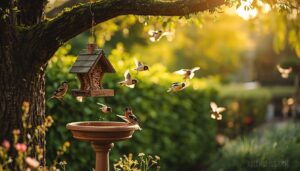
Building a feeder is just the first step — where you put it and how you care for it makes all the difference. A few simple setup habits can keep your backyard birds safe, healthy, and coming back every day.
Here’s what to know before you hang that first feeder.
Best Seeds for Finches and Chickadees
Getting the seed mix right makes all the difference.
Finches love nyjer and sunflower chips — both oil-rich seeds that fuel their small bodies through cold days. Chickadees prefer black oil sunflower and safflower for their high fat content.
Rotate your seasonal seed mix every four to six weeks and store blends in airtight containers.
Fresh bird seed means healthier birds and better disease prevention at every DIY bird feeder.
Choosing Perches for Small Birds
Seed choice sets the table — perches decide who stays for dinner. Small birds do best with perches around 1/4 to 1/2 inch in perch diameter.
Wooden dowels, a skewer wrapped in twine, or natural materials like rough bark all work well. Texture variety matters too, since birds grip better on uneven surfaces.
Keep perch areas clean for hygiene safety.
Hanging Feeders at Safe Heights
Where you hang your feeder matters just as much as what’s inside it. Follow these Predator Height Guidelines for the best results:
- Hang feeders 5–6 feet high for ideal visibility clearance and predator protection
- Position them 10 feet from trees or walls to block ambush routes
- Use Wind Stabilization hardware like braided rope or steel cable outdoors
Height adjustment is simple — mark your pole with safety markers so refilling stays easy.
Adding Drainage for Wet Weather
Rain can spoil seed fast, but a few smart choices keep your feeder dry and inviting.
| Problem | Fix |
|---|---|
| Pooling water | Add elevated drainage channels under the platform |
| Soggy seed trays | Use a perforated tray design to let water escape |
| Erosion around base | Follow slope ratio guidelines — 1 inch drop per 50 inches |
| Weather damage | Choose weatherproof materials like cedar or stainless steel |
A simple rain shield placement above the feeder deflects most rainfall. Drainage holes in the base handle the rest.
Cleaning Feeders to Prevent Disease
A dirty feeder can quietly harm the birds you love.
Clean feeders every week using a 10% bleach disinfection solution, then rinse completely and air-dry for full moisture control. Wear protective gear to avoid fumes. Practice regular debris removal under and around the feeder. A simple cleaning schedule — same day each week — makes bird health protection easy and consistent.
Avoiding Toxic and Unsafe Materials
The feeder you build is only as safe as what goes into it. Stick to food-grade metals like stainless steel, and choose BPA-free plastics to keep seeds clean.
Use non-toxic paints and safe sealants on all surfaces. Lead-free solder, smooth edges, and toxic material avoidance aren’t optional extras — they’re the basics that keep your backyard visitors healthy and coming back.
Safe materials aren’t optional extras — they’re the basics that keep your backyard visitors healthy and coming back
Reducing Squirrels and Insect Pests
Squirrels are clever, but you can outsmart them. Mount a squirrel baffle design on your pole and position feeders using elevated feeder positioning — at least 5–6 feet high — to cut off easy routes.
Mesh barrier installation and seed port restriction keep bulk raiders out while letting small birds feed freely.
For insects, insect repellent sprays like peppermint oil and drainage holes stop mold and ants quickly.
Top 5 Small Bird Feeders
If you’d rather skip the weekend craft projects, a good commercial feeder can do the job just as well. There are a handful of tried-and-true options that small birds genuinely love — and that hold up through real weather.
Here are five worth a spot in your yard.
1. Audubon Squirrel Proof Bird Feeder
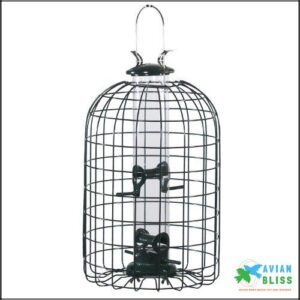
If you’ve ever watched a squirrel empty your feeder in minutes, the Audubon Squirrel Proof Bird Feeder feels like sweet justice. Its weight-activated perch closes seed access the moment a squirrel steps on it — but small birds like chickadees and finches feed without triggering it.
The powder-coated steel cage also keeps bully birds like grackles out.
It holds up to 9 pounds of seed, has a seed-level window, and disassembles tool-free for easy cleaning.
A reliable, low-fuss choice for protecting your backyard songbirds.
| Best For | Backyard bird lovers who want to protect songbirds from squirrels and bully birds without a lot of upkeep. |
|---|---|
| Material | ABS plastic & steel |
| Weight | 966 grams |
| Dimensions | 9.5″L x 9.5″W x 15″H |
| Pest Deterrence | Squirrels & large birds |
| Easy Cleaning | Tool-free disassembly |
| Weather Resistant | Powder-coated steel cage |
| Additional Features |
|
- The steel cage keeps out larger birds like grackles and blue jays, so smaller birds can eat in peace.
- Tool-free disassembly makes cleaning and refilling quick and painless.
- Airflow design helps keep seeds fresh and reduces waste.
- Not fully squirrel-proof — baby squirrels and chipmunks can still squeeze through.
- Gaps in the cage seams could potentially trap small birds if left unsealed.
- Smaller birds may kick seeds out as they feed, so placement matters.
2. Aspects Window Cafe Bird Feeder
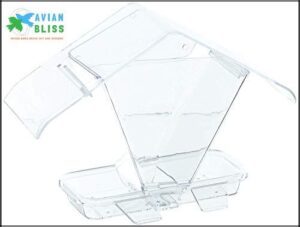
Some birds are best enjoyed up close. The Aspects Window Cafe Bird Feeder makes that easy.
It mounts to any smooth glass with three strong suction cups and holds about 0.75 quarts of seed in a UV-stabilized polycarbonate body that stays clear for years.
You don’t need tools — just slide out the reservoir to refill or clean.
Chickadees, finches, and nuthatches love it.
It’s great for kids, seniors, or anyone who wants birds just inches away.
| Best For | Kids, seniors, and anyone who wants to watch small birds like chickadees and finches up close without leaving the couch. |
|---|---|
| Material | Plastic |
| Weight | 12.8 ounces |
| Dimensions | 10.5″L x 8″W x 4.5″H |
| Pest Deterrence | Squirrels & large birds |
| Easy Cleaning | Removable hopper, no tools |
| Weather Resistant | Drainage holes, rain/snow rated |
| Additional Features |
|
- Slides out for easy refilling and cleaning — no tools, no hassle
- Three heavy-duty suction cups keep it firmly in place on any smooth glass
- Drainage holes prevent soggy, spoiled seeds after rain or snow
- Too small for larger birds like cardinals or doves
- Suction cups can fail if not installed carefully on a clean, smooth surface
- Flying squirrels can still sneak in despite the squirrel-resistant design
3. Woodlink Absolute II Squirrel Resistant Feeder
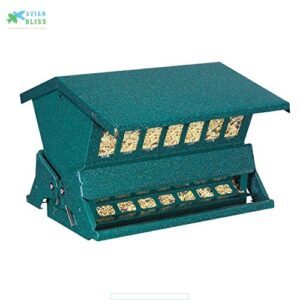
If you love having birds visit, but squirrels keep raiding the seed, the Woodlink Absolute II is worth a look. Its spring-activated perches close under heavier weight, so squirrels and larger pests get locked out while finches and chickadees feed freely.
The all-steel, powder-coated body withstands rough weather without rusting.
It holds about 12 pounds of seed, so you’re not refilling every other day.
At $84, it’s a solid, long-term investment for your backyard flock.
| Best For | Backyard bird lovers who are tired of squirrels emptying their feeders and want a durable, low-maintenance solution that actually lasts. |
|---|---|
| Material | Steel & polycarbonate |
| Weight | ~16 oz (empty) |
| Dimensions | 16″L x 13.5″W x 11.25″H |
| Pest Deterrence | Squirrels, crows & large birds |
| Easy Cleaning | Removable hopper |
| Weather Resistant | Powder-coat all-metal body |
| Additional Features |
|
- Spring-activated perches shut out squirrels and larger pests automatically — no extra gadgets needed
- Holds up to 12 lbs of seed, so refills are few and far between
- All-steel, powder-coated build handles rough weather season after season
- Determined raccoons or bears can still get in, so it’s not fully critter-proof
- The pole connections are non-threaded and can wobble without some extra work to secure them
- Heavier birds like Blue Jays might get locked out too — you’ll need to fiddle with the weight settings to get the balance right
4. Aspects HighView Hummingbird Feeder
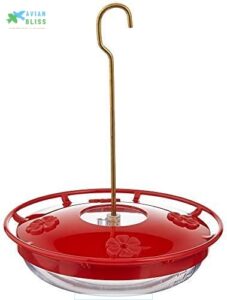
If you’re ready to welcome hummingbirds into the mix, the Aspects HighView Hummingbird Feeder makes it easy.
The bright red cover draws them in from a distance, while four drip-proof ports let multiple birds feed without crowding.
A built-in ant moat keeps insects out, and the polycarbonate bowl detaches for quick cleaning — dishwasher safe, no fuss.
It holds 12 ounces of nectar and fits any backyard setup.
Just swap nectar every three days to keep things fresh.
| Best For | Backyard bird watchers who want a low-maintenance feeder that actually pulls hummingbirds in and holds up through any season. |
|---|---|
| Material | Polycarbonate |
| Weight | 0.8 pounds |
| Dimensions | 7.75″L x 7.75″W x 1.75″H |
| Pest Deterrence | Ants (built-in moat) |
| Easy Cleaning | Dishwasher-safe parts |
| Weather Resistant | Integrated rain shield |
| Additional Features |
|
- Built-in ant moat keeps bugs out without any extra gear
- Detaches easily and goes straight in the dishwasher — cleanup takes minutes
- Bright red cover and perch design bring hummingbirds in fast and keep them around longer
- Costs more upfront than a basic feeder
- Friction-fit lid needs a gentle touch — force it and you risk cracking it
- Nectar needs swapping every three days, which adds up in time and sugar
5. Birds Choice Upside Down Suet Feeder
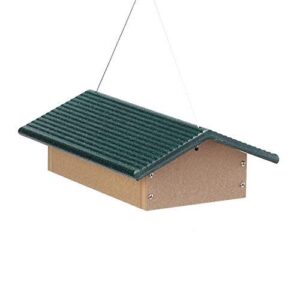
For suet lovers, the Birds Choice Upside Down Suet Feeder is worth a close look. Its inverted design lets woodpeckers, nuthatches, and chickadees cling underneath to feed — while starlings and grackles mostly give up and move on.
The roof shields the suet block from rain and snow, so it lasts longer between refills.
Built from recycled poly lumber with stainless-steel hardware, it holds up year-round. Just hang it at a safe height and let the right birds find it.
| Best For | Bird enthusiasts who want to attract woodpeckers, nuthatches, and chickadees while keeping starlings, sparrows, and squirrels out of the suet. |
|---|---|
| Material | Recycled poly lumber |
| Weight | 2 pounds |
| Dimensions | 11.75″L x 8.75″W x 4″H |
| Pest Deterrence | Non-clinging birds & squirrels |
| Easy Cleaning | Wide suet cake access |
| Weather Resistant | Weatherproof recycled lumber |
| Additional Features |
|
- The upside-down design naturally filters out most pest birds without any extra effort
- Built from recycled poly lumber with stainless-steel hardware — it handles all four seasons without cracking or fading
- Easy to clean and refill with wide access to the suet cake
- Determined birds like blue jays or grackles may still figure it out over time
- The gravity-close roof won’t stop a persistent raccoon
- Some birds need a little time to get comfortable feeding upside-down
Frequently Asked Questions (FAQs)
Why put a potato in your bird feeder?
Cooked potato gives small birds a quick carbohydrate boost, especially in cold weather.
It’s plain, safe, and pairs well with seeds — a simple way to add variety and extra energy to your feeder.
What to put in a small bird feeder?
Black oil sunflower seeds work best for most small birds. Finches love Nyjer thistle. Chickadees prefer millet. Skip anything salted or seasoned. Keep it simple, fresh, and dry.
Why should you sprinkle coffee grounds around your bird feeder?
Sprinkling used coffee grounds in a shallow ring around your feeder deters slugs, snails, and insects naturally. Replenish weekly, and keep grounds away from perches to protect your birds.
Are DIY bird feeders a good idea?
Yes, DIY bird feeders are a great idea.
They save money, let you reuse household items, and give you full control over the design. Plus, making one with kids turns into a fun nature lesson.
How to make a small bird feeder?
Making a small bird feeder takes almost no time at all.
Grab a plastic bottle, poke two holes for a wooden dowel perch, fill it with sunflower seeds, and hang it up.
What is a good bird feeder plan?
A good bird feeder plan starts with picking the right spot — near a window, about 5 to 6 feet high, with a shrub close by for shelter and a water source nearby.
What are some fun DIY bird feeder ideas for kids?
Try a plastic bottle feeder, a mason jar perch feeder, or a milk carton hanging feeder.
Kids can paint, decorate, and fill them — turning backyard bird-watching into a hands-on family ritual.
How to decorate a garden with a bird feeder?
Turn your feeder into a garden centerpiece.
Hang it at 5–6 feet, surround it with low plants, and add a birdbath nearby.
Birds will find it quickly — and your garden will feel alive.
What is a good bird feeder for small birds?
tube-style feeder with small ports works best for finches and chickadees.
Look for clear plastic so you can monitor seed levels, and short slim perches that keep larger birds from taking over.
What is the easiest homemade bird feeder?
The plastic bottle seed feeder is your easiest bet. Poke a few holes near the bottom, slide in a stick for a perch, and hang it up. Done in minutes.
Conclusion
ball is in your court now. You’ve got the small bird food feeder ideas, the materials list, and the setup know-how to turn any backyard into a reliable stop for finches, chickadees, and sparrows.
Start with a pinecone or a plastic bottle. See who shows up.
Once a chickadee finds your feeder, it tells the whole neighborhood. That steady stream of small wings isn’t just rewarding to watch—it means you built something that works.