This site is supported by our readers. We may earn a commission, at no cost to you, if you purchase through links.
A bird bath full of yesterday’s water harbors more bacteria than a subway handrail. Within 24 hours, that inviting pool becomes a petri dish of avian pathogens, algae spores, and mosquito larvae. Birds instinctively avoid contaminated water sources, yet many backyard enthusiasts refresh their baths only when the water looks visibly dirty.
The question of how often you should change bird bath water has a straightforward answer backed by ornithological research: daily changes dramatically reduce disease transmission among visiting birds. Temperature, visitor traffic, and seasonal factors all influence this baseline recommendation.
Understanding the science behind water quality helps you create a safe, attractive oasis that genuinely sustains your local bird population.
Table Of Contents
- Key Takeaways
- Why Clean Bird Bath Water Matters
- How Often Should You Change Bird Bath Water?
- Signs Your Bird Bath Water Needs Changing
- Factors Affecting Water Change Frequency
- Seasonal Bird Bath Water Change Guide
- Best Practices for Changing Bird Bath Water
- Preventing Algae and Mosquito Problems
- Choosing The Right Water for Bird Baths
- Maintaining a Cleaner Bird Bath Longer
- Creating a Healthy Environment for Birds
- Frequently Asked Questions (FAQs)
- Conclusion
Key Takeaways
- Change bird bath water daily during warm months to reduce disease transmission and prevent algae and mosquito growth.
- Clean and rinse the bath thoroughly with safe solutions like diluted vinegar or mild soap to remove bacteria and chemical residues.
- Position your bird bath in partial shade and away from dense shrubs to minimize debris, control water temperature, and discourage algae.
- Monitor water clarity, depth, and signs of contamination, adjusting your cleaning schedule based on weather, bird activity, and seasonal changes.
Why Clean Bird Bath Water Matters
Fresh water in your bird bath isn’t just about aesthetics—it’s a lifeline for the birds visiting your yard. Stagnant water quickly becomes a breeding ground for bacteria, algae, and parasites that can spread serious avian diseases.
Understanding why clean water matters will help you create a safe, healthy space that keeps your feathered visitors coming back.
Preventing Avian Diseases
Regular cleaning and disinfection of your bird bath reduces pathogen load by up to 90%, directly protecting avian health from diseases like avian pox and salmonellosis. Fresh water daily minimizes bacterial growth, cutting disease transmission among visiting birds.
Avoid standing water nearby to reduce mosquito breeding, which lowers vector-borne disease risk. Use non-toxic cleaners and rinse thoroughly to prevent chemical residue that could harm birds. Switching to no-mess bird food options can also minimize spills that attract pests and create standing water issues around feeders.
Supporting Bird Health and Hygiene
Clean water promotes bird health by preventing contaminant buildup that can irritate beaks and eyes, maintaining ideal feather care through frequent bathing. Fresh water quality boosts avian wellness, encouraging your visitors to preen more effectively. Understanding proper hydration for caged birds helps you create a watering routine that keeps feathers glossy and prevents common health issues.
When you change water consistently, you reduce pathogen presence by up to 90%, directly promoting beak health and overall bird hygiene in your yard. Regular maintenance also prevents algae buildup and bacterial growth, so understanding the importance of bird bath hygiene helps you create a consistently safe environment for visiting birds.
Regular auditing using scientific study methods can also help identify areas for improvement in maintaining a healthy environment.
Enhancing Bird Enjoyment
Fresh water quality directly improves bird attraction methods by creating an inviting environment. Avian stress reduction occurs in clean water settings, where your feathered visitors linger longer and return often.
You’ll notice more frequent visits when you change water daily, as bird-friendly designs paired with water feature variety encourage natural bathing behaviors.
Maintaining a bird bath with fresh conditions transforms it from a simple fixture into a true wildlife haven.
How Often Should You Change Bird Bath Water?
Establishing a regular water change routine is the cornerstone of bird bath maintenance. The exact frequency depends on several factors. Most experts recommend daily changes during warm months, while cooler periods allow for a more relaxed schedule.
Understanding both general guidelines and seasonal adjustments will help you provide the safest, freshest water for your feathered visitors. Choosing an easy clean bird bath bowl makes your maintenance routine faster and reduces harmful bacteria buildup between deep cleanings.
Daily Vs. Weekly Recommendations
You’ll want to aim for daily water changes during warm months when bacterial growth spikes, but weekly maintenance can work in cooler, calmer periods. Your bird bath cleaning schedule hinges on water quality—if it stays clear and odorless, weekly changes support bird health without extra effort. A quick scrub with a vinegar solution prevents algae buildup, and proper bird bath cleaning techniques ensure you’re rinsing away every trace before refilling.
- Daily changes minimize pathogen transmission during peak activity
- Weekly maintenance suits temperate conditions with moderate use
- Morning refills align with natural bird visitation patterns
- Adjust your cleaning schedules based on observed water clarity
Adjusting Frequency for Seasons
Seasonal shifts directly influence water change frequency, with evaporation rates climbing in hot months and humidity levels shaping bacterial growth. Temperature control matters year-round for ideal seasonal bird bath care.
You’ll need daily changes during summer’s peak temperatures, but spring and fall demand only twice-weekly refreshes. Winter’s colder weather patterns slow contamination, so you can stretch intervals to every three or four days while monitoring water quality for stagnation.
Signs Your Bird Bath Water Needs Changing
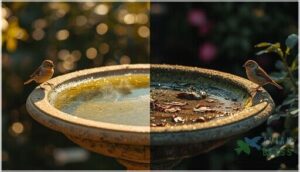
You don’t always need to wait for your scheduled cleaning day to refresh your bird bath. Your feathered visitors rely on clean water, and certain warning signs tell you when it’s time to act immediately.
Watch for these three key indicators that signal your bird bath water needs changing right away.
Cloudy or Discolored Water
Cloudy water signals that turbidity issues have taken hold, often from suspended particles or microbial activity that degrade water quality. Discolored water—whether green, brown, or milky—points to algae growth, organic decay, or mineral buildup requiring immediate attention.
You’ll need to change the water and scrub away biofilm to restore water clarity, prevent further discoloration causes, and maintain a safe drinking source for your feathered visitors.
Algae or Mosquito Larvae Presence
Green slime coating the basin or tiny wriggling larvae near the surface demand immediate action. Algae growth thrives in warm, still water, compromising water quality and creating slippery surfaces that deter birds. Mosquito larvae develop rapidly in stagnant conditions, turning your bath into a breeding ground.
Effective algae control and larvae prevention require daily water changes during peak seasons, plus routine scrubbing to maintain biological balance and support mosquito management.
Foul Odors or Visible Debris
A sharp, unpleasant smell signals bacterial growth you can’t ignore. Foul odors develop when microbes break down organic matter, worsening in heat and threatening bird health. Visible debris—leaves, droppings, pollen—creates a breeding ground for contamination and drives water stagnation.
Monitor these warning signs for effective odor control and debris removal:
- Persistent smell despite surface skimming
- Floating or sunken debris clouding water quality
- Slimy film accompanying algae growth
- Turbid water deterring bird visits
Immediate water change and thorough scrubbing restore bird bath maintenance standards, supporting disease prevention and attracting healthy birds. Algae prevention starts with removing debris before microbial colonies establish themselves in stagnant conditions.
Factors Affecting Water Change Frequency
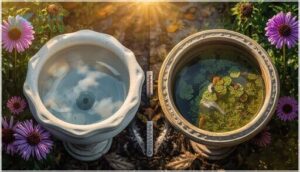
You can’t rely on a one-size-fits-all schedule for changing your bird bath water. Several environmental and physical factors determine how quickly water becomes contaminated, requiring you to adjust your maintenance routine accordingly.
Understanding these variables helps you establish a cleaning schedule that keeps your feathered visitors safe and healthy.
Weather and Temperature
Temperature fluctuations directly influence water change frequency and your bath’s overall water quality. Hot daytime temperatures accelerate evaporation rates and algae growth, demanding daily changes to protect bird health.
Humidity effects intensify these challenges, while climate considerations shift with seasons—summer heat requires vigilant monitoring, winter demands freeze prevention strategies.
Adjust your seasonal bird bath care routine based on local weather patterns to maintain ideal water change frequency year-round.
Bird Bath Location
Your bird bath location directly impacts water change frequency and bird health. Shade placement reduces algae buildup, while full sun demands daily refreshes.
Position your outdoor water features 4 to 5 feet high for ideal bath elevation and predator avoidance. Guarantee bird visibility and water accessibility by clearing 10–15 feet around the bath.
Strategic positioning cuts maintenance time while protecting visiting species.
Bird Activity Level
Where you place your bird bath matters, but how many birds actually use it determines your water change frequency. High bird activity means more droppings, feathers, and debris contaminating the water.
You’ll notice peak visits during early morning and late afternoon, when avian social behavior intensifies. Monitor your bath daily—if frigivorous species flock in, expect rapid water quality decline.
More wing hygiene sessions equal more frequent changes, protecting beak health and feather care for visiting birds.
Bath Size and Material
Beyond visitor numbers, bath material and water capacity directly affect your water management routine. Larger baths dilute contaminants more slowly, extending time between changes. Consider these factors:
- Ceramic baths retain heat differently than metal, influencing algae growth rates
- Plastic surfaces scratch easily, harboring biofilm that compromises bird health
- Bath design with elevated rims minimizes splash, reducing evaporation
Material durability shapes your maintenance schedule.
Seasonal Bird Bath Water Change Guide

Your bird bath maintenance routine isn’t one-size-fits-all throughout the year. Temperature, humidity, and bird activity shift with the seasons, and your water change schedule needs to shift with them. Here’s how to adjust your approach as the calendar turns.
Summer Maintenance Tips
During peak heat, you’ll need to change your bird bath water daily to prevent rapid stagnation and mosquito control issues. High temperatures accelerate algae growth, and evaporation management becomes essential. Daily cleaning removes debris and maintains water sanitation.
Position your bath in midday shade to manage water temperature, and inspect it every 2–3 days, ensuring proper shade management throughout summer’s hottest weeks.
Winter Water Care
When temperatures drop, winter water care shifts to ice prevention methods and frozen water management. Change your bird bath every 1 to 2 days during freezing conditions to prevent pathogen buildup in ice melt pools. Use room-temperature water to minimize stress, and clean weekly with diluted white vinegar for frosty water maintenance.
Avoid salt-based deicers—they compromise winter bird hygiene and harm visiting species.
Spring and Fall Adjustments
During bird migration peaks, adjust your seasonal bird bath care routine to match activity surges. In spring renewal periods, change water every 2 days and scrub thoroughly to remove pollen accumulation. Fall debris demands similar change frequency as leaves settle and birds prepare for travel.
Monitor water temperature, increase seasonal cleaning intervals, and maintain consistent bird bath maintenance through both transitions for best water change results.
Best Practices for Changing Bird Bath Water
Changing your bird bath water isn’t just about dumping and refilling; proper technique protects your feathered visitors from disease while extending the life of your bath.
You’ll need the right approach for emptying, cleaning solutions that won’t harm birds, and thorough rinsing methods to remove all residue.
Here’s how to maintain your bird bath safely and effectively.
Proper Emptying and Refilling
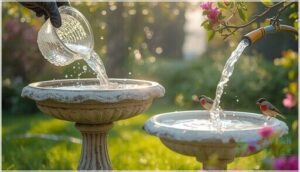
Emptying your bird bath completely removes settled debris and stagnant water that compromise water quality. Rinse thoroughly with clean water before refilling to eliminate residual dirt and prevent algae growth. This simple water change routine maintains the bath sanitizing needed between deeper cleaning schedules.
Follow these refill techniques for best results:
- Empty the bath fully to clear all debris removal needs
- Rinse interior surfaces to prevent algae growth
- Refill with fresh, clean water to recommended depth
Safe Cleaning Solutions

Occasionally, routine water changes aren’t enough to prevent algae growth and avian disease risks.
Vinegar solutions, diluted at roughly one part distilled white vinegar to two parts clean water, effectively tackle mineral buildup and algae prevention on non-porous surfaces. Peroxide uses include sanitizing methods with 3% hydrogen peroxide diluted 1:32 with water.
Mild soaps work for regular cleaning, while enzyme cleaners offer bird-safe alternatives that reduce water change frequency needs.
Rinsing and Residue Removal
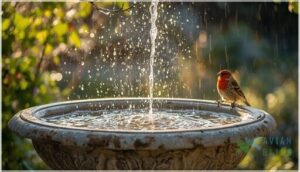
After scrubbing with cleaning solutions, thorough soap removal protects visiting birds from chemical exposure. Run clean water over all bath surfaces until no suds or film remain, ensuring proper residue control for ideal water quality. Target the bottom, sides, and rim during your rinse techniques.
- Inspect for lingering soap traces after the initial rinse
- Repeat rinsing if any residue appears on surfaces
- Allow the bath to air-dry completely before refilling
- Check water depth once fresh water is added
Preventing Algae and Mosquito Problems

Algae and mosquitoes thrive in standing water, turning your bird bath into a health hazard if left unchecked. Prevention requires a combination of smart positioning, consistent maintenance, and careful consideration of any additives.
The following strategies will help you keep your bird bath clear, safe, and free from unwanted growth.
Shady Placement Techniques
Position your bird bath where morning sun meets afternoon shade to control water temperature and slow algae growth. This shade selection keeps water fresh longer between changes.
Place the bath away from dense shrubs to guarantee bird safety and clear sightlines. A thoughtful yard layout near trees and flowering plants attracts visitors while maintaining outdoor maintenance ease.
Routine Scrubbing Methods
A dedicated brush removes slime buildup that threatens bird health and hygiene—aim for scrubbing every 1–2 weeks during active periods. Use bird-safe cleaning solutions like diluted white vinegar, then rinse thoroughly to protect water quality.
This basin maintenance routine controls algae growth between water change frequency cycles, keeping your bird bath inviting and safe for feathered visitors.
Water Additives: Are They Safe?
Many commercial water additives promise algae prevention and mosquito control, but their chemical risks often outweigh benefits for bird safety. Copper-based algaecides can cause toxic effects at low concentrations, while chlorine irritates sensitive avian tissues.
Instead of relying on these products for bacterial growth control, prioritize additive alternatives: frequent water changes, physical scrubbing, and proper placement maintain excellent water quality and avian hygiene.
Choosing The Right Water for Bird Baths
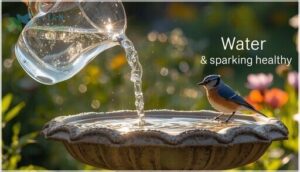
You’ve mastered the cleaning routine, but what about the water itself? The quality of water you pour into your bird bath matters just as much as how often you change it.
Here’s what you need to know about selecting safe, healthy water for your feathered visitors.
Tap Vs. Filtered Water
You can usually use tap water for your bird bath, though filtration methods improve water quality by removing chlorine and reducing mineral content. Most municipal tap water is safe for bird safety and provides adequate fresh water, but chlorine effects may affect palatability.
Filtered water enhances water sanitation and purification without removing essential minerals. Both options support the importance of clean water for birds through proper water quality management.
Avoiding Harmful Chemicals
While tap or filtered water works well, never add cleaning agents, fragrances, or pesticides to your bird bath. These chemicals compromise water purity and create toxic effects through ingestion or feather contact.
Chemical-free water sanitation relies on mechanical scrubbing with hot water instead of algaecides or sanitizers. For bird safety and avian hygiene, thorough rinsing removes all detergent residues before refilling.
Maintaining a Cleaner Bird Bath Longer
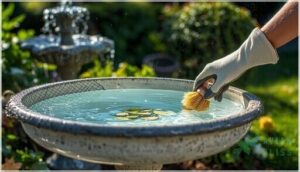
Keeping your bird bath cleaner for longer doesn’t require constant attention, just a few smart strategies. By addressing debris before it accumulates, using protective barriers, and maintaining a consistent inspection routine, you’ll reduce the need for frequent deep cleaning.
Here are three practical approaches to extend water freshness and minimize maintenance.
Debris Prevention Strategies
Simple tactics can keep your bird bath cleaner between water changes, reducing maintenance demands and promoting fresh water. Regular physical cleaning removes loose debris, cutting mold substrate by 60%. Strategic placement away from overhanging branches reduces organic buildup by 25–60%, while shallow-water debris rinsing after each refill controls particle accumulation effectively.
- Position baths 1–2 feet above ground to decrease leaf intrusion
- Install fine mesh screens to block 70% of wind-blown debris
- Establish weekly inspection routines to prevent algae growth and mosquito larvae development
Using Bird Bath Covers or Guards
You can reduce bird bath water change frequency by 30–40% with covers that shield the surface from debris blockage and UV exposure. Rigid cover materials or flexible guard designs block 70% of contaminants while stabilizing water temperature during heat waves.
Verify hinged or transparent options maintain bird safety by allowing comfortable access and preventing entrapment. Clean covers monthly to preserve their protective benefits.
Regular Inspection Schedules
You should establish a daily visual check to maintain ideal water quality and bird health. Regular maintenance routines prevent contamination between scheduled water changes.
- Morning inspections verify clarity and identify debris requiring immediate removal
- Weekly confirmation ensures cleaning protocols eliminate algae or mosquito larvae
- Monthly reviews assess bath components for cracks that compromise inspection frequency
Adjust your maintenance schedule based on seasonal bird activity and local weather patterns.
Creating a Healthy Environment for Birds
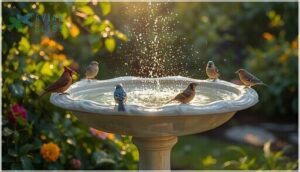
A well-maintained bird bath does more than provide clean water; it transforms your yard into a wildlife sanctuary. When you establish a consistent care routine, you create a reliable resource that attracts diverse bird species throughout the year.
A well-maintained bird bath transforms your yard into a wildlife sanctuary that attracts diverse species year-round
The following strategies will help you build a thriving habitat that nourishes your local avian community.
Encouraging Frequent Visits
Fresh water acts like a magnet for birds. When you maintain consistent water changes, you’ll notice more frequent visits from a wider variety of species.
Clean bird baths signal safety to cautious birds, reducing disease transmission risk while supporting avian health. Studies show that well-maintained baths attract diverse visitors. Your attention to water quality and bath maintenance directly enhances bird attraction and visitor safety.
Supporting Local Wildlife
Your bird bath does more than serve feathered friends—it anchors a thriving ecosystem. Clean, fresh water draws small mammals, pollinators, and diverse species that depend on accessible moisture for survival.
- Butterflies and bees sip from shallow edges, supporting pollinator populations
- Squirrels and chipmunks visit for hydration, enhancing wildlife conservation efforts
- Native plants near your bath attract varied species, promoting ecosystem balance
This simple feature strengthens your role in creating a bird-friendly environment and gardening for wildlife, all while controlling algae growth through regular maintenance.
Promoting Garden Biodiversity
When you pair your bird bath with native plantings, you transform your garden into a biodiversity powerhouse. Fresh water draws birds while diverse habitats support pollinators, beneficial insects, and varied species.
This wildlife connectivity delivers ecosystem services—soil health, natural pest control, and resilience against algae growth. Reducing pesticides strengthens biodiversity conservation, making your gardening for wildlife efforts truly impactful across all trophic levels.
Frequently Asked Questions (FAQs)
Can birds drink chlorinated tap water safely?
Worried about what’s in your tap? Municipal chlorine levels usually stay low enough for bird safety, but letting water rest or using filtered options reduces chemical exposure—especially important for younger birds maintaining proper hydration.
How deep should bird bath water be?
You’ll want water depth between 1 and 5 inches for safe bird bath design. Shallow edge benefits include accessibility for various species, while bathing water levels under 2 inches prevent drowning risks, ensuring maximum bird safety.
Should I add moving water features for birds?
Like a magnet drawing travelers to an oasis, moving water features attract more birds through splashing sounds and visible activity.
Solar-powered fountains reduce algae while signaling freshness, though regular maintenance and bird safety remain essential considerations.
What temperature water do birds prefer year-round?
Birds tolerate a wide water temperature range for bird bath comfort. During hot weather, they prefer cooler water around 90–100°F, while cooler months allow near-freezing levels without compromising bird health or avian hygiene.
Conclusion
A backyard ornithologist once tracked disease outbreaks to a single neglected bird bath, affecting dozens of local songbirds. Your daily maintenance creates a ripple effect through the entire ecosystem.
Understanding how often you should change bird bath water—ideally every 24 hours—transforms your simple basin into a genuine lifeline. Clean water protects vulnerable populations, fosters healthy behaviors, and invites continued visits. Your consistency determines whether birds thrive or merely survive in your garden sanctuary.
- https://www.scribd.com/document/683678057/Academic-Research-Manual-V1-1-April-2016
- https://www.audubon.org/news/how-make-birdbath
- https://www.buildings.com/articles/34698/avian-fecal-matter-poses-threat-buildings-and-occupants
- https://academichelpexpress.blog/2024/08/please-use-the-bulleted-points-and-the-rubric-below-to-guide-your-work-your-pa/
- https://www.sciencedirect.com/science/article/pii/S0749208123000268