This site is supported by our readers. We may earn a commission, at no cost to you, if you purchase through links.
Clean birdbath water does more than look nice. It can mean the difference between a safe stop for thirsty birds and a shallow bowl full of germs, algae, and mosquito larvae. I’ve seen birds return again and again to a fresh bath, then avoid the same basin once the water turns cloudy.
That’s why how often you should change birdbath water matters more than many backyard bird lovers realize. A good routine keeps birds drinking, bathing, and preening without adding disease risk.
Once you know the right schedule, the job stays easy, quick, and far more effective year‑round in practice.
Table Of Contents
- Key Takeaways
- Why Fresh Birdbath Water Matters
- Change Water Every One to Two Days
- What Changes The Schedule
- Seasonal Birdbath Water Schedule
- How to Clean Between Refills
- Frequently Asked Questions (FAQs)
- How often should you replace water in a bird bath?
- How often should you clean a bird bath?
- Are bird baths safe?
- How do you clean a bird bath?
- How often should I replace bird bath water?
- Why put a tennis ball in a bird bath?
- Is tap water safe for wild birds?
- Can you use rainwater in a birdbath?
- How deep should birdbath water be?
- Where should you place a birdbath?
- Conclusion
Key Takeaways
- Change birdbath water every one to two days as your normal routine, and switch to daily changes in hot weather or when the bath gets heavy use.
- Fresh water protects birds by reducing germs, algae, and mosquito larvae, while also making the bath more appealing for drinking and bathing.
- Replace the water right away if it looks cloudy, smells bad, feels slimy, or has droppings, leaves, or mosquito larvae in it.
- Empty and rinse the bath between refills, scrub it when grime builds up, and do a deeper cleaning every one to two weeks with bird-safe cleaners.
Why Fresh Birdbath Water Matters

Fresh birdbath water does more than make your yard look cared for. It helps keep the space safer, cleaner, and more inviting for the birds that stop by.
Pairing clean water with safe places to find bird nesting material helps turn your yard into a more dependable refuge.
Here are the main reasons it matters.
Drinking and Bathing Benefits for Wild Birds
Because wild birds use water for far more than a quick sip, a clean birdbath provides bird hydration, Digestive Aid, Feather Hydration, Thermoregulation Support, Preening Efficiency, and even Parasite Removal.
A fresh water source provides bird health day after day, and good water sanitation, built into your bird bath cleaning schedule, keeps bathing and drinking useful, gentle, and safe.
birdbath heater can keep water from freezing in winter, ensuring birds have access to liquid water year‑round.
Disease Risks From Stagnant Water
That fresh splash matters because health risks of stagnant birdbath water rise fast. Water stagnation effects include Pathogen Transmission, Legionella Growth, Giardia Contamination, Fungal Spores, and Biofilm Formation from droppings and debris. That raises waterborne disease risk for birds and people handling it.
Stagnant birdbath water quickly breeds harmful germs, turning a simple splash into a disease risk for birds and people
Frequency of changing bird bath water and cleaning and sanitizing bird baths help keep it safe overall.
Mosquito and Algae Prevention
That same stagnant water also invites mosquito larvae and slick green algae growth.
For solid mosquito breeding prevention, use Water Circulation from drippers or Aeration Devices, add Fine Mesh Covers where needed, and support Biological Predators like dragonflies.
Natural Algaecides can help, but steady birdbath maintenance, water quality monitoring, and the right frequency of changing bird bath water matter most.
Why Clean Water Attracts More Birds
Once algae and mosquitoes are under control, clean water draws birds in quickly:
- Visual Contrast and Bright Basin Colors help them spot it.
- Odor-Free Water feels safe.
- A Gentle Ripple signals freshness.
- Ambient Temperature water, plus daily refresh, helps bird attraction strategies, bird bath maintenance, and steady water quality monitoring, so more songbirds stop, drink, bathe, and come back again.
Change Water Every One to Two Days
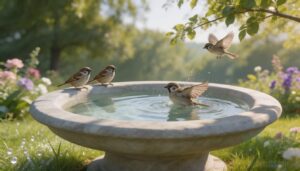
For most birdbaths, changing the water every one to two days is the safest routine. Some days you’ll need to refresh it sooner, while cooler, cleaner conditions may give you a little more room.
Here’s how to tell what schedule makes sense for your setup.
If mess builds up fast, this bird bath cleaning schedule to prevent algae growth can help you stay ahead of droppings and grime.
Best Baseline Schedule for Most Birdbaths
A routine keeps problems from sneaking up on you. The frequency of water changes for bird baths is every one to two days.
Use Baseline Timing Rules, Monitoring Frequency, Water Clarity Metrics, and Bird Activity Tracking to shape your bird bath maintenance schedule. Keep daily vs weekly recommendations, follow cleaning frequency guidelines, add Automation Options, and schedule weekly deep cleaning.
When Daily Water Changes Are Necessary
Sometimes, daily changes aren’t optional, especially in hot and humid weather.
- High Humidity speeds algae growth.
- Stormwater Runoff can cause pH Imbalance and bacterial buildup.
- Nearby Pesticide Application raises risk for Bird Species Sensitivity.
- When mosquitoes lay eggs or droppings build fast, change water that day.
Warm bowls foul quickly, so trust your nose and eyes.
When You Can Stretch Changes Slightly Longer
When Cool Night Temperatures linger and Sparse Bird Visits continue, Frequency of Changing Bird Bath Water can stretch to three or four days.
Basin Cover Benefits, Dripper Water Movement, and Distilled Water Use help.
Seasonal Adjustments for Bird Bath Water Changes reflect Temperature influence on algae, support Mosquito breeding prevention in bird baths, fitting Cleaning methods and schedules for birdbaths.
Signs It Needs Changing Sooner
See cloudy water or dark water? Change it right away. A foul odor, discolored water, slick algae, or a bacterial bloom all point to fast bacteria buildup.
If you spot mosquito larvae, visible larvae, leaves, or fresh bird droppings, don’t wait. Those are clear signs the bath is turning from a safe stop into a health risk for visiting birds.
What Changes The Schedule

A birdbath doesn’t run on one fixed schedule all year. A few simple factors can make the water get dirty, warm up, or disappear faster than usual.
Here’s what to watch so you know when it’s time to change it sooner.
Hot Weather and Rapid Evaporation
Here’s the hard truth: in hot weather, heat evaporation can drop a birdbath by nearly an inch a day. Evaporation Rate Factors like sun, Wind-Induced Loss, Material Heat Conductivity, and Surface Area Ratio all raise water turnover frequency.
Use shade and Evaporation Mitigation Techniques to increase the frequency of water changes for bird baths and protect water sanitation for birds.
Heavy Bird Traffic and Droppings
Heavy bird traffic changes everything: high Perch Density means fast Dropping Accumulation, and bird droppings can foul a small bath within hours. Shared baths foul fast; slick residue and microbes build quickly, so refresh the water sooner.
- Ammonia Buildup
- Phosphate Enrichment
- Biofilm Formation
- Tighten your cleaning routine
- Increase frequency of water changes for bird baths for disease prevention for birds
Sun Exposure, Shade, and Algae Growth
After droppings speed fouling, look at light. Sunlit Basin Placement warms water fast, so Algae Bloom Timing shortens.
Partial Shade Benefits are real: better shade placement lowers UV exposure effects and slows temperature-dependent growth.
Add a bubbler for Water Movement Effect, one of the best algae suppression methods. That algae control step cuts temperature influence on algae, too.
Leaves, Pollen, and Other Debris
Shade helps, but breezy days rewrite your schedule.
Wind-Driven Debris can cover a basin fast; Debris Accumulation Timing may be just hours. Leaf Float Dynamics and organic matter accumulation foul clean water quickly, so change bird bath water sooner.
For Pollen Film Removal, use leaf and feather skimming, quick debris removal, and Skimmer Efficiency Tips after storms.
Basin Size, Depth, and Water Clarity
After skimming leaves, look at the bowl itself. A shallow basin with good Basin Shape Optimization and Edge Design Safety stays safer and easier to refresh.
The role of water depth in bird bathing comes down to Species Depth Preference, while Volume Evaporation Balance affects seasonal water replacement.
Water Transparency Metrics: if water clarity slips, clean water can’t wait.
Seasonal Birdbath Water Schedule
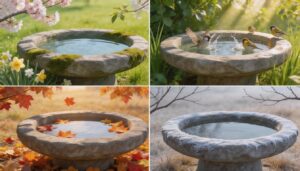
Birdbath care shifts with the seasons, so your routine shouldn’t stay the same all year. Warm weather usually means more frequent changes, while cooler days can give you a bit more flexibility.
Here’s a simple season-by-season schedule to help you know when to empty, refill, and check the water.
Spring and Fall Change Frequency
Why fuss in mild weather? Spring and Fall Bird Bath Maintenance still matters: Migration timing, Day length, Temperature thresholds, Rainfall patterns, and Feather molt all shape spring and fall adjustments.
Plan Seasonal water replacement every two days, with Seasonal Adjustments for Bird Bath Water Changes based on traffic and debris. That rhythm facilitates hydration, preening, and Seasonal bird bath care.
Summer Daily Refresh Routine
In summer, make a Morning Water Check part of your routine: dump and replace with fresh water every day, or sooner with heat evaporation in bird baths.
Water Level Monitoring, Mosquito Larvae Inspection, and Water Temperature Comfort all matter. Add Bubbler Aeration if you can.
These summer maintenance tips support bird bath hygiene and steady water quality management in heat.
Winter Water Changes and Ice Issues
In winter, Winter water changes matter even when the bowl looks quiet; ice can seal off safe drinking spots fast.
- Check Ice Thickness Monitoring; Seasonal adjustments matter.
- Use gentle Ice Thawing Strategies, never hammer.
- Add Aeration Under Ice for oxygen.
- Keep Frozen Water Access shallow and clear.
- Support Winter Bird Access with room-temperature refills and steady Ice prevention for birds.
Adjusting for Local Climate Conditions
Because yards vary, seasonality shapes your bird bath maintenance schedule more than the calendar alone.
| Factor | seasonal adjustments |
|---|---|
| Humidity Levels | watch temperature impact on algae |
| Wind Direction, Rainfall Timing | environmental factors influencing water change frequency |
| Temperature Extremes, Microclimate Positioning | guide safer changes |
A shady, sheltered spot stays cleaner longer, while hot, windy corners dry fast and foul water sooner, often.
Best Time of Day to Refill
Fresh timing matters as much as water.
- Morning Refill suits daily changes, dawn use, and limits heat stress for birds.
- Midday Top-up helps in the sun; Late Afternoon works where shade and Bird Bath Placement and Shade Considerations slow evaporation and temperature impact on algae.
- Stay Weather Responsive: refill After Rain, or whenever heat, debris, or levels appear.
How to Clean Between Refills
Changing the water is only half the job, because the basin itself can hold grime you don’t always notice. A simple cleaning routine between refills keeps the bath safer for birds and easier for you to manage.
Here’s what to do, when to do it, and what helps keep the water cleaner longer.
Empty, Rinse, and Refill Steps
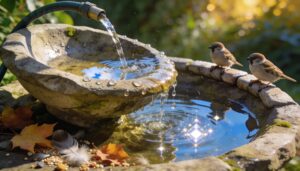
Think of it as a reset button: use a simple Drainage Technique and gentle Basin Tilt to empty every drop, then remove debris before a hose rinse. Keep Water Flow Control steady as you refill.
This Quick Dry Method aids Mold Prevention, helps clean bird bath surfaces, fits water changes, daily changes, and any bird bath cleaning schedule you follow.
When to Scrub The Basin
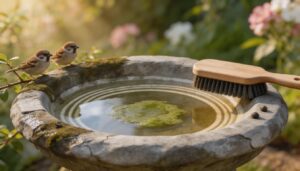
Notice green scum or a sour smell? That’s when scrubbing matters.
Odor detection, pH shift, Biofilm buildup, Mineral film, cloudy water, or stuck droppings all mean cleaning the basin right away.
Use a stiff-bristled brush that suits the basin material.
Save deep cleaning procedures for bird bath basins, cleaning and sanitizing bird baths, and any nontoxic cleaning solution for later.
Safe Cleaning Solutions for Birdbaths
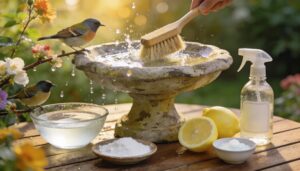
Once scrubbing becomes necessary, stick with Safe Cleaning Solutions for Bird Baths: a Vinegar Dilution made from distilled white vinegar, a Baking Soda Scrub, diluted Hydrogen Peroxide or hydrogen peroxide, a Lemon Juice Rinse, or Bird-safe Soap.
Each works as a non-toxic cleaning solution for chemical-free cleaning, as long as you rinse thoroughly and leave no residue behind for birds.
How Often to Deep Clean
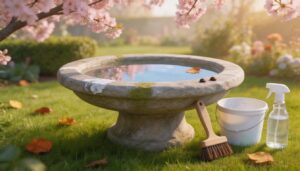
After using bird-safe cleaners, set a Deep Clean Interval of every one to two weeks. Let Seasonal Deep Cleaning follow your birdbath maintenance schedule, water change frequency, and seasonal maintenance needs.
Cleaning Frequency Triggers include slime, odor, droppings, or scale. Basin Material Impact matters, so keep a Deep Clean Checklist and follow deep cleaning procedures for bird bath basins carefully.
Accessories That Keep Water Cleaner Longer
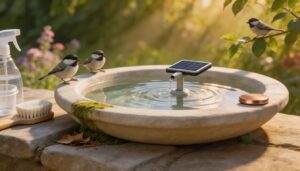
If you’re deep cleaning every week or two, a few simple add-ons can buy you cleaner days between refills. In-line Filters, Copper Silver Ion, Algae Inhibitors, UV Purification, and Water Stabilizers help.
Pair them with a birdbath brush set, copper disc, solar fountain, dripper, or bubbler to cut debris, algae, and stale water without adding much work to your routine.
Frequently Asked Questions (FAQs)
How often should you replace water in a bird bath?
Fresh, flowing water keeps birds coming back. Change your birdbath’s water every one to two days as your baseline refresh interval. Daily changes work best in summer heat.
How often should you clean a bird bath?
Clean your birdbath every few days for light maintenance, and do a full scrub weekly. When bird traffic is heavy or water looks cloudy, don’t wait.
Are bird baths safe?
Yes—bird baths are safe with Predator Guarding, Non-toxic Materials, Cat Deterrent Design, clean water, mosquito control, and cleaning and sanitizing bird baths.
Avoid Chemical Residues, Temperature Shock, and bird disease vectors to protect avian health.
How do you clean a bird bath?
Start by emptying it, scrubbing with soft Brush Types, and rinsing well.
Use diluted vinegar for algae control, avoid Pressure Washer Use, check Drainage Maintenance and Inspecting Cracks, and follow Basin Material Care throughout cleaning.
How often should I replace bird bath water?
Like an oasis, replace birdbath water every one to two days, with daily changes in heat or heavy use.
Let temperature control, habitat placement, and seasonal water management shape your maintenance schedule for bird baths.
Why put a tennis ball in a bird bath?
Tennis balls offer Buoyancy Benefits and Color Visibility, while Ripple Motion improves water circulation.
They work as a Surface Tension Breaker for mosquito breeding control, support Maintenance Simplification, and fit smart birdbath design considerations well.
Is tap water safe for wild birds?
Tap water is usually a safe fresh water source for birds if it smells clean, but watch Chlorine Levels, Fluoride Toxicity, Heavy Metal Contamination, Pharmaceutical Residues, and pH Balance because water quality affects bird health.
Can you use rainwater in a birdbath?
The theory that rainwater is safer holds partly true.
Rainwater Collection is fine if Roof Chemical Risks are avoided, Filtration Options are used, and Temperature Control aligns with Bird Preference, creating a fresh water source for birds.
How deep should birdbath water be?
Aim for an ideal depth range of 1-2 inches. Species-specific depth matters; use a depth measurement method in bird bath bowl.
Depth safety tips: watch standing water, mosquito larvae, algae, depth and temperature, water changes.
Where should you place a birdbath?
Best practices for bird bath placement: choose a bird bath location with shade, clear sightlines, nearby shelter, feeder distance, easy refill access, and predator deterrence height.
seasonal considerations for water changes mean you update water daily.
Conclusion
Imagine your birdbath as an invigorating oasis, where clean water invites birds to drink, bathe, and thrive. By changing the water every one to two days, you’re not just keeping it clear – you’re safeguarding their health.
A simple routine, like this, becomes second nature, ensuring your feathered friends enjoy a safe haven. As you refresh the water, you’re nurturing a haven, and with each refill, you’re supporting their well-being by knowing how often you should change birdbath water.