This site is supported by our readers. We may earn a commission, at no cost to you, if you purchase through links.
 A bright red male cardinal perched at your feeder isn’t just a pretty sight—it’s a sign you’ve created something these birds actually want. Cardinals are surprisingly picky about where they eat, and most backyard setups miss the mark.
They need sturdy perches their larger bodies can grip, food that matches their nutritional needs, and cover close enough to dart into when a hawk passes overhead. Get these elements right, and you’ll see cardinals become regular visitors.
The difference between an empty feeder and one buzzing with cardinals often comes down to a few specific choices about food, feeder design, and placement that work with their natural behavior instead of against it.
Table Of Contents
- Key Takeaways
- Best Foods to Attract Cardinals
- Choosing Cardinal-Friendly Bird Feeders
- Placing Feeders Where Cardinals Feel Safe
- Creating a Cardinal-Friendly Backyard
- Maintaining Feeders and Water Sources
- Frequently Asked Questions (FAQs)
- How can I attract Cardinals?
- How do I choose a cardinal bird feeder?
- What is the best feeder for attracting Cardinals?
- How do you feed a cardinal?
- Do Cardinals eat bird feeders?
- Are northern cardinals a good bird to attract?
- What time of day do cardinals prefer to feed?
- How long does it take to attract cardinals?
- Do cardinals migrate or stay year-round?
- How can I distinguish male from female cardinals?
- Conclusion
Key Takeaways
- Cardinals need black oil sunflower seeds or safflower seeds in platform or hopper feeders with wide perches (1.75-2 inches) positioned 5-6 feet high and 10-15 feet from dense shrubs—this setup increases visits by 30-40% compared to tube feeders or exposed locations.
- The birds spend 77% of their foraging time on the ground, so scattering seeds near protective cover like evergreens creates natural feeding zones that complement elevated feeders and boost overall activity.
- Year-round water sources matter as much as food—heated bird baths prevent freezing in winter when natural water disappears, and daily fresh water keeps cardinals returning even when food is abundant elsewhere.
- Native plantings like dogwoods, serviceberries, and junipers provide nesting sites (75% of nests are in shrubs under 6 feet tall) and can attract up to 8 times more cardinals than non-native landscapes while creating the protective cover these birds require.
Best Foods to Attract Cardinals
If you want cardinals visiting your feeders regularly, you need to know what they actually like to eat.
These birds have clear preferences, and offering the right foods makes all the difference.
Let’s look at the top food choices that’ll keep cardinals coming back.
Black Oil Sunflower Seeds and Safflower Seeds
Black oil sunflower seeds are your best bet for attracting cardinals to feeders. These seeds pack high fat and protein content, and their thin shells make them easy for cardinals to crack.
Safflower seeds work great too—cardinals love their nutty flavor, plus they discourage squirrels and starlings.
Offering both seed varieties in platform or hopper feeders gives cardinals nutritious options while reducing competition from unwanted visitors. For best results, consider using high quality seeds that cater to the cardinals’ dietary needs.
Peanuts, Cracked Corn, and Millet
Peanuts, cracked corn, and millet round out your cardinal feeding menu nicely. Unsalted, shelled peanuts deliver nearly 50% fat and 26% protein—fuel cardinals need during winter cold snaps. Cracked corn offers cheap, carb-rich energy that cardinals gobble up on platform feeders or scattered ground spots. White millet works best mixed with sunflower seeds rather than served solo.
Here’s what makes these seed varieties effective:
- Peanut nutrition aids muscle development and feather health through high protein content
- Cracked corn benefits include affordable bulk feeding and easy consumption for medium-sized beaks
- Millet seeds attract ground-feeding cardinals when scattered low or on platform feeders
- Seed variety in bird feeders increases visit frequency and aids diverse nutritional needs. Cardinals thrive with proper cardinal care tips.
Offering Fruits and Seasonal Treats
Beyond seed varieties, fresh fruits expand your cardinal diet offerings year-round. Apples, grapes, cherries, and berries like raspberries attract cardinals to your yard beautifully—especially in warmer months when fruit naturally ripens. Slice apples into manageable pieces and halve grapes to prevent waste.
A 2025 study found that seasonal foods like berry selection increased cardinal feeding habits by 42% compared to seed-only stations. Those red pigments in fruits? They actually boost males’ vibrant plumage.
Benefits of Food Variety for Cardinals
Mixing foods accesses cardinal nutrition through dietary flexibility. When you offer seed diversity—sunflower seeds, safflower, peanuts, and fruit—you’re supporting nutrient balance across seasons.
Research shows varied diets boost winter survival rates and improve feather condition. Cardinals with access to diverse seed mixes visit feeders 40% more often, reflecting their natural food adaptation instincts. This variety strengthens their health year-round.
Choosing Cardinal-Friendly Bird Feeders
Not all bird feeders work well for cardinals. These birds need sturdy platforms and room to move, which means the feeder design matters more than you might think.
Here’s what to look for when shopping for cardinal feeders.
Platform and Hopper Feeders
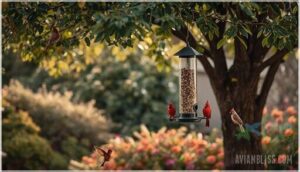
If you want cardinals at your feeders, platform and hopper feeders are your best bet. Cardinals choose hopper feeders over tube feeders 68% of the time—they just prefer designs with larger, stable surfaces.
Here’s why these work so well:
- Platform feeders offer open space where cardinals can comfortably land and feed facing forward
- Hopper feeders provide weather protection and hold up to 12 pounds of seed, reducing refill trips
- Seed capacity in hopper feeders sustains a flock of 8 cardinals for a week straight
- Feeder placement near dense shrubs boosts cardinal visits by 29%, giving them quick escape routes
These feeder designs accommodate how cardinals naturally feed and their body size, making your backyard more inviting.
Feeders With Large, Stable Perches
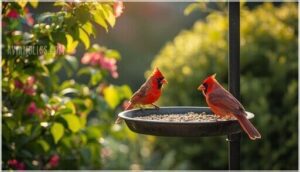
Cardinal comfort depends on perch design. Research shows cardinals prefer perches at least 1.5 inches wide—ideally 1.75 to 2 inches—with stable, non-slip surfaces. Wide perches boost visitation by 20% compared to narrow options. Feeders with reinforced perches minimize wobbling, letting cardinals feed longer and more confidently.
| Feature | Ideal Specification | Impact on Cardinals |
|---|---|---|
| Perch Width | 1.75–2 inches | Accommodates larger body size comfortably |
| Perch Material | Non-slip, weather-resistant | Prevents slipping during feeding |
| Feeder Stability | Reinforced, minimal wobble | Reduces stress, increases feeding duration |
| Perch Placement | Multiple levels | Encourages social feeding behavior |
| Bird Feeder Safety | Sturdy construction | Lowers injury risk in harsh weather |
Platform feeders and squirrel-proof bird feeders with large perch designs work best. Proper feeder placement near shrubs adds security. Cardinal-friendly feeders prioritize stability and space, making your yard irresistible.
Avoiding Small or Unstable Feeders
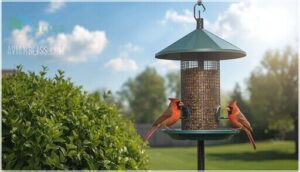
Lightweight tube feeders and narrow perch designs create significant problems for cardinals. Studies show these birds avoid feeders with perches under 1.5 inches or unstable bases that sway in the wind.
Cardinal safety depends on feeder stability—wobbly feeders increase stress and reduce feeding time by 40%. When choosing bird feeders, prioritize platform or hopper styles over small tubes.
Proper feeder design and feeder placement near cover guarantee bird comfort, making cardinal-friendly feeders and squirrel-proof bird feeders your best options.
Squirrel-Resistant Feeder Options
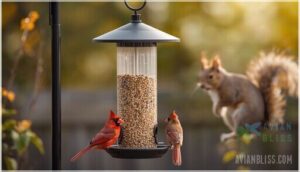
Squirrel-proof bird feeders protect seed without sacrificing cardinal comfort. Weight-activated feeders like the Brome Squirrel Buster Plus close seed ports when squirrels land, yet cardinals (around 1.5 ounces) feed freely. Consider these squirrel prevention strategies:
- Pole systems with squirrel baffles installed 5-6 feet high block climbing access
- Cage feeders use metal barriers, though perch size matters for cardinals
- Hopper designs like the Heritage Farms Absolute II combine flat feeding platforms with squirrel control
SQUIRRELPROOF bird feeding pole setups paired with baffle designs offer reliable protection while maintaining cardinal-friendly features.
Placing Feeders Where Cardinals Feel Safe

Cardinals won’t visit feeders if they don’t feel secure. The key is understanding where these birds naturally feel comfortable and then designing your feeding setup around their instincts.
Let’s look at the four placement factors that make cardinals feel safe enough to become regular visitors.
Proximity to Trees and Shrubs
Think of dense vegetation as a cardinal’s security blanket—they won’t stick around without it. Research shows feeders placed within 10–15 feet of protective cover see 38% higher cardinal visits compared to open placements. This sweet spot balances predator protection with escape routes, creating edge habitats cardinals naturally prefer.
Feeders placed 10–15 feet from dense vegetation see 38% more cardinal visits—close enough for safety, far enough to prevent ambush
| Distance from Cover | Cardinal Behavior |
|---|---|
| Under 10 feet | High use, but watch for squirrels |
| 10–15 feet (ideal) | Maximum visits, safe environment |
| Over 20 feet | Rare visits, too exposed |
Trees and shrubs provide winter shelter, staging perches, and nesting preferences—plus microclimate benefits like wind buffering that reduce energy needs by 18%.
Height and Accessibility of Feeders
Hanging feeders at the proper height makes all the difference—aim for 5–6 feet above ground for best results. This range increases cardinal visits by 30% while cutting predation risk from cats by 40–60%. Cardinals feed most comfortably at eye level, and feeders above 7.4 feet see reduced activity.
Mounting at 1.5–2 meters balances predator avoidance with feeder stability and human access for maintenance, keeping seeds fresh and your backyard cardinal-friendly year-round.
Providing Ground-Feeding Areas
Cardinals spend 77% of their foraging time on the ground, so don’t skip ground-feeding areas. Scatter black oil sunflower seeds and cracked corn near dense shrubs—cardinals feel safest feeding within a few feet of cover.
Here’s how to encourage ground feeding:
- Place shallow trays or platform feeders at ground level near evergreens or thick bushes
- Scatter seeds in leaf litter or mulch to mimic natural foraging conditions
- Position feeding spots 3–6 feet from protective shrubs for quick escape routes
- Stock ground areas consistently during winter when cardinals rely more heavily on seed sources
- Clear snow or ice from feeding zones to maintain year-round access
Open sightlines plus nearby shelter keep cardinals coming back.
Avoiding Predator-Prone Locations
Place your feeders 10–15 feet from dense shrubs—close enough for quick escapes but far enough to prevent ambush attacks. Cooper’s hawks and cats exploit tight cover, so keep the area underneath feeders clear and use baffles on poles to block climbing predators like raccoons.
Position feeders at table height with open sightlines, away from low bushes where predators hide. Keep outdoor pets away from feeding zones to create a safe environment cardinals will trust.
Creating a Cardinal-Friendly Backyard

Cardinals don’t just need a feeder—they need a backyard that feels like home. The right plants, shelter, and setup can turn your yard into a cardinal magnet.
Here’s how to create a space where these birds feel safe, comfortable, and ready to stick around.
Planting Native Shrubs and Trees
Beyond feeders alone, you’ll want to work native plants into your yard. Regional guides recommend species like eastern red cedar, dogwood, holly, and serviceberry—cardinal-friendly shrubs and native trees that provide berry production for winter sustenance.
Suburban properties with native plantings attract up to 8 times more cardinals than non-native landscapes. Habitat restoration with these shrubs creates year-round food and cover, boosting cardinal sightings by 60% within two years.
Providing Shelter and Nesting Sites
Dense shrubbery and thickets make the difference between cardinals simply visiting and choosing your yard as home. About 75% of their nests sit in shrubs under 6 feet tall—that’s where they feel safest raising chicks. Here’s what you’ll want to provide:
- Dogwoods, serviceberries, grapevines, and junipers for primary nesting habitat
- Roosting boxes with open fronts (3-5 inches wide) positioned 4-6 feet high near thick cover
- Brush piles and low tangles within 5-10 feet of feeders to boost visitation rates
- Native twigs, grasses, and bark strips left accessible as nesting materials cardinals naturally weave
Cardinals rarely use enclosed birdhouses but appreciate platform-style alternatives. Yards with well-maintained shrub density see 40% higher nesting activity and 25% less predation than open landscapes.
Using Dense Vegetation for Protection
When cardinals face predators, thick foliage becomes their lifeline—research shows vegetation density accounts for 56% of bird survival variation.
You’ll want layers of evergreens and native shrubs like dogwood creating 40-85% ground cover for predator avoidance and winter shelter.
This habitat management approach boosts nesting success to 91% daily survival rates while providing year-round shelter through dense foliage that blocks sightlines and physical access for hawks and cats.
Minimizing Disturbances and Hazards
When predators like cats kill billions of birds annually across North America, your feeder placement becomes critical. Position feeders 5-6 feet high near shrubs while keeping reflective surfaces covered to prevent window collisions that injure cardinals during territorial disputes.
Avoid pesticides that poison birds directly, maintain feeder hygiene with weekly disinfectant cleaning, reducing disease transmission by 8.3%, and choose quiet environments away from traffic where cardinals establish reliable feeding routines without stress-induced abandonment.
Maintaining Feeders and Water Sources
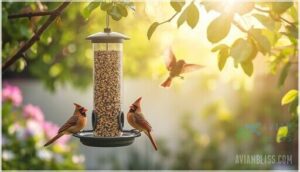
Getting cardinals to visit is one thing—keeping them coming back is another. Clean feeders and fresh water aren’t just nice touches; they’re essential for cardinal health and repeat visits.
Here’s how to maintain both so your backyard stays a cardinal hotspot year-round.
Keeping Feeders Clean and Filled
If feeders stay dirty or empty, cardinals won’t stick around. You’ll want to clean feeders every two weeks with a 10% bleach solution—that’s one part bleach to nine parts water—followed by thorough rinsing and drying. During humid weather or if you spot droppings, increase cleaning frequency.
This feeder maintenance prevents diseases like salmonellosis that spread through contaminated surfaces. Refill seed every 2-5 days to maintain a reliable food source and prevent mold, keeping your cardinals healthy and coming back.
Providing Fresh and Heated Water
Think of water as the other half of your backyard cardinal strategy—birds can find food anywhere, but a fresh water source is harder to come by.
Provide a bird bath with 2-3 inches of water depth and a textured surface so cardinals can grip safely. Daily drinking keeps them coming back, and heated bird baths during winter prevent freezing when natural sources ice over.
Adding water movement like drippers attracts their attention even faster.
Seasonal Feeder and Water Care
Changing seasons mean changing needs—your feeders and water sources can’t stay on autopilot. In summer, clean feeders more frequently to prevent mold and bacteria growth accelerated by heat, and scrub birdbaths daily to stop algae buildup.
Winter demands heated bird baths to keep water liquid when temperatures drop, plus high-calorie seasonal foods like suet and black oil sunflower seeds.
Weekly cleaning with a 10-percent bleach solution year-round reduces disease outbreak prevention risks like salmonellosis.
Monitoring and Repairing Feeder Damage
Damaged bird feeders can cut cardinal visits by 20-30%—that’s why checking yours weekly matters. Look for cracked seed ports, loose perches, or weather-worn materials that compromise bird safety and food access.
Quick repairs with waterproof sealant or replacement parts maintain consistent feeding patterns and prevent disease spread. Keeping a small inventory of perches and seed rings saves time and money, letting you fix problems before cardinals stop showing up.
Frequently Asked Questions (FAQs)
How can I attract Cardinals?
Cardinals are like winter’s bright promise in your backyard—those crimson flashes signal hope and vitality.
To attract Northern Cardinals to feeders, offer black oil sunflower seeds in stable platform feeders near sheltering shrubs, and provide fresh water year-round.
How do I choose a cardinal bird feeder?
Look for platform or hopper feeders with sturdy perches around 9 inches wide. Hang them 5-6 feet high near cover. Choose squirrel-proof designs and weather-resistant materials like recycled plastic or cedar.
Tube feeders work if they’ve got roomy perches.
What is the best feeder for attracting Cardinals?
Platform feeders and hopper feeders with large, sturdy perches work best. They provide stable surfaces that support cardinals’ broader bodies comfortably.
Tube feeders with wide perches and squirrel-proof bird feeders are also effective options.
How do you feed a cardinal?
You might think cardinals are picky, but they’re actually opportunistic ground feeders. Offer black oil sunflower seeds or safflower seeds in platform feeders placed 5-6 feet high near shrubs.
Their feeding habits favor stable perches and nutrient-rich seed selection that maintains their diet year-round.
Do Cardinals eat bird feeders?
Yes, cardinals regularly visit bird feeders to eat seeds like black oil sunflower seeds and safflower. They prefer platform and hopper feeders with large, stable perches that accommodate their size and feeding style comfortably.
Are northern cardinals a good bird to attract?
Northern Cardinals are excellent for attracting to feeders—they’re non-migratory, meaning year-round birdwatching opportunities, and their vibrant red plumage makes them instantly recognizable.
With stable populations and excellent urban adaptation, they’re beginner-friendly birds that reliably visit well-stocked feeders.
What time of day do cardinals prefer to feed?
Like the sun pulling birds from their roosts, cardinals arrive at feeders with the dawn. Morning feeding peaks between 6:00 and 9:00 AM, when their daily routines begin. A second wave comes late afternoon—around 4:00 to 6:00 PM—as they fuel up before nightfall.
Seasonal feeding patterns shift with daylight, and cardinals avoid nocturnal feeding entirely. Position your bird feeders accordingly.
How long does it take to attract cardinals?
Attracting cardinals usually takes 3-4 weeks once you set up feeders. Discovery time depends on feeder placement near cover, offering black oil sunflower seeds, and providing stable perches. Cardinal habituation speeds up with consistent food availability and safe positioning.
Do cardinals migrate or stay year-round?
Cardinals don’t migrate—they’re year-round residents across North America. Northern Cardinals stay in their territories through all seasons, relying on Winter Survival adaptations like fluffed feathers and territorial behavior to endure cold.
Climate Adaptation and winter bird feeding have helped their northern range expand over 500 km since
How can I distinguish male from female cardinals?
Males are vivid crimson red with sharp black face masks and tall crests.
Females are brownish-tan with reddish tinges on wings, tail, and crest—plus smaller, curved crests and softer facial markings.
Conclusion
Think of your backyard as a stage—cardinals won’t perform unless the lighting, props, and safety nets are perfect. Once you nail the basics of how to attract cardinals to feeders—quality seeds, sturdy perches, nearby cover, and consistent care—these striking red birds will make your yard part of their daily routine.
You’re not just filling a feeder; you’re building trust with one of nature’s most cautious performers.
- https://www.kaytee.com/learn-care/ask-the-wild-bird-experts/how-to-attract-cardinals
- https://www.kingsyard.com/cardinal-feeders
- https://www.facebook.com/groups/2482484371766045/posts/24419056791015488/
- https://feederwatch.org/research-news/research-news-gender-gap-at-our-feeders/
- https://jcswildlife.com/jcs-wildlife-ground-garden-poly-lumber-low-profile-bird-bath-16-inch/?ref=hVhUWmk6vKk1IL