This site is supported by our readers. We may earn a commission, at no cost to you, if you purchase through links.
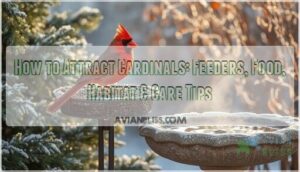
That vivid red flash darting past your window isn’t just eye candy—it’s one of North America’s most beloved backyard visitors, and it’s probably sizing up your yard right now. Cardinals don’t migrate, which means once you attract them, they’re yours to enjoy year-round, bringing color to even the dreariest winter morning.
The secret to making your space irresistible isn’t complicated, but it does require understanding what these stunning birds actually need: the right food served at the right height, safe shelter tucked among native plants, and reliable water they can access without fear.
Get these elements working together, and you’ll transform your yard from a place cardinals pass through into a sanctuary they call home.
Table Of Contents
Key Takeaways
- Cardinals don’t migrate, so creating the right habitat with proper food, shelter, and water transforms your yard into their year-round home rather than just a quick stop.
- Black-oil sunflower seeds and safflower seeds are the top food choices because their high oil content and thin shells make them easy for cardinals to crack and digest efficiently.
- Dense native shrubs and evergreens planted in layered clusters at multiple heights provide the protective cover and nesting sites cardinals need to feel secure enough to stay.
- Shallow birdbaths positioned about 10 feet from cover, combined with feeders stocked at dawn and dusk when cardinals are most active, create the complete environment these territorial birds seek.
Best Feeders to Attract Cardinals
Cardinals need a feeder that gives them room to perch comfortably while they crack open seeds with their powerful beaks. The right feeder makes all the difference between a quick visit and a regular dining routine, so choosing one with sturdy perches and easy access to food is key.
Here are four feeders that check all the boxes for attracting these stunning red visitors to your yard.
1. Cedar Ranch Bird Feeder
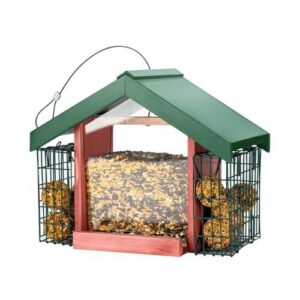
A Cedar Ranch Bird Feeder offers sturdy wood durability that can weather multiple seasons while providing the spacious perching areas cardinals need. You’ll appreciate that this cardinal-friendly feeder accommodates both seeds and suet blocks simultaneously, giving you flexibility in bird attraction strategies.
For more tested options that deliver similar results, check out this guide to the best bird feeders for cardinals.
The hanging mount design allows strategic bird feeder placement 10-12 feet from protective cover, though you’ll want to add squirrel proofing measures since the wire cable can be fragile.
Regular feeder maintenance—checking for damage and cleaning feeding trays—keeps your setup safe and welcoming for these territorial beauties.
| Best For | Bird enthusiasts who want a durable, natural-looking feeder that can attract multiple species including cardinals and bluebirds while offering flexibility with seed and suet options. |
|---|---|
| Material | Red Cedar Wood |
| Mounting Type | Hanging Mount |
| Weather Resistance | Durable Wood |
| Easy Assembly | Simple Setup |
| Maintenance | Requires Repairs |
| Target Species | Bluebird |
| Additional Features |
|
- Solid red cedar construction provides natural weather resistance and insect protection that lasts through multiple seasons
- Spacious design with multiple feeding options lets you offer both seeds and suet blocks at the same time
- Hanging mount with included wire makes installation straightforward and allows flexible placement around your yard
- Not genuinely squirrel-proof without adding extra protective measures or guards
- Hanging wire cable can be fragile and may break under heavy weight or stress from larger animals
- Some components like the roof may use thinner materials that could need repairs or replacement over time
2. Kingsyard Adjustable Bird Feeder
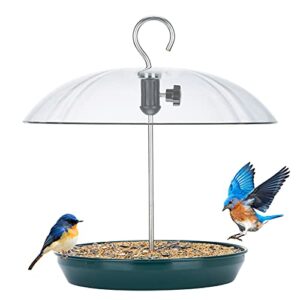
If you’re looking for versatility in bird feeder placement, the Kingsyard Adjustable Bird Feeder ($28.99) lets you control which species visit your cardinal feeder through its adjustable dome design.
Place it near a self-filling bird bath to create a complete feeding station that attracts cardinals while keeping maintenance simple.
This polycarbonate and metal construction includes drainage holes that keep black-oil sunflower seeds fresh—though you’ll need to clean them occasionally to prevent clogging. The rust-proof base provides stability cardinals appreciate, and while it’s not entirely squirrel-proof, pairing it with a baffle creates one of the most adaptable cardinal-friendly feeders available for attracting these territorial beauties year-round.
Cardinals also love safflower seeds and cracked corn, so mixing in the right bird food to attract cardinals alongside sunflower seeds can bring even more of these vibrant visitors to your feeder.
| Best For | Bird enthusiasts who want control over which species visit their feeder and need a durable, adjustable option that works in various yard setups. |
|---|---|
| Material | Cast Iron & Metal |
| Mounting Type | Freestanding |
| Weather Resistance | Rust-Proof Coating |
| Easy Assembly | Easy to Assemble |
| Maintenance | Easy to Clean |
| Target Species | Wild Birds |
| Additional Features |
|
- Adjustable dome lets you customize access for cardinals while keeping larger birds away, giving you real control over your feeder traffic.
- Rust-proof metal base and polycarbonate construction hold up well outdoors, so you’re not replacing it every season.
- Built-in drainage holes help keep seeds fresh and dry, which means less wasted food and healthier birds.
- Drainage holes can get clogged with seed debris and need regular cleaning to work properly.
- The seed tray capacity is on the smaller side, so you’ll be refilling more often if you have a lot of bird activity.
- Not completely squirrel-proof on its own—you’ll need to add a baffle if squirrels are a problem in your area.
3. Jealoeur Hanging Bird Feeder
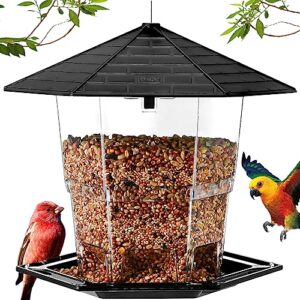
For smaller backyards where hanging designs work better than ground stations, the Jealoeur Hanging Bird Feeder offers a budget-friendly option—though you’ll need realistic expectations. Its 2.2-pound seed capacity and 360-degree perch appeal to chickadees and finches, but the 8.7 x 7.6 x 7.8-inch dimensions create challenges for cardinals.
Smaller birds benefit from this feeder’s manageable perches, especially when paired with vitamin-rich foods for birds that support their winter energy needs.
These territorial beauties prefer spacious perching areas that allow comfortable feeding, and this compact tube-style design simply doesn’t accommodate their larger body size. While the transparent reservoir helps with feeder maintenance, consider this model supplementary rather than your primary cardinal feeder strategy.
| Best For | Budget-conscious birders with smaller yards who want to attract chickadees and finches but shouldn’t expect regular cardinal visits due to the compact size. |
|---|---|
| Material | Mesh Fabric |
| Mounting Type | Freestanding |
| Weather Resistance | Outdoor Rated |
| Easy Assembly | Lightweight Setup |
| Maintenance | Easy to Clean |
| Target Species | Cats & Small Pets |
| Additional Features |
|
- Holds 2.2 pounds of seed with a clear reservoir so you can see when it needs refilling
- 360-degree perch design lets multiple small birds feed at once
- Weather-resistant construction with a hexagonal roof that provides shade and rain protection
- Too small for cardinals and other larger birds to comfortably access and feed
- Squirrel deterrence is hit-or-miss based on user reports
- May not attract birds as effectively as larger, more spacious feeders
4. MIXXIDEA Metal Bird Feeder Tray
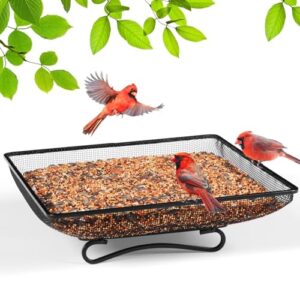
Platform feeders like the MIXXIDEA Metal Bird Feeder Tray finally give cardinals what they’re looking for—ample space to land, turn, and feed without awkward balancing acts. This 11×11-inch tray with rust-resistant black powder coating accommodates multiple birds simultaneously, and its mesh wire construction ensures proper drainage while keeping seeds fresh.
The double metal stand provides stability against tipping, though you’ll want to secure it during windier conditions.
For cardinal-friendly feeders, this straightforward design eliminates the guesswork from bird feeder selection and maintenance with surfaces that clean easily between refills.
Choosing the right feeder is just one piece of creating a backyard bird sanctuary that keeps cardinals and other species coming back year-round.
| Best For | Backyard birders who want a simple, low-maintenance feeder that attracts cardinals and other songbirds with plenty of landing space for multiple birds to feed comfortably at once. |
|---|---|
| Material | Polycarbonate & Metal |
| Mounting Type | Hanging Mount |
| Weather Resistance | Rain-Proof Design |
| Easy Assembly | Easy to Assemble |
| Maintenance | Easy to Clean |
| Target Species | Cardinal |
| Additional Features |
|
- Mesh wire construction allows water to drain quickly and keeps seeds fresh instead of letting them get soggy or moldy
- Rust-resistant black powder coating and durable metal build means it’ll hold up outdoors season after season
- Easy to clean with smooth surfaces that don’t trap seed husks, and the open design lets you refill it in seconds
- Can tip over in windy weather or when larger animals visit, so you might need to weigh it down or move it to a more sheltered spot
- The 11×11-inch size is smaller than some people expect, which limits how much seed you can put out at once
- Not deep enough to work as a catch tray under hanging feeders, so it really only works as a standalone platform feeder
Choosing Cardinal-Friendly Foods
If you want cardinals to become regular visitors to your yard, you’ll need to stock your feeders with the right menu—and trust me, these birds have strong preferences. While they’re not exactly picky eaters, certain seeds and foods will catch their attention far more reliably than generic birdseed mixes.
Let’s walk through the best food options that’ll keep those bright red visitors coming back, season after season.
Black-oil and Striped Sunflower Seeds
If you’re serious about attracting cardinals to your bird feeder, black oil sunflower seeds are your best bet. Their higher oil content and thinner hulls make them easier for cardinals to crack and digest compared to equal-weight mixes, and these cardinal-friendly feeders consistently draw more visits when stocked with black sunflower seeds.
Here’s what makes them so effective:
- Oil Content: Black-oil varieties pack more energy per seed
- Hull Thickness: Thinner shells mean less work, faster access to nutrition
- Digestion Ease: Cardinals process them efficiently, supporting year-round health
- Seed Preferences: Striped sunflower seeds offer similar energy value with even easier handling for smaller beaks
Understanding language patterns can also help you learn more about the behaviors of cardinals and other birds.
Safflower Seeds and Blends
Safflower seeds offer a smart alternative to sunflower seeds—cardinals love them, but squirrels and starlings usually don’t. You’ll see the best results with safflower-based blends that combine safflower and black-oil sunflower seeds, delivering higher fat content for breeding season and winter.
Keep your cardinal-friendly feeders stocked with these blends at mid-level stations, rotating pure safflower seeds occasionally to maintain their interest and prevent habituation. By using structured analysis methods, such as those found in scientific study audits, you can better understand the importance of providing the right food for cardinals.
Corn, Peanuts, and Fruit Options
Cardinals won’t turn down cracked corn, unsalted peanuts, or fresh fruit like berries and apple slices—these options add essential variety to seed blends while attracting cardinals to your yard through cardinal-friendly feeders.
Three alternatives to keep in mind:
- Cracked corn provides quick energy but shouldn’t dominate your bird seed mix
- Shelled peanuts deliver high-fat nutrition when fresh and mold-free
- Fresh berries offer hydration and natural sugars during breeding season
Monitor for peanut allergies and rotate fruit variety to maintain nutrient balance at your bird feeders.
Seasonal Food Adjustments for Cardinals
Northern cardinals adjust their menu throughout the year, and your bird feeding strategies should follow suit. Winter diet needs shift heavily toward high-energy sunflower seeds and suet, while spring protein comes from mealworms during breeding season. Summer fruits provide carotenoid sources that maintain those vibrant red feathers. By autumn, fattening foods like nuts prepare them for cold months—cardinal-friendly feeders stocked year-round keep these beauties visiting your yard.
| Season | Primary Foods | Why They Matter |
|---|---|---|
| Winter | Sunflower seeds, suet, grain | High calories for warmth, natural seeds scarce under snow |
| Spring/Summer | Insects, mealworms, fresh berries | Protein for nestlings, carotenoids for plumage maintenance |
| Fall | Nuts, seeds, late fruits | Fat reserves before winter scarcity hits hard |
Creating a Safe and Welcoming Habitat
Cardinals won’t stick around if your yard feels exposed or dangerous, no matter how much food you offer. Creating the right habitat means thinking about shelter, safety, and nesting—basically, giving these birds a reason to call your space home.
Let’s look at four key ways to transform your yard into cardinal-friendly territory.
Planting Native Shrubs and Evergreens

Think of native shrubs and evergreen species as the foundation of cardinal habitats—they’re what transforms your yard into a true bird sanctuary. Planting native plantings like dogwood, viburnum, and Eastern red cedar in shrub clusters mimics the brushy woodland edges cardinals naturally seek.
This landscape design for birds creates layered cover at multiple heights, turning wildlife gardening into a magnet for these stunning red visitors year-round.
Providing Dense Cover for Shelter

Dense planting at ground level through mid-canopy is what truly defines protective shelter for cardinals. You’ll want to create thicket creation zones where shrub selection emphasizes native plants like holly and juniper—these evergreen care champions provide nesting and roosting sites year-round.
Layer your native landscaping from groundcover to head height, establishing the structural complexity cardinals crave in their cardinal habitats.
Reducing Predator Risks and Hazards
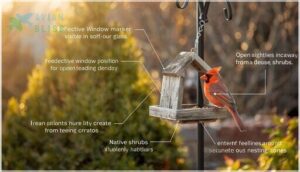
Your protective shelter won’t mean much if predators lurk nearby, so let’s talk about keeping your cardinals safe. Cats kill up to 4 billion birds annually in the U.S., making cat deterrents your first priority—keeping Fluffy indoors aids wildlife conservation efforts. Beyond that, smart habitat creation tackles multiple threats:
Safe cardinal habitats require indoor cats, strategic feeder placement, window markers, chemical-free gardens, and open sightlines to outsmart predators at every turn
- Place feeders 10-12 feet from dense ground cover management zones where cats ambush
- Apply visible markers to windows within 30 feet of feeders for window safety
- Avoid neonicotinoid garden products, as chemical hazards damage cardinal reproduction at sublethal doses
- Maintain open sightlines around feeders while locating nesting and roosting sites farther back for raptor control
- Remove feeders temporarily if hawks hunt your yard repeatedly
Protecting birds from hazards means thinking like a predator, then outsmarting them.
Supplying Nesting Materials
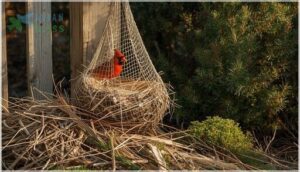
Beyond shelter, you can actively support cardinal nesting by offering safe construction materials. Cardinals weave nests from twigs, dry leaves, grapevine bark, grass stems, and pine needles—natural fiber use that’s easy to replicate.
Place loose piles of untreated dry grass, small fallen branches, and moss near dense shrubs, or hang mesh bags filled with straw and rootlets from fence posts, creating nesting opportunities cardinals will recognize and use.
Offering Water and Nesting Opportunities

Cardinals need more than just food to make your yard feel like home—they’re looking for fresh water to drink and bathe in, plus safe spots to raise their families. Getting these basics right can turn occasional visitors into year-round residents who return to the same nesting sites season after season.
Here’s how to provide the water sources and nesting opportunities that’ll keep cardinals coming back.
Setting Up Birdbaths and Water Features
When you’re providing water sources for birds, shallow basins work best. Aim for a birdbath with a depth of just 1.5 to 2 inches, giving cardinals safe footing without submersion risk. Textured bottoms prevent slipping.
Birdbath placement matters too: position your bird bath about 10 feet from dense cover, balancing openness with quick escape routes for bird safety.
Using Heated Baths in Winter
When winter months arrive and temperatures drop below freezing, a heated birdbath becomes your most valuable asset for bird conservation. Thermostatically controlled heaters maintain water just above 32 degrees, providing reliable winter water sources without scalding risk.
Keep depths shallow—about 1 to 2 inches—so cardinals can drink safely at the edge. This heated bath safety approach prevents frozen feather risks while ensuring consistent access to liquid water throughout harsh weather.
Selecting Plants for Natural Nesting Sites
Cardinals build their nests 3 to 10 feet off the ground in dense thickets, so layered plantings with native shrubs and evergreen trees create ideal nesting material hideouts. Think dogwood, arrowwood viburnum, or eastern redcedar—these natives support insects that feed nestlings while forming the protective tangle cardinals need for wildlife gardening tips success.
- Arrowwood viburnum (Viburnum dentatum) grows 6 to 8 feet tall, offering dense multi-stem structure and hosting over 100 native caterpillar species
- Eastern redcedar (Juniperus virginiana) provides year-round evergreen cover with dense foliage for nesting and winter roosting
- Dense vines like Virginia creeper create thick tangles along fences and trees, functioning as primary nesting substrates
- Inkberry holly (Ilex glabra) maintains leaf cover through winter at 4 to 12 feet, perfect for early-season nests in your birdfriendly garden
Maintaining Clean and Accessible Water Sources
Every 2 to 3 days, you’ll want to scrub your birdbath and refill it with fresh water—that cleaning schedule prevents algae buildup and stops mosquito larvae from maturing in standing water.
Choose a shallow basin with gently sloped sides, around 1 to 2 inches deep, so cardinals can grip the edge safely while you maintain this critical water source year-round.
Cardinal Behavior and Seasonal Care Tips
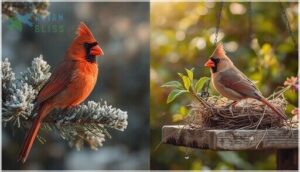
Cardinals are creatures of habit, and once you understand their rhythms, you’ll know exactly when to expect your bright red visitors at the feeder. These non-migratory birds stick around all year, but their needs shift dramatically with the seasons—what works in spring won’t cut it come winter.
Let’s break down how cardinal behavior changes throughout the year and what you can do to keep them coming back, season after season.
Understanding Cardinal Feeding Patterns
If you’ve noticed Northern Cardinals don’t visit your feeders randomly, you’ve spotted their bimodal rhythm—most activity clusters around dawn and dusk. Their foraging habits reflect both daily rhythms and seasonal diet shifts: winter brings more feeder use and varied seed preferences, while breeding season emphasizes insects.
Weather effects matter too; cold days intensify visits to cardinal-friendly feeders stocked with sunflower seeds, making thoughtful bird feeding essential for creating a cardinal-friendly yard.
Encouraging Year-round Visits
Since Northern Cardinals don’t migrate, year-round visits depend on habitat consistency—stable food, water, shelter, and minimal disturbance across all seasons. Maintaining a bird-friendly yard with cardinal-friendly feeders, evergreen cover, and a year-round food supply encourages territorial pairs to remain rather than abandon your space.
Seasonal adaptation matters: offering high-fat seeds in winter and insect-friendly native plantings during breeding season strengthens site fidelity, transforming occasional visitors into permanent residents and attracting songbirds through thoughtful, evidence-based bird feeding tips.
Supporting Cardinals During Breeding Season
From late April through mid-August, supporting breeding Northern Cardinals means shifting focus to protein and nesting material—your bird-friendly yard becomes essential reproductive habitat during this critical window.
- Offer calcium-rich foods like crushed eggshells or calcium-fortified seed blends alongside cardinal-friendly feeders to support skeletal development in nestlings
- Provide natural nesting material such as native grasses, small twigs, and strips of bark near dense shrubs where pairs prefer to nest 1–3 meters up
- Increase insect availability by planting native plants that host caterpillars and beetles, which dominate the cardinal diet fed to young during fledgling care
- Minimize disturbance near nesting sites, as territorial males aggressively defend breeding habitat and may abandon nests if stressed
- Maintain consistent water sources throughout the breeding season, since both adults and recently fledged juveniles require daily hydration during peak summer heat
Adjusting Care for Seasonal Changes
As nonmigratory residents, cardinals rely on your bird-friendly yard through every seasonal shift—what you provide in January matters just as much as August.
Adjust from high-fat seeds and winter windbreaks during cold months to protein-rich insects and nesting material come breeding season, maintaining a year-round food supply and shelter that aids their changing metabolic needs across seasonal diet shifts.
Frequently Asked Questions (FAQs)
What colors attract cardinals besides red feeders?
Earth tones, dark colors, and green foliage blend seamlessly into cardinal-friendly yards.
Orange blooms and purple hues from seed-bearing flowers attract Northern Cardinals too, offering visual cues and nutritional benefits for attracting birds to your yard naturally.
How do cardinals communicate with each other?
Cardinals possess one of the most impressive vocal repertoires in the bird world. Both males and females sing elaborate territorial signals, use distinct call types for alarms, and employ soft nest vocalizations for mate communication and coordinating parental care.
Can cardinals recognize individual humans over time?
Yes, northern cardinals likely recognize individual humans through visual discrimination and repeated association with food sources.
Research on bird behavior suggests they remember familiar people for extended periods, showing clear habituation patterns and facial recognition abilities.
Why do cardinals sometimes attack window reflections?
Like ancient warriors charging at phantom foes, Northern Cardinals may attack window reflections during breeding season, misinterpreting their mirror image as a territorial rival—a form of reflection aggression common among backyard birds defending nesting areas.
How long do cardinals typically live?
In the wild, northern Cardinals usually live around three years on average, though banding records show some individuals reaching 15 years under favorable conditions—predation, disease, and accidents greatly limit longevity.
Conclusion
Think of your yard as a stage—you’ve built the set, positioned the props, and now the crimson stars are ready for their entrance. Learning how to attract cardinals to your yard isn’t about forcing nature’s hand; it’s about extending an invitation these birds can’t refuse.
Keep those feeders stocked, water fresh, and shelter dense. The rest writes itself: vivid flashes of red against morning snow, territorial calls echoing through summer evenings, and the quiet satisfaction of knowing you’ve created something lasting.
- https://barrie.wbu.com/attracting-northern-cardinals
- https://feedsnneeds.ca/advices/how-to-attract-cardinals-to-your-yard/
- https://www.facebook.com/WillCoForests/posts/love-cardinals-want-to-see-them-in-your-yard-cardinals-arent-picky-eaters-so-hav/1016328480538505/
- https://www.audubon.org/field-guide/bird/northern-cardinal
- https://www.birdwatchingdaily.com/beginners/birding-faq/a-proven-strategy-that-keeps-cardinals-coming-back-to-your-feeder/