
This site is supported by our readers. We may earn a commission, at no cost to you, if you purchase through links.

A male cardinal landing in your yard isn’t luck—it’s an invitation. These birds are selective. They know what they want, and if your feeder doesn’t offer it, they’ll find someone else’s that does. The good news? Winning them over takes surprisingly little effort once you understand what actually draws them in.
Cardinals have a strong preference for fat-rich seeds with thin shells they can crack with their thick, cone‑shaped bills. Black‑oil sunflower and safflower are the heavy hitters, but the right feeder setup and placement matter just as much as what’s inside. Get those three things working together, and a cardinal pair might just claim your yard as their regular dining spot.
Table Of Contents
- Key Takeaways
- Top 10 Bird Foods for Cardinals
- 1. Wagners Safflower Seed Bird Food
- 2. Lyric Peanut Bird Food
- 3. Woodlink Absolute II Squirrel Resistant Feeder
- 4. Woodlink Cedar Platform Bird Feeder
- 5. Woodlink Audubon Dome Bluebird Feeder
- 6. Audubon Park Cardinal Blend Bird Seed
- 7. Wagners Cardinal Blend Wild Bird Food
- 8. Kaytee Cardinal Seed Cake
- 9. Kaytee Nut Fruit Wild Bird Seed
- 10. Kaytee Cardinal Bird Seed
- Best Seeds Cardinals Eat
- Feeders Cardinals Prefer
- Place Feeders Where Cardinals Feel Safe
- Keep Cardinals Visiting All Year
- Frequently Asked Questions (FAQs)
- What can you feed cardinals if you don’t have bird seed?
- How can I attract Cardinals?
- What do Cardinals eat in a bird feeder?
- Do birds eat Cardinal seeds?
- What plants attract Cardinals?
- What is the best bird feeder for Cardinals?
- How do you attract Cardinals to a bird feeder?
- What types of feeders are best for cardinals?
- What food sources do cardinals prefer?
- Which plants are most attractive to cardinals?
- Conclusion
Key Takeaways
- Black-oil sunflower and safflower seeds are your two best bets for drawing cardinals quickly — they love both, and safflower has the bonus of keeping squirrels away.
- Cardinals feel safest when feeders are placed 3–10 feet high and within 10–12 feet of shrubs or trees, giving them a quick escape route and a reason to stick around longer.
- Platform and hopper feeders work best because cardinals need wide, stable perches where they can sit comfortably and eat facing forward — cramped tube feeders just don’t suit them.
- Keeping seed fresh, feeders clean, and a heated water source available in winter are what turn a one-time cardinal visit into a year-round habit.
Top 10 Bird Foods for Cardinals
Cardinals aren’t picky, but they do have favorites. right food makes a real difference in how often they show up — and how long they stick around.
Sunflower seeds and safflower are usually the fastest way to win them over — here’s a breakdown of the best wild bird seeds for attracting cardinals if you want to nail the mix.
Here are 10 options that consistently bring them to the yard.
1. Wagners Safflower Seed Bird Food
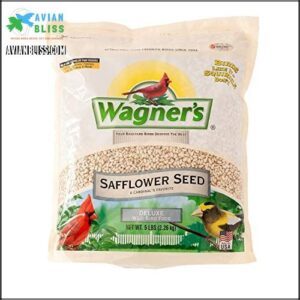
Wagner’s safflower seed is one of the simplest ways to bring cardinals straight to your yard. A 5 lb resealable bag runs just $11.98 — easy to store, easy to refill.
Cardinals love safflower’s thick, nutty seeds, and here’s the bonus: squirrels, grackles, and starlings mostly ignore it. So you get the birds you actually want.
Use it in a hopper or platform feeder, and you’ll notice the difference fast.
| Best For | Backyard bird watchers who want to attract cardinals and songbirds without dealing with squirrels or feeder hogs. |
|---|---|
| Cardinal Appeal | Yes – primary target species |
| Price | $11.98 |
| Squirrel Deterrence | Safflower seed naturally deters squirrels |
| Product Type | Seed (safflower) |
| Bird Life Stage | All life stages |
| Weather Resistance | Resealable bag maintains freshness |
| Additional Features |
|
- Squirrels, grackles, and starlings tend to leave it alone — so the good birds actually get to eat
- The resealable bag keeps seeds fresh and cuts down on waste between fills
- High-fat content gives small birds a solid energy boost through cold months
- Seed husks can pile up under the feeder and get messy over time
- The high fat content is a bit much in warmer seasons — worth mixing with lighter seeds come spring
- Shelf life is limited, seeds can go rancid within a year or two if not stored somewhere cool
2. Lyric Peanut Bird Food
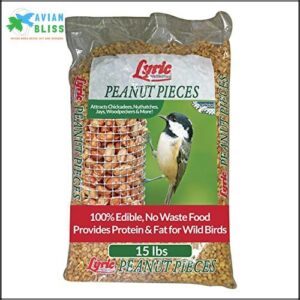
If safflower keeps the unwanted visitors away, peanuts bring everyone to the party.
Lyric’s 15 lb bag of shelled peanut pieces runs $32.99 and packs serious nutrition — around 25% protein and 40% fat.
That’s real fuel, especially when cardinals are pushing through cold mornings or feeding nestlings in spring.
No shells mean no waste, and cardinals can grab pieces quickly without wrestling with the feeder.
Just keep them dry — wet peanuts mold fast.
| Best For | Backyard birders who want to attract a wide variety of species — from chickadees to woodpeckers — without dealing with messy shells or leftover waste. |
|---|---|
| Cardinal Appeal | Indirect – high-protein peanuts attract wide range |
| Price | $32.99 |
| Squirrel Deterrence | Attracts squirrels; additional deterrents needed |
| Product Type | Seed (shelled peanuts) |
| Bird Life Stage | All life stages |
| Weather Resistance | Keep dry to prevent mold |
| Additional Features |
|
- High protein and fat content gives birds real energy, especially during cold winters or nesting season
- No shells means no mess under the feeder and less time spent cleaning
- Works with most feeder types and draws in a solid mix of songbirds
- Peanuts mold quickly if they get wet, so you’ll need to check the feeder regularly after rain
- Squirrels and chipmunks love these too, so be ready for some uninvited guests
- Whole pieces may not fit in smaller tube or finch feeders
3. Woodlink Absolute II Squirrel Resistant Feeder
Good seed only gets you so far if squirrels empty the feeder before the cardinals even land.
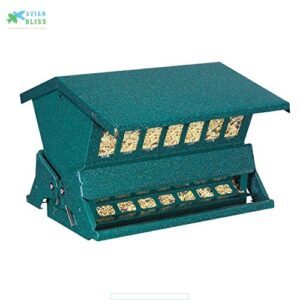
The Woodlink Absolute II solves that. Its spring-activated perches close automatically when anything heavier than a songbird steps on — squirrels included. You get double-sided feeding ports, a large 12‑pound capacity, and a seed‑level window so you’re never guessing when to refill.
At $84.14, it’s built from heavy‑duty steel with a weather‑resistant finish. Cardinals can feed comfortably. Squirrels can’t.
| Best For | Backyard bird lovers who are tired of squirrels raiding the feeder and want a set-it-and-forget-it solution that works for most songbirds. |
|---|---|
| Cardinal Appeal | Yes – weight-selective feeder suits cardinals |
| Price | $84.14 |
| Squirrel Deterrence | Spring-activated perches exclude squirrels by weight |
| Product Type | Feeder (hopper with pole) |
| Bird Life Stage | All life stages |
| Weather Resistance | Powder-coat steel endures outdoor conditions |
| Additional Features |
|
- Spring-activated perches shut out squirrels and larger pests automatically — no extra gadgets needed
- Holds up to 12 lbs of seed, so you’re not refilling every other day
- All-steel, weather-resistant build means it holds up through rain, wind, and cold without falling apart
- Determined raccoons or bears can still get into it, so it’s not a fix for every backyard pest problem
- The pole connections are non-threaded and can wobble unless you drill or grab aftermarket adapters
- Heavier birds like Blue Jays might get locked out too, depending on how you set the weight trigger
4. Woodlink Cedar Platform Bird Feeder
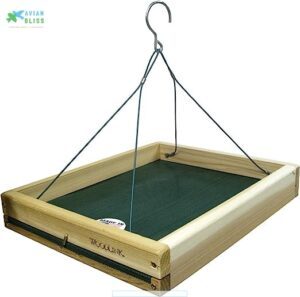
Cardinals like having room to breathe. That’s exactly what the Woodlink Cedar Platform Bird Feeder gives them — a wide-open tray where they can perch, face forward, and eat comfortably.
It’s hand-crafted from rot-resistant red cedar, holds up to 3 pounds of mixed seed, and the screen bottom slides out for easy cleaning.
At $37.53, it’s solid value. You can hang it, post-mount it, or set it on the ground — whatever suits your yard setup best.
| Best For | Backyard birders who want a roomy, natural-looking feeder that works for cardinals, jays, and other larger birds without being locked into one mounting style. |
|---|---|
| Cardinal Appeal | Yes – open platform suits cardinal feeding style |
| Price | $37.53 |
| Squirrel Deterrence | Not squirrel-proof; baffle sold separately |
| Product Type | Feeder (platform/tray) |
| Bird Life Stage | All life stages |
| Weather Resistance | Cedar resists rot; screen drains water |
| Additional Features |
|
- Real red cedar looks great and holds up to the elements without rotting out on you
- The slide-out screen makes cleanup quick — just pull it out, rinse it off, done
- Hang it, post-mount it, or set it on the ground — works however your yard is set up
- Mounting hardware isn’t included, so budget a bit extra if you don’t already have a pole or post
- Open tray means rain soaks the seed, which can make cleaning messier than expected
- A few buyers have reported loose screws and wood splitting out of the box
5. Woodlink Audubon Dome Bluebird Feeder
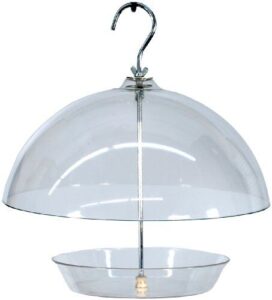
Here’s one feeder worth a closer look — especially if squirrels and pushy jays keep crashing the party. The Woodlink Audubon Dome Bluebird Feeder uses an 11.75-inch clear polycarbonate dome to keep seed dry and larger birds out.
You can adjust the dome height to control who gets in. Cardinals fit comfortably on the shallow tray, and the whole thing hangs easily from a hook.
It’s lightweight, simple to clean, and does its job without fuss.
| Best For | Backyard birders who want to attract bluebirds and small songbirds while keeping rain, jays, and grackles away from the feeder. |
|---|---|
| Cardinal Appeal | Yes – adjustable dome targets small songbirds |
| Price | Not specified |
| Squirrel Deterrence | Adjustable dome can limit larger pest access |
| Product Type | Feeder (dome tray) |
| Bird Life Stage | All life stages |
| Weather Resistance | Polycarbonate dome shields food from rain |
| Additional Features |
|
- The clear dome keeps food dry in rain or snow, so you’re not constantly tossing soggy seed
- Adjustable dome height lets you block bigger, pushier birds without needing a separate feeder
- Easy to unhook and clean, and the transparent dome gives you a great unobstructed view of your visitors
- The plastic tray and threaded collar tend to crack or break within a year or two, especially in windy spots
- Metal parts like the post and wing nuts can rust fast if you’re in a damp climate
- The lower wing nut loosens over time, so you’ll need to check and tighten it pretty regularly
6. Audubon Park Cardinal Blend Bird Seed
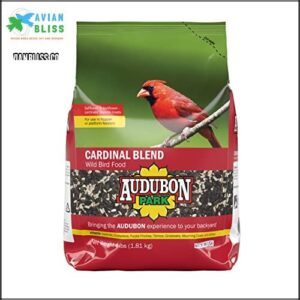
Two seeds, no filler — that’s the whole idea behind the Audubon Park Cardinal Blend (Model 12231).
It’s straight black-oil sunflower and safflower, nothing is wasted. Cardinals love both, and squirrels tend to skip the safflower, so you’re not constantly refilling after a raid.
At $7.99 for 4 lbs, it costs a little more than generic mixes, but you’re paying for seeds that birds actually eat.
Works in hopper, tray, or platform feeders — whatever you’ve already got set up.
| Best For | Backyard bird lovers who want to attract cardinals and songbirds without babysitting the feeder every hour because of squirrels. |
|---|---|
| Cardinal Appeal | Yes – sunflower/safflower blend targets cardinals |
| Price | $7.99 |
| Squirrel Deterrence | Safflower component reduces squirrel interest |
| Product Type | Seed blend (sunflower & safflower) |
| Bird Life Stage | All life stages |
| Weather Resistance | Standard bag; use in covered feeder recommended |
| Additional Features |
|
- Just two quality seeds — no cheap filler that birds toss aside and waste
- Safflower naturally deters squirrels, so your seed actually goes to the birds
- Works with most feeders you already own — hopper, tube, or platform
- Pricier per pound than a basic mixed seed bag
- Won’t attract birds that prefer millet, nyjer, or cracked corn
- Squirrels won’t always take the hint — some stubborn ones will still try their luck
7. Wagners Cardinal Blend Wild Bird Food
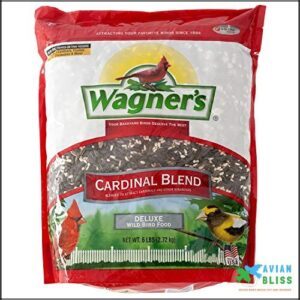
Wagner’s Cardinal Blend keeps it simple: 60% black-oil sunflower seeds, 40% safflower, plus a bonus of striped sunflower for extra variety. That high-oil formula means real energy — roughly 16–18% crude fat — which matters most during cold snaps and breeding season.
At $13.48 for 6 lbs, it’s not the cheapest option, but the no-filler mix means less waste on the ground.
The resealable press-lok bag is a small thing that makes a real difference in keeping seeds fresh between refills.
| Best For | Bird lovers who want to attract cardinals and finches without dealing with messy shells or filler seeds. |
|---|---|
| Cardinal Appeal | Yes – 60% sunflower/40% safflower cardinal blend |
| Price | $13.48 |
| Squirrel Deterrence | Safflower reduces squirrel feeding |
| Product Type | Seed blend (sunflower & safflower) |
| Bird Life Stage | All life stages |
| Weather Resistance | Resealable Velcro bag protects seed |
| Additional Features |
|
- High-oil seed blend gives birds real, energy-dense nutrition — especially useful during breeding season and cold weather
- No filler seeds means less waste on the ground and fewer rodents poking around
- Resealable press-lok bag keeps seeds fresh and storage clean between refills
- At $13.48 for 6 lbs, it costs more than basic generic blends
- Squirrels may still help themselves despite safflower being less attractive to them
- Popular feeders can burn through a bag fast, so you might be refilling more often than expected
8. Kaytee Cardinal Seed Cake
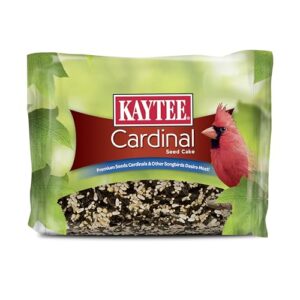
Sometimes you just want to skip the mess. The Kaytee Cardinal Seed Cake presses black‑oil sunflower and safflower — cardinals’ two favorite seeds — into a solid block with honey and cracked corn.
No measuring, no spilled hulls, no daily refills. One 1.85‑lb cake lasts several days, depending on how busy your feeders get. It fits Kaytee’s cake‑style holders and hangs cleanly.
Watch out for squirrels, though — they love this thing just as much as your cardinals do.
| Best For | Backyard birders who want to attract cardinals and songbirds without the daily hassle of loose seed mess. |
|---|---|
| Cardinal Appeal | Yes – sunflower and safflower cake for cardinals |
| Price | $6.48 |
| Squirrel Deterrence | Squirrels frequently consume the cake |
| Product Type | Seed cake (compressed) |
| Bird Life Stage | All life stages |
| Weather Resistance | Compressed cake reduces moisture absorption |
| Additional Features |
|
- Black-oil sunflower and safflower seeds are exactly what cardinals love, so you’ll actually see the birds you’re after.
- No loose seed means no hulls piling up under your feeder — way less cleanup.
- One cake lasts several days, so you’re not out there refilling every morning.
- Squirrels are big fans too, and they’ll work through it fast if you don’t have a squirrel-proof setup.
- You’ll need a compatible cake-style feeder — it won’t just sit anywhere on its own.
- Cutting or breaking the cake can get crumbly, which somewhat defeats the mess-free point.
9. Kaytee Nut Fruit Wild Bird Seed
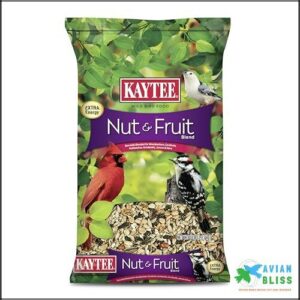
If cardinals had a favorite treat bag, this might be it. Kaytee Nut Fruit Wild Bird Seed packs black‑oil sunflower seeds, peanuts, dried cherries, raisins, and mixed nuts into one rich blend — high in fat and protein, which cardinals genuinely need.
That variety keeps them at your feeder longer instead of grabbing one seed and bolting.
At $12.59 for 5 lbs, it costs more than basic mixes, but the longer visits and extra bird diversity make it worth trying.
| Best For | Backyard birdwatchers who want to attract a wide variety of birds — especially cardinals, woodpeckers, and nuthatches — and don’t mind spending a little more for quality. |
|---|---|
| Cardinal Appeal | Yes – premium blend targets cardinals specifically |
| Price | $12.59 |
| Squirrel Deterrence | Attractive to squirrels; feeder protection advised |
| Product Type | Seed blend (mixed nuts & fruit) |
| Bird Life Stage | All life stages |
| Weather Resistance | Standard bag; store in dry location |
| Additional Features |
|
- Rich mix of sunflower seeds, peanuts, nuts, and dried fruit gives birds a reason to stick around longer
- Attracts a solid variety of species, so your feeder stays busy and interesting
- High fat and protein content means birds are actually getting good nutrition, not just filler
- At $12.59 for 5 lbs, it’s pricier than your average seed bag — costs add up fast if you feed heavily
- Squirrels and other backyard crashers love it just as much as the birds do
- The blend can vary batch to batch, so the peanut-to-seed ratio isn’t always consistent
10. Kaytee Cardinal Bird Seed
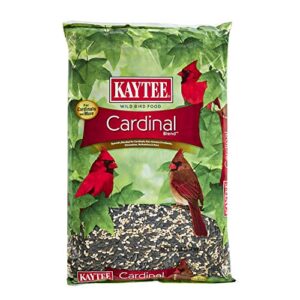
Kaytee Cardinal Bird Seed keeps things simple — and sometimes simple is exactly right. It blends black-oil sunflower and safflower seeds, two of the best foods you can offer a cardinal.
The safflower pulls double duty: cardinals love it, squirrels don’t. At $14.95 for 7 lbs, it’s reasonably priced and allergen-free with added soybean oil to keep seeds fresh.
Refill your feeder early each morning — cardinals show up at dawn and stick around late.
| Best For | Backyard bird lovers who want to attract cardinals and other songbirds while keeping squirrels at bay. |
|---|---|
| Cardinal Appeal | Yes – sunflower/safflower mix targets cardinals |
| Price | $14.95 |
| Squirrel Deterrence | Safflower bitter taste discourages squirrels |
| Product Type | Seed blend (sunflower & safflower) |
| Bird Life Stage | All life stages |
| Weather Resistance | Standard bag; low-odor allergen-free formulation |
| Additional Features |
|
- The safflower-sunflower blend is a magnet for cardinals, chickadees, blue jays, and more
- Allergen-free with soybean oil coating, so it’s clean and fresh-smelling
- Decent price at $14.95 for 7 lbs, and it works year-round
- Squirrels aren’t fully deterred — they’ll still give it a shot
- High bird traffic means you’ll be refilling the feeder pretty often
- Bulk buyers will find better value elsewhere
Best Seeds Cardinals Eat
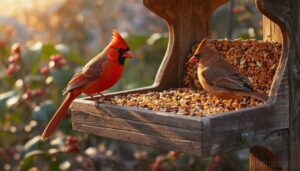
Cardinals aren’t picky eaters, but they do have clear favorites.
The seeds you put out make a real difference in how often they show up.
Here’s what they actually go for.
Black-oil Sunflower Seeds
If there’s one seed every cardinal feeder should have, it’s black oil sunflower seeds. The Northern Cardinal cracks them open with ease — thin shells, serious energy density, and strong Vitamin E content mean real nutritional benefits all year. The seeds’ higher oil content benefits provide extra energy for cold mornings.
- ~22–24% fat fuels cold-morning feeding
- Thin seed shell thickness suits cardinal bills perfectly
- Long shelf life when stored cool and dry
- Top-ranked in cardinal seed preferences nationwide
Safflower Seeds
Black-oil sunflower is hard to beat — but safflower seeds run a close second in any smart Cardinal diet and food preferences setup.
Cardinals crack them easily, and most squirrels won’t touch them, making squirrel control methods almost simple.
| Benefit | Detail |
|---|---|
| Nutritional Benefits | High fat, promotes plumage |
| Shelf Life | Long when stored cool and dry |
| Squirrel Deterrence | Bitter taste repels most squirrels |
Shelled Peanuts
Shelled peanuts punch well above their weight in any cardinal diet and nutrition plan. Each ounce delivers about 7 grams of protein plus 14 grams of healthy fat — serious high-energy seeds for birds burning calories through cold mornings.
Shelled peanuts deliver 7 grams of protein and 14 grams of fat per ounce — serious fuel for cardinals burning through cold mornings
Always offer them shell-free; whole peanuts are too awkward. One storage tip: keep them sealed and dry, or they’ll go rancid fast.
Cracked Corn
Peanuts bring fat; cracked corn brings fast energy. Cardinals enjoy it, especially in winter when energy density matters most for warmth.
It’s a smart seasonal use addition to your cardinal diet and nutrition setup.
- Nutritional Balance tip: Pair it with sunflower seeds.
- Storage Tips: Keep it dry — moisture above 10% breeds mold quickly.
- Squirrel Management: Squirrels love it, so use cardinal‑friendly bird feeders with baffles.
White Proso Millet
Think of white proso millet as the quiet workhorse of your Cardinal diet and nutrition setup. The Northern Cardinal accepts it readily, especially when scattered on the ground.
Its small size suits natural foraging, and its modest nutritional value — roughly 11% protein — makes it a solid supporting seed.
| Feature | Detail |
|---|---|
| Seed size | ~2mm wide |
| Crude protein | ~11% |
Purple Majesty Millet
Purple Majesty millet pulls double duty in your yard. Cardinals accept it as a supplementary seed in any seed mix, while its tall plumes, purple foliage, and winter interest make it a natural fit for your feeder placement strategy.
It’s heat tolerant and container friendly, so you can grow it close by — fresh seed, practically on demand.
No-mess Seed Blends
No-mess seed blends make life easier for you and the birds. Every seed is hulled — shell-free cleanup means no debris piles up near your patio.
Cardinals get straight to the sunflower hearts and shelled peanuts without wrestling with shells.
Look for a cardinal blend with calcium enrichment and fruit additives for breeding season. It’s one of the smartest ways of choosing cardinal-friendly bird seed blends.
Feeders Cardinals Prefer
Cardinals are picky about where they eat — and the wrong feeder will have them flying right past your yard.
The good news is that a few simple design features make a big difference.
Here are the feeder types that cardinals actually prefer.
Hopper Feeders
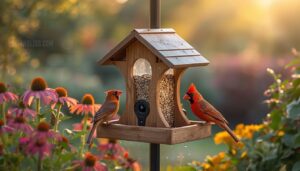
Hopper feeders are a natural fit for cardinals. Their gravity seed delivery system keeps seed flowing steadily to the port, so birds always find something waiting.
A weatherproof lid protects your investment from rain, while the clear reservoir tells you at a glance when it’s time to refill.
Durable construction withstands year-round outdoor exposure — exactly what reliable cardinal feeding demands.
Platform Feeders
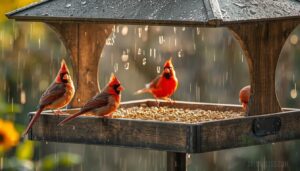
Cardinals practically wrote the specs for a platform feeder. The wide, open tray — usually 12 to 20 inches across — gives them room to land, face forward, and eat without contorting.
Bird feeder design matters here.
- Roof overhang design keeps seed mix dry
- Drainage system prevents mold in cardinal-friendly seed blends
- Material durability endures every season
- Easy cleaning protects your cardinal diet investment
Tray Feeders
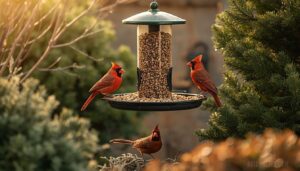
Think of a tray feeder as an open buffet — no awkward angles, no fighting for space. The Woodlink 3-in-1 Tray Feeder is a favorite for Northern Cardinals because it’s wide, accessible, and holds a solid bird seed mix without crowding.
| Feature | Why It Matters | Cardinal Benefit |
|---|---|---|
| Open tray design | Easy forward feeding | Natural posture |
| Drainage holes | Keeps seed dry | Reduces mold |
| Ground-level option | Mimics natural foraging | More visits |
Place it thoughtfully — feeder placement near shrubs makes Cardinals feel safe enough to linger.
Wide, Sturdy Perches
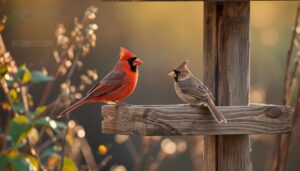
Wide, sturdy perches make all the difference. Unlike the open tray of the Woodlink 3-in-1, cardinals need something they can grip and settle into.
Look for these perch qualities:
- Perch Width Range of 0.5–1.25 inches with Textured Wood Surface for secure footing
- Durable Materials, like non-treated hardwood, that handle weather without cracking
- Safety Height Placement at 3–6 feet keeps feet — and birds — protected
Low-stress Access to Seed
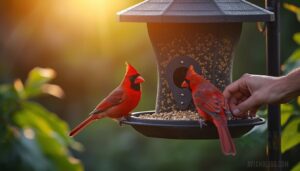
Good perches get cardinals to land — but a smooth feeding experience keeps them there. Look for feeders with a front-loading door and one-handed access so you can do quiet refills without startling nearby birds.
Airtight lids handle seed moisture control, keeping things fresh longer. Wide dispensing ports let cardinals feed cleanly, without bumping or jostling every time they reach in.
Squirrel-resistant Feeder Designs
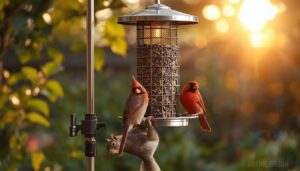
Squirrels don’t give up easily — so your feeder shouldn’t either.
Cage steel construction surrounds the seed without blocking cardinal access, while a weight activated latch shuts ports the moment something heavier steps on it.
A telescoping mount with a slick baffle stops climbers cold.
Anti-chew components and double port separation round out these squirrel-resistant feeders, keeping seed where it belongs.
Place Feeders Where Cardinals Feel Safe
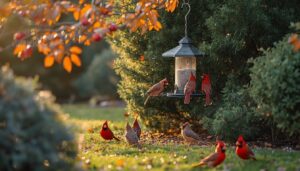
Cardinals don’t just show up because the food is good — they need to feel safe before they’ll stick around. Where you hang your feeder matters just as much as what’s inside it.
Here’s what works.
Set Feeders Near Shrubs and Trees
Cardinals don’t feel comfortable in the open — they need a quick exit. Placing feeders close to protective cover, like dense shrubs or low tree branches, makes all the difference.
- Stay within 10–12 feet of evergreen or deciduous shrubs for year-round shelter proximity benefits
- Prioritize branch density planning so birds can survey surroundings before landing
- Strategic placement of feeders for safety means clear flight paths, not tangled brush
Keep Feeders 3–10 Feet High
Height Safety Guidelines start with one simple rule: keep your feeder between 3 and 10 feet off the ground. That sweet spot blocks most ground predators while staying easy to refill.
| Factor | Why It Matters | Quick Tip |
|---|---|---|
| Pole Installation Tips | Prevents wobble and tip-overs | Use a ground-anchored, rust-resistant pole |
| Predator Baffle Placement | Stops climbers cold | Mount baffle 18" below feeder |
| Visibility From Home | Lets you monitor visits | Face feeder toward a window |
Strategic placement of feeders for safety means wind resistance strategies matter too — a stable mount keeps cardinal‑friendly bird feeders from swinging wildly and scaring birds off. Providing safe feeding areas for backyard birds really does start at feeder height.
Use Quiet, Low-traffic Yard Spots
Tucking your cardinal-friendly bird feeders into a quiet corner of the yard makes a real difference. Bermed Planting and an Evergreen Sound Barrier block street noise and wandering eyes.
Lay down Ground Cover Mulch to soften footsteps nearby. Soft Lighting keeps things calm at dusk. Stick to a Quiet Morning Routine when refilling — cardinals notice the difference and reward the protective cover with longer visits.
Place Feeders Near Woodland Edges
If your yard backs up to trees or brush, you’re already sitting on prime real estate.
Feeder placement strategies near woodland edges give cardinals the best of both worlds — open flight paths and cover nearby. Edge microclimate benefits keep seeds drier and cooler.
Edge vegetation concealment from native plants provides predator escape routes, while the shade-sun balance extends comfortable feeding hours across seasons.
Scatter Seed on The Ground
Sprinkling seeds on the ground is one of the simplest ground feeding techniques for cardinals — they’re natural foragers. Scatter a cardinal-friendly seed blend of millet, cracked corn, or sunflower near shrubs for predator deterrence.
Good soil preparation keeps seeds visible and dry; moisture management matters, so skip wet or frozen ground.
Seasonal timing is everything — early morning seed distribution aligns perfectly with their daily rhythm.
Avoid Placing Feeders by Windows
Windows are actually one of the sneakiest dangers in your yard. Birds can’t tell glass from open air — and cardinals are no exception.
Follow these Feeder Distance Guidelines for safer placement:
- Stay within 3 feet of windows to limit collision impact
- Or go 30+ feet away so birds recognize the barrier
- Apply UV Decals or Screen Barriers for Reflective Glass Mitigation
Window Collision Prevention keeps your backyard visits joyful, not tragic.
Keep Cardinals Visiting All Year

Getting cardinals to show up is one thing — keeping them around is another. A few simple habits make your yard the spot they return to, season after season.
Here’s what actually works.
Refill Feeders Early Each Morning
Cardinals are early risers — and an empty feeder at dawn is a missed connection. Refilling before sunrise gives you a real Morning Freshness Boost, matching their peak Dawn Feeding Routine perfectly.
It’s simple Bird Feeder Maintenance that pays off fast.
| Benefit | Why It Matters | Quick Tip |
|---|---|---|
| Feeder Hygiene Checks | Spot spoiled seed before birds do | Remove clumps at each refill |
| Seed Moisture Control | Overnight dew degrades seed quality | Dump old seed first |
| Predator Avoidance Timing | Early birds feed before cats stir | Refill while it’s still quiet |
Keep Seed Fresh and Dry
Fresh seed is everything. Before storing, try Air Drying batches on a tray — or use a Dehydrator at its lowest setting — to drop moisture below 8%. Then seal it in Airtight Containers with Desiccant Packets inside. This is real Moisture Control, and it keeps your supply genuinely fresh.
- Dry seed before storing — damp seed spoils fast
- Use desiccant packets to pull out hidden moisture
- Airtight containers block humidity and pests
- Label containers so you rotate oldest stock first
Remove Moldy or Spoiled Seed
Even dry, well-stored seed can turn. That’s why Mold Detection starts with regular Seed Inspection — look for fuzzy patches, clumping, or a sour smell.
Toss anything suspect using Hygienic Disposal: bag it sealed, and straight to the trash.
Then scrub the feeder — Container Sanitization and consistent bird feeder cleaning are your best defense. Feeder hygiene protects every bird that visits.
Add Heated Water in Winter
Beyond fresh seed, a clean water source for birds matters just as much in winter. Heated Bird Baths keep cardinals drinking even on freezing mornings — and a simple ground bird bath with a low-wattage heater does the job well.
- Heated Bowl Safety: Keep temperature targets between 60–75 °F — never above 110 °F
- Shelter Proximity: Place within 10 feet of shrubs for wind protection
- Power Wiring: Always use a GFCI‑protected outdoor outlet
- Daily Maintenance: Replace water daily and check connections regularly
Providing water sources during winter makes your yard a true refuge for winter bird feeding.
Offer High-fat Foods in Cold Months
Water keeps them alive, but high-fat foods keep them warm.
When temperatures drop below freezing, cardinals burn through calories fast — that’s where high-fat nut mixes, energy-dense seed cakes, and coconut oil seed blends earn their place.
Black-oil sunflower seeds hit around 50% fat, making them ideal for winter feeding.
Smart winter seed rotation and moisture-free storage keep your high-energy seeds fresh and cardinals returning.
Rotate in Berries, Suet, and Mealworms
Switching up your bird feeder offerings through the seasons is one of the smartest things you can do for the Northern Cardinal diet.
Try berry-infused suet in late winter when natural fruit runs thin, then shift your mealworm timing toward early summer to fuel fledglings.
Berry millet pairings and seasonal suet rotation keep things fresh — and suet texture management matters too, since softer blends work best on cool mornings near berry bushes.
Frequently Asked Questions (FAQs)
What can you feed cardinals if you don’t have bird seed?
No bird seed? No problem.
Try fresh fruit, mealworms, suet, cooked oats, or a hard-boiled egg. Cheese cubes, dried apricots, and insect protein work too.
Cardinals aren’t picky when real food shows up.
How can I attract Cardinals?
To attract cardinals, set up cardinal‑friendly bird feeders near shrubs, keep seed fresh, add a heated bird bath, and use native plants to create a bird‑friendly habitat that feels safe and welcoming.
What do Cardinals eat in a bird feeder?
Northern Cardinals go straight for black oil sunflower seeds and safflower seeds first.
Toss in white millet, mealworms, or suet cakes, and you’ve got a feeder they’ll keep coming back to.
Do birds eat Cardinal seeds?
Yes — other birds eat cardinal seeds too. But safflower seeds give Northern Cardinals a real edge, since most non-cardinal species skip them, cutting seed preference competition fast.
What plants attract Cardinals?
Feeders help, but native plants seal the deal.
Dogwood, winterberry, serviceberry, and hawthorn offer real food and cover. Native Berry Shrubs, Winter Fruit Trees, Evergreen Shelter Plants, and Native Wildflowers with Flowering Seed Heads keep cardinals coming back naturally.
What is the best bird feeder for Cardinals?
The best cardinal-friendly bird feeders are platform feeders and hopper feeders. Cardinals need wide, stable perches — they feed facing forward, so cramped tube feeders don’t work well for them.
How do you attract Cardinals to a bird feeder?
Attracting cardinals takes surprisingly little effort — use cardinal-friendly bird feeders stocked with preferred seed types for Northern Cardinals, add bird bath proximity for water, and apply seasonal feeding strategies for cardinals year‑round.
What types of feeders are best for cardinals?
Cardinals do best with platform feeders and hopper feeders — both offer wide, stable perches where they can sit comfortably and feed facing forward, which is exactly how they prefer it.
What food sources do cardinals prefer?
Black oil sunflower seeds top the list, but cardinals also love white millet, peanuts, suet, and cardinal blend mixes.
Insect protein, wild berries, suet cakes, and mealworm treats round out their natural diet.
Which plants are most attractive to cardinals?
Sunflower Plantings, Safflower Shrubs, Berry Shrubs like dogwood and elderberry, Evergreen Cover, and Perching Trees are the best native plants for cardinal habitat — offering seed-bearing plants, black oil sunflower seeds, millet, and sunflower seeds, naturally.
Conclusion
Attracting cardinals is less about luck and more about speaking their language.
The right bird food to attract cardinals—black-oil sunflower, safflower, shelled peanuts—paired with a sturdy platform feeder and a sheltered spot near dense shrubs, tells them your yard is worth trusting.
Keep seed fresh, water available, and the space quiet. Do that consistently, and you won’t just see cardinals passing through. You’ll have a pair that considers your yard home.