This site is supported by our readers. We may earn a commission, at no cost to you, if you purchase through links.
Most backyard birders discover their water dishes sit untouched while their neighbor’s fountain buzzes with activity—the difference isn’t luck, it’s design. Birds need water as much as food, relying on it for drinking, bathing, and maintaining the waterproof coating on their feathers through preening.
A stagnant basin won’t cut it when a babbling stream or dripping faucet naturally signals safety and freshness to passing flocks. The secret to transforming your backyard into an avian hotspot lies in understanding what draws birds to water sources and applying a few strategic tweaks to your setup.
Once you match your water feature to the specific needs of local and migratory species, you’ll notice chickadees, warblers, and even shy thrushes making regular visits.
Table Of Contents
- Key Takeaways
- Why Birds Need Water in Your Backyard
- Choosing The Best Water Features for Birds
- Setting Up Bird-Friendly Water Sources
- Enhancing Water Features to Attract More Birds
- Maintaining Clean and Healthy Water Features
- Seasonal Strategies for Attracting Birds
- Additional Tips for a Bird-Friendly Backyard
- Frequently Asked Questions (FAQs)
- Conclusion
Key Takeaways
- Birds need moving water features like drippers, misters, or fountains because the sound and motion signal freshness and safety, attracting more species than stagnant basins ever will.
- Shallow water depths of 2-6 inches with gradual slopes provide safe access for small songbirds, while proper placement 10-20 feet from cover balances escape routes with predator deterrence.
- Consistent maintenance every 2-7 days prevents algae growth and disease transmission, with seasonal adjustments needed for winter ice prevention and summer mosquito control.
- Strategic positioning near native plants, feeders, and shelter creates an integrated habitat that transforms your yard into a reliable refueling station during migration periods.
Why Birds Need Water in Your Backyard
Water isn’t just a nice addition to your backyard—it’s essential for every bird species that visits. Birds rely on water sources for hydration, feather maintenance, and cooling down during hot weather.
Understanding why birds need water will help you create a space that sustains their health and attracts more species year-round.
Importance of Water for Drinking and Preening
Survival hinges on access to water—you’ll notice birds visit your bird bath for two critical purposes. They need fresh water for hydration and digestion, sustaining their metabolic processes throughout the day. Water features also enable preening habits, allowing birds to maintain plumage health by waterproofing feathers and controlling parasites. Clean, moving water creates a bird-friendly environment that sustains:
- Daily hydration and digestive function
- Feather care and waterproofing through preening
- Parasite control and insulation maintenance
- Reduced dehydration stress during activity
- Improved overall health indicators.
Understanding the importance of methodological rigor is vital for maintaining a healthy environment.
Seasonal Water Needs for Local and Migratory Birds
Water temperature and seasonal hydration needs shift dramatically as bird migration unfolds. You’ll observe local species requiring daily fresh water when temperatures stay above freezing, while migratory birds arriving in spring and departing in fall depend on your bird bath during energy-intensive journeys.
In summer, evaporation accelerates water turnover, making frequent replenishment necessary for both resident populations and passing travelers engaged in birdfriendly gardening and wildlife conservation efforts.
Health Benefits of Clean Water for Birds
Beyond simply offering a drink, clean water safeguards your backyard visitors against illness and improves their survival. Fresh, algae-free waterways aid proper bird hydration and thermoregulation, which keeps activity levels high throughout the day. When you maintain a clean birdbath or water feature, you’re providing disease prevention that matters:
- Reduces avian cholera and botulism exposure compared with stagnant sources
- Decreases parasite transmission affecting feather health
- Aids clearer foraging vision by minimizing microbial irritants
Regular birdfriendly gardening practices with your bird waterer create clean waterways that help birds thrive.
Choosing The Best Water Features for Birds
You don’t need fancy equipment to turn your yard into a bird haven. The right water feature depends on your space, budget, and the species you want to attract.
Here’s what works best for bringing feathered visitors to your backyard.
Bird Baths—ceramic, Concrete, and DIY Options
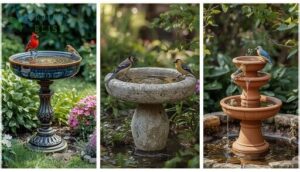
Choosing the right birdbath starts with understanding how material affects bird safety and water quality. Ceramic baths offer decorative appeal and smooth preening surfaces, while concrete options provide durability and stability in windy conditions.
DIY designs let you customize depth and slope using terra cotta pots or repurposed bowls, creating a birdfriendly environment that suits your local species and budget while maintaining the clean water feature birds need.
Misters, Drippers, and Moving Water Systems
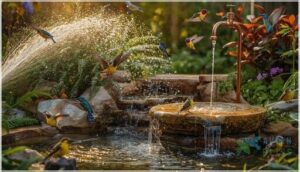
Attract a wider variety of species by installing water flow rates that mimic natural streams. Moving water catches attention through sound and sparkle, drawing birds that ignore static bird baths. Mister systems and DIY drippers boost bird attraction while improving water circulation:
- Dripper Designs release intermittent streams that resemble raindrops
- Mister systems create fine sprays for birds to fly through
- Adjustable flow rates let you customize water features for local species
- Overhead streams reduce splash injury risk for ground-foraging birds
Ponds and Solar-powered Fountains
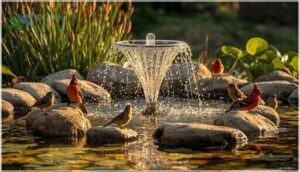
Solar pumps deliver energy-efficient pond aeration while creating the moving water that birds prefer for bathing. Position solar fountains to optimize sun exposure for consistent water circulation, and include perched rocks around your bird habitat so species can observe before approaching the water features.
You’ll attract more species when fountain design includes shallow margins of 2–6 inches, allowing wading birds safe access.
Butterfly Puddlers and Alternative Water Sources
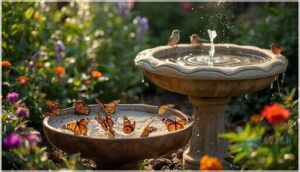
Butterfly puddler placement near your bird bath creates a wildlife-friendly yard that assists both insects and birds. While puddlers primarily target butterflies seeking minerals, they complement your bird attraction strategy by boosting local insect populations.
Alternative water sources improve your backyard habitat:
- Drippers attached to existing fountain systems provide moving water that signals freshness
- Shallow dishes positioned at ground level accommodate mourning doves and sparrows
- Recirculating misters create fine spray zones for preening activity
- Rock-edged saucers with gradual slopes offer safe bathing access
- Small-scale wetland creation using native plants increases overall water circulation
Position these water feature options in open sight lines with nearby escape cover.
Setting Up Bird-Friendly Water Sources
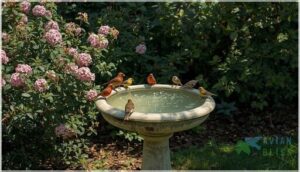
You’ve picked out your water feature—now it’s time to set it up so birds actually use it. Where you place your bath or fountain, how you design the water depth, and what you surround it with all determine whether birds feel safe enough to stop by.
Let’s look at three key factors that turn any water source into a backyard hotspot for your feathered visitors.
Ideal Placement for Safety and Visibility
Positioning your bird bath correctly transforms it from decorative to functional. You’ll want to place water features 10–20 feet from shrubs or trees, creating safe escape routes while maintaining open approach space on multiple sides. Keep them 3–4 feet high to deter ground predators, and situate in areas with minimal dense foliage—predator deterrent matters as much as bird visibility for successful wildlife habitat creation.
| Placement Factor | Recommended Distance | Purpose |
|---|---|---|
| Shelter proximity | 10–20 feet | Quick escape routes |
| Open approach space | 4–6 feet minimum | Safe landing zones |
| Ground height | 3–4 feet | Predator deterrent |
Creating Gradual Slopes and Shallow Areas
Your bird bath’s edge design determines which species can safely drink and bathe. Aim for slopes between 5 and 15 degrees with water depth under 2 inches—small songbirds need gradual entry zones, not steep drops.
Improve your backyard habitat with these substrate selection tips:
- Use smooth pebbles or sand for non-slip traction
- Create terraced edges offering multiple depth options
- Add bank stabilization with native grasses to prevent erosion
This wildlife-friendly approach ensures water circulation reaches all shallow areas.
Integrating Water Features With Native Plants and Shrubs
Think of your water feature as the heart of a microhabitat creation zone. Strategic shrub placement within 10 feet provides quick escape routes, while native plant selection around the perimeter filters runoff naturally.
This water feature design approach boosts bird habitat diversity by combining shelter with hydration. You’re basically gardening for biodiversity—weaving native plants and shrubs into one bird-friendly environment that attracts warblers, thrushes, and finches simultaneously.
Enhancing Water Features to Attract More Birds
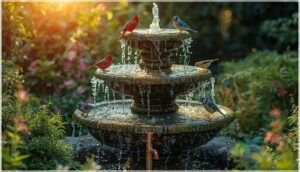
Birds are naturally drawn to moving water because the sound and sparkle signal a fresh, reliable source. If your static bird bath isn’t bringing in the variety of species you hoped for, adding motion can make all the difference.
Here’s how fountains, drippers, and simple enhancements turn an ordinary water feature into a backyard hotspot.
Benefits of Moving Water—fountains, Bubblers, and Drippers
Moving water features transform your bird bath into an irresistible destination. Fountain designs create visible sprays that catch avian attention from afar, while bubbler systems produce rising columns that generate both audible and visual cues.
DIY drippers release steady droplets, forming rippling currents that encourage perching and drinking.
Solar fountains with moving waterfalls improve water circulation, reducing stagnation while deterring mosquitoes—making your setup healthier for visiting species.
Using The Birds Choice Avian Mister Dripper System
The Birds Choice Avian Mister Dripper System delivers micro-droplets that mimic natural rainfall, attracting small passerines without startling them. Mister installation requires tubing and a power source, while dripper maintenance ensures system efficiency through regular pump checks.
You’ll notice improved avian health as clean, moving water encourages drinking and preening behaviors. This low-flow design promotes water conservation, making your bird bath more effective for wildlife attraction methods and bird watching opportunities.
Adding Rocks and Perches for Bathing and Drinking
After installing your mister system, rock placement creates textured surfaces that prevent slipping during bathing. Position rough stones 2–6 inches from the water surface to accommodate small species like chickadees and warblers. Edge slopes with shallow gradients improve bathing safety while perch design near your bird bath allows vigilant monitoring.
These wildlife attraction methods transform simple water features into essential stops for bird watching enthusiasts seeking a bird-friendly environment.
Maintaining Clean and Healthy Water Features
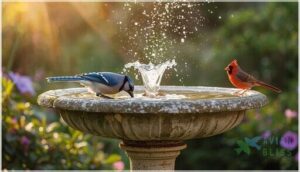
A sparkling bird bath attracts visitors, but a dirty one can spread disease faster than a flock scatters at a hawk’s shadow. You’ll need to stay on top of regular cleaning, watch for uninvited guests like mosquito larvae, and keep your pumps running smoothly.
A sparkling bird bath attracts visitors, but a dirty one spreads disease faster than a flock scatters at a hawk’s shadow
Here’s how to maintain water features that keep your feathered friends healthy and coming back for more.
How Often to Change Water and Clean Baths
A clean bird bath protects your feathered visitors from illness, so you’ll want to change the water every 2–3 days during hot weather and every 4–7 days when it’s cooler.
Scrub the basin with mild soap or a diluted bleach solution, rinse thoroughly to remove residue, and check pumps monthly for proper water circulation.
Maintaining a healthy bird bath means consistent sanitation schedules and attention to algae control methods.
Preventing Algae, Mosquito Larvae, and Disease
You can prevent algae, mosquito larvae, and disease by keeping water moving with drippers or fountains that disrupt breeding sites and boost water circulation. Replace water every few days to limit stagnant conditions, remove debris that fuels algae control problems, and use bird-safe sanitizing treatments when needed.
These eco-friendly solutions support water conservation while maintaining a healthy bird bath year-round.
Safe Cleaning Methods and Pump Care
Proper pump care and water sanitizing keep your bird bath safe for avian visitors throughout the season. Regular system inspection catches problems early, while filter cleaning prevents clogs that reduce water flow. Follow these steps for maintaining a healthy bird bath:
- Use a 1:9 bleach solution for disinfection, soaking 10 minutes before thorough rinsing
- Replace standing water weekly to minimize bacterial growth
- Check pump seals and gaskets for leak detection
- Clean intake screens monthly to prevent debris buildup
- Replace submersible pumps every 1–3 years based on usage
Seasonal Strategies for Attracting Birds
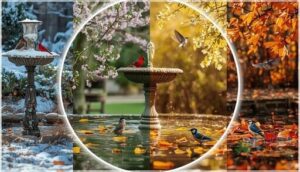
Birds don’t disappear when the seasons change—they just need different support from you throughout the year. Winter freezes, summer heat, and migration windows each bring unique challenges that require adjustments to your water setup.
Here’s how to keep your backyard water source working for birds no matter what time of year it’s.
Adapting Water Sources for Winter and Summer
Your bird bath needs seasonal tweaks to keep visitors happy year-round. In winter, shallow pools with slight heat prevent ice formation, while summer demands moving water to cool temps and block mosquito breeding. Shade and ground cover fight evaporation in hot months, and winterization tips include insulated basins for steady access. Fresh water features with seasonal adjustments guarantee every species finds relief.
| Season | Water Features Strategy | Key Benefit |
|---|---|---|
| Winter | Heated or insulated bird waterer | Ice prevention for small birds |
| Summer | Circulating fountains with shade | Controls water temperature, deters mosquitoes |
| Year-round | Frequent refills and cleaning | Maintains fresh water quality |
Providing Water During Migration Periods
During spring and fall migrations, your backyard becomes a refueling station for exhausted travelers. Set up multiple shallow water sources (0-2 inches deep) with moving water features like drippers to attract migrant bird species and support their hydration needs.
Place your bird waterer near native shrubs for quick escapes, and maintain fresh water daily to prevent disease transmission among flocking songbirds passing through.
Adjusting Maintenance Routines Throughout The Year
Your water feature demands different care as seasons shift, following birdscaping techniques that keep your wildlife-friendly habitat thriving. Change bird bath water daily when temperatures climb above 85°F to prevent algae control issues, but extend to every 3–5 days during cooler months.
Seasonal cleaning intensifies during spring and summer, while frost protection and pump maintenance become critical before winter freezes. Water testing and maintaining a healthy bird bath means adjusting your routine to match local bird activity peaks.
Additional Tips for a Bird-Friendly Backyard
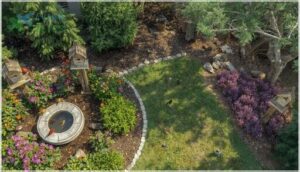
Creating a bird-friendly backyard goes beyond just adding water—you need to think about the bigger picture. Birds thrive when they have easy access to food, shelter, and water all in one location, which means combining these elements strategically throughout your yard.
The following tips will help you create an all-in-one habitat that attracts a wider variety of species and keeps them coming back.
Combining Water Features With Feeders and Shelter
Creating a multilevel bird retreat transforms your yard into a wildlife-friendly haven. Position water features within 10-15 feet of bird feeders and sheltered perches—this feeder shelter combo reduces predation risk while increasing visitation rates.
Dense shrubs or birdhouses near water provide escape cover and roosting sites.
Strategic water feature placement alongside native plant integration fosters greater species diversity than isolated elements ever could.
Recommended Resources Like The Sibley Field Guide
Once you’ve set up feeders, shelter, and water, you’ll want to identify your visitors. The Sibley Field Guide offers detailed plates and range maps for North American species, while Audubon apps provide real-time distribution data.
Peterson Field Guides and Cornell Lab of Ornithology resources complement each other—pair visual field guides with birding apps for sound recordings. These ornithology resources sharpen your species identification skills and deepen your conservation awareness.
Observing and Identifying Backyard Bird Visitors
Now that you know which guides and apps work best, you can sharpen your bird identification skills right at your water source. Watch for these bird behavior clues to distinguish your backyard birds:
- Beak shape and color—finches show thick seed-crushing bills, while warblers sport thin insect-catching beaks
- Bathing posture—some species face-dunk, others wing-splash
- Visitor patterns—early morning and late afternoon bring peak activity
- Wing bars and tail markings—reliable species identification features
Record your observations in 5–10 minute intervals for accurate counts.
Frequently Asked Questions (FAQs)
What water depth attracts the most bird species?
Small songbirds prefer shallow pools of 2 to 4 inches, while robins and larger species visit depths around 6 to 8 inches.
Creating depth variations attracts the most diverse bird species to your water features.
Can tap water harm birds or affect feathers?
While tap water won’t poison your backyard visitors outright, chlorine and trace metals can irritate mucous membranes and compromise feather health over time, especially when combined with stagnant conditions in poorly maintained water features.
How do I stop cats from ambushing bathing birds?
Position your water feature in open areas with clear sightlines, and install cat-proof fencing using hardware cloth around the perimeter—effective predator control that creates a bird-friendly environment while supporting wildlife preservation efforts.
Should I remove ice from frozen bird baths daily?
You don’t need to chisel ice daily like an old-timey iceman—instead, use daily thawing methods or heated bird baths for frozen bath care, keeping winter bird needs met with cold weather strategies for your backyard habitat.
Conclusion
A neglected birdbath collects dust while a neighbor’s dripping fountain hosts daily visitors—that gap closes the moment you apply what you’ve learned about how to attract more birds to your backyard water source.
Moving water, shallow depths, strategic placement near cover, and consistent maintenance transform any feature into a gathering spot.
Your yard won’t just host occasional guests; it’ll become a key rest stop where species you’ve never seen before pause, bathe, and return season after season.