This site is supported by our readers. We may earn a commission, at no cost to you, if you purchase through links.

Your parakeet’s crooked toes weren’t a birth defect—they developed from months spent gripping a single smooth dowel. Like wearing ill-fitting shoes every day, the wrong perch forces birds into unnatural foot postures that lead to arthritis, bumblefoot, and chronic pain.
Most bird owners don’t realize their perch choices directly shape their pet’s long-term mobility and comfort. The diameter, texture, and material of each perch either fosters healthy circulation and natural grasping reflexes or gradually damages the delicate bones and tendons in those tiny feet.
Getting it right means understanding how different perch types affect foot health, matching sizes to your bird’s species, and creating variety that mimics the branches they’d navigate in the wild.
Table Of Contents
- Key Takeaways
- Why Choosing The Right Bird Perch Matters
- Types of Bird Perches and Materials
- How to Select The Correct Perch Size
- Best Practices for Perch Placement and Safety
- Maintaining and Enhancing Your Bird’s Perch
- Frequently Asked Questions (FAQs)
- What is the best perch for birds?
- Why do birds need different sized perches?
- Do birds prefer tall or wide cages?
- How many perches should a bird have?
- How often should I replace bird perches?
- Can birds sleep on any perch type?
- Do outdoor perches need special weatherproof treatment?
- What perch materials are toxic to birds?
- Should I sand down rough perch surfaces?
- Conclusion
Key Takeaways
- Mixing perch materials and sizes keeps your bird’s feet healthy, strong, and pain-free.
- Natural wood perches with varied textures and diameters best mimic wild branches and encourage a natural grip.
- Placing perches at different heights and distances helps your bird climb, exercise, and feel safe in their cage.
- Regular cleaning and rotating perches prevent infections, boredom, and injuries for happier, more active birds.
Why Choosing The Right Bird Perch Matters
Your bird’s perch isn’t just a place to sit—it’s where they’ll spend most of their day, and the wrong choice can lead to real foot problems, discomfort, and even behavior issues. Think of it like shoes you wear all day long: if they don’t fit right, you’re going to feel it.
That’s why knowing which perch materials support healthy feet is one of the most important decisions you’ll make as a bird owner.
Your bird’s perch is like the shoes they wear all day—get it wrong, and foot problems, discomfort, and behavior issues follow
Let’s look at why getting this right matters so much for your bird’s health and happiness.
Impact on Foot Health and Comfort
Your bird’s feet are their world—literally. The wrong perch can trigger foot pain, pressure sores, and even toe deformities over time. Here’s how perch texture, size, and support shape avian foot health:
- Perch texture improves bird grip and prevents slipping
- Varied diameters distribute pressure, protecting delicate toe joints
- Proper foot support reduces cramping during long rest periods
- Right perch size promotes natural grasping and healthy circulation
Effects on Bird Behavior and Activity
Beyond foot comfort, the right perches can trigger healthier behavior patterns. Varied perch arrangements encourage more flapping, climbing, and foraging behavior—keeping your bird mentally sharp.
They also improve bird socialization if you have multiple birds, reduce stress hormones during heat waves, and support consistent sleep cycles.
Stable, textured perches even decrease feather picking and pacing, signs of avian anxiety you definitely don’t want to see.
Types of Bird Perches and Materials
Your bird’s perch isn’t just a place to land—it’s where they’ll spend most of their day, so the material matters more than you might think. Natural wood, rope, concrete, and plastic each offer different benefits for your bird’s feet, comfort, and overall health.
If you’re considering natural wood, check out the best natural wood perches for bird cages to find options that support foot health and mimic your bird’s natural habitat.
Let’s break down what each type brings to the table so you can mix and match the right options for your feathered friend.
Natural Wood Vs. Artificial Perches

Regarding perch material, you’re weighing two camps: natural wood perches that invite chewing and offer varied textures for a healthy bird grip, versus artificial options with uniform surfaces for easy cleaning.
Wood texture aids diverse foot health through irregular diameters, but requires vigilant inspection for pests. Meanwhile, synthetic perches deliver predictable perch durability yet may limit the enrichment your bird craves for ideal bird health.
For a closer look at the many, explore how these options can promote your bird’s physical and mental well-being.
Rope, Concrete, and Plastic Options
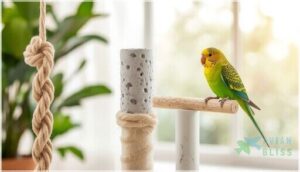
If you’re ready to explore a perch material comparison that breaks the natural-wood mold, consider the following options. Rope perches twist into custom shapes while stimulating foot muscles with varied grip. Concrete perches offer a chew-resistant texture that trims nails naturally, though they’re heavy. Plastic perches resist moisture and mold, making them a win for easy cleaning.
Just ensure you check rope durability weekly and verify all perch material choices suit your bird’s perch customization needs.
Pros and Cons of Popular Perch Types

Each perch material brings unique trade-offs. Natural wood offers varied perch diameter and foot health benefits through irregular textures, yet demands intensive cleaning to prevent bacteria. Rope perches flex for bird enrichment and muscle exercise, but fraying fibers create bird safety risks.
Concrete and plastic excel in perch durability and hygiene, supporting bird health and wellness while lacking the natural grip variation critical for bird perch safety.
How to Select The Correct Perch Size
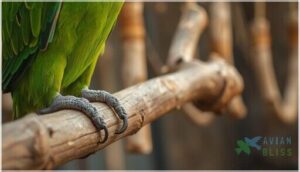
Getting the perch size right isn’t about guesswork—it’s about matching your bird’s anatomy to what keeps their feet healthy and comfortable. Too thick or too thin can lead to pressure sores, poor circulation, and even arthritis down the line.
Here’s how to nail the sizing so your bird can perch without pain and move with confidence.
Measuring Diameter for Different Species
Getting perch diameter wrong puts your bird’s foot health at risk every single day. You need to match the thickness to your bird species so their toes wrap about two-thirds to three-quarters around without overlapping. Here’s what works:
- Small birds (finches, parakeets): 8–18 mm keeps tiny feet relaxed
- Medium birds (cockatiels): 15–20 mm facilitates comfortable grip
- Large birds (parrots, macaws): 25–60 mm accommodates wide toe spread
Measure with calipers at the bird perch contact point for accuracy.
Importance of Perch Length and Shape
Length and shape work together to protect your bird’s feet and keep them strong. Short perches under four inches cramp toes, while anything over six inches causes fatigue.
Oval or flat-sided perches distribute pressure better than round ones, preventing sores. Angled perches strengthen foot muscles, and textured surfaces improve grip—all critical for healthy foot posture and long-term comfort.
Providing Variety for Foot Exercise
Think of your bird’s feet like your own—they need variety to stay nimble and healthy. Mixing perch textures, variable diameters from 15 mm to 35 mm, and inclined perches prevents foot problems by encouraging natural toe splay and grip changes.
Add foraging toys near different perch placements to keep those muscles working. This simple perch variety transforms boring bird foot care and maintenance into daily strength training.
Best Practices for Perch Placement and Safety
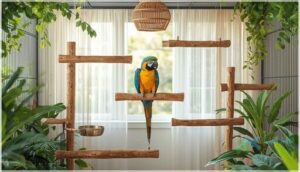
Getting the right perch is just the start—where you put it matters just as much for your bird’s health and happiness. A poorly placed perch can lead to stress, illness, or even injury, no matter how perfect the perch itself might be.
Let’s walk through the key placement principles that’ll keep your feathered friend safe, comfortable, and thriving.
Ideal Height and Location in The Cage
Your bird’s home becomes a true avian habitat design when you nail perch placement and cage design. Here’s how to set up vertical zones that keep your feathered friend healthy and active:
- Position primary perches 18–24 inches above the cage floor for small to medium parrots, creating safe landing areas without neck strain
- Spread perches across different heights instead of clustering them at the top—this encourages natural climbing
- Place one low perch near the entrance to boost bird visibility and make human interaction easier
Avoiding Drafts, Sunlight, and Contamination
Your bird cage becomes a health hazard when drafts sneak through vents or windows—cold air stresses respiratory systems fast. Position your bird perch away from airflow sources and seal gaps for draft prevention.
Sun protection matters too: rotate perches to dodge direct heat that burns delicate footpads.
Perch sanitizing with bird-safe disinfectants prevents bacterial buildup, safeguarding avian health and wellness through proper ventilation systems and smart placement.
Safe Distance and Multiple Perch Arrangements
Once you’ve nailed ventilation, proper perch spacing becomes your next move for bird safety. Space perches 12 to 18 inches apart to prevent crowding—your bird deserves room to hop without wing strikes. Stagger heights by 4 to 8 inches and keep 6 inches of horizontal clearance between parallel perches.
This cage layout with multiple perches aids bird health through natural vertical clearance and perch variety. Proper perch distances are also vital in maintaining.
Maintaining and Enhancing Your Bird’s Perch
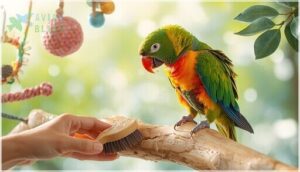
Picking the perfect perch is just the start—keeping it clean and interesting makes all the difference for your bird’s health and happiness. A little daily attention prevents bacteria buildup, while adding natural branches or toys turns a simple perch into an adventure zone.
Let’s break down how to maintain your bird’s perch and give them the enrichment they deserve.
Daily and Weekly Cleaning Tips
Keeping your bird’s perch sparkling clean isn’t just about appearances—it’s foundational to preventing bumblefoot and bacterial infections. Daily cleaning removes droppings and debris that harbor harmful pathogens, while weekly deep scrubs tackle stubborn buildup.
- Wipe perches with bird-safe disinfectant each morning during your health checks
- Scrub textured surfaces weekly using a dedicated brush to remove caked-on waste
- Inspect for cracks or splinters during feather dusting that could injure delicate feet
- Rotate perches monthly so each gets thorough sanitizing while your bird explores fresh options
Adding Enrichment With Toys and Natural Elements
Once your perches are spotless, it’s time to transform them into launchpads for adventure. Toys rotated every week prevent boredom—swap puzzle feeders and multi-texture items to spark bird engagement. Natural elements like untreated branches add foraging thrills, while safe herbs provide behavioral stimulation. Schedule brief enrichment activities twice weekly, blending training with play to support avian welfare and encourage vibrant bird behavior.
| Enrichment Type | Example | Bird Benefit |
|---|---|---|
| Puzzle feeders | Hide-and-seek treat boxes | Problem-solving skills |
| Natural Perches | Untreated willow branches | Foot dexterity practice |
| Scent stimulation | Fresh herb sprigs | Curiosity and exploration |
| Climbing toys | Sisal rope ladders | Physical exercise |
| Seasonal rotation | Woven baskets with leaves | Mental novelty boost |
Frequently Asked Questions (FAQs)
What is the best perch for birds?
Variety wins regarding perch material—mixing manzanita, rope, and concrete keeps feet fit. Natural wood branches offer the best grip, exercise, and enrichment for your feathered friend’s wellbeing.
Why do birds need different sized perches?
Different perch sizes strengthen foot muscles through varied gripping motions, preventing pressure sores and bumblefoot.
Perch variety mirrors natural branch diversity, promoting bird comfort while supporting species needs and overall foot health across different perch textures and materials.
Do birds prefer tall or wide cages?
Most feathered friends thrive in wide cages that honor their natural flight patterns. Horizontal space matters more than height—your bird needs cage width to spread wings, hop between perches, and stay mentally sharp.
How many perches should a bird have?
Most small to medium parrots thrive with three to five perches inside their cage. This perch quantity promotes healthy foot exercise and prevents pressure sores through strategic perch placement and variety.
It also encourages varied bird cage design, allowing for a more dynamic and engaging environment for the birds.
How often should I replace bird perches?
Ironically, that “indestructible” perch won’t last forever. Replace worn or soiled perches every one to three months, rotating materials for foot exercise.
Inspect weekly during cleaning schedules—safety checks prevent injuries before they happen.
Can birds sleep on any perch type?
Your bird can sleep on most perch types, but natural wood with rough texture beats smooth plastic for comfort.
Rope perches work when paired with firmer bases to prevent foot wrapping overnight.
Do outdoor perches need special weatherproof treatment?
Yes, outdoor perches absolutely need weatherproof coatings to resist rain and UV protection against sun damage.
Choose non-toxic, rust prevention finishes for metal parts, and reapply regularly since outdoor durability depends on proper bird-safe treatments.
What perch materials are toxic to birds?
Like a silent threat hiding in plain sight, certain perch materials poison pet birds. Nonstick coatings, lead-based paint, toxic wood treatments, and metal hazards cause chemical exposure—compromising bird health and welfare through unintentional ingestion.
Should I sand down rough perch surfaces?
Sanding rough perch surfaces removes splinters and sharp edges that can injure your bird’s feet, but light texture is essential for secure grip.
Use fine-grit sandpaper along the grain, then wipe away all dust before reinstalling.
Conclusion
An ounce of prevention is worth a pound of cure—especially regarding your bird’s feet. Learning how to choose the right bird perch today protects against painful conditions that could limit your companion’s mobility for years.
Mix diameters, rotate textures, and observe how your bird moves. Those small adjustments create a world where your feathered friend hops, climbs, and perches exactly as nature intended—pain-free and fully alive.