This site is supported by our readers. We may earn a commission, at no cost to you, if you purchase through links.

Most gardeners don’t realize that birds can drown in just three inches of water—or that the wrong basin texture sends them slipping right back into the sky. Your birdbath isn’t just yard decoration; it’s a lifeline that determines whether cardinals, finches, and wrens trust your space enough to stay.
Material matters more than most homeowners expect. A ceramic beauty might crack come January, while that budget resin option could outlast your perennials.
Depth, placement, and maintenance routines separate the birdbaths that attract flocks from those that sit empty all season. Getting these elements right transforms your garden into a haven where birds return daily—and where you’ll actually want to position your morning coffee chair.
Table Of Contents
Key Takeaways
- Your birdbath needs 1-1.5 inches of water depth with a textured, sloped basin to prevent drowning and give birds secure footing—shallow edges with rough surfaces like concrete or unglazed ceramic keep even small species safe while bathing.
- Material choice determines longevity and maintenance: concrete and stone offer durability but weigh you down, ceramic looks beautiful but cracks in freezing temps, while plastic and resin resist freeze-thaw cycles and stay lightweight for easy seasonal cleaning.
- Place your birdbath 10 feet from dense shrubs where predators hide, 3-4 feet high on a pedestal for ground predator protection, and in partial shade to keep water 2-6 degrees cooler while slowing algae growth and reducing evaporation.
- Daily water changes in summer and weekly scrubbing with vinegar or baking soda prevent algae and bacteria buildup—add a heater or de-icer in winter to keep water accessible year-round without letting it freeze solid.
Key Features of an Ideal Birdbath
Not all birdbaths are created equal. The difference between a bath that birds ignore and one they flock to comes down to a few critical design features.
Here’s what separates a functional birdbath from one that becomes a backyard hotspot.
Optimal Water Depth and Safety for Birds
Safety starts with getting the water depth just right—aim for 1 to 1.5 inches of shallow water in your bird bath. This depth lets small birds drink and bathe comfortably while preventing drowning risks. You’ll want a sloped basin so birds can wade in gradually, and a textured surface helps them grip securely.
Change the water daily during hot weather to keep your feathered visitors healthy and hydrated. Proper research techniques, such as using clear science information, can help you make informed decisions about your bird bath.
Importance of Textured Surfaces and Non-slip Edges
Beyond water depth, you need textured surfaces that give your birds a fighting chance at stable footing. Look for materials like concrete or unglazed ceramic that offer natural slip resistance, especially when wet. A nonslip rim provides bird grip during entry and exit, while easy-clean surfaces maintain traction design through regular maintenance.
Here’s what makes textured bird baths safer:
- Rough textures prevent slipping when birds enter or leave the shallow water
- Knurled edges give better footing security in icy conditions
- Textured platforms help lighter birds access water confidently
- Surface channels drain pooling water that creates slip hazards
Regular cleaning removes slippery algae while preserving these essential bird-friendly features. When designing a bird bath, consider the importance of research methodology to guarantee a safe and effective design.
Shallow Slopes and Raised Centers for Secure Footing
A gentle slope toward the center ensures water distribution across the basin, so birds of all sizes find their comfort zone. Raised centers reduce splashing while giving landing birds instant footing security—think of it as a built-in safety platform. Nonslip bases prevent tipping during wind or heavy traffic, keeping your bird-friendly backyard water feature stable.
| Design Feature | Bird Safety Benefit |
|---|---|
| Shallow slope inward | Even depth, better balance |
| Raised center rim | Reduced splash, stable landing |
| Textured outer edges | Enhanced grip at water’s edge |
| Gentle basin taper | No corner pooling |
| Nonslip pedestal feet | Birdbath stability on uneven ground |
Design Elements That Attract Diverse Bird Species
Multiple water access points accommodate species with different approaches—some prefer perched landings, while ground-feeding birds wade from the edges. Light-colored interiors reflect sunlight without overheating, and nearby shrubs within 10–15 feet offer quick escapes.
Add gentle water movement through drippers or fountains; moving water attracts hummingbirds and swallows while deterring mosquitoes.
These birdbath accessories transform garden layout into a hub for species diversity.
Choosing The Best Birdbath Material
Your birdbath material affects everything from how often you’ll need to refill it to whether it’ll survive your local winters. Each option comes with trade-offs in weight, durability, and maintenance that you’ll want to weigh against your garden’s conditions.
Here’s what you need to know about the most common materials and how they’ll perform in real-world use.
Pros and Cons of Concrete, Ceramic, and Stone

When you’re weighing material comparison for birdbath durability, think of it as choosing garden decor that doubles as a reliable water feature.
Concrete sealing extends lifespan but adds weight. Ceramic glazing offers beauty yet risks cracking in freezing temps. Stone texture provides excellent grip and stays naturally cool, though it’s permanently planted once installed.
- Concrete: Stable in wind, resists weathering, but heavy and needs occasional sealing to prevent algae buildup
- Ceramic: Stunning bird baths with glazed finishes for easy cleaning, though fragile in harsh weather
- Stone: Superior durability with cool surfaces that keep water invigorating, plus natural grip for secure footing
- Weight Trade-off: All three offer stability but complicate seasonal cleaning and birdbath design and placement flexibility
Durability and Maintenance of Plastic and Resin Options

Plastic durability hinges on UV resistance—look for stabilized resins that won’t crack or fade after a season in the sun. These durable materials resist freeze-thaw cycles better than porous options, and their non-slip textured finishes keep your bird bath safe.
Maintenance concerns are minimal: scrub weekly with gentle soap, rinse thoroughly, and monitor water quality to prevent algae buildup in warmer months.
Metal and Glass: Temperature and Antimicrobial Properties
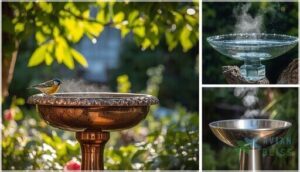
Metal and glass bird baths bring unique perks, but thermal regulation matters. Metal surfaces heat fast under direct sun, pushing water temperatures up 5–10°C and potentially discouraging backyard birds. Consider these material comparison points:
- Copper and brass offer antimicrobial effects that reduce bacterial colonies on contact.
- Stainless steel lacks strong antimicrobial properties; rely on regular cleaning.
- Glass heats quickly but cools faster than stone—shade helps stabilize temperature.
- Textured metal edges prevent slipping when wet, boosting bird safety at water features.
Pair metal bird baths with overhead shelter to balance bird health and functionality.
Weather Resistance and Ease of Cleaning Considerations
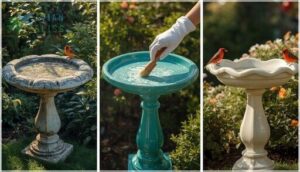
Weather resistant birdbaths save you time and headaches down the line. Compare how materials stack up when freeze-thaw cycles and scrubbing routines test durability:
| Material | Weather Resistance | Cleaning Methods |
|---|---|---|
| Stone / Concrete | Resists UV fade; cracks in freeze-thaw | Scrub with brush; needs frequent rinsing |
| Glazed Ceramic | Smooth easyclean surfaces; may crack below 0°C | Wipe with mild soap; mineral buildup minimal |
| Plastic / Resin | Lightweight; deforms in high heat | Quick rinse; replace every 3–4 years |
Choose freeze protection features and non-porous finishes for smooth Bird Bath Maintenance in any Birdfriendly Garden Features setup.
Strategic Placement for Birdbath Success
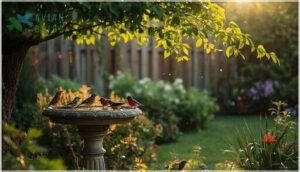
You’ve picked the perfect birdbath, but where you put it matters just as much as what you buy. The right spot can mean the difference between a bustling bird haven and an empty basin collecting leaves.
The perfect birdbath means nothing if you place it poorly—location turns empty basins into bustling bird havens
Let’s look at how shade, distance, height, and sightlines work together to create a safe and inviting space for your feathered visitors.
Benefits of Partial Shade and Cooler Water
A shaded bird bath works like a natural cooler for your backyard habitat—keeping water 2–6 degrees Fahrenheit cooler during peak sun and reducing evaporation so you won’t refill as often.
Here’s why shade benefits your water feature:
- Slows algae growth by maintaining cooler temperatures that discourage bloom formation
- Reduces bird heat stress during hot afternoons when thermal regulation matters most
- Preserves water quality longer between cleanings while supporting better bird hydration
Safe Distances From Trees, Shrubs, and Feeders
Strategic garden layout directly impacts predator risk and bird visibility at your water feature. Position your bath at least 10 feet from dense shrubs where cats hide, yet within safe flight distance of escape cover.
Keep it 3–4 feet from feeders to reduce competition, and maintain 15–20 feet from windows for window safety—creating ideal birdwatching conditions while supporting wildlife conservation through thoughtful feeder placement.
Elevation and Predator Protection Strategies
Elevation matters more than you’d think. Mount your pedestal bath 3–4 feet high to cut ground predator access while giving birds clear sightlines to approaching threats.
Add nearby perches for quick bird escape routes, and consider motion-activated deterrents around ground baths.
Keep water depth at 1–2 inches—shallow enough for secure perching but deep enough to support wildlife conservation goals through safe, bird-friendly features.
Maximizing Birdwatching Opportunities From Home
Position your backyard bird bath 10–15 feet from windows where you actually sit. Early mornings and late afternoons deliver peak bird watching action when species activity spikes.
Add bird friendly plants nearby—native shrubs create natural wildlife habitat that draws diverse visitors.
Track bird behavior in a simple log to spot patterns and bird preferences. Smart garden layout turns casual glances into genuine birdwatching moments worth savoring.
Birdbath Maintenance and Seasonal Care
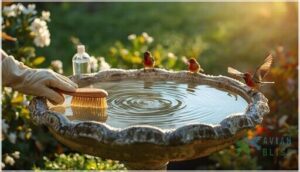
A beautiful birdbath won’t stay inviting if you neglect it. Regular cleaning and seasonal adjustments keep the water safe for birds while preventing algae, bacteria, and freezing damage.
Here’s how to maintain your birdbath year-round with minimal effort.
Cleaning Routines to Prevent Algae and Bacteria
Weekly scrubbing with a stiff-bristled brush keeps algae control on track and protects bird health and hydration.
Drain and refill your birdbath every 2 to 3 days during hot weather to halt bacterial growth.
For deeper water sanitation, use a dilute white vinegar solution quarterly—it’s safe, effective birdbath maintenance and cleaning.
Rinse thoroughly so clean water stays inviting, supporting birdbath hygiene and garden maintenance and upkeep year-round.
Water Refreshing Frequency in Different Seasons
Beyond routine scrubs, your revitalizing schedules need to shift with the seasons to keep clean water flowing. Bird hydration relies on matching water temperature and evaporation rates to seasonal needs—that’s true bird health and hydration care.
- Spring: Refresh your water feature every 1–2 days as algae wakes up with warmer light
- Summer: Daily top-ups combat heat and keep water depth inviting for thirsty visitors
- Autumn: Every 2–3 days works as temperatures drop and evaporation slows
- Winter: Weekly changes suffice in mild zones; circulating systems need daily attention
- Year-round: Monitor for cloudiness or debris between scheduled refreshes
Preventing Freezing With Heaters and De-icers
When frost threatens your water feature, a thermostatic control device kicks in automatically near 32°F—you won’t waste energy during milder stretches. Submersible or floating deicers deliver focused heat for ice prevention without overheating risks, keeping your bird bath accessible all winter.
Look for frost-proof models with built-in safety features, or consider solar-powered options that blend heater efficiency with eco-conscious design.
Safe Cleaning Agents and Bird-friendly Practices
You’ll want to reach for plain white vinegar or a baking soda paste when tackling mineral deposits—both work beautifully without threatening avian health.
Regular unscented dish soap cleans effectively, but rinse until every bubble disappears.
Natural disinfectants like 3% hydrogen peroxide offer safe water purification between refills.
These soap alternatives protect bird-friendly features while supporting wildlife conservation through consistently clean water.
Enhancing Birdbath Design for Bird Safety
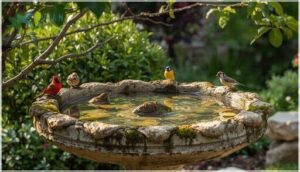
A well-designed birdbath isn’t just about looks—it needs features that keep birds safe while they drink and bathe. Small additions and smart adjustments can prevent accidents, reduce disease risks, and make your birdbath more appealing to a wider variety of species.
Here’s how to create a safer, more inviting space for your feathered visitors.
Adding Rocks, Perches, and Natural Elements
Your birdbath becomes a true oasis when you add rocks and natural elements that birds instinctively trust. Strategic rock placement creates shallow zones—about 0.5 to 1 inch deep—so smaller species can wade safely while larger birds enjoy deeper areas.
Consider these bird-friendly features:
- Position flat stones as stepping perches inside the basin
- Surround your outdoor water features with native plants for cover
- Create microhabitats using varied rock sizes for wildlife-friendly landscaping
This garden design approach mimics stream edges birds recognize from nature.
Creating Water Movement to Attract Birds
A gentle splash or drip catches avian attention like nothing else. Install fountain designs or dripper systems that create subtle motion effects—shallow, continuous water flow rates work best for diverse backyard wildlife.
Moving water features discourage algae while signaling “safe refreshment here” to passing birds. These birdfriendly features boost visitation rates markedly compared to still basins, transforming your outdoor water features into hubs of constant activity.
Preventing Window Collisions and Drowning Risks
Even well-placed birdfriendly features can turn hazardous without thoughtful safeguards. Position your bird bath at least 3–4 meters from glass surfaces, then add window decals or visual barriers to prevent collision prevention nightmares.
Keep shallow water depths under 2 cm at the edges, and toss in textured stones for secure footing—these simple wildlife friendly tweaks make your reliable water source genuinely safe.
Monitoring for Disease and Maintaining Hygiene
You can’t see bacteria blooming in your bird bath, but sick birds give you clues—watch for lethargy or cloudy water.
Change water every 2–3 days in warm weather to cut microbial control risks and disease transmission. Scrub surfaces weekly with a mild vinegar solution, rinse thoroughly, and track algae patterns to protect bird health and maintain hygiene practices that support ecosystem balance.
Top 4 Birdbaths for Your Garden
Now that you know what makes a great birdbath, let’s look at four solid options that deliver on safety, durability, and design.
Each one brings something different to the table, whether you’re dealing with winter freezes or limited space. These picks cover a range of budgets and garden styles, so you can find one that works for your backyard.
1. Wildlife World Bird Bath And Drinker
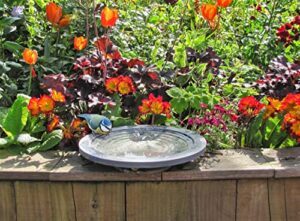
If you’re working with limited space, this compact water basin delivers surprising functionality. The Wildlife World Bird Bath And Drinker combines bird-friendly design with an integrated drinker system, making water changes easier while attracting garden wildlife.
Its dual-access setup accommodates both bathing and drinking behaviors, and the weather-resistant materials handle varying temperatures without cracking. You’ll find the assembly straightforward, and it’s particularly effective for small to medium gardens.
Choosing the right birdbath means balancing bird attraction with practical garden water features for wildlife conservation and habitat support.
- Dual-access design accommodates both bathing and drinking, making it more functional than single-purpose birdbaths
- Weather-resistant materials handle temperature changes without cracking, ensuring year-round durability
- Straightforward assembly and integrated drinker system make water changes and maintenance easier
- Compact 12-inch size may not accommodate larger bird species or those preferring deeper water
- Shallow depth limits full bathing capability for some birds
- Price point may feel high given the smaller dimensions compared to traditional birdbaths
2. Ikuchelife Bird Bath Heater
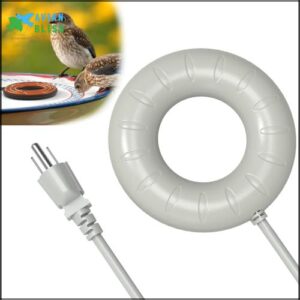
When temperatures drop, the Ikuchelife Bird Bath Heater keeps your backyard conservation efforts going strong. This 70-watt unit offers thermostat control that automatically prevents frozen water without wasting energy consumption.
The aluminum construction resists rust while the built-in pump circulates water, creating movement that attracts more birds to your garden water features.
You’ll need to keep it fully submerged, and the 3.3-foot cable requires nearby power access. Winter safety for your bird-friendly garden features becomes seamless with this heater efficiency, though you’ll refill more often due to evaporation.
- Thermostat automatically controls heating to prevent freezing while keeping energy use efficient
- Built-in water pump creates circulation that attracts more birds and prevents ice formation
- Rust-resistant aluminum construction holds up better than plastic alternatives in outdoor conditions
- Must stay fully submerged to work properly, which limits placement flexibility
- Short 3.3-foot cable means you need a power outlet close to your bird bath
- Causes faster water evaporation in cold weather, requiring more frequent refills
3. Dreamysoul Hanging Bird Bath With Solar Light
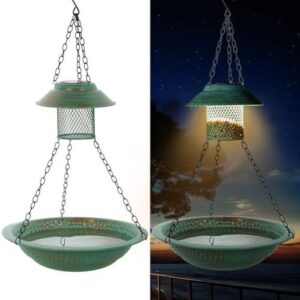
For a bird-friendly backyard water feature that pulls double duty after dark, the DreamySoul Solar Hanging Bird Bath combines practical function with garden decoration. This metal design hangs from your pergola or tree branch, reaching 13 inches tall with a 3.3-inch basin that keeps water quality manageable for quick cleaning.
The solar-powered light charges throughout the day, then illuminates your outdoor water features at dusk. Bird attraction happens naturally with the hanging design, though you’ll need to watch for seed spillover from the integrated feeder section.
- Solar-powered light automatically charges during the day and illuminates the bath at night without any electrical setup
- Durable metal construction with a stable triangular design and easy hanging installation via S-hook
- Combines bird feeder and bath in one unit, providing both water and food sources for local birds
- Bird seed can spill into the water basin, leading to fermentation and unpleasant odors if not cleaned regularly
- Some users report durability issues including rust, chipped paint, and a solar light that’s not very bright
- Limited feeder capacity and the dual-purpose design requires more frequent maintenance than single-function products
4. Mumtop Outdoor Bird Bath Bowl
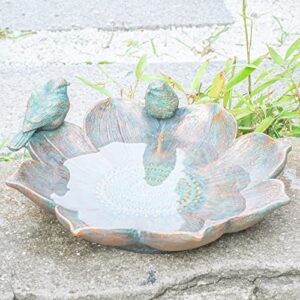
This $30.99 Mumtop Antique Bird Bath Bowl brings vintage charm to your garden design for wildlife with its decorative flower pattern and resin construction. The weather-resistant coating manages outdoor conditions, though you’ll face some bowl maintenance challenges—users report paint peeling and surface flaking over time.
At this compact size, water quality stays easier to monitor than larger ceramic bird baths, but expect frequent refills. It’s an affordable entry point for bird attraction if you’re willing to touch up the finish occasionally.
- Attractive vintage design with flower pattern adds decorative charm to garden spaces
- Weather-resistant resin construction holds up to outdoor conditions at an affordable $30.99 price point
- Compact size makes water changes and cleaning easier compared to larger birdbaths
- Paint finish and surface may peel or flake over time, requiring maintenance
- Small bowl capacity means frequent refills, especially in hot weather
- Limited size may not accommodate larger bird species
Frequently Asked Questions (FAQs)
How often should I replace birdbath water?
Fresh water isn’t just nice—it’s critical. Replace your bird bath daily in summer heat, every 1-2 days in cooler months.
Clean water depth promotes bird health, prevents algae control issues, and maintains a bird-friendly backyard water source year-round.
Can birdbaths attract unwanted pests or insects?
Yes, standing water can attract mosquitoes and flies if you don’t refresh it regularly. Weekly scrubbing prevents algae buildup, and changing water every 1–2 days in warm weather discourages pest breeding cycles effectively.
What size birdbath works best for small gardens?
Compact gardens thrive with 14–18 inch diameter bowls that won’t overwhelm tight spaces.
Stick with 1–2 inch water depth, add textured surfaces for secure footing, and choose lightweight resin or ceramic options you can easily relocate.
Should I use tap water or filtered water?
Tap water works fine for most bird bath setups, but filtration methods reduce mineral buildup and chemical taste in areas with hard water.
Regular water changes matter more than filtration for maintaining a reliable water source.
Conclusion
Picture goldfinches perched on textured edges, cardinals splashing in shallow water, and wrens returning each dawn because they’ve found safety in your yard.
When you know how to choose the right birdbath for your garden—weighing material durability, strategic placement, and consistent maintenance—you create more than aesthetic appeal. You build trust.
Your birdbath becomes the neighborhood gathering spot where feathers dry in dappled sunlight and wildlife flourishes just beyond your window.
- https://www.wbu.com/bird-bathing/
- https://www.slideshare.net/slideshow/scientific-writing-249466665/249466665
- https://www.writingclearscience.com.au/category/writing-guides/writing-research-papers/page/2/
- https://www.sciencedirect.com/science/article/pii/S0749208123000268
- https://www.housedigest.com/1598489/benefits-add-rocks-to-bird-bath/