This site is supported by our readers. We may earn a commission, at no cost to you, if you purchase through links.
A birdbath can sit in the yard for weeks like a tiny empty stage, while the birds you hoped to welcome keep passing it by. Most of the time, the problem isn’t the birds. It’s the setup.
Songbirds want shallow water, steady footing, open views, and a quick flight path to cover if danger shows up. Fresh water matters too, especially in heat, when a warm, stagnant basin can turn from inviting to useless, fast.
Once you understand those small signals, learning how to encourage birds to use a birdbath becomes less guesswork and more like setting a careful table.
Table Of Contents
- Key Takeaways
- Choose The Right Birdbath
- Place The Birdbath for Safety
- Set The Bath in Partial Shade to Keep Water Cool
- Avoid Harsh Afternoon Sun and Overhanging Branches
- Place It 10–15 Feet From Feeders
- Keep Nearby Shelter Within About 5 Feet
- Maintain Open Sightlines So Birds Can Spot Predators
- Keep Distance From Dense Shrubs Where Cats Can Hide
- Position The Bath Where Birds Feel Secure but Visible
- Keep Water Clean and Fresh
- Refill With Fresh Water Every 1–2 Days
- Change Water Daily During Hot Weather
- Remove Leaves, Droppings, Feathers, and Algae Quickly
- Scrub The Basin Weekly to Prevent Slime Buildup
- Use Vinegar and Water or Other Non-toxic Cleaners
- Rinse Thoroughly and Avoid Detergents or Chemical Soaps
- Prevent Stagnant Water That Attracts Mosquitoes
- Add Features Birds Find Irresistible
- Use Drippers, Bubblers, or Misters for Gentle Movement
- Create Ripples That Mimic Natural Streams
- Add Branches, Rocks, or Textured Rim Perches
- Include Multiple Landing and Escape Points
- Create a Natural Look With Stones and Surrounding Plants
- Try Subtle Sound Cues Like Soft Wind Chimes Nearby
- Offer Both Low and Elevated Bathing Spots
- Build a Bird-Friendly Bathing Area
- Plant Native Shrubs, Grasses, and Flowers Nearby
- Add Berry-producing Plants and Insect-friendly Habitat
- Place Feeders 10–30 Feet From The Birdbath
- Add Nesting Boxes in The Broader Yard Setup
- Use Heated Baths or Safe Heaters in Winter
- Never Use Antifreeze or Glycerin in Cold Weather
- Track Bird Visits and Adjust Placement or Features as Needed
- Refresh The Setup Seasonally to Encourage Year-round Use
- Frequently Asked Questions (FAQs)
- Conclusion
Key Takeaways
- Birds are most likely to use a birdbath when it feels safe and easy to use, which means shallow water, rough footing, stable materials, and designs that do not tip or get slippery.
- Placement matters just as much as the bath itself, so put it in partial shade with open sightlines, shelter close by, and enough distance from feeders and dense shrubs where predators can hide.
- Clean, cool, moving water keeps birds coming back, so refill often, scrub the basin regularly, avoid harsh cleaners, and prevent stagnant water that can grow algae or attract mosquitoes.
- Extra features like drippers, rocks, branches, native plants, and both ground-level and raised bathing spots make the area more natural and appealing to a wider range of birds.
Choose The Right Birdbath
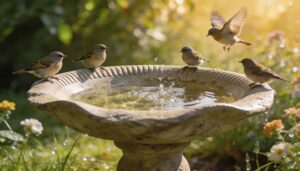
The kind of birdbath you choose makes a bigger difference than most people expect. Birds notice comfort and stability right away, so a few simple design choices can help them feel at ease.
Shallow basins with textured surfaces tend to work best, and these bird bath maintenance kits for safer, cleaner water help keep them inviting.
Here’s what to look for before you set one in your yard.
Keep Water Depth at 1–2 Inches
Because birds trust what feels safe, keep Water Depth Shallow at about 1 to 2 inches deep. That reasonable depth provides Depth Benefits like better Feather Health, easy drinking, and solid Species Compatibility for finches, sparrows, and fledglings.
It also helps with Evaporation Rate and Temperature Regulation. Think of it as Balancing Water Depth for Different Species in shallow water.
Add Pebbles or Flat Stones for Footing
Once the water is shallow, add rocks or pebbles so each visitor has a steady perch in the bird bath.
- Pebble size range: 8–25 mm, set in a Pebble placement pattern
- Use smooth flat stones; Flat stone thickness should reach 1.5 inches
- Secure pebble anchoring and Seasonal pebble maintenance keep textured surfaces safe for small feet during bathing and drinking.
Pick Rough, Non-slip Surfaces Birds Can Grip
After adding rock or pebbles, look at grip. Choose textured surfaces with Embedded Grit Particles, Serrated Edge Patterns, Crosshatched Channels, an Angled Lip Design, or a Honeycomb Grip Pattern. These give wet feet solid perches and safer entry.
stone bird bath should feel rough, not slick, so avoid slippery materials that turn a simple landing into a skid quickly.
Use Stable Materials Like Concrete, Stone, or Terra Cotta
Good footing matters, and so does material. Choosing Appropriate Materials for Bird Baths means favoring a concrete bird bath with Reinforced concrete for freeze‑thaw durability and Matte glare reduction.
A stone bird bath offers a sealed stone surface that stays sturdy. Thick terra cotta also works well, especially with wide base stability.
Think: Choosing Materials Resistant to Weather outdoors.
Avoid Deep, Slick, or Easily Tipped Designs
Because small birds need confidence, skip deep containers and unstable bases. Choose shallow water in a shallow basin with a Wide base, Weighted base, Low center of gravity, Anti-tip design, and Wind-resistant shape. Bird Bath Placement Strategies matter, but design comes first:
- safer footing
- easier entry
- less fear
- fewer spills
Deep bowls can drown fledglings, waste water, and turn slick quickly.
Consider Pedestal and Ground-level Options for Different Species
Match the bath to your visitors: a pedestalstyle bird bath suits watchful songbirds, while a groundlevel bird bath helps shy ground feeders. Keep Adjustable Depth so Species-specific Heights stay useful and depth reasonable.
| Option | Best use |
|---|---|
| Predator-safe Pedestal | perching spots |
| Ground-level Access | bird species diversity |
| Multi-level Arrays | more choices |
Flat stones steady landings and give nervous birds quick exits too.
Place The Birdbath for Safety
Where you set a birdbath matters just as much as the bath itself. Birds are far more likely to use it when the spot feels safe and easy to watch.
The next tips will help you choose a location birds can trust.
Set The Bath in Partial Shade to Keep Water Cool
Why do birds favor a cool sip over a warm puddle?
Even in winter, a thermostat-controlled heated bird bath for winter keeps water fresh without wasting energy.
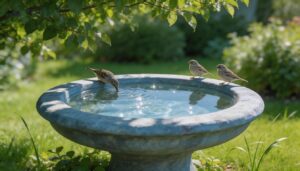
Set the bath in partial shade, where a shaded area offers Dappled Light Benefits, water temperature control, and Air Circulation.
Smart Shade Structure Design and a Cooling Color Palette help. Temperature Sensors can guide placement. You’re providing shade and predator protection while supporting fresh water daily for birds nearby.
Avoid Harsh Afternoon Sun and Overhanging Branches
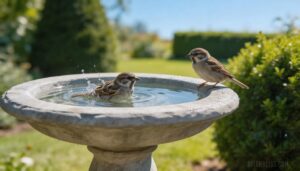
Think of midday sun as a slow kettle for your birdbath. It overheats water and makes bathing less inviting.
- Use Afternoon Heat Mitigation in a shady spot with partial shade.
- Apply Sunlight Filtering Options for shaded bird bath locations.
- Follow Overhead Clearance Standards and Branch Trimming Guidelines; avoid overhanging branches.
- Pair Cooling Water Techniques with protective cover, not dense canopy.
Place It 10–15 Feet From Feeders
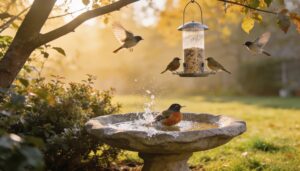
Location Matters: when you’re choosing the ideal birdbath location, keep it 10–15 feet from feeders.
That gap promotes Integrating Bird Baths with Feeders, smooth Flight Path Integration, and a clear Observation Angle.
It also creates Predator Buffer Zone, improves Cat Deterrent Placement, helps Offer Food Nearby without crowding, and aids Seasonal Positioning while Ensuring predator safety around birdbaths overall.
Keep Nearby Shelter Within About 5 Feet
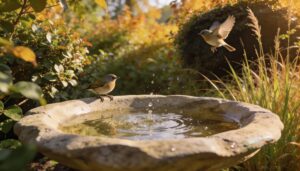
Set shelter close, and your birdbath feels safer right away. The Shelter distance advantage is simple: Quick refuge access lets birds dash to a safe spot after bathing.
Aim for protective cover within five feet, using dense bushes or tall shrubs. Keep a Cover concealment balance with Windbreak shelter and Seasonal foliage cover, but avoid creating predator cover too close.
Maintain Open Sightlines So Birds Can Spot Predators
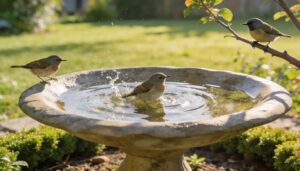
That nearby safe spot works best when birds can also read the space around it.
For smart birdbath placement, focus on:
- Line of Sight.
- Perimeter Lighting and Shadow Management.
- Ground Cover Management and gentle Predator Deterrence.
This birdbath location helps predator avoidance and predator protection, so birds can judge movement fast and bathe with more confidence daily.
Keep Distance From Dense Shrubs Where Cats Can Hide
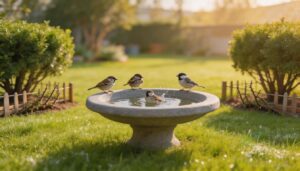
Clear views matter, but so does distance. Avoid placement near shrubs, especially thick evergreens, where cats can stalk unseen.
Use Shrub Pruning, Ground Clearance, and Cat Deterrent Barriers as cat deterrent strategies that lower cat predation risk. This provides Visual Predator Surveillance, predator avoidance, Escape Route Planning, and Selecting Safe Locations and Predator Protection around the bath year-round for birds.
Position The Bath Where Birds Feel Secure but Visible
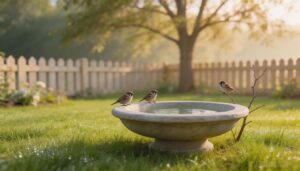
After avoiding ambush cover, let birds bathe where they can watch the yard and still slip quickly into nearby shelter.
- Window-friendly View, Bird’s-eye Level, non-reflective surface.
- Contrasting Background and unobstructed approach calm nervous visitors.
- Optimizing Bath Location for visibility helps.
- Selecting Safe Locations and predator protection beat placement near shrubs.
- Providing Perches and safety for birds improves placement near trees.
Keep Water Clean and Fresh
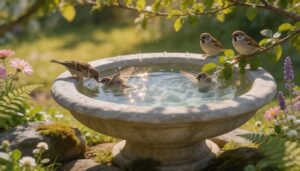
Clean water is one of the biggest reasons birds return to a birdbath. If the basin stays fresh and clear, it feels safer and more natural to them.
Here are the simple habits that keep your birdbath inviting day after day.
Refill With Fresh Water Every 1–2 Days
Fresh water is the whole invitation. Refill every 1–2 days to keep clean and fresh water appealing, support Oxygenated Water, and improve Bacterial Prevention through simple Quality Monitoring and Nutrient Dilution.
| Task | Timing | Benefit |
|---|---|---|
| Refill | 1–2 days | Freshness Appeal |
| Check | each refill | Maintaining Clean Water in Bird Baths |
| Remove debris | same time | Ensuring water cleanliness and freshness |
| Note | cloudiness | early. |
Change Water Daily During Hot Weather
During heat waves, do a Morning Refill and change water again later if needed.
It keeps clean and fresh water cooler for Temperature Management, facilitates Heat Stress Mitigation, Evaporation Control, and Breeze-Induced Cooling, and fits maintaining clean water in bird baths plus Regular Cleaning and Water Refresh Practices, Preventing Algae in Bird Baths, and Preventing mosquito breeding in stagnant water.
Remove Leaves, Droppings, Feathers, and Algae Quickly
Skim mess fast so birds keep finding clean and fresh water. In your cleaning routine, regular cleaning matters: lift leaves, wipe droppings, pull feathers, and stop algae growth early. Always avoid chemicals that can leave slippery risky residue.
- Leaf Skimmer Net kept handy
- Dropping Waste Bag ready
- Feather Brush Sweep lightly
- Algae Spot Scrub promptly
- Debris Vacuum Tool close by
Scrub The Basin Weekly to Prevent Slime Buildup
Grab a soft brush once a week and give the basin a scrub. Good Brush Selection helps lift slime from edges and corners without scratching.
That steady Scrub Frequency aids Biofilm Management, algae prevention, and a Cleaning Routine you can fold into your cleaning routine.
Wear Protective Gloves, avoid chemicals, and use a non‑toxic cleaner for clean and fresh water.
Use Vinegar and Water or Other Non-toxic Cleaners
Think of cleaning as nest care for your birdbath. Use a nontoxic cleaner with a Vinegar Dilution Ratio for mineral spots.
A Baking Soda Abrasive helps with grime. Light Castile Soap Use works for messes, while a Hydrogen Peroxide Sanitizer disinfects.
Labeling cleaning solutions promotes ensuring nontoxic cleaning practices, bird health hygiene, clean water, and maintaining clean and fresh water.
Rinse Thoroughly and Avoid Detergents or Chemical Soaps
Would you bathe in soapy water? Use a simple Rinsing Technique with Detergent-Free Cleaning after any nontoxic cleaner. For solid residue removal, let Gentle Water Flow cover every surface for a Safe Rinse Duration of 15 seconds or more.
Clean water and fresh water protect feathers and keep baths chemical-free, supporting Regular cleaning and sanitation of birdbaths for healthy visits.
Prevent Stagnant Water That Attracts Mosquitoes
Still water is a welcome mat for mosquitoes.
Use Aeration Devices and careful Flow Rate Adjustment to keep moving water gentle for birds and effective for mosquito control. Add Debris Screens, skip Mosquito Deterrent Additives, and practice Seasonal Water Management with regular cleaning and sanitation of birdbaths, water depth variation, and preventing mosquito breeding in garden water sources all year.
Add Features Birds Find Irresistible
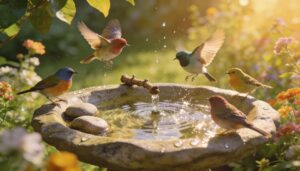
Once the water is clean, a few small touches can make the bath much more appealing to birds. The best additions help birds notice the water quickly and feel safe using it.
Here are the simple features that tend to bring more birds in and keep them coming back.
Use Drippers, Bubblers, or Misters for Gentle Movement
Add gentle moving water, and birds often come sooner. It feels like a safe puddle, not a noisy fountain in summer.
- Dripper Positioning upstream of stones helps a dripper stay inviting.
- Keep Bubbler Depth at 1–2 centimeters with bubblers.
- Mist Droplet Size around 0.2–0.4 millimeters suits a misting system.
- Solar Pump Usage and Quiet Operation keep your water feature calm.
Create Ripples That Mimic Natural Streams
Once your dripper or bubblers are running, shape the moving water into soft stream-like patterns.
Use Flow Rate Tuning and Ripple Length Control to keep ripples gentle, about 5–15 centimeters, with Irregular Flow Paths.
A quiet Subsurface Fountain Effect and Edge Microcurrent Design help add moving water features that feel like natural water features.
| Tune | Result |
|---|---|
| Slow | Clearer |
| Varied | Visits |
Add Branches, Rocks, or Textured Rim Perches
After those gentle ripples, give birds better footing for shy songbirds and safer sipping after bathing too:
- Natural Materials in bird perch design.
- Branch Diameter Choice: 1–2 inches, rough bark.
- Rock Placement Pattern: flat, weathered perching spots.
- Textured Rim Materials help, adding rocks and perches for safety.
- Seasonal Perch Rotation facilitates providing perches and landing spots, plus Predator-Deterrent Perches.
Include Multiple Landing and Escape Points
Once birds trust the rim, give them choices: Dual Landing Zones, Adjustable Rim Steps, and Staggered Perch Levels. These features support providing perches and landing spots while leaving headroom for takeoff.
Hidden Escape Corridors and Predator‑Safe Pathways lower predator risks around birdbaths. For multiple bathing stations, choose safe locations for birdbaths, always providing perches and safety for birds nearby, easily.
Create a Natural Look With Stones and Surrounding Plants
Because wild birds trust places that feel familiar, try creating a Natural Look with Stone, Natural Stone Edges, and Mixed Stone Sizes around the basin. Use Natural Materials, Native plants, Groundcover Integration, Soft Mulch Borders, and an Irregular Plant Layout to build a bird-friendly garden.
Keep shapes loose and layered, like a woodland edge, so footing and cover feel natural.
Try Subtle Sound Cues Like Soft Wind Chimes Nearby
Invite curiosity with:
- Chime Material Selection
- Ideal Distance Placement
- Sound Level Calibration
- Seasonal Acoustic Tuning
- Chime Maintenance Routine
When Adding Sound Elements to Attract Birds, hang lightweight wind chimes near bird bath placement. Keep tones soft and steady, so bird behavior stays calm and bird activity rises with passing breezes on warm, lightly windy days.
Offer Both Low and Elevated Bathing Spots
Not every bird thinks alike regarding bath height considerations. Ground-feeding species like sparrows and towhees prefer a ground-level dish, while chickadees and finches feel safer on an elevated perch.
Setting up a dual-level bath placement gives both groups their comfort zone. Think of it as a tiered bath design that invites the whole neighborhood, maximizing height variation benefits for every visitor.
Build a Bird-Friendly Bathing Area

A birdbath works best when the space around it feels safe, useful, and easy for birds to read. The right plants, feeder spacing, winter care, and a few seasonal tweaks can turn a simple bath into a steady stop in your yard.
Here’s how to build that kind of setup, one smart choice at a time.
Plant Native Shrubs, Grasses, and Flowers Nearby
Think of your birdbath as the center of a small living room outdoors. Use native landscaping with native shrub screening, tall grasses, and ground cover diversity to frame it gently. Add seasonal grass texture, pollinator-friendly perennials, and thoughtful bloom succession planning.
Treat your birdbath like an outdoor living room, framed with native shrubs, grasses, and flowers
In Germany, beech, chamomile, yarrow, and wood anemone help when planting bird-attracting flowers in a calm bird-friendly garden nearby.
Including oak trees nearby can improve bird use of the bath, as oak trees support birds provide essential habitat.
Add Berry-producing Plants and Insect-friendly Habitat
Want birds to linger? Plant Berry shrub clusters near the bird bath, with Staggered fruiting from serviceberry, blueberry, and beautyberry.
Add Insect host plants, Groundcover diversity, and Leaf litter habitat so nesting songbirds find caterpillars, beetles, and spiders close by.
These native plant benefits create steady habitat enrichment, turning a simple yard into a richer bird-friendly garden year-round outdoors.
Planting early-season trees boosts insect food, as native plants generate four times more insect biomass.
Place Feeders 10–30 Feet From The Birdbath
Space matters: set each bird feeder 10–30 feet from the birdbath, so birds move calmly between bird feeding stations.
- Follow Feeder distance guidelines: 15–25 feet often works best.
- Use Feeder Height Variation and Feeder Color Contrast.
- Try Species-Specific Placement, Feeder Noise Management, Seasonal Feeder Adjustments.
- Prioritize managing cat predation risk while integrating feeders and nesting boxes for shy backyard species.
Add Nesting Boxes in The Broader Yard Setup
Keep the bath linked to shelter by integrating Nest Boxes and Bird Feeders across one calm yard. Follow Box Height Guidelines for birdhouse placement, use predator guard features, and build in ventilation and drainage.
Choose Material Durability and seasonal insulation, while adding nearby shelter and vegetation. That’s habitat enhancement and designing a bird-friendly yard landscape that birds trust all season long.
Use Heated Baths or Safe Heaters in Winter
After adding boxes and feeders, support winter bathing with Winter Heating Solutions for Bird Baths: choose a heated birdbath, submersible heater, or immersion heater with Thermostat Automation.
Prioritize GFCI Protection, correct Heater Placement, Weather-resistant Enclosures, and practical Power Source Options.
Winterizing birdbaths for cold weather works best when water stays near 40 to 50°F, safely accessible for winter songbirds outside.
Never Use Antifreeze or Glycerin in Cold Weather
Heaters help, but never add antifreeze or glycerin.
- Antifreeze Toxicity kills birds fast.
- Glycerin Irritation harms skin and airways.
- Chemical Spill Cleanup matters after leaks.
- Watch Bird Health Indicators: sweet smell, blue-green drops, coughing.
- Choose Safe Winter Water with Winter Heating Solutions for Bird Baths when Winterizing birdbaths for cold weather and bird disease prevention instead of risky chemical shortcuts.
Track Bird Visits and Adjust Placement or Features as Needed
Once winter water is safe, use Visit Data Logging for Monitoring Bird Activity at Water Sources. A notebook or camera enables Behavioral Trend Analysis and Evaluating Bird Bath Usage and Adaptation.
If bird activity drops, try Species-specific Adjustments, Seasonal Location Tweaks, and an Adaptive Maintenance Schedule, while Choosing ideal birdbath location and Optimizing Bath Location for Visibility near cover, safely.
Refresh The Setup Seasonally to Encourage Year-round Use
Spring water depth stays shallow, Summer mist settings cool birds, Autumn perch textures steady wet feet, and Winter ice prevention, with winter bird bath heating, keeps water usable.
Seasonal maintenance calendar provides Seasonal Care of Bird Baths, Seasonal Considerations for Bird Bath Usage, Seasonal maintenance of birdbaths, and Year-round bird attraction strategies well.
Frequently Asked Questions (FAQs)
How long before birds start using it?
Most birds show early adoption within one to three days, though time to habituation can reach two weeks.
During your observation period, visits usually rise as birds decide the bath is safe, cool, and reliable.
Which bird species are most likely to visit?
Expect Blue Tit Attraction, Great Tit Preference, House Sparrow Use, Blackbird Visits, Starling Activity, plus house finches, black-capped chickadees, tufted titmouse;
together they show bird attraction and varied bird bathing behavior around calm shallow water.
Can birdbaths spread disease between wild birds?
Nothing says hygiene like shared bathwater: birdbaths can spread disease through Pathogen Transmission, Biofilm Formation, and Cross-Species Infection.
Keep It Clean, Add Moving Water, and use Disease Monitoring for avian disease prevention and bird health.
Should a birdbath stay outside overnight year-round?
Usually yes, but only if you manage Ice Formation, winter maintenance, and predator risks.
Heated birdbaths support Winter Water Availability, while protective cover, Bird Behavior Patterns, Energy Consumption, and Maintenance Burden should guide year-round availability.
Do reflective surfaces scare birds away from water?
Like Narcissus fooled by shimmer, glare avoidance, UV reflection, and predator mimicry can make some birds hesitate at water.
Still, species habituation, angle adjustment, and calmer materials and textures often restore birdbath appeal and visits.
Conclusion
Regarding welcoming birds, patience and planning go hand-in-hand. As the saying goes, "well done is better than well said."
By following these simple setup tips on how to encourage birds to use a birdbath, you’ll create a haven that invites feathered friends to stay awhile.
With a little effort, your yard can become a vibrant sanctuary, teeming with life and song. Your birdbath will transform into a thriving hub of activity.
- https://www.inournature.ca/native-berry-producing-shrubs-for-birds
- https://www.hortmag.com/smart-gardening/native-berries-to-plant-for-birds
- https://bayberryhome.org/activities/pollinator-garden/
- https://thegardenmagazine.com/10-native-shrubs-that-provide-berries-for-wildlife/
- https://www.provenwinners.com/learn/top-ten-lists/top-10-shrubs-pollinators