This site is supported by our readers. We may earn a commission, at no cost to you, if you purchase through links.
Your parakeet’s feathers look dull, and she’s been unusually quiet for the past week. Before you panic, consider this: many avian health issues stem from vitamin deficiencies that are entirely preventable and reversible. Wild birds obtain essential nutrients from diverse food sources—tree bark, insects, seasonal fruits—but companion birds depend entirely on what you provide.
A seed-only diet, no matter how premium the brand, won’t deliver the complete nutritional profile your bird needs. Understanding how to give birds vitamins correctly can mean the difference between a thriving companion and one struggling with compromised immunity, brittle bones, or reproductive complications.
The process isn’t complicated, but precision matters—wrong dosages or delivery methods can create new problems instead of solving existing ones.
Table Of Contents
Key Takeaways
- Seed-only diets lack essential nutrients like vitamin A, D3, and B-complex, making supplementation necessary to prevent compromised immunity, brittle bones, and reproductive complications in companion birds.
- Accurate dosing based on species and weight is critical—wrong amounts or mixing supplements without veterinary guidance creates toxicity risks, especially with fat-soluble vitamins like A and D3.
- Monitor your bird’s feather quality, energy levels, and droppings weekly after starting supplements, watching for improvement within 1-3 weeks or signs of toxicity like lethargy and unusual droppings.
- Choose species-specific supplements from reputable manufacturers with clear dosing instructions, store them properly in cool, dry conditions, and replace water-based solutions daily to maintain potency.
Why Birds Need Vitamin Supplements
Your bird’s health depends on more than just seeds and water. Even the best diet can fall short on essential vitamins, leaving your feathered companion vulnerable to serious health issues.
Understanding which deficiencies affect birds most, how to spot warning signs, and what happens when nutrition falls short will help you keep your bird thriving.
Common Vitamin Deficiencies in Birds
Vitamin and mineral deficiencies can quietly undermine your bird’s health. Understanding these gaps helps you protect your companion from preventable illness.
Common avian vitamin deficiencies include:
- Vitamin A Deficit – causes oral cavity changes, poor feather health, and respiratory vulnerability in many species
- Vitamin D deficiency – leads to brittle bones and metabolic disorders, especially in indoor birds
- Vitamin E shortage – triggers muscular weakness and reproductive complications
- B-complex deficiencies – result in dermatitis around the beak, reduced appetite, and stunted growth
- Vitamin C lack – produces swollen joints and poor wound healing in susceptible species
Recognizing these patterns allows you to address bird nutrition gaps before serious beak problems or compromised eggshell quality develop. Ensuring the accuracy of scientific study summaries is essential, and utilizing methodological rigor can help in this process.
Signs Your Bird Needs Vitamins
Your companion’s body often whispers warnings before vitamin deficiency becomes a crisis. Watch for dull, brittle plumage, lethargy that steals their usual spark, or beak problems like flaking around the nares. Changes in appetite, weight loss, or recurrent infections signal nutritional deficiencies in birds that demand attention.
| Physical Signs | Behavioral Changes | Health Indicators |
|---|---|---|
| Poor feather health, dullness | Reduced activity, less vocalization | Frequent infections, slow healing |
| Flaky skin, crusty beak/legs | Decreased curiosity, increased sleep | Abnormal droppings, digestive upset |
| Patchy molting issues, color fading | Altered preening patterns | Weight loss, appetite changes |
| Brittle plumage, poor molt | Less social interaction | Lab-confirmed low vitamin levels |
Species-specific patterns matter—parrots on seed-based diets show different avian vitamin requirements than finches. If you notice several signs together, your bird’s nutrition needs assessment by an avian veterinarian.
Risks of Vitamin Deficiency
Left untreated, deficiency symptoms escalate into serious health consequences. Avian malnutrition compromises immunity, leaving your bird vulnerable to infections that healthy companions easily resist. Neurological signs—seizures, tremors, poor coordination—reveal how nutrient imbalance affects the nervous system. Reproductive failures and skeletal deformities emerge in breeding birds.
Untreated vitamin deficiencies destroy your bird’s immunity, nervous system, and reproductive health—turning preventable gaps into irreversible damage
Dietary deficiencies don’t announce themselves until damage deepens.
- Immunocompromised birds face recurrent respiratory and systemic infections
- Mineral deficiency triggers metabolic bone disease and egg-binding emergencies
- Species-specific vulnerabilities mean African Greys develop hypocalcemia faster than budgies
Choosing The Right Bird Vitamins

Not all bird supplements are created equal, and picking the wrong product can do more harm than good. The supplement aisle can feel overwhelming, but knowing what to look for makes the choice straightforward.
Here’s what you need to keep in mind when selecting vitamins for your bird.
Types of Bird Vitamin Supplements
You’ll encounter several categories of vitamin supplements designed to meet avian vitamin requirements. Multivitamins and vitamin premixes provide broad-spectrum support, while targeted products like vitamin A with carotenoid supplements address specific deficiencies.
Vitamin D3 formulations support calcium metabolism, and vitamin E with selenium blends protect cellular health. B-complex vitamins with folic acid support metabolism and reproduction—each serving distinct bird nutrition and supplements needs.
Selecting Quality and Safe Products
When choosing vitamin supplements for your feathered companion, you’ll want products specifically formulated to meet avian vitamin requirements. Look for product labels listing active ingredients with clear dosages, and prioritize manufacturers that follow safety standards with third party verification. Quality bird nutrition and supplements avoid toxic ingredients like xylitol or artificial sweeteners, and include storage guidelines to maintain potency.
Consider these essential features:
- Commercially manufactured for birds or reptiles specifically
- Clear species suitability and vitamin and mineral requirements
- Reputable quality control and third party verification
- Free from palm oil, caffeine, and other toxic ingredients
- Proper storage guidelines and expiration dates
This careful selection ensures effective vitamin supplementation for birds while protecting their health.
Vet Recommendations and Species Needs
Your avian veterinarian should always guide supplement decisions based on your bird’s species, nutrition, dietary needs, and current health status. Many small parrots benefit from targeted B-complex or vitamin A adjustments when dietary variety is limited, while indoor birds often require careful vitamin D3 dosing. Regular avian health assessments ensure that vitamin supplements address actual deficiencies without risking toxicity.
| Species Type | Common Vitamin and Mineral Requirements | Vet Guidance Focus |
|---|---|---|
| Small Parrots | B-complex, Vitamin A | Supplement safety monitoring |
| Indoor Birds | Vitamin D3, Calcium balance | Hypervitaminosis prevention |
| Seed-Diet Birds | Multivitamin | Avian dietary needs assessment |
Preparing to Give Birds Vitamins
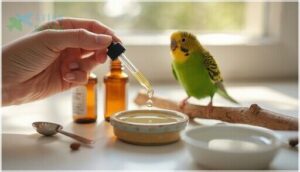
Before you add any supplement to your bird’s routine, you need to get the basics right. Dosage matters more than most people realize—too little won’t help, and too much can cause real harm.
Let’s walk through how to measure correctly, what form works best for your bird, and how to keep those vitamins safe and effective.
Determining The Correct Dosage
Accurate dosage is the cornerstone of safe vitamin supplementation for birds. You’ll need to calculate based on your bird’s weight and species, since parrots metabolize vitamins differently than finches.
Consider these essentials:
- Weight-based dosage prevents under- or overdosing in small birds
- Species specificity ensures proper vitamin metabolism rates
- Dosage calculations require veterinary guidance to avoid toxicity
Regular monitoring confirms your bird receives the right amount.
Forms of Vitamin Supplements (Liquid, Powder, Pellet)
Vitamin supplements come in three primary forms, each with distinct advantages for vitamin absorption. Liquid supplements offer rapid bioavailability rates and precise dosing via droppers, though some birds reject flavored solutions. Powder mixing into water or food provides flexibility for vitamin supplementation for birds. Pellet formulations deliver consistent vitamin and mineral supplementation daily, maintaining stable levels when stored properly. Your bird’s temperament often determines which form works best.
Safe Storage and Handling Practices
Store your vitamin supplements in a cool, dry location between 2–25°C (36–77°F), away from direct sunlight and heat sources. Temperature control and humidity management directly impact supplement safety and potency for bird health and nutrition.
- Keep containers tightly sealed to prevent moisture ingress and maintain vitamin storage integrity
- Label all products with batch numbers and expiration dates for proper tracking
- Use clean, dedicated measuring tools during handling precautions to avoid cross-contamination risks
Step-by-Step Guide to Administering Vitamins
Once you’ve chosen the right supplement and determined the proper dosage, it’s time to actually give it to your bird. The method you use depends on your bird’s temperament, the supplement form, and your comfort level with hands-on administration.
Below are the most effective approaches to guarantee your bird receives vitamins safely and consistently.
Adding Vitamins to Water or Food
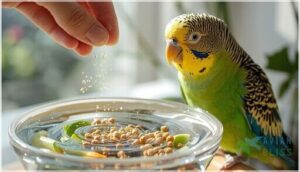
The most practical dosing methods involve mixing vitamins into fresh food or drinking water. When adding supplements to water, use commercially formulated avian products and replace the solution daily—vitamin solubility degrades quickly.
For food fortification, blend water-soluble vitamins into softened vegetables or pellets just before feeding. This approach preserves nutrient balance and aids in superior bird health and nutrition, particularly vitamin A and vitamin D3 absorption.
Direct Oral Administration Tips
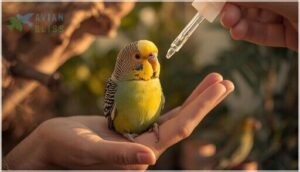
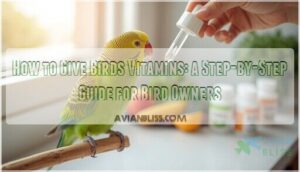
When mixing supplements into food or water isn’t feasible, direct oral dosing techniques offer precise vitamin administration. Use a narrow-tipped dropper or syringe to deliver liquid supplements toward the back of your bird’s tongue—never force the tip into the throat.
Hold your bird gently but securely, positioning the head slightly elevated and forward to ease swallowing and prevent aspiration during vitamin supplementation.
Monitoring Your Bird’s Response

After administering vitamin supplements for birds, watch your bird closely for the next few weeks. Bird behavior and feather health offer the clearest signs that your nutritional supplements and dietary adjustments are working—or if something needs attention.
- Observe appetite and water intake changes within 24–72 hours of starting avian nutrition supplementation
- Track weekly weight using a precise scale to detect unintended fluctuations during immune system support for birds
- Record feather condition, shine, and molt patterns as supplement efficacy indicators over 2–4 weeks
- Monitor stool consistency and color for digestive or metabolic responses to vitamin supplements for birds
- Note behavioral shifts like increased energy or lethargy; report persistent concerns during health monitoring visits
Avoiding Over-Supplementation
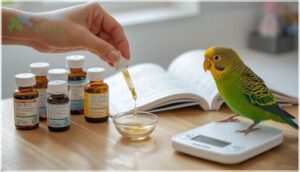
While monitoring your bird’s response helps catch deficiencies, it’s equally important to prevent vitamin toxicity. Safe dosing means checking every product for overlapping ingredients—many dietary supplements contain the same vitamins, creating supplement risks through cumulative intake.
Choose species-specific formulations backed by veterinary guidance, and regularly assess total vitamin supplementation from all sources to maintain balanced nutrition and true avian wellness.
Monitoring Bird Health After Supplementation

Once you start giving your bird vitamins, your work isn’t done—you need to watch how your bird responds. Some changes signal improvement, while others may point to problems that need immediate attention.
Here’s what to look for in the days and weeks after you begin supplementation.
Recognizing Positive Changes
When vitamin supplements are working, you’ll notice real improvements in your bird’s daily life. Feather improvement appears as brighter plumage and healthier sheen within weeks. Energy boost becomes evident through increased activity and responsiveness. Digestive health stabilizes with normal droppings. Behavioral changes include better appetite and alertness.
These signs confirm proper nutrient uptake, supporting overall avian health and wellness through targeted dietary supplements and vitamins.
Watching for Side Effects or Toxicity
Even with careful dosing, supplement overdose can occur if you miss toxicity signs. Watch for lethargy, unusual droppings, feather deterioration, appetite loss, or behavioral shifts—these indicate dosing errors or vitamin interactions affecting avian health. Fat-soluble vitamins pose greater risk in avian toxicology than water-soluble ones. Track dosing carefully and adjust if nutritional deficiencies in birds worsen despite dietary supplements and vitamins, ensuring bird health and wellness.
- Lethargy or decreased activity signals systemic reactions
- Unusual stool changes indicate intestinal upset
- Facial or feather condition decline suggests toxicity
- Reduced appetite or thirst changes accompany adverse reactions
- Behavioral shifts like irritability reflect vitamin-related discomfort
When to Consult an Avian Veterinarian
Whenever you notice acute distress, persistent symptoms like feather plucking, or sudden behavioral changes, emergency care becomes essential.
An avian veterinarian provides veterinary guidance on bird toxicity risks, health monitoring protocols, and avian nutrition adjustments customized to your pet’s needs.
Routine consultations guarantee proper bird health and nutrition, while specialized testing assists avian health when standard pet bird care and wellness strategies with bird nutrition and supplements don’t resolve deficiencies.
Frequently Asked Questions (FAQs)
Can I mix different vitamin supplements together?
Don’t combine vitamin supplements without your avian vet’s guidance. Overlapping nutrients raise toxicity risks, especially with fat-soluble vitamins like A and D
Mixing can compromise stability, bioavailability, and dosage control in dietary supplements for birds.
How long before vitamins show noticeable results?
Most birds show subtle improvements in energy and feather condition within one to three weeks of starting vitamin supplementation. However, complete recovery from nutritional gaps often requires consistent administration over two to three months.
Do outdoor birds need fewer vitamin supplements?
Outdoor birds usually don’t need vitamin supplementation due to diverse natural foraging that provides adequate nutrition.
Wild bird nutrition through ecological sources maintains vitamin balance better than artificial outdoor supplementation, which can disrupt avian wellness and create unintended dietary deficiencies.
Are human vitamins ever safe for birds?
No—human vitamins pose serious toxicity risks. Avian metabolism processes vitamin A, vitamin D3, vitamin E, and B vitamins differently than ours.
Dosing errors and vitamin interactions create species specificity concerns that threaten bird nutrition and health.
What if my bird refuses supplemented food?
Try mixing supplements into favorite treats, switching to liquid forms added to fresh foods, or using powder sprinkled on moist vegetables.
Gradual dietary shift tips help birds accept nutritional gaps being filled without stress.
Conclusion
Supplementing your bird’s diet doesn’t require veterinary training—just attention to detail and consistency. How to give birds vitamins becomes routine once you establish a method that works for your species and individual bird.
Monitor feather quality, energy levels, and droppings weekly. Document any changes you observe. If uncertainty arises about dosages or your bird’s response to supplementation, contact an avian veterinarian before adjusting protocols.
Your diligence directly impacts your companion’s long-term health outcomes.
- http://mailto:allen
- https://www.youtube.com/c/PoultryBiosecurity
- https://academichelpexpress.blog/2024/08/please-use-the-bulleted-points-and-the-rubric-below-to-guide-your-work-your-pa/
- https://www.sciencedirect.com/science/article/pii/S0749208123000268
- https://www.studocu.com/en-za/messages/question/7372130/the-comprise-a-rigorous-and-systematic-process-with-explicit-steps-so-that-impartial