This site is supported by our readers. We may earn a commission, at no cost to you, if you purchase through links.
A birdhouse mounted six inches too low becomes a predator’s snack bar. Your carefully crafted wooden sanctuary won’t attract a single nesting pair if it faces west and turns into an afternoon oven. The difference between an empty box and a thriving bird family often comes down to three factors: height, direction, and what you mount it on.
Most backyard birders don’t realize that Eastern Bluebirds won’t touch a house attached to a tree, while chickadees actively seek them out. Getting these details right means you’re not just hanging a decoration—you’re creating safe shelter that birds will actually use.
The mounting process itself takes less than an hour, but knowing where and how to secure your birdhouse determines whether you’ll watch babies fledge or wonder why nothing ever moves in.
Table Of Contents
Key Takeaways
- Mount your birdhouse 5-6 feet high facing northeast or east to provide morning sun and afternoon shade while keeping predators from reaching nests through proper height placement and directional orientation.
- Species-specific requirements determine mounting surfaces—Eastern Bluebirds need posts in open areas while chickadees prefer tree trunks, and matching these preferences directly impacts whether birds will actually use your box.
- Install stovepipe baffles 4 feet up on poles and avoid adding perches since these predator guards increase nesting success by nearly 7% while perches only help predators access vulnerable chicks.
- Clean your birdhouse each fall with a diluted bleach solution and inspect quarterly for structural damage, ensuring drainage holes stay clear and mounting hardware remains secure throughout seasonal changes.
Choosing The Ideal Birdhouse Location
Your birdhouse location matters more than you might think. The right spot keeps birds safe, comfortable, and keen to nest.
Let’s look at three key factors that’ll help you pick the perfect place.
Safe Height and Placement
For birdhouse height, think of it as finding that sweet spot between safety and care. Mount your box 5 to 6 feet high—low enough for easy cleaning yet high enough to discourage prowling cats. Bluebirds thrive at this height, while chickadees prefer 5 to 15 feet.
For more guidance on positioning your birdhouse in the yard, check out tips on choosing the best location to place a bird house.
Place boxes in open areas with grasses 8 to 12 feet away, giving birds clear flight paths and you peace of mind. For ideal placement, consider the birdhouse installation guidelines.
Sunlight, Shade, and Weather Protection
Face your birdhouse northeast or east for gentle morning sun and afternoon shade—this nest box orientation prevents deadly overheating above 40°C while supporting thermal regulation. In cooler regions, limited south exposure works if you provide partial shade through nearby foliage. Avoid west-facing placement; strong afternoon sun stresses nestlings.
Face your birdhouse northeast or east for gentle morning sun and afternoon shade, preventing deadly overheating while keeping nestlings comfortable
For weather protection during birdhouse installation, tilt the entrance away from prevailing winds and rain, ensuring your birdhouse mounting creates a safe, bird-friendly gardening haven with proper wildlife protection. Proper bird box placement involves considering the best bird box direction to guarantee the birds’ safety and comfort.
Avoiding Predators and Disturbances
Beyond weather, predator protection and minimizing bird disturbance are critical for nest safety. Position your birdhouse away from launching points that predators exploit:
- Keep the box at least 30 feet from feeders where cats and raccoons patrol
- Clear overhanging branches within leaping distance—predator deterrents work best combined with smart placement
- Avoid high-noise zones; construction sounds reduce hatching success in bluebirds
Wildlife conservation starts with thoughtful environmental factors during birdhouse installation.
Kids can learn hands-on conservation skills by building birdhouses designed for local species in your backyard.
Selecting The Right Mounting Surface
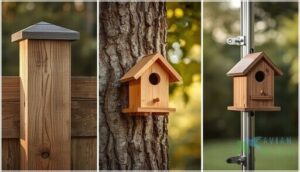
The surface you choose matters more than you might think. It affects how easily you can maintain the birdhouse and whether your target species will actually move in.
Let’s look at the key factors that’ll help you pick the right spot.
Accessibility for Cleaning and Monitoring
You’ll want your birdhouse at a height you can reach without acrobatics—around 5 feet works well. Mount it where you can check inside quickly. Choose surfaces that let you open the cleanout door without wrestling branches. A clear path to the birdhouse makes annual cleaning less of a chore and keeps you safe.
If you’re planning for year-round residents that roost in winter, position the entrance away from prevailing winds to help them stay warm during cold snaps.
| Mounting Height | Access Method | Maintenance Benefit |
|---|---|---|
| 5 feet | No ladder needed | Quick visual inspection |
| Clear path | Direct approach | Safe cleaning access |
| Open cleanout door | Hinged panel | Easy debris removal |
Impact on Bird Species Preferences
Your mounting surface shapes which bird species will call your birdhouse home. Eastern Bluebirds favor posts in open spaces, while chickadees seek tree trunks in wooded areas. Downy Woodpeckers won’t use pole mounts—they need bark. Purple Martins require poles in fields, never trees.
Match your surface to nesting preferences and species habitat needs for successful bird-friendly gardening.
For cavity nesters like bluebirds, installing a properly designed nesting box with predator guards can help create a safer environment that matches their natural preferences.
Step-by-Step Guide to Mounting a Birdhouse
You’ve picked the perfect spot and chosen your mounting surface. Now it’s time to get that birdhouse up and secure.
Just remember to put up your birdhouse well before nesting season so birds have time to discover and inspect their new home.
Let’s walk through the exact tools you’ll need and the steps to mount it safely so your feathered friends can move in with confidence.
Tools and Materials Needed
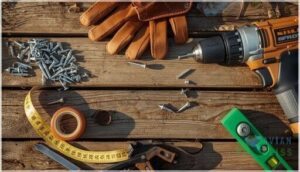
You’ll need the right gear before starting your birdhouse installation. Think of proper material selection and mounting hardware as your foundation for success.
- Galvanized deck screws – These resist corrosion better than nails.
- Power drill with wood bits – Essential for pilot holes.
- Measuring tape – Ensures consistent mounting heights.
- Safety glasses and work gloves – Protect against sharp edges.
- Level tool – Keeps your birdhouse properly aligned.
Measuring and Marking The Mounting Point
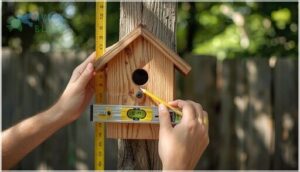
Accurate measurement marks the difference between a secure home and a crooked disappointment. Hold your birdhouse against the post at your target height—usually 5 to 6 feet for bluebirds. Mark pilot hole locations through the back mounting holes directly onto your surface. Use your level to guarantee vertical alignment before marking. This transfers exact reference points for drilling.
| Measurement Task | Recommended Tool |
|---|---|
| Vertical spacing | Measuring tape |
| Level alignment | Bubble level |
| Marking points | Pencil or marker |
| Height verification | Measuring tape |
Securing The Birdhouse Properly
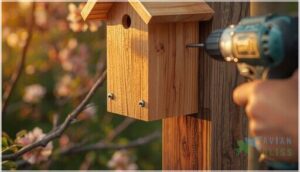
Your fastening method determines whether your birdhouse accommodates birds or becomes a hazard. Drive stainless steel or galvanized screws through pilot holes into your post. These resist corrosion outdoors.
Use two vertically spaced screws for secure attachment—single fasteners allow rotation. Tighten screws until flush with the back panel. This birdhouse mounting prevents wobbling.
Your access panel needs a screw closure to keep predators out during nesting.
Ensuring Stability and Level Placement
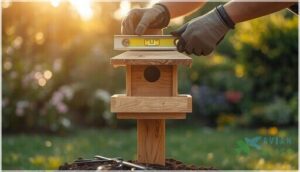
A crooked nest box puts eggs at risk and discourages nesting birds. Check both vertical and horizontal alignment with a spirit level before tightening your fasteners completely.
- Place your level on the birdhouse roof to confirm horizontal positioning
- Check the pole itself for true vertical alignment
- Bury wooden posts 18–24 inches deep for ground anchoring
- Tamp soil firmly in layers around your pole for stability
Re-check level placement after securing all fasteners. Your stable mounting prevents seasonal tilting.
Predator Protection and Safety Measures
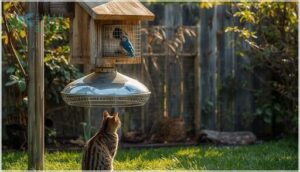
Your birdhouse won’t do much good if predators can reach the nest inside. Cats, raccoons, snakes, and even larger birds pose real threats to nesting families.
Here’s how to keep your feathered friends safe from unwanted visitors.
Installing Predator Guards and Baffles
Think of predator guards as your birdhouse’s security team. Stovepipe baffles are the most effective option, measuring eight inches wide and two feet tall. Mount them four feet up to effectively deter raccoons, snakes, and cats. Data shows that nest boxes equipped with guards have a nearly seven percent higher success rate. For maximum protection, combine a pole baffle with a Noel guard. Your feathered friends deserve reliable climbing prevention.
| Guard Type | Best Protection Against |
|---|---|
| Stovepipe baffle (8″ diameter) | Raccoons, snakes, cats |
| Cone baffle (24″ diameter) | Climbing mammals |
| Noel guard (wire mesh) | Raccoons reaching in |
| Entrance hole extender | Predators entering cavity |
| Combined guards | Broadest predator deterrents |
Proper Entrance Hole Size
Your birdhouse design works hand-in-hand with predator protection. Entrance diameter determines which species can nest safely. Bluebirds need 1.5 inches, while chickadees prefer 1.125 inches. Smaller entrance holes exclude invasive starlings and limit predator access.
Species-specific entrance hole recommendations:
- Bluebirds: 1.5-inch diameter entrance (3.8 cm)
- Chickadees: 1.125-inch diameter opening (2.9 cm)
- Nuthatches: 1.0 to 1.25-inch diameter (2.5–3.2 cm)
- Downy Woodpeckers: 1.25-inch diameter entrance (3.2 cm)
Position entrance holes two inches below the roof edge for weather protection during nesting season.
Avoiding Perches and Climbing Hazards
Predator deterrents start with your birdhouse design itself. Never add an external perch—they give corvids and climbing predators easy access to the entrance hole, increasing nest raids.
North American conservation groups agree: perches help predators more than birds. Your target species don’t need them; they land on the entrance hole edge during bird house installation.
If your box has a perch already, remove it immediately for better nest box security.
Maintenance Tips After Installation

Getting your birdhouse mounted is just the beginning of caring for your feathered visitors. Like any outdoor structure, it needs regular attention to stay safe and functional throughout the seasons.
Here’s what you should do to keep your birdhouse in top shape year after year.
Annual Cleaning and Inspection
Clean your birdhouse once each fall after nestlings leave. This simple act protects bird health and boosts future nesting success. Your nest box sanitation routine prevents parasites and disease from taking hold.
Essential Inspection Metrics and Cleaning Schedules:
- Remove all old nesting material and droppings completely
- Scrub interior with 10% bleach solution, then rinse thoroughly
- Check for structural damage, loose screws, or rotting wood
- Verify drainage holes and ventilation remain clear
- Document occupancy and breeding success for your records
Monitoring for Damage or Wear
After your fall nest box cleaning, make a habit of checking every few months for problems. Look for cracks in walls or floors that expose chicks to drafts. Inspect the roof for gaps where rain sneaks in. Watch for wood rot, gnawed holes, or wobbly posts.
Check your mounting hardware—screws loosen, brackets rust. Catching wear early means your feathered friends stay safe and dry all season long.
Adjusting Placement for Seasonal Changes
As temperatures swing and nesting patterns shift, you’ll want to fine-tune your birdhouse placement to match environmental factors and bird migration cycles. These seasonal adjustments keep your nest box welcoming year-round.
- Trim back summer growth that now blocks your east-facing entrance or creates climbing routes for predators
- Add temporary wind shields during harsh winter months when climate considerations demand extra protection
- Reposition boxes slightly if spring sun now overheats afternoon-shaded spots
Smart birdhouse maintenance means adapting to nature’s rhythms.
Frequently Asked Questions (FAQs)
What birdhouse materials attract specific bird species?
Natural wood like cedar or pine draws chickadees, bluebirds, and wrens because it breathes and mimics tree cavities.
Metal birdhouses overheat unless shaded.
Purple martins accept white aluminum or gourds when properly ventilated.
How do you waterproof a wooden birdhouse?
You’ll want pure tung oil or a plant-based sealer on the exterior only. Let it cure fully before installation.
Drill drainage holes in the floor and add ventilation gaps near the roof.
Can multiple birdhouses be mounted on one pole?
Sure, you can cram multiple birdhouses on one pole—if you enjoy watching territorial battles unfold.
Back-to-back nest box mounting works for Tree Swallows and bluebirds sharing space, but same-species pairs need 250–300 feet apart.
When is the best time to install birdhouses?
Late winter works best for birdhouse installation—think January through February in warmer zones, mid-March up north. You’ll catch early nesters like bluebirds when they’re scouting territories before breeding season kicks off.
Should birdhouses face a particular compass direction?
Orient your birdhouse entrance between north and east—most often east or southeast. This compass orientation captures gentle morning sun while protecting nesting birds from harsh afternoon heat, driving rain, and prevailing westerly winds.
Conclusion
You can own the fanciest birdhouse on the block, but it won’t matter if it’s in the wrong spot. Learning how to mount a bird house properly transforms that decorative box into a genuine refuge—one that shelters families instead of gathering dust.
Height, direction, and predator protection aren’t just recommendations; they’re the difference between watching fledglings take flight and staring at an empty entrance hole all season long.
- https://theprohardware.com/how-to-read-a-measuring-tape/
- https://www.ihinges.com/difference-between-latch-and-hinge/
- https://www.allaboutbirds.org/news/providing-nest-material-for-birds-dos-donts/
- https://birdschoice.com/blogs/news/how-to-mount-nest-boxes
- https://extension.okstate.edu/fact-sheets/three-designed-birdhouse-plans-for-eastern-bluebirds.html