This site is supported by our readers. We may earn a commission, at no cost to you, if you purchase through links.
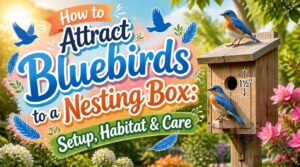
Put up a nesting box with the wrong hole size, and you won’t get bluebirds. You’ll get house sparrows, and they’re tough competitors that can kill adult bluebirds inside the box. That single detail—a hole cut to 1.5 inches instead of the sparrow-friendly gap most stores sell—separates a box that fills up each spring from one that sits empty.
Here’s the thing: attracting bluebirds isn’t luck. It comes down to matching a handful of specific, research-backed choices—box design, placement, food, and predator control—to what these birds actually need to raise young successfully. Get those pieces right, and you’ll watch a pair scout your yard within weeks.
Table Of Contents
- Key Takeaways
- Choose The Right Bluebird Nesting Box Design
- How to Attract Bluebirds to a Nesting Box
- Create a Bluebird-Friendly Backyard Habitat
- Offer Food and Water That Encourage Nesting
- Protect and Maintain Your Bluebird Nesting Box
- Frequently Asked Questions (FAQs)
- How to attract bluebirds to a nest box?
- Why are Bluebirds not using my nest box?
- Do Bluebirds nest despite old nesting material?
- How do Bluebirds build nests?
- How to encourage bluebirds to nest?
- How do you attract bluebirds to nesting boxes?
- What month do bluebirds lay their eggs?
- Why won’t bluebirds use nest boxes?
- How often should bluebird nest boxes be cleaned?
- Can bluebirds coexist with other bird species nearby?
- Conclusion
Key Takeaways
- Cut your entrance hole to exactly 1.5 inches (1-9/16 for Mountain bluebirds) to keep house sparrows out, since the wrong size invites competitors that can kill adult bluebirds inside the box.
- Place your box in an open, sunny spot facing south or southeast with at least 25 feet of clear ground and no dense shrubs crowding the entrance.
- Space boxes at least 100 yards apart, mount them on a metal pole with a predator baffle and cone guard, and clean them out each fall to keep parasite loads low.
- Build a habitat that feeds bluebirds year-round with native berry shrubs, insect-friendly plants, short mowed grass, pesticide-free care, and a mealworm feeder near shallow moving water.
Choose The Right Bluebird Nesting Box Design
Before you buy or build anything, know that box design makes or breaks your chances with bluebirds. These birds are picky about their homes, and small details decide whether a pair moves in or flies right past. Here’s what to check before you settle on a box.
For a closer look at entrance hole size, ventilation, and mounting height, this guide to choosing the right bluebird house walks through each detail that matters.
Entry Hole Size
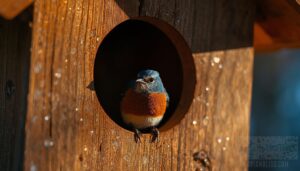
One number decides who moves in: 1.5 inches. That’s the sweet spot for Eastern and Western bluebirds, while Mountain species need 1-9/16 inches—species-specific diameters matter for proper predator deterrence and starling prevention.
Measuring accuracy counts too. Use a caliper, keep the rim smooth so wings don’t snag, and center the hole cleanly on your bluebird nest box. Skip anything oblong or oversized. Get this right, and your nest box setup earns real trust from every passing pair. It is also important to use natural untreated wood to make sure a safe environment.
Interior Floor Dimensions
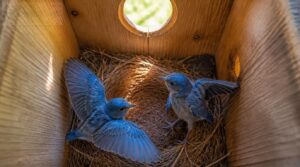
Get the hole size right, then look down. Floor space matters just as much: 4×4 inches for Eastern species, at least 5×5 inches for Western and Mountain bluebirds.
That extra room gives fledglings space to hop and stretch before their first flight. Skip cramped floors—crowded nests mean stressed chicks and messier cleanup once the brood fledges.
Safe Wood Materials
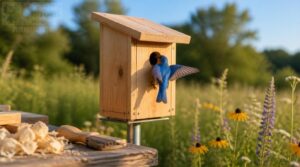
Once you’ve nailed floor space, think about what the box itself is made from. Stick with untreated cedar or redwood—both offer natural wood decay resistance without chemical fumes.
- Skip pressure-treated lumber
- Use non-toxic sealants outside only
- Choose FSC-certified, sustainable wood sourcing
- Apply natural wood finishes sparingly
- Check material safety standards before buying
Drainage and Ventilation
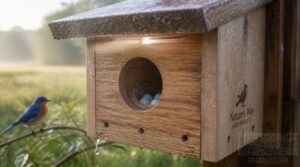
Good wood choice won’t help much if water sits inside the box. Floor drainage holes let rain escape fast, while roof ventilation slots keep air moving so damp nests dry out quickly.
That airflow matters—stale, humid boxes invite mold and chilled eggs. A few small gaps in the right spots protect your nesting box and boost overall nesting success season after season.
Fledgling Climbing Surface
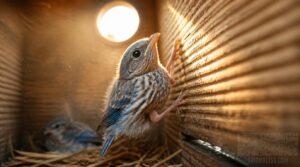
Picture a fledgling bluebird scrambling toward daylight for the first time—it needs grip, not glass. Skip smooth wood; leave the inner front wall rough-textured with shallow ridges under 2mm, sized for tiny toes.
A fledgling bluebird scrambling toward daylight needs grip, not glass, so rough ridges beat smooth wood every time
This Texture Grip Safety protects delicate talons while supporting real climbing niche stability. Choose cedar without toxic coatings, and add drainage so surfaces dry fast, keeping nesting success high and fledglings safely on their way out.
How to Attract Bluebirds to a Nesting Box
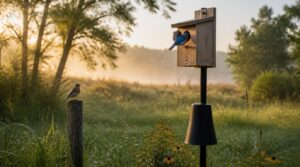
Once you’ve built the right box, where and how you set it up matters just as much. Bluebirds are picky about their surroundings, and small details can make or break their decision to move in. Here’s what to get right before the first pair comes scouting.
Open Yard Placement
Open spaces matter more than most folks think. Bluebirds hunt by sight, so give your box a clear, open grassy spot with at least 25 feet of open ground around it — no dense shrubbery crowding in.
Pair that open sightline with a properly mounted, predator-guarded box, and you’ll cover the essentials from this Colorado bluebird habitat guide.
Skip shady thickets. Wind exposure mitigation matters too: avoid gusty corridors. Keep a small tree within 10-20 feet for fledgling landing zones, and you’ve got a solid setup.
South or Southeast Entrance
Since bluebirds nest in cavities without any control over sun exposure, your box’s facing direction does the job for them. South or southeast entrances capture morning light and warmth while dodging harsh afternoon sun.
Why it works:
- Early thermal regulation for eggs
- Blocks prevailing westerly winds
- Dries morning dew fast
- Boosts nesting success rates
Nearby Fledgling Perches
Fledglings can’t fly far on their first attempt, so give them a soft landing. Keep perches within 10 to 40 feet of your bluebird nesting box for safe flight training.
| Perch Feature | Why It Matters |
|---|---|
| Rough bark texture | Better grip |
| Light shrub cover | Predator safety |
Skip artificial coatings—natural grip textures support stronger nesting success.
Proper Box Spacing
Bluebirds don’t like close neighbors. Keep boxes at least 100 yards apart to respect territorial boundaries and cut down on nesting cavity competition.
- Space boxes 300-500 feet apart when possible
- Avoid placing two boxes visible from the same perch
- Keep predator buffers wide and sightlines open
Good spacing means less shading, fewer squabbles, and stronger fledgling success across your whole habitat.
Early Season Setup
Timing beats everything during nesting season. Get your bluebird nesting box up by late winter, before scouts start checking real estate.
| Task | Why It Matters |
|---|---|
| Check entrance hole | Prevents blockage from warping wood |
| Clear old debris | Reduces mold, improves humidity control |
Fresh wood selection and quick entrance maintenance each spring keep nesting sites ready before competition moves in.
Create a Bluebird-Friendly Backyard Habitat
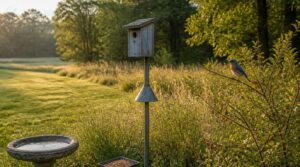
A good box only works if the yard around it earns its keep. Bluebirds need more than a place to nest—they need food, cover, and safety close by. Here’s what to plant, mow, and skip to make your yard feel like home.
Native Berry Shrubs
Plant native berry shrubs and you’ll feed bluebirds long after summer ends. Serviceberry offers early blooms plus midsummer fruit, while chokeberry tolerates wet or average soils. Red chokeberry berries persist into winter, giving birds a food source when insects disappear.
Mixing several native shrubs boosts biodiversity, spreads out berry production timing, and keeps your yard producing food across every season, not just one.
Insect-Rich Plantings
Berries handle winter, but insects fuel the nesting season. About 68% of a bluebird’s diet is insects, so native landscaping matters more than any feeder.
Mix bloom times for native bloom succession, and stack layered plant heights from groundcovers to perennials. This builds beneficial arthropod support, creates pollinator landing sites, and protects soil microhabitat health—all boosting insect biodiversity your bluebirds depend on.
Short Grass Areas
Short grass is your bluebird’s dinner table. Keep patches mowed to 1.5–2.5 inches near the box to expose insects and worms for easy foraging.
Five reasons it works:
- Provides insect microhabitats
- Aids soil moisture regulation
- Creates natural foraging lanes
- Keeps open habitat intact
- Encourages native turf management
Mow every 7–14 days for best results.
Pesticide-Free Yard Care
Once the grass is trimmed, skip the sprays. Pesticides wipe out the very insects bluebirds hunt, since bugs make up 68% of their diet.
| Do This | Skip This |
|---|---|
| Beneficial insects | Broad insecticides |
| Native pollinator plants | Chemical herbicides |
| Hand-pulled weeds | Systemic pesticides |
| Organic soil care | Synthetic fertilizers |
A chemical-free yard keeps garden ecology intact and food sources flowing naturally.
Hunting Perches
Give your bluebirds a lookout post. A dead limb or fence line near the nestbox works as a hunting perch, letting them scan open ground for insects.
Keep three things in mind:
- Best height: a few feet up for clear sightlines
- Material durability: rough, sturdy wood over slick metal
- Strategic spacing: multiple perches around the birdhouse
Seasonal maintenance matters too—check for rot each spring.
Offer Food and Water That Encourage Nesting
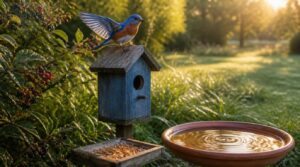
After you’ve planted the shrubs and skipped the pesticides, food and water seal the deal. Bluebirds nest where meals come easy and a clean drink is close by. Here’s what to set out.
Live Mealworms
Nothing pulls in a bluebird faster than a wriggling live mealworm. These larvae pack real nutritional punch—protein and fat that fuel egg-laying and fledgling feeding alike.
| Mealworm Trait | Detail |
|---|---|
| Larval size | ~2.5 cm |
| Lifecycle stage fed | Larva (pre-pupal) |
| Daily limit | 15 per bird |
| Color | Creamy white to tan |
| Feeding frequency | Adjust with brood size |
Keep portions modest—overfeeding risks calcium deficiency.
Bluebird-Safe Feeders
Toss mealworms in an open dish and you’ll feed every grackle in the county before a single bluebird shows up. Skip that.
Use domed or platform feeders with high walls to block bigger birds while keeping the setup visible enough for bluebirds to spot easily. Clear panels help you track worm levels without disturbing the feeding station.
Cold Weather Foods
A frozen morning burns more calories than a summer one, so your feeding routine needs to shift with the season.
Offer suet, sunflower hearts, or scrambled eggs during hard cold or wet spells. Dried mealworms work when live ones freeze solid. Bluebirds won’t touch your grain bowl or root veggie scraps meant for stews, so stick to bird feeders stocked for their needs, not yours.
Shallow Moving Water
Still water sits quiet, but moving water sings—and that sound tells insects it’s safe to move in.
Shallow moving water oxygenates fast through turbulence, feeding mayflies and caddisflies that bluebirds hunt. Add rocks or gravel for substrate variety, and let native riparian plants soften the banks. A garden stream or shallow fountain within 50 to 100 feet of your nesting box rounds out the habitat perfectly.
Birdbath Cleaning Schedule
A dirty birdbath undoes all that good work fast. In summer heat, refresh water every other day and scrub weekly to fight algae. Cooler months allow weekly cleanings.
Skip soap—use a stiff brush and plain water, or diluted vinegar rinsed thoroughly. Let it dry before refilling, and always rinse nesting boxes and feeders on a similar rotating schedule.
Protect and Maintain Your Bluebird Nesting Box
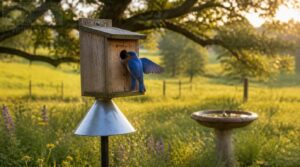
Once your box is stocked with food and water nearby, it’s time to lock down its safety. Bluebirds trust you to keep their nest secure from climbers, sparrows, and old debris. Here’s what to set up and check on a regular basis.
Metal Pole Mounting
Skip wooden posts. Metal pole mounting keeps snakes and cats from climbing up to your nesting box.
- Use a base plate for wind load stability
- Choose corrosion resistant hardware to fight rust
- Set mounting height between 5 and 12 feet
Tighten bolts each spring. Vibration reduction techniques, like locking washers, keep everything snug after storms roll through.
Predator Baffles
Predator baffles turn that pole into a dead end for climbers. Add a stovepipe baffle at least 8 inches wide and 24 inches long, mounted below the box.
Cylinder shapes work best—their slick surface texture stops claws cold. Powder-coated steel lasts 5-10 years outdoors. Check clamps each spring; loose baffles wobble, and wobbly baffles invite trouble.
Noel Guards
Noel guards add a second layer of defense right at the entry hole. This wire mesh collar, made from galvanized steel, keeps raccoons and squirrels from reaching in even after they climb past your baffle.
Mount it flush against the hole with screws so wind can’t shift it. Check the mesh each spring for bent spots or teeth marks, and tighten loose hardware right away.
House Sparrow Control
House sparrows are the toughest threat you’ll face, cutting bluebird occupancy by up to 60% where they compete. Your best defenses:
- Entrance hole sizing at 1.5 inches
- Daily nest checks
- Nest removal every 10-12 days
- Van Ert traps for active sparrows
- Sealed box for a week after trapping
Predator decoys and reflective deterrents help too—rotate them weekly so sparrows don’t adapt.
Nest Box Cleaning
Cleaning out the box each fall keeps parasite loads low and boosts nesting success rates next spring. Wear gloves, use a stiff brush, and boil water for sterilization—skip soaps entirely.
| Do | Don’t |
|---|---|
| Boil water | Use pesticides |
| Clean fall/winter | Clean mid-nesting |
| Dry in sun | Reinstall damp |
| Check yearly | Ignore parasites |
Frequently Asked Questions (FAQs)
How to attract bluebirds to a nest box?
Bluebirds won’t fall for a rusty coffee can nailed to a fence post. Give them a real bluebird nesting box with proper orientation, open foraging ground nearby, correct spacing, and solid predator guards — that’s the setup that actually works.
Why are Bluebirds not using my nest box?
Empty boxes often trace back to improper hole sizing, inadequate interior space, or poor site visibility. Check nesting box placement, add predator guards, and verify entrance hole size matches species needs.
Also watch for invasive species competition—monitoring the box regularly helps you catch problems early.
Do Bluebirds nest despite old nesting material?
Yes, thanks to strong site fidelity, but they’ll build fresh on top rather than reuse old nests. Parasite accumulation hurts fledgling survival, so cleaning nesting boxes between broods still matters, even for loyal returning pairs.
How do Bluebirds build nests?
He gathers, she builds: as cavity nesters, bluebirds work as a team on nesting sites. The male delivers grasses and pine needles; the female shapes a nest cup, layering coarse twigs outside, soft feather insulation inside your bluebird nesting box.
How to encourage bluebirds to nest?
Set up your bluebird nesting box in early spring, spaced 100 yards apart in open habitat. Face it southeast, add nearby perches, and skip pesticides. These simple habitat attraction strategies bring foraging pairs back season after season.
How do you attract bluebirds to nesting boxes?
Picture an open meadow with clear flight paths and morning sun. That’s perfect yard visibility for a bluebird nesting box: 5-6 feet high, southeast facing, spaced 100 yards apart, with predator guards and sparrow control during spring setup.
What month do bluebirds lay their eggs?
Southern bluebirds start laying as early as February, while northern and mountain species wait until March or April. Regional climate drives this window—expect eggs through June, with incubation lasting 12 to 14 days before hatching.
Why won’t bluebirds use nest boxes?
An empty box usually points to improper hole sizing, poor microclimate control, or unsuitable habitat density.
Invasive species competition and ineffective predator deterrents also drive bluebirds off, so check nestbox design, placement, and predator protection before assuming your nesting sites are simply unlucky.
How often should bluebird nest boxes be cleaned?
Clean nestboxes after each brood fledges, roughly two to three times per season, then give them a fall cleaning too. Scrub with safe soap, remove old nests, and check for parasites to prevent disease in your avian habitat.
Can bluebirds coexist with other bird species nearby?
Yes — like neighbors sharing a fence line. Territorial spacing of 100 yards reduces competition, letting bluebirds, tree swallows, and chickadees practice nesting niche partitioning.
Diverse cavity nesters achieve stable multi-species occupancy when boxes are spaced thoughtfully and habitat offers each species room to nest.
Conclusion
Small steps, steady rewards: that’s the quiet truth behind how to attract bluebirds nesting box success. The 1.5-inch hole, the open yard, the mealworms at dawn—none of it’s complicated, but all of it matters. Skip a step, and sparrows move in instead.
Get it right, and you’ve built more than a box. You’ve built a safe nursery for a species that trusts very few yards. Watch closely this spring. They’re already looking.
- https://nestwatch.org/blog/round-versus-slot-entrances-new-study-says-go-round
- https://www.virginiabluebirds.org/nest-boxes-guards-signs
- https://nesthollow.com/best-predator-guard-bluebird-houses-nest-boxes
- https://www.perkypet.com/articles/how-to-attract-bluebirds
- https://michiganbluebirds.org/about-bluebirds/feeding-bluebirds