This site is supported by our readers. We may earn a commission, at no cost to you, if you purchase through links.

Last Tuesday, a perfectly healthy cardinal stopped visiting my patient’s feeder. Three days later, they found it dead beneath the perch—its crop full of moldy sunflower seeds. This scenario plays out in backyards more often than most bird lovers realize.
Mold doesn’t just spoil your seed investment; it produces mycotoxins that can kill birds within 48 hours of exposure.
The good news? You can prevent mold in bird food with the right feeder design, smart seed selection, and a simple maintenance routine. Understanding where moisture sneaks in—and how to stop it—means the difference between nourishing your feathered visitors and inadvertently poisoning them.
Table Of Contents
Key Takeaways
- Mold produces mycotoxins that can kill birds within 48 hours, making prevention through proper feeder design, seed selection, and maintenance routine essential for bird safety.
- Moisture above 70% humidity combined with warmth and poor air circulation creates ideal mold conditions, so choose mold-resistant seeds like black oil sunflower and feeders with drainage holes and ventilation gaps.
- Clean feeders every 1-2 weeks in summer and every 2-4 weeks in winter using bird-safe solutions like vinegar or mild soap, never bleach, to remove mold before it spreads.
- Store bird seed in airtight containers in cool, dry locations below 60% humidity, inspecting regularly for clumps, off-odors, or discoloration that signal mold growth.
Why Mold Grows in Bird Food
Mold doesn’t just appear out of nowhere—it needs specific conditions to take hold in your bird feeders. Understanding what creates these conditions helps you stay one step ahead of potential health risks for your feathered visitors.
Preventing mold starts with choosing fresh, quality seeds that are less likely to harbor moisture and fungal spores from the start.
Let’s look at the key factors that turn fresh bird food into a breeding ground for mold.
Moisture is the biggest culprit, especially when combined with foods you should never give your birds that spoil quickly in humid conditions.
Conditions That Promote Mold
Mold growth thrives when three conditions converge: moisture, warmth, and poor air circulation. When humidity levels climb above 70%, you’re creating a fungal playground.
If you store bird food in damp areas, check out these bird supply food storage ideas to keep moisture-loving mold from ruining your stash.
Temperature fluctuations cause condensation on seed surfaces, and trapped moisture turns quality seed into moldy feeders within 24 to 48 hours.
Without proper ventilation, even premium seed quality won’t protect your birds from moldy seed hazards.
Risks Mold Poses to Birds
When that fungal contamination reaches your feeder, bird health pays the price. Toxic effects from mycotoxins can trigger avian diseases you don’t want visiting your backyard.
Watch for these warning signs of mold poisoning:
- Sudden weight loss despite regular feeding
- Drooping, dull feathers indicating compromised avian health
- Respiratory issues like wheezing or labored breathing
- Decreased alertness and unusual lethargy
- Bird mortality in extreme mold exposure cases
Mold prevention protects lives.
Common Types of Bird Food Prone to Mold
Not all seeds carry equal risk. Cracked corn tops the moldy seed types list—it absorbs moisture fast when humidity climbs above 60%. Suet and shelled peanuts follow close behind, especially in warm storage. Mixed blends containing millet invite fungal growth factors if kept damp. Fresh fruit pieces? They’re high-risk ingredients that spoil within hours.
Your mold prevention strategy starts with choosing wisely.
Choosing Mold-Resistant Bird Food and Feeders
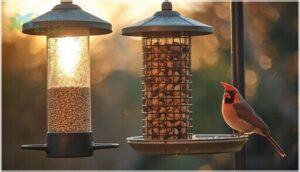
You can’t control the weather, but you can control what you put in your feeders. The right combination of seed types and feeder designs creates a hostile environment for mold growth.
Let’s look at the specific choices that keep your birds safe and your feeders clean.
Start by choosing bird cage accessories designed for enrichment that make regular cleaning easier while keeping your birds engaged and healthy.
Best Seed Types for Mold Prevention
You’ll want to focus your seed selection on varieties that naturally resist mold. Black oil sunflower seeds offer excellent mold prevention due to their hard shells and lower moisture content. Nyjer seed stays fresher when stored properly, while white proso millet dries quickly between feedings.
These choices support bird nutrition while keeping moldy seed at bay through smart storage methods and quality control.
Selecting Feeders With Proper Drainage
Water management starts with the right feeder design. You’ll need drainage systems that channel moisture away from seed storage areas effectively.
Look for these critical features in mold prevention feeders:
- Integrated drainage holes positioned at the base to release trapped water
- Ventilation design with gaps that promote airflow without exposing seeds to rain
- Sloped surfaces that prevent pooling and accelerate drying after wet weather
Materials That Resist Mold Growth
Stainless steel feeders outperform wood in mold prevention strategies. They resist microbial colonization better than porous materials that trap moisture.
UV stabilized plastics won’t crack or harbor mold colonies over time. Ceramic surfaces with antimicrobial coatings reduce surface growth by up to 60 percent.
Choose mold resistant materials with non-porous finishes for effective feeder maintenance and lasting moisture control against moldy feeders.
Proper Placement and Maintenance of Bird Feeders

Where you hang your feeder matters just as much as what you put in it. The right spot keeps seed dry and fresh, while the wrong location turns your feeder into a mold factory within days.
Let’s look at three key strategies that protect your birds and your investment.
Optimal Feeder Placement to Reduce Moisture
Think of your feeder’s location as its first line of defense. Place feeders in shaded areas during peak afternoon sun—ideally on elevated perches 3–4 feet above ground. This simple feeder maintenance step improves air flow management and moisture control.
Position feeders at least 10 feet from dense vegetation to improve ventilation and drainage. Proper sun protection creates natural moisture barriers that safeguard your birds’ health.
Using Weather Guards and Baffles
Weather protection starts with the right equipment. Install baffles above your feeders to deflect rain and create an air gap that prevents splash. Choose guard materials like powder-coated metal or UV-stable plastics—they resist corrosion and last longer.
Feeder shields covering 60% of the opening block direct precipitation effectively. This baffle installation strategy is essential for mold prevention and proper outdoor maintenance.
Managing Seed Quantity and Refilling Practices
Refill strategies make all the difference in mold prevention. You’ll want to add only what birds consume in 2–3 days—overfilling traps humidity and accelerates mold growth.
Check seed quality before each refill and toss any clumped or damp portions. Plan your refill scheduling on dry days with low humidity to maintain ideal seed storage conditions and protect bird food from contamination.
Cleaning and Disinfecting Feeders Effectively
Keeping your feeders clean isn’t just about appearances—it’s the single most important step you can take to protect birds from harmful mold and bacteria.
Cleaning feeders isn’t about appearances—it’s the single most important step you can take to protect birds from harmful mold and bacteria
The good news is that with the right approach and safe cleaning solutions, you can maintain a healthy feeding station without much hassle.
Here’s what you need to know about proper cleaning techniques, bird-safe disinfectants, and how often to clean based on the season and feeder style you’re using.
Step-by-Step Feeder Cleaning Process
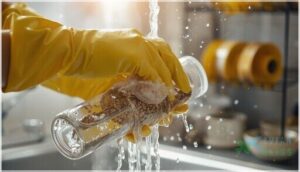
Cleaning feeders isn’t complicated, but it requires attention to detail. Regular feeder maintenance prevents mold before it becomes a health threat to your backyard birds.
Follow these cleaning techniques for effective mold removal:
- Empty completely – Discard all damp or spoiled seed to eliminate mold sources.
- Rinse thoroughly – Use warm running water to remove loose debris and seed purification begins.
- Scrub surfaces – Apply brush to corners, seams, and feeding ports for proper feeder sanitation.
- Rinse again – Remove all residue before air-drying.
- Inspect carefully – Check for damage that compromises mold prevention strategies.
Establish cleaning schedules based on weather conditions and usage.
Safe Cleaning Solutions for Birds
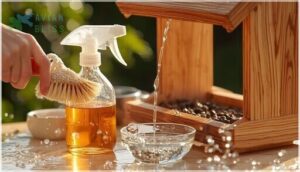
Once you’ve scrubbed your feeders, you need the right cleaning solutions. Mild soap with water works well for routine cleaning—just rinse thoroughly.
Vinegar solutions (equal parts with water) offer bird-friendly disinfection without harsh chemicals. Hydrogen peroxide at 3% concentration provides effective sanitizing power.
Skip bleach solutions entirely—they leave residues that harm birds. These non-toxic cleaners guarantee safe, thorough mold prevention strategies.
Cleaning Frequency by Season and Feeder Type

Now that you’ve chosen safe cleaners, timing matters just as much. Your feeder maintenance schedule depends on both weather and feeder design.
Summer humidity demands weekly cleaning and sanitizing to prevent mold growth. In winter, you can stretch it to every two to four weeks. Platform feeders need attention every one to two weeks during wet months, while tube feeders handle biweekly cleaning schedules.
- Clean suet feeders every 1-3 weeks to stop rancidity
- Increase frequency after storms or heavy rainfall
- Watch for condensation inside feeders—it signals immediate cleaning
Safe Storage and Handling of Bird Seed
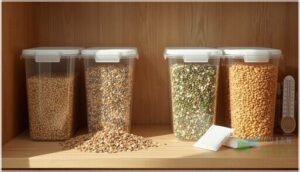
Your bird seed storage habits matter just as much as feeder maintenance regarding preventing mold. Even the cleanest feeder won’t help if you’re starting with compromised seed that’s been sitting in moisture.
Let’s walk through the essential storage practices that keep your bird food fresh and safe from the moment you bring it home.
Airtight Containers and Storage Locations
Your seed storage practices make or break mold prevention. Store bird seed in airtight containers with silicone seals—they block moisture that triggers mold growth. Choose food-grade, BPA-free bins made of sturdy plastic or galvanized metal. Keep containers in cool, dry locations away from direct sunlight.
Transparent storage lets you spot moisture or moldy seed without opening the container and risking contamination.
Inspecting Seed for Freshness
Once your storage practices are solid, you need to check what’s inside those containers. Visual inspection techniques catch problems early—look for clumps, webbing, or off colors. Smell the seed; a musty odor signals mold growth even when it’s invisible. Test seed moisture by squeezing a handful—it shouldn’t feel damp or leave residue.
- Dry seeds appear uniform in color
- Fresh seed has a neutral or nutty scent
- Clumpy texture indicates moisture infiltration
- Discoloration suggests declining seed quality
Toss moldy seed immediately to protect your birds.
Tips for Preventing Moisture During Storage
Beyond choosing the right containers, you need active moisture control to keep seed fresh. Store bird seed in locations where humidity stays below 60 percent—basements and garages often trap dampness.
Raise containers off concrete floors to prevent moisture transfer. Check for leaks or warped lids monthly, replacing any compromised storage immediately.
Good ventilation around your airtight containers creates the dry environment that stops mold growth cold.
Frequently Asked Questions (FAQs)
Can moldy bird food be composted safely?
No, you shouldn’t compost moldy seed. Mycotoxins contaminate finished compost and harm soil health. Seal moldy portions in plastic bags and discard with household waste to prevent fungal toxin release.
Do certain bird species avoid moldy feeders more?
Yes, certain species do show greater mold avoidance. Finches and chickadees, for example, reduce visits to moldy feeders more noticeably than larger seed-eating birds, demonstrating species-specific sensitivity to feeder cleanliness and mold presence.
How does temperature affect mold growth rates?
Mold growth rates increase as temperature rises from freezing to around 25–30°C. Higher humidity levels accelerate mold metabolism even more.
Ideal storage means keeping seed cool and dry to slow this process.
Are there natural mold inhibitors for bird food?
Certain essential oils and plant compounds like cinnamon or clove show antifungal activity in laboratory settings. However, their safety for birds remains unproven, requiring careful toxicological evaluation before use in seed storage or mold prevention.
What attracts pests to moldy bird feeders?
Spoiled seeds release volatile compounds that draw rodents and insects to your feeders. Pest attraction increases as mold spores spread, creating ideal conditions for rodent infestation and insect attractants seeking decomposing food sources.
Conclusion
Think of your feeder as a life raft—what you stock it with determines whether birds thrive or sink. Every moldy seed is a slow-acting poison, but you now control the variables: drainage, placement, cleaning schedules, and airtight storage.
Preventing mold in bird food isn’t complicated; it’s about vigilance. Check your feeders this weekend. Toss questionable seed. Your cardinals, finches, and jays depend on you making the right call before it’s too late.