This site is supported by our readers. We may earn a commission, at no cost to you, if you purchase through links.
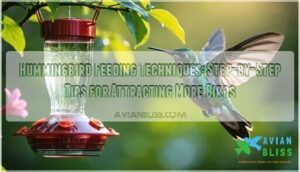 With the right hummingbird feeding techniques, you’ll make your yard the go-to hangout for these quick-winged wonders. Place feeders where birds feel safe from predators and curious cats, maybe under a leafy branch with a good vantage point. Use a sugar-water blend—four parts water, one part sugar—and skip honey or sweeteners.
Clean the feeder often, especially in hot weather, or mold and ants will crash the party. Field researchers say saucer-style feeders are easy to maintain and let you spot nectar levels at a glance.
Curious which kind of native flowers give hummingbirds an extra reason to stick around?
Table Of Contents
- Key Takeaways
- Choosing The Best Hummingbird Feeder
- Where and When to Place Feeders
- Making and Maintaining Perfect Nectar
- Cleaning and Maintaining Feeders Properly
- Attracting and Supporting Hummingbirds Year-Round
- Frequently Asked Questions (FAQs)
- How many hummingbird feeders do I Need?
- How do hummingbird feeders work?
- Can you use a hummingbird feeder?
- Do hummingbirds eat a stable feeder?
- What should you look for when buying a hummingbird feeder?
- How do you care for a hummingbird feeder?
- Do hummingbirds prefer feeding alone or in groups?
- What time of day do hummingbirds feed most?
- How do hummingbirds find new feeders in the area?
- Can too much sugar in nectar harm hummingbirds?
- Conclusion
Key Takeaways
- Place feeders where hummingbirds feel safe, with some shade and away from predators or dense brush.
- Mix nectar with four parts water to one part white sugar, and keep feeders clean to prevent mold and insects.
- Choose feeders with bee guards and ant moats, and pick easy-to-clean styles for hassle-free maintenance.
- Add native flowers around your yard and space out multiple feeders to cut down on territorial fights.
Choosing The Best Hummingbird Feeder
You’ll want to select a hummingbird feeder that matches their feeding patterns and helps prevent insect problems. Field observations show that features like bee guards, ant moats, and easy-to-clean materials make a big difference in attracting more birds safely.
Feeder Styles and Materials
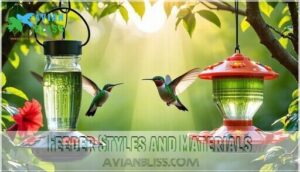
When choosing hummingbird feeders, think about Glass vs. Plastic, Feeder Capacity, Material Safety, and Feeder Design. Field observations show birds prefer:
- Nectar Visibility for easy foraging
- Durable glass for heat resistance
- Lightweight plastic for busy gardens
- Saucer-style for simple cleaning
Providing a feeder can help boost their natural nectar supply. Mix feeder placement and multiple feeding stations to boost visitor numbers and bird comfort.
Importance of Bee Guards and Ant Moats
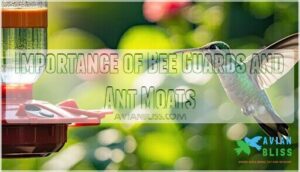
After picking your feeder style, think about bee guard types and ant moats. Bee guards block insects, letting only hummingbirds reach the nectar.
Moat effectiveness depends on keeping the water filled—ants hate swimming. Ant prevention works best with ant guards or ant moats, boosting nectar protection.
Field studies show insect control keeps feeders cleaner and hummingbirds coming back.
Selecting Feeders for Easy Cleaning

After checking bee guards and ant moats, don’t overlook feeder disassembly. Go for feeders with wide-mouth openings and simple design—makes cleaning so much easier. Durable materials endure repeat scrubbing and weather changes.
If cleaning tools reach every corner, mold doesn’t stand a chance. Clean your hummingbird feeder often; well-kept feeders really bring in the birds.
Where and When to Place Feeders
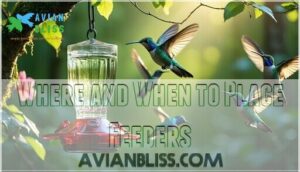
You’ll want to monitor hummingbird behavioral patterns in your area to align feeder placement with peak feeding activity and seasonal changes.
Choose locations with partial shade and open visibility to minimize predator risk and support safe, reliable visits.
Optimal Feeder Placement for Safety and Attraction
After picking the right hummingbird feeder, location matters just as much. Find a spot that offers easy access for the birds—high enough to thwart predators but not lost in dense leaves. Sprinkle in some sun exposure and guarantee great visibility factors.
This way, you’ll boost feeder safety and attract more hummingbirds, even when territorial considerations come into play.
Timing Feeder Setup for Seasonal Activity
Placing feeders isn’t just about the spot—it’s about the season. Stay alert to Seasonal Migration Patterns and Regional Timing Differences.
Use First Arrival Dates for your area as a guide. Set feeders out before migration peaks, and delay Fall Feeder Removal if you spot a winter hummingbird.
Year-Round Feeding aids stragglers during off-peak migration and cold snaps.
Avoiding Common Placement Mistakes
Let’s shift from seasonal timing to feeders’ real estate. Hummingbird feeders need smart placement for a safe, inviting feeding environment. Keep these points in mind:
- Maintain easy access and predator avoidance by elevating the feeder near shade but away from dense brush.
- Prevent window collision with distance or decals.
- Solve territorial conflicts by spacing feeders apart.
Hummingbirds thrive on careful field observations.
Making and Maintaining Perfect Nectar
You’ll need to mix nectar with the right sugar-to-water ratio to match what hummingbirds find in flowers.
Regular cleaning and careful observation help you prevent mold and keep the solution fresh for visiting birds.
Homemade Nectar Recipe and Sugar Ratios

Plenty of field studies show hummingbirds favor nectar with a concentration near 20–25% sucrose.
Your best homemade nectar recipe uses four parts water to one part plain white sugar—no honey or artificial sweeteners. Stick with this tried-and-true formula.
Avoid “natural alternatives” and skip safe additives. Simplicity keeps your hummingbird nectar just like nature’s original recipe.
How to Keep Nectar Fresh in Different Weather
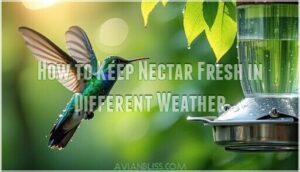
Every type of weather hits nectar differently. Temperature Impact Nectar is real—hot weather spoils it quickly, so stash feeders in Shady Locations. At higher altitudes, nectar stays fresh longer, but don’t relax; even cool weather means regular changes.
Use Seasonal Nectar Adjustments, check for Weather Nectar Spoilage, and remember, Cleaning Feeders is your ace against stale Hummingbird Nectar. To prevent mold, rinse feeders often.
Preventing Mold and Bacterial Growth
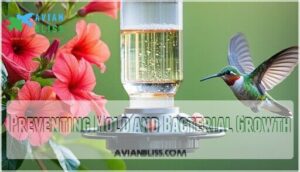
When temperatures swing, microbes thrive, so don’t skip your regular maintenance schedule. Stick with safe materials for all your cleaning. Use proven Cleaning Solutions paired with effective Disinfecting Methods for reliable Mold Prevention and Bacteria Control.
Routine cleaning feeders stops gunk fast. Field studies show feeder maintenance prevents harmful blooms and keeps your visitors healthy. Always prevent mold buildup.
Cleaning and Maintaining Feeders Properly
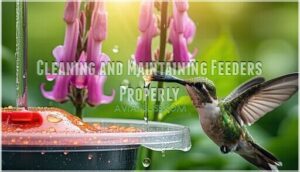
You’ll see the healthiest hummingbird flocks when you keep feeders clean and well maintained. Regular sanitation reduces mold and bacteria growth, helping prevent disease transmission during peak feeding activity.
Keeping your hummingbird feeders clean and maintained is the surest way to support a healthy, thriving flock
Cleaning Frequency for Hot, Mild, and Cool Weather
Weather impact shapes cleaning routines for feeders. In hot weather, clean daily or every other day to stay ahead of mold and bacteria. During mild stretches, every three days is enough. Cool weather lets you stretch cleaning to twice a week.
Monitor local temperature thresholds and regional variations; seasonal adjustments in feeder maintenance keep nectar safe and birds healthy.
Safe Cleaning Materials and Disinfecting Methods
After sticking to a cleaning schedule, you’ll want to use the right gear. Reach for these five steps:
- Wash with safe soap types, avoiding harsh scents.
- Use disinfectant solutions like white vinegar.
- Rinse thoroughly to prevent mold.
- Dry using air or a paper towel.
- Inspect for bird droppings or insects before refilling.
Preventing Insect and Predator Problems
Predator deterrents and safe barriers make a difference for hummingbird health. Try ant guards, bee guards, and ant moat maintenance to keep ants and wasps away. Avoid insecticide alternatives—natural repellents like mint and clean water in ant moats protect birds.
Place feeders far from dense branches to discourage ambush predators and stay alert for changing behavioral patterns during the season.
Attracting and Supporting Hummingbirds Year-Round
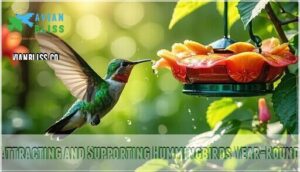
You can keep hummingbirds visiting in every season by using a mix of nectar feeders, native flowering plants, and safe foraging zones based on field studies.
Observing their foraging and migration behaviors lets you fine-tune your setup, so these birds stay active around your home year-round.
Planting Native Flowers for Natural Food Sources
Keeping hummingbirds healthy isn’t just about clean feeders. You also want to plant native flowers for steady hummingbird food sources. Native Plant Selection supports insect populations, giving birds protein. Aim for Year-Round Blooms, since Natural Nectar Preference drives their visits.
Try these steps:
- Research local native plants
- Mix bloom times
- Limit pesticides
- Group flowers together
- Welcome wild insects
Providing Safe, Sheltered Feeding Environments
After planting native flowers, think about safe feeding environments too. Put your hummingbird feeders in shady spots, not out in blazing sun. Choose open access—avoid placing feeders near dense shrubs where surprise predators might lurk.
Height placement matters: hang feeders high enough for safety, but within reach for cleaning. Try ant guards to keep nectar clean. Shade helps with weather protection, too.
Strategies for Multiple Feeders and Territorial Birds
A turf war can break out at hummingbird feeders, but you can keep the peace. For attracting hummingbirds and promoting territory management, try these strategies:
- Space feeders a few feet apart for effective feeder spacing.
- Use distraction techniques by placing feeders out of sight.
- Add multiple feeders for dominant birds.
- Rotate spots to mix up bird dominance during hummingbird feeding.
Frequently Asked Questions (FAQs)
How many hummingbird feeders do I Need?
Let’s not put all your eggs in one basket—start with two feeders, spread them apart, and watch hummingbirds’ territorial instincts reduce conflict.
Field studies show this helps accommodate more birds and reduces aggressive competition for nectar.
How do hummingbird feeders work?
You fill a hummingbird feeder with sugar water that mimics flower nectar. Birds hover by, insert their tongues deep into feeding ports, and draw liquid up by capillary action, repeating this fast, like tiny sipping machines.
Can you use a hummingbird feeder?
Think of your yard as a scientist’s lab and the feeder as an essential field tool.
You can use a hummingbird feeder—just hang it securely, keep nectar fresh, and clean it regularly for healthy visitors.
Do hummingbirds eat a stable feeder?
You’ll see hummingbirds happily visit a stable feeder if they find it reliable and well-stocked.
They don’t care if it swings or stands firm—they just want easy access, clean nectar, and a safe spot nearby.
What should you look for when buying a hummingbird feeder?
Choose a feeder with bee guards and an ant moat, focus on easy cleaning, and look for designs with red accents.
Place it somewhere shady and safe from predators, so your hummingbirds feel both secure and welcome.
How do you care for a hummingbird feeder?
Imagine your feeder as a laboratory test site—clean it with fragrance-free soap, rinse well, and dry thoroughly.
In warm weather, swap nectar every two days; cooler weather lets you stretch that maintenance to twice weekly.
Do hummingbirds prefer feeding alone or in groups?
You’ll usually spot hummingbirds feeding alone, fiercely defending their turf like little feathered warriors.
It’s rare to see them eating together—group feeding often leads to squabbles as they’re pretty serious about personal space.
What time of day do hummingbirds feed most?
You’ll spot hummingbirds feeding most at dawn and dusk, when flower nectar is freshest and the competition is fierce. Early risers get the best food, but evening brings a lively dash for energy before nightfall.
How do hummingbirds find new feeders in the area?
Even the shiest hummingbird acts like a tiny scientist, tracing the air for flower-like colors and sweet scents.
You’ll see them zip in, test new feeders, and remember rich nectar spots using sharp, well-tuned memories.
Can too much sugar in nectar harm hummingbirds?
Too much sugar in nectar might look like a quick energy fix, but hummingbirds need balance. Overly sweet mixtures can cause dehydration and digestive stress, so stick to about 20–25% sucrose for healthy birds.
Conclusion
Like a well-tuned orchestra, effective hummingbird feeding techniques blend science and observation. When you use proper nectar ratios and keep feeders clean, you help hummingbirds thrive. Place feeders away from predators and consider native flowers to support natural foraging behaviors.
Watch for territorial squabbles and adjust feeder locations as needed. These small actions foster healthy communities. Careful attention transforms your garden into a field laboratory where you observe, learn, and encourage these fascinating species season after season.
- https://www.pnas.org/doi/10.1073/pnas.1016944108
- https://academic.oup.com/iob/article/1/1/oby006/5267482
- https://pmc.ncbi.nlm.nih.gov/articles/PMC10112966/
- https://tpwd.texas.gov/publications/nonpwdpubs/introducing_birds/hummingbirds/
- https://www.audubon.org/magazine/where-do-hummingbirds-get-all-energy