This site is supported by our readers. We may earn a commission, at no cost to you, if you purchase through links.
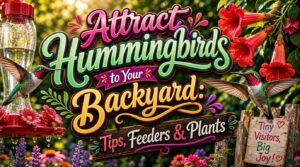
A hummingbird hovers at eye level for maybe three seconds before vanishing—wings beating 50 times per second, heart racing at 1,200 beats per minute. Miss it, and you’ll wonder if it was even real. The good news? Once you crack the code on what these tiny birds actually want, they stop being rare sightings and start becoming regulars.
Most backyards already have the bones of a great hummingbird habitat—they just need a few smart tweaks. The right feeder placement, a simple homemade nectar recipe, and a handful of native plants can turn your yard into a spot they return to all season long.
With these adjustments, your outdoor space transforms from a fleeting glimpse into a reliable haven for these dazzling creatures.
Table Of Contents
- Key Takeaways
- Choose The Best Feeder Location
- Make Safe Hummingbird Nectar
- Plant a Nectar-Rich Backyard
- Add Water, Perches, and Protection
- Top 10 Hummingbird Attraction Products
- 1. Kaytee Hummingbird ElectroNectar Food
- 2. Sapphire Labs Hummingbird Nectar Defender
- 3. First Nature Red Hummingbird Feeder
- 4. Aspects HummZinger HighView Hummingbird Feeder
- 5. Aspects Jewel Box Window Hummingbird Feeder
- 6. Mademax Solar Bird Bath Fountain
- 7. HG Lifestyles Brass Patio Misting Kit
- 8. Zoo Med Big Dripper Rainfall Simulator
- 9. Pops Birding Vintage Copper Hummingbird Swing
- 10. Nature Best Hope Yard Conservation Book
- Frequently Asked Questions (FAQs)
- How do I get hummingbirds to come to my feeder?
- How long does it take hummingbirds to find a new feeder?
- Why are the hummingbirds not coming to my feeder?
- Should a hummingbird feeder be in the sun or shade?
- How long does it take hummingbirds to find feeders?
- Do hummingbirds remember and return to same feeders?
- What time of day are hummingbirds most active?
- Can multiple hummingbird species share the same feeder?
- Should feeders be taken down during rainy weather?
- How do I attract hummingbirds during migration season?
- Conclusion
Key Takeaways
- Hang your feeder 5–6 feet up in partial shade, spaced 10–15 feet from others, so hummingbirds feel safe and don’t fight over territory.
- Stick to a simple 1:4 white sugar-to-water mix — skip honey, food coloring, and sweeteners, and swap the nectar every 2–5 days depending on the heat.
- Native tubular flowers like cardinal flower and penstemon, timed to bloom from spring through fall, give hummingbirds a reason to keep coming back even when feeders run dry.
- Add moving water, a perch or swing, and an ant moat — and ditch the pesticides — to turn your yard into a place hummingbirds actually want to stay.
Choose The Best Feeder Location
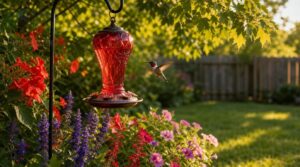
Where you hang your feeder matters more than most people realize. Hummingbirds are picky about their dining spots — and getting the placement right means the difference between daily visits and an empty feeder.
Even small tweaks — like shade, height, and distance from windows — can make a surprising difference in how often hummingbirds visit your feeder.
Here’s what to keep in mind.
Ideal Feeder Height
Hang your hummingbird feeder 5 to 6 feet above ground, which is the ideal height for flight corridor clearance and easy viewing from your patio. This positioning balances accessibility with safety.
Adjustable pole systems simplify seasonal height adjustments, particularly as nearby shrubs grow. These systems allow effortless tuning to maintain optimal placement throughout the year.
Raise the feeder slightly during windy conditions to enhance stability and preserve a safe ground clearance buffer. This proactive adjustment ensures consistent feeding access despite weather fluctuations.
Distance From Shrubs
Once you’ve achieved the correct height, focus on the surrounding area. Aim for 6–12 feet of flight path clearance from nearby shrubs—this creates a predator buffer zone. If the feeder is too close, cats or hawks may use these perching and hiding areas to ambush visitors.
Seasonal shrub spacing also matters; trim back in summer when growth is dense to maintain this critical distance.
Shade and Visibility
Shrub distance handled — now think about light. A feeder baking in full afternoon sun speeds up fermentation fast. Aim for that sweet spot: morning sun, afternoon dappled shade.
Smart bird feeder placement means:
- 60–80% shade coverage — not total darkness
- Red and bright colors stay visible with contrast lighting
- Shade sail placement cools multiple feeders at once
- Seasonal light mapping keeps visibility strong year-round
Safe Window Placement
Window placement is where things get tricky. Keep that feeder window gap tight — 6 to 12 inches from the glass — so birds don’t build up dangerous speed. Add glass markings or collision deterrents like UV decals for bird-safe windows.
Secure mounting matters too; skip suction cups. A clear approach path and bird-friendly lighting round out solid window collision prevention.
Multiple Feeder Spacing
Hummingbirds are fiercely territorial — one bird will guard a single feeder like it owns the yard. That’s why multiple feeding stations with smart distance optimization matter.
Hummingbirds guard a single feeder like it owns the yard, so multiple stations are essential
Space feeders 10–15 feet apart, use vertical tiering at different heights, and try zone separation around corners. These strategies reduce direct competition and mimic natural foraging patterns.
Feeder rotation and territorial reduction tactics help maintain peace, while habitat connectivity across your yard welcomes more visitors naturally. This approach balances individual dominance with communal access to resources.
Make Safe Hummingbird Nectar
Getting the nectar right is honestly one of the most important things you can do for your hummingbirds. The wrong ingredients — even well-meaning ones — can make them sick or drive them away for good.
Here’s exactly what you need to know to make nectar that’s safe, fresh, and irresistible.
Correct Sugar Water Ratio
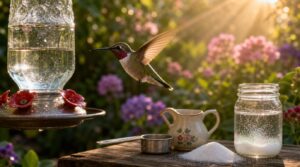
The magic number for your DIY nectar recipe is simple: 1 part white sugar to 4 parts water — that’s your sugar solution ratio. This sugar water recipe hits the sweet spot for ratio accuracy without risking fermentation. Stir until dissolved. Then cool completely.
Temperature effects matter here — warm nectar ferments fast, so your dilution guidelines stay consistent year-round.
Be sure to replace nectar every few days to prevent bacterial growth.
Ingredients to Avoid
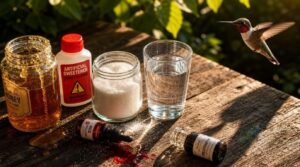
Some ingredients can quietly poison your homemade hummingbird nectar — and they’re probably already in your kitchen. Skip the honey, syrups, artificial sweeteners, and food coloring entirely. Metal container leaching and chemical preservatives are just as risky. Your sugar water recipe only needs one thing: plain white sugar.
- Honey and syrups – ferment fast, harbor fungi
- Artificial sweeteners – zero nutritional value for birds
- Food coloring – irritates birds, attracts pests
- Chemical preservatives – disrupt simple sugar balance
Nectar Storage Tips
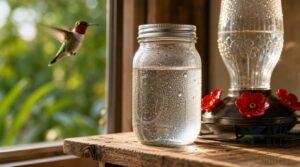
Wasting good nectar by letting it spoil is a waste—hummingbirds will notice. To prevent waste, store sugar water in airtight containers at refrigeration temperatures around 4°C, which keeps it fresh for up to seven days. Store in small batches and follow a rotation schedule to maintain quality.
A maintenance schedule ensures freshness:
| Condition | Replace the Nectar | Clean Your Feeders |
|---|---|---|
| Cool weather | Every 4–5 days | Every 3–4 days |
| Warm weather | Every 2–3 days | Every 2 days |
| Hot weather | Daily | Daily |
Watch for spoilage signs: cloudiness, foam, or a sour smell. Address these promptly to keep feeders safe for hummingbirds.
Seasonal Nectar Changes
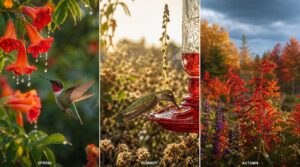
Seasons change your backyard’s nectar landscape more than you’d think. Sugar concentration trends peak early in bloom — often hitting 25–35% — then taper as flowers age or heat spikes hit.
Temperature-driven nectar drops during summer heat waves, and rainfall impacts can dilute what’s left.
Watch for mid-season nectar gaps in late spring, and bump up your sugar water solution slightly stronger (1:3) during cold snaps to compensate.
Cleaning Schedule by Temperature
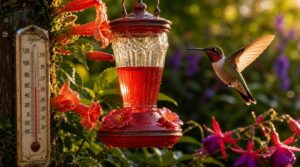
Temperature is basically running your feeder cleaning schedule behind the scenes. The warmer it gets, the faster nectar turns — and that means bacteria moves in fast.
- Below 41°F: clean every 24 hours
- 50–60°F: bump to every 10 hours
- Above 60°F: clean every 6 hours
Use cool-water rinses in summer heat, and calibrate your thermometer regularly so your feeder hygiene routine actually matches real conditions.
Plant a Nectar-Rich Backyard
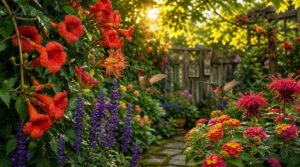
Feeders are great, but nothing beats a yard that works for hummingbirds around the clock. The right plants turn your space into a living buffet — no refills required.
Here’s where to start.
Native Tubular Flowers
If you want hummingbirds showing up reliably, native plants with long tubular flowers are your secret weapon. Their tube-shaped flowers are basically built for hummingbird bills — nectar sits deep inside, perfectly placed.
| Native Species Guide | Seasonal Bloom Sequence | Soil Drainage Needs |
|---|---|---|
| Aquilegia canadensis | Spring | Well-drained, rocky |
| Penstemon digitalis | Late spring–early summer | Average, well-drained |
| Lobelia cardinalis | Mid–late summer | Moist, rich soil |
| Salvia elegans | Late summer–autumn | Well-drained, fertile |
| Jasione montana | Late spring | Sandy, dry |
Taller native flowers like cardinal flower create natural pollinator partnerships while standing out above surrounding foliage. Smart native plant selection ensures blooms from spring straight through fall.
Red and Orange Blooms
Now, color really does matter. Hummingbirds are wired to zero in on red and orange first — it’s just how their eyes work. Early-season bursts from Red Cardinal Flower and Trumpet Vine give them something to find right away.
These long tubular flowers pack nectar sugar levels around 25–40%, fueling the birds efficiently. Heat-tolerant varieties with clustered inflorescences ensure continuous blooms even during brutal summer conditions, making them indispensable for sustained habitats.
This approach exemplifies smart wildlife-friendly landscaping, honestly.
Staggered Bloom Times
Think of it like a relay race — one plant passes the baton to the next. A smart sequential bloom plan means hummingbirds always find something open. Map your spring bloom schedule around early Penstemon, hand off to mid-season bee balm, then let late Salvia carry the finish.
Overlap bloom windows using climate-responsive varieties, and phenology matching does the rest naturally.
Deadheading for Reblooming
Once your regimen is running, keep it going longer with one simple habit: deadhead dying flowers before they set seed. The Pinching Technique—pinching spent blooms right above the next healthy leaf node—redirects Energy Allocation toward fresh buds. Bud Selection matters too; always cut to an outward-facing node for stronger shoots.
- Deadhead weekly during peak bloom for continuous flower bloom times
- Use clean shears at a 45° angle for disease prevention
- Remove entire spent stems on cardinal flower to trigger a new flush
- Apply timing strategies — stop deadheading late summer so plants store energy
- This extends your seasonal planting and pollinator garden display naturally
This practice naturally extends your seasonal planting and pollinator garden display.
Shelter and Perching Plants
Beyond nectar, hummingbirds need a place to land, rest, and hide. Dense evergreen windbreaks block wind and cold, while layered shrub corridors — dogwood, viburnum, native grasses — create safe flight paths between feeders and flowers.
Fern archways and bark texture grips give birds natural perches to preen on.
Groundcover roosts tucked 6–12 feet from feeders complete your wildlife-friendly landscaping.
| Plant Type | Role | Example Species |
|---|---|---|
| Evergreen shrubs | Windbreak and winter cover | Holly, Eastern Red Cedar |
| Mid-layer natives | Layered shrub corridors | Dogwood, Viburnum |
| Ferns | Fern archways and perching | Cinnamon Fern, Ostrich Fern |
| Native grasses | Groundcover roosts | Little Bluestem, Prairie Dropseed |
| Rough-barked trees | Bark texture grips | River Birch, Shagbark Hickory |
Add Water, Perches, and Protection
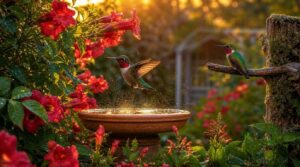
Feeders and flowers get most of the attention, but hummingbirds need a few more things to feel truly at home.
Water source, a safe place to rest, and some basic pest protection can make a real difference in how often they show up.
Here’s what to add to your setup.
Misters and Solar Fountains
Hummingbirds are basically drawn to the sound of running water like a magnet. A solar-powered fountain or mister does the trick beautifully — no wiring needed.
Look for outdoor water features with weather-resistant housing, quiet pump design, and adjustable mist patterns so you control the spray. Good solar panel sizing plus energy storage means it keeps running even on cloudy days.
Shallow Bird Bath Setup
A shallow bird bath — just 1 to 2 inches deep — gives hummingbirds a safe water source without drowning risks. Depth precision really matters here.
Choose cool materials like ceramic or light-colored plastic for algae control and a heat-reflecting surface.
A texture rim and stable base keep things safe and steady.
Position it near your fountain or outdoor water features for maximum visits.
Hummingbird Swings and Perches
Think of a hummingbird swing as their favorite armchair — a spot to pause, survey the yard, and recharge between feeder visits. Set swing height at 5 to 8 feet for the best balance of visibility and safety.
For hummingbird perches, perch texture matters: rough wood or corrosion-resistant materials keep tiny feet from slipping.
Space perches 1 to 3 feet from your feeder using a smart perch spacing strategy, and position guard perch spots with a clear sightline — perfect for birdwatching and garden bird feeding.
Ant Moats and Bee Guards
Ants and bees crashing the nectar party? An ant moat fixes that fast. Fill it with plain water — your simplest moat water type — and hang it directly above the feeder hook as your ant barrier. Adjust Barrier Height Settings to ensure nothing bridges the gap.
Bee Guard Mechanics work alongside, blocking bee-proof feeding ports. This dual system prevents unwanted visitors while allowing birds access.
Check the moat water weekly; Seasonal Moat Adjustments and regular Cleaning Moat Components keep your ant deterrent running smoothly. Replace evaporated water promptly and scrub components monthly to prevent residue buildup.
Consistent maintenance ensures long-term effectiveness against pests, protecting your feeder year-round.
Avoid Pesticides and Cats
Skip the pesticides — full stop. Chemicals wipe out the tiny insects hummingbirds rely on for protein, quietly dismantling your wildlife-friendly backyard from the inside out.
For cat predation prevention, mount feeders 5–6 feet up and use Low-Scent Feeders with covered ports. Timed Feeding Sessions at dawn and dusk also help reduce risks.
Maintain Tidy Edge Habitat Cleanliness and install Cat-Proof Barriers to complete your Non-Toxic Pest Management strategy.
Top 10 Hummingbird Attraction Products
The right gear makes a real difference when you’re trying to turn your yard into a hummingbird hotspot.
From feeders and nectar to water features and perches, there are a handful of products that genuinely earn their spot in your setup. Here are ten worth knowing about.
1. Kaytee Hummingbird ElectroNectar Food
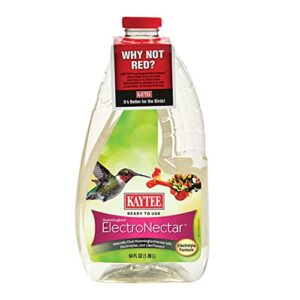
Kaytee ElectroNectar offers a ready-to-use solution for hummingbird enthusiasts, eliminating the need for measuring cups. Available in a 64 oz jug for $9.99, it simplifies feeding with no mixing or guesswork required.
The formula prioritizes quality, featuring a clear, dye-free composition enhanced with electrolytes to support the birds’ energetic lifestyles. Its non-GMO ingredients and USA-made origin ensure reliability, while compatibility with standard feeders guarantees versatility.
Post-opening, refrigeration is essential to maintain freshness. An ant moat is strongly recommended, as the nectar’s sweetness naturally attracts unwanted pests.
| Best For | Hummingbird lovers who want a hassle-free, no-mess feeding setup without the DIY sugar-water routine. |
|---|---|
| Primary Use | Ready-to-use nectar |
| Price | $9.99 |
| Material | Liquid formula |
| Outdoor Suitable | Yes |
| Maintenance Required | Refrigerate after opening |
| Insect/Pest Issue | Attracts ants and bees |
| Additional Features |
|
- Ready to pour straight from the jug — no mixing, no measuring, no fuss
- Clear, dye-free formula with electrolytes that actually supports the birds’ health
- Non-GMO and made in the USA, so you know what you’re putting out there
- At $9.99 for 64 oz, it’s pricier than just making your own sugar water at home
- The sweetness draws in ants, so you’ll likely need an ant moat to keep things clean
- Caps can leak during shipping, and you’ll need fridge space once it’s opened
2. Sapphire Labs Hummingbird Nectar Defender
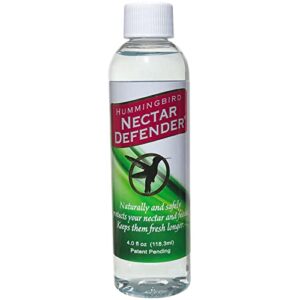
Sapphire Labs Nectar Defender is worth a look if you’d rather stretch your nectar further than replace it every few days. Add a small dash to your standard 1:4 sugar-water mix, and it can keep nectar fresh for up to 14 days — even when temperatures climb into the 90s.
The formula contains no dyes, no artificial preservatives, relying instead on trace minerals that mirror what hummingbirds naturally consume. This approach ensures safety while extending freshness.
At $12.90 a bottle, the upfront cost is a bit more, but the trade-off is real: fewer refills and easier cleanings make it a practical choice for long-term use.
| Best For | Hummingbird enthusiasts in hot climates who want to cut down on constant refills and keep their feeders cleaner with less effort. |
|---|---|
| Primary Use | Nectar preservative additive |
| Price | $12.90 |
| Material | Liquid concentrate |
| Outdoor Suitable | Yes |
| Maintenance Required | Regular feeder cleaning still needed |
| Insect/Pest Issue | Not applicable |
| Additional Features |
|
- Keeps nectar fresh up to 14 days — a real win when summer heat kicks in
- No dyes or artificial preservatives, so you’re not adding anything sketchy to your birds’ food
- Less time refilling and scrubbing means a lower-maintenance feeder setup overall
- $12.90 upfront is steeper than just swapping nectar every few days
- Real-world freshness is often closer to 7–10 days, not the full 14 claimed
- You still need to clean the feeder regularly — this isn’t a skip-cleaning solution
3. First Nature Red Hummingbird Feeder
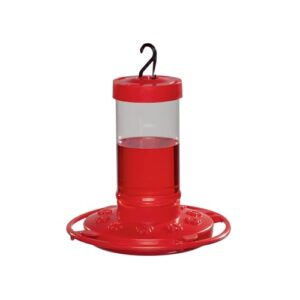
Once your nectar is fresh and ready, you need a feeder that won’t let you down. The First Nature Red Hummingbird Feeder comes in a two-pack, offering instant flexibility to space feeders apart and reduce territorial squabbles.
Each feeder holds 16 oz of nectar across ten feeding ports, providing plenty of room for a small crowd. The wide-mouth reservoir ensures mess-free refilling, while the two-part base twists apart for easy cleaning.
Solid, simple, and built to last, this feeder combines practicality with durability.
| Best For | Backyard birders who want a no-fuss, high-capacity feeder that’s easy to fill, clean, and set up right out of the box. |
|---|---|
| Primary Use | Hummingbird feeder |
| Price | Not listed |
| Material | Durable plastic |
| Outdoor Suitable | Yes |
| Maintenance Required | Hand-wash or dishwasher |
| Insect/Pest Issue | Not bee-proof |
| Additional Features |
|
- Two-pack gives you instant flexibility—space them out to cut down on hummingbird turf wars
- Wide mouth and twist-apart base make refilling and cleaning genuinely quick and painless
- Ten feeding ports mean several birds can eat at once without crowding
- The round feeding holes let bees in, so you may deal with nectar disappearing faster than expected
- The bottom half can be tricky to clean thoroughly, so mold is a real risk if you skip regular upkeep
- Some buyers got feeders with slit holes instead of round ones—worth double-checking what you receive
4. Aspects HummZinger HighView Hummingbird Feeder
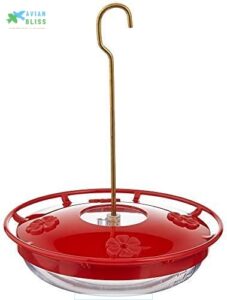
If you want a feeder that lets you actually watch the action, the Aspects HummZinger HighView is something special. Its 360° perch rail gives birds a place to land and linger — which means you get a clear, unobstructed view while they sip.
The built-in ant moat keeps crawlers out, and the bright red lid pulls hummingbirds in from a distance.
At 12 oz with four ports and a dishwasher-safe bowl, it’s low-maintenance and genuinely well thought out.
| Best For | Backyard bird enthusiasts who want a close-up view of hummingbirds and a feeder that’s genuinely easy to keep clean. |
|---|---|
| Primary Use | Hummingbird feeder |
| Price | Not listed |
| Material | Polycarbonate plastic |
| Outdoor Suitable | Yes |
| Maintenance Required | Refill every 3 days in heat |
| Insect/Pest Issue | Ant moat included |
| Additional Features |
|
- The 360° perch rail lets birds settle in, so you can actually watch and identify them up close
- Built-in ant moat and rain overflow keep the nectar clean without extra gadgets
- Dishwasher-safe bowl and removable lid make cleaning quick and hassle-free
- The integrated hook can cause the feeder to tilt if it’s not hung perfectly level
- Nectar needs replacing every few days in warm weather — it ferments fast
- Not great for cold climates; nectar can freeze and the feeder needs to come inside when temps drop below freezing
5. Aspects Jewel Box Window Hummingbird Feeder
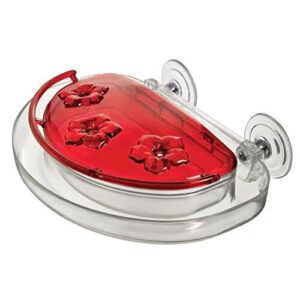
The Jewel Box is designed for optimal viewing, mounting directly to your window with suction cups—eliminating the need for hooks or poles. Its bright red cover naturally attracts birds, doing the "recruiting" for you.
The 8 oz reservoir is intentionally compact, encouraging more frequent nectar refreshes—a practice birds genuinely appreciate. This thoughtful design ensures cleaner, fresher food for your feathered visitors.
Three feeding ports, a wraparound HighView perch, and an optional ant moat complete the setup. These features prioritize accessibility and hygiene, creating a welcoming space for hummingbirds.
Close-up hummingbird watching doesn’t get much easier than this. The Jewel Box transforms your window into a front-row seat for observing these vibrant creatures in action.
| Best For | Anyone who wants a close-up view of hummingbirds without the hassle of poles or hooks—great for homeowners, families, and anyone tight on outdoor space. |
|---|---|
| Primary Use | Window hummingbird feeder |
| Price | Not listed |
| Material | Polycarbonate |
| Outdoor Suitable | Yes |
| Maintenance Required | Frequent refills; keep moat filled |
| Insect/Pest Issue | Ant moat included |
| Additional Features |
|
- Mounts right to your window with suction cups, so you get an up-close look without any special setup
- The red cover does the work of attracting hummingbirds, and the perch lets them stick around longer
- Small reservoir means you’re swapping out nectar more often, which keeps it fresh and healthier for the birds
- Eight ounces fills up fast, so if you get a lot of visitors, you’ll be refilling pretty regularly
- Suction cups need a spotless glass surface to hold well, and they can lose grip in really hot or cold weather
- It costs more than basic window feeders, which might be a stretch if you’re just testing the waters
6. Mademax Solar Bird Bath Fountain
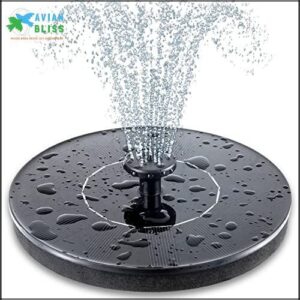
Moving water is like a dinner bell for hummingbirds — and the Mademax Solar Bird Bath Fountain delivers exactly that. At just $16.79, this plug-and-play pump activates within seconds of sunlight, shooting water 50–70 cm high. No wiring, no batteries—simply drop it into your bird bath, let the sun power it, and watch hummingbirds flock to the movement.
The fountain includes eight interchangeable nozzles, allowing you to customize the spray pattern to your liking. Just keep in mind it won’t run on cloudy days, as it relies entirely on solar energy.
| Best For | Gardeners and bird lovers who want an easy, low-maintenance way to attract hummingbirds and keep a small water feature moving without dealing with wires or batteries. |
|---|---|
| Primary Use | Solar bird bath fountain |
| Price | $16.79 |
| Material | Plastic |
| Outdoor Suitable | Yes |
| Maintenance Required | Rinse nozzles periodically |
| Insect/Pest Issue | Not applicable |
| Additional Features |
|
- Starts working within seconds of sunlight — truly zero setup, just drop it in and go
- Eight nozzle options let you switch up the spray pattern whenever you feel like it
- At $16.79, it’s a cheap way to add life and movement to any bird bath or small pond
- Completely stops working on cloudy days or at night since there’s no battery backup
- Can drain smaller basins fast, and the spray may overshoot the edges in full sun
- Reliability is hit or miss — some pumps last months, others quit after just a few days
7. HG Lifestyles Brass Patio Misting Kit
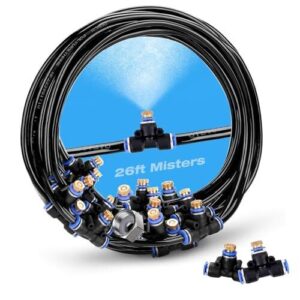
Hummingbirds absolutely love a fine mist — and the HG Lifestyles Brass Patio Misting Kit makes that easy to set up. Eight rust-proof brass nozzles run along 29 feet of UV-resistant tubing, connecting straight to your garden hose.
No pump needed. Just attach, turn on, and let the cool spray do its thing. Position it near your feeders or native plantings for the best results.
Avoid tight bends in the tubing — kinking interrupts flow and reduces your mist coverage.
| Best For | Backyard and patio owners who want a simple, pump-free way to cool down their outdoor space — especially anyone who enjoys attracting hummingbirds or tending a garden. |
|---|---|
| Primary Use | Patio misting system |
| Price | Not listed |
| Material | Polyurethane tubing, brass |
| Outdoor Suitable | Yes |
| Maintenance Required | Unclog nozzles as needed |
| Insect/Pest Issue | Not applicable |
| Additional Features |
|
- Eight brass nozzles put out a consistent, fine mist that can drop the temperature around your patio by several degrees — no extra equipment needed.
- Connects straight to a standard garden hose, so setup takes minutes and doesn’t require any tools or plumbing knowledge.
- UV-resistant tubing and rust-proof brass fittings mean it can live outside all season without falling apart.
- The tubing kinks pretty easily — you’ll need to plan your layout carefully to keep the flow running smoothly.
- Adjusting one nozzle shifts the others since they’re all on the same line, so you can’t fine-tune individual heads without affecting the rest.
- Low water pressure (under 30 psi) can cause clogging, and the quick-connect fittings may drip if the tube isn’t cut perfectly straight or pushed in all the way.
8. Zoo Med Big Dripper Rainfall Simulator
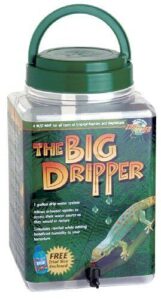
Some birds just won’t drink from a dish — they want rain. That’s exactly what the Zoo Med Big Dripper delivers.
This one-gallon simulator hangs above your garden or enclosure and releases slow, steady droplets that mimic natural rainfall. You can adjust the drip rate to just a few drops per minute, which keeps things gentle and controlled.
Position it over foliage so droplets land on leaves — hummingbirds love sipping directly from wet surfaces, just like they would in the wild.
| Best For | Reptile and amphibian keepers who own species like chameleons, geckos, or frogs that prefer drinking from wet surfaces rather than standing water. |
|---|---|
| Primary Use | Reptile drip waterer |
| Price | Not listed |
| Material | Thin-wall plastic |
| Outdoor Suitable | No |
| Maintenance Required | Monitor drip rate regularly |
| Insect/Pest Issue | Not applicable |
| Additional Features |
|
- Holds a full gallon of water, so you’re not refilling it constantly
- Drip rate is adjustable, giving you real control over moisture levels
- Folds right onto the lid for easy hanging — no extra hardware needed
- The thin plastic cracks easily if dropped, especially when full
- The nozzle and tubing tend to leak or warp over time, which gets annoying fast
- Dialing in the right drip rate takes patience — too loose and you’ve got a flood
9. Pops Birding Vintage Copper Hummingbird Swing
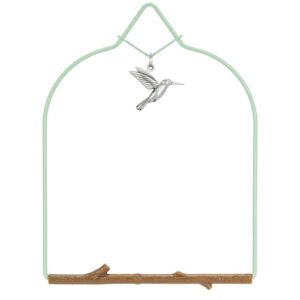
Want hummingbirds to actually linger in your yard? Give them a place to sit. The Pops Birding Vintage Copper Hummingbird Swing does exactly that — its POLYPERCH mimics natural perches, so birds feel comfortable resting between feedings. The handcrafted copper finish develops a beautiful rustic patina over time.
That red glass bead? It acts like a little visual magnet, drawing hummingbirds in. At $22.99, it’s an easy addition near any feeder, measuring roughly 5.25 × 7 inches and lightweight enough to relocate anytime.
| Best For | Bird lovers, gardeners, and gift-givers who want to attract hummingbirds and add a charming decorative touch to their outdoor space. |
|---|---|
| Primary Use | Hummingbird perch swing |
| Price | $22.99 |
| Material | Coated metal wire |
| Outdoor Suitable | Yes |
| Maintenance Required | Check mounting stability |
| Insect/Pest Issue | Not applicable |
| Additional Features |
|
- The POLYPERCH design mimics natural resting surfaces, making hummingbirds feel right at home and encouraging them to stick around longer.
- At $22.99, it’s an affordable, low-effort way to level up any feeder setup — no assembly needed.
- Small and lightweight, so you can move it around until you find the sweet spot.
- Some customers got theirs without the charm accessory, or with a bent attachment ring right out of the box.
- Don’t expect instant results — it can take weeks or even months before hummingbirds start using it.
- A few buyers felt the build quality didn’t quite match the price, especially in windy conditions where extra anchoring might be needed.
10. Nature Best Hope Yard Conservation Book
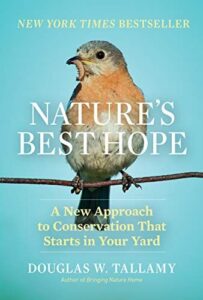
Think of Homegrown National Park as the instruction manual your yard has been waiting for. Doug Tallamy’s Nature’s Best Hope ($16.59, Timber Press) walks you through turning any patch of land—including balconies—into a genuine wildlife corridor. You’ll learn which native oaks, shrubs, and groundcovers feed the insects that feed the birds. At 256 pages, it’s packed with case studies, plant checklists, and seasonal timelines.
Less lawn, more life. It’s that simple.
-based, so readers outside the States may need to do extra homework on local species.
- Getting the right native plants can take some hunting—and a bit of upfront money or effort.
- It’s focused on private property, so it won’t replace bigger conservation or policy work.
| Best For | Homeowners, renters, and families who want to do something real for local wildlife without waiting on politicians or policy changes. |
|---|---|
| Primary Use | Wildlife gardening book |
| Price | $16.59 |
| Material | Paper/print |
| Outdoor Suitable | Yes |
| Maintenance Required | None |
| Insect/Pest Issue | Not applicable |
| Additional Features |
|
- Breaks down native planting into simple, actionable steps anyone can follow—no landscaping degree needed.
- Covers all property sizes, from full yards to tiny balconies, so it’s useful no matter where you live.
- Packed with photos, case studies, and plant lists that make it easy to actually get started.
- Plant recommendations lean heavily U.S.
Frequently Asked Questions (FAQs)
How do I get hummingbirds to come to my feeder?
Getting them to visit is simpler than you’d think. Hang a bright red feeder 6–8 feet up, fill it with fresh 1:4 sugar water, and place it near flowering plants.
How long does it take hummingbirds to find a new feeder?
Most hummingbirds find a new feeder within 1 to 7 days. In active yards, expect your first visitor in 2 to 3 days — sometimes faster during peak migration season.
Why are the hummingbirds not coming to my feeder?
An empty feeder is like a closed diner — no one stops twice.
If they’re not showing up, your nectar may be stale, the location too exposed, or the feeder hard to spot.
Should a hummingbird feeder be in the sun or shade?
Partial shade wins every time. Morning sun is fine, but afternoon shade keeps nectar fresh longer. Direct sun heats the sugar water fast, speeding up fermentation and forcing more frequent refills.
How long does it take hummingbirds to find feeders?
Most hummingbirds find a new feeder within 1 to 7 days. During spring migration, some show up in as little as 24 hours. Patience pays off.
Do hummingbirds remember and return to same feeders?
Yes — and it’s impressive. They memorize feeder locations and return season after season.
Keep yours clean, stocked, and in the same spot, and they’ll treat it like a regular stop on their route.
What time of day are hummingbirds most active?
Dawn is their sweet spot. Hummingbirds hit peak activity in the first 60–90 minutes after sunrise, then surge again late afternoon before roosting. Two daily windows — catch either one.
Can multiple hummingbird species share the same feeder?
Multiple hummingbird species can absolutely share the same feeder. It happens more often than you’d think.
Key factors include keeping nectar fresh, ensuring plentiful ports, and spacing out a few feeders around the yard.
Should feeders be taken down during rainy weather?
Light rain? Leave them up. Heavy, prolonged downpours are a different story — bring feeders in temporarily to prevent mold and nectar spoilage, then rehang once the storm passes.
How do I attract hummingbirds during migration season?
Migration season is your golden window. Get feeders up by early April, keep nectar fresh every 24–48 hours, and plant red tubular blooms. Hummingbirds will find you.
Conclusion
Picture your yard on a quiet morning—a flash of iridescent green hovering inches from a bloom you planted yourself. That moment doesn’t happen by accident. Every feeder position, fresh nectar, native flower you added made it possible.
When you attract hummingbirds to your backyard feeder consistently, you’re part of it. Keep the habitat thriving, and they’ll keep coming back, season after season.
- https://www.audubon.org/news/how-make-hummingbird-nectar
- https://homesteadandchill.com/make-homemade-hummingbird-food-recipe/?srsltid=AfmBOorQ_BLN16rOZsG4JvhkW_8ODZt6ZlrqpptwHp-5_Lg1kYDL0b8D
- https://lurveys.com/the-top-3-tips-to-attract-more-hummingbirds/
- https://www.perkypet.com/articles/place-hummingbird-feeder?srsltid=AfmBOoobZY3BGDVR7M9UpRTYe7nsCX5BlTMvw4iIL3qxzw1ePlsrCAkU
- https://gardenforwildlife.com/collections/native-plants-for-hummingbirds?srsltid=AfmBOopmqvuOe25UuOzUZv7g20sMu3k_ZgwfpbpbbpbdJGCxiQr8cwki