This site is supported by our readers. We may earn a commission, at no cost to you, if you purchase through links.
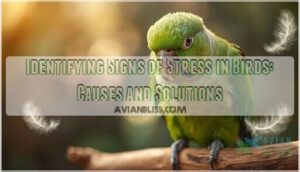
Your bird’s body language speaks volumes, but most owners miss the subtle warnings until serious problems develop. A parrot that suddenly stops singing might be dealing with depression, while one that screams constantly could be experiencing separation anxiety or crushing boredom. These behavioral shifts aren’t just quirks—they’re your bird’s way of telling you something is wrong.
Physical signs like weight loss, trembling, or changes in droppings add another layer of concern, often pointing to stress that’s already affecting your bird’s health. Understanding what stress looks like in birds helps you catch problems early, before they escalate into feather plucking, self-mutilation, or immune system breakdown.
The good news is that once you know what to watch for, you can take concrete steps to restore your bird’s sense of safety and well-being.
Table Of Contents
Key Takeaways
- Your bird’s behavior changes—like sudden silence, constant screaming, or aggressive lunging—are direct communication that something’s wrong, not just personality quirks you should ignore.
- Physical signs including weight loss, trembling, and droppings changes often appear before serious health problems develop, making early detection through weekly monitoring essential for preventing immune system breakdown and chronic illness.
- Most stress in birds stems from fixable environmental issues like loud noises, social isolation, routine disruptions, and lack of mental stimulation—problems you can address through consistent daily interaction, enrichment activities, and species-appropriate care.
- Chronic stress triggers measurable physical damage including a 30% drop in immune antibodies, 60% higher infection mortality rates, and permanent feather follicle damage, making immediate veterinary care necessary when you see persistent behavioral changes or self-mutilation lasting beyond two weeks.
Key Behavioral Signs of Stress in Birds
Birds can’t always tell you when something’s wrong, but their behavior speaks volumes. When stress takes hold, you’ll notice changes in how they act, interact, and even how they treat their own bodies.
Here are the key behavioral signs that tell you your bird needs help.
Biting and Lunging Behavior
When your bird suddenly lunges or bites, it’s often responding to fear rather than showing true aggression. Fear-related triggers like loud noises, unfamiliar people, or sudden movements can make your bird feel trapped, prompting defensive bites. Pain indicators matter too—a bird that’s hurting may bite when touched.
Social stressors, environmental stressors, and hormonal changes can all lower your bird’s tolerance, turning a gentle companion into one that guards its space with sharp, defensive lunges. Human caretakers should avoid forceful or dominating approaches, as this can provoke parrot aggressive behaviour.
Screaming and Excessive Vocalization
While biting signals fear, screaming and excessive vocalization often point to boredom, separation anxiety, or environmental chaos. Your bird’s repetitive, high-intensity calls—sometimes reaching 100 to 120 decibels—aren’t just noise. Vocalization triggers include sudden changes, isolation, and noise pollution.
Understanding that birds may be seeking attention can help owners identify the underlying reason for the behavior. Intervention outcomes improve when you identify what’s prompting the screaming, then adjust enrichment, routine, and your responses.
Persistent changes in vocalization patterns warrant a veterinary check to rule out illness or chronic stress.
Decreased Vocalization or Silence
On the flip side, silence can be just as telling. When your bird suddenly goes quiet—showing a vocalization decline—it may signal depression, illness, or emotional shutdown.
Studies show stressed populations reduce song output by over 40%, making decreased vocalization a key stress indicator. Acoustic monitoring now tracks silence as a biomarker in conservation work, proving that what your bird doesn’t say matters just as much.
A stressed bird’s silence speaks volumes—song output drops over 40% under stress, making quiet as telling as screaming
Feather Picking and Plucking
When your bird starts plucking out feathers, you’re witnessing one of the most common behavioral problems in captive parrots. Studies show feather picking affects around 10–25% of pet birds, with cockatoos reaching a striking 30.6% prevalence.
Key risk factors include:
- Age—adult birds face 3.17 times higher odds
- Separation anxiety—increasing risk by 81%
- Species—lovebirds and African greys are particularly vulnerable
- Hand-rearing practices
This visible stress sign demands immediate attention.
Self-Mutilation and Skin Damage
Beyond feather picking, some birds inflict serious skin damage—chewing through muscle and even exposing bone. Over 40% of captive parrots develop cutaneous disease, with nearly half involving self-trauma. Cockatoos face the highest risk.
Wound infections, pain management, and behavioral intervention are critical. Underlying causes—from allergies to boredom—must be addressed early.
Prognosis factors improve dramatically when you act quickly and work closely with an avian vet.
Repetitive Behaviors and Pacing
When birds pace endlessly or weave along cage bars, you’re witnessing stereotypical behaviors—stress indicators that signal welfare impairment. Social isolation and barren housing are common pacing origins.
In one parrot colony, 96% developed stereotypy, with some devoting up to 85% of their time to repetitive movement.
Fortunately, enrichment effects are powerful: proper environmental changes can reduce these behavioral problems within weeks.
Physical Indicators of Stress
While behavioral changes often grab your attention first, your bird’s body tells its own stress story. Physical signs can be subtle at first, but they’re just as important as screaming or feather plucking when it comes to spotting a problem early.
Let’s look at the key physical indicators that show your bird is struggling.
Weight Loss and Decreased Appetite

When your bird steps away from the food dish or the scale shows a downward trend, you’re witnessing stress physiology in action. Chronic stress triggers hormonal changes that suppress appetite and burn through energy reserves fast.
Weekly weight monitoring helps you catch losses as small as 3–5%—often the first measurable sign before other symptoms appear. If you notice decreased appetite alongside unexplained weight loss, prompt veterinary consultation is essential.
Changes in Droppings and Urine

One of the most accessible windows into your bird’s health is the cage liner. Dropping color changes—red, tarry black, or pale feces—signal digestive or systemic distress.
Urine consistency can shift to watery output, while dropping frequency often increases or decreases outside the normal 20–30 minute cycle.
These urate indicators and stress signs warrant immediate veterinary examination, as changes in droppings and urine frequently precede visible illness in avian stress.
Trembling, Crouching, or Flattening
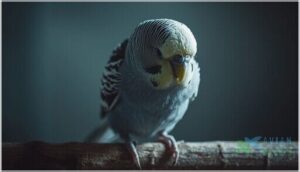
When your bird presses flat against the perch or trembles in place, you’re witnessing classic fear postures that reveal deep anxiety. These stress signs—crouching, flattening, and trembling—correlate with elevated physiological markers like corticosterone and represent your bird’s instinctive response to perceived danger.
- Muscle tension manifests as visible shaking during handling or environmental changes
- Feather compression flattens the body profile, signaling high-arousal fear states
- Freezing responses keep birds motionless even when threats approach within arm’s reach
Recognizing stress in birds through these physical cues helps you intervene before chronic stress develops.
Altered Sleep Patterns and Activity Levels

When your bird sleeps restlessly or suddenly becomes inactive, you’re seeing stress in action. Sleep deprivation effects in birds include reduced singing, decreased movement, and altered vocalization patterns. Captive birds need 10-12 hours of darkness nightly, yet even mild disturbances keep hens awake 22-27% of the night.
Changes in sleep patterns and activity signal physiological impacts that demand your attention before chronic stress develops.
Common Causes of Stress in Birds

Birds are sensitive creatures, and understanding what stresses them out is the first step toward keeping them healthy and happy. Many factors can disrupt your bird’s sense of security, from changes in their surroundings to gaps in their daily care.
Let’s look at the most common triggers that can send your feathered friend into distress.
Environmental Changes and Loud Noises
When your bird’s home suddenly shifts—whether you’re moving, rearranging furniture, or dealing with construction noise—these environmental changes can trigger significant avian stress.
Loud noises above 70 decibels, from fire alarms to traffic, disrupt your bird’s sense of safety and heighten stress responses.
Urbanization stress, habitat disruption, and pollution effects all compound these challenges, making noise impact and climate change critical environmental factors in stress management.
Lack of Social Interaction or Isolation
While environmental disruptions unsettle birds, social isolation effects cut even deeper. Your bird’s social needs aren’t optional—they’re hardwired. Lack of attention from you or other birds triggers stress responses that show up in behavior and hormones. Studies on zebra finches found just 30 minutes of isolation spiked stress hormones considerably. Owner interaction time and housing configuration matter more than you might think.
Social isolation creates serious welfare concerns:
- Solo-housed parrots showed 118 stereotypic behaviors versus only 8 in group-housed birds
- Developmental isolation impact persists into adulthood, impairing social recognition
- Interaction quality matters—inconsistent engagement correlates with feather plucking
- Extended daily periods alone increase screaming and aggression
- Environmental enrichment alone can’t replace conspecific or human social contact
Routine and Schedule Disruptions
Just as social bonds anchor your bird’s emotional health, consistency in daily patterns keeps their stress hormones in check. Light cycle changes, feeding schedule shifts, and unpredictable cage cleaning times all trigger measurable behavioral changes.
When your absence length varies wildly or household routines shift suddenly, your bird’s ability to predict what comes next vanishes—and that unpredictability itself becomes a stress indicator worth recognizing.
Nutritional Deficiencies and Diet Changes
Poor nutrition silently undermines your bird’s stress resilience. Seed-based diets lacking vitamin A cause nasal discharge and feather picking in 90% of psittacines, while calcium-to-phosphorus imbalances trigger tremors in African Greys.
Vitamin deficiencies show up as brittle feathers, weight loss, and decreased appetite—mineral shortages like iodine create goiter and wheezing.
Dietary imbalances don’t just weaken immunity; they worsen every other stressor your bird faces.
Insufficient Mental Stimulation
When your parrot lacks mental stimulation, boredom indicators like feather plucking emerge—affecting 20.8% of captive birds. Cognitive needs go unmet without enrichment strategies such as foraging opportunities that mimic wild behavior.
Stereotypic behaviors including pacing and route-tracing appear in 23.2% of understimulated parrots. Environmental enrichment providing varied textures, puzzles, and challenges prevents these behavioral changes from taking root.
Effects of Chronic Stress on Bird Health

When stress becomes a constant companion in your bird’s life, it doesn’t just affect their mood—it takes a real toll on their body.
The effects ripple through multiple systems, from the immune response to feather health, and even reproductive function.
Let’s look at the specific ways chronic stress can harm your bird’s physical well-being.
Compromised Immune System
When your bird experiences chronic stress, its immune system function pays a steep price. Stress indicators like high corticosterone weaken avian health defenses, opening the door to serious health issues requiring veterinary care.
Here are the key impacts of chronic stress on a bird’s immune system:
- Lymphoid Atrophy: The thymus shrinks by 22% and the bursa of Fabricius reduces 15-20% under prolonged stress
- Antibody Reduction: IgG levels drop 30% and IgM production falls 40% in chronically stressed birds
- Cytokine Elevation: Inflammatory markers like IL-1β increase threefold in immune-stressed tissues
- Disease Susceptibility: Mortality from infections rises 60%, with Oxidative Stress compounding cellular damage
Feather Follicle and Skin Damage
Constant feather picking and self-mutilation wreak havoc on your bird’s skin, triggering follicle inflammation and bacterial skin infections. Among surveyed psittacines, 210 showed inflammatory skin disease directly tied to plucking consequences.
| Damage Type | Prevalence | Severity |
|---|---|---|
| Folliculitis | 210 cases | Moderate-High |
| Traumatic Skin | 198 cases | High |
| Polyfolliculosis | Lovebirds/Canaries | Severe Itching |
| Dermatitis | Secondary | Chronic |
Mutilation severity escalates when feather regeneration fails, leaving permanent scars from behavioral problems worsened by environmental changes.
Behavioral Disorders and Stereotypies
When your bird’s world shrinks to the same cage corner or endless bar-flipping, you’re witnessing stereotypy origins—repetitive behaviors born from chronic frustration. Captivity effects in restricted environments trigger these cognitive impacts, with approximately 25% of captive parrots developing stereotypies.
Intervention strategies require:
- Enrichment rotation – Swap toys weekly to prevent mental stagnation
- Foraging challenges – Hide food to engage natural searching behaviors
- Social stimulation – Provide daily interaction to combat isolation
Stereotypical behaviors escalate welfare concerns, as they signal your bird’s coping mechanisms are failing.
Reproductive Issues in Female Birds
When stress hormones stay elevated in your female bird, reproductive issues multiply fast. Chronic stress disrupts hormonal imbalances, shrinking ovarian function by up to 30% and altering clutch size unpredictably.
You’ll see egg binding—especially in budgies and cockatiels—alongside dystocia from poor breeding practices and nutritional gaps. Maternal stress even programs offspring with skewed sex ratios and weakened immunity.
If your bird’s eggbound or showing reproductive distress, consult your avian vet immediately.
How to Help a Stressed Bird
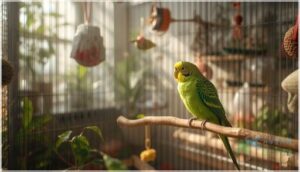
Once you’ve spotted the signs of stress in your bird, the next step is taking action to help them feel safe and comfortable again. The good news is that most stressed birds respond well to thoughtful changes in their environment, routine, and care.
Here are five practical ways you can support your bird through stressful times.
Identifying and Removing Stressors
You need to spot what’s bothering your bird, then make it go away. Noise reduction and smart cage placement can cut stress by 70% in just two days. Watch for environmental changes, loud noises, routine changes that throw them off, or predator presence.
Diet quality matters too—eliminate deficiencies fast.
Address social needs and lack of enrichment once environmental stressors are handled.
Providing Environmental Enrichment
Once you’ve tackled the stressors, enrichment becomes your best tool. Your bird’s brain craves activity—without it, stress won’t budge. Foraging opportunities, toy rotation, and sensory stimulation keep them engaged and calm.
Here’s what works:
- Foraging devices that hide treats and encourage problem-solving
- Destructible toys like shredded paper or natural wood for beak exercise
- Perch variety with different textures and heights for physical activity
Environmental enrichment for birds increases behavioral diversity by 40% and cuts repetitive behaviors in half.
Ensuring Proper Nutrition and Diet
Beyond enrichment, proper nutrition anchors your bird’s stress response. Dietary deficiencies spike corticosterone levels by 30%, weakening immunity and triggering feather picking. A species-appropriate diet with vitamin supplementation reverses this—antioxidants rise 25%, stress markers drop 40%.
Diet quality shapes gut microbiome health, which influences feeding behavior and emotional stability. Balanced nutrition isn’t optional; it’s your foundation for a calmer, healthier bird.
Maintaining Consistent Routines
Feed your bird at the same time each morning. That simple routine benefits behavioral stability more than you’d think. Studies confirm that schedule disruptions—irregular feeding, erratic sleep times—increase stress hormones and trigger behavioral changes like feather plucking.
Environmental changes and bird anxiety ease when you maintain practical components: predictable playtime, consistent 10-12 hour dark sleep periods, and fixed cage cleaning times. Empirical evidence shows routine changes provoke distress, so stick to your schedule.
Offering Social Interaction and Attention
Beyond predictable schedules, your bird craves genuine connection. Research shows quality one-on-one time—just 10-15 minutes twice daily—strengthens bonding scales and reduces stress markers. Playful interactions mirror flock dynamics birds naturally need.
Allow 3-4 hours outside the cage for parallel activities near you. Social interaction isn’t optional; lack of attention triggers feather plucking and screaming.
Environmental enrichment means your presence, not just toys.
When to Seek Veterinary Assistance

Sometimes the best care you can give your bird is knowing when to call in a professional. While you can manage many stress-related issues at home, certain warning signs require an avian veterinarian’s expertise to rule out underlying illness or prevent serious harm.
Here are the key situations when you shouldn’t wait to schedule that vet visit.
Persistent or Severe Behavioral Changes
If your bird’s aggression or biting persists beyond two weeks, it’s time to consult an avian veterinarian. Sustained vocalization shifts—whether excessive screaming or unusual silence—signal deeper distress. Watch for stereotypic behaviors like pacing or head bobbing that don’t improve with environmental changes.
Around 20% of birds with severe behavioral stress need veterinary intervention to prevent lasting harm and restore well-being.
Signs of Self-Mutilation or Feather Loss
When feather plucking or self-mutilation appears, don’t wait—these signal urgent distress. Cockatoos, African greys, and lovebirds show feather-loss prevalence between 24% and 31%, far higher than budgerigars at 5%. Veterinary findings often reveal inflammation even in unaffected skin.
Treatment costs escalate quickly with diagnostic tests, antibiotics, and protective collars. Risk factors include smaller households and species epidemiology, making early intervention essential for your stressed bird’s recovery.
Unexplained Weight Loss or Illness
When your bird drops weight without obvious cause, underlying medical conditions demand immediate veterinary assessment. Weight loss signs may emerge before you notice decreased appetite, so monitoring weight weekly catches health problems early.
- A loss exceeding 10% of baseline weight signals possible systemic diseases requiring urgent care
- Nutritional deficiencies and imbalances can trigger immunosuppression link, opening the door to infections
- Endocrine disorders like diabetes cause weight loss despite normal eating
- Infectious diseases often present with weight reduction before other symptoms appear
Sudden Changes in Droppings or Activity
Your bird’s droppings tell a story—pay attention when that story shifts. Changes in dropping frequency and consistency, especially when accompanied by reduced activity, require immediate veterinary attention. Most small birds eliminate every 20–30 minutes, so a decrease in droppings or the appearance of watery ones, along with lethargy, necessitates a veterinary examination within 24 hours to detect illness or stress early.
| Normal Patterns | Warning Signs |
|---|---|
| Regular frequency (every 20–30 min) | Sudden increase or decrease in output |
| Consistent color and texture | Watery, tarry, or bloody droppings |
| Active, responsive behavior | Lethargy, minimal movement, silence |
Recognizing stress in birds involves monitoring both changes in behavior and droppings. When these two aspects shift simultaneously, it is crucial not to wait and see if the situation improves on its own.
Frequently Asked Questions (FAQs)
Can stress in birds be inherited from parents?
Like ripples spreading across a pond, stress in parent birds can echo into subsequent generations through transgenerational epigenetic inheritance, altering offspring physiological consequences and stress responses even before hatching.
Do different bird species experience stress differently?
Yes, different avian species show unique stress responses. Cockatoos develop stereotypical behaviors like pacing, while other parrots pluck feathers.
Physiological indicators and behavioral variations reflect each species’ evolutionary background, requiring species-specific assessment approaches.
How long does stress recovery typically take?
Recovery time depends on stress severity. Acute recovery often takes 24 to 72 hours, while chronic duration extends to weeks or months.
Species differences, social support, and nutritional impact all influence healing timelines greatly.
Can birds develop PTSD from traumatic experiences?
Research shows birds can experience PTSD-like psychological stress after traumas—displaying persistent fear responses, anxiety, altered neuroendocrine markers, and long-term welfare impacts.
However, human-defined PTSD criteria don’t directly apply to avian species yet.
Are there natural supplements to reduce bird stress?
When your bird seems wound tighter than a spring, natural supplements like L-Tryptophan and chamomile can help ease the tension, while vitamins C and E support resilience against environmental stress.
Conclusion
Your bird can’t tell you in words when something’s wrong, but their body and behavior reveal everything you need to know. Identifying signs of stress in birds transforms you from a passive observer into an advocate for their well-being.
By watching for behavioral shifts, physical changes, and environmental triggers, you’ll catch problems before they become crises.
Small adjustments to routine, enrichment, and care create lasting calm. Your attention makes all the difference between a bird that merely survives and one that truly thrives.
- https://journals.plos.org/plosone/article/file?id=10.1371%2Fjournal.pone.0254610&type=printable
- https://en.wikipedia.org/wiki/Abnormal_behaviour_of_birds_in_captivity
- https://www.sciencedirect.com/science/article/abs/pii/S0168159109002561
- https://academic.oup.com/conphys/article/8/1/coz110/5714800
- https://pubmed.ncbi.nlm.nih.gov/PMC11847492