This site is supported by our readers. We may earn a commission, at no cost to you, if you purchase through links.
 Lack of vitamin D in birds is surprisingly common, especially among our feathered friends living indoors.
Up to 80% of captive parrots show suboptimal vitamin D levels, while their wild cousins maintain healthy levels through natural sunlight and diverse foraging.
African Grey Parrots face the highest risk, often developing seizures from calcium deficiency.
You’ll notice signs like bone deformities, muscle weakness, poor eggshells, and behavioral changes including feather plucking.
The main culprit is Limited UVB exposure in captive environments, combined with seed-heavy diets that lack essential nutrients.
Understanding how vitamin D, calcium, and proper lighting work together can transform your bird’s health in ways you might not expect.
Table Of Contents
- Key Takeaways
- Can Birds Get Vitamin D Deficiency?
- What Does Vitamin D Do for Birds?
- Signs and Symptoms of Vitamin D Deficiency
- Causes of Vitamin D Deficiency in Birds
- How Vitamin D, Calcium, and Magnesium Interact
- Does Vitamin D Deficiency Affect Bird Behavior?
- Sources of Vitamin D for Birds
- Supplementing Vitamin D in Pet Birds
- Preventing and Treating Vitamin D Deficiency
- Frequently Asked Questions (FAQs)
- What can I give my bird for vitamin D?
- What are the five signs of vitamin D deficiency?
- Do birds need sunlight for vitamin D?
- How long do birds need sunlight daily?
- Can vitamin D toxicity harm pet birds?
- Which bird species need most vitamin D?
- Do eggs provide enough vitamin D naturally?
- How quickly does deficiency develop in birds?
- Conclusion
Key Takeaways
- You’ll need UVB lighting or sunlight – Up to 80% of captive parrots develop vitamin D deficiency because indoor housing blocks essential UVB rays needed for natural synthesis, so you’ll need specialized bird UVB bulbs or 15-30 minutes of direct sunlight daily.
- Watch for bone and behavioral warning signs – You’ll notice muscle weakness, bone deformities, seizures, feather plucking, and depression in deficient birds, with African Grey Parrots being especially vulnerable to calcium-related seizures.
- Diet alone isn’t enough – Even if you’re feeding vitamin D-rich foods, your bird can’t properly absorb calcium without adequate vitamin D levels, leading to weak bones, poor eggshells, and metabolic bone disease.
- Work with a vet for safe supplementation – You can’t guess at vitamin D dosing since excess amounts cause dangerous calcium buildup and organ damage, so you’ll need professional guidance to prevent both deficiency and toxicity.
Can Birds Get Vitamin D Deficiency?
Yes, birds can develop vitamin D deficiency, and it’s surprisingly common in captive birds who lack proper sunlight exposure or balanced diets.
Indoor pet birds face the highest risk since they can’t access the UVB rays needed for natural vitamin D synthesis, while species like African grey parrots and Amazon parrots show particular susceptibility to this nutritional disorder.
Prevalence in Captive and Wild Birds
Vitamin D deficiency strikes captive birds far more than their wild counterparts.
Up to 80% of captive parrots have suboptimal vitamin D levels, while wild bird health rarely shows deficiency issues.
Your bird habitat matters substantially – indoor captive bird care creates higher risks than natural environments.
Wild birds maintain adequate levels through sunlight and foraging, but vitamin D tests often reveal deficiency in indoor aviaries lacking proper UVB lighting.
Species Most at Risk
While all birds can develop vitamin d deficiency, certain species face higher risks.
African Grey Parrots show extreme susceptibility to hypocalcemia and deficiency-related seizures. Cockatiels and grass parakeets frequently develop metabolic bone disease during juvenile stages.
Vitamin D3 deficiency in young chickens can lead to rickets and osteoporosis.
Species at highest risk include:
- Parrots – African Greys, cockatiels, and Amazon parrots require specialized vitamin d for parrots supplementation
- Frugivorous birds – Toucans eating fruit-heavy diets lack natural vitamin sources
- Indoor captives – Finches, doves, and pet birds without UVB exposure
Why Deficiency is Common
Several factors make vitamin d deficiency incredibly common in pet birds.
Indoor housing prevents natural UVB exposure, while seed diets lack essential nutrients for proper avian nutrition.
Captive breeding environments often don’t replicate wild conditions where birds naturally obtain vitamin D.
Limited diet choices and artificial lighting systems can’t fully replace sunlight’s benefits for bird health, making bird vitamin supplements increasingly necessary for ideal bird diet management.
What Does Vitamin D Do for Birds?
Vitamin D acts as your bird’s internal regulator, controlling how calcium and phosphorus move through their body to build strong bones and support essential functions.
This essential vitamin also strengthens your feathered friend’s immune system and keeps their nervous system running smoothly, making it indispensable for everything from healthy eggshells to proper muscle control, which relies on the balance of calcium and phosphorus for strong bones and overall health, including proper muscle control.
Regulation of Calcium and Phosphorus
Within your bird’s body, vitamin D acts like a master conductor, orchestrating calcium absorption from food while fine-tuning phosphorus metabolism.
This delicate balance enables proper bone mineralization and supports essential kidney function.
When vitamin D deficiency strikes, parathyroid hormone levels spike, disrupting calcium and phosphorus regulation, ultimately leading to weakened bones and compromised health in your feathered companion.
Role in Bone Health
Supporting your bird’s skeletal integrity, vitamin D acts as calcium absorption’s master controller.
Without adequate levels, your feathered friend faces serious bone development challenges that can lead to lifelong complications.
Here’s how vitamin D deficiency impacts bird bone health:
- Fracture Risk – Brittle bones break easily during normal activities
- Rickets in Birds – Young birds develop severely deformed, weak skeletal structures
- Osteoporosis Prevention – Adult birds lose bone density rapidly without sufficient vitamin D
- Calcium Deficiency Birds – Poor mineral absorption creates cascading skeletal problems
- Bird Skeletal Problems – Overall structural integrity deteriorates, affecting mobility and quality of life
Support for Immune and Nervous Systems
Beyond bone formation, vitamin D serves as your bird’s immune system quarterback, orchestrating white blood cell production and infection-fighting responses.
This essential nutrient also fine-tunes nervous function, ensuring proper nerve signal transmission and preventing seizures.
When vitamin d deficiency strikes, you’ll notice weakened immune support leaving your feathered friend vulnerable to illness, while compromised nervous function manifests through tremors or behavioral health changes.
Signs and Symptoms of Vitamin D Deficiency
When your bird’s vitamin D levels drop too low, you’ll notice distinct warning signs that affect their physical health and behavior.
These symptoms can range from subtle changes in posture to more serious bone problems that require immediate veterinary attention, which can be indicated by distinct changes in behavior and physical health, highlighting the importance of monitoring veterinary care.
Bone Deformities and Rickets
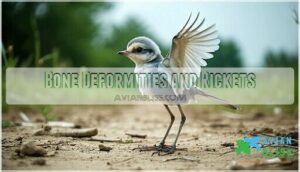
Why do young birds develop bent legs and twisted spines?
Vitamin D deficiency disrupts calcium absorption, causing rickets in growing birds.
Their growth plates soften, leading to severe bone deformities as developing bones can’t support body weight.
Without proper deformity correction through vitamin D supplements and improved calcium absorption, these skeletal malformations become permanent, affecting flight and mobility.
Muscle Weakness and Seizures

You’ll notice muscle weakness and seizures as your bird’s vitamin d deficiency progresses.
These neurological impacts reflect deficiency severity, where muscle atrophy weakens your pet’s grip and movement.
Reflex impairment becomes obvious during handling.
Bird deficiency signs include trembling, difficulty perching, and various seizure types ranging from mild twitching to full convulsions.
Bird vitamin supplements can reverse these concerning symptoms when administered properly, helping to alleviate seizures and other deficiency signs.
Poor Eggshell Quality

If your breeding bird shows vitamin D deficiency, you’ll notice thin, fragile eggshells that crack easily.
Poor calcium absorption disrupts shell thickness, making eggs vulnerable during handling.
Dietary impact becomes obvious when laying frequency drops and breeding health suffers.
Vitamin D deficiency creates serious egg laying issues because vitamin D benefits birds by enhancing bird calcium utilization for proper shell formation.
These abnormalities can indicate bird calcium deficiency.
Behavioral Changes and Mood Issues
Your bird might become withdrawn, unusually quiet, or excessively agitated when vitamin d deficiency affects their mood.
Feather plucking often signals underlying anxiety signs and depression symptoms in deficient birds.
You’ll notice dramatic activity changes, reduced social interaction, and overall bird lethargy, which indicate compromised bird wellbeing, as vitamin D supports nervous system function essential for stable moods and normal avian anxiety disorders management, leading to stable moods.
Causes of Vitamin D Deficiency in Birds
Understanding why your bird develops vitamin D deficiency is essential for preventing serious health complications that can affect everything from bone strength to behavior.
Your feathered friend faces three primary risks: insufficient sunlight exposure, poor dietary choices, and the limitations of indoor living environments, which can lead to serious health issues if not properly addressed, particularly in terms of bone strength.
Lack of Sunlight or UVB Exposure
The biggest culprit behind vitamin d deficiency in captive birds is limited sun exposure.
Window glass blocks essential UVB rays that trigger precursor conversion in your bird’s skin.
Indoor bird risks skyrocket without proper bird UVB lighting, as artificial lights can’t replace natural bird sunlight.
Your feathered friend needs direct sunlight exposure or specialized UVB lighting needs to maintain healthy vitamin D levels.
Inadequate Diet and Poor Nutrition
Feeding your bird exclusively seed-based diets creates a nutritional nightmare. These diets lack essential nutrients, causing malnutrition illnesses like liver disease and obesity risks.
Vitamin A deficiency commonly develops alongside vitamin D deficiency, weakening immunity. Poor bird diet plans contribute to metabolic disorders.
Following proper poultry nutrition tips and incorporating avian vitamin supplements prevents these issues. Quality bird nutrition advice emphasizes balanced formulated diets over seeds alone.
Such diets can even result in respiratory distress, highlighting the importance of a well-planned diet to avoid serious health issues.
Indoor and Captive Living Conditions
Your feathered friend’s living space dramatically impacts their vitamin D status. Captive birds face unique challenges that wild counterparts never encounter, creating a perfect storm for deficiency.
Consider these environmental factors affecting UV light exposure:
- Cage Size restricts natural movement and limits access to varied lighting conditions
- Enrichment Needs often go unmet, reducing opportunities for natural sunlight behaviors
- Social Interaction decreases when birds can’t engage in normal flock activities outdoors
Environmental factors like filtered windows block essential UV rays, while artificial lighting rarely provides adequate spectrum. Without proper bird natural sunlight or specialized bird artificial lighting, vitamin D deficiency becomes inevitable. Stress reduction through improved housing helps, but addressing UV light exposure remains paramount for preventing serious health complications in captive birds.
How Vitamin D, Calcium, and Magnesium Interact

Your bird’s body relies on vitamin D, calcium, and magnesium working together like a well-coordinated team to build strong bones and maintain healthy egg production.
Without adequate vitamin D, your feathered friend can’t properly absorb calcium from their diet, which leads to weak bones, poor eggshell formation, and potentially serious metabolic bone disease.
Synergistic Roles in Bone Formation
When vitamin D activates calcium absorption in your bird’s intestines, it works alongside magnesium to regulate phosphorus levels for ideal skeletal development.
This trio strengthens bone density by enabling proper mineral deposition in growing cartilage.
Without adequate vitamin D benefits birds experience, calcium can’t reach bones effectively, leading to metabolic bone disease.
Parrot vitamin needs include this synergy for maintaining bird bone strength throughout life.
Impact on Egg Production and Shell Quality
Reproduction challenges multiply when vitamin d deficiency disrupts your bird’s delicate egg-making process.
Without adequate calcium absorption, your feathered friend can’t create sturdy shells or maintain proper egg viability.
Here’s how deficiency impacts breeding:
- Shell thickness decreases dramatically, leading to cracked or broken eggs before hatching
- Hatching success drops substantially as weak shells can’t protect developing chicks properly
- Breeding problems escalate when calcium absorption fails, causing reproductive system stress
These parrot vitamin needs directly affect avian wellness and bird health issues throughout the reproductive cycle.
Preventing Metabolic Bone Disease
Beyond shell formation, preventing metabolic bone disease requires consistent calcium balance through proper UVB exposure and diet quality.
You can’t rely on vitamin D supplements alone without risking supplementation risks like toxicity.
Early detection involves monitoring for vitamin d deficiency symptoms including weakness or bone deformities.
Combining natural sunlight, quality nutrition, and appropriate vitamin D for birds creates the foundation for ideal avian wellness and prevents serious bird health issues, ensuring proper UVB exposure and a balanced calcium balance.
Does Vitamin D Deficiency Affect Bird Behavior?
You might notice your bird acting unusually quiet, plucking feathers, or showing signs of depression when vitamin D levels drop too low.
Research shows that vitamin D deficiency can contribute to anxiety and mood changes in birds, but proper supplementation often leads to noticeable behavioral improvements.
Links to Depression and Anxiety
Beyond simple bone health concerns, vitamin d deficiency creates profound mood changes in your feathered companions.
Research shows deficient birds exhibit increased anxiety-like behaviors, reduced social interaction, and altered stress response patterns.
These cognitive function disruptions often manifest as persistent lethargy and withdrawal from normal activities.
Your avian vet can recommend targeted bird supplements to restore healthy sleep patterns and improve overall bird behavior, supporting better bird health tips for emotional well-being.
Feather Plucking and Quietness
Stressed birds often turn to destructive habits when vitamin D deficiency disrupts their well-being.
You’ll notice increased feather plucking causes stem from underlying anxiety that worsens with nutritional imbalances.
Quietness triggers include mood disturbances linked to inadequate vitamin levels.
These behavioral links between bird feather health and mental state require attention from an avian vet who can recommend appropriate bird vitamin D supplements for anxiety reduction and mood improvement through proper feather picking intervention, which ultimately leads to better feather health.
Improvement With Supplementation
When you address vitamin D deficiency through proper supplementation, you’ll often see remarkable behavioral improvements in your feathered friend.
Bird vitamin D supplements can restore your pet’s natural cheerfulness and reduce stress-related behaviors when used correctly.
Here’s what to expect during recovery:
- Supplement efficacy becomes apparent within 2-4 weeks as vitamin D3 for birds begins restoring normal calcium metabolism
- Dosage adjustments may be needed based on your bird’s response and blood work monitoring progress
- Supplement types vary from liquid drops to fortified pellets, each offering different vitamin D benefits birds require
- Long-term effects include sustained mood stability and reduced feather plucking behaviors with consistent vitamin D for birds supplementation.
It’s essential to prevent organ damage and calcification by carefully monitoring vitamin D levels.
Sources of Vitamin D for Birds
You’ll need to understand your bird’s vitamin D sources to prevent serious health problems like weak bones and behavioral issues.
Birds get this essential vitamin through three main pathways: natural sunlight exposure, specific foods, and artificial lighting designed for indoor pets.
Natural Sunlight and UVB Rays
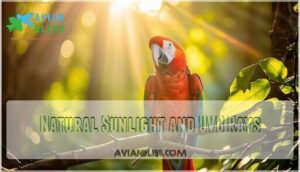
Natural sunlight provides the essential UVB rays your bird needs for vitamin D synthesis.
These ultraviolet light waves penetrate avian skin and trigger the preen gland to produce vitamin D precursors.
However, window glass blocks vital UVB penetration, making indoor lighting ineffective.
Your bird requires 11-30 minutes of direct sunlight daily for ideal bird vitamin D synthesis, preventing vitamin D deficiency through proper light duration and UVB exposure.
For birds kept indoors, consider using a specialized UVB lamp.
Dietary Sources in The Wild and Captivity
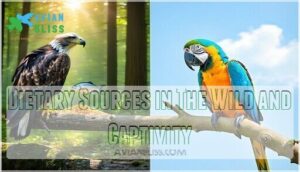
Wild Diets vary dramatically—insectivores and fish-eaters access more vitamin D through animal prey than seed-eating species.
Captive Foods like formulated diets provide consistent vitamin D3, unlike seed-only diets that leave birds deficient.
Liver Sources, egg yolks, and fatty fish offer bioavailable vitamin D for birds, while plant-based foods contribute little to preventing vitamin D deficiency.
Commercial feeds, however, can cause kidney failure problems if they contain too much calcium.
Artificial UVB Lighting for Indoor Birds
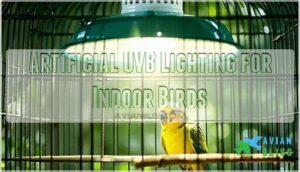
When natural sunlight isn’t available, artificial UVB lighting becomes your bird’s lifeline for vitamin D synthesis.
Choose full-spectrum UVB bulbs designed for birds, positioning them 12-18 inches away depending on your bird species needs.
Provide 10-12 hours of daily exposure, replacing bulbs every 6-12 months since UV output diminishes over time, even when they still produce visible light.
Many retailers offer specialized avian bulbs for this purpose, and it’s crucial to select the right ones for your bird’s health.
Supplementing Vitamin D in Pet Birds
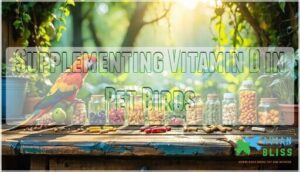
When your bird can’t get enough vitamin D from sunlight alone, supplements become essential for preventing serious health problems.
You’ll need to choose the right type, follow proper dosing guidelines, and work with a vet to avoid dangerous toxicity while ensuring your feathered friend gets adequate nutrition.
Choosing The Right Supplement
When selecting vitamin D supplements, you’ll find various supplement forms including liquid, powder, and tablet options.
Here’s what matters most:
- Dosage Calculation: Choose products with clear IU labeling to prevent under or overdosing
- Ingredient Quality: Look for vitamin D3 (cholecalciferol) over D2 for better absorption
- Brand Reputation: Select veterinary-approved supplements with third-party certification
- Veterinary Approval: Consult your avian vet for species-specific recommendations
Quality matters more than price when addressing vitamin D deficiency in birds.
A balanced bird diet is essential for overall avian health.
Safe Dosage and Avoiding Toxicity
Calculating proper vitamin D dosage requires precision since excess vitamin D3 can cause harmful calcium accumulation in tissues, particularly affecting macaws and other susceptible species.
Start with manufacturer-recommended doses and monitor for toxicity symptoms like weakness, excessive thirst, or kidney problems.
Consider vitamin D products for supplementation, as safe supplementation means avoiding vitamin D imbalance through careful dosage calculation and regular monitoring levels to prevent vitamin D toxicosis while addressing deficiency effectively.
Importance of Veterinary Guidance
Professional avian medicine expertise guarantees safe vitamin D supplementation for your feathered friend.
Veterinarians provide accurate diagnosis of vitamin D deficiency through blood tests and offer customized treatment options based on your bird’s specific needs.
- Early intervention prevents severe complications like metabolic bone disease
- Supplement guidance helps avoid dangerous toxicity from excessive vitamin D for birds
- Preventative care monitoring guarantees ideal bird vitamin D synthesis long-term
Preventing and Treating Vitamin D Deficiency
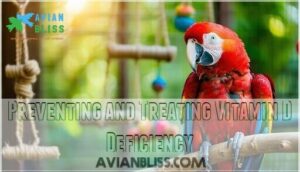
Preventing vitamin D deficiency in your bird requires a combination of proper lighting, balanced nutrition, and regular health monitoring.
Early detection and veterinary intervention can reverse deficiency symptoms and prevent serious complications like bone deformities or metabolic disorders, which is crucial for the bird’s overall health and can be achieved through regular health monitoring.
Balanced Diet and Proper Lighting
You’ll want to offer your bird dietary diversity that includes vitamin D-rich foods like fatty fish, liver, and fortified pellets rather than seed-only diets.
Install quality UVB bulbs for indoor birds, or provide supervised natural sunlight exposure for 15-30 minutes daily.
This combination supports proper bird vitamin D synthesis without supplementation risks while adding foraging enrichment opportunities.
Monitoring for Early Signs
Watch closely for subtle changes in your bird’s daily routine, as vitamin D deficiency often creeps in gradually.
Early detection makes all the difference in preventing serious complications.
Key warning signs to monitor:
- Feather condition deteriorates – dull, brittle plumes that lack their usual shine
- Leg weakness develops – wobbly perches, reluctance to climb or grip firmly
- Appetite loss occurs – decreased interest in favorite foods or treats
Pay attention to egg quality in breeding birds, as thin shells often signal deficiency.
These subtle changes in pet bird health shouldn’t be ignored, as vitamin D deficiency affects overall avian companionship and wellbeing.
Veterinary Diagnosis and Intervention
When you notice early signs, your vet will run diagnostic tests including serum 25(OH)D measurements and radiographs to confirm vitamin D deficiency.
Treatment options involve cholecalciferol supplementation, diet modification, and UVB lighting.
Your vet will establish intervention strategies with calcium support for osteoperosis and bird beak problems.
Monitoring progress through follow-up blood work guarantees proper pet bird health recovery, and prognosis factors depend on early detection and consistent treatment protocols.
Frequently Asked Questions (FAQs)
What can I give my bird for vitamin D?
Like a gardener tending their precious blooms, you’ll need to provide your feathered friend with natural sunlight, UVB lighting, or vitamin D3 supplements to keep their bones strong and healthy.
What are the five signs of vitamin D deficiency?
You’ll notice muscle weakness, brittle or deformed bones, poor feather quality, seizures or tremors, and behavioral changes like depression or feather plucking in your bird.
Do birds need sunlight for vitamin D?
Like plants reaching for sunshine, your feathered friend absolutely needs sunlight for vitamin D synthesis.
UVB rays convert precursors in their skin into essential vitamin D3, supporting strong bones and overall health.
How long do birds need sunlight daily?
Your feathered friends need 11-30 minutes of direct sunlight daily for proper vitamin D synthesis. This exposure helps their bodies convert precursors into essential vitamin D3 through UVB rays.
Can vitamin D toxicity harm pet birds?
Yes, vitamin D toxicity can seriously harm your pet bird.
Excess vitamin D3 causes dangerous calcium buildup in tissues, especially affecting macaws and other susceptible species.
Leading to organ damage and health complications.
Which bird species need most vitamin D?
Young birds, especially African grey parrots, need substantial vitamin D during rapid bone development.
Indoor species like cockatiels, budgies, and amazons require consistent supplementation since they can’t synthesize vitamin D without UVB exposure.
Do eggs provide enough vitamin D naturally?
Eggs contain some vitamin D, but they won’t meet your bird’s complete needs. You’ll still need UVB light exposure or supplements since eggs alone provide insufficient amounts for ideal health.
How quickly does deficiency develop in birds?
Like watching a faucet slowly drip away your home’s foundation, vitamin D deficiency in birds develops gradually over weeks to months, depending on their diet and sunlight exposure.
Conclusion
Understanding the lack of vitamin D in birds is like holding the key to revealing your feathered friend’s peak health.
You’ve learned that this deficiency affects up to 80% of captive parrots, causing bone deformities, seizures, and behavioral changes.
The solution combines proper UVB lighting, balanced nutrition, and veterinary guidance.
By addressing these factors together, you’ll prevent serious health complications and guarantee your bird thrives with strong bones, healthy eggs, and vibrant behavior for years to come.
- https://pdsparrotshop.com/blogs/pds-parrot-blog/vitamin-d-deficiency-in-our-pet-bird
- https://www.merckvetmanual.com/bird-owners/disorders-and-diseases-of-birds/nutritional-disorders-of-pet-birds
- https://birdsupplies.com/blogs/news/birds-and-uv-light-time-to-boost-vitamin-d-levels
- https://grubblyfarms.com/blogs/the-flyer/vitamin-d-egg-production
- https://poultrydvm.com/condition/vitamin-d-deficiency