This site is supported by our readers. We may earn a commission, at no cost to you, if you purchase through links.

Most people walk through a forest and hear birds without really listening. A seasoned ornithologist hears something different—a Black-throated Blue Warbler holding territory 40 meters upslope, a Red-eyed Vireo on its fourth repetition cycle, a habitat telling its own story in sound.
That gap between hearing and listening is where bird knowledge lives. Learning bird calls and songs closes it fast. You don’t need binoculars, perfect light, or a clear sightline—your ears work in dense canopy, before dawn, and through fog.
This guide walks you through the listening skills, identification techniques, and tools that turn ambient noise into a language you can actually read.
Table Of Contents
- Key Takeaways
- Why Learn Bird Calls and Songs
- How to Listen to a Bird Song
- Step-by-Step Guide to Learning Bird Songs
- Best Tools and Apps for Bird Song Identification
- Top 10 Bird Song Guides and Identifiers
- 1. Bird Songs North American Bird Guide
- 2. Backyard Birdsong Guide Book
- 3. Haikubox Bird Sound Identifier
- 4. North American Birdwatching Guide
- 5. Lyric Bird Song Identifier
- 6. Backyard Bird Songs Book
- 7. ZDH Handcrafted Wooden Bird Call Set
- 8. National Geographic Kids Bird Guide
- 9. Bird Talk Identification Guide Book
- 10. Puget Sound Bird Guide Book
- Frequently Asked Questions (FAQs)
- What is the best app to learn bird calls?
- What is the difference between bird calls and bird songs?
- Is there a free version of Merlin?
- Can beginners identify birds by sound alone?
- How long does it take to learn bird calls?
- Are bird songs different across seasons or regions?
- What is a spectrogram and how does it help?
- How do nocturnal birds differ in their calls?
- Conclusion
Key Takeaways
- Your ears can do what your eyes can’t — identifying birds by sound recognition works in dense fog, thick canopy, and low light where binoculars are useless.
- Train on four core elements — rhythm, pitch, repetition, and tone — and most bird songs will start clicking into place faster than you’d expect.
- Start with the birds already outside your window; daily exposure to familiar calls builds a stronger foundation than any field guide or cramming session ever will.
- Free tools like the Merlin Bird ID app identify over 2,000 species in real time, making accurate bird recognition accessible from day one.
Why Learn Bird Calls and Songs
Learning bird calls opens up a whole new layer of the natural world around you.
Once you start recognizing calls, a guide like Rhode Island backyard bird identification helps you put a face to every song you hear.
Most birders are surprised to find how much they’ve been missing once their ears catch up to their eyes. Here’s why it’s worth your time.
Benefits of Recognizing Bird Calls in The Field
Bird song recognition is a field skill that quietly transforms your entire birding experience. When you can identify species by ear, you stop missing the birds hiding in dense foliage or calling from distant treetops.
- Species Detection improves dramatically — rails and warblers reveal themselves through sound alone
- Field Research moves faster when Bird ID doesn’t require binoculars
- Habitat Monitoring and Wildlife Tracking become more accurate
- Bird Conservation data strengthens when citizen scientists log confidently recognized Bird Calls
For more guidance, explore resources on learning bird identification by ear.
Connecting With Nature Through Sound
There’s something that shifts when you stop looking and start truly listening. Soundscapes carry emotional weight — research shows even a few minutes of birdsong lowers stress and lifts mood.
A few minutes of birdsong is all it takes to lower stress and lift your mood
Nature therapy through eco listening isn’t abstract; it’s as simple as noticing a chickadee while walking to work. Wildlife acoustics ground you in place, turning any patch of green into something worth knowing.
Listening also offers benefits associated with natural soundscapes and well-being, including reduced stress and better mental health.
| Sound Experience | What You Notice | How You Feel |
|---|---|---|
| Dawn chorus in spring | Layered bird songs from multiple species | Energized, present |
| Quiet forest midday | Distant bird calls, wind, insects | Calm, unhurried |
| Urban park at dusk | Mixed bird call recognition moments | Grounded, restored |
| Coastal wetland morning | Shorebird cries, wave rhythm | Open, expansive |
| Neighborhood backyard | Learning birdcalls of familiar visitors | Curious, connected |
Bird song identification and bird call recognition deepen your relationship with a place — not just as a birder, but as someone paying genuine attention.
How Bird Songs Aid Species Identification
Sound does more than set a mood — it unlocks bird identification in ways your eyes alone can’t. Every bird vocalization carries a species signature: a distinctive combination of rhythm, pitch, and tone.
Song pattern recognition turns a fleeting chirp into a confirmed species. That’s sonic taxonomy in practice — audio identification working faster than any field guide you’ll flip through.
How to Listen to a Bird Song
Listening to a bird song isn’t just about hearing it — it’s about knowing what to pay attention to.
Every species gives itself away through a mix of rhythm, pitch, repetition, and tone.
Once you know what to listen for, the whole thing starts to click.
Rhythm — Tempo and Pattern of Notes
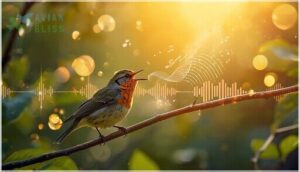
Rhythm is your first foothold in birding by ear. Think of it as the heartbeat of a song — tempo changes, silent gaps between notes, and repeating sound patterns all shape what you hear.
A trill’s speed differs sharply from a slow phrase. Noticing note duration and rhythmic patterns helps you sort bird songs and bird calls before anything else clicks.
Pitch — High, Medium, and Low Frequencies

Pitch is your second clue — and it’s surprisingly instinctive. Smaller birds like warblers and kinglets ring out at high frequencies, sometimes reaching 8–9 kHz in vocal range.
Larger birds sit lower. This natural frequency variation makes bird sound identification faster once you train your ear. Audio spectrograms show pitch visually, turning acoustic analysis of bird calls and songs into something you can actually see.
Repetition — Phrases and Syllable Patterns
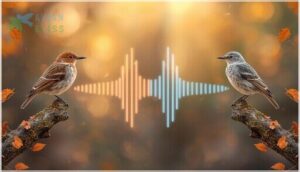
Repetition might be your sharpest tool in bird song recognition. The Brown Thrasher repeats each phrase exactly twice; the Northern Mockingbird repeats three or more times.
These phrase repetition and syllable patterns give bird song analysis a numerical handle — count the repeats. Mnemonic devices like “tea kettle, tea kettle, tea kettle” lock repetition cues into memory fast, making bird sound identification almost automatic over time.
Tone — Clear, Harsh, Trilling, or Buzzing Qualities

Tone is your fourth filter — and it’s surprisingly telling. Clear whistles, like a Black-capped Chickadee‘s two-note call, feel smooth and pure. Harsh calls from crows sound rough, almost grating.
Trill patterns blur into a steady musical buzz, while buzzy tones carry that electric, zipper-like quality. Spectrogram analysis makes these differences visible, turning what your ears sense into patterns you can actually see and study.
Step-by-Step Guide to Learning Bird Songs

Learning bird songs is one of those skills that builds on itself — the more you practice, the faster it clicks. The good news is there’s a clear path to follow, and you don’t need any special talent to get started.
Here’s a step-by-step approach that works for most beginners.
Start With Common Local Species First
Think of your backyard as your classroom. For beginner birdwatching, starting with common local species — Northern Cardinals, American Robins, House Sparrows — makes bird identification far less overwhelming.
You hear these same bird calls and bird songs daily, so neighborhood birding becomes natural practice. Building daily listening habits around familiar voices sharpens your birding by ear skills faster than any field guide ever could.
Use Visual Cues to Reinforce Sound Memory
Your ears and eyes work as a team. Pairing visuals with bird calls dramatically sharpens your bird sound identification skills.
Try these bird watching tips to lock sounds into memory:
- Sketch a song’s shape for bird song mapping — rising lines, dips, zigzags.
- Use color coding in notes: blue for high pitch, green for low.
- Apply spectrogram analysis to spot visual patterns in bird songs.
- Build mental imagery and visual mnemonics linking each bird’s appearance to its call for faster bird identification.
Practice With Recordings and Mnemonics
Daily audio learning sessions make bird song analysis stick faster than you’d expect. Short 10–15 minute listens beat long cramming sessions every time. Pair audio recordings with mnemonic devices — “Who cooks for you all?” instantly recalls the Barred Owl. Study sound patterns by species, not randomly.
| Species | Mnemonic | Sound Pattern |
|---|---|---|
| Barred Owl | “Who cooks for you all?” | Deep, rhythmic hooting |
| Eastern Towhee | “Drink-your-teeee” | Clear, rising whistle |
| White-throated Sparrow | “Poor Sam Peabody” | Thin, wavering phrases |
Use acoustic ecology principles during bird sound identification — listen for bird calls within their habitat context for sharper recall.
Join Bird Clubs or Guided Field Trips
Recordings and mnemonics only take you so far — at some point, you need real birdsong in real air. Joining a local bird club puts you next to experienced birders who name every call as it happens. That kind of live, in-context learning accelerates bird song identification faster than solo study.
- Guided walks give you expert-led ornithology in productive hotspots
- Field trip planning covers seasonal habitats, from dawn choruses to nocturnal owl outings
- Bird club benefits include mentorship, community engagement, and shared “heard-only” sightings
- Conservation efforts are woven into many club surveys, making your birding by ear count
- Beginner-friendly options lower the barrier — many trips are free and accessible
Keep Checklists to Track What You Hear
Beyond bird clubs, your own field notes become one of the most useful tools you’ll ever have. Keeping a sound checklist — logging bird calls and bird songs with the date, location, and a short description — sharpens your bird identification over time.
Apps like the Merlin App make audio logging simple. Bird surveys, eBird checklists, and consistent checklist methods turn every walk into measurable progress.
Best Tools and Apps for Bird Song Identification

The right tools can shorten your learning curve by months. Whether you’re in the field or back home reviewing what you heard, a handful of apps and resources do most of the heavy lifting.
Here are the ones worth knowing.
Using Smartphone Apps Like Merlin Bird ID
Merlin Bird ID puts serious bird identification power right in your pocket. Its Sound Recognition feature listens through your microphone and identifies over 2,000 species in real time, highlighting each match as it’s singing.
The app’s audio analysis is trained on hundreds of hours of field recordings, so it copes with background noise well. For mobile learning, it’s genuinely hard to beat.
Exploring Online Sound Libraries and Spectrograms
While Merlin Sound ID is great on the go, online sound libraries open up a deeper world of acoustic analysis of bird sounds.
The Macaulay Library hosts over 64 million media assets, and its library filters let you search by region, behavior, or sound type. Paired with spectrogram visuals, you can see bird songs and bird calls as patterns — making pattern recognition and online analysis genuinely user-friendly.
How to Record Birds for Later Study
Recording your own birds takes the study home with you. A handheld recorder paired with a shotgun mic — like the Sennheiser ME66 — gives you clean audio for spectrogram analysis later.
Set your recorder to 48 kHz and 24-bit for crisp detail. Field techniques matter too: get close, stay still, and go at dawn. That’s when bird sound identification really clicks.
Top 10 Bird Song Guides and Identifiers
Whether you’re just starting out or looking to sharpen your ear, having the right guide in your hands makes a real difference.
Some tools are built for the field, others for your bookshelf or backyard, but each one brings something useful to the table.
Here are ten worth knowing about.
1. Bird Songs North American Bird Guide
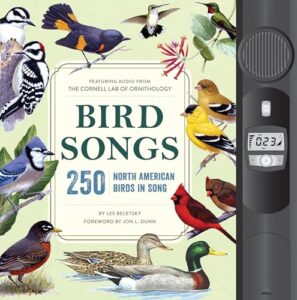
The Bird Songs North American Bird Guide by ornithologist Les Beletsky is one of the most satisfying all-in-one learning tools you’ll find. It profiles 250 North American species, pairing full-color illustrations with a built-in digital audio player that draws from the Macaulay Library’s trusted archive.
Each bird gets its own track number right beside its illustration, so you can hear the song instantly while studying the field marks. It’s a great choice for learning at home before heading out.
| Best For | Birdwatchers of all ages and skill levels who want to learn bird identification by sight and sound, from curious beginners to seasoned nature enthusiasts. |
|---|---|
| Bird Coverage | 250 North American species |
| Skill Level | All skill levels |
| Audio Feature | Built-in digital audio player |
| Format | Hardcover book with device |
| Geographic Focus | North America |
| Illustrations/Visuals | Colorful illustrations |
| Additional Features |
|
- 250 birds covered with colorful illustrations and real audio recordings, so you’re learning visually and by ear at the same time
- Written by ornithologist Les Beletsky with a foreword by Jon L. Dunn — you’re getting expertise you can actually trust
- Great for home study before a birding trip, or for educators teaching kids about North American wildlife
- No number pad on the audio player, so jumping to a specific track takes a bit of patience
- Runs on batteries, and first-time setup requires removing a protective tab — small thing, but easy to overlook
- Not ideal for users with hearing impairments since the audio component is central to the experience
2. Backyard Birdsong Guide Book
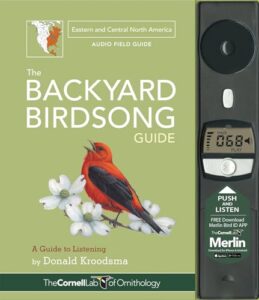
Donald Kroodsma’s Backyard Birdsong Guide takes a refreshingly hands-on approach to learning birds. The built-in sound module holds recordings of 75 common species — all sourced from Cornell Lab’s Macaulay Library — and you trigger each one with a numbered button matched directly to the bird’s page. No app required, no searching.
Each entry pairs a scientifically accurate illustration with a range map, so you’re checking sound, appearance, and location all at once. It’s a reliable starting point, especially if you’re just getting comfortable with backyard species.
| Best For | Beginning bird watchers of all ages who want a simple, hands-on way to learn backyard birds by sight and sound without relying on a phone or app. |
|---|---|
| Bird Coverage | 75 bird species |
| Skill Level | Beginners |
| Audio Feature | Touch-button electronic module |
| Format | Interactive handbook with module |
| Geographic Focus | Eastern and central North America |
| Illustrations/Visuals | Scientifically accurate illustrations |
| Additional Features |
|
- Touch-button sound module with 75 real bird recordings makes it easy to connect what you hear outside with what’s on the page
- Each entry pairs a detailed illustration with a range map, so you’re cross-referencing sound, look, and location all at once
- Comes with free access to Cornell Lab’s Merlin Bird ID App, giving you a solid digital companion when you’re ready to go further
- The audio player can be finicky — some users report it not working even with fresh batteries
- Only covers the most common vocalizations per species, so you won’t get the full picture of every bird’s sound repertoire
- The digital display can be tough to read, and the book itself runs smaller than some buyers expect
3. Haikubox Bird Sound Identifier
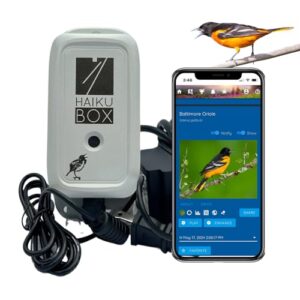
Imagine a device that listens to your backyard around the clock so you don’t have to. That’s exactly what Haikubox does. This small outdoor unit plugs into a standard outdoor outlet and connects to your Wi-Fi, running a neural network trained on thousands of bird vocalizations.
It captures three-second clips, generates spectrograms, and identifies species automatically — even owls calling at 2 a.m. You can review detections, listen to recordings, and share your findings through the app or website.
| Best For | Bird lovers of all experience levels who want a hands-off way to discover and track the species visiting their backyard, especially those who enjoy birding by ear or have limited vision or hearing. |
|---|---|
| Bird Coverage | Real-time species detection |
| Skill Level | Beginners and experts |
| Audio Feature | AI-powered sound recognition |
| Format | Electronic smart device |
| Geographic Focus | US and Canada only |
| Illustrations/Visuals | Spectrograms and app visuals |
| Additional Features |
|
- Identifies birds automatically by sound, day or night, so you never miss a visitor even when you’re not outside
- Gives you rich data — spectrograms, daily counts, hourly breakdowns — plus the ability to save and share recordings
- Comes with a one-year membership and was designed by actual bioacoustics experts, so the science behind it is solid
- Only works in the US and Canada, and needs both an outdoor outlet and a reliable Wi-Fi connection to function
- Struggles when multiple birds are calling at the same time, and won’t catch every species perfectly
- The mobile app has been noted to have bugs and a UI that leaves something to be desired
4. North American Birdwatching Guide

Some beginners reach for their phone the moment they hear an unfamiliar song — but there’s real value in having a solid print guide nearby. This North American Birdwatching Guide covers 200+ species with full-color illustrations, habitat notes, behavior details, and authentic bird sounds accessed through QR codes.
At 92 pages, it won’t weigh down your pack. It’s built for newcomers — families, hikers, teachers — who want a clear, battery-free reference that holds up when you’re deep in the field without a signal.
| Best For | Beginners, families, hikers, and nature lovers who want a simple, no-fuss guide to identifying North American birds in the field. |
|---|---|
| Bird Coverage | 200+ North American species |
| Skill Level | Beginners |
| Audio Feature | QR code audio links |
| Format | Illustrated paperback book |
| Geographic Focus | North America |
| Illustrations/Visuals | Full-color illustrations |
| Additional Features |
|
- Covers 200 species with full-color illustrations and real bird sounds via QR codes — everything you need in one place
- Lightweight and compact enough to toss in a bag without thinking twice
- Written for newcomers, so the identification tips are clear and easy to actually use
- QR codes require an internet connection, which isn’t always an option when you’re out on the trail
- Advanced birders will likely find the detail level too basic for their needs
- Only covers North American species, so it won’t help if you’re traveling abroad
5. Lyric Bird Song Identifier
Sometimes the best teacher is a device that does one thing really well. The Lyric Bird Song Identifier keeps it simple — press a bird’s picture, and it says the name, gives you a mnemonic phrase like “drink your tea,” then plays the actual song.
That three-step sequence builds memory fast. You get 40 songs across two SongCards covering common yard species, expandable to 100. No data needed, no screen to fumble with. Just clean audio, volume control, and birds.
| Best For | Backyard birders, curious kids, and anyone who wants a no-fuss way to learn bird songs without pulling out their phone. |
|---|---|
| Bird Coverage | 40 bird songs included |
| Skill Level | Kids and adults |
| Audio Feature | Song player with volume control |
| Format | Handheld electronic player |
| Geographic Focus | Eastern and western US |
| Illustrations/Visuals | No illustrations |
| Additional Features |
|
- Comes ready to go with 40 bird songs across two SongCards — no setup, no Wi-Fi, no hassle
- The name-plus-phrase-plus-song sequence makes it surprisingly easy to actually remember what you’re hearing
- Lightweight and simple enough for kids to use on their own, but genuinely useful for adults too
- The headphone jack is sized for older earbuds, so your modern headphones probably won’t fit
- Older SongCards may not work with newer units, which could frustrate longtime users
- Additional SongCards can get pricey, and the device itself is on the higher end for what it does
6. Backyard Bird Songs Book
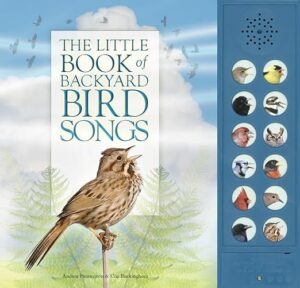
Next on the list, the Backyard Bird Songs book blends field guide with instant audio. Each page matches sharp bird artwork to its unique song, all at the push of a button. You get 75 common North American backyard species, which makes it practical for quick reference at home or outside.
The recordings come straight from the Cornell Lab’s Macaulay Library. Durable pages and a sturdy audio module mean you can toss this book in your pack without worry. It’s built for real-world use.
| Best For | Anyone who loves watching backyard birds and wants a fun, hands-on way to learn what they’re hearing — great for curious kids and adults alike. |
|---|---|
| Bird Coverage | 12 garden bird species |
| Skill Level | All ages |
| Audio Feature | 12 recorded bird songs |
| Format | Board book with sound module |
| Geographic Focus | North American gardens |
| Illustrations/Visuals | Full-color realistic pictures |
| Additional Features |
|
- Hear 12 real bird songs at the push of a button, so you can connect the sound to the bird right away
- Full-color artwork and interesting facts make it genuinely useful, not just a novelty
- Sturdy board book build means it can handle being passed around or tossed in a bag
- Only covers North American species, so it’s not much help if you’re birding elsewhere
- The volume can run loud, which might get old fast in a quiet setting
- Heavy use over time could wear down the sound module or pages
7. ZDH Handcrafted Wooden Bird Call Set
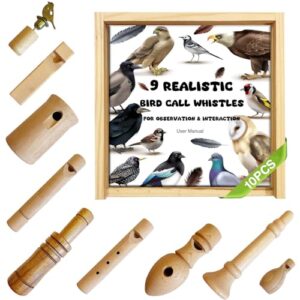
If you’re ready to move from passive listening to active practice, the ZDH Handcrafted Wooden Bird Call Set gives your hands something to do. This 9-piece kit is built from beechwood and zinc alloy, and each call produces a different tone — chirps, trills, tweets — depending on how you twist or squeeze it.
That variety trains your ear to distinguish pitch and rhythm, the same qualities you’d listen for in the field. It stores neatly in a wooden box with an acrylic window, so nothing gets lost on the trail.
| Best For | Bird enthusiasts, outdoor adventurers, and curious learners — kids and adults alike — who want a hands-on way to explore wildlife sounds. |
|---|---|
| Bird Coverage | 9 bird calls included |
| Skill Level | Kids, students, adults |
| Audio Feature | 9 mimicry bird callers |
| Format | Wooden instrument set |
| Geographic Focus | General/universal |
| Illustrations/Visuals | No illustrations |
| Additional Features |
|
- Nine distinct bird calls in one kit means real variety without hauling multiple tools into the field.
- Beechwood and zinc alloy construction feels solid and built to last through regular outdoor use.
- The wooden display box with an acrylic window keeps everything organized and honestly looks great on a shelf too.
- Getting loud, convincing calls takes practice — don’t expect perfect results right out of the box.
- The price point runs higher than basic single-call options, so it’s more of an investment.
- Wood isn’t the easiest material to sanitize, which can be a concern if it’s being shared in a classroom or group setting.
8. National Geographic Kids Bird Guide
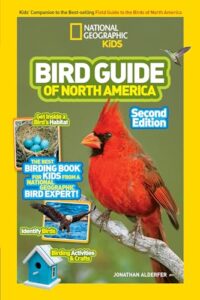
Not every birder starts with a field notebook and binoculars at age 30. Some of us got hooked long before that.
The National Geographic Kids Bird Guide of North America, written by bird artist Jonathan Alderfer, covers 150 species through full profiles and mini-profiles, grouping birds by habitat so young readers can match what they see outside to what’s on the page. Each entry describes the bird’s sounds in plain language — no jargon, just useful description.
| Best For | Kids who are just starting to get curious about birds and want a fun, easy way to learn without feeling overwhelmed. |
|---|---|
| Bird Coverage | 50 profiles, 100 mini-profiles |
| Skill Level | Kids |
| Audio Feature | No audio feature |
| Format | Paperback field guide |
| Geographic Focus | North America |
| Illustrations/Visuals | Photography and drawings |
| Additional Features |
|
- Covers 150 bird species with full profiles, mini-profiles, and range maps — plenty to keep a young birder busy for a long time
- Groups birds by habitat, so kids can flip to what they’re actually seeing outside instead of hunting through endless pages
- Packed with activities, crafts, and fun facts that make it feel more like an adventure than a textbook
- Only 150 species total, so serious young birders will eventually outgrow it pretty quickly
- Leans heavily toward the US side of things — Canadian birds and habitats don’t get as much love
- It’s more of a starter guide than a true field guide, so the detail level on less common species is pretty thin
9. Bird Talk Identification Guide Book
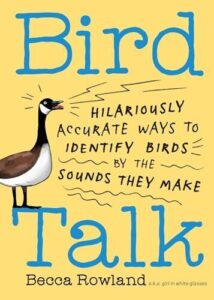
Not all guides take themselves too seriously — and that’s exactly what makes Bird Talk: Hilariously Accurate Ways to Identify Birds by the Sounds They Make worth picking up. Written and illustrated by Becca Rowland, this 256-page book covers 101 species using comparisons like “someone absolutely SCREAMING” for a Barn Owl or a backing truck for a Red-breasted Nuthatch. Once you’ve matched a call to a memory, brushing up on visual bird identification field marks helps you seal the deal when two similar species show up side by side.
The humor sticks. Readers report actually recognizing birds by ear after reading it, which is the whole point.
| Best For | Bird lovers, casual nature enthusiasts, and beginner-to-intermediate birders who want a fun, memorable way to learn bird calls without wading through a dry field guide. |
|---|---|
| Bird Coverage | 101 bird songs |
| Skill Level | All birder levels |
| Audio Feature | No audio feature |
| Format | Paperback reference book |
| Geographic Focus | General/universal |
| Illustrations/Visuals | Vibrant illustrations |
| Additional Features |
|
- The humor actually works — comparing bird calls to everyday sounds makes them stick in your memory way better than technical descriptions
- Covers 101 species with vibrant illustrations, so it’s genuinely useful, not just a novelty
- Works as both a reference book and a fun read, which makes it a solid gift option too
- Seasoned birders may find it too light on technical detail for serious identification work
- The comedic tone won’t click with everyone — if you prefer straight facts, this isn’t your book
- 101 species is a good start, but you’ll likely need additional resources to fill in the gaps
10. Puget Sound Bird Guide Book
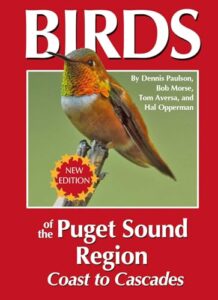
If you bird in the Puget Sound area, this pocket-sized guide was made for you. It covers over 200 species regularly seen across Western Washington, with large full-color photos and concise habitat notes that help you narrow down what’s singing before you even spot it.
The regional focus is its strength — fewer irrelevant species means less confusion when you’re learning local calls. Pair it with an audio app, and you’ve got a solid field combination.
| Best For | Beginner and experienced birders who spend time outdoors in the Puget Sound and western Washington region. |
|---|---|
| Bird Coverage | Regional Puget Sound species |
| Skill Level | Beginners and experienced |
| Audio Feature | No audio feature |
| Format | Pocket field guide |
| Geographic Focus | Western Washington only |
| Illustrations/Visuals | State-of-the-art photographs |
| Additional Features |
|
- Pocket-sized and lightweight, so it’s easy to toss in a bag and take into the field
- 450 sharp digital photos with color tabs make spotting and identifying birds quick and intuitive
- Region-specific focus cuts out the noise — only the species you’re actually likely to see
- Only useful in the Puget Sound area, so it won’t help if you bird outside western Washington
- At 28 pages, it’s pretty slim — seasoned birders may want something with more depth
- The small format can make text tough to read, especially in low light or on the go
Frequently Asked Questions (FAQs)
What is the best app to learn bird calls?
The best app for learning bird calls is Merlin Bird ID by Cornell Lab. It’s free, covers 2,000-plus species, and identifies songs in real time — perfect for beginners and seasoned birders alike.
What is the difference between bird calls and bird songs?
Think of songs as a bird’s billboard — bold, structured, and built to impress during breeding season.
Calls are quick texts: short, functional, sent year-round to warn, connect, or coordinate with the flock.
Is there a free version of Merlin?
Yes, Merlin Bird ID is completely free. The Cornell Lab of Ornithology offers it at no cost for iOS and Android, including Sound ID, Photo ID, range maps, and downloadable regional Bird Packs.
Can beginners identify birds by sound alone?
Ironically, yes — and no. Beginners can identify a handful of bold singers like Northern Cardinals fairly quickly.
But quiet species? Those take time, patience, and a lot of honest listening.
How long does it take to learn bird calls?
Most beginners recognize 5 to 10 common backyard birds within 2 to 4 weeks of regular practice. Full field confidence usually builds over one to two years of consistent listening.
Are bird songs different across seasons or regions?
Bird songs do shift with the seasons and vary by region.
Spring brings the most complex, frequent songs, while winter calls grow simpler and shorter.
Local dialects also differ across geography.
What is a spectrogram and how does it help?
Think of a spectrogram as a sound photograph — it maps pitch on one axis and time on the other, turning invisible songs into visible shapes you can study, compare, and remember.
How do nocturnal birds differ in their calls?
Nocturnal birds keep it simple. Owls use low, far-carrying hoots, while nightjars repeat the same phrase for hours.
Migrating birds offer just a quick chip or buzz as they pass overhead in the dark.
Conclusion
John Muir once said the clearest way into the universe is through a forest wilderness—but he didn’t mention you’d need your ears open to get there.
Learning bird calls and songs is what transforms a walk into a conversation. You stop moving through nature and start moving with it. Each call you recognize adds a new voice to that dialogue.
Keep listening, keep learning, and the forest will never sound empty again.
- https://www.basicsofbirding.com/blog/how-to-identify-birds-birding-by-ear-learning-songs-and-calls
- https://www.allaboutbirds.org/news/how-to-learn-bird-songs-and-calls/
- https://merlin.allaboutbirds.org
- https://www.birdwatchingdaily.com/birds/field-guides-and-apps/best-birdsong-apps/
- https://c2s2.engineering.cornell.edu/blogposts/FA23/UnravelingBirdSoundsWithSpectrograms