This site is supported by our readers. We may earn a commission, at no cost to you, if you purchase through links.
South Carolina sits along the Atlantic Flyway, one of the busiest bird migration corridors in North America—meaning your backyard might host species that spent last week in Canada and will winter in Costa Rica.
Over 400 bird species move through or nest in the state each year, yet habitat loss quietly chips away at the ecosystems that make those journeys possible.
Local bird conservation and birdwatching have become one of the most effective ways communities push back against that loss.
From the old-growth bottomlands of Congaree to the salt marshes of Cape Romain, South Carolina offers both the birds and the organizations working hard to protect them.
Table Of Contents
- Key Takeaways
- Leading Local Bird Conservation Organizations
- Community Involvement in Bird Conservation
- Birdwatching Activities and Educational Programs
- Top Birdwatching Locations in South Carolina
- Protecting Local Bird Species and Habitats
- Frequently Asked Questions (FAQs)
- What are the 5 S’s of birding?
- What is a bird conservationist called?
- How do I identify common California bird species?
- What equipment do beginners need for birdwatching?
- When is the best time of day to see birds?
- How can I attract specific bird species to my yard?
- What are the migration patterns for Bay Area birds?
- How do birds communicate with each other?
- What threats do migratory birds face globally?
- How does climate change affect bird breeding cycles?
- Conclusion
Key Takeaways
- South Carolina sits along the Atlantic Flyway, making it a critical stopover for 400+ bird species annually, yet habitat loss keeps quietly shrinking the ecosystems these birds depend on.
- Local groups like Waccamaw, Columbia, and Hilton Head Audubon societies are doing real, hands-on conservation work — from preserving thousands of wetland acres to running weekly community bird walks anyone can join.
- You don’t need a science degree to help — citizen science programs like eBird, the Christmas Bird Count, and the Great Backyard Bird Count turn your weekend birdwatching into data that drives actual conservation decisions.
- Planting native species like oaks, hollies, and serviceberry in your own yard is one of the most direct ways to support migrating and nesting birds, since these plants fuel the food web from caterpillars to berries.
Leading Local Bird Conservation Organizations
South Carolina has no shortage of people who care deeply about its birds. Across the state, several local organizations are doing the hands-on work of protecting species and the places they call home.
From backyard feeders to organized habitat restoration, everyday people are proving that individual bird conservation efforts can genuinely move the needle for local species.
Here’s a look at the groups leading that charge.
Augusta-Aiken Audubon Society Initiatives
The Augusta-Aiken Audubon Society puts bird conservation into action every day. From Silver Bluff Sanctuary to neighborhood parks, you’ll find real opportunities to connect with wildlife and your community:
- Free public field trips welcoming all ages
- Long-term Citizen Science counts dating back to 1978
- School garden projects supporting Habitat Restoration
- Community Outreach at Earth Day and local events
You can join expert-led nature walks during Augusta/Aiken Audubon field trips to explore early spring butterflies and dragonflies at Silver Bluff Sanctuary.
Charleston Natural History Society Programs
Closer to the coast, the Charleston Natural History Society has been championing bird conservation since 1905. Their field trips take you through cypress swamps, tidal marshes, and maritime forests — real habitat, not just a walk in the park.
You’ll encounter community outreach initiatives, environmental education programs, and citizen science counts that help track local wildlife. It’s conservation you can actually be part of.
Those interested in learning more about nature can explore guided interpretive programs offered across the region.
Columbia and Hilton Head Audubon Efforts
Inland, the Columbia Audubon Society brings bird conservation efforts to the Midlands through monthly field trips, education programs, and counts like the Great Backyard Bird Count. Down in the Lowcountry, the Hilton Head Audubon Society — with 400+ members — runs Audubon Newhall Preserve, logging 144 species in a single Christmas count.
Together, their wildlife preservation strategies include:
- Monthly birdwatching in Columbia outings open to everyone
- Habitat restoration at the 50-acre Newhall Preserve
- Community engagement through social birding events
- Audubon partnerships with state and local leaders
- Wildlife preservation through ongoing bird monitoring programs
Waccamaw Audubon Society Projects
Further up the coast, Waccamaw Audubon Society shows what real commitment to bird conservation looks like. They helped establish Waccamaw National Wildlife Refuge — protecting thousands of acres of floodplain wetlands — and earned a Rachel Carson Award for it.
Their work mirrors the broader push by groups like BirdLife International to protect critical habitats — efforts you can explore further through this guide on saving bird populations through habitat and conservation.
Their weekly Wednesday bird walks at Huntington Beach State Park, habitat restoration plantings, and citizen science bird surveys make wildlife preservation something you can actually be part of.
Community Involvement in Bird Conservation
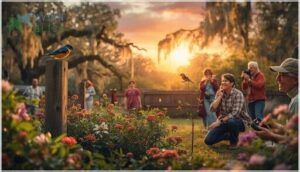
Bird conservation in South Carolina isn’t just for scientists or full-time naturalists — it’s something your whole community can be part of. Whether you’re planting native shrubs in your backyard or logging sightings on a weekend walk, every action adds up.
Here’s how locals are getting involved and making a real difference.
Habitat Restoration and Improvement Projects
Restoring habitat isn’t just planting a few shrubs — it’s rebuilding entire ecosystems. South Carolina’s habitat restoration projects reflect serious conservation planning, from wetland restoration at Francis Beidler Forest to native plantings in urban parks.
You can see ecological conservation methods at work everywhere:
- Filling old ditches to restore natural water levels
- Planting keystone native trees for habitat design
- Connecting forest corridors for wildlife preservation strategies
Volunteer and Citizen Science Opportunities
Want to make a real difference? Citizen science opens the door. You don’t need a biology degree — just curiosity and a free app like eBird or Merlin. These volunteer opportunities feed directly into research projects that track population trends across South Carolina.
| Program | When | What You Do |
|---|---|---|
| Great Backyard Bird Count | February | Log 15-min bird counts |
| Christmas Bird Count | Dec 14–Jan 5 | Survey fixed 15-mile circles |
| Project FeederWatch | Nov–April | Count feeder birds weekly |
Your sightings fuel real wildlife conservation efforts.
Creating Bird-Friendly Neighborhoods
Your own backyard can become a haven for birds. Native Plantings — oaks, hollies, and serviceberry — draw in caterpillars and berries that birds genuinely need.
Add bird-safe window treatments, dim outdoor lights during migration, and skip the pesticides. These Eco Friendly Designs support Wildlife Conservation right where you live, turning everyday choices into meaningful habitat preservation and bird protection for your whole neighborhood.
Birdwatching Activities and Educational Programs
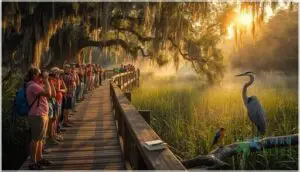
South Carolina has some great ways to get outside and connect with birds, whether you’re brand new to birding or have been at it for years.
Local organizations across the state run programs that meet you right where you’re. Here’s a look at what’s available to help you get started or go deeper.
Guided Birdwatching Walks and Field Trips
Getting out on a guided bird walk might just be the easiest way to fall in love with local bird species you’ve walked past a hundred times.
Birding field trips across South Carolina usually run 1.5 to 2 hours and include:
- Loaner binoculars for beginners
- Early 8 a.m. starts for peak activity
- Small groups of 10–15 participants
- Conservation outreach built into every stop
- eBird checklist recaps at the end
Birdwatching tours and guided walk structure make bird identification feel natural, not overwhelming.
Bird Identification Workshops and Classes
If you’ve ever squinted at a mystery bird and thought, “what on earth is that?”—workshops on bird identification are your answer.
You’ll cover bird anatomy, binocular techniques, and vocalization training for species like Carolina wrens and cardinals. Instructors use field guides and apps like Merlin to sharpen your species recognition skills.
Hilton Head Audubon’s multi-session courses run around $40–$50 and welcome complete beginners.
Youth and Family Birdwatching Initiatives
Family Birding Days at the Dill Sanctuary near Charleston are a great starting point for kids discovering Youth Birding. Each February, families join guided walks tied to the Great Backyard Bird Count, logging sightings through eBird and Merlin.
Teen Conservation deepens through Carolina Young Birder Scholarships, covering Bird Camps and environmental education programs. These community outreach efforts make birding field trips genuinely accessible for every family.
Top Birdwatching Locations in South Carolina
South Carolina is packed with bird spots where birds and birders alike feel right at home.
Whether you’re chasing warblers through old-growth forest or scanning wetlands for waterfowl, the right location makes all the difference.
Here are three spots worth putting on your list.
Hampton-Preston Gardens and Historic Columbia
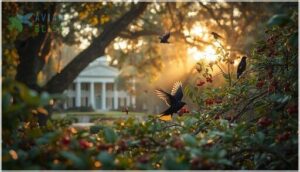
Tucked into Columbia’s historic core, Hampton-Preston Gardens is a genuine urban wildlife gem. Historic Columbia’s free “Birdwatching in the Gardens” program makes bird species identification accessible to everyone — no experience needed.
Garden conservation efforts here support over 100 species year-round through layered plantings and mature canopy trees.
- Cedar Waxwings feasting on seasonal berries
- Songbirds foraging through vertical garden layers
- Migratory visitors resting along the urban corridor
Congaree National Park Birding Trails
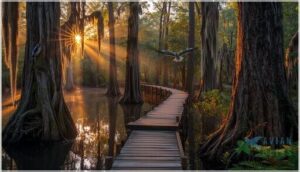
From Columbia’s gardens to old-growth wilderness, Congaree National Park takes birdwatching to another level. The free, accessible Boardwalk Loop Trail stretches 2.6 miles through floodplain ecology rich with life — Barred Owls, Pileated Woodpeckers, and Swallow-tailed Kites call this place home.
Trail conditions vary seasonally, so spring visits reward you most. Park accessibility is excellent, with no entrance fee required.
Saluda Shoals Park and Harbison State Forest
Two more gems round out your South Carolina birdwatching map. Saluda Shoals Park sits along the Saluda River, where River Bird Habitats and Wetland Preservation create ideal conditions for spotting migrants following Bird Migration Patterns each spring and fall. Harbison State Forest offers 30+ miles of Forest Trail Systems through pine and hardwood.
Top species you’ll find:
- Cerulean and Prothonotary Warblers during migration peaks
- Belted Kingfisher along the riverfront
- Eastern Bluebirds near powerline corridors
- Red-shouldered Hawk hunting the tree line
- Swamp Sparrow wintering in wetland edges
Both sites reflect strong Park Conservation Efforts supporting Wildlife Preservation in South Carolina across these essential Nature Reserves and Parks.
Protecting Local Bird Species and Habitats
South Carolina’s birds need more than just a good place to land — they need healthy habitats, the right food sources, and people paying attention.
The good news is there’s a lot you can do to help, starting right in your own backyard. Here’s what matters most in protecting the birds that call this state home.
Carolina Wren and Other Native Birds
South Carolina’s state bird, the Carolina Wren, is a great starting point for anyone curious about ornithology. You’ll recognize it by its reddish-brown back, bold white eyebrow stripe, and loud, cheerful song.
It nests in flowerpots, brush piles, even mailboxes. Alongside it, northern cardinals and mockingbirds add to bird species diversity, making wildlife preservation in South Carolina a rewarding, everyday adventure.
Importance of Native Plants for Birds
Native plants are the backbone of real habitat restoration in your yard. Oaks and cherries alone host hundreds of caterpillar species — essential protein for nestlings during breeding season.
Native berries fuel migrating birds with fat content up to 48 percent. Supporting plant diversity means supporting the whole food web. That’s ecological conservation and biodiversity preservation working together, right outside your door.
Native berries fuel migrating birds with fat up to 48 percent — plant diversity sustains the whole food web
Monitoring Bird Populations and Migration Patterns
Momentum is building around species monitoring in South Carolina, and you can be part of it. Bird tracking systems like eBird and BirdCast radar map migration patterns of birds in real time across the Atlantic Flyway.
- Log sightings through eBird for habitat analysis
- Join Christmas Bird Counts each winter
- Participate in the Great Backyard Bird Count
- Follow tagged Red Knots via satellite data
- Report migration patterns to support conservation efforts
Frequently Asked Questions (FAQs)
What are the 5 S’s of birding?
Think of the 5 S’s as your field shortcut: Size, Shape, Shade, Sound, and Space.
Each clue — from Bird Size Estimation to Bird Space Habitat — sharpens your Bird Sound Recognition and overall birdwatching instincts fast.
What is a bird conservationist called?
A bird conservationist goes by several names depending on their focus. You might hear ornithologist, avian ecologist, or conservation biologist — each reflecting a unique role in protecting bird species and habitats.
How do I identify common California bird species?
Start with bird size comparison, then check beak shapes and plumage colors.
Wing markings and feather patterns clinch the ID.
Apps like eBird make spotting local birds and ornithology and bird species records incredibly easy.
What equipment do beginners need for birdwatching?
You don’t need much to get started. A solid pair of binoculars, a field guide or birding app like Merlin, and comfortable gear are your core essentials for any birdwalk.
When is the best time of day to see birds?
Ever wonder why early risers see the most wildlife? Dawn Chorus peaks right after sunrise, when Morning Feeding kicks into high gear.
That first two-hour window delivers peak Bird Activity across Daylight Hours.
How can I attract specific bird species to my yard?
Matching your yard to what specific species actually need makes all the difference.
The right Bird Seed Selection, Feeder Placement Strategies, Native Plant Choices, Water Feature Designs, and Yard Layout Tips turn your space into a welcoming habitat.
What are the migration patterns for Bay Area birds?
Oddly enough, the Bay Area‘s busiest migration season feels like a quiet one.
Millions of shorebirds follow Pacific Routes along the Flyway Migration corridor, peaking between March and November in seasonal patterns that shape local birdwatching year-round.
How do birds communicate with each other?
Birds communicate through vocal songs, bird calls, visual displays, chemical signals, and tactile communication.
Ornithology and avian biology research reveals that bird species weave these channels together, making ornithological research into bird watching a genuinely fascinating pursuit.
What threats do migratory birds face globally?
Migratory birds face a gauntlet of threats globally — Habitat Loss, Climate Impacts, Light Collisions, Illegal Hunting, and Pesticide Effects chip away at populations, making Wildlife Preservation and habitat conservation more urgent than ever.
How does climate change affect bird breeding cycles?
Climate change is pushing bird breeding cycles earlier, disrupting nesting success rates and food timing.
Temperature effects now misalign chick needs with insect peaks, straining bird migration patterns and challenging long-term wildlife preservation strategies.
Conclusion
Every bird you spot and every habitat you help restore is a drop in the bucket—until those drops fill something worth protecting.
Local bird conservation and birdwatching in South Carolina isn’t just a hobby; it’s how ordinary people become part of a special story. The warblers, wrens, and shorebirds moving through this state don’t know state lines or politics. They just need people like you showing up, paying attention, and caring enough to act.
- https://www.gviusa.com/blog/smb-bird-citizen-science-contributing-to-conservation-efforts-one-sighting-at-a-time/
- https://www.urbanhabitats.org/v03n01/citizenscience_full.html
- https://www.birds.cornell.edu/home/us-state-level-conservation-data-summaries/
- https://ncwildflower.org/the-best-bird-feeders-are-native-plants-heres-why/
- https://birdsconnectsea.org/habitat-athome/