This site is supported by our readers. We may earn a commission, at no cost to you, if you purchase through links.
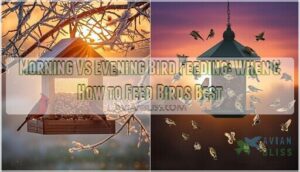
You might assume birds visit feeders whenever hunger strikes, but their feeding schedules follow surprisingly precise biological rhythms. Most backyard species concentrate their visits during two distinct windows: the critical dawn-through-mid-morning period when they’re recovering from overnight fasting, and the late-afternoon-to-dusk rush as they stockpile energy reserves before roosting.
Understanding morning versus evening bird feeding patterns doesn’t just satisfy curiosity—it transforms how you support the Cardinals, Chickadees, and finches that depend on your offerings. Each period attracts different species with unique behavioral needs, from the territorial morning rush dominated by early risers to the cooperative evening flocks preparing for night survival.
Timing your feeding strategy around these natural cycles helps you provide exactly what birds need, when they need it most.
Table Of Contents
Key Takeaways
- Birds concentrate feeding during two critical windows—dawn through mid-morning when they recover from overnight fasting, and late afternoon to dusk when they build fat reserves for nighttime survival.
- Morning feeders attract territorial early risers like Cardinals and Chickadees seeking quick energy replenishment, while evening hours draw finches and sparrows focused on storing calories before roosting.
- Seasonal shifts, weather patterns, and daylight hours dramatically reshape feeding schedules, with winter’s scarcity intensifying dawn activity and compressed daylight narrowing feeding windows to brief peak periods.
- Strategic feeder placement at least five feet high, regular cleaning every two weeks, and rotating fresh seed supplies in cool storage create reliable feeding stations that support birds’ natural biological rhythms year-round.
Comparing Morning and Evening Bird Feeding
Understanding when birds visit your feeders isn’t just about watching the clock—it’s about recognizing two distinct windows of activity that serve very different purposes.
Morning and evening feeding periods attract different species, driven by unique biological needs and behavioral patterns. Let’s explore how these two peak times compare and what you can expect to observe during each.
Key Differences in Feeding Times

Morning feeding happens at dawn through mid-morning, when birds refuel after their overnight fast and take advantage of cooler temperatures and peak insect activity. Evening supper runs from late afternoon to dusk, as your feathered visitors build essential fat reserves before roosting.
These bird activity peaks create distinct feeding time zones in daily rhythm patterns, with each period offering unique foraging strategies that shift with seasonal feeding shifts. Understanding language patterns can also help you better communicate with fellow bird enthusiasts about the best feeding times.
Typical Bird Species Active at Each Period

You’ll notice Northern Cardinals and Black-capped Chickadees dominating the morning rush at first light, refueling after their overnight fast. Blue Jays usually arrive after the initial morning activity subsides.
Offering the right mix of seeds keeps these early visitors coming back and attracts even more species throughout the day.
Evening supper attracts different feeder visitors—finches and sparrows concentrate their visits during late-afternoon hours, taking advantage of daily rhythms that support bird migration preparation and showcase notable species diversity across both feeding windows.
Understanding the importance of methodological rigor is essential for scientific studies on bird behavior.
Bird Behavior Patterns Observed

Beyond which species show up, you’ll want to watch how birds actually behave at different times. Morning rush brings intense competition—dominant species like jays arrive after smaller birds, while mixed-species foraging flocks form more frequently during resource-scarce seasons, boosting predator detection.
Evening feeder dynamics shift entirely:
Nocturnal species become more visible, and understanding where different birds gather by habitat type helps you position yourself for the best sightings.
- Social interactions become less aggressive as birds prioritize fat reserves over territory
- Flocking behaviors intensify before dusk, supporting bird migration preparation
- Foraging strategies adapt to declining light, with quicker visits replacing leisurely morning feeding patterns
These wild bird behavior rhythms reveal fascinating insights into avian behavior study and survival tactics.
Recognizing basic bird identification characteristics helps you decode these behaviors and understand what each movement actually means.
Benefits of Morning Bird Feeding

Morning feeding offers birds something they desperately need—a reliable energy source right when their bodies are running on empty. You’ll find this timing creates a natural rhythm that benefits both the birds and your ability to observe them up close.
Keeping your feeders stocked with fresh, properly stored seed from a quality bird nutrition food guide ensures those early visitors get the nutrients they need to thrive.
Let’s look at three key reasons why filling your feeders at dawn makes such a meaningful difference.
Energy Replenishment After Overnight Fast
After spending the night without food, your backyard visitors face depleted energy reserves that demand immediate replenishment. Birds metabolize stored fats during those dark hours, so the morning rush to your feeders reflects genuine physiological urgency.
This peak in morning foraging aligns perfectly with their daily rhythms and metabolic needs, making dawn feeding critical for bird nutrition and energy storage that sustains their entire day ahead.
Enhanced Bird Watching Opportunities
When you position yourself by your feeders during the morning rush, you’ll witness bird behavior that simply doesn’t happen later in the day. This golden window for backyard bird watching reveals feeding patterns, courtship displays, and species diversity that transform ordinary observation into genuine discovery:
- Peak activity levels showcase competitive interactions and dominance hierarchies among resident species
- Dawn arrivals provide valuable data on bird migration timing and local population shifts
- Enhanced visibility in soft morning light illuminates plumage details critical for accurate species identification
- Structured thirty-minute observation sessions yield repeatable data on feeding habits and schedules
- Strategic feeder placement near natural perches captures pre-feeding staging behaviors rarely seen at dusk
Types of Food Best Offered in The Morning
During the morning rush, you’ll want to stock your feeders with foods that match bird feeding patterns and energy requirements. Black oil sunflower seeds attract seed-eating birds rebuilding overnight reserves, while cracked corn and millet provide quick morning grains.
Fresh fruit offerings supply natural sugars for warblers and thrushes. Balancing these energy sources with protein-rich peanuts creates the nutrient balance that fosters diverse bird feeding habits at dawn.
Advantages of Evening Bird Feeding

Evening feeding plays a different but equally important role in your backyard birds’ daily survival. As daylight fades, birds shift their focus to preparing for the long, cold hours ahead, and your feeder becomes a critical resource for that preparation.
Let’s explore how evening feeding aids your feathered visitors in ways morning feeding simply can’t.
Building Fat Reserves for Night Survival
Evening feeding plays a critical role in your backyard birds’ survival through cold winter nights. Small songbirds can burn up to 75 percent of their fat reserves during a single dark period, making dusk feeding patterns essential for their nocturnal energy needs.
Evening feeding is critical for backyard birds, as small songbirds burn up to 75 percent of their fat reserves during cold winter nights
Understanding how evening food aids winter foraging:
- High-fat foods like suet help birds rapidly build fat storage strategies before roosting
- Small passerines intensify late-afternoon feeding to prepare for 13-15 hour fasting periods
- Fat reserves fuel thermoregulation methods, including shivering thermogenesis throughout the night
- Birds balance energy needs against flight costs, adjusting dusk body mass accordingly
- Morning feeding alone can’t replace the protective fat levels gained from evening feeding habits
Your feeders stocked before dusk directly aid bird feeding patterns that determine overnight survival, especially as temperatures drop and nights lengthen.
Attracting Different Bird Species
Different bird species respond to evening feeder setups in surprisingly varied ways. Your strategic feeder design tips and species-specific foods can transform dusk into prime viewing hours for cardinals, finches, and larger songbirds that prefer quieter feeding times.
Matching bird seed types to backyard birds’ feeding habits and schedules reveals distinct bird behavior patterns you’ll miss during morning rushes.
| Evening Visitor | Attraction Strategy |
|---|---|
| Cardinals | Sunflower seeds in platform feeders |
| Woodpeckers | Suet cages with peanut blends |
| Finches | Nyjer seed in tube-style bird feeder |
Evening Feeding Challenges and Solutions
Nocturnal feeding presents unique hurdles you’ll need to navigate. Dusk predator activity, particularly from cats and hawks, can make evening foraging risky for smaller birds, disrupting their natural nighttime roosting patterns.
You’ll also face moisture and mold concerns without proper feeder protection. Strategic placement in sheltered spots and understanding bird feeding habits and schedules help you overcome these evening feeding challenges while supporting essential wildlife nutrition.
Factors Influencing Optimal Feeding Time
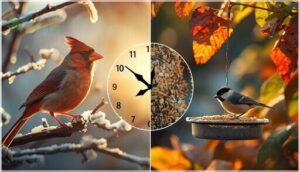
The best time to fill your feeders isn’t just about morning versus evening—it’s about understanding what shapes bird behavior throughout the day and across the year. Several key factors determine when birds will visit most actively, from the changing seasons to the simple matter of daylight hours.
Let’s look at what influences these feeding patterns so you can time your efforts for maximum success.
Seasonal Changes and Bird Feeding Schedules
As seasons shift, bird feeding schedules naturally adjust to climate influence and migration patterns. Winter’s scarcity intensifies morning feeding periods when birds desperately replenish overnight losses, while spring and summer bring seasonal adaptation as natural foods reduce feeder dependence.
You’ll notice bird species diversity changing through autumn migration pulses, requiring flexible feeder maintenance. Understanding these seasonal bird feeding rhythms helps you support your feathered visitors year-round.
Weather and Daylight Impacts
Beyond seasonal shifts, weather patterns and daylight hours dramatically reshape the best times to feed birds. Temperature fluctuations drive metabolic demands—cold snaps push hungry visitors to your feeder during both morning feeding and evening feeding windows as they seek high-fat calories. Cloud effects and daily cycles alter when species arrive, while shorter winter daylight compresses feeding into narrow dawn and dusk periods.
- Rain reduces activity, so stock feeders before storms pass
- Wind sends birds to sheltered feeding stations
- Snow cover increases reliance on your provisions
- Warm days may decrease overall visitation frequency
- Extreme weather creates sudden spikes in feeder use
Predator Activity and Safety Considerations
Predator risks change dramatically with the light. Hawks and cats hunt most aggressively at dawn and dusk—precisely when birds crowd your feeders. Exposed setups invite danger, so elevated bird feeders with shields or baffles cut predation by 20–40%.
Store feeders overnight to reduce nocturnal risks, and position them near cover but away from ambush spots, blending safety measures with smart feeder security for genuine wildlife conservation.
Food Type and Availability
Beyond safety, what you offer shapes when birds show up. Black oil sunflower seeds and suet draw seed-eating birds at dawn—they need quick fat after fasting overnight. Mealworm benefits insectivores later, when activity peaks.
Food storage matters too: stale seed preferences shift visitor patterns. Smart feeder designs with weather shields keep nutrient balance consistent, helping you match bird food to natural rhythms throughout morning and evening.
Tips for Effective Morning and Evening Feeding
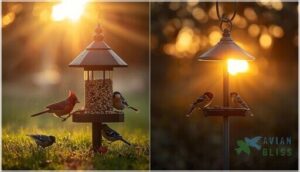
Once you understand when birds feed most actively, you can fine-tune your approach to make the most of those morning and evening peaks. Small adjustments to what you offer, where you place feeders, and how you maintain them can dramatically increase both bird visits and your enjoyment.
Let’s look at some practical strategies that help create a reliable feeding station birds will return to day after day.
Maintaining Fresh and Varied Food Supplies
Fresh bird food makes all the difference in attracting seedeating birds and supporting bird nutrition and health. You’ll want to rotate seed stocks regularly—store them in cool, airtight containers to prevent spoilage. Replace nectar every two to three days to avoid fermentation, while suet and mealworms need UV-protected storage.
Smart food storage tips and consistent feeding schedules keep your backyard visitors healthy year-round.
Feeder Placement and Hygiene
Where you place your backyard bird feeders matters as much as what you fill them with. Mount feeders at least five feet high to deter ground predators, and position them fifteen meters from windows.
Clean bird feeders every two weeks with diluted bleach to protect bird health, and dry them completely. Proper sanitation methods and thoughtful feeder height choices create a safer space for wild bird care.
Observing and Recording Bird Activity
Tracking bird behavior transforms casual bird watching into meaningful wildlife observation. You’ll notice activity patterns emerge when you record species identification, arrival times, and feeder placement preferences during morning feeding sessions and evening visits.
Simple notes on which birds arrive first, how long they stay, and their interactions provide data analysis insights that deepen your understanding of backyard bird feeding rhythms.
Creating a Bird-Friendly Environment
Native plantings form the foundation of wildlife gardening, fostering natural bird feeding habits beyond what feeders alone provide. You’ll attract diverse species by incorporating dense shrubs for bird shelter, installing water features for year-round hydration, and practicing pest control without harmful chemicals.
This garden design approach complements your morning and evening feeding routines while advancing bird conservation through creating a bird-friendly environment.
Frequently Asked Questions (FAQs)
Do birds feed during midday hours?
While the morning rush might steal the spotlight, midday isn’t exactly a ghost town at your feeders. Birds do visit during those sun-soaked hours, though activity noticeably drops compared to dawn’s frenzy and evening’s final feeding push.
How does migration timing affect feeding patterns?
Migration timing dramatically reshapes feeding schedules, as long-distance travelers intensify dawn foraging after nocturnal flights.
Refueling at stopover sites, where seasonal shifts in insect availability drive their energy needs, these travelers adapt their feeding strategies accordingly.
Can artificial lighting disrupt bird feeding schedules?
Yes, artificial illumination can shift circadian rhythms and feeding schedules in urban birds. Light pollution may extend active foraging periods or alter dawn feeding times, disrupting natural patterns that enhance wildlife watching opportunities.
Do baby birds visit feeders with adults?
You’ll often spot fledglings at bird feeders alongside their parents during early summer, especially at nectar and seed stations.
Here, adults demonstrate foraging techniques while still providing supplemental parental care and chick nutrition.
Should feeders be removed during certain months?
Keeping feeders up year-round seems ideal, yet temporary removal during disease outbreaks or severe weather transitions aids wildlife conservation.
Through sustainable bird feeding practices, this approach enhances seasonal bird feeding strategies and feeder hygiene while protecting winter feeding routines.
Conclusion
Picture a Cardinal catching the first golden rays at your feeder, then returning as shadows lengthen—two visits serving two survival needs. Your understanding of morning versus evening bird feeding transforms scattered offerings into strategic support aligned with natural rhythms.
By matching food types, feeder placement, and timing to these biological patterns, you’re not just filling feeders—you’re becoming part of the intricate daily cycle that sustains your backyard community through every season.
- https://www.sciencedirect.com/science/article/pii/S0749208123000268
- https://x.com/godofprompt/status/1990526288063324577
- https://www.onelook.com/?loc=olthes1&w=subpoint
- https://academichelpexpress.blog/2024/08/please-use-the-bulleted-points-and-the-rubric-below-to-guide-your-work-your-pa/
- https://pmc.ncbi.nlm.nih.gov/articles/instance/9553038/bin/pone.0275964.s005.docx