This site is supported by our readers. We may earn a commission, at no cost to you, if you purchase through links.

You might be surprised to learn that the small park down your street could host more than 50 different bird species throughout the year. Natural bird habitats near me aren’t limited to remote wilderness areas—they’re often hiding in plain sight within your own community. Urban parks, wetlands, forests, and even open fields create essential stopover points for migrating birds and year-round homes for resident species.
Unfortunately, many of these habitats face growing threats from development and climate change, which makes understanding and protecting them more important than ever. Whether you’re hoping to spot a colorful warbler during spring migration or want to support the birds that call your area home, knowing where to look and how these habitats function will transform the way you see your local landscape.
Table Of Contents
Key Takeaways
- Local bird habitats like parks, forests, wetlands, and fields support a surprising diversity of bird species, often right in your neighborhood.
- Habitat loss from development and climate change is causing sharp declines in bird populations, making conservation and protection efforts more urgent than ever.
- Simple actions at home, such as planting native plants and preventing window collisions, can significantly improve conditions for birds in your area.
- Seasonal migrations bring many bird species through local hotspots, and timing your visits during spring and fall increases your chances of seeing a wide variety.
Types of Natural Bird Habitats Near You
Birds live in a surprising variety of habitats, even in areas you pass by every day. Each habitat type sustains different bird species based on the food, shelter, and nesting sites it provides.
Let’s look at the main habitat types you’ll find near you and the birds they attract.
Urban Parks and Green Spaces
Right in the middle of cities, urban parks provide surprising bird habitat. These green spaces act as urban oases, offering microhabitat diversity through lawns, trees, and shrubbery. Their economic value extends beyond recreation, supporting migratory stopovers along major flyways. A recent study indicates that greenspace area matters most for urban bird diversity.
- Park bird richness increases with total greenspace area
- Connectivity among patches enhances species diversity
- Structural complexity attracts varied bird communities
Urban birding reveals nature’s resilience within developed landscapes.
Forested Areas and Woodland Trails
Beyond city parks, forested areas and woodland trails offer critical habitat for birds year-round. Forests support up to 90 distinct bird species, but habitat quality matters more than size alone. Trail bird diversity peaks where tree structure varies, yet forest fragmentation impact threatens specialists.
Forest bird decline accelerates with degradation—62% of monitored species face population loss. According to a recent report, bird populations continue to decline across the US. Conservation urgency now centers on protecting these ecosystems and maintaining habitat protection.
Wetlands and Marshes
Wetlands and marshes rank among the most valuable ecosystems for birds, yet they’re vanishing faster than any other natural habitat. More than one-third of North American bird species depend on these areas for food, breeding, and shelter.
You’ll find amazing bird diversity here—a recent survey identified 218 species in wetland habitats. Wetlands also serve as critical migration stopovers, with over 2 million waterfowl passing through key corridors each spring.
Grasslands and Open Fields
Grasslands and open fields support a unique but struggling community of birds. Since 1970, grassland bird decline has reached 53%, with 720 million birds lost. You can help reverse this trend through habitat preservation and conservation efforts.
Species diversity in well-managed grasslands remains impressive—studies document 86 species where natural habitats are protected. These areas provide critical economic value while sustaining birds like meadowlarks and sparrows through thoughtful habitat management.
Coastal and Waterfront Habitats
Coastal zones are biodiversity hotspots you won’t want to overlook. Recent surveys identified 69 waterbird species with peak counts exceeding 166,000 individuals, demonstrating considerable species diversity along waterfront areas.
Estuary importance can’t be overstated—shorebird abundance increases dramatically near these productive zones. However, habitat restoration is urgently needed as climate threats accelerate declines:
- Shorebird decline has reached 70% since 1980 for some species
- Sea level rise floods critical marsh habitat
- Over 75% of Eastern black rails disappeared in two decades
- 59% of waterbirds show declining populations
- Distance from estuaries greatly reduces bird numbers
Protecting coastal bird habitats safeguards these essential ecosystems.
Best Local Birding Hotspots and Locations
Finding great birding spots near you doesn’t have to be complicated. Whether you’re searching online databases or asking local birding clubs, you’ll discover places that attract diverse species throughout the year.
Let’s look at where you can find the best birding opportunities in your community.
Finding Birding Sites in Your Area

You can discover prime bird watching locations by exploring eBird hotspots, which catalog millions of observations at birding hotspots in boroughs and natural habitats nationwide.
Local guides and community resources from Audubon societies or state wildlife trails help identify bird sanctuaries and habitats near you.
Data-driven selection using regional checklists and accessibility options—like proximity to transit or roads—ensures you’ll find productive sites without frustration.
Public Parks With High Bird Diversity
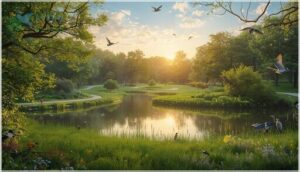
You’ll find well-maintained city parks support impressive bird species counts, sometimes hosting dozens of species in a single visit. Park size and vegetation structure matter most—larger parks with layered canopies, native plantings, and water features consistently attract diverse bird communities. Even under human impact, effective park management balances visitor access with bird habitats and protection, making urban birding accessible while advancing wildlife management and bird conservation efforts.
Look for:
- Parks exceeding ten acres with interior forest zones
- Sites featuring ponds, streams, or wetland edges
- Areas offering mixed habitats—woodlands, shrubs, and grasslands
- Well-surveyed locations with active birding communities
Nature Reserves and Wildlife Refuges
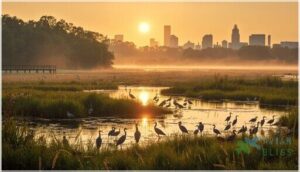
Wildlife refuges anchor regional conservation, protecting over 147 million acres across the United States. Despite funding trends that haven’t matched expansion, these hotspots generate $3.2 billion annually while safeguarding migration corridors and breeding grounds essential to wildlife populations.
You’ll access critical bird habitat at more than 100 refuges within 25 miles of major cities, supporting both urban access and management challenges.
Seasonal Bird Migration and Viewing Opportunities
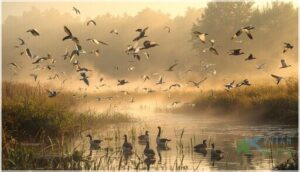
Bird migration transforms local habitats into temporary stopovers twice a year, offering you front-row seats to one of nature’s most noteworthy journeys.
Understanding when and where different species pass through your area can help you catch peak viewing opportunities you might otherwise miss.
Here’s what to watch for during spring and fall migration seasons.
Spring and Fall Migration Patterns
Bird migration patterns shift dramatically between seasons, driven by Migration Timing and climate changes. Spring journeys happen faster, while fall periods have lengthened over five decades.
You’ll notice Adaptive Responses as migratory birds adjust Route Patterns based on temperature cues and food availability at hotspots. Migration Intensity peaks when weather conditions align perfectly, with billions of birds traveling overnight through established corridors, where Influences Success include insect abundance and bird habitat quality.
Peak Viewing Times for Different Species
Timing your birding outings around when different bird species are most active dramatically improves your chances of successful sightings. Dawn Chorus activity peaks between sunrise and 11 AM for songbirds, while shorebirds concentrate during the 3-hour windows around high tide.
Weather Impact matters too—overcast days extend morning viewing periods, and Crepuscular Activity at dusk offers another prime window for grassland species and waterfowl returning to wetland hotspots.
Raptors and Daytime Migration
Raptors soar along mountain ridges and coastal corridors during daylight hours, making them easier to spot than nocturnal migrants.
You can watch hawks, eagles, and falcons navigate the Atlantic Flyway from established hawkwatch sites, where observation data shows that hundreds to thousands of migrating birds pass through during peak fall migration between August and November.
Species diversity reaches its maximum in October, when thermal updrafts help raptors along their migration routes.
Songbirds and Warblers
Unlike raptors, songbirds and warblers migrate at night, touching down in patches of forest to rest and feed during daylight. You’ll find the highest diversity during spring and fall migration peaks, but habitat loss threatens these populations.
Nearly 3 billion songbirds have vanished from North America since 1970, making viewing hotspots with adequate tree cover essential for observing species like Yellow Warblers facing environmental threats and population declines.
Since 1970, North America has lost nearly 3 billion songbirds, making tree-covered habitats critical for species like Yellow Warblers facing steep declines
Common Bird Species in Local Habitats
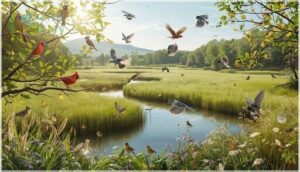
Knowing which birds call your area home helps you understand the health of local habitats and what to look for on your next outing. Some species stay put all year, while others pass through only during migration seasons.
Let’s look at the common birds you’re likely to encounter in different habitat types near you.
Year-Round Resident Birds
Throughout the calendar, certain avian species remain in your local bird species communities without migrating. These year-round residents demonstrate strong habitat dependency and urban adaptation. You’ll often spot these reliable neighbors:
- House Finches – thriving in cities with populations exceeding 80 birds per park
- Northern Cardinals – favoring areas with dense tree canopy
- American Robins – maintaining consistent breeding patterns across seasons
Their population stability indicates healthy habitat conditions.
Seasonal Migrants and Visitors
While resident birds stay put, seasonal migrants and visitors arrive at predictable times each year. Spring migration peaks from April to early May, bringing neotropical species like warblers. Fall migration runs mid-August through October, with September seeing half of all annual movement along flyways.
You can track over 195 distinct migratory bird species at local stopover sites using real-time dashboards like BirdCast during these peak viewing opportunities.
Species Indicators of Healthy Habitats
Certain birds tell you whether an ecosystem’s thriving or struggling. Coal Tits and Semi-collared Flycatchers signal strong forest bird richness, while wetland wading birds reflect prey availability and habitat quality metrics.
When bark-probing specialists vanish and generalists move in, that’s an indicator bird decline pointing to avian stress indicators.
Tracking these shifts in bird species diversity helps you understand ecosystem health and the real state of avian populations around you.
Identifying Birds by Habitat Type
You can narrow down bird identification by looking at where they’re perched or feeding. Habitat identification keys work because herons stick to water while meadowlarks favor open fields.
Adding habitat-augmented data to field identification cues boosts accuracy by over 1 percentage point, and ecological zone success rates climb as high as 96% in native forests—proof that bird habitat protection starts with knowing who belongs where.
Supporting and Protecting Bird Habitats
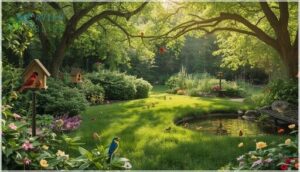
You can make a real difference for birds right in your own backyard. Simple actions at home, combined with community involvement, help protect the habitats birds depend on for survival.
Let’s look at practical ways you can support bird populations and address the challenges they face.
Creating Bird-Friendly Spaces at Home
Your yard can become a powerful tool for bird habitat protection. Start with native plantings—gardens with at least 70% native plants support healthier bird populations and produce more caterpillars for feeding young.
Add supplemental feeding stations, layered garden structure with shrubs and groundcover, and reduce chemical use.
These steps strengthen bird conservation while connecting you to community gardens focused on protecting bird habitats.
Preventing Window Collisions and Light Pollution
Window collisions kill up to two billion birds annually in the U.S., but you can drastically reduce this threat. Effective bird protection involves several straightforward actions:
- Apply window film or visible markers on exterior glass surfaces—external UV-visible treatments increase avoidance by 47%
- Support Lights Out initiatives by reducing nighttime light pollution during migration seasons
- Advocate for bird-safe building design standards in your community
- Choose urban landscaping that balances habitat value with collision prevention
These conservation efforts directly address top human-caused mortality factors.
Joining Local Conservation Efforts
You don’t have to tackle conservation alone—local partnerships increase your impact. Volunteer opportunities with bird clubs offer hands-on habitat restoration, while citizen science programs like Christmas Bird Counts contribute critical data.
Organizations such as Loudoun Wildlife Conservancy mobilize dozens of volunteers annually, and funding support through grants strengthens environmental protection.
Joining these environmental advocacy networks connects you with wildlife protection efforts that make measurable differences in your community.
Understanding Habitat Loss and Threats
Over 60% of the world’s bird species face avian population decline from habitat fragmentation, agricultural expansion, and invasive species. Climate impacts worsen these threats, reducing ecosystem services like pest control.
You can support bird habitat preservation through wildlife protection actions—planting native vegetation, reducing pesticide use, and backing environmental conservation efforts. These environmental protection steps directly counter the forces driving populations downward.
Frequently Asked Questions (FAQs)
What native plants attract the most birds?
Ever wonder which plants really make a difference for birds? Oak tree benefits include supporting over 530 caterpillar species, while native shrubs density and berry lipid content fuel migrations, strengthening bird populations through enhanced insect biomass support.
How do I start birdwatching as a beginner?
Starting birding requires essential gear like binoculars and bird identification guides. Use ID apps such as Merlin for species recognition.
Join local groups, practice regularly, and celebrate beginner milestones—most identify 100-120 bird species their first year.
Are there birding apps to identify species?
Yes, there are birding apps for bird species identification, like Merlin Bird ID, BirdNET, and eBird. These use identification technology with high App accuracy, support citizen science, and help you engage in bird observation and study, though feature limitations exist.
What binoculars are best for casual birding?
Isn’t it curious how sharper focus often means seeing more by choosing less?
For casual birdwatching, 8×42 binoculars strike a balance—good magnification levels, wide field of view, ergonomic design, and budget options for bird enthusiasts and wildlife observation.
Can I feed birds in natural habitats?
You can feed birds in natural habitats, but Feeding Legality varies by location.
Disease Risks increase at crowded feeders, so follow Best Practices—clean regularly, avoid ground feeding, and integrate Conservation Integration to support wildlife and bird habitat preservation near birding hotspots.
Conclusion
Imagine your neighborhood as a living tapestry, each thread representing a bird’s journey through natural bird habitats near me. Every park, wetland, and field is a patch in this quilt, woven together by migration, survival, and community care.
When you notice a flash of color in the trees or hear birdsong at dawn, you’re witnessing the fabric of local biodiversity. Protecting these habitats ensures the tapestry remains whole, vibrant, and ready for future generations to explore and cherish.
- https://www.audubon.org/magazine/sweeping-new-report-shows-us-birds-declining-sharply-across-range-habitats
- https://www.birds.cornell.edu/home/bring-birds-back/
- https://www.birdlife.org/news/2022/10/13/new-report-reveals-widespread-losses-of-birds-in-all-u-s-habitats-except-for-one/
- https://pmc.ncbi.nlm.nih.gov/articles/PMC9177422/
- https://www.waddensea-worldheritage.org/resources/simultaneous-january-2020-waterbird-and-wetland-census-along-east-atlantic-flyway