This site is supported by our readers. We may earn a commission, at no cost to you, if you purchase through links.
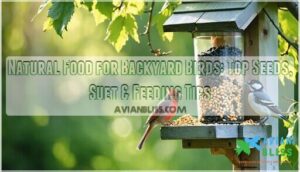 You’ll attract more birds with natural food for backyard birds like black oil sunflower seeds and white proso millet—the dynamic duo that outperforms any fancy mix.
These nutrient-packed options mirror what birds naturally forage for in the wild, providing essential fats and proteins without cheap fillers that end up scattered on the ground.
Add peanut hearts for woodpeckers and chickadees, or try nyjer seed for finches.
Fresh suet gives high-energy fuel during cold months, while cracked corn appeals to ground-feeders like juncos and sparrows.
The secret lies in matching food types to feeding behaviors and seasonal needs.
Table Of Contents
Key Takeaways
- Choose black oil sunflower seeds and white proso millet as your foundation – these two seeds attract the most species (71 and 42 respectively) and provide essential fats and proteins that mirror birds’ natural diet
- Match feeding methods to bird behaviors – use tube feeders for finches, platform feeders for larger species like jays and cardinals, and scatter seeds on the ground for sparrows and juncos who naturally forage by scratching
- Maintain clean feeders every two weeks with a 9:1 water-to-bleach solution – dirty feeders become breeding grounds for harmful bacteria that can kill birds, so regular cleaning is essential for their health
- Adjust your offerings seasonally – provide high-fat foods like suet and peanuts during winter when birds need 30% more calories, and offer protein-rich mealworms during spring breeding season when 90% of songbirds feed insects to their babies
Popular Bird Foods
You’ll find that backyard birds have clear preferences regarding food, with hulled sunflower seeds topping the list as the favorite choice of nearly 90% of bird species.
Understanding these preferences helps you create an effective feeding station that attracts diverse bird populations while providing the nutrition they need to thrive.
Hulled Sunflower Seeds
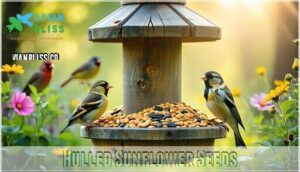
Hulled sunflower seeds reign supreme among backyard birdseed choices, attracting an impressive 88 species.
Nearly 90% of bird species can’t resist these shell-free sunflower powerhouses that deliver maximum nutrition with zero mess.
These shell-free benefits mean less mess and maximum nutrition for your feathered friends.
Consider these key advantages:
- Cost Analysis: Higher upfront price but no waste from shells
- Storage Tips: Keep in airtight containers to prevent spoilage
- Seed Mixes: Perfect base ingredient for custom blends
Use tube or hopper bird feeders for best results with attracting birds to your yard.
Black Oil Sunflower Seeds
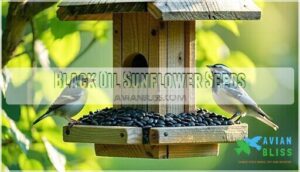
Black oil sunflower seeds rank as the second-most popular birdseed choice, attracting 71 species nationwide.
These seeds offer thinner shells compared to striped varieties, making them easier for smaller birds to crack open.
| Feature | Black Oil | Striped | White |
|---|---|---|---|
| Seed Size | Medium | Large | Small |
| Shell Thickness | Thin | Thick | Medium |
| Bird Preferences | 71 species | 45 species | 38 species |
| Storage Tips | Cool, dry place | Airtight container | Moisture-free |
Their higher oil content provides excellent energy for year-round feeding.
Regional availability stays consistent across most areas, though prices fluctuate seasonally.
Store in cool, dry locations to prevent spoilage.
Peanuts Hearts
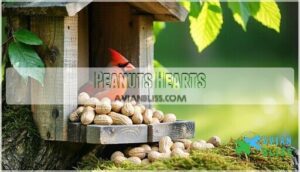
Third most popular among 58 bird species, peanut hearts pack serious nutritional punch with 49.2% fat and 25.8% protein per 100 grams.
These shelled peanut pieces offer concentrated energy that jays, nuthatches, and woodpeckers can’t resist.
You’ll find peanut heart benefits include easy digestion and reduced waste.
Store them in cool, dry places to maintain freshness and prevent spoilage.
Cracked Corn
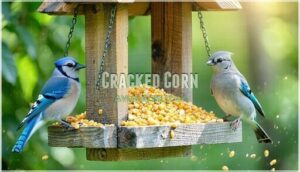
Looking beyond peanut hearts, cracked corn offers a budget-friendly option that attracts different bird species. Corn size matters since medium-sized pieces prevent spoilage risks while remaining accessible to various seedeating birds.
This wild bird seed provides moderate carbohydrates, making it ideal for larger ground feeders like jays and doves who prefer platform feeding.
Bird preferences for cracked corn include:
- Blue jays crack whole kernels with their powerful beaks
- Mourning doves gather in flocks around scattered corn
- Cardinals appreciate the easy-to-handle kernel size
- Sparrows forage enthusiastically through corn offerings
The nutritional benefits include traces of Vitamin B6, phosphorus, and potassium. Among bird food varieties, cracked corn ranks fourth in popularity, consumed by 48.9% of species.
Bird nutrition experts recommend offering corn on platform feeders or directly on the ground where these species naturally forage.
Nutritional Bird Food
Understanding what nutrients your backyard birds need helps you choose the right foods to keep them healthy and thriving year-round.
The fat, protein, and vitamin content in different seeds and supplements directly impacts bird energy levels, feather quality, and overall wellness.
Fat Content
Fat serves as your backyard birds’ primary energy source, especially during harsh weather when their dietary needs peak.
High-fat foods fuel your feathered friends through winter’s toughest challenges.
High-fat foods like peanuts and suet provide essential fuel for insulation and feather health, directly supporting breeding success throughout nesting season.
| Food Type | Fat Content |
|---|---|
| Peanut Hearts | 49.2% |
| Sunflower Seeds | 27-29% |
| Suet Cakes | Variable* |
| Cracked Corn | Low |
*Contains animal fat plus added ingredients for birdseed nutrition enhancement.
Protein Sources
Protein powers your feathered friends through breeding season and molt.
Mealworms pack 53% protein, making them perfect for insect-eating birds when natural bugs run low.
Peanuts deliver 25.8% protein plus essential minerals like zinc and iron.
Suet combines animal fat with protein-rich additions like peanut hearts.
Over 90% of songbirds feed insects to their babies, so offering high-protein foods supports their natural diet when calcium sources and seed protein aren’t enough, providing a natural boost.
Vitamin Supplements
While proper nutrition from seeds and suet usually meets birds’ needs, vitamin supplements can help during specific situations.
Most backyard birders don’t need synthetic vitamins since natural foods provide adequate nutrition. Watch for deficiency signs like poor feather quality before considering supplements.
- Supplement Types: Powder, liquid, and seed coatings offer different application methods
- Natural Alternatives: Orange peels, leafy greens, and insects provide vitamins naturally
- Safe Usage: Follow dosage guidelines and clean feeders regularly to prevent contamination
Feeding Methods
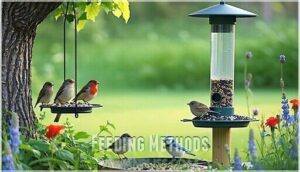
Choosing the right feeding method determines which bird species will visit your backyard and how successfully they’ll access the food you provide.
You can use tube feeders for small songbirds, platform feeders for larger species, or scatter seeds directly on the ground to attract different types of birds with varying feeding preferences.
Tube Feeders
Through proper tube feeder selection, you’ll attract finches and small songbirds effectively.
Choose models with excellent material durability and adequate seed capacity for consistent feeding. Port design matters – smaller openings work best for nyjer and thistle seeds.
Add squirrel baffles above or below feeders to protect your birdseed mixes. Quality tube feeders offer weather protection, keeping seeds dry and fresh for visiting birds.
Many prefer nyjer specific tube feeders.
Platform Feeders
Platform feeders offer excellent bird visibility and accommodate multiple species simultaneously.
These open tray-style feeders work perfectly for backyard bird food like cracked corn, peanut hearts, and birdseed mixes.
Smart feeder placement away from jumping spots helps with squirrel deterrents.
Choose designs with drainage holes for weather protection.
Many options are available if you want to purchase platform feeders.
Clean weekly to maintain proper cleaning frequency and prevent seed spoilage, ensuring your natural bird feed stays fresh for visiting songbirds.
Ground Feeding
Ground feeders like sparrows and juncos naturally forage by scratching through leaf litter and debris.
You can support this natural bird feed behavior by scattering cracked corn, white proso millet, and hulled sunflower seeds directly on clean ground or low platform feeders.
Choose areas with good ground cover nearby for quick escape from predator risks, and regularly clean up seed spillage to prevent spoilage and disease.
Best Bird Feeding Practices
Creating the right feeding environment goes beyond just choosing seeds—you’ll need to maintain clean feeders and provide safe food options to keep your backyard birds healthy.
Smart feeding practices also include planting native food sources that naturally support local bird populations year-round, which is a complete concept in itself.
Regular Feeder Cleaning
Keeping your bird feeders spotless isn’t just good housekeeping—it’s lifesaving for your feathered friends.
Disease Prevention starts with understanding that dirty feeders become breeding grounds for harmful bacteria and fungi.
Here’s your cleaning roadmap:
- Clean every two weeks using a 9:1 water-to-bleach solution
- Scrub away all debris from feeding ports and perches
- Choose plastic, steel, or glass feeders for easier maintenance
- Remove spoiled birdseed immediately to prevent contamination
This simple routine protects bird health while ensuring your backyard remains a safe haven.
Consider that feeder placement matters to prevent crowding and disease spread.
Safe Food Types
You’ll want to stick with proven safe bird food options to keep your feathered friends healthy.
Black oil sunflower seeds, white proso millet, and nyjer seed are excellent safe alternatives to avoid toxic foods like chocolate or bread.
Store bird food in airtight containers to prevent spoilage and mold growth.
Always offer unsalted, unprocessed options, as preparation methods matter for bird feeding safety and overall bird health.
Natural Food Sources
Beyond commercial bird foods, you can create a thriving ecosystem that naturally supports your feathered visitors.
Native plants produce seeds, berries, and nectar while attracting insect populations that insect-eating birds need for protein.
- Plant native berry-producing shrubs like elderberry and serviceberry for natural fruit sources
- Establish seed dispersal plants such as sunflowers and coneflowers that birds love
- Maintain clean water sources year-round for drinking and bathing needs
Native bird food grows right in your yard when you choose birdfriendly plants. These organic bird food sources reduce your reliance on store-bought options, creating a more natural and sustainable environment.
Seasonal Feeding Tips
Birds change their dietary needs throughout the year, making seasonal feeding an important part of backyard bird care.
You’ll want to adjust your feeding approach based on temperature extremes, migration patterns, and breeding cycles to best support your feathered visitors.
Winter Feeding
Why struggle through winter food scarcity when smart feeding helps? Birds increase calorie intake 30% during cold weather.
Offer high-fat black oil sunflower seeds and suet for birds to build essential energy reserves. Your bird feeder mix should include peanuts and cracked corn.
Store birdseed properly and provide frozen water solutions using heated bird baths for ideal winter bird health.
Summer Feeding
Summer shifts bird feeding dynamics dramatically.
While insect abundance provides natural protein for insecteating birds and their nestling diets, you’ll still attract fruiteating birds with fresh offerings.
Focus on nectar sources for hummingbirds and reduce fatty foods that spoil quickly.
During molting season, protein-rich mealworms support feather development.
Maintain consistent water availability since heat increases hydration needs. Provide fresh water daily to guarantee proper hydration.
Summer alternatives to heavy winter foods keep your backyard visitors healthy.
Spring Feeding
When do returning migrants need your help most?
Spring feeding provides essential migration support as backyard birds arrive exhausted from long journeys.
Offer high-protein mealworms and insect alternatives to fuel recovery.
Fresh fruit offerings attract orioles and tanagers.
Provide calcium sources like crushed eggshells for egg-laying females.
Add nesting materials nearby.
These bird feeding strategies help various bird species rebuild strength before breeding season begins.
High Energy Bird Foods
When backyard birds need extra energy for migration, cold weather, or nesting, high-energy foods become essential for their survival.
Suet cakes and nyjer seed top the list of calorie-dense options that provide the fats and proteins birds require during these demanding periods.
Suet Cakes
When winter temperatures drop, suet cakes become your best friend for feeding hungry birds.
These high-energy treats combine animal fat with ingredients like peanut butter, cornmeal, and peanuts for birds, creating nutritious winter bird feeding solutions. You’ll find suet benefits include attracting woodpeckers, nuthatches, and chickadees to your yard.
Use specialized suet feeders or create homemade suet recipes with simple suet ingredients. Solidified animal fat is a key component.
These bird feeding strategies provide essential calories during cold months when natural food sources become scarce, making suet cake offerings invaluable bird feeding tips, and are a great way to attract birds like woodpeckers and nuthatches, while also supporting chickadees with high-energy treats.
Nyjer Seed
Nyjer seed efficiently attracts finches and siskins with concentrated calories packed into each tiny black kernel.
This thistle seed offers exceptional nutritional benefits, making it a favorite among birdseed varieties for discerning bird enthusiasts.
Here’s your nyjer feeding guide:
- Attracting Finches: Use specialized nyjer feeders with small ports
- Seed Spoilage: Replace every 3-4 weeks to maintain freshness
- Bird Preferences: Goldfinches and siskins prefer this over other seeds
- Buying Guide: Purchase hulled nyjer for easier consumption
Bird Food Varieties
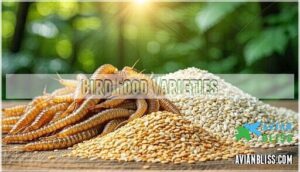
You’ll find several specialty bird food varieties that cater to specific species and nutritional needs beyond the basic sunflower seeds and corn.
These targeted options include protein-rich mealworms for insect-loving birds, tiny white proso millet seeds that ground-feeders prefer, and safflower seeds that attract cardinals while deterring pesky squirrels.
Mealworms
Mealworms pack protein power that’ll make your feathered friends sing with joy.
These golden grubs deliver 50% protein and essential amino acids, making them perfect bird feeding supplements for insectivores like bluebirds and wrens.
Live vs dried options both work well – live mealworms encourage natural foraging while dried varieties offer convenience.
Consider sourcing quality mealworms for superior nutrition.
Sourcing mealworms from reputable suppliers guarantees quality nutrition that supports breeding success and healthy bird feeding habits year-round, and this helps to guarantee the best results.
White Proso Millet
White proso millet serves as the ultimate ground feeder magnet, attracting 41.8% of bird species with its budget-friendly appeal.
This nutritious grain provides essential protein for sparrows and other ground-feeding birds while doubling as brewing material.
Its small size makes it perfect for platform feeders, offering excellent millet nutrition that supports wild bird food requirements year-round, providing a great source of essential protein.
Safflower Seeds
Safflower seeds offer a smart solution for bird enthusiasts dealing with squirrel problems.
This squirrel deterrent works because these persistent critters dislike safflower’s bitter taste, while cardinals and chickadees enthusiastically consume them.
The seed composition includes healthy oils and proteins that support bird feeding benefits.
You’ll find regional availability varies, with the U.S. producing 26% of global supplies.
Store these safe bird food options in cool, dry places to maintain freshness and maximize their effectiveness as quality birdseed ingredients.
Bird Feeder Maintenance

You’ll need to maintain your feeders regularly to keep birds healthy and coming back to your yard.
Clean feeders every two weeks with a bleach solution, place them strategically to prevent crowding.
Monitor for spoiled seeds to avoid making birds sick, and ensure the feeders are well-maintained to support the health of the birds, with regular checks.
Cleaning Solutions
Proper cleaning solutions keep your feeders safe for visiting birds.
Mix one part bleach with nine parts water for effective disinfection, or choose mild dish soap as a natural alternative.
Both soap types remove harmful bacteria and residue buildup that can sicken birds.
Rinse thoroughly after cleaning to eliminate any cleaning residue, ensuring safe disinfectants don’t harm your feathered friends during their next feeding visit, and maintain a clean environment for visiting birds.
Feeder Placement
Strategic feeder placement creates a sanctuary where birds feel secure while dining. Position feeders with predator avoidance in mind, ensuring clear visibility factors around each station.
- Weather Protection: Place feeders 10-12 feet from dense shrubs, giving birds quick escape routes while preventing predators from hiding nearby.
- Species Segregation: Space multiple feeders at least 6 feet apart to reduce competition and allow different bird species to feed comfortably.
- Accessibility Concerns: Mount feeders 5-6 feet high for easy cleaning while maintaining bird safety from ground predators.
Seed Spoilage Prevention
Keeping your seeds fresh prevents waste and protects bird health.
Choose small feeders that you’ll empty regularly, and store unused birdseed in airtight containers away from moisture. Limit shelled seeds since they spoil faster than whole seeds.
| Prevention Method | Frequency |
|---|---|
| Regular emptying | Every 2-3 days |
| Cleaning frequency | Every 2 weeks |
| Birdseed storage check | Weekly |
Proper storage and feeder drainage systems help maintain birdseed safety while reducing spoilage risks.
Creating Bird Friendly Spaces
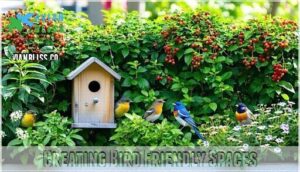
You can create the ultimate bird habitat by planting native trees and shrubs that produce natural seeds, berries, and attract insects year-round.
Adding clean water sources and reducing pesticide use will transform your yard into a thriving ecosystem that supports local bird populations naturally.
Native Planting
Beyond maintaining clean feeders, you can create a thriving bird-friendly habitat through strategic native plant selection.
These plants support local ecosystems while attracting insects that birds need for protein-rich diets.
- Choose native berry-producing shrubs – Elderberry and serviceberry provide natural food sources
- Plant seed-bearing flowers – Coneflowers and black-eyed Susans offer winter sustenance
- Create habitat diversity – Layer trees, shrubs, and ground cover for nesting options
- Practice reduced mowing – Leave natural areas for insect populations to flourish
- Select drought-resistant species – Native plants require less water conservation efforts while supporting bird diversity
Water Sources
Clean water sources complement bird feeding programs and create thriving bird-friendly habitats.
Bird baths require regular cleaning with fresh water, while bird bath water should be shallow for safety.
Winter water needs heated elements to prevent freezing.
Natural ponds attract diverse species when combined with bird garden plants.
Moving water benefits by attracting more birds to your yard.
Water source placement near feeders creates convenient drinking stations that support your birdfriendly habitat goals and provide a safe environment with fresh water.
Insect Conservation
Beyond water, reducing insecticides helps preserve native insects that form 96% of bird diets during nesting season.
Pesticides kill over seven million birds annually while eliminating vital prey.
Plant bird garden plants like oaks that support 500+ caterpillar species.
Create habitat preservation areas with leaf litter and brush piles.
Supplement with mealworms for birds when natural insect diversity drops, supporting bird conservation through birdfriendly habitat and smart bird feeding practices.
Healthy Bird Feeding Habits
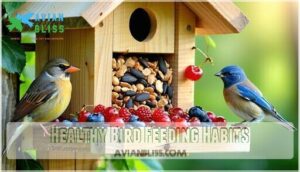
You’ll achieve better bird health by establishing consistent feeding routines that prevent overfeeding and monitor your feathered visitors’ behavior for signs of stress or aggression.
Smart feeding habits include reducing waste through proper portion sizes and choosing appropriate food types that match seasonal needs and local bird populations, which helps in achieving better bird health.
Avoiding Overfeeding
Two daily feedings prevent bird feeding mistakes that harm wildlife through portion control.
Offering unlimited seeds creates spoilage risks and disrupts natural foraging behaviors essential for weight management.
You’ll support healthier bird feeding practices by limiting access to feeders during peak foraging hours.
These bird feeding guidelines encourage natural alternatives while reducing negative bird feeding impact on local ecosystems, promoting healthier and more natural foraging behaviors.
Monitoring Bird Behavior
Watch your feeder visitors closely to spot changes that signal feeding impact on bird behavior.
Aggressive pecking, displacement, and territorial disputes often increase at overcrowded stations.
Notice species interaction patterns—mixed flocks typically indicate healthy dynamics, while isolated feeding suggests stress.
Health indicators include consistent appetite, normal activity levels, and regular preening.
Dietary changes become apparent when birds suddenly avoid preferred foods or show unusual eating habits during birdwatching sessions.
The key to understanding these dynamics is observing the birds’ behavior over time, and noting any changes in their feeding impact.
Reducing Waste
Smart spillage reduction starts with choosing the right feeder design and proper seed storage.
Store birdseed in airtight containers to prevent spoilage and pest issues.
Follow these bird feeding best practices:
- Select appropriate feeder sizes – Choose smaller feeders that empty quickly, reducing birdseed spoilage and encouraging fresh consumption
- Practice bulk buying wisely – Purchase only what you’ll use within 2-3 months to maintain seed quality
- Composting waste effectively – Turn spilled seeds and hulls into garden compost rather than letting them accumulate
These birdseed handling techniques minimize waste while supporting healthy feeding habits.
Frequently Asked Questions (FAQs)
What is the best homemade bird food?
Like a chef’s secret recipe, the best homemade bird food blends black oil sunflower seeds, peanut hearts, and white proso millet.
You’ll create nutritious energy that attracts diverse species while supporting their health naturally.
What is backyard bird’s favorite food?
Hulled sunflower seeds top the list as backyard birds’ absolute favorite, attracting nearly 90% of species. You’ll also see great success with black oil sunflower seeds and peanut hearts.
What birds eat from backyard gardens naturally?
You’ll find songbirds, cardinals, chickadees, nuthatches, woodpeckers, jays, and finches naturally foraging in your garden for insects, berries, seeds from native plants, and fruits from trees and shrubs you’ve cultivated.
How do weather changes affect bird diets?
Weather patterns shift like nature’s thermostat, forcing birds to adapt their diets dramatically.
You’ll notice they switch from insects in summer to high-fat seeds and berries during harsh winters for survival energy.
Which plants produce the best bird seeds?
Sunflowers produce the most valuable seeds for birds, attracting nearly 90% of species.
Native plants like coneflowers, black-eyed Susans, and asters also provide excellent seed sources that birds prefer over commercial options, with native plants being a key factor.
Do baby birds need different foods?
Though you might think all birds eat the same foods, baby birds have dramatically different dietary needs than adults.
Nestlings require up to 90% insects for protein during their first weeks, while adult birds can thrive on seeds and varied diets year-round, with dramatically different needs.
What foods should never be given birds?
Never give birds chocolate, avocado, caffeine, salt, onions, garlic, or alcohol – these are toxic. Also avoid bread, which lacks nutrition and can cause malnutrition in developing birds.
Conclusion
Feeding birds is like planting seeds of joy in your backyard—the rewards multiply with every flutter and song.
You’ll create a thriving ecosystem by offering natural food for backyard birds that matches their dietary needs.
Black oil sunflower seeds, nyjer, and suet provide essential nutrients year-round, and by doing so, you’ll create a thriving ecosystem.
Clean feeders regularly, vary your offerings seasonally, and watch as diverse species transform your outdoor space into a vibrant wildlife sanctuary that benefits both birds and your family.