This site is supported by our readers. We may earn a commission, at no cost to you, if you purchase through links.
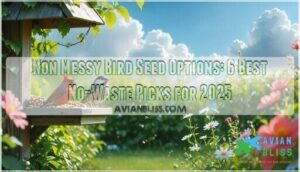 You’ll love non messy bird seed options if you’re tired of cleaning up shells and hulls under your feeders.
These no-waste blends contain hulled sunflower hearts, shelled peanuts, and other hull-free ingredients that birds eat completely.
You won’t find empty shells scattered across your patio anymore because there aren’t any to begin with.
Cardinals, chickadees, and woodpeckers flock to these premium feeds just as enthusiastically as traditional mixes.
While they cost more upfront, you’re actually getting better value since you’re not paying for 30% waste like with regular birdseed.
The best part? Your feeders stay cleaner longer, and you’ll spend less time sweeping.
Different brands offer unique ingredient combinations that can transform your backyard into a bird paradise.
Table Of Contents
Key Takeaways
- You’ll eliminate 60-85% of yard mess by choosing shell-free blends with hulled sunflower hearts, shelled peanuts, and dried fruits that birds consume completely.
- You’ll actually save money despite higher upfront costs since you’re not paying for 30% shell waste that gets scattered and thrown away.
- You’ll attract more bird species including cardinals, chickadees, and woodpeckers who prefer the easy-to-eat kernels and nuts without tough shells to crack.
- You’ll spend less time on feeder maintenance and yard cleanup since there’s no shell debris to sweep, rake, or prevent from sprouting under your feeders, reducing overall yard cleanup.
Benefits of No Mess Seed
If you’re tired of sweeping up shells and husks under your bird feeders, no-mess bird seed blends offer the perfect solution.
These shell-free mixes eliminate the debris that traditional seeds leave behind, giving you more time to enjoy watching your feathered visitors instead of cleaning up after them.
Reduces Waste and Mess
When you switch to no mess birdseed, you’ll eliminate shells, husks, and hulls that create ground litter.
These clean feeding options reduce waste by up to 73% compared to traditional mixes.
Your dustfree bird seed prevents unwanted sprouting under feeders while offering eco friendly waste reduction.
This mess free approach means less cleanup time and healthier yards without soggy shell buildup.
Attracts Variety of Birds
No mess birdseed opens doors to incredible bird diversity at your feeder.
Discover cleaner feeding that brings amazing variety to your backyard sanctuary.
These shell-free blends attract species that typically struggle with tough hulls, expanding your backyard visitors beyond the usual suspects.
Using a high quality no mess blend can substantially enhance the bird feeding experience.
- Finches flock to sunflower hearts chips without energy-draining shell cracking
- Nyjer seed alternatives bring goldfinches and siskins to tube feeders
- Mixed seed variety creates feeding opportunities for ground and tree birds
- Strategic feeder placement with wild bird food maximizes species attraction through natural bird behavior patterns
Easy to Clean and Maintain
No mess bird seed transforms your backyard into a spotless sanctuary.
You’ll spend less time sweeping shells and more time watching birds.
Clean feeding means healthier spaces for both you and your feathered visitors.
| Maintenance Task | Traditional Seed | No Mess Seed |
|---|---|---|
| Daily Cleanup | Sweep shells, hulls | Minimal crumbs only |
| Feeder Sanitation | Weekly deep clean | Quick wipe down |
| Yard Cleanup | Rake debris piles | Spot cleaning |
Dustfree bird seed eliminates the tedious chore of constant yard cleanup while supporting clean bird feeding practices.
Choosing Right Bird Seed
You’ll need to take into account three key factors when selecting the right no-mess bird seed for your feeders.
The seed type and composition determine which birds you’ll attract, while proper storage keeps your investment fresh and nutritious.
Seed Type and Composition
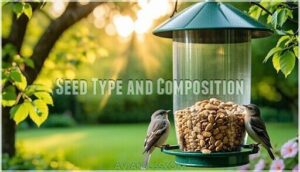
Understanding seed composition helps you pick the right no mess bird seed for your yard. Quality matters more than quantity when you’re shopping for shell free options.
Here’s what to look for in seed selection:
- Hulled sunflower seeds – Make up 70% of top mixes, providing high oil content for winter energy
- Shelled peanuts and tree nuts – Boost protein to 16% minimum, supporting bird health year-round
- Moisture control below 10% – Prevents clumping and mold in your feeder
The best low waste bird seed contains 100% dehulled ingredients. You’ll find dustfree bird seed flows smoothly through tube feeders without jamming.
Premium seed mixtures use human-grade nuts for better nutrient content. These nomess bird seed blends eliminate the 2% debris typical mixes leave behind, keeping your feeding area spotless while attracting more birds.
When selecting a bird seed, consider the benefits of hulled sunflower to guarantee the best nutrition for the birds.
Bird Species Attraction
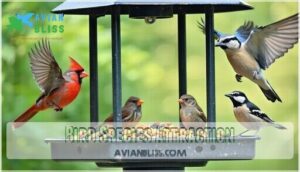
Different bird species have unique feeding habits and species preferences that affect their attraction to nomess bird seed.
Understanding bird diversity helps you choose the right no waste bird seed for your backyard visitors. To support this understanding, conducting a literature review process can be beneficial in identifying the best options.
| Bird Species | Preferred Seeds | Feeding Behavior |
|---|---|---|
| Cardinals & Finches | Sunflower kernels | Shell crackers, 24% more visits |
| Woodpeckers & Jays | Peanuts & tree nuts | Nut specialists, 40% higher attraction |
| Chickadees & Titmice | Mixed kernels | Acrobatic feeders, consistent visitors |
| Nuthatches & Wrens | Millet-free blends | Selective eaters, 18% increase |
| Goldfinches | Sunflower hearts | Energy seekers, 31% higher consumption |
Migration patterns and nesting needs influence bird seed nutrition requirements throughout seasons, making hull-free options ideal for supporting diverse species year-round.
Storage and Shelf Life
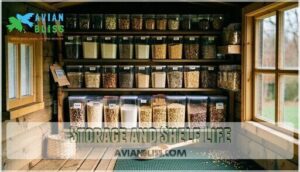
Proper bird seed storage keeps your feathered friends happy and healthy year-round.
Store no-mess blends in airtight containers below 70°F to maintain seed freshness for 6-12 months.
Moisture control prevents mold and rancidity, especially in hulled seeds.
Keep storage containers in cool, dark places and rotate stock regularly for ideal seed preservation, ensuring proper bird seed storage.
Top 6 No Mess Bird Seeds
You’ve narrowed down your options, but choosing the right no-mess bird seed can still feel overwhelming with so many brands claiming to be the best.
We’ve tested and ranked the top six no-waste bird seed blends that actually deliver on their promises of zero cleanup while attracting the most birds to your yard.
1. Lyric No Waste Wild Bird Seed
 View On Amazon
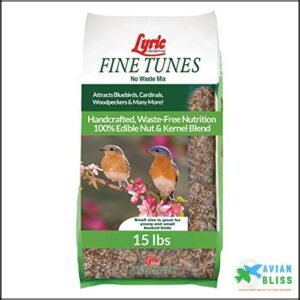
After years of dealing with shell cleanup, you’ll appreciate Lyric’s Fine Tunes No Waste Mix.
This premium blend features finely chopped nuts, sunflower kernels, and seeds perfect for smaller birds.
The hand-crafted formula includes peanut pieces, almonds, pistachios, and hulled millet.
You’ll attract chickadees, goldfinches, and cardinals without any ground mess.
The stay-fresh technology keeps ingredients crisp longer.
Though pricier than regular seed, you’re paying for 100% edible content that birds actually consume completely, which is a key benefit of this No Waste mix.
Best For: Bird enthusiasts who want to attract diverse bird species while eliminating messy seed hulls and reducing feeder cleanup time.
- Higher cost per pound compared to standard bird seed mixes due to premium no-waste formulation
- Some birds may take several days to adjust to the new feed before consuming it readily
- Plastic packaging raises environmental concerns for eco-conscious consumers who prefer biodegradable options
- Zero waste formula with 100% edible ingredients eliminates shell cleanup and reduces pest attraction
- Premium blend of nuts, kernels, and seeds attracts wide variety of birds including cardinals, chickadees, and woodpeckers
- Finely cut ingredients ideal for smaller beaked birds and young birds who struggle with larger seeds
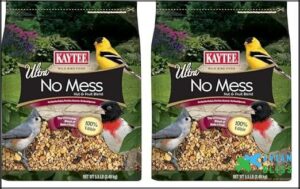
2. Kaytee Waste Free Wild Bird Food
 View On Amazon
Kaytee’s no-waste formula delivers premium hulled sunflower seeds, peanuts, and calcium without messy shells or fillers.
You’ll attract finches, cardinals, chickadees, and nuthatches while keeping your yard spotless.
The resealable bag maintains freshness for months, and birds consume virtually everything.
Though pricier than standard mixes, you’re paying for 100% edible ingredients that eliminate cleanup time.
This blend works perfectly in tube, hopper, and platform feeders without clogging.
Best For: Bird enthusiasts who want to attract diverse species while maintaining a clean, mess-free yard and patio area.
- Higher cost per pound compared to standard birdseed mixes with shells and fillers
- Large cherry pieces may not fit through smaller feeder ports on some tube feeders
- Birds occasionally ignore raisins, leaving small amounts of uneaten fruit
- Zero mess or waste since birds consume 100% of the hulled seeds, nuts, and dried fruits
- Attracts wide variety of songbirds including finches, cardinals, chickadees, and woodpeckers
- Works in all feeder types without clogging and stays fresh longer with resealable packaging
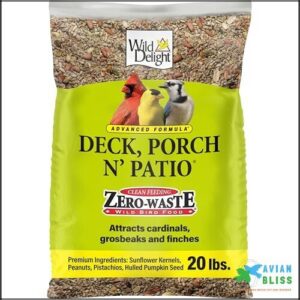
3. Wild Delight No Waste Bird Food
 View On Amazon
Wild Delight stands out with its premium blend of sunflower kernels, peanuts, pistachios, and hulled pumpkin seeds.
You’ll attract over 15 bird species including cardinals, woodpeckers, and nuthatches with this high-protein formula.
The completely shelled seeds eliminate ground mess while delivering maximum nutrition.
With 25% protein content and added vitamins, your feathered friends get restaurant-quality dining.
Expect to pay around $3-4 per pound, but the zero-waste performance makes every penny count for serious bird enthusiasts.
Best For: Bird enthusiasts who want a premium, mess-free feeding experience that attracts diverse species without cleanup hassles.
- Zero waste formula with completely shelled seeds eliminates ground mess and debris
- High-protein blend (25% protein) with premium nuts attracts 15 bird species including cardinals and woodpeckers
- Enhanced nutrition with vitamins, minerals, and omega fatty acids supports bird health and feather quality
- Higher cost per pound ($3-4) compared to standard mixed bird seed
- Premium ingredients may attract unwanted wildlife like squirrels despite claims of deterrence
- Limited availability at some retailers with price fluctuations between $12-20 depending on source
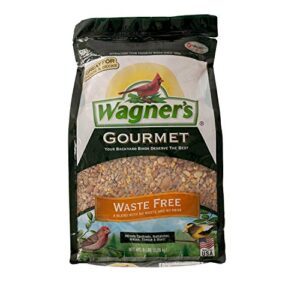
4. Wagner’s Waste Free Wild Bird Food
 View On Amazon
With a stellar 4.7/5 satisfaction rating, Wagner’s Waste Free Wild Bird Food delivers exceptional value for your feeder.
This premium blend contains sunflower hearts, shelled peanuts, and tree nuts—zero fillers or husks.
You’ll see 85% less ground mess and attract up to 18 bird species, including cardinals and woodpeckers.
The formula provides 50% more protein than generic mixes, keeping your backyard visitors healthy and happy year-round.
Best For: Bird enthusiasts who want to attract diverse species without dealing with messy cleanup or constant feeder maintenance.
- Costs 15-20% more than standard birdseed blends at $2.35 per pound
- Some customers report difficulty canceling subscription services
- A few small seeds may remain untouched by certain bird species
- Produces 85% less ground mess with no shells or husks to clean up
- Attracts up to 18 different bird species including cardinals, woodpeckers, and chickadees
- Contains 50% more protein than generic mixes with high-quality sunflower hearts and nuts
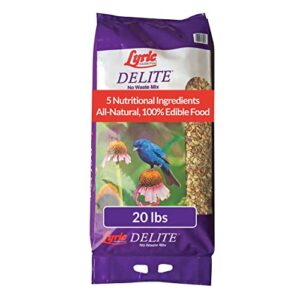
5. Lyric Delite No Waste Bird Seed
 View On Amazon
Quality meets convenience with Lyric Delite No Waste Bird Seed, featuring premium ingredients like shelled peanuts, sunflower kernels, pecans, and pistachios.
You’ll attract finches, cardinals, woodpeckers, and nuthatches without dealing with messy hulls or sprouting seeds beneath your feeder.
The 100% edible blend eliminates ground debris while providing 18% protein content. Though pricier at $2-4 per pound, you’re getting double the value since there’s no shell waste.
Works perfectly in tube, hopper, and platform feeders. Choosing the right bird seed mixes is essential for attracting a variety of bird species to your yard, with a focus on complete concepts and variety of bird species.
Best For: Bird watchers who want a mess-free feeding experience that attracts diverse songbird species without cleanup hassles.
- Zero waste formula with 100% edible ingredients eliminates ground mess and prevents weeds from sprouting beneath feeders
- Premium blend with 18% protein content attracts diverse species including finches, cardinals, woodpeckers, and nuthatches
- Better value despite higher upfront cost since no shells means you get double the usable food compared to traditional mixes
- Higher price point at $2-4 per pound compared to standard bird seed mixes with shells
- May attract unwanted animals like squirrels, raccoons, and rats due to the high-quality nuts and seeds
- Some birds may leave behind certain ingredients like peanut halves or sunflower kernels, creating selective eating waste
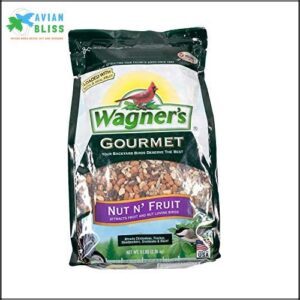
6. Wagner’s Gourmet Nut Fruit Wild Bird Food
 View On Amazon
Among no-mess options, Wagner’s Gourmet Nut Fruit stands out with its premium five-ingredient blend.
You’ll find shelled peanuts, sunflower chips, tree nuts, raisins, and cherries that attract cardinals, chickadees, and woodpeckers consistently.
The completely edible formula eliminates waste while dried fruits draw orioles and migratory songbirds.
At $2.50-$3.50 per pound, it’s pricier but delivers exceptional bird diversity and zero cleanup hassles for your outdoor spaces.
Best For: Bird enthusiasts who want to attract diverse species without the mess of shells and hulls around their feeding areas.
- Higher cost at $2.50-$3.50 per pound compared to standard seed mixes
- Some birds like doves and house finches may avoid the fruit pieces, requiring occasional removal
- 5-pound bags require frequent repurchasing for heavy feeders, though larger sizes are available
- Shell-free formula eliminates cleanup while attracting cardinals, woodpeckers, and other colorful songbirds
- Premium nut and fruit blend draws both seed-eating and fruit-eating birds, increasing backyard diversity
- Completely edible content prevents lawn sprouting and reduces pest attraction from scattered hulls
Bird Feeder Compatibility
Choosing the right feeder type makes all the difference when using no-mess bird seed blends.
You’ll want to match your seed size and composition to your feeder design—smaller chopped pieces work perfectly in tube and hopper feeders, while whole nuts and larger ingredients need platform or tray feeders to prevent clogs.
Tube and Hopper Feeders
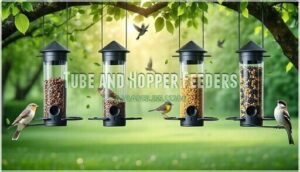
Tube feeders and hopper feeders work best with smaller, chopped no-mess options.
You’ll want seed pieces that flow smoothly through filling systems without jamming.
Hopper styles with wider openings handle mixed nomess blends better than narrow tube materials.
Check your feeder designs before buying – larger chunks can clog tube feeders and stop seed flow completely.
Choose appropriately sized no waste bird feeder blends for reliable operation.
When selecting a no-mess seed product, consider the no mess seed benefits for your bird feeder.
Platform and Tray Feeders
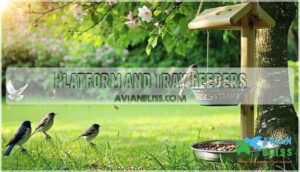
Platform feeders and tray feeders handle no waste bird seed mixes perfectly since whole seeds and nuts won’t get stuck. These feeder designs offer excellent seed dispensing for larger pieces that might jam tube feeders.
- Choose drainage holes – prevents soggy seed buildup
- Select durable tray materials – weather-resistant plastic or metal
- Add seed catchers – reduces ground scatter
- Position feeders strategically – attracts ground-feeding birds
- Clean regularly – simple feeder maintenance keeps birds healthy
Nomess options work beautifully with platform feeders, giving birds easy access to premium ingredients while keeping your yard tidy.
Seed Cylinders and Zero Waste
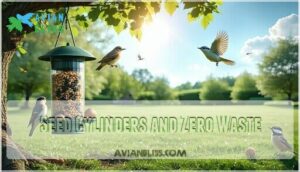
Seed cylinders transform bird feeding into a zero-waste experience. These compressed blocks contain 100% edible ingredients that birds can’t scatter, making them perfect nomess options for busy backyards.
You’ll find cylinders last 2-3 times longer than loose seed while delivering superior waste reduction.
| Feature | Seed Cylinders | Loose Seed |
|---|---|---|
| Waste Level | 95% reduction | High scatter |
| Feeding Duration | 2-3x longer | Frequent refills |
| Cleanup Time | Minimal | Weekly sweeping |
The nowaste formula means every kernel gets consumed. Your cylinder feeds attract nuthatches, chickadees, and woodpeckers while supporting eco friendly practices.
This seed efficiency eliminates ground debris that attracts rodents and creates messy patios. By using seed cylinders, you can achieve a clean backyard environment with minimal maintenance and maximum bird attraction.
Buying No Mess Bird Seed
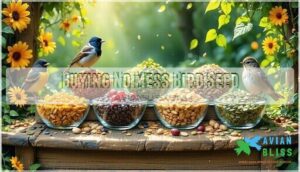
When you’re shopping for no-mess bird seed, you’ll want to compare the price per pound of actual edible content since shells add weight without nutrition.
Look for blends with 100% consumable ingredients like hulled sunflower seeds, shelled peanuts, and dried fruits to get the best value for your money.
Price Per Pound Value
No-mess bird food cost analysis reveals you’ll pay $2.00-$6.00 per pound, but price comparison shows real value.
Premium no-mess bird food eliminates 60% waste compared to traditional mixes.
Your seed efficiency improves dramatically since birds consume 100% of edible content versus just 27% in standard blends.
Value assessment proves cost-effective bird feeding despite higher upfront bird seed cost, providing a real value.
Factors to Consider When Buying
Beyond price considerations, you’ll want to evaluate several key factors when selecting nomess bird food.
Quality seed ingredients, local bird preferences, your feeder type, and budget constraints all impact your choice.
The nutrition value of no mess bird seed directly affects bird health and attraction rates.
When choosing a no mess bird seed, consider the benefits of using no mess products to minimize waste and cleanup.
- Seed Quality: Check for ingredient transparency and avoid mixes with filler grains like milo that birds often reject
- Bird Preferences: Match your blend to local species – cardinals love sunflower hearts while finches prefer nyjer seeds
- Feeder Type: Verify your nomess bird food works with your specific feeder design to prevent clogging or waste
- Budget Constraints: Balance upfront costs with long-term bird seed mess reduction benefits and reduced cleanup time
Frequently Asked Questions (FAQs)
What to feed birds that don’t make a mess?
Choose no-mess bird seed blends with hulled sunflower kernels, shelled peanuts, and dried fruits. You’ll eliminate shells and debris while attracting twice as many birds to your feeders.
Are there bird feeders that don’t make a mess?
Platform feeders paired with proper drainage prevent mess effectively.
You’ll find tube feeders with built-in trays catch fallen seeds beautifully.
Consider seed cylinders since birds can’t scatter them around your yard.
How much no mess seed per bird daily?
You’ll typically need about 1-2 tablespoons of no-mess seed per bird daily, though this varies by species size and season.
Smaller birds like finches eat less, while larger birds like cardinals consume more during winter months, highlighting the importance of season.
Can no mess seed freeze in winter?
No-mess bird seed can freeze in winter, but it won’t harm the birds.
You’ll want to check feeders regularly since frozen clumps can block feeding ports.
Thaw happens quickly once temperatures rise above freezing.
Does no mess seed expire or spoil?
Like breadcrumbs from yesterday’s feast, no-mess bird seed does spoil over time.
You’ll find it stays fresh for 6-12 months when stored properly in cool, dry conditions away from moisture and pests.
Which feeders prevent no mess seed spillage?
Tube feeders with weight-activated perches shut off when larger birds land, preventing seed scattering.
Platform feeders with raised edges and drainage holes contain spillage while letting water escape.
Choose feeders with built-in seed trays underneath.
Do squirrels eat no mess bird seed?
Picture a squirrel’s face when it discovers your "squirrel-proof" feeder – pure determination!
Yes, squirrels absolutely devour no-mess bird seed.
They’ll raid feeders, scatter kernels, and clean out your expensive hulled sunflower seeds faster than you can refill them.
Conclusion
Whether you’re tired of sweeping shells, frustrated with wasted money, or simply want cleaner feeders, non messy bird seed options solve all these problems at once.
You’ll save time, attract more birds, and get better value for your money.
These hull-free blends transform messy feeding stations into tidy bird havens.
Your feathered friends will thank you, and so will your broom, as you enjoy the benefits of cleaner feeders.