This site is supported by our readers. We may earn a commission, at no cost to you, if you purchase through links.
 You’ll spot pigeon neurological problem signs when your feathered friend starts acting like they’ve had one too many.
Watch for head tilting that makes them look perpetually confused, circles that would make a NASCAR driver dizzy, and pecking that misses the mark like a blindfolded dart player.
Their droppings turn watery as soup, while tremors shake their tiny bodies.
Balance becomes their enemy as they stagger like sailors on shore leave.
Flight coordination goes haywire, turning graceful glides into crash landings.
These symptoms often appear together, creating a constellation of concerning behaviors that signal serious neurological distress requiring immediate attention.
Understanding the specific patterns behind these signs reveals vital timing for intervention.
Table Of Contents
- Key Takeaways
- Pigeon Neurological Signs
- Avian Neurological Disorders
- Treatment and Recovery Options
- Preventing Neurological Problems
- Frequently Asked Questions (FAQs)
- How do I know if my bird has a neurological problem?
- Can neurological problems be fixed?
- Can neurological symptoms appear gradually over weeks?
- Do certain pigeon breeds show higher susceptibility?
- Are neurological problems contagious to other birds?
- Can cold weather trigger neurological episode relapses?
- Do recovered pigeons retain permanent movement impairments?
- Conclusion
Key Takeaways
- Watch for the classic combo – Head tilting, tremors, balance problems, and watery droppings often appear together, signaling serious neurological trouble that needs immediate vet attention.
- Don’t wait when you see flight issues – If your pigeon’s crashing during landings, flying backward, or somersaulting mid-air, you’re dealing with severe coordination problems that require emergency care.
- Act fast for best outcomes – Neurological symptoms worsen rapidly without treatment, so early intervention makes the difference between recovery and permanent damage.
- Isolate immediately if suspected – Some neurological conditions like Pigeon Paramyxovirus spread to other birds, so quarantine affected pigeons for at least six weeks while seeking treatment.
Pigeon Neurological Signs
When you spot neurological problems in pigeons, quick recognition can mean the difference between recovery and permanent damage.
Quick recognition of neurological signs can save your pigeon’s life—every moment counts.
These seven warning signs will help you identify when your feathered friend needs immediate veterinary attention.
Head Tilting and Torticollis
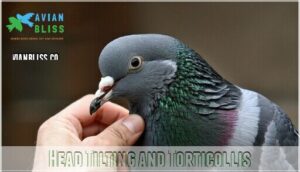
The telltale pigeon head tilt often signals serious neurological trouble brewing beneath the surface.
When you spot a pigeon with torticollis—that distinctive twisted neck position—you’re witnessing potential PMV mimics or other neurological disorders.
Causes of torticollis range from infections to toxins, making differential diagnosis essential.
Treatment strategies depend on identifying the underlying condition, though the long-term prognosis varies substantially based on prompt intervention.
Abnormal Droppings and Urination
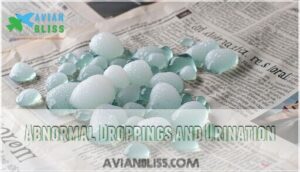
You’ll notice your pigeon’s droppings change dramatically when neurological problems strike.
Healthy droppings appear firm with distinct white urates, but neurological issues cause thin, broken solids swimming in liquid pools.
Watch for polyuria and polydipsia – excessive urination and drinking that signals kidney dysfunction.
Dropping color changes, persistent diarrhea, and stained feathers around the vent area provide key diagnostic clues for veterinary evaluation, which can help identify neurological problems.
Fine Tremors and Seizures
Microscopic muscle contractions create visible pigeon tremors, often signaling serious neurological issues.
These fine tremors typically affect the head and eyes, distinguishing them from normal bird movements.
Seizure management becomes essential when tremors escalate into full fits with convulsions.
Electrolyte imbalance, toxin exposure, or genetic predisposition can trigger these neurological symptoms, requiring immediate veterinary attention.
Staggering and Loss of Balance
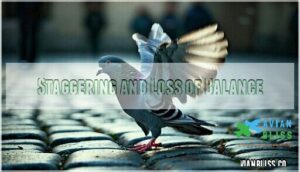
When your pigeon stumbles around like it’s walking on a ship’s deck, you’re witnessing vestibular disease or cerebellar ataxia in action.
This pigeon loss of balance stems from inner ear problems or brain damage affecting the balance system.
Watch for proprioception issues where your bird can’t sense where its feet are, causing that characteristic pigeon incoordination and pigeon falling over with an abnormal gait.
Early detection via pupillary light response is critical for diagnosis.
Somersaulting and Flight Issues
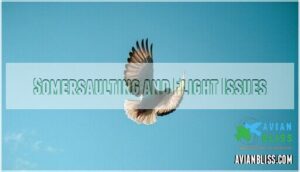
When flight instability becomes your pigeon’s new normal, you’re witnessing a clear pigeon neurological problem.
Backward flying, crash landings, and spiraling flight patterns signal serious pigeon incoordination.
Your bird might somersault mid-air or experience complete loss control during takeoff.
These dramatic pigeon flight inability symptoms often accompany the pigeon falling over you’ve already observed, creating a concerning pattern of pigeon loss of balance.
Avian Neurological Disorders
You’ll need to identify specific neurological disorders when your pigeon shows concerning symptoms that don’t fit typical illness patterns.
Advanced diagnostic tools like MRI and CT scans can reveal brain injuries or infections that standard examinations might miss.
Wildlife Rescue Centre Diagnostics
When you spot concerning neurological symptoms in your pigeon, wildlife rescue centres offer specialized diagnostic expertise that goes beyond basic veterinary care.
These facilities understand pigeon neurological disorders and provide thorough evaluation through experienced wildlife veterinarians trained in differential diagnosis. One key sign to watch for is head twisting, which can indicate Pigeon Paramyxovirus.
Wildlife rescue diagnostic capabilities include:
- Symptom interpretation combining clinical signs with species-specific knowledge for accurate pigeon diagnosis
- Testing availability for paramyxovirus, bacterial infections, and toxicity screening through established laboratory networks
- Diagnostic limitations assessment helping determine when advanced imaging or specialist referral becomes necessary
- Ethical considerations balancing treatment costs, recovery potential, and quality of life for ideal pigeon veterinary care outcomes
Magnetic Resonance Imaging (MRI) Scans
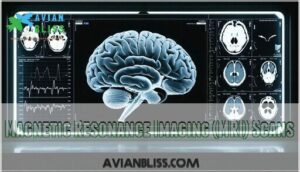
Advanced diagnostic tools reveal what’s hidden inside your pigeon’s brain.
MRI availability varies by region, with specialized avian veterinary centers offering magnetic resonance imaging MRI for pigeon neurological disorders. Scan interpretation requires expert radiologists familiar with avian neuroimaging.
Cost considerations range from $800-2000, making sedation protocols essential for quality images.
CT scans are faster than MRIs, offering a quicker diagnostic option.
Alternative imaging options provide budget-friendly pigeon veterinary care when thorough pigeon neurological diagnosis isn’t feasible.
Computed Tomography (CT) Scans
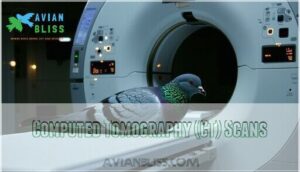
CT scans offer detailed cross-sectional images of your pigeon’s brain, revealing neurological damage invisible on regular X-rays.
These high-resolution scans detect hemorrhages, swelling, and structural abnormalities with 80% accuracy for intracranial lesions, though MRI remains superior for soft tissue detail.
- CT Scan Uses: Identifies brain hemorrhages, tumors, and trauma-related damage in pigeons
- Image Interpretation: Requires veterinary expertise in avian neuroanatomy for accurate diagnosis
- Radiation Exposure: Minimal risk during single scans, though anesthesia poses greater concern
- Cost Considerations: Ranges $250-350 per procedure, limiting accessibility for many bird owners
- Alternative Imaging: MRI provides better soft tissue contrast but costs substantially more
Treatment and Recovery Options
Once you’ve identified neurological problems in your pigeon, swift treatment becomes your top priority for recovery.
You’ll need to create a thorough care plan that includes proper isolation, targeted nutrition, and environmental adjustments to give your bird the best chance at healing, which is crucial for recovery.
Isolation and Hygiene Protocols
Once you’ve identified neurological symptoms, immediate pigeon isolation becomes your first line of defense.
Keep infected birds quarantined for six weeks minimum to prevent disease spread. Use bleach solutions for disinfection methods on food containers and perches.
Practice proper waste disposal by carefully removing droppings without tracking contamination. Always handle sick pigeons last and wash hands thoroughly for handler safety, reducing transmission risks effectively.
Hand Feeding and Nutritional Support
Why struggle with traditional feeding when your neurologically impaired pigeon can’t manage regular seed? Hand feeding thawed peas and corn becomes essential—offer 5% of body weight twice daily.
Use deep dishes for easier access and narrow containers for water to prevent drowning. Many owners find success using specialized feeding tools to assist with this process.
Maintain consistent feeding frequency while providing electrolyte support. This targeted pigeon nutrition approach guarantees proper pigeon recovery during critical healing periods.
Vitamin and Mineral Supplementation
Beyond hand feeding, your bird needs targeted pigeon nutrition support through pigeon vitamins and mineral supplementation. Dosage Considerations matter—over-supplementation risks toxicity while under-dosing won’t address Deficiency Symptoms.
Addressing nutritional deficiencies is key to maintaining healthy feathers.
- Calcium supplement with vitamin D3 prevents nerve dysfunction and muscle tremors
- B-complex pigeon vitamins support nerve transmission and stress recovery
- Mineral Balance between calcium, phosphorus, and magnesium stabilizes nerve conduction
- Probiotic Synergy enhances nutrient absorption from pigeon supplements
Monitor for Supplement Interactions that could affect neurological recovery
Environmental Modifications for Recovery
Beyond vitamin support, creating the right space matters just as much for your pigeon’s recovery. Think of their temporary home as a healing sanctuary where every detail supports neurological repair.
| Environment Factor | Recommended Setup | Recovery Benefit |
|---|---|---|
| Quiet Warmth | 75-80°F, away from noise | Reduces stress on damaged nerves |
| Soft Flooring | Towels or fleece bedding | Prevents further injury from falls |
| Minimal Light | Dim, consistent lighting | Calms overstimulated nervous system |
| Deep Dishes | 2-3 inch seed containers | Helps birds with feeding difficulties |
Your pigeon rehabilitation setup should include narrow containers for water to prevent drowning while maintaining easy access. A suitable option for this setup is a safe housing environment. This stressfree environment becomes the foundation for successful pigeon disease management and long-term recovery.
Reducing Stress and Promoting Wellbeing
Beyond your pigeon’s physical recovery, create a stress-free environment with enrichment activities and mental stimulation.
Maintain a clean environment with regular hygiene practices and schedule routine checkups.
Daily enrichment through social interaction supports healing, while community support networks provide valuable pigeon care guidance.
These wellness strategies complement medical treatment for ideal neurological recovery, ensuring a complete and supportive approach to your pigeon’s care, including daily enrichment.
Preventing Neurological Problems
Prevention starts before symptoms appear, making early action your best defense against pigeon neurological disorders.
You’ll save time, money, and heartache by implementing simple protective measures that keep your birds healthy and alert.
Vaccination and Disease Prevention
Vaccination schedules protect your flock from neurological diseases like paramyxovirus.
You’ll need two doses four weeks apart, then yearly boosters.
Quarantine procedures require isolating new birds for two weeks minimum.
Environmental management includes strict pigeon hygiene protocols – disinfect food containers with bleach solutions.
Pigeon vaccination combined with proper pigeon disease prevention creates effective pigeon disease management strategies for long-term pigeon disease control.
Head trauma, even minor, can result in serious neurological issues, which is a critical aspect of neurological diseases.
Reducing Bird Gatherings and Stress
Large pigeon gatherings create perfect conditions for disease transmission and emotional stress.
You’ll want to manage these factors to protect your birds’ neurological health effectively.
- Gathering Size: Limit flock density to reduce competition and disease spread
- Stress Reduction: Provide multiple feeding stations to minimize aggressive interactions
- Enrichment Activities: Offer perches and toys to keep birds mentally stimulated
Clean environments and proper pigeon disease management strategies substantially reduce neurological disorders in your flock.
Early Intervention and Veterinary Care
When you spot pigeon neurological symptoms like head tilting or balance issues, don’t wait.
Prompt veterinary diagnosis from specialist avian vets can mean the difference between recovery and permanent damage.
Emergency treatment protocols exist for good reason—neurological conditions worsen rapidly without intervention.
Supportive care importance can’t be overstated, and rehabilitation therapy options improve substantially with early professional assessment, highlighting the need for prompt veterinary diagnosis.
Proper Nutrition and Dietary Support
Quality nutrition serves as your pigeon’s first defense against neurological problems.
A Balanced Pigeon Diet rich in vitamins A, D, and calcium strengthens neural pathways.
Proper Supplement Dosages prevent Nutritional Deficiencies that trigger neurological symptoms.
Effective Feeding Techniques guarantee adequate pigeon hydration and mineral absorption.
Recovery Diets with legumes like mung beans support healing, while careful pigeon vitamins and pigeon minerals monitoring prevents over-supplementation complications.
Many owners find that targeted vitamin regimens are helpful, using a targeted approach to pigeon health.
Recognizing Early Warning Signs and Symptoms
Early detection can save your feathered friend’s life. Watch for subtle behavioral changes like decreased activity or altered vocalizations. Eating difficulty often appears first—pigeons missing seeds or tossing food backward signal trouble. Coordination issues manifest as stumbling, pigeon circling disease, or pigeon stargazing behavior with twisted necks.
- Physical symptoms: Look for pigeon twisted neck, head tilts, pigeon seizures, tremors, or pigeon paralysis affecting wings or legs
- Vision problems: Birds bumping into objects, difficulty landing, or flying backwards indicate neurological damage
- Weakness/paralysis: Progressive loss of muscle control starting in extremities and potentially spreading to essential functions
Frequently Asked Questions (FAQs)
How do I know if my bird has a neurological problem?
Watch for head tilts, tremors, balance issues, difficulty eating, circling movements, or abnormal droppings.
These signs often appear together in unique combinations, distinguishing neurological problems from other illnesses in your bird, which can be identified by abnormal droppings.
Can neurological problems be fixed?
Many neurological problems in birds can improve with proper treatment.
You’ll find success depends on the underlying cause – infections, injuries, and nutritional deficiencies often respond well to targeted therapy and supportive care.
Can neurological symptoms appear gradually over weeks?
Yes, neurological symptoms in pigeons can definitely develop gradually over weeks rather than appearing suddenly.
You’ll notice subtle changes first – maybe slight head tilting or minor coordination issues that slowly worsen into more obvious signs like circling or difficulty eating.
The symptoms will progress, and it is essential to monitor the pigeons closely to identify any neurological symptoms early on.
Do certain pigeon breeds show higher susceptibility?
Current research doesn’t show specific pigeon breeds having higher susceptibility to neurological conditions.
The virus principally attacks the nervous system and kidneys, infecting irrespective of age with staggering variation within a single species but no clear breed-based patterns.
Are neurological problems contagious to other birds?
Some neurological problems in pigeons are contagious, particularly Pigeon Paramyxovirus (PMV), which spreads through direct contact and contaminated surfaces.
You’ll need to isolate affected birds immediately to prevent transmission to your flock, especially through direct contact.
Can cold weather trigger neurological episode relapses?
Cold weather’s icy grip can indeed trigger relapses in your pigeon’s neurological episodes. Stress from temperature drops weakens immunity, making birds vulnerable to symptom flare-ups you’ve already battled.
Do recovered pigeons retain permanent movement impairments?
Most recovered pigeons adapt well, though some retain subtle balance quirks or slight head tilts. You’ll notice they compensate cleverly, living full lives despite minor lasting effects.
Conclusion
Like Cassandra’s prophecies, recognizing pigeon neurological problem signs early can prevent tragedy from unfolding.
You’ve learned to identify seven critical symptoms that demand immediate attention.
When you spot head tilting, tremors, balance issues, or abnormal droppings, don’t hesitate to seek veterinary care.
Early intervention substantially improves recovery outcomes for affected birds.
Your vigilance can mean the difference between life and death for these urban companions facing neurological challenges.
- https://www.pigeonrescue.sirtobyservices.com/commonailments-2/neurologicalproblems/
- https://agriculture.vic.gov.au/biosecurity/animal-diseases/pigeon-diseases/pigeon-paramyxovirus
- https://pigeondoctors.com/paramyxovirus/
- https://www.daera-ni.gov.uk/articles/avian-avulavirus-1-aavv-1-pigeon-paramyxovirus
- https://en.wikipedia.org/wiki/Sarcocystis_calchasi