This site is supported by our readers. We may earn a commission, at no cost to you, if you purchase through links.
 You’ll find several striking red birds in Wisconsin throughout the year, each with distinct features that make identification easier once you know what to look for.
The Northern Cardinal stands out as the most recognizable, with males displaying brilliant red plumage year-round, while females show warm brown tones with red highlights.
Red-winged Blackbirds flash their signature shoulder patches in wetlands, and Red-headed Woodpeckers sport bold crimson caps in oak forests.
Rose-breasted Grosbeaks visit during migration with their distinctive chest markings, and American Robins offer rusty-red breasts as familiar backyard companions.
Each species has preferred habitats and seasonal patterns that reveal the best times and places to spot them.
Table Of Contents
- Key Takeaways
- Red Birds in Wisconsin: an Overview
- Types of Red Birds in Wisconsin
- Common Red Birds Found in Wisconsin
- Red-Headed Birds in Wisconsin
- Red and Black Birds in Wisconsin
- Attracting Red Birds to Your Backyard in Wisconsin
- Frequently Asked Questions (FAQs)
- What Wisconsin birds are red?
- Do cardinals stay in Wisconsin year round?
- Do Scarlet Tanagers live in Wisconsin?
- Who was the chief red bird in Wisconsin?
- What seasons do red birds migrate through Wisconsin?
- How long do Wisconsin red birds typically live?
- What predators threaten red birds in Wisconsin backyards?
- Do red birds in Wisconsin change colors seasonally?
- Which red birds sing most loudly in Wisconsin?
- Conclusion
Key Takeaways
- You’ll find several year-round red birds in Wisconsin, including Northern Cardinals with their brilliant plumage and Red-winged Blackbirds with distinctive shoulder patches in wetlands
- Seasonal visitors like Scarlet Tanagers arrive during breeding season (May-August) while Pine Grosbeaks and Common Redpolls visit during harsh winters
- You can attract these colorful birds to your backyard by offering black oil sunflower seeds in feeders, planting native berry-producing plants, and providing fresh water sources
- Each species has specific habitat preferences – Cardinals favor woodland edges, Red-headed Woodpeckers prefer oak forests, and Rose-breasted Grosbeaks inhabit deciduous forests
Red Birds in Wisconsin: an Overview
Wisconsin hosts diverse red bird species year-round, from the iconic Northern Cardinal to seasonal visitors.
Wisconsin’s stunning red birds bring vibrant splashes of color to every season’s changing landscape.
You’ll discover over a dozen species displaying striking color variations – bright scarlet tanagers in summer oak forests, pink-washed pine grosbeaks during winter irruptions, and crimson-capped common redpolls at feeders.
Bird identification becomes easier when you understand habitat preferences and seasonal changes. Cardinals prefer woodland edges, while red-headed woodpeckers favor open groves.
Most red bird species maintain stable conservation status, though habitat loss affects some populations. Providing native plants and feeders attracts these vibrant wisconsin birds to your yard.
You can also attract birds by installing bird feeders.
Types of Red Birds in Wisconsin
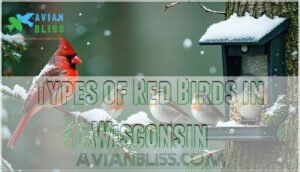
Wisconsin’s diverse habitats host several spectacular red bird species that’ll catch your eye throughout the year.
Cardinal variations include both males with their brilliant crimson plumage and females sporting warm reddish-brown tones.
Finch subspecies like House Finches display rosy-red coloring on males’ heads and chests.
Tanager migration brings Scarlet Tanagers through Wisconsin during breeding season, showcasing stunning red bodies with contrasting black wings.
Here’s what you’ll encounter:
- Permanent residents – Northern Cardinals year-round in backyards and woodland edges
- Seasonal visitors – Pine Grosbeaks and Common Redpolls during harsh winters
- Breeding migrants – Rose-breasted Grosbeaks in deciduous forests from May through August
Grosbeak habitats range from coniferous woods to mixed forests, while Redpoll diet focuses on small seeds at backyard feeders.
Understanding bird habitats in Wisconsin can improve identification skills.
Red bird identification becomes easier when you understand these patterns of wisconsin birds behavior and seasonal presence.
Common Red Birds Found in Wisconsin
Several species of red birds wisconsin call home year-round or seasonally. Identifying Cardinals becomes straightforward when you spot the male’s brilliant crimson plumage and distinctive crest.
These wisconsin birds frequent backyard feeders, especially enjoying sunflower seeds during winter months. House Finches represent common red birds with males displaying rosy-red heads and chests.
These adaptable Finch Varieties thrive in urban settings and form social flocks at nyjer-filled tube feeders. Scarlet Tanagers showcase stunning red bodies with contrasting black wings during breeding season.
Their Tanagers Migration brings them to Wisconsin’s deciduous forests from May through August, where they hunt insects in oak canopies. Common Redpolls arrive unpredictably during harsh winters.
Their Redpoll Behavior includes forming large flocks that devour small seeds when arctic food sources fail. Pine Grosbeaks occasionally visit during irruptive years.
These gentle giants focus their Grosbeak Diets on tree seeds and mountain ash berries. Urban centers attract them to backyard environments.
Each species offers unique identification challenges and rewards for patient observers practicing bird identification skills throughout Wisconsin’s diverse habitats.
Red-Headed Birds in Wisconsin
Spotting Wisconsin’s red-headed birds creates unforgettable moments for any birdwatcher.
These striking species showcase vibrant crimson crowns that distinguish them from other red birds Wisconsin offers.
- Red-headed Woodpecker – Bold tri-colored pattern with completely red head and neck, declining due to habitat loss
- Scarlet Tanager – Males display brilliant red bodies with contrasting black wings during breeding season
- Rose-breasted Grosbeak – Males feature distinctive rose-colored chest patches against black and white plumage
- Northern Cardinal – Both sexes sport prominent red crests, with males showing all-red coloring
- Pine Grosbeak – Large finches with reddish-pink males and grayish-brown females in coniferous forests
The red headed woodpecker faces conservation challenges as dead trees disappear from landscapes.
These woodpeckers drum to attract mates.
Scarlet tanager populations thrive in mature oak forests across Wisconsin.
These species’ identifying features and habitat preferences make them sought-after sightings for Wisconsin birds enthusiasts.
Red and Black Birds in Wisconsin
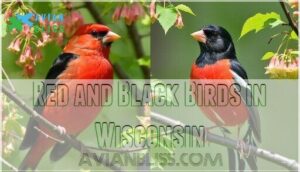
Wisconsin’s red and black birds create striking contrasts that’ll catch your eye across the state.
These dramatic plumage variations showcase nature’s artistry in motion.
- Scarlet Tanager – Males flash brilliant red bodies with jet-black wings during breeding season
- Rose-breasted Grosbeak – Features distinctive black and white patterns with rose-red chest patches
- Red-winged Blackbird – Dominates wetlands with glossy black plumage and scarlet shoulder badges
- Northern Cardinal – Males sport bright red feathers with bold black face masks year-round
- Red-headed Woodpecker – Displays tri-colored pattern with vivid red head and black wings
These species demonstrate fascinating behavior patterns and diet analysis differences.
Scarlet tanagers prefer insects in forest canopies, while red-winged blackbirds dominate marshland territories.
Their conservation status remains stable, though hybridization events occur rarely between similar species in overlapping ranges.
Some blackbirds, like the Red-winged Blackbird, are known for their distinct shoulder patches.
Attracting Red Birds to Your Backyard in Wisconsin
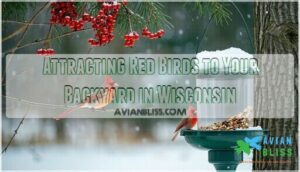
Turn your backyard into a red bird paradise by creating the perfect habitat for Wisconsin’s most colorful visitors.
Transform your Wisconsin yard into a vibrant red bird sanctuary with strategic habitat design.
Best feeders stocked with black oil sunflower seeds attract Northern Cardinal and other red birds year-round, increasing visits by up to 60%. Position tube and hopper bird feeders near dense cover for safety.
Native plants like serviceberry and dogwood provide natural food sources that support dozens of backyard birds wisconsin species. Fresh water sources, including heated birdbaths during winter, keep birds hydrated through harsh seasons.
Winter shelter from evergreens like cedar and pine offers essential protection from cold winds. Consider adding moving water to your bird bath to further entice birds.
Avoiding predators means placing feeders within three feet of windows or using decals to prevent collisions. With these simple steps, you’ll enjoy brilliant flashes of cardinal wisconsin colors dancing through your yard all season long.
Frequently Asked Questions (FAQs)
What Wisconsin birds are red?
You’ll spot several red birds across Wisconsin’s landscapes.
Northern Cardinals show brilliant red plumage year-round, while Scarlet Tanagers display vibrant red during breeding season.
House Finches, Pine Grosbeaks, and Rose-breasted Grosbeaks also feature striking red coloration.
Do cardinals stay in Wisconsin year round?
Looking for feathered friends who brave Wisconsin’s winters?
Yes, Northern Cardinals stay in Wisconsin year-round.
You’ll spot these bright red beauties at your feeders through all seasons, from snowy January mornings to summer evenings, making them reliable backyard companions.
Do Scarlet Tanagers live in Wisconsin?
Yes, Scarlet Tanagers live in Wisconsin during spring and summer breeding months.
You’ll find these bright red males with black wings in deciduous forests, parks, and oak trees from May through early fall, which can be considered a complete breeding cycle for them.
Who was the chief red bird in Wisconsin?
I can’t identify a specific "chief red bird" in Wisconsin from the ornithological information provided.
You might be thinking of a Native American leader or historical figure rather than an actual bird species.
What seasons do red birds migrate through Wisconsin?
Scarlet Tanagers arrive in Wisconsin during May for breeding season, while Common Redpolls visit during fall and winter months. You’ll spot migrating red birds primarily during spring and fall periods.
How long do Wisconsin red birds typically live?
Most Wisconsin red birds live 2-10 years in the wild. Cardinals often reach 13+ years, while smaller finches typically survive 4-6 years. Backyard feeders can extend lifespans substantially.
What predators threaten red birds in Wisconsin backyards?
Your backyard cardinals, house finches, and other red birds face threats from domestic cats, hawks, owls, snakes, raccoons, and squirrels that raid nests and hunt adult birds.
Do red birds in Wisconsin change colors seasonally?
Most red birds in Wisconsin don’t change colors seasonally.
You’ll see male Northern Cardinals, House Finches, and Scarlet Tanagers maintain their vibrant red plumage year-round, while females keep their consistent brown tones.
Which red birds sing most loudly in Wisconsin?
You’ll hear Northern Cardinals singing their clear whistles and Rose-breasted Grosbeaks with sweeter, more melodious songs lasting up to 6 seconds during breeding season.
You can find Northern Cardinal recordings from various locations, which can help you identify the clear whistles of these birds.
Conclusion
Like a field guide tucked in your pocket, this knowledge transforms casual walks into exciting discovery adventures.
You’ve learned to identify Wisconsin’s most striking red birds in wisconsin through key features, habitats, and seasonal patterns.
Whether spotting a cardinal’s brilliant plumage or a woodpecker’s crimson cap, you now possess the tools for confident identification.
Your backyard can become a haven for these colorful visitors with proper feeders and native plants.