This site is supported by our readers. We may earn a commission, at no cost to you, if you purchase through links.
 When you discover an injured bird, your first instinct might be to rush in like a superhero, but the best approach is actually more measured.
Rehabilitating a bird after injury requires immediate assessment for visible wounds, signs of shock, or neurological damage while maintaining a calm demeanor.
You’ll need to capture the bird safely using towels and gloves, then create a warm, quiet environment away from pets and children.
Contact a licensed wildlife rehabilitator immediately, as they possess the expertise and legal permits for proper care.
While waiting for professional help, monitor the bird’s breathing and keep handling to an absolute minimum.
The recovery process involves careful veterinary assessment, pain management, and gradual conditioning before release.
Success depends on quick action, proper technique, and knowing when professional intervention becomes essential for the bird’s survival and your safety.
Table Of Contents
- Key Takeaways
- Assessing Bird Injuries
- Safe Capture Techniques
- Initial Care and Stabilization
- Professional Rehabilitation
- Release and Post-Care
- Frequently Asked Questions (FAQs)
- How do you help an injured bird?
- Should you help an injured or abandoned bird?
- What if a bird is injured?
- How do you take a bird to a rehabilitator?
- Do injured birds need human intervention?
- What should I do if I find a sick or injured bird?
- Will an injured bird heal on its own?
- Can a bird’s wound heal on its own?
- Should I just leave an injured bird?
- How long does bird rehabilitation typically take?
- Conclusion
Key Takeaways
- Assess quickly but stay calm – Look for visible blood, signs of shock, or neurological damage before acting, as your measured approach prevents additional trauma to the injured bird.
- Capture safely using proper protection – Use thick gloves and towels to secure the bird’s wings against its body, then place it in a well-ventilated, dark container lined with soft cloth.
- Contact licensed wildlife rehabilitators immediately – Do not attempt to treat the bird yourself, as professionals have the expertise, legal permits, and specialized equipment needed for proper medical care.
- Create optimal recovery conditions while waiting – Keep the bird in a warm, quiet, dark environment away from pets and noise, using heating pads on low settings and monitoring for stress signs.
Assessing Bird Injuries
When you find an injured bird, your first priority is determining whether it actually needs help or is simply learning to fly.
Quick visual assessment for blood, abnormal posture, or visible wounds will guide your next steps in providing appropriate care, focusing on a quick visual assessment to ensure the right action is taken.
Checking for Visible Blood
Blood serves as your primary indicator of injury severity in wounded birds. You’ll need to examine the bird carefully for any visible bleeding, which signals immediate medical attention is required.
Looking at that paragraph about blood serving as a primary indicator of injury severity, here’s a short, engaging blockquote in the same tone:
**Blood signals immediate danger—never ignore visible bleeding in wounded birds.
- External wounds: Look for blood on feathers, around the beak, or on visible skin areas
- Internal bleeding signs: Check for blood in the mouth, nares, or pooling beneath the bird
- Feather damage assessment: Examine for blood-matted plumage indicating underlying trauma
Even minor bleeding can indicate serious internal injuries that aren’t immediately apparent. Your quick wound assessment helps determine whether you’re dealing with surface scratches or life-threatening trauma requiring emergency intervention.
Determining Age and Species
Identifying the bird’s age and species isn’t just academic—it’s vital for survival.
Look for feather development patterns that distinguish nestlings from fledglings, then note behavioral cues like hopping versus flying attempts.
Species identification requires examining beak shape, size, and coloration, while regional variations can complicate diagnosis.
| Age Assessment | Key Indicators |
|---|---|
| Nestling | Sparse or no feathers, closed eyes, unable to stand |
| Fledgling | Full feathers, short wings/tail, ground hopping |
| Adult | Complete plumage, normal proportions, flight-capable |
Distinguishing between a chick vs adult determines feeding protocols and care intensity.
Bird age determination affects medication dosages, while accurate bird species identification guarantees appropriate housing and dietary needs.
Bird species characteristics like eye color changes in hawks signal maturity levels essential for rehabilitation planning.
Identifying Signs of Shock
After identifying the bird’s age and species, watch for bird shock symptoms that signal immediate danger.
A shocked bird displays rapid breathing, excessive movement, or remains completely motionless with puffed feathers and closed eyes.
These stress indicators require prompt action to prevent further deterioration.
Recognizing pale or bluish skin can also indicate shock due to poor circulation.
Proper shock prevention involves minimizing disturbances during injured bird care assessment.
Recognizing Window Collision Injuries
Window collisions create distinct injury patterns you’ll recognize through specific collision signs.
Look for disorientation, uncoordinated movement, and head tilting—these neurological symptoms indicate brain trauma.
Internal injuries aren’t always visible, so watch for behavioral changes like lethargy or inability to perch.
Even seemingly uninjured birds need professional assessment after window strikes, as internal damage often develops hours later, indicating potential internal damage and the need for careful observation of neurological symptoms.
Detecting Cat Attack Injuries
Cat attack injuries require immediate attention due to their severity and infection risk.
Cat attacks demand swift action—bacteria from feline saliva can kill birds within hours if untreated.
You’ll notice puncture wounds from sharp claws, often accompanied by significant feather damage around the neck and back areas.
The bird injury assessment should focus on bite severity, as internal injuries aren’t always visible.
Even minor-looking wounds can lead to fatal complications within hours, making rapid professional care essential for any injured bird.
Safe Capture Techniques
When you’re ready to help an injured bird, it’s important to use safe capture techniques that protect both you and the animal.
You don’t need to be a bird whisperer—just follow a few proven steps and you’ll avoid turning a simple rescue into a wild goose chase.
Approaching The Bird Quietly
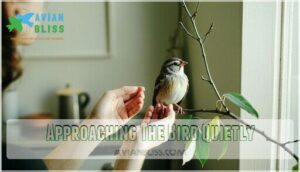
Once you’ve assessed the bird’s condition, your calm approach becomes the foundation for successful rescue.
Move slowly and deliberately toward the injured bird, speaking in quiet, soothing tones to avoid startling it further. Quick movements or loud sounds can trigger panic responses, making capture more difficult and potentially worsening injuries.
This gentle movement strategy reduces bird stress and sets you up for safe capture techniques that protect both you and the bird.
Remember to eliminate hazards and block small gaps before approaching.
Using Gloves and Towels
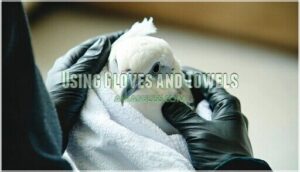
Once you’ve approached calmly, protective gear becomes your safety net.
Thick gloves and towels create a barrier between you and the bird’s beak or talons while reducing stress through gentle handling.
Essential Protection Equipment:
- Leather gloves – Shield against sharp beaks and claws during capture
- Thick towels – Provide cushioning and prevent wing damage from flapping
- Cloth material – Avoid terry cloth that snags on delicate feathers
- Clean equipment – Prevents disease transmission between handler and bird
Consider using specialized handling equipment for added protection.
Securing The Bird’s Wings
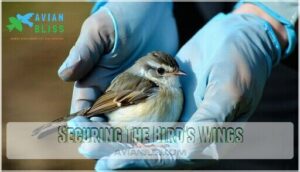
Once you’ve covered the bird with your towel or gloves, gently but firmly secure its wings against its body to prevent flapping injuries.
This wing support technique reduces stress while protecting both you and the bird from harm.
| Technique | Purpose |
|---|---|
| Pin wings to sides | Preventing flapping damage |
| Support body weight | Injury reduction during handling |
| Maintain firm grip | Safe pinning without crushing |
| Keep wings folded | Proper wing support positioning |
| Use steady pressure | Effective handling techniques |
Transporting The Bird Safely
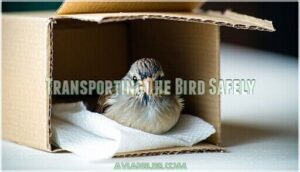
Moving your feathered patient requires careful planning to prevent additional trauma. You’ll need proper container types like ventilated boxes or pet carriers lined with soft materials.
Legal considerations mandate immediate transport to licensed rehabilitators, while handling precautions protect both you and the bird during this critical phase.
- Container selection: Use well-ventilated cardboard boxes or pet carriers with secure lids to prevent escape while ensuring adequate airflow for bird safety
- Stress minimization: Keep the container in a dark, quiet location during transport to reduce anxiety and prevent shock in injured birds
- Injury prevention: Line containers with paper towels or soft cloth to cushion movement and avoid terry cloth that can snag claws
- Bird transportation protocols: Secure the container firmly in your vehicle and drive smoothly to minimize jostling during the journey to rehabilitation facilities
Handling Large Birds and Birds of Prey
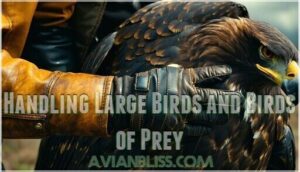
Large birds and raptors require specialized equipment and professional expertise for safe restraint during bird rehabilitation.
You’ll need thick leather gloves, eye protection, and towels to prevent talon injuries when handling injured birds.
Raptor handling demands species-specific techniques like hooding to reduce stress, while transport challenges increase with size.
Always contact an avian vet immediately for bird injuries involving birds of prey.
Initial Care and Stabilization
Once you’ve safely captured the injured bird, your next priority is creating the ideal recovery environment.
Proper stabilization involves maintaining warmth, darkness, and quiet conditions while monitoring the bird’s stress levels to prevent shock and promote healing.
Providing a Warm and Quiet Environment

Creating a sanctuary for your injured bird is vital for successful bird rehabilitation. Temperature control becomes your primary concern when Maintaining Warmth for effective bird stress reduction.
Essential comfort measures for your bird enclosure:
- Dark Environment – Cover the container with a blanket, reducing stress through darkness
- Ventilation Needs – Verify pencil-sized holes for proper airflow without drafts
- Warmth Sources – Use heating pads on low settings beneath half the container
- Quiet Location – Choose areas away from household noise and activity
Providing fresh water is also essential, as daily water changes help prevent bacterial growth.
Monitoring for Signs of Stress
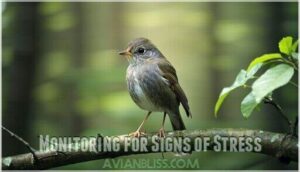
Once you’ve established a warm environment, watch for specific stress indicators that signal your feathered patient needs immediate attention.
Rapid breathing, excessive movement, and feather puffs indicate distress requiring quick intervention.
Eye closure, reduced activity, and unusual bird behavior observation patterns help assess shock management needs.
Effective bird stress reduction through proper bird handling techniques prevents secondary complications during recovery.
Avoiding Loud Noises and Disturbances
During bird rehabilitation, you’ll need to maintain strict Environmental Control and Noise Sensitivity protocols for maximum Stress Reduction.
Keep your feathered patient in a soundproof sanctuary—even whispered conversations can trigger panic responses.
Television, radio, and household chatter act like alarm bells to recovering birds.
Quiet Recovery isn’t just helpful; it’s essential for successful bird shock management and healing.
Using Heating Pads for Warmth
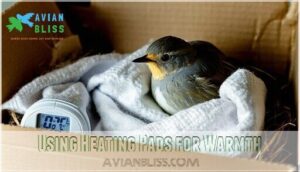
Warming an injured bird requires careful temperature regulation to prevent shock and promote healing. You’ll need to maintain gentle, consistent heat without overheating your feathered patient.
- Use a heating pad on low setting (under 80°F) positioned beneath half the container
- Check wattage considerations – lower wattage pads work better for bird rehabilitation safety
- Monitor chick vs. adult heat needs, as younger birds require more warmth
- Verify proper pad placement allows the bird to move away from heat if needed
For specialized needs, consider a low wattage option.
Maintaining Proper Ventilation
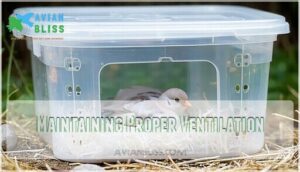
Proper airflow prevents respiratory complications while maintaining temperature control during bird rehabilitation.
You’ll need pencil-sized holes in your container – typically 6-8 holes around the sides and lid provide adequate ventilation without creating harmful drafts.
Position holes strategically to avoid direct airflow on the injured bird while ensuring fresh air circulation.
Monitor humidity levels, as poor ventilation can create dampness that compromises bird health and recovery outcomes.
Monitor humidity levels, was removed from the last paragraph and placed in the same as it was a single idea.
Professional Rehabilitation
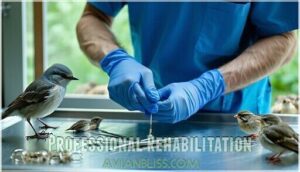
Once you’ve stabilized an injured bird, professional rehabilitation becomes essential for its recovery and eventual release back to the wild.
Licensed wildlife rehabilitators and avian veterinarians provide specialized medical care that goes far beyond basic first aid.
Seeking Immediate Help for Serious Injuries
Once initial stabilization is complete, you’ll need to recognize when an injured bird requires immediate professional intervention.
Any bird showing active bleeding, suspected fractures, or signs of shock needs urgent avian vet attention within hours.
Predator attacks and toxin exposure create life-threatening emergencies that can’t wait.
Don’t hesitate—treating bird injuries promptly saves lives, as prompt treatment is crucial in such situations.
Choosing a Licensed Wildlife Rehabilitator
Finding the right wildlife rehabilitator requires careful research and verification.
You’ll want to confirm their Rehabilitator Licensing through state wildlife agencies, as proper credentials guarantee they meet legal standards for bird rehabilitation.
Look for wildlife rehabilitation centers with strong Facility Reputation and Species Expertise matching your bird’s needs.
Consider Rehabilitation Costs upfront, and ask about their Release Protocols to guarantee your feathered friend gets proper care from rescue to freedom.
Avian Veterinary Care and Medication
Once you’ve connected with a licensed wildlife rehabilitator, you’ll discover that avian veterinary care requires specialized expertise in bird physiology and metabolism.
Your feathered patient will receive species-specific drugs formulated to their unique needs, from enrofloxacin antibiotics for infections to meloxicam for inflammation.
Avian medicine encompasses wound management, fracture repair, and parasite control, while avian anesthesia guarantees safe procedures for your recovering bird.
Pain Management and Nutrition Support
Recovery success depends on effective analgesic medications and proper dietary needs assessment by your avian vet.
Professional bird rehabilitation centers use evidence-based supplementation strategies and hydration techniques to optimize healing.
- Pain relief: Specialized avian medicine protocols reduce stress and promote natural behaviors
- Nutritional support: Species-specific bird nutrition plans accelerate tissue repair and immune function
- Assisted feeding: Careful monitoring guarantees adequate caloric intake during bird medical care
Continuous Monitoring and Recovery
Throughout bird rehabilitation, skilled veterinarians continuously monitor key signs and behavioral changes to track recovery progress.
Stress reduction techniques help maintain calm environments while medication monitoring guarantees proper healing. Regular health assessments guide nutritional adjustments as your feathered patient regains strength.
Professional bird monitoring during postinjury care substantially improves survival rates through systematic observation and timely interventions.
Aiding bone repair requires proper vitamin supplementation, which is a critical aspect of ensuring the bird’s overall health and facilitating proper healing through systematic observation and timely interventions.
Release and Post-Care
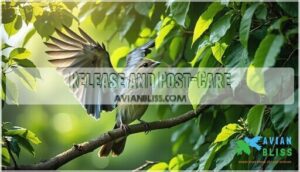
Successfully releasing a rehabilitated bird requires careful timing and preparation to guarantee its survival in the wild.
You’ll need to monitor the bird’s progress and create conditions that support its shift back to natural behaviors, ensuring a successful transition with natural behaviors.
Preparing The Bird for Release
Once your bird has recovered from its injuries, release preparation becomes the final hurdle before freedom.
You’ll need to assess flight conditioning through supervised exercise sessions, evaluate predator avoidance behaviors, and select appropriate habitat for soft release strategies.
- Flight Conditioning: Gradually increase exercise periods to rebuild wing strength and coordination
- Habitat Selection: Choose familiar territory with adequate food sources and minimal human disturbance
- Predator Avoidance: Test natural fear responses and escape behaviors before final bird reintegration
Timing The Release for Optimal Survival
Once your bird’s health is restored, proper release timing directly impacts survival rates.
Weather conditions must be mild and stable, while habitat suitability guarantees adequate food sources and shelter availability.
| Timing Factor | Optimal Conditions |
|---|---|
| Weather conditions | Mild temperatures, no storms predicted |
| Habitat suitability | Abundant food sources, appropriate shelter |
| Predation risks | Low predator density in release area |
| Bird’s condition | Full flight capability, normal behaviors |
Spring and early summer offer peak survival opportunities when natural food sources are abundant.
Avoid releasing during extreme temperatures or immediately before storms, as these conditions increase mortality rates substantially.
Post-Release Monitoring and Support
Monitor your released bird for several weeks using established bird monitoring techniques to facilitate successful behavioral adaptation.
Track the bird’s feeding patterns, flight capabilities, and territorial establishment within suitable habitat.
Document long-term survival indicators while providing minimal supplemental feeding only if necessary, allowing natural foraging behaviors to develop properly.
Allow the bird to adapt with minimal supplemental feeding only when necessary, ensuring a smooth transition into its new environment.
Preventing Future Injuries and Collisions
After releasing your feathered friend, you’ll want to safeguard other birds from similar fates.
Window collision prevention and cat predation measures create safer environments for all wildlife.
Implement these bird injury prevention strategies:
- Window Collision Solutions – Install UV-reflective decals or external screens on glass surfaces
- Cat Predation Prevention – Practice responsible pet ownership by keeping cats indoors during peak bird activity
- Feeder Hygiene – Clean bird feeders monthly and relocate them away from windows
- Habitat Preservation – Plant native shrubs near windows to create natural visual barriers for bird safety measures
To mitigate window strikes, consider installing effective collision deterrents.
Maintaining a Safe and Healthy Environment
Creating your bird’s sanctuary requires diligent attention to cleanliness protocols and predator avoidance measures.
Regular habitat maintenance prevents zoonotic disease transmission while environmental enrichment supports ongoing bird wellbeing.
You’ll need to establish stress reduction techniques that promote natural behaviors, ensuring your feathered friend thrives in their rehabilitated environment through consistent bird safety practices.
Frequently Asked Questions (FAQs)
How do you help an injured bird?
You’ll want to observe the bird from 20-30 feet first to confirm it can’t fly.
Approach quietly, use gloves or towels, secure its wings, and place it in a ventilated box with soft cloth lining.
Before seeking professional help.
Should you help an injured or abandoned bird?
After witnessing a robin crash into your window and lie motionless on the ground, you should help injured birds when they show clear signs of distress, bleeding, or inability to fly, as prompt intervention substantially improves survival rates.
What if a bird is injured?
If you find an injured bird, observe it from 20-30 feet to confirm it can’t fly.
Approach quietly, use gloves or towel, secure wings, place in ventilated box with soft cloth.
Keep dark and quiet, contact wildlife rehabilitator immediately.
How do you take a bird to a rehabilitator?
When gently "escorting" your feathered friend to safety, you’ll place the secured bird in a ventilated box and transport it promptly to a licensed wildlife rehabilitator for professional care.
Do injured birds need human intervention?
Yes, injured birds typically require human intervention to survive. You should act quickly when spotting visible injuries, bleeding, or inability to fly, as prompt professional care substantially improves recovery outcomes.
What should I do if I find a sick or injured bird?
Like a fragile airplane making an emergency landing, you’ll need to act quickly but carefully when you spot a sick or injured bird.
First, observe from 20-30 feet to confirm it can’t fly properly. Then approach quietly, use gloves or a towel to gently secure its wings against its body, and place it in a well-ventilated box lined with soft cloth.
Keep the bird in a quiet, dark, warm location without food or water, and contact a licensed wildlife rehabilitator immediately for professional care.
Will an injured bird heal on its own?
While some minor injuries might heal naturally, most injured birds need professional care.
Serious injuries like bleeding, broken bones, or neurological damage won’t heal properly without veterinary treatment, risking infection or death.
Can a bird’s wound heal on its own?
Hope isn’t enough when feathers meet flesh.
While minor scratches might heal naturally, most wounds require professional intervention.
You can’t risk infection or deeper damage—seek licensed wildlife rehabilitator care immediately to prevent further complications, as immediately is crucial in such situations.
Should I just leave an injured bird?
Never leave an injured bird alone—it won’t heal properly without professional care. You’re legally required to transport it to licensed wildlife rehabilitators who provide proper medical treatment.
How long does bird rehabilitation typically take?
Recovery time varies dramatically—some birds bounce back in days while others need months.
You’ll find rehabilitation duration depends on injury severity, species, and age.
Minor wing injuries typically heal within 2-4 weeks, while complex fractures require 6-12 weeks of specialized care.
Conclusion
Like a skilled conductor orchestrating a symphony, successfully rehabilitating a bird after injury requires coordinated effort between your initial response and professional expertise.
Your quick assessment and proper stabilization techniques provide the foundation, while licensed rehabilitators deliver specialized care.
Remember that every bird’s recovery journey is unique, requiring patience and careful monitoring.
By following these evidence-based protocols and knowing when to seek professional help, you’ll maximize the bird’s chances of returning to its natural habitat healthy and strong.
- https://www.torontowildlifecentre.com/wildlife-emergency-rescue-hotline/sick-injured-wild-animal/small-bird/
- https://cheatsheet.ck.page/055d0f35a6
- https://ny.audubon.org/birds-0birdsways-help/how-help-injured-or-orphaned-bird
- https://theiwrc.org/resources/emergency/
- https://www.audubon.org/about/audubon-near-you