This site is supported by our readers. We may earn a commission, at no cost to you, if you purchase through links.
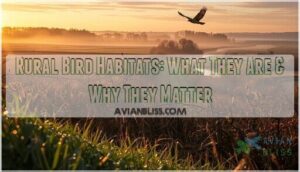
Step outside on a quiet morning in farm country, and the air tells a story before you see a single bird. A red-tailed hawk traces slow circles over a corn stubble field. Somewhere in the hedgerow, a song sparrow runs through its repertoire.
These moments aren’t accidents—they’re the result of a complex web of habitats working together. Rural bird habitats weave farmland, woodlots, wetlands, and field margins into a living mosaic that sustains hundreds of species year-round.
But that mosaic is shrinking, and the birds that depend on it are feeling the pressure. Understanding what makes these landscapes tick is the first step toward keeping them whole.
Table Of Contents
- Key Takeaways
- Key Features of Rural Bird Habitats
- Common Bird Species in Rural Areas
- Factors Influencing Rural Bird Populations
- Conservation Challenges in Rural Bird Habitats
- Enhancing and Protecting Rural Bird Habitats
- Frequently Asked Questions (FAQs)
- What is Audubon certified bird friendly land?
- What environments do birds live in?
- What are the different types of bird habitats?
- Where do birds live?
- What is a bird habitat?
- Do birds live in urban areas?
- What birds live in rural areas?
- What challenges do birds face in a rural habitat?
- How do rural bird migration patterns change?
- What role do rural birds play in pollination?
- Conclusion
Key Takeaways
- Rural bird habitats work best as a connected mosaic of farmland, wetlands, woodlots, and field margins — break that web, and the birds disappear.
- Pesticide use has wiped out more than 60% of farmland bird populations since 1980, mostly by starving out the insects birds rely on to raise their chicks.
- Simple actions on your own land — planting native shrubs, adding nest boxes, and keeping brush piles — can make a real difference for both resident and migratory birds.
- Climate change is quietly reshuffling migration timing, pushing birds to arrive before their food sources are ready and throwing nesting seasons off balance.
Key Features of Rural Bird Habitats
Rural bird habitats aren’t just patches of land — they’re intricate systems shaped by what’s available, what’s safe, and what sustains life through every season.
From forest canopies to open grasslands, understanding what makes each environment thrive helps explain why birds are so selective about where they settle — explore the patterns behind those choices with this guide to identifying bird habitats.
A few core features determine whether birds thrive or disappear from a landscape entirely. Here’s what actually makes rural habitats work for birds.
Habitat Diversity in Rural Landscapes
Rural landscapes aren’t just farmland — they’re living mosaics. Patchworks of crops, pastures, woodlots, and wetlands create rural ecosystems rich in biodiversity hotspots. This microhabitat creation fosters everything from grassland conservation efforts to bird nesting habits across surprisingly short distances.
Ecological connectivity thrives when these varied patches stay linked, making habitat preservation in rural areas essential for the ecological importance of bird nesting year-round. Structural differences in forests play a major role in shaping.
Natural Vs. Semi-Natural Areas
Not all green spaces are created equal. Natural areas — think undisturbed wetlands or native forests — develop through centuries of ecological processes, shaping nesting sites and bird nesting habits organically.
Semi-natural areas, like managed hedgerows or grazed pastures, blend habitat classification with human influence. Both matter deeply for biodiversity conservation, landscape ecology, and habitat preservation across rural areas.
For more insight into how semi-natural environments support biodiversity, their ecological significance is well recognized in conservation research.
Availability of Food and Water
Beyond the structure of the land itself, food sources and water quality shape everything. Birds need insect prey in spring and seed availability through winter — and rural areas deliver both when habitats stay intact.
Streams, ponds, and even farm ditches support rural feeding year-round. That’s bird habitat preservation in action, quietly underpinning wildlife conservation and broader ecosystem services that benefit everyone.
Nesting Sites and Shelter Options
Shelter is surprisingly varied in rural areas. Bird nesting happens everywhere — from tree cavities in old snags to ledges inside barns. Your farm’s structures, brush piles, and even bare ground all count.
- Tree cavities in dead snags host woodpeckers and bluebirds
- Nest boxes replace lost natural hollows on open farmland
- Farm structures shelter swallows and owls year-round
- Ground nesting sites hide in dense grass margins
Nesting materials like feathers, mud, and twigs finish the job — turning any nook into home.
Common Bird Species in Rural Areas
Rural areas are home to a surprisingly wide range of birds, each finding its own corner of the landscape to call home.
From open fields to wooded edges, rural landscapes attract dozens of species year-round, with seasonal movement patterns detailed in this guide to mountain birding locations and peak migration windows.
From the edges of a quiet pond to the open stretch of a working farm, different species have learned to make the most of what’s around them. Here’s a look at some of the birds you’re most likely to encounter out there.
Songbirds and Their Habitats
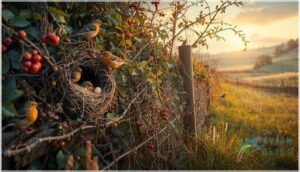
Songbirds are everywhere in rural areas — darting through hedgerows, nesting in dense shrubs, singing from fence posts.
Their nesting habits depend heavily on what the landscape offers. Hedgerows packed with native plants can hold two to three times more species than bare margins.
Smart habitat restoration and conservation strategies that protect these nesting sites give songbird behavior — and bird migration patterns — room to thrive.
Waterfowl in Rural Wetlands
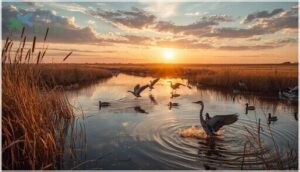
Rural wetlands are a lifeline for waterfowl. From prairie potholes to flooded farm ditches, these spots fuel waterfowl migration and support rural wildlife conservation year-round.
Habitat management and wetland restoration make all the difference:
- Shallow ponds offer feeding and nesting cover
- Emergent plants support ecosystem services
- Restored wetlands boost rural conservation efforts
- Connected wetlands strengthen bird conservation across rural areas
Birds of Prey in Farmland and Woodlands
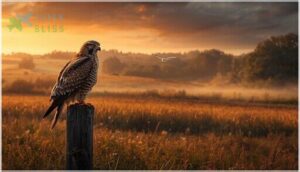
Hawks, owls, and falcons quietly anchor rural wildlife conservation. In farmland, kestrels hover over grass margins hunting voles, while barn owls patrol fields at night using sound to pinpoint prey.
Raptor migration connects woodland nesting sites to open hunting grounds. These birds of prey regulate prey populations naturally — making habitat preservation strategies and avian ecology central to understanding rural areas.
Seasonal Changes in Bird Populations

Bird populations in rural areas shift like clockwork with the seasons. Spring brings a surge of migratory birds following food resources north, while fall migration clears out most long-distance travelers by October.
Seasonal abundance peaks in summer, then drops sharply in winter. Climate effects are nudging these migration patterns earlier, putting migratory bird behavior slightly out of sync with habitat shifts and food availability.
Factors Influencing Rural Bird Populations
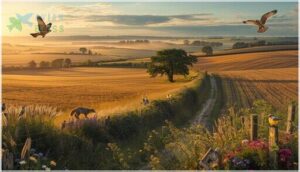
Rural bird populations don’t just thrive or struggle by chance — there’s always something behind the shift.
From the crops growing in nearby fields to the predators patrolling the hedgerows, a handful of key forces shape who shows up and who disappears. Here’s a closer look at the main factors at play.
Impact of Agricultural Practices
Farming shapes the land birds depend on more than almost anything else. Intensive farming and monoculture effects strip away the insect-rich, varied habitat that keeps rural bird populations healthy.
Fertiliser runoff clouds wetlands and kills aquatic invertebrates wading birds need. Sustainable agriculture and rangeland management — including sustainable ranching practices across grasslands — can dramatically reduce the environmental impact on bird populations.
Role of Native Plants and Vegetation
Think of native plants as the backbone of everything birds need. Native Plant Diversity drives Ecosystem Services that no ornamental shrub can replicate — a single oak hosts over 500 caterpillar species.
That means real food, reliable Nesting Sites, and Habitat Restoration that actually sticks. Plants for Birds like asters and black cherry support Seed Dispersal, Biodiversity Conservation, and Bird-friendly Habitats across Grasslands year-round.
Effects of Predators and Human Activity
You can picture rural areas as a stage where predator control and human disturbance shape bird behavior and migration. For instance, free ranging cats cause high bird mortality, while habitat fragmentation lets smaller predators thrive.
Even simple recreation or noise can disrupt nesting habits. Conservation efforts and wildlife management and conservation help balance these pressures, keeping birds of prey and songbirds safer.
Climate and Seasonal Variation
Climate and weather extremes don’t just set the backdrop — they actively reshape bird behavior and migration.
Temperature shifts push migratory songbirds to arrive earlier in spring, sometimes before insects peak.
That mismatch throws off nesting habits and ecological balance.
Seasonal patterns of drought or heavy rain flood low-lying nests.
Climate change, simply put, keeps rewriting the rules rural birds live by.
Conservation Challenges in Rural Bird Habitats
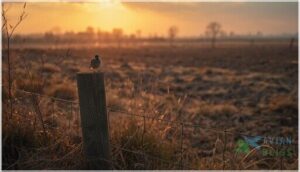
Rural bird habitats are under real pressure these days, and the threats aren’t always obvious from the outside.
From shrinking landscapes to disappearing food sources, the challenges facing local bird populations are worth understanding. Here’s a closer look at what’s working against them.
Habitat Loss and Fragmentation
Habitat destruction in rural areas quietly unravels the ecological balance birds depend on. When mixed farmland gives way to large monocultures, fragmentation effects ripple outward — isolating woodland patches, severing corridors, and shrinking the biodiversity that once thrived there.
Edge impacts push nest predation higher, while corridor loss leaves species stranded. Wildlife habitat restoration isn’t optional; it’s how rural landscapes breathe again.
Pesticide Use and Food Scarcity
Beyond habitat loss, pesticide effects quietly starve birds out of rural areas. Insect decline from heavy chemical use has cut farmland bird populations by over 60% since 1980 — a staggering blow to bird conservation. Food shortages hit hardest during nesting season, when chicks need insects most.
Pesticide-driven insect decline has slashed farmland bird populations by over 60% since 1980, leaving bad news for chicks and conservation alike
- Bird mortality spikes when breeding overlaps with spray cycles
- Ecosystem disruption ripples from soil invertebrates to wildlife management and conservation
- Environmental conservation depends on reducing chemical pressure across whole landscapes
Water Scarcity and Environmental Changes
When drought hits rural areas hard, wetland habitat can shrink by up to 80% — leaving waterfowl with almost nowhere to go.
Water scarcity drives habitat loss, crowding birds into shrinking pools where predators find them easily.
Climate shifts make these dry spells longer and less predictable. Without stronger wildlife management and conservation, environmental degradation will keep pushing bird conservation into crisis mode.
Importance of Hedgerows and Field Margins
Tucked along field edges, hedgerows and margins are quietly doing the heavy lifting for rural bird conservation. They’re nesting sites, food pantries, and safe corridors rolled into one.
Field margin ecology shows these strips can hold up to six times more birds than bare edges. Smart hedgerow management and bird habitat restoration keep grasslands connected — real ecosystem services that biodiversity conservation and wildlife ecology both depend on.
Enhancing and Protecting Rural Bird Habitats
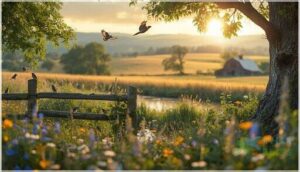
Good news: protecting rural bird habitats doesn’t have to be complicated. Whether you own a small farm, tend a garden, or just care about the birds passing through your area, there are real, practical ways you can make a difference.
Here’s what actually works.
Creating Bird-Friendly Farms and Gardens
Your farm or garden can become a sanctuary birds actually want to call home. Small, intentional choices — like planting native berry shrubs, adding shallow water features, and installing nest boxes — support real farm biodiversity and create sustainable landscapes that work year-round.
- Plant native hedgerows using elderberry or serviceberry for continuous food and nesting sites
- Mount nest boxes 1.5–3 meters high to improve bird nesting success
- Add a shallow birdbath near cover to safely attract garden wildlife
Restoring Natural Features and Connectivity
Restoring natural features is like stitching a quilt back together — each patch of native vegetation, riparian buffer, and woodland strip reconnects the landscape.
Wildlife corridors let birds move safely across rural areas without crossing hostile open fields. Habitat restoration rooted in conservation biology and landscape ecology principles builds true ecosystem connectivity, supporting grasslands, wetlands, and ecological sustainability that birds — and you — can count on.
Community Engagement in Conservation
Ever wonder how your rural community can boost bird conservation efforts? Community Engagement weaves together Volunteer Programs, Citizen Science, and Education Initiatives.
Here’s how you can help:
- Join local bird monitoring projects
- Attend Community Outreach events
- Build conservation partnerships
- Support rural community development
- Teach neighbors about bird habitats
Small actions create lasting change in Rural Areas.
Supporting Migratory and Breeding Birds
Supporting migratory birds starts with what’s already on your land. Thoughtful habitat restoration — planting native shrubs, keeping brush piles, and installing nest boxes — directly lifts breeding success by giving birds reliable nesting sites and nesting strategies that work.
Food availability matters just as much: retained crop strips and flooded fields fuel bird migration patterns during stopovers. Your choices shape migratory bird conservation and influence what a breeding bird survey shows next season.
Frequently Asked Questions (FAQs)
What is Audubon certified bird friendly land?
Audubon certified bird friendly land is working ranch or farm land managed under strict habitat standards, grazing protocols, and welfare practices to support declining grassland birds while still producing beef or bison.
What environments do birds live in?
Birds thrive across Forest Ecosystems, Grassland Habitats, Wetland Environments, Coastal Areas, and Rural Landscapes. Each setting offers unique Nesting Sites that shape Bird Populations — from woodland canopies to open Grasslands shaped by Ecosystem Restoration.
What are the different types of bird habitats?
From grasslands to wetlands, rural landscapes offer a whole “nest” of habitats. You’ll find grassland ecosystems, forest habitats, wetland conservation zones, nesting sites, and bird sanctuaries—each sheltering unique species.
Where do birds live?
From dense Forest Ecosystems to open Rural Landscapes, birds live almost everywhere.
They find Nesting Sites in trees, wetlands, and farmlands — each offering unique Habitat Diversity and Complexity that fosters nesting, feeding, and survival year-round.
What is a bird habitat?
A bird habitat is any place where a species finds food, water, shelter, and space to raise young.
Habitat diversity and complexity determine which birds thrive, making nesting sites and food sources essential for bird ecology.
Do birds live in urban areas?
Yes, birds absolutely live in urban areas. At least 2,041 species — roughly 20% of all known birds — call cities home, nesting on buildings and adapting diets to thrive amid the noise and crowds.
What birds live in rural areas?
Rural areas are home to songbirds, waterfowl, birds of prey, and wading birds.
Farmland ecology sustains sparrows, skylarks, barn owls, mallards, and herons — each finding food, shelter, and bird nesting spots across diverse rural landscapes.
What challenges do birds face in a rural habitat?
Habitat Destruction, food shortage, and pollution effects hit hard.
Climate change shifts seasons unpredictably.
Human disturbance disrupts bird nesting.
Wildlife management and grassland ecology efforts can’t always outpace urbanization’s spread or the growing threats birds face daily.
How do rural bird migration patterns change?
Migration patterns shift as climate warms — your local grasslands become year-round stopovers.
Timing changes push birds off familiar routes, while fragmented habitats break connectivity between the Northern Great Plains, wintering grounds in Mexico, and beyond.
What role do rural birds play in pollination?
Birds do more than sing — they’re quiet pollinators. Through nectar feeding and pollen transfer, species like hummingbirds support seed dispersal and ecosystem services that keep wildflowers, hedgerows, and grasslands thriving around you.
Conclusion
Nearly 3 billion North American birds have vanished since 1970—a loss no single statistic captures more starkly.
Rural bird habitats are where much of that story plays out, field by field, hedgerow by hedgerow. But the ending isn’t written yet. Every patch of native grass you protect, every fence line you leave standing, adds a thread back into that living mosaic.
The birds are still out there. They just need the landscape to meet them halfway.
- https://www.farmers.gov/blog/new-englands-small-diverse-farms-are-boon-shrubland-birds
- https://www.audubon.org/magazine/farms-natural-habitat-gain-more-benefits-birds
- https://pmc.ncbi.nlm.nih.gov/articles/PMC1602054/
- https://besjournals.onlinelibrary.wiley.com/doi/full/10.1111/1365-2664.12715
- https://www.pnas.org/doi/10.1073/pnas.2216573120