This site is supported by our readers. We may earn a commission, at no cost to you, if you purchase through links.
 If you’re itching to escape the city buzz, rural bird watching spots hand you the keys to nature’s backstage.
From North Carolina’s Cape Hatteras dunes to the waterfowl spectacle at Lake Mattamuskeet, you’ll spot everything from Bald Eagles to Red-cockaded Woodpeckers.
Venture beyond—Bosque Del Apache hosts thousands of cranes, while Cape May Point is a raptor magnet.
Trails wind through forests, marshes, and riverbanks, each habitat packed with unique avian life, and Accessibility’s a breeze with well-marked paths and plenty of parking.
Ready to trade traffic for birdsong? Stick around—there’s a flock of secrets waiting just past the next bend.
Table Of Contents
- Key Takeaways
- Top Rural Bird Watching Spots in North Carolina
- Hidden Gems Near Wilson and Beyond
- Rural Birding Hotspots Across The US
- What to Expect at Rural Birding Destinations
- Frequently Asked Questions (FAQs)
- Where can I go bird watching?
- What is a local Birding Website?
- Where can I find bird watching hotspots?
- Where is the best place to bird watch in the world?
- What is bird watching?
- Where can I find bird watching groups?
- How to find a bird watching group?
- Where is the best place to go bird watching in the US?
- What equipment do beginners need for birdwatching?
- How early should you arrive for birding?
- Conclusion
Key Takeaways
- You’ll find diverse habitats in rural spots – from coastal marshes and longleaf pine forests to wetlands and bottomlands, each supporting unique bird species like Red-cockaded Woodpeckers and Bald Eagles.
- Peak seasons offer the best viewing opportunities – spring brings migrating warblers, fall delivers spectacular raptor flights, and winter concentrates waterfowl on lakes and rivers.
- These destinations provide excellent accessibility – most rural birding spots feature well-marked trails, observation decks, ample parking, and facilities that make birdwatching easy for all skill levels.
- Your visits directly support conservation efforts – rural birdwatching fuels local economies, funds habitat protection, and contributes valuable citizen science data that helps preserve wild spaces.
Top Rural Bird Watching Spots in North Carolina
You’ll find North Carolina’s top rural bird watching spots offer diverse habitats, from coastal marshes to longleaf pine forests, supporting hundreds of bird species throughout the year.
Discover wild freedom among North Carolina’s marshes and pine forests, where hundreds of bird species await year-round
Whether you’re tracking bald eagles at Jordan Lake or scanning Pea Island’s shoreline for migratory waterfowl, each location provides unique opportunities for observing avian ecology in action, with chances to see species like migratory waterfowl.
Cape Hatteras National Seashore and Pea Island NWR
If you’re craving freedom and fresh air, Cape Hatteras National Seashore and Pea Island NWR are your ticket.
These birding locations offer Barrier Island Birds across dunes, marshes, and tidal flats.
Hatteras Accessibility means easy trails and platforms.
Pea Island Waterfowl flock here during Coastal Bird Migration, making rural bird watching in these coastal habitats both intimate and unforgettable.
Birders often seek Hatteras birding products to enhance their experience.
Lake Mattamuskeet National Wildlife Refuge
Leaving the salty breezes behind, Lake Mattamuskeet calls with its Waterfowl Abundance and rich Refuge Ecology.
You’ll spot thousands of ducks, swans, and geese during peak Birding Seasons.
The lake’s future is tied to both conservation and the Local Economy, making Mattamuskeet National Wildlife Refuge a must-see rural bird watching site among North Carolina’s top birding locations.
Weymouth Woods Sandhills Nature Preserve
Weymouth Woods Sandhills Nature Preserve lets you wander among ancient Longleaf Pine forests, home to endangered Red-cockaded Woodpeckers and over 260 bird species.
You’ll explore Sandhills Ecology along well-marked hiking trails, discovering unique bird habitats and the rich preserve history.
North Carolina’s commitment to conservation shines here, making every walk a lesson in biodiversity and freedom.
Carolina Beach State Park
Exploring Carolina Beach State Park, you’ll spot rare Venus flytraps tucked among Longleaf pines and Turkey oak stands.
With 233 bird species recorded, this coastal habitat is a magnet for bird watchers seeking freedom in nature.
The park’s mix of wetlands and forests creates prime birding destinations, making it one of North Carolina’s top bird watching sites and hotspots. Bird watchers may even spot Ospreys diving for fish in their natural habitat.
Jordan Lake State Recreation Area
Freedom takes flight at Jordan Lake State Recreation Area, where the Eagle Observation Deck offers prime Bald Eagle Viewing.
You’ll find healthy Winter Bird Populations along Jordan Lake Trails, making this site one of North Carolina’s top birding hotspots.
Recreation Area Access is easy, and bird watching here reveals a stunning mix of raptors and waterfowl among the region’s diverse habitats.
Hidden Gems Near Wilson and Beyond
You’ll find that rural areas near Wilson offer exceptional opportunities to observe migratory and resident bird species in diverse habitats, including bottomland forests and river corridors.
These lesser-known sites provide scientific value for birders seeking accurate data on population trends and habitat use, so don’t forget your field notebook.
Upper Neuse River Bottomlands
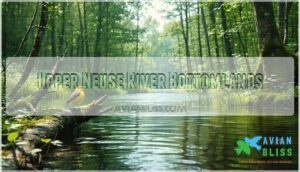
Within the Upper Neuse River Bottomlands, you’ll find prime birding along accessible trails and rich bottomland habitats.
Neuse Birds thrive here, with Wilson Birding offering nature observation for all skill levels. River access points make seasonal viewing easy, especially during migration.
The area is part of the Neuse River Trail system, offering extensive pathways for exploration.
Don’t miss:
- Prothonotary Warbler sightings
- Diverse bird species
- Mature forest patches
- Trail signage
- Year-round birdwatching
Falls Lake and Roanoke River Bottomlands

Falls Lake birds thrive in secluded birding spots, while Roanoke habitats offer country birding with river access that feels like a secret handshake with nature.
Birding seasons bring shifting species diversity—warblers in spring, waterfowl in winter.
You’ll spot quiet birding spots along trails, perfect for patient observation.
These areas are essential for migratory bird species that depend on these wetlands. The Falls Lake and Roanoke River Bottomlands promise rewarding, intimate encounters with North Carolina’s avian life.
Tump Island and Surrounding Areas

You’ll find Tump Island perfect for quiet birding spots, tucked away from crowds and full of off-the-beaten-path birding.
Island Birdlife thrives here, thanks to diverse river ecosystems and country birding opportunities near Wilson.
Watch migratory patterns unfold each season and spot local conservation efforts in action.
Secluded birding means you’ll hear more birds than people—nature’s true soundtrack, with local conservation efforts making a difference.
Lower Neuse River Bottomlands
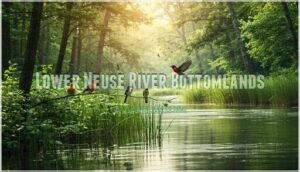
Step into the Lower Neuse River Bottomlands and immerse yourself in prime Bottomland Habitats.
River Access is easy, making bird watching a breeze. You’ll spot Neuse Birdlife like warblers and woodpeckers, especially during peak migration.
Conservation Efforts keep these birdwatching locations thriving, so every visit reveals new bird species. Seasonal Birds add variety, making North Carolina’s river valleys unforgettable, with Conservation Efforts being a key factor.
Eno River and Chowan River Bottomlands
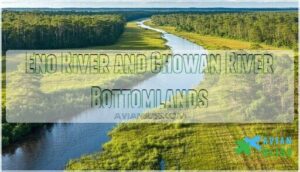
Explore the Eno River Bottomlands and Chowan River Bottomlands for a fresh take on North Carolina bird watching.
You’ll encounter unique Eno Birds and diverse Chowan Habitats thanks to easy river access and local conservation efforts.
For a technical checklist, focus on:
- Bird watching trails
- Notable bird species
- Seasonal viewing opportunities
- Habitat diversity
This will help you make the most of your North Carolina bird watching experience, taking advantage of the easy river access.
Rural Birding Hotspots Across The US
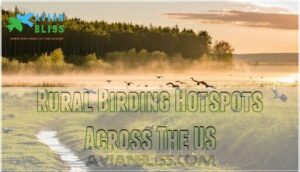
You’ll find that rural birding hotspots across the United States offer a remarkable range of habitats, from wetlands and grasslands to coastal marshes and forest preserves.
Whether you’re tracking sandhill cranes in New Mexico or scanning for warblers in Texas, each location provides unique opportunities to observe regional avifauna and seasonal migration patterns.
Bosque Del Apache National Wildlife Refuge
Bosque Del Apache’s Refuge Waterfowl spectacle pulls you into the heart of Crane Migration each fall.
Watch thousands of sandhill cranes fill the sky in a breathtaking autumn migration spectacle
Over 15,000 Sandhill Cranes and 32,000 snow geese fill the desert skies—ideal for desert birding and photography opportunities.
Bosque Del Apache merchandise is available online.
Wildlife refuges here offer bird watching trails, observation decks, and blinds, letting you witness migratory birds and tackle conservation challenges firsthand during wildlife viewing.
Klamath Basin Birding Areas
If you’re chasing freedom under wide-open skies, the Klamath Basin is a birdwatching destination with a storied Refuge History and unmatched avian diversity.
Here, you’ll track Migratory Patterns as millions of birds sweep across Klamath Habitats.
Water Management shapes lush wetlands, supporting 30+ bird species and bolstering the Local Economy through wildlife viewing and bird identification.
The area is part of the Pacific Flyway, a vital route for migratory birds.
Potter Marsh, Alaska
Potter Marsh sits just outside Anchorage, making it a prime spot for bird migration and wildlife observation.
The wetland ecosystem, shaped by salmon influence, supports impressive avian diversity.
From the viewing platform, you’ll spot dozens of bird species—think Arctic terns and bald eagles.
Bring binoculars for better bird identification and use patience; early mornings boost your bird watching success.
Cape May Point, New Jersey
From Alaska’s marshes, you’ll find Cape May Point, New Jersey, a migration hotspot in the eastern United States.
Coastal habitats here attract flocks of shorebirds and raptors during peak birding seasons.
You’ll love:
- Sweeping coastal estuaries packed with species diversity
- Prime viewing for fall bird migration
- Local conservation efforts supporting thriving birdwatching destinations
High Island, Texas
After Cape May Point, your birdwatching adventure finds new life at High Island, Texas.
This Migration Hotspot sits near Bolivar Flats, with Smith Oaks and Boy Scout Woods offering prime birding.
High Island History includes legendary spring bird migration events, drawing flocks of warblers and vireos.
These bird sanctuaries and wildlife refuges create a haven for both birds and birders.
Many birders also enjoy visiting birding hotspots locations within the national park system.
What to Expect at Rural Birding Destinations
You’ll encounter a wide range of habitats, from wetlands and forests to grasslands, each supporting distinct bird species and seasonal patterns.
Expect well-marked trails, accessible facilities, and opportunities to observe conservation efforts that benefit both local wildlife and rural communities.
Habitat Diversity and Notable Bird Species
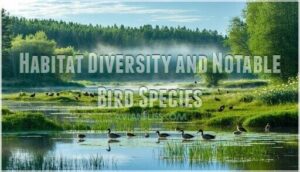
As you explore rural birdwatching, you’ll encounter Forest Birdlife in misty woods, Wetland Avifauna in marshes, and Grassland Birds flitting through open fields.
North Carolina’s bird species diversity spans Agricultural Habitats and Riparian Species along riverbanks.
Each habitat supports unique bird species, from warblers to waterfowl, making every stop a lesson in adaptation and survival.
Some species, like the Greater Roadrunner, exhibit desert camouflage to thrive in arid environments, showcasing desert camouflage techniques.
Accessibility and Visitor Facilities
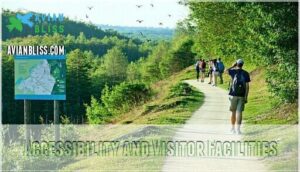
After soaking in habitat diversity, you’ll want to know how easy it’s to get around.
Birdwatching infrastructure matters—think smooth trail conditions and clear signage quality.
Most rural birdwatching spots offer:
- Ample parking availability and marked lots
- Restroom access near trailheads
- Options for guided tours to boost accessible birdwatching logistics
You’ll find birdwatching accessibility surprisingly well-supported.
Before you go, be sure to check current trail conditions for smooth trail conditions and to ensure accessible birdwatching.
Seasonal Birding Highlights
Every birdwatching season in North Carolina brings its own magic.
Spring Migration fills forests with songbirds, while Summer Nesting reveals hidden nests in lush habitats.
Fall Raptors soar overhead, riding thermals, and Winter Waterfowl gather on lakes, painting a lively scene.
Peak Seasons offer unmatched bird diversity, with each bird species adapting to shifting habitats and rhythms, making every season a unique experience, and you’ll never watch the same show twice, which is part of the bird diversity and the reason for the changing rhythms.
Eco-tourism and Conservation Impact
As migration seasons ebb and flow, your visits fuel more than your own life list.
Birdwatching and ecotourism pump energy into local economies, spark funding increases for conservation, and inspire volunteer efforts.
Community programs thrive, habitats get protected, and citizen science grows.
Every sighting you record helps bird conservation—proving that one curious observer can help keep wild places wild.
Frequently Asked Questions (FAQs)
Where can I go bird watching?
You can find excellent birdwatching opportunities at diverse locations including national wildlife refuges, state parks, coastal areas, wetlands, forests, and grasslands that offer varied habitats supporting different species year-round.
What is a local Birding Website?
Looking for local birding resources to fuel your avian adventures?
You’ll want to bookmark eBird.org – it’s your digital field guide for discovering nearby hotspots, tracking species, and connecting with fellow birders in your area, to enhance your avian adventures.
Where can I find bird watching hotspots?
You’ll discover prime birding hotspots through eBird.org’s extensive database, local Audubon chapters, national wildlife refuges, state birding trails, and specialized apps that pinpoint species-rich locations near you.
Where is the best place to bird watch in the world?
Like a golden key opening nature’s treasury, Costa Rica offers over 900 bird species in one compact destination.
You’ll discover unmatched avian diversity spanning rainforests to wetlands, making it the world’s premier birding hotspot.
What is bird watching?
Bird watching involves systematically observing and identifying wild birds in their natural habitats.
You’ll use binoculars, field guides, and patience to study bird behavior, migration patterns, and species diversity for scientific understanding or personal enjoyment, which can include understanding species diversity.
Where can I find bird watching groups?
Join local Audubon Society chapters, search eBird.org for nearby groups, contact Carolina Bird Club for field trips.
Visit nature centers, check community colleges for birding classes.
Or connect through social media birding forums, which can also be a great way to find local groups and field trips.
How to find a bird watching group?
Check local Audubon Society chapters, visit eBird.org for nearby hotspots.
Contact national wildlife refuges for guided trips, attend birding festivals.
Or search online for regional bird clubs offering field excursions.
Where is the best place to go bird watching in the US?
Millions of migrating sandhill cranes create thunderous symphonies at Nebraska’s Platte River each spring.
You’ll discover America’s premier birding destination at Point Pelee, Ontario, where 390 species funnel through this migration bottleneck during peak seasons, making it a key spot for birding.
What equipment do beginners need for birdwatching?
You’ll need binoculars (8×42 magnification works well), a field guide for your region, and comfortable walking shoes. Consider adding a notebook for recording sightings and a camera with zoom capabilities.
How early should you arrive for birding?
The early bird catches the worm, and in birding, you’ll want to arrive at dawn when birds are most active.
Plan to reach your spot 30 minutes before sunrise for ideal viewing opportunities.
Conclusion
Beyond city limits, rural bird watching spots transform ordinary days into extraordinary wildlife encounters.
You’ll discover North Carolina’s coastal treasures and national gems offer unparalleled access to diverse avian communities.
From dawn chorus symphonies to migration spectacles, these destinations provide essential habitat connections for countless species.
Whether you’re tracking warblers through bottomland forests or witnessing crane gatherings, rural bird watching spots deliver authentic nature experiences that urban environments simply can’t match, offering a chance to connect with diverse species.
- https://www.visitnc.com/things-to-do?spage=1&type=Activity,Attraction&slug=things-to-do&interest=iFnm
- https://www.lightupmyphotos.com/cameras-and-lenses/6-best-cameras-and-lenses-for-travel/
- https://www.eventbrite.com/e/the-ultimate-bird-drawing-throwdown-showdown-and-online-auction-registration-723614288817?aff=oddtdtcreator
- http://www.audubon.org/search-by-zip
- http://birding.aba.org/