This site is supported by our readers. We may earn a commission, at no cost to you, if you purchase through links.
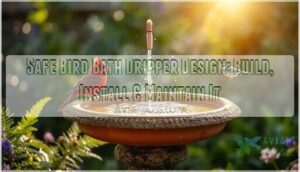
A bird that won’t visit a dry bath will absolutely show up for a dripping one.
Moving water pulls birds in from surprising distances—even species that never touch standing water.
But a poorly designed dripper does more than waste water.
It creates shallow puddles that attract mosquitoes, depths that can drown small songbirds, and slippery rims that send birds tumbling toward waiting cats.
Safe bird bath dripper design closes that gap between good intentions and a backyard that actually works.
Get the depth, placement, materials, and drip rate right, and you’ll have a setup birds return to every single day.
Table Of Contents
- Key Takeaways
- Key Principles of Safe Bird Bath Dripper Design
- Choosing The Right Dripper System Components
- Installing Your Bird Bath Dripper Safely
- Maintenance and Care for Dripper Bird Baths
- Top 5 Safe Bird Bath Dripper Products
- Frequently Asked Questions (FAQs)
- How to make a dripper for a bird bath?
- Do birdbath Drippers work?
- Do birdbath Drippers have adjustable valves?
- How do you make a birdbath dripper?
- Does a birdbath dripper freeze?
- Do birds take a bath in a birdbath?
- What makes a good bird bath?
- How often should I clean the dripper mechanism itself?
- Can I use tap water or does it need filtering?
- How do I prevent birds from injuring themselves on tubing?
- Conclusion
Key Takeaways
- Moving water pulls birds in from far away, so a simple dripper—set to 1–2 drops per second—turns a plain bath into a busy backyard hotspot.
- Keep water 1–2 inches deep with gently sloping sides, place the bath 24–36 inches off the ground, and stay 10–15 feet from dense shrubs to keep birds safe from predators.
- Stick with non-toxic materials like UV-stable polyethylene, stainless steel, or lead-free ceramic—skip zinc fittings and unsealed concrete, which can harm birds over time.
- Clean every 2–3 days in warm weather using a vinegar-to-water mix (1:9), drain tubing before hard freezes, and do quick monthly checks for leaks and clogs to keep everything running smoothly.
Key Principles of Safe Bird Bath Dripper Design
Getting the design right from the start makes everything easier. A few simple principles go a long way toward birds safe and coming back regularly.
From perch placement to water depth, small details matter—explore these bird-friendly water feature ideas to get the setup right from day one.
Here’s what to keep in mind before you build or buy anything.
Optimal Water Depth and Bath Shape
Getting the depth right is everything. Most birds need water between 1 and 2 inches deep — shallow enough to stand, deep enough to splash. A gradual basin slope does the work naturally, mimicking puddles birds already trust.
Here’s what your bird bath design needs:
- Gradual Basin Slope — lets small finches wade in safely
- Depth Zone Markings — keeps water in the 1–2 inch sweet spot
- Rim Texture Grip — rough edges mean confident landings
- Multi‑Level Shelves — give every species its own comfort zone
A shallow diameter size around 18–24 inches fits most gardens and welcomes more visitors.
ideal shallow water depth is recommended to keep birds safe and comfortable.
Safe Placement and Predator Prevention
Your water depth is perfect — but placement seals the deal. A bird bath set too close to dense shrubs becomes a cat’s best ambush spot. Keep at least 10 to 15 feet of shrub buffer around your dripper system, and make sure birds have open sightlines in every direction.
Elevation height matters too. Raise the bath 24 to 36 inches off the ground. That simple move stops most cats cold.
For window distance, stick to the 3-or-30 rule — either within 3 feet or beyond 30 feet of glass. Anything in between risks serious collisions.
To prevent bird collisions, place your bath either within 3 feet or beyond 30 feet from windows—never in between
Add a few escape perches nearby, like stakes or low branches within 5 to 10 feet. Birds need a quick exit, not a maze. Good outdoor garden design gives them both safety and confidence. That’s wildlife friendly gardening in action. moving water attraction enhances bird visits by simulating natural streams.
Material Selection for Bird Safety
Placement sorted — now let’s talk materials. What’s touching the water matters more than most people think. Some surfaces leach chemicals; others trap bacteria right where birds drink.
Stick with these bird safety choices:
- Non-toxic plastics — UV-stabilized polyethylene won’t crack or shed harmful residue
- Stainless steel durability — grade 304 steel lasts 8–15 years and cleans easily
- Lead-free ceramics — glazed finishes stay safe and keep water cool
- Natural stone bases — textured grip, thermally stable, blends naturally
- Recycled materials — recycled HDPE and copper-based components work well and stay eco‑friendly
Skip unsealed concrete and zinc fittings. They cause more harm than good.
Drip Rate Control for Conservation and Attraction
Now that you’ve got safe materials sorted, let’s talk about drip rate control. Picture a gentle tap—each drop is a tiny invitation. Flow optimization means setting your dripper at 1–2 drops per second. You’ll save water and draw warblers, tanagers, and thrushes with the soft sound. For robins and jays, bump the rate to 3–4 drops per second. Noise management matters, too; a harsh splash scares birds, but a steady drip brings them in. Use adjustable valves for easy tweaks, and set timers for peak bird activity. Seasonal timing and energy efficiency keep your setup ecofriendly and low‑maintenance. Here’s how drip rates shape bird attraction and conservation:
| Drip Rate | Bird Attraction |
|---|---|
| 1–2 drops/sec | Warblers, tanagers |
| 3–4 drops/sec | Robins, jays |
| 5 drops/sec | Water waste, pooling |
| Variable flow | Diverse species |
Choosing The Right Dripper System Components
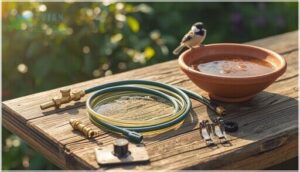
Picking the right components makes the difference between a dripper that works and one that’s a constant headache.
There are a few key decisions to make before you buy or build anything. Here’s what to think about.
One of those decisions is nailing the right placement—getting the balance of shade and sun right affects everything from algae to how comfortable birds actually feel, so it’s worth reading up on automatic bird bath refill systems and setup tips before you commit to a spot.
DIY Vs. Store-Bought Dripper Options
budget and patience both matter here.
DIY birdbath dripper costs under $5 using recycled jugs, but plan for 30 minutes of setup.
Store-bought kits run $20–$45 with a much easier installation time — usually under 10 minutes.
On the durability rating side, commercial options win with UV-resistant materials lasting 2–3 years and real warranties.
DIY offers better customization flexibility and lower environmental impact through upcycling.
Weigh your cost and value priorities honestly before deciding.
Tubing and Fitting Materials
The right tubing makes or breaks your dripper system. For most setups, ¼-inch plastic tubing is your best bet — polyethylene vs vinyl being the key choice. Polyethylene manages UV resistance better and lasts longer outdoors. Vinyl stays more flexible for tight bends. Skip copper-based options; they can leach ions that harm birds over time.
- Barbed vs compression fittings: barbed connectors push on easily; compression fittings handle higher pressure ratings up to 60 PSI
- Food-grade safety matters — stick to non-toxic polyethylene or polypropylene
- Check compatibility features before buying any fittings
Eco-Friendly and Upcycled Material Ideas
Before heading to the store, take a look around your home — you likely already have what you need. Recycled Plastic Jugs like old milk jugs work beautifully as gravity‑fed drippers. Clean them well with a vinegar rinse, drill a small hole near the bottom, and you’re set. This kind of DIY home improvement approach promotes eco‑friendly gardening and garden wildlife conservation without spending a dime.
- Bamboo Drip Channels guide water naturally and resist rot outdoors
- Ceramic Upcycle Basins — think old teapots or mugs — create charming, rust‑free reservoirs
- Stone Base Platforms add stability and blend right into your garden
- Metal‑Free Hardware keeps harmful zinc or copper away from bird water
Essential Tools and Supplies Needed
A few basic tools make the whole project feel smooth.
Drilling tools like a 1‑inch drill bit and a 13/64‑inch bit manage fittings cleanly.
Tubing connectors and a tubing cutter guarantee snug, leak‑free joins.
Grab silicone sealant for any gaps, and use zip ties or wire ties as mounting hardware.
A brass needle valve manages flow‑adjustment devices perfectly.
These keep your dripper system running smoothly and simplify bird‑bath maintenance from day one.
Installing Your Bird Bath Dripper Safely
You’ve picked your components — now it’s time to put everything together.
Installation doesn’t have to be complicated, but few key steps make all the difference between a dripper that works beautifully and one that’s a constant headache.
Here’s what you need to know to get it right.
Planning Location and Positioning
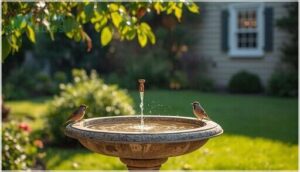
Where you put your bird bath dripper matters more than most people realize. Keep it at least 10–15 feet from dense shrubs — good predator sightlines give birds time to escape.
Follow basic height guidelines and set the basin 24–36 inches off the ground.
A smart sun-shade balance, with morning light and afternoon shade, slows algae and keeps water cool.
Mind your window proximity too — stay within 3 feet or beyond 30 to prevent collisions.
Assembling and Attaching The Dripper
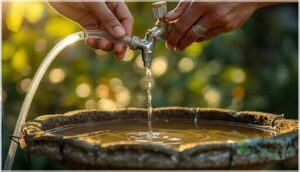
Now comes the satisfying part — putting it all together. Assembly is simpler than it looks, especially if you’ve already planned tubing routing in advance.
- Push the vinyl tubing onto the barbed faucet adapter and seat each connector sealing point firmly — no gaps, no drips sneaking loose.
- Run the tubing along your planned path, keeping wire‑tie placement every 12 inches so nothing shifts during a rainstorm.
- Lock the dripper head into position above the basin, checking dripper alignment so water lands center‑bath, not on the rim.
A good Bird Bath Dripper Kit manages most of this with ease. Compatibility features and setup simplicity make secure mounting straightforward for any skill level.
Adjusting Drip Rate and Water Flow
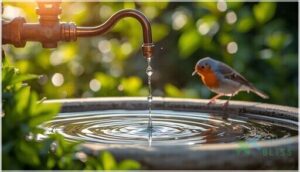
Now that your dripper’s locked in, it’s time to fine-tune the water flow. Use Drip Rate Control and Drop Count Calibration—watch for 1–2 drops per second, adjusting your valve until the rhythm feels right.
For Water Conservation, set a timer for peak bird hours and tweak Pressure Compensation if your supply fluctuates.
Seasonal Flow Tuning and Wind Mitigation keep things steady.
Keep an eye out for Maintenance Needs so your Dripper System stays reliable.
Hiding Tubing for a Natural Look
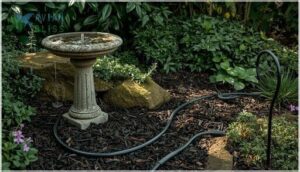
With your flow dialed in, now hide that tubing. Black vinyl runs naturally along the base of rocks — Rock Camouflage at its simplest.
Lay a Mulch Cover two to three inches deep, and the line nearly disappears.
Try Ground Cover Planting like creeping thyme to do the work over time.
Color Matching dark tubing to soil, burying trenches just two inches down, or weaving lines behind your shepherd’s hook all keep your birdbath dripper looking less DIY project, more Garden Decoration Ideas.
That’s Bird Friendly Gardening meeting smart outdoor decor.
Maintenance and Care for Dripper Bird Baths
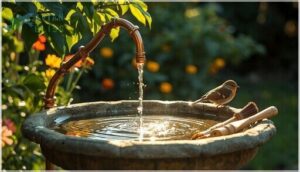
good dripper setup doesn’t stop at installation — it needs regular attention to keep birds coming back.
The good news is that upkeep is simpler than most people think. Here’s what to stay on top of to keep your bird bath clean, working, and ready for every season.
Cleaning and Preventing Algae Growth
Keeping algae out of your bird bath dripper isn’t complicated — it just takes a little rhythm. Aim for cleaning two to three days in warm weather, and weekly when it cools down. Your best friend here is a simple Vinegar Cleaning solution: one part white vinegar to nine parts water. It’s safe, effective, and won’t harm birds.
Follow this Daily Skimming Routine to maintain Algae-Free Water:
- Skim out leaves and droppings each morning
- Swirl the water gently to flush debris toward the edges
- Check that your circulation systems are running with steady flow
- Top off with fresh, Clean Water daily
Shade Placement slows algae growth considerably. Position your bath under dappled tree cover rather than full sun. A Shallow Bowl Design with smooth sides makes scrubbing fast and easy. The dripper’s natural movement does a lot of the work — constant circulation disrupts algae before it takes hold, reducing your overall maintenance requirements. Spot green slime? Clean immediately.
Checking and Replacing Power Sources
Now that your water stays clean, don’t forget the power keeping it all moving.
A quick Battery Health Check every four to six weeks goes a long way.
Solar Powered units need a monthly Solar Panel Inspection — dust and droppings quietly cut efficiency by up to 30%.
Check Wiring Integrity and run basic Voltage Testing in full sun, aiming for 5–7V.
Weak output? That’s your sign for a Power Source Upgrade.
Inspecting for Leaks, Clogs, and Wear
Spotting trouble early makes all the difference in bird bath maintenance. You want your dripper system to last, so get hands‑on with these four checks:
- Tubing Leak Detection—run your fingers along the hose for damp spots or fine sprays.
- Emitter Clog Inspection—unscrew dripper heads and flush out grit or algae.
- Fitting Seal Check—look for mineral crust or loose barbs at every joint.
- Basin Crack Monitoring—watch for slow leaks or hairline cracks, and keep a wear log tracking maintenance requirements and water flow control.
Seasonal Adjustments and Winterizing
When winter arrives, your bird bath maintenance needs shift fast. Start by checking your tubing in fall — vinyl and rubber hoses crack when frozen water expands inside them. Drain and store dripper lines before the first hard freeze. That’s your best Winter Drainage Solutions move.
For Ice Prevention Strategies, switch to a 40–50W heated bird bath. Built‑in thermostats manage Heater Power Management automatically, kicking on only near freezing. Place the bath in south‑facing sun to slow ice build‑up through the day.
Cold Weather Drip Timing matters too. Run your dripper only during midday warmth — refreezing overnight makes perches dangerously slick. Seasonal Bird Behavior shifts toward midday visits anyway, so your water circulation timing lines up perfectly. Clean weekly during mild spells and you’re set.
Top 5 Safe Bird Bath Dripper Products
Not all drippers are created equal, and picking the right one makes a real difference for your birds.
These five options cover a range of budgets, power sources, and setups — so there’s something here for almost every yard.
Here’s what’s worth your attention.
1. Mister Landscaper Bird Bath Dripper Kit
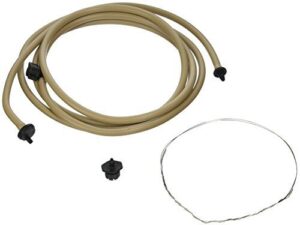
Mister Landscaper Bird Bath Dripper Kit is one of those setups that just works. It comes with 8 feet of tan vinyl tubing, an 18‑inch Bend‑N‑Stay lead that holds its shape without kinking, a 1 GPH pressure‑compensating dripper, and wire ties to secure everything to your bath stand.
Installation is straightforward. You’ll need a 1/4‑inch faucet adapter (sold separately), but once connected, simply position the dripper 2–4 inches above the bath lip and use the on/off valve to dial in your preferred flow. One gallon per hour is gentle enough to attract birds without splashing water everywhere.
Every week or two, check the tubing for clogs or wear. A screen filter helps if your water runs hard. You can also connect this kit to an existing irrigation system or add a timer as your backyard habitat grows.
| Best For | Backyard bird enthusiasts who want a low-maintenance way to keep their bird bath fresh and full of life. |
|---|---|
| Primary Use | Bird bath dripper |
| Material | Vinyl tubing |
| Installation Ease | Moderate |
| Maintenance Level | Low |
| Outdoor Durability | Weather-resistant tubing |
| Power Source | Water pressure |
| Additional Features |
|
- The bend-and-stay tubing holds its position without fussing, so setup stays put once you’ve got it where you want it.
- Works with existing drip irrigation systems, so it’s easy to fold into a setup you already have.
- A gentle 1 GPH flow keeps the water moving and clean without splashing everything around it.
- You’ll need to buy a 1/4-inch faucet adapter separately, which is a bit of an annoying extra step.
- The flow control can be tricky to dial in just right, especially if you want a very specific drip rate.
- The tubing might run longer than you need, so you may have to cut it down to fit your space.
2. Miriam Song Solar Water Agitator
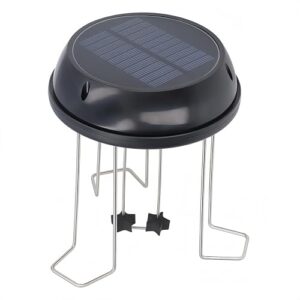
Ever notice birds seem to flock to moving water?
The Miriam Song Solar Water Agitator makes it easy to turn your bird bath into a lively spot without wires or batteries. Its solar panel powers a quiet motor that creates gentle ripples—perfect for catching a bird’s eye and keeping mosquitoes at bay.
Made from tough ABS plastic and stainless steel, it endures sun, rain, and everyday use. You just set the panel in a sunny spot, drop the agitator in, and let nature do the rest.
Maintenance is simple: wipe off algae every so often and check for debris.
For under $20, you get reliable mosquito control, cleaner water, and more feathered visitors. It’s a smart, eco-friendly upgrade for your backyard habitat.
| Best For | Backyard bird enthusiasts who want a low-maintenance, eco-friendly way to attract more birds without dealing with cords or batteries. |
|---|---|
| Primary Use | Bird bath agitator |
| Material | ABS plastic & stainless steel |
| Installation Ease | Easy |
| Maintenance Level | Low |
| Outdoor Durability | Sun & rain resistant |
| Power Source | Solar |
| Additional Features |
|
- Runs entirely on solar power—no wiring, no batteries, no hassle
- Quiet motor keeps water moving, which draws birds in and helps prevent mosquito breeding
- Built from weather-resistant ABS and stainless steel, so it holds up outdoors
- Cloudy days can kill the performance since it needs direct sunlight to run
- Some users have reported it stops working after just a few months
- Not a great fit for larger water features—it’s sized for bird baths, not big ponds
3. Rain Bird 1 GPH Drippers 30 Pack
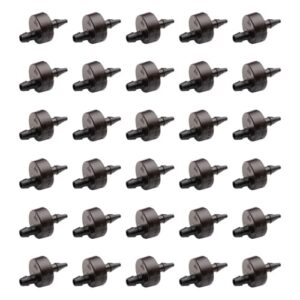
Want a dripper that works as reliably as a clock? The Rain Bird 1 GPH Drippers 30 Pack is your go‑to for a steady, gentle flow—no surprises, just clear water movement that birds love.
Each emitter puts out exactly 1 gallon per hour, thanks to its pressure‑compensating design. That means you won’t see wild surges or sluggish trickles, even if your water pressure changes.
The self‑piercing barbs slip right into standard tubing, so setup is quick and tool‑free. Tough UV‑resistant plastic keeps them from cracking in the sun, and large internal passages help prevent clogs.
You can spread these drippers across several bird baths or garden spots. For about $20–25, you get thirty emitters—enough to build a lively, bird‑friendly oasis.
| Best For | Gardeners, landscapers, and plant enthusiasts who want a reliable, low-maintenance drip irrigation setup for beds, shrubs, or container plants. |
|---|---|
| Primary Use | Drip irrigation emitter |
| Material | UV-resistant plastic |
| Installation Ease | Easy |
| Maintenance Level | Low |
| Outdoor Durability | UV & chemical resistant |
| Power Source | Water pressure |
| Additional Features |
|
- Consistent 1 GPH flow rate no matter what’s happening with your water pressure — no guessing, no adjustments
- Self-piercing design makes installation quick and painless, no tools needed
- UV and chemical-resistant plastic means these hold up season after season without cracking or degrading
- Hard water or sediment can gunk them up over time, so occasional cleaning is part of the deal
- May not play well with systems that run at very high or very low pressure
- Requires some upfront planning to lay out properly — a rushed install can lead to clogging headaches down the road
4. Raindrip Adjustable Flow Bubbler Emitter
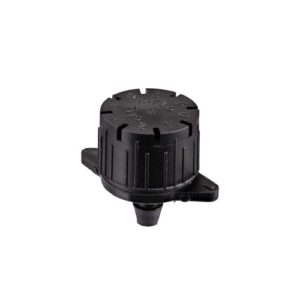
Need control over bird bath’s water flow? The Raindrip Adjustable Flow Bubbler Emitter lets you fine‑tune everything with a simple twist of the dial. You can set the flow from a gentle trickle up to 13 gallons per hour, so you won’t waste water or flood your basin.
Its eight‑stream pattern mimics natural springs, drawing birds in and keeping water moving to stop mosquitoes.
The UV‑resistant polyethylene holds up through sun and rain, and the 1/4‑inch barbed inlet slips into standard drip tubing—no fuss, no leaks.
If you want a dripper that adjusts for your garden’s needs and keeps maintenance low, this bubbler is a practical choice that lasts season after season.
| Best For | Gardeners who want precise control over watering flow for flower beds, shrubs, trees, or groundcover in areas with varying water pressure. |
|---|---|
| Primary Use | Bird bath bubbler |
| Material | UV-resistant polyethylene |
| Installation Ease | Easy |
| Maintenance Level | Low |
| Outdoor Durability | Sun & rain resistant |
| Power Source | Water pressure |
| Additional Features |
|
- Dial lets you dial in exactly how much water you want—anywhere from a slow drip to over 11 gallons per hour
- Eight-stream bubbler spreads water in a full circle, so plants get even coverage without you having to reposition anything
- Easy to install—just push the barbed inlet into standard drip tubing and you’re good to go
- Non-pressure compensating design means flow can vary depending on tubing length or elevation, so spots farther from the source may get less water
- Hard water can clog the emitter over time, which means occasional maintenance
- High water pressure can pop the emitter right out of the tubing
5. EOWCO Black Ornament Display Stand
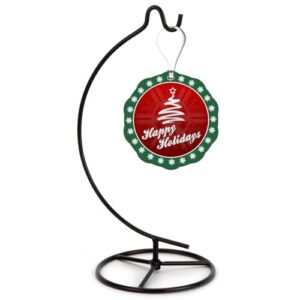
Once you’ve picked a dripper that suits your needs, don’t overlook how you’ll set it up.
The EOWCO Black Ornament Display Stand is a simple, sturdy choice for supporting lightweight dripper attachments or a bit of garden flair. Made from tough iron with a smooth black finish, it holds up well outdoors and blends in with your landscape. Its curved arm and stable 4‑inch base keep things balanced, even if a curious bird decides to check it out.
You can hang a homemade dripper, a glass globe, or a weatherproof ornament right above your bird bath—no fuss, no tools needed. The stand’s compact size means it fits easily beside your bath, on a deck rail, or tucked among plants. It’s a small touch, but it brings order and charm to your bird‑friendly space.
| Best For | Anyone who wants a clean, stylish way to display lightweight decorations—think air plants, glass globes, or ornaments—whether inside the home or out in the garden. |
|---|---|
| Primary Use | Decorative hanger |
| Material | Iron |
| Installation Ease | Easy |
| Maintenance Level | Low |
| Outdoor Durability | Iron construction |
| Power Source | None |
| Additional Features |
|
- Built from solid iron, so it feels sturdy and holds up well over time
- The curved design works with a lot of different décor styles, modern or classic
- Super versatile—use it indoors, outdoors, in the kitchen, bedroom, wherever
- It’s a bit pricier than similar stands on the market
- Not great for heavier or oversized decorations
- If you need several of them, the cost adds up fast
Frequently Asked Questions (FAQs)
How to make a dripper for a bird bath?
Making a dripper is simpler than you’d think.
Poke a tiny hole near the cap of a clean plastic bottle, add a second hole near the top for airflow, fill it, and hang it above your bath.
Do birdbath Drippers work?
Yes, birdbath drippers work really well. Birds can hear dripping water from up to 50 yards away. That sound pulls them in fast — and keeps them coming back.
Do birdbath Drippers have adjustable valves?
Most store-bought drippers do have adjustable valves.
You can dial the flow up or down to hit that sweet spot — usually one to two drops per second — without wasting a drop.
How do you make a birdbath dripper?
Grab a clean gallon jug, poke a small pinhole in the bottom, and hang it about 12 to 18 inches above your bath. Water drips in slowly, birds love it.
Does a birdbath dripper freeze?
Yes, birdbath drippers can freeze when temperatures drop below 32°F.
Ice can crack plastic tubing, jam pumps, and block flow.
Drain your dripper on cold nights or pair it with a small heater to stay safe.
Do birds take a bath in a birdbath?
Birds treat a birdbath like a backyard spa. They wade in, splash water over their wings, and ruffle their feathers to shake off dust and parasites — usually wrapping up in under five minutes.
What makes a good bird bath?
A good bird bath keeps water shallow, clean, and moving. Aim for 2 inches deep max, with gently sloping sides. Add a dripper, place it safely, and refresh the water daily.
How often should I clean the dripper mechanism itself?
Every two weeks during spring and summer keeps things running smoothly. In fall and winter, once a month is fine. A quick vinegar soak clears mineral buildup fast.
Can I use tap water or does it need filtering?
Chlorine fades within 24 to 48 hours if you let it sit uncovered. If your water smells strongly of chemicals, run it through a basic charcoal filter first.
How do I prevent birds from injuring themselves on tubing?
Stick with soft, flexible tubing — 1/4-inch poly or vinyl works well. Secure it snugly along bath edges so there are no loose loops where feet or wings could catch.
Conclusion
Picture your yard six months from now: birds lined up at the rim, wings spread, water catching the light. That’s what safe bird bath dripper design actually builds toward—not just a pretty feature, but a place birds genuinely trust.
You’ve got the depth, the placement, the drip rate, and the materials sorted. Keep it clean, keep it flowing, and the birds will keep coming back. They always find the good spots.
- https://duncraft.com/products/bird-bath-dripper-for-pedestal-bird-bath-stainless-steel
- https://santafe.wbu.com/water-for-birds-and-birdbaths
- https://todayshomeowner.com/lawn-garden/guides/how-to-make-a-homemade-birdbath-dripper-for-your-yard/
- https://nature-expert.ca/en/bird-feeders-accessories/bird-baths-and-waterers/universal-dripper-for-bird-bath
- https://www.groworganic.com/blogs/articles/how-to-maintain-your-drip-irrigation-system