This site is supported by our readers. We may earn a commission, at no cost to you, if you purchase through links.
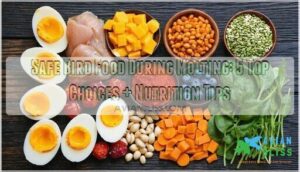 You want safe bird food during molting that packs a punch for feather regrowth.
Hard-boiled eggs and lean chicken offer top-tier protein, while sprouted legumes boost digestibility.
Toss in carrots, sweet potatoes, and spinach for Vitamin A, and berries for antioxidants.
Healthy seeds like sunflower and pumpkin add essential fats and zinc, but don’t go overboard—portion control is key.
Skip avocado, chocolate, and salty snacks, as these spell trouble.
Think of molting as your bird’s spa day—nutrient-rich meals and TLC make all the difference.
Curious about which foods truly shine and what pitfalls to dodge? There’s more wisdom just ahead.
Table Of Contents
- Key Takeaways
- Safe Foods for Birds During Molting
- Key Nutrients for Healthy Feather Growth
- Top 5 Bird Food Products for Molting
- Tips to Support Your Bird During Molting
- Frequently Asked Questions (FAQs)
- What foods are good for molting?
- What do chickens eat during molting?
- How do you maintain feather growth during molting?
- What should I do if my bird molts?
- How do you care for a molting parrot?
- Do molting chickens need a healthy diet?
- Can birds develop allergies to molting supplements?
- How does molting affect bird social behavior?
- Are homemade bird foods safe during molting?
- Can environmental changes impact molting success?
- Conclusion
Key Takeaways
- You’ll need to increase protein intake by 25% during molting – offer hard-boiled eggs, lean chicken, and sprouted legumes to support strong feather regrowth
- Focus on vitamin A-rich foods like carrots, sweet potatoes, and spinach, plus antioxidant-packed berries to boost immune function during this stressful period
- Include healthy seeds like sunflower and pumpkin in moderation for essential fats and zinc, but practice portion control to prevent obesity
- Avoid toxic foods completely – never give avocado, chocolate, or salty snacks as these can be fatal during your bird’s vulnerable molting phase
Safe Foods for Birds During Molting
When your bird starts molting, choosing the right foods becomes essential for healthy feather development.
You’ll need to focus on high-protein options, essential vitamins, and proper hydration to support this energy-intensive process.
Protein-Rich Foods for Feather Regrowth
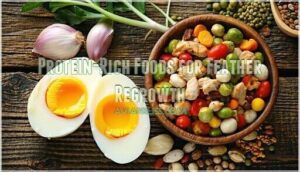
During molting seasons, your bird’s protein needs skyrocket by 25% as feather proteins demand intensive amino acid support.
Molting birds need extra protein—up to 25% more—to power healthy feather regrowth and vibrant plumage
High-quality protein sources become your bird’s nutritional lifeline for successful feather regrowth nutrition.
Essential protein-rich foods for molting bird diet include:
- Hard-boiled eggs – delivering 12.6g protein per 100g for rapid keratin production
- Cooked lean chicken – providing complete amino acids without seasoning risks
- Sprouted legumes – offering digestible plant proteins with enhanced amino acid availability
Understanding key protein rich foods is vital for a balanced diet.
These molting diets support healthy feather development through targeted bird nutrition.
Essential Fruits and Vegetables
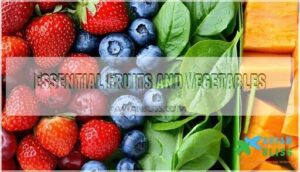
Beyond protein sources, Fresh Fruits and Leafy Greens provide essential vitamins and minerals for your molting bird diet.
Berry Nutrition delivers antioxidants while Vegetable Variety guarantees thorough nutrition. These safe bird food options support feather development naturally, though Fruit Supplements may complement whole foods when recommended by your avian veterinarian.
A balanced diet including a daily fresh fruit mix can be highly beneficial for molting birds.
| Nutrient Category | Food Sources | Molting Benefits |
|---|---|---|
| Vitamin A | Carrots, sweet potatoes, spinach | Supports skin health and feather formation |
| Antioxidants | Blueberries, strawberries, broccoli | Protects against cellular damage during molt |
| Folate | Dark leafy greens, asparagus | Aids in new cell production for feathers |
| Vitamin C | Bell peppers, kale, oranges | Boosts immune system during stressful molt |
| Beta-carotene | Squash, papaya, collard greens | Enhances feather color and quality |
Healthy Seeds and Nuts in Moderation
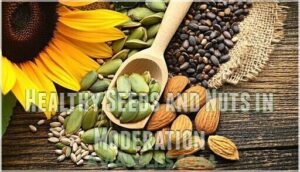
Seeds and nuts pack powerful nutrition for molting birds, but moderation is key.
These energy-dense foods support feather growth while preventing obesity that can hinder the molting process.
Smart seed selection and nut benefits include:
- Sunflower seeds – Rich in vitamin E and healthy fats for feather development
- Pumpkin seeds – High in zinc, supporting strong feather structure and pigmentation
- Almonds and walnuts – Provide omega-3s for skin health during feather replacement
- Flax seeds – Supply essential amino acids needed for keratin production
Keep portions small – think treats, not meals.
Foods to Avoid During Molting
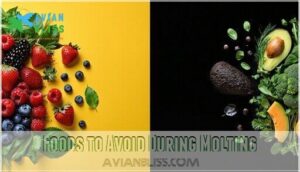
Dangerous choices during molting season can derail your bird’s recovery.
Toxic foods like avocado and chocolate pose fatal risks, while high salt and processed meals strain kidneys.
Sugary treats disrupt molting bird nutrition, and fried foods overwhelm digestive systems during the bird molting process when energy should focus on feather growth and health.
To make informed decisions, research and understand toxic food sources to guarantee a safe and healthy diet for your bird.
| Toxic Foods | High Salt/Processed | Other Hazards |
|---|---|---|
| Avocado (persin) | Salty snacks | Fried foods |
| Chocolate (theobromine) | Processed meals | Sugary treats |
| Onions/garlic | Canned foods | Dairy products |
| Fruit pits/seeds | Deli meats | Moldy grains |
Key Nutrients for Healthy Feather Growth
Understanding which nutrients fuel healthy feather growth becomes essential when your bird starts molting.
You’ll need to focus on specific vitamins, minerals, and proteins that directly support the complex process of creating strong, vibrant new feathers.
Importance of Protein and Amino Acids
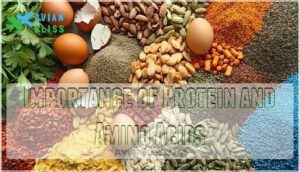
Your bird’s feathers are built from protein sources like keratin structure, demanding 16-18% protein in their diet during molt.
These amino acids fuel healthy feather growth while meeting increased nutritional needs.
Key protein requirements for molting nutrition include:
- Methionine and cystine – sulfur amino acids forming feather keratin
- Lysine – supports quality feather development and strength
- Arginine – aids protein synthesis during rapid growth periods
- Branched-chain amino acids – maintain muscle mass while redirecting resources
- Complete protein sources – eggs, insects, and high-quality pellets deliver all essentials
A balanced diet is vital for birds undergoing molting process to guarantee healthy health and feather growth.
Role of Vitamins A, D, and E
Vitamins A, D, and E work together to support your bird’s feather health during the molting process.
Vitamin A strengthens skin cells beneath developing feathers, while vitamin D helps calcium absorption for sturdy feather shafts.
Vitamin E protects new cells from damage as they grow, and these vitamin benefits improve avian wellness naturally through proper bird nutrition and diet.
Though vitamin supplements can help if your bird’s regular food lacks these essential bird vitamins, they should be considered as part of a comprehensive approach to bird care.
Minerals for Strong Feathers (Calcium, Zinc)
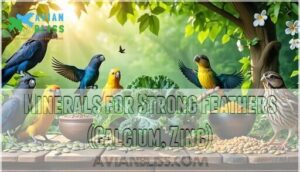
Two essential minerals form the backbone of healthy feather development during molting. Your bird’s calcium benefits include stronger feather shafts, while zinc supplements support proper pigmentation and immune function.
- Calcium-rich greens: Dark leafy vegetables like kale and collard greens provide natural calcium for feather strength
- Zinc sources: Pumpkin seeds and legumes offer zinc that prevents mineral deficiency during molting
- Strong feathers: Adequate mineral intake creates durable, flexible plumage that withstands daily wear
- Supplement timing: Bird calcium supplements work best when given consistently throughout the molt cycle
- Deficiency signs: Weak, brittle feathers often indicate poor mineral absorption affecting molting bird nutrition
Omega-3 Fatty Acids and Skin Health
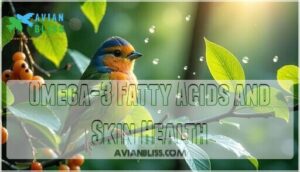
During molting season, omega-3 fatty acids serve as your bird’s secret weapon for gorgeous feather shine and healthy skin.
These essential nutrients reduce inflammation while supporting strong feather development.
Flaxseeds, chia seeds, and hemp hearts deliver ideal omega-3 levels for avian nutrition.
Balance omega-3 with omega-6 at a 1:1 ratio to maximize skin health benefits during this demanding growth period.
Hydration and Fresh Water Needs
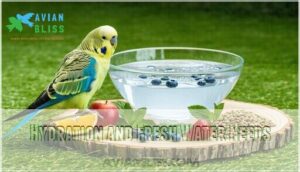
Fresh water isn’t just another item on your bird care checklist—it’s the foundation of healthy molting.
During feather replacement, your bird’s hydration needs skyrocket as their body works overtime producing new plumage.
Clean bowls filled with fresh water daily support ideal drinking habits and prevent bacterial growth.
Poor water intake can derail the entire molting process, making proper hydration one of your most powerful bird health tips, and it is crucial for healthy molting.
Top 5 Bird Food Products for Molting
When your feathered friend starts dropping feathers everywhere, you’ll want specialized nutrition to support healthy regrowth.
These five top-rated molting supplements provide the extra protein, vitamins, and minerals your bird needs during this demanding process.
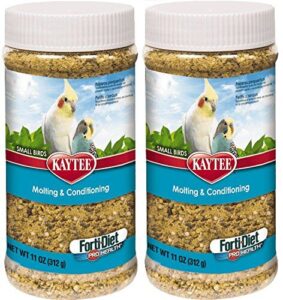
1. Kaytee Small Bird Health Supplement
 View On Amazon
During stressful molting periods, you’ll want reliable nutritional support that delivers results.
Kaytee’s Small Bird Health Supplement contains 21% crude protein and essential amino acids like L-Lysine and DL-Methionine—exactly what your feathered friend needs for strong feather regrowth.
The DHA Omega-3 supports cognitive health while prebiotics and probiotics maintain digestive wellness.
Simply sprinkle over regular food or serve separately.
Trusted by bird owners for over 150 years, this veterinarian-recommended formula helps reduce molt-related stress naturally.
Best For: Small bird owners seeking reliable nutritional support during molting periods, breeding cycles, or when feeding young birds.
- High protein content (21%) with essential amino acids supports strong feather regrowth and development
- Contains DHA Omega-3, prebiotics, and probiotics for comprehensive cognitive, visual, and digestive health
- Veterinarian-recommended formula with 150 years of trusted brand history and positive customer feedback
- Not suitable for birds with known ingredient allergies or specific underlying health conditions
- Supplements should be limited to 20% of daily intake to prevent over-supplementation
- Requires proper storage in cool, dry conditions and regular discarding of unused portions
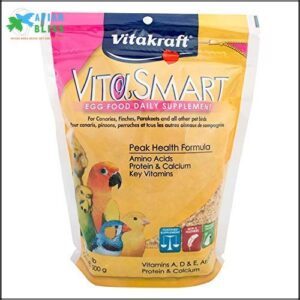
2. VitaSmart Egg Food for Birds
 View On Amazon
Many bird owners appreciate VitaSmart Egg Food for its thorough nutritional profile during challenging molting periods.
With 17.5% crude protein and essential amino acids like lysine and methionine, it supports healthy feather regrowth effectively.
You’ll find vitamin A, D3, and calcium working together to strengthen developing feathers while biotin enhances overall feather integrity.
The formula’s high palatability means most birds readily accept it when sprinkled over regular food or mixed with fresh fruits and vegetables.
Best For: Bird owners seeking a nutritional supplement to support their pets during molting, breeding, stress periods, and overall health maintenance across all life stages.
- High-quality protein content (17.5%) with essential amino acids supports healthy feather regrowth and tissue repair during molting periods
- Comprehensive vitamin and mineral profile including vitamin A, D3, calcium, and biotin strengthens immune system and promotes feather integrity
- Versatile feeding options allow mixing with regular seeds, fruits, or vegetables while serving as a medication carrier when needed
- Requires refrigerated storage in warm climates which may be inconvenient for some bird owners
- Functions as a supplement rather than complete nutrition, requiring continued use of balanced bird diets
- Some delivery and customer service issues reported, though product quality remains consistently positive
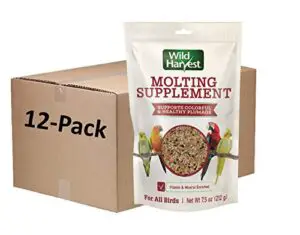
3. Bird Molting Supplement for Plumage
 View On Amazon
Wild Harvest’s specialty blend transforms feather-plucking worries into vibrant plumage success stories.
This scientifically-formulated supplement combines millet, oat groats, and canary grass seed with essential vitamins and minerals.
You’ll notice improved feather color intensity and reduced brittleness within weeks of consistent use.
The 7.5-ounce BPA-free packaging guarantees freshness while delivering concentrated nutrition.
Mix it with your bird’s regular diet for maximum absorption.
Birds consume it readily without waste, making every sprinkle count toward healthier molting cycles and stronger feather development.
The supplement is designed to provide vibrant plumage success stories, making it an ideal choice for bird owners.
Best For: Bird owners dealing with molting issues, feather plucking, or seeking to improve their pet’s plumage health and color vibrancy during seasonal changes.
- Small 7.5-ounce package size requires careful rationing and frequent repurchasing for multiple birds or extended use periods
- Not intended as sole nutrition source, requiring continued investment in balanced base diet and potentially other supplements
- Limited to supplemental use during specific periods rather than year-round feeding, which may complicate feeding routines for some bird owners
- Scientifically-formulated blend with essential vitamins, minerals, and amino acids that visibly improves feather color intensity and reduces brittleness within weeks
- Birds readily consume the supplement without waste, and the concentrated nutrition can be easily mixed with regular diet for maximum absorption
- Made in USA with BPA-free packaging that ensures freshness, while providing cost-effective nutrition support during high-demand molting periods
4. Parrot Food with Bee Pollen
 View On Amazon
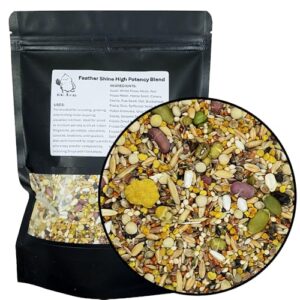
During molting season, bee pollen emerges as nature’s powerhouse supplement for your feathered friend.
This golden dust contains over 130 nutrients, including all 22 essential amino acids vital for feather development.
You’ll find it delivers more protein than beef or chicken, making it perfect for rebuilding keratin structures.
The antioxidants and vitamins boost immune function while reducing infection risks.
Simply sprinkle this natural superfood on wet foods to maximize absorption and watch your bird’s plumage transform with improved brightness and strength.
Providing the right best bird food is essential to support the molting process and guarantee healthy feather regrowth.
Best For: Pet owners seeking a comprehensive, high-quality seed mix with omega fatty acids and plant protein to support their parrots through molting season and general health maintenance.
- Contains 53.8% omega-3 and omega-6 fatty acids from natural sources like flax, hemp, and safflower seeds for optimal feather health
- Provides 17.5% plant-based protein from sprouted legumes and seeds, essential for feather regrowth during molting
- Free from common allergens and artificial additives (no soy, corn, or peanuts) with fresh, appealing variety of seeds and vegetables
- High cost relative to the quantity provided, with some buyers finding the portion size smaller than expected
- Contains many small components like tiny beans that some birds may ignore or not consume fully
- Requires gradual dietary transition and monitoring to ensure birds eat all components for maximum nutritional benefit
5. Avian Color Shine Supplement Powder
 View On Amazon
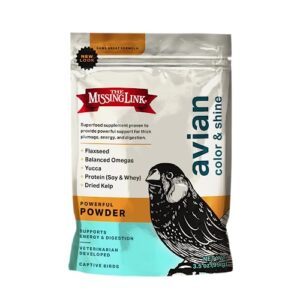
This superfood powder delivers balanced omega fatty acids through its fresh-ground flaxseed base, supporting vibrant feather color and healthy regrowth.
You’ll get 22% protein content from soy and whey concentrates, plus essential amino acids for strong keratin synthesis.
The supplement includes digestive support through yucca and kelp, helping your bird absorb nutrients more efficiently.
The supplement is veterinarian-formulated with antioxidant-rich ingredients like dried carrot and parsley, it maintains feather brightness throughout molting cycles.
Best For: Bird owners with molting, feather-plucking, or dull-plumaged birds who want veterinarian-formulated nutritional support for healthier feather regrowth and vibrant coloration.
- Balanced omega fatty acids from flaxseed base promote healthy feather growth and reduce inflammation during molting
- High protein content (22%) with essential amino acids supports strong keratin synthesis for robust feather development
- Veterinarian-formulated with digestive support ingredients that improve nutrient absorption and overall bird health
- Higher cost compared to basic bird supplements may strain budgets for multiple bird households
- Picky eaters may reject the powder initially, requiring gradual introduction mixed with favorite foods
- Ziplock packaging prone to caking issues that can compromise freshness and make dispensing difficult
Tips to Support Your Bird During Molting

Supporting your bird through molting requires adjusting their care routine to meet increased nutritional and environmental demands.
Molting is a time when your bird needs extra care, attention, and the right nutrition to thrive
Here’s how you can help your feathered friend navigate this energy-intensive process with proper dietary changes, supplement decisions, and environmental modifications.
This process involves making informed decisions to ensure your bird’s health and well-being, particularly focusing on proper dietary changes.
Adjusting Diet for Increased Energy Needs
Your bird’s metabolism revs up like a race car engine during molting, demanding 25% more energy than usual.
Boost their calorie intake with nutrient dense protein sources like eggs and insects.
Energy boosters such as high protein seeds become essential dietary adjustments.
These molting diet requirements guarantee your feathered friend maintains strength while growing gorgeous new plumage through proper molting bird nutrition strategies, ensuring the right energy intake.
Using Supplements Versus Whole Foods
Balanced molting bird nutrition combines supplement benefits and whole food advantages for ideal feather support. Nutrient comparison studies show whole foods offer 15-30% higher bioavailability, while supplements provide consistent nutritional support for molting diet requirements.
Your dietary needs strategy should address both convenience and feather growth supplements effectiveness. Researching bird molting supplements can help you make informed decisions.
- Whole foods like boiled eggs naturally deliver protein without overdose risks
- Supplements guarantee precise dosing when your schedule gets hectic
- Fresh vegetables provide carotenoids that commercial bird molting supplements can’t match
- Combining both approaches gives your feathered friend thorough molting bird nutrition
Recognizing Signs of Nutritional Deficiency
Watching for telltale signs can help you catch nutritional problems before they escalate.
Brittle feathers, lethargy, and excessive preening often signal protein imbalance or dietary insufficiency.
Feather stress becomes visible through dull coloring and increased breakage, while molting symptoms like flaky skin around the beak indicate vitamin deficiencies affecting your bird’s health and nutrition needs.
When to Consult an Avian Veterinarian
Persistent feather loss lasting over four weeks signals molting emergencies requiring immediate vet consultation.
Watch for bleeding pin feathers, unexplained weight loss, or severe lethargy during molting season.
These bird behavior changes often indicate infections or metabolic disorders needing medical intervention.
Annual avian health checkups help detect early complications before they compromise your bird’s molting bird health and overall well-being.
It’s vital to understand proper emergency care procedures to guarantee the best support for your bird during molting season and ensure their overall well-being.
Creating a Comfortable Molting Environment
Quiet sanctuaries work wonders during molting season.
You’ll want to maintain 50-60% humidity control and stable temperature management around 68-75°F.
Dim lighting adjustments help reduce stress, while noise reduction creates peaceful spaces.
Proper air quality with gentle ventilation supports your molting bird’s comfort and recovery needs.
Frequently Asked Questions (FAQs)
What foods are good for molting?
Think of molting like a marathon—your bird needs fuel.
Offer high-protein foods like eggs, mealworms, and pellets.
Add leafy greens, nuts, and seeds for vitamins and minerals.
Fresh water keeps those new feathers growing strong.
What do chickens eat during molting?
You’ll want to feed chickens a high-protein diet during molting—think soybean meal, eggs, mealworms, and quality pellets.
Toss in leafy greens and seeds for vitamins.
Fresh water’s a must; hydration speeds feather regrowth.
How do you maintain feather growth during molting?
Like nurturing a garden through seasonal change, you’ll boost feather regrowth by providing high-protein foods, essential vitamins A and E, omega-3 fatty acids.
Maintaining proper hydration throughout the molting process is also crucial.
What should I do if my bird molts?
Provide a high-protein diet with 20-25% protein content, maintain stable humidity levels, and minimize handling.
Monitor your bird’s behavior closely, guarantee fresh water availability, and schedule a veterinary checkup if unusual symptoms appear.
How do you care for a molting parrot?
During molting season, support your parrot’s feather regrowth by offering high-protein foods like pellets, eggs, and insects.
Maintain proper humidity levels, minimize handling, and provide extra rest time for ideal healing.
Do molting chickens need a healthy diet?
During molting, chickens lose up to 25% more protein than usual.
You’ll need to boost their protein intake to 18-20% to support healthy feather regrowth and maintain their energy levels throughout this demanding process.
Can birds develop allergies to molting supplements?
Yes, birds can develop allergies to molting supplements, though it’s uncommon.
You’ll notice symptoms like skin irritation, respiratory issues, or digestive upset.
Always introduce new supplements gradually and consult your avian vet if reactions occur.
How does molting affect bird social behavior?
During molting, your bird becomes more withdrawn and irritable, spending extra time preening instead of socializing.
They’ll likely avoid interactions, seek quiet spots, and show less interest in play or bonding activities, which can be a clear sign that they are going through a molting process.
Are homemade bird foods safe during molting?
Sarah’s canary stopped eating during his molt, so she offered scrambled eggs—but homemade foods can be risky.
You’ll need proper protein ratios and nutrient balance.
Commercial molting supplements provide safer, scientifically-formulated nutrition than homemade alternatives during this critical period, offering the right balance.
Can environmental changes impact molting success?
Environmental changes substantially impact your bird’s molting success.
Temperature fluctuations, humidity changes, lighting variations, and stress from relocations can disrupt feather development, delay molt completion, or cause poor-quality feather regrowth in your feathered companion.
Conclusion
Molting transforms your feathered friend into a nutritional powerhouse-seeker, demanding twice the usual energy for spectacular feather renewal.
Providing safe bird food during molting isn’t just important—it’s absolutely critical for your pet’s health and vibrant plumage recovery.
Focus on high-protein options like hard-boiled eggs, vitamin A-rich vegetables, and quality seeds while avoiding toxic foods.
Monitor your bird’s progress closely, and don’t hesitate to consult your avian veterinarian if concerns arise during this demanding biological process.
- https://www.chewy.com/education/bird/food-and-nutrition/dont-feed-your-pet-bird-these-6-foods
- https://www.petmd.com/bird/foods-are-toxic-birds
- https://birdtricksstore.com/blogs/birdtricks-blog/unsafe-foods-for-parrots
- https://www.reddit.com/r/cockatiel/comments/1bg35sg/what_are_the_very_toxic_foodsitems_that_will/
- https://forums.avianavenue.com/index.php?threads%2Fgood-foods-for-a-bird-who-is-molting.205278%2F