This site is supported by our readers. We may earn a commission, at no cost to you, if you purchase through links.
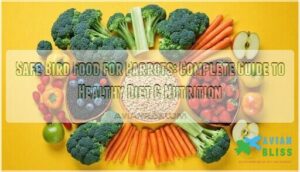 You’ll want to focus on safe bird food for parrots that includes high-quality pellets as the foundation—they’re nutritionally complete, unlike seed-only diets that can leave your feathered friend malnourished.
Fresh vegetables should make up about 30% of their diet, with dark leafy greens, carrots, and broccoli being excellent choices.
Fruits are treats, not staples, so offer them sparingly.
Cooked whole grains, legumes, and sprouted seeds add variety and nutrition.
Always avoid chocolate, avocado, caffeine, and high-sodium foods—they’re toxic to parrots.
Think of their diet like a colorful rainbow; the more variety in safe foods, the healthier your parrot will be.
Table Of Contents
- Key Takeaways
- Parrot Diet Basics
- Pellet Nutrition Facts
- Seed Mixes and Nutritional Risks
- Fresh Produce for Parrots
- Safe Foods for Parrots
- Feeding Practices and Portion Control
- Diet Conversion and Patience
- Unsafe Foods for Parrots
- Balancing Parrot Diets
- Healthy Parrot Food Options
- Frequently Asked Questions (FAQs)
- What food is safe for parrots?
- What should not be fed to parrots?
- What is the best food to give a parrot?
- What seeds are toxic to parrots?
- Can parrots eat cooked rice or pasta?
- How often should I change water bowls?
- Are vitamin supplements necessary for healthy parrots?
- What temperature should parrot food be served?
- Can multiple parrot species share the same diet?
- Conclusion
Key Takeaways
- Base your parrot’s diet on high-quality pellets – You’ll need pellets to make up 60-80% of their daily food intake, since they provide complete nutrition, unlike seed-only diets that cause deficiencies.
- Add fresh vegetables daily but limit fruits – You should offer vegetables, like kale, carrots, and broccoli, as 20-30% of their diet, while keeping fruits as occasional treats due to their high sugar content.
- Avoid toxic foods completely – You must never feed your parrot avocado, chocolate, caffeine, alcohol, or fruit seeds, as these can cause serious illness or death, even in small amounts.
- Be patient during diet transitions – You’ll need to gradually introduce new foods over 2-4 weeks, mixing them with familiar foods, or using soaking and sprouting techniques to encourage acceptance.
Parrot Diet Basics
Your parrot’s diet forms the foundation of their health, with high-quality pellets serving as the nutritional backbone that should make up 60-80% of their daily food intake.
You’ll need to balance this with fresh produce and limit seeds to treats, creating a diet that mirrors what these intelligent birds would eat in their natural habitat.
High-Quality Pellets
High-quality parrot pellets serve as your bird’s nutritional foundation, providing balanced vitamins, minerals, and proteins.
Choose pellets without artificial colors or sweeteners, as these additives can trigger allergic reactions.
Consider these key factors when selecting pellets:
- Organic ingredients improve digestibility scores
- Brand reputation matters – Harrison’s, Lafeber, and ZuPreem lead recommendations
- Additive-free formulas prevent long-term health issues
Quality pellets should constitute 50-70% of your parrot’s diet for ideal nutrition.
Many owners now buy organic parrot food for their birds.
Fresh Produce Importance
Beyond pellets, your feathered friend needs fresh produce to thrive. This colorful addition provides essential nutrients pellets can’t match, including Vitamin A sources and calcium-rich veggies that support immunity and bone health.
To avoid dietary pitfalls, it’s important to examine cold-pressed pellet benefits for ideal parrot health.
| Nutrient Category | Best Fresh Options | Health Benefits |
|---|---|---|
| Vitamin A Sources | Carrots, sweet potatoes, kale | Supports vision and immunity |
| Calcium-Rich Veggies | Broccoli, collard greens | Strengthens bones and beaks |
| Safe Fruit List | Apples (no seeds), berries | Provides antioxidants and energy |
| Organic Benefits | Pesticide-free produce | Reduces toxin exposure |
Proper produce preparation matters—wash everything thoroughly and offer organic when possible for maximum parrot nutrition benefits.
Seed and Nut Limitations
Seeds and nuts create nutritional pitfalls that can trap your parrot in poor health habits.
While these high-fat treats seem appealing, they’re basically junk food that leads to serious dietary imbalances when overused.
- Seed addiction develops quickly – parrots often refuse healthier parrot food options once hooked on fatty seeds
- Nutritional deficiencies arise – all-seed diets lack essential vitamins A, D, E, K, and calcium your parrot diet requires
- Weight management becomes difficult – excessive nuts and seeds cause obesity and fatty liver disease
- Healthy alternatives exist – sprouted seeds, portion control, and quality pellets provide better nutrition than toxic foods
Pellet Nutrition Facts
When properly formulated, pellets supply 100% of your parrot’s daily vitamin and mineral requirements, making them nutritional powerhouses. These compressed foods contain carefully balanced pellet ingredients including proteins, carbohydrates, vitamins, and minerals that work together like a well-orchestrated symphony.
Nutrient digestibility in quality pellets reaches peak levels because manufacturers pre-process ingredients for maximum absorption. However, not all pellets are created equal—organic pellets typically receive higher digestibility scores from avian veterinarians compared to conventional options.
Some bird owners find that organic options support health due to their lack of artificial ingredients. Watch out for pellet additives like artificial colors, sugar, and sweeteners, which can trigger allergic reactions in one out of six parrots.
Conversion challenges often arise when switching your bird from seeds to pellets, requiring patience and gradual introduction over 2-4 weeks. Quality parrot food brands focus on parrot nutrition without unnecessary fillers, supporting your parrot’s health through scientifically balanced parrot diet formulations that promote longevity and vibrant feather condition.
Seed Mixes and Nutritional Risks
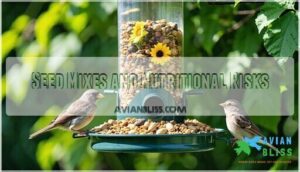
You might think seed mixes sound healthy for your parrot, but they’re often nutritional traps that can harm your bird’s health over time.
These colorful blends lack essential vitamins and minerals while packing dangerous levels of fat that lead to serious health problems.
Insufficient Vitamins and Minerals
Seed mixes create serious parrot diet deficiencies because they lack essential vitamins A, D, E, K and calcium.
Seeds alone starve your parrot of life-sustaining vitamins and minerals.
You’ll notice deficiency symptoms like poor feather quality, weak bones, and immune problems.
Most seeds provide minimal vitamin sources compared to fortified foods.
Without proper supplementation options, your parrot faces mineral absorption issues that impact long-term health.
High Fat Content
Most commercial seed mixes create a recipe for disaster with their excessive fat content.
Cheap mixes loaded with sunflower seeds become Weight Gain Issues waiting to happen, leading to obesity and Liver Disease in your feathered friend.
Here’s why Seed Mix Dangers lurk in high-fat content:
- Sunflower Seed Risks – these tasty treats contain 40-50% fat content
- Peanuts and almonds – while nutritious, they’re calorie bombs requiring strict portion control
- Moderation Strategies – limit nuts and seeds to 10-20% of total diet
Your parrot’s liver wasn’t designed to process this fat overload daily.
Breed-Specific Seed Mixes
While high-fat content poses significant risks, choosing appropriate species seed needs becomes equally important for your parrot’s health.
Different parrot species require specific mix ingredients from reputable brands like Higgins and Lafeber to meet their unique nutritional requirements.
However, even premium parrot seed mixes can’t prevent avoiding deficiencies without supplementing mixes with pellets and fresh produce for complete parrot food nutrition.
African Greys benefit from premium seed mixes designed for their needs.
Fresh Produce for Parrots
You’ll find that fresh produce forms the foundation of a healthy parrot diet, providing essential vitamins and nutrients that pellets alone can’t deliver.
The key lies in understanding the proper vegetable-to-fruit ratio and selecting safe options that’ll keep your feathered friend thriving.
Vegetable and Fruit Ratio
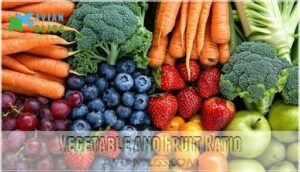
When planning your parrot’s fresh produce intake, aim for a 10:1 vegetable-to-fruit ratio.
Vegetables like carrots and sweet potatoes provide Vitamin A sources, while calcium-rich veggies including kale and broccoli support bone health.
Safe fruits for parrots contain beneficial nutrients but higher sugar content requires moderation importance. This parrot food variety guarantees balanced nutrition through fresh produce while preventing overconsumption of natural sugars, ensuring a healthy diet.
Organic and Washed Produce
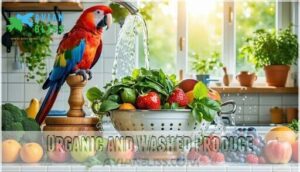
When choosing organic parrot food, you’re investing in your bird’s long-term health by reducing pesticide exposure.
Thorough washing techniques help remove harmful residues from conventionally grown produce, while organic benefits include superior nutrient retention and reduced chemical contamination that can accumulate over time.
Many owners also choose to buy pre-made organic blends for convenience.
Essential Fresh Produce Guidelines:
- Pesticide Removal – Wash all vegetables and fruits under running water for 30 seconds, scrubbing firm produce with a clean brush to eliminate surface contaminants
- Organic Benefits – Choose certified organic options when possible to minimize exposure to synthetic pesticides and fertilizers that can harm your parrot’s sensitive digestive system
- Spoilage Prevention – Store washed produce properly in the refrigerator and offer fresh portions daily, removing uneaten food within 2-3 hours to prevent bacterial growth
Safe Fruits and Vegetables
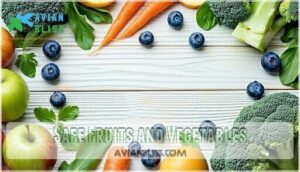
Around fresh produce, you’ll want to prioritize safe vegetables for parrots like kale, broccoli, and carrots packed with vitamin-rich veggies.
Safe fruits for parrots include seedless apples and berries, but moderation matters since fruits contain more sugar.
Always remove toxic fruit parts like apple seeds and cherry pits before serving, and choose organic produce when possible to minimize pesticide risks, though thorough washing helps too.
Fruits can be beneficial, providing parrots with essential healthy micronutrients, which is why they are a good addition to a parrot’s diet in proper amounts.
Safe Foods for Parrots
You’ll find that whole grains, legumes, and select nuts provide essential nutrients that complement your parrot’s pellet-based diet.
These safe food options offer variety while ensuring your feathered friend gets the complex carbohydrates, proteins, and healthy fats needed for peak health.
Whole Grains and Seeds
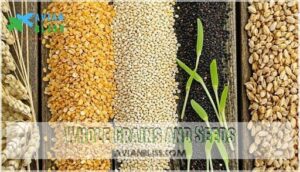
Whole grains and seeds transform your parrot’s diet when prepared correctly.
Millet, quinoa, and flax seeds offer exceptional nutritional value through proper seed preparation and sprouting benefits.
Sprouting increases grain digestibility while boosting vitamin content substantially.
Offer these safe quantities: one teaspoon daily for small birds, two for larger species.
Always soak grains before serving to maximize their potential, and remember to provide the right amount to ensure the best nutritional value.
Beans and Legumes
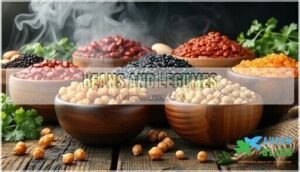
Beans and legumes pack serious nutritional value for your parrot when prepared correctly.
Raw or dry beans contain toxins that’ll harm your bird, but proper cooking methods eliminate these toxicity concerns.
Here’s your preparation playbook:
- Soaking benefits: Soak dried legumes 8-12 hours before cooking
- Sprouting legumes: Increases digestibility and vitamin content substantially
- Cooking methods: Boil until completely soft, never serve crunchy
Chickpeas and lentils make excellent parrot food choices once properly prepared.
Nuts and Seeds in Moderation
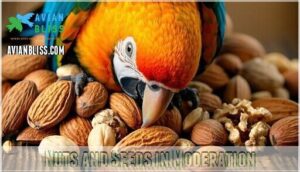
While nuts and seeds pack serious nutritional benefits, they’re like candy for parrots—irresistible but dangerous in large amounts.
You’ll want to limit these high-fat treats to 10-20% of your bird’s diet.
Safe nuts include almonds and walnuts, while sprouting seeds boosts their digestibility.
Some seeds, like apple seeds, contain toxic cyanide compounds, so it’s important to be careful.
Always practice portion control with parrot food moderation for ideal parrot nutrition.
Feeding Practices and Portion Control
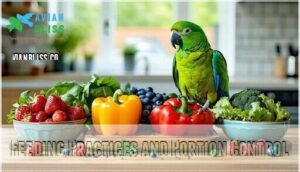
Understanding proper portion control and feeding schedules guarantees your parrot gets the right amount of nutrition without overeating.
You’ll need to adjust daily food amounts based on your bird’s size, while incorporating foraging activities and sprouted seeds to keep mealtimes both healthy and engaging.
Daily Food Intake
Your parrot’s daily food intake depends on size and species.
Small parrots need 15-20% of their body weight daily, while medium and large birds require about 10%.
That’s roughly 15-25g for small birds, 30-40g for medium ones, and 90-110g for large species.
Monitor your bird’s weight regularly and adjust portion control accordingly.
Establish a consistent feeding schedule to support healthy parrot nutrition and proper hydration needs, ensuring proper hydration.
Foraging Activities
Mental stimulation through foraging activities transforms mealtime into an adventure for your feathered friend.
Hide parrot food like vegetables, fruits, and nuts inside food puzzles or paper cups around the cage.
This enrichment mimics natural behaviors, encouraging physical exercise as birds search and work for their meals.
Simple enrichment ideas include wrapping treats in paper or using foraging toys that challenge your parrot’s problem-solving skills.
Sprouting Seeds
Sprouting transforms ordinary seeds into nutritional powerhouses for your feathered friend. This simple process releases vitamins, minerals, and enzymes while reducing fat content. Your parrot will thank you for this fresh, digestible treat that mimics their natural foraging instincts.
Here’s your sprouting roadmap:
- Select safe seeds – mung beans, alfalfa, broccoli, and radish seeds work perfectly
- Rinse thoroughly – wash seeds multiple times to remove debris and potential contaminants
- Soak overnight – submerge seeds in clean water for 8-12 hours
- Drain and rinse – repeat every 8-12 hours until tiny tails appear (1-3 days)
- Store properly – refrigerate fresh sprouts and use within 2-3 days maximum
For convenient options, consider exploring parrot sprouting seeds available online. Watch for mold or off-odors during the sprouting process, as these indicate sprout toxicity. Only offer completely fresh sprouts to maintain your parrot’s health and safety.
Diet Conversion and Patience
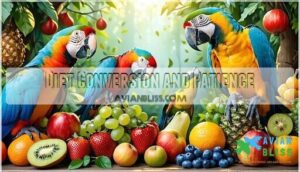
Switching your parrot to a healthier diet requires patience, especially if they’ve been eating seeds for years.
You’ll need to try different conversion methods like gradually mixing new foods with familiar ones or offering healthy options alongside their regular diet until they become curious enough to try them.
Gradual Mix Method
Patience works wonders during chop introduction for parrot diet conversion.
Start by mixing small amounts of fresh vegetables with your bird’s current food, gradually increasing the ratio over several weeks.
This method guarantees nutritional balance while maintaining palatability boosters from familiar foods.
Diet conversion requires slow adjustments for long-term success with parrot feeding variety.
Cold Turkey Method
If gradual mixing doesn’t work, try the cold turkey method for parrot diet conversion.
Offer only the new parrot food for two hours, then remove it.
This limited timeframe encourages hunger, making your bird more willing to try unfamiliar vegetables.
Food refusal is normal initially, but this method’s effectiveness lies in letting natural appetite drive acceptance of safe foods for parrots.
Adding Soaked Seeds
When the cold turkey method feels too harsh, soaking benefits can ease your parrot into healthier eating habits.
Adding soaked seeds to their chop makes sprouting process more appealing while maintaining familiar textures they’ll recognize.
- Seed Selection: Choose millet, quinoa, and flax seeds for ideal parrot diet nutrition
- Sprouting Process: Soak seeds 8-12 hours, then rinse twice daily for 2-3 days
- Safe Seeds: Avoid sprouted milo and raw amaranth which can harm parrots
- Preparation Tips: Mix soaked seeds with regular chop to increase acceptance rates
- Parrot Food Benefits: Sprouting increases digestibility and releases essential nutrients for better health
Unsafe Foods for Parrots
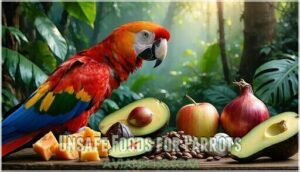
Knowing what foods can harm your parrot is just as important as understanding what keeps them healthy.
Some common household foods that seem harmless can actually be toxic or even deadly to your feathered friend.
Toxic Foods
Beyond pellets and fresh produce, you’ll encounter some serious dangers in your kitchen.
Avocado toxicity poses the greatest threat—just 3.5 grams can kill a budgerigar within 30 minutes.
Chocolate risks stem from theobromine, while caffeine effects mirror this danger.
Alcohol harm occurs rapidly, causing respiratory depression.
Even common foods like onions destroy red blood cells, proving that everyday ingredients can become deadly toxic foods parrots must avoid completely.
Dairy and Mushroom Risks
Dairy products spell trouble for your feathered friend’s digestive system.
Parrots lack the enzymes needed to break down lactose, leading to uncomfortable digestive upset and poor calcium absorption that disrupts their gut microbiome.
- Lactose intolerance affects all parrots since they can’t produce lactase enzymes
- Mushroom toxicity varies by species, making all varieties risky for parrots
- Calcium absorption becomes impaired when dairy interferes with proper digestion
- Gut microbiome imbalances occur from dairy consumption in birds
- Alternative sources like leafy greens provide safer calcium options than dairy
Avocado and Chocolate Dangers
Avocado and chocolate top the list of deadly toxic foods for parrots.
These seemingly innocent treats pack a lethal punch for our feathered friends.
Avocado contains persin, causing respiratory distress and heart failure within hours. Chocolate’s theobromine poisoning triggers seizures, vomiting, and cardiac arrest.
These unsafe parrot foods require immediate veterinary action if consumed. Replace with safe alternatives like apples or berries for treats your feathered friend will actually survive enjoying.
Balancing Parrot Diets
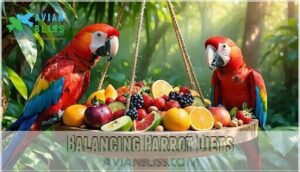
Creating a balanced diet for your parrot isn’t just about mixing different foods together—it’s about understanding how each component works to prevent serious health problems like fatty liver disease and nutritional deficiencies.
You’ll need to rotate food varieties regularly and monitor your bird’s health to guarantee they’re getting all the vitamins and minerals they need for a long, healthy life, which involves understanding how each component works to prevent serious health problems.
This process is crucial for ensuring your parrot leads a long, healthy life.
Variety and Rotation
Rotating your parrot diet variety prevents boredom and maintains thorough nutrition.
Mix seasonal foods throughout the week—spring greens in March, summer berries in July. Nutrient cycling through different vegetables and fruits keeps your bird engaged while maintaining peak health.
Smart food presentation makes new additions exciting.
- Your feathered friend deserves the rainbow – colorful variety signals complete nutrition
- Mealtime becomes an adventure – rotating safe parrot foods transforms eating into exploration
- Prevention beats cure every time – diverse diets stop deficiencies before they start
Preventing Deficiencies
You’ll spot deficiency symptoms before they become serious problems with proper nutrition monitoring.
Watch for dull feathers, lethargy, or frequent infections—these signal missing vitamins or minerals in your parrot’s diet.
Vitamin A sources like carrots and sweet potatoes prevent respiratory issues, while calcium importance shows in strong bones and proper muscle function.
Mineral balance requires diverse foods since no single ingredient provides everything your bird needs for peak parrot health.
To prevent selective eating, regularly introduce fresh foods for parrots to guarantee variety and support peak parrot health.
Fatty Liver Disease Prevention
Limit seed intake and reduce fat consumption to prevent fatty liver disease in your parrot.
High-fat diets stress the liver and cause dangerous fat accumulation. Increase exercise through foraging activities to maintain healthy weight.
Monitor weight regularly with an avian veterinarian’s guidance. Consider milk thistle supplements for liver support, but consult your vet first.
Proper parrot nutrition prevents this serious condition.
Healthy Parrot Food Options
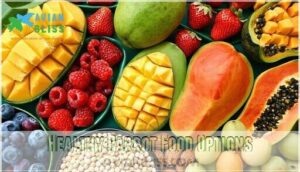
Choosing healthy parrot food can feel overwhelming with countless options lining pet store shelves, but focusing on quality ingredients makes the difference between a thriving bird and costly vet visits.
You’ll want to prioritize organic pellets from trusted brands, pesticide-free produce, and GMO-free options that support your feathered friend’s long-term health.
Recommended Pellet Brands
When choosing pellets, you’ll find top-tier brands offer organic pellet benefits without artificial additives.
Pellet brand comparison reveals clear winners in digestibility scores:
- Harrison’s – Veterinary-endorsed, organic ingredients, no synthetic preservatives
- TOP’s – USDA Organic certified, cold-pressed for maximum nutrition retention
- Roudybush – Research-proven formula, widely used in scientific studies
Lafeber and Higgins also provide quality non-GMO pellet options for discerning parrot owners.
Safe Fruit and Vegetable Lists
When choosing produce preparation methods, you’ll want fresh, organic vegetables and birdsafe fruits that retain maximum nutrition.
Safe vegetables for parrots include broccoli, carrots, and kale, while safe fruits encompass apples (seedless) and berries.
Safe herbs like basil add variety, and remember moderation matters with all produce—avoid toxic foods like avocado completely, ensuring vitamin retention through proper washing and minimal cooking.
Organic and Non-GMO Options
When making the switch to organic parrot food, you’re investing in your bird’s long-term health and well-being.
- Organic benefits include reduced pesticide exposure and higher digestibility scores compared to conventional options
- GMO concerns are eliminated with USDA certified brands that guarantee no genetically modified ingredients
- Certified brands like Harrison’s, TOP’s, and Bird Street Bistro offer premium natural parrot food formulations
- Pesticide exposure drops substantially with organic choices, supporting better immune and feather health
- Healthy parrot food costs 20-50% more but provides superior nutrition for your feathered friend’s safe parrot diet
Frequently Asked Questions (FAQs)
What food is safe for parrots?
You’ll want high-quality pellets as your parrot’s foundation, making up 50-70% of their diet. Fresh vegetables like kale, carrots, and broccoli provide essential vitamins, while limited fruits offer healthy variety.
What should not be fed to parrots?
An ounce of prevention is worth a pound of cure" – avoid feeding your parrot avocado, chocolate, caffeine, alcohol, dairy, mushrooms, and fruit seeds from apples, cherries, or peaches.
What is the best food to give a parrot?
High-quality pellets should form 60-80% of your parrot’s diet, with fresh vegetables making up 20-25%. Add limited seeds and nuts as treats, ensuring balanced nutrition for peak health.
What seeds are toxic to parrots?
Apple, cherry, peach, plum, and apricot seeds contain cyanide compounds that’re toxic to parrots. Raw amaranth and sprouted milo seeds should also be avoided completely for your bird’s safety.
Can parrots eat cooked rice or pasta?
Perfectly prepared pasta and rice provide parrots proper nutrition!
You can safely serve your feathered friend cooked rice or pasta as part of their balanced diet.
Choose whole grain options when possible, and avoid adding salt, butter, or seasonings that could harm them, to ensure a well-rounded and balanced diet.
How often should I change water bowls?
Change your parrot’s water bowls daily, or twice daily in hot weather. Fresh, clean water prevents bacterial growth and keeps your feathered friend healthy and hydrated.
Are vitamin supplements necessary for healthy parrots?
Like a safety net beneath a trapeze artist, proper nutrition catches deficiencies before they fall.
If you’re feeding high-quality pellets (50-70% of diet) plus fresh vegetables and fruits, supplements aren’t necessary—they’ve got complete nutrition covered already.
What temperature should parrot food be served?
Room temperature food works best for parrots.
Cold or frozen food should be thawed first, while hot food needs cooling to prevent burns.
Fresh chop and pellets served at room temperature encourage natural eating behaviors and guarantee safety.
Can multiple parrot species share the same diet?
Most parrot species can share similar diets, but you’ll need to adjust portions and preferences. Small birds need more seeds, while large parrots thrive on pellet-heavy diets with fresh produce.
Conclusion
Feeding your parrot properly isn’t rocket science, but it requires commitment to providing safe bird food for parrots consistently.
You’ve learned that high-quality pellets form the foundation, fresh vegetables provide essential nutrients, and variety prevents boredom and deficiencies.
Remember, switching diets takes patience, and avoiding toxic foods like chocolate and avocado is non-negotiable.
Your feathered companion’s health depends on these dietary choices, so stick to the guidelines you’ve discovered for a vibrant, long-lived bird.
- https://vcahospitals.com/know-your-pet/budgies-feeding
- https://resources.bestfriends.org/article/healthy-parrot-diet-nutrition-toxic-foods
- https://www.msdvetmanual.com/exotic-and-laboratory-animals/pet-birds/nutritional-diseases-of-pet-birds
- http://parrotnation.com/recipe-posts/
- https://psittacine.org/wp-content/uploads/Diet-Nutrition.pdf