This site is supported by our readers. We may earn a commission, at no cost to you, if you purchase through links.
 You’re right to worry about safe bird seed for parrots—some seeds can actually harm your feathered friend.
Stick with pumpkin seeds, chia seeds, and hulled sunflower seeds for healthy options. These provide essential omega-3s and vitamin E without the risks.
Avoid apple seeds, cherry pits, and avocado pits completely since they contain cyanide compounds that are toxic to parrots. Wild bird seed mixes aren’t safe either because they often contain harmful additives and chemicals.
Remember, seeds should only make up 10-15% of your parrot’s total diet to prevent malnutrition. There’s more to know about creating the perfect seed mix.
Table Of Contents
- Key Takeaways
- Choosing Safe Seeds
- Parrot Seed Nutrition
- Safe Seed Types
- Avoiding Toxic Seeds
- Balanced Diet for Parrots
- Frequently Asked Questions (FAQs)
- Are parrot seeds good for birds?
- Can parrots eat wild bird seed?
- What seeds can a parrot eat?
- What are the best seeds for parrots?
- Are seeds bad for parrots?
- Can pet parrots eat ground flax seed?
- What is the healthiest seed for parrots?
- Can parrots eat regular bird seeds?
- Should I give my parrot seed or pellets?
- What bird seeds to avoid?
- Conclusion
Key Takeaways
- Choose safe seed varieties – Stick with pumpkin seeds, chia seeds, and hulled sunflower seeds that provide omega-3s and vitamin E, while completely avoiding apple seeds, cherry pits, and avocado pits that contain toxic cyanide compounds.
- Limit seeds to prevent health issues – Keep seeds to only 10-15% of your parrot’s total diet to avoid obesity, seed addiction, and nutritional deficiencies that can lead to fatty liver disease and organ strain.
- Avoid wild bird seed mixes – Don’t use regular wild bird seeds since they often contain harmful additives, floor sweepings, dust, and up to 70% filler ingredients that can cause contamination and malnutrition.
- Balance seeds with complete nutrition – Mix seeds with high-quality pellets (75-80% of diet), fresh vegetables, and fruits to prevent your parrot from becoming a picky eater and ensure they get all essential nutrients for vibrant feathers and strong immunity.
Choosing Safe Seeds
You’ll need to know which seeds provide essential nutrients without harming your parrot’s health.
The right seeds offer vitamins, minerals, and healthy fats while avoiding toxic compounds that can cause serious illness or death.
Nutritional Benefits of Seeds
Seeds pack serious nutritional punch for your feathered friend.
These tiny powerhouses deliver essential vitamins, minerals, and healthy fats that support everything from vibrant feathers to strong bones.
The seed nutrient density varies dramatically between types, making variety vital for ideal parrot nutrition.
- Sprouted seed benefits include easier digestion and increased vitamin content
- Seed antioxidant power protects cells from damage and supports immune health
- Seed digestive enzymes in papaya seeds promote healthy gut function
Risks of Excessive Seed Consumption
Too many seeds can spell trouble for your feathered friend.
Feathered friends need balance—seeds are treats, not meals, for optimal parrot health and happiness.
Obesity risks climb when parrots overindulge in high-fat seeds, leading to fatty liver disease and organ strain.
Seed addiction develops quickly, causing birds to refuse healthier foods and creating nutritional imbalance.
Vitamin deficiencies follow, affecting bones and digestion.
These health risks make portion control absolutely essential for your parrot’s wellbeing.
Supplementing their diet with nutritious safflower seeds can provide essential vitamins and minerals, helping to prevent seed addiction and support overall wellbeing.
Healthy Seed Options for Parrots
Now that you understand the risks, let’s explore nutritious options that’ll keep your feathered friend thriving.
Pumpkin seeds offer iron and magnesium, while chia seeds provide omega-3s for heart health. Hemp seeds deliver balanced protein and calcium.
Sprouted seed benefits include easier digestion and enhanced nutrients. Many owners also buy seeds for parrots to provide enrichment.
Proper seed preparation methods and organic seed choices guarantee your parrot gets premium nutrition without harmful additives.
Parrot Seed Nutrition
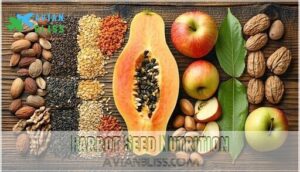
You’ll find that seeds pack essential nutrients your parrot needs to stay healthy, including vitamins A and E, calcium, magnesium, and omega-3 fatty acids that support strong bones and shiny feathers.
Understanding which nutrients each seed type provides helps you create a balanced diet that meets your bird’s specific health requirements, including providing essential nutrients.
Essential Vitamins and Minerals
Your parrot’s body needs specific vitamins and minerals to stay healthy.
Seeds provide iron, magnesium, calcium, and phosphorus for strong bones.
B vitamins support energy, while vitamin E protects cells.
However, mineral deficiencies can occur with poor seed choices.
Sprouted seeds offer better vitamin absorption and balanced ratios than dry seeds, making nutrients more bioavailable for ideal parrot nutrition, which relies on proper nutrition.
Importance of Fiber and Antioxidants
Fiber benefits your parrot’s digestive health by promoting smooth food passage and better nutrient absorption.
Antioxidant sources like pumpkin and pomegranate seeds provide cellular protection against free radical damage.
These compounds work together in your parrot’s diet – fiber keeps digestion running smoothly while antioxidants guard cells from harmful oxidation. Quality parrot nutrition depends on both working in harmony.
Role of Omega-3 Fatty Acids
Your parrot’s health depends on omega-3 fatty acids found in specific seed sources.
These essential fats support feather health, brain function, and provide anti-inflammatory benefits that boost immune support throughout your bird’s body. A balanced diet guarantees optimal feather health.
Key omega-3 benefits for parrot nutrition include:
- Feather health – Creates glossy, strong plumage
- Brain function – Enhances cognitive abilities and memory
- Immune support – Strengthens disease resistance naturally
- Anti-inflammatory – Reduces joint pain and organ stress
Safe Seed Types
You can safely feed your parrot several nutritious seed types that provide essential vitamins and minerals without harmful toxins.
The best options include pumpkin seeds for iron and fiber, chia seeds for omega-3 fatty acids, and sesame seeds for calcium and magnesium.
Pumpkin and Papaya Seeds
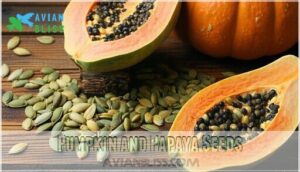
Pumpkin seeds pack iron, magnesium, and fiber into your parrot’s diet.
Proper pumpkin preparation involves baking at 375°F for 45 minutes—no salt needed.
Papaya seeds deliver powerful papaya enzymes that boost digestion, plus calcium and healthy fats.
Both sprouted seeds offer enhanced nutrition and easier digestion.
Source fresh seeds from ripe fruits, feeding 2-3 times weekly as nutritious parrot food additions.
Pumpkin also provides a great source of essential vitamin A, which is a key nutritious element, and supports overall health with healthy fats.
Chia and Sesame Seeds
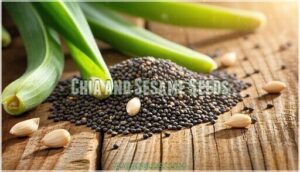
Packed with omega-3s and calcium, chia seeds support your parrot’s heart and bone health.
These tiny powerhouses swell when soaked, making seed preparation essential—rinse thoroughly after 2-4 hours.
Sesame seeds deliver thiamine for nervous system function.
Both sprouted seeds offer enhanced nutrition, but watch seed ratios carefully.
Safflower seeds can support cardiovascular health.
These parrot food staples prevent deficiencies when balanced properly, ensuring overall wellness.
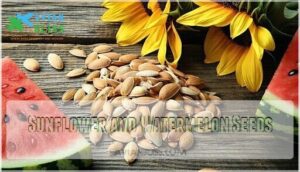
Sunflower and Watermelon Seeds
Two beloved seeds deserve special attention in your parrot’s diet.
Sunflower seeds offer magnesium and healthy fats but need strict portion control—they’re like candy to parrots.
Watermelon seeds provide magnesium, copper, and zinc with less fat content.
Both require proper seed preparation: remove shells from sunflower seeds and wash watermelon seeds thoroughly.
Limit feeding frequency to prevent addiction.
Many owners purchase sunflower seeds for parrots, which is a popular choice.
Avoiding Toxic Seeds
Not all seeds are safe for your parrot, and some can cause serious health problems or even death.
You’ll need to know which seeds contain dangerous compounds like cyanide and which seed mixes might harbor harmful contaminants that could hurt your feathered friend.
Seeds to Avoid Due to Cyanide
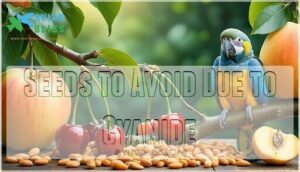
Apple seeds contain amygdalin, which releases deadly cyanide when your parrot chews them.
Stone fruit pits from cherries, peaches, plums, and apricots pose the same cyanide toxicity risk.
Even tiny amounts can cause rapid breathing, seizures, or death in birds.
Always remove these dangerous seeds during seed preparation and choose safe alternatives like pumpkin or hemp seeds for your parrot food instead.
Other human foods, such as chocolate and caffeine, are also poisonous to birds.
Risks of Wild Bird Seed Mixes
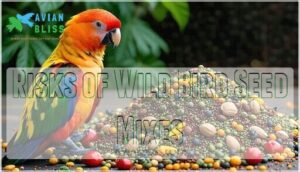
Wild bird seed mixes pose serious contamination risks for your parrot.
These discount blends often contain unsafe ingredients like unroasted peanuts, artificial additives, and up to 70% filler seeds that create nutritional imbalance. Storage issues lead to mold and bacteria growth in uneaten portions.
Three Major Risks:
- Toxic contamination from foreign materials and fungi
- Disease transmission through shared bacteria at feeders
- Malnutrition from poor-quality filler ingredients
Dangers of Dyed or Unknown Seeds
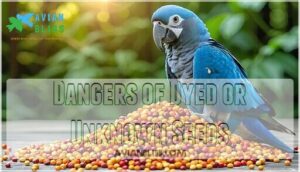
Dyed seeds hide toxic chemicals beneath their colorful shells, making them dangerous for your parrot’s health.
Unknown origins mean you can’t verify seed quality or chemical contamination levels. These unsafe foods often contain harmful chemicals that cause serious health consequences.
Always choose natural, unprocessed safe bird seed from trusted sources to protect your parrot’s well-being and avoid dye toxicity.
Balanced Diet for Parrots
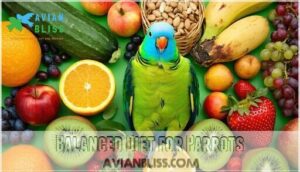
You can’t feed your parrot only seeds and expect them to stay healthy, just like you wouldn’t eat only potato chips for every meal.
Seeds should make up just 10-15% of your parrot’s total diet, with the rest coming from fresh vegetables, fruits, and high-quality pellets to prevent malnutrition and obesity.
Importance of Variety in Seeds
Offering different parrot seed types prevents your feathered friend from becoming a picky eater.
Nutrient diversity through seed rotation keeps your parrot’s diet interesting while preventing deficiencies that single-seed diets cause.
Consider these benefits of varied parrot seed mixes:
- Foraging enrichment mimics natural feeding behaviors
- Balanced consumption provides multiple vitamins and minerals
- Prevent deficiencies by rotating seed types weekly
- Mental stimulation keeps birds engaged during feeding
Mixing Seeds With Other Foods
Balance transforms your parrot’s health when you master seed-food ratios.
Your parrot diet needs proper pellet integration alongside sprout combinations for maximum nutrition.
Mix seeds with veggie pairings and fruit additions to create parrot dietary diversity.
This parrot feeding guide guarantees your parrot nutrition tips work effectively.
| Food Category | Ideal Ratio with Seeds |
|---|---|
| Pellets | 60-70% of total diet |
| Fresh Vegetables | 20-25% of total diet |
| Seeds/Nuts | 5-10% of total diet |
| Fresh Fruits | 5-10% of total diet |
| Sprouted Seeds | 2-5% as treats |
The key to a healthy parrot is achieving the right balance and providing a proper pellet integration alongside a variety of other foods, ensuring your parrot receives all necessary nutrients for optimal health, and making sure to include sprout combinations.
Avoiding Seed Addiction and Malnutrition
Think of seeds as dessert rather than dinner for your parrot’s health.
Seed addiction develops when birds refuse nutritious foods, leading to serious malnutrition and health problems.
Prevent these issues by following these strategies:
- Limit seeds to 10-20% of your parrot’s total diet
- Offer sprouted seeds for better nutrition and digestibility
- Provide dietary variety with pellets, vegetables, and fruits daily
- Use behavioral enrichment to encourage trying new foods
Frequently Asked Questions (FAQs)
Are parrot seeds good for birds?
Parrot seeds nourish your bird, parrot seeds energize your bird, and parrot seeds support your bird’s health when you offer variety.
You’ll want high-quality mixes with pumpkin, chia, and hemp seeds while avoiding excess sunflower seeds.
Can parrots eat wild bird seed?
Wild bird seed isn’t ideal for your parrot.
These mixes often contain floor sweepings, dust, and debris that can harm your feathered friend.
You’re better off choosing high-quality parrot-specific seed blends for their safety.
What seeds can a parrot eat?
Your feathered friend can safely enjoy pumpkin, papaya, chia, sesame, watermelon, pomegranate, flax, coriander, hemp, and brown linseeds.
However, you’ll want to avoid apple seeds and fruit pits since they contain harmful cyanide compounds.
What are the best seeds for parrots?
Choosing wrong seeds won’t doom your bird!
Chia, pumpkin, and flax seeds top the list for nutrition.
They’re packed with omega-3s, vitamins, and minerals that support healthy feathers, digestion, and overall wellness.
Are seeds bad for parrots?
Seeds aren’t bad for parrots, but they shouldn’t dominate your bird’s diet.
When fed in moderation alongside pellets, fruits, and vegetables, seeds provide essential nutrients without causing obesity or nutritional deficiencies that harm your feathered friend, ensuring a balanced diet.
Can pet parrots eat ground flax seed?
Picture tiny powerhouse seeds transforming into digestible nutrition for your feathered friend.
Yes, you can feed your parrot ground flax seed!
It’s easier to digest than whole seeds and provides omega-3 fatty acids for healthy feathers.
What is the healthiest seed for parrots?
Chia seeds top the list for parrot health.
They’re packed with omega-3s, fiber, and calcium while being low in fat.
You can feed them whole or ground, and they support heart health and digestion naturally.
Can parrots eat regular bird seeds?
Like a gamble with your feathered friend’s health, regular bird seeds aren’t ideal for parrots.
Wild bird mixes contain floor sweepings, dust, and debris that can harm your pet’s delicate digestive system, which is a delicate issue.
Should I give my parrot seed or pellets?
You’ll want both in your parrot’s diet.
Pellets should make up 75-80% of their daily food since they’re nutritionally balanced.
Seeds work great as treats or training rewards, but limit them to prevent addiction and obesity.
What bird seeds to avoid?
Avoid apple seeds, cherry pits, peach pits, plum pits, pear seeds, apricot pits, and nectarine pits—they contain deadly cyanide compounds.
Also skip wild bird seed mixes that often contain floor sweepings, dust, and harmful debris.
Conclusion
Choosing safe bird seed for parrots isn’t just about avoiding toxic options—it’s about creating a foundation for your bird’s long-term health.
You’ve learned that seeds like pumpkin, chia, and hulled sunflower provide essential nutrients without the risks.
Remember to limit seeds to 10-15% of their diet and always research new varieties before offering them.
Your parrot’s vibrant feathers, strong immune system, and active behavior depend on these careful choices you make every day, which are crucial for their long-term health.
- https://sciencing.com/do-birds-react-sesame-seeds-6660749.html
- https://www.ncbi.nlm.nih.gov/pmc/articles/PMC2835426/
- https://toronto.wbu.com/seed-birds-bad-wrong-waste
- https://www.justanswer.com/pet-bird/7duze-fed-cockatiel-wild-bird-seed-yesterday-due-sudden.html
- https://www.fws.gov/story/feed-or-not-feed-wild-birds