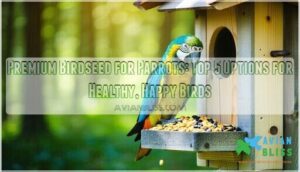
This site is supported by our readers. We may earn a commission, at no cost to you, if you purchase through links.

A parrot burning through energy at peak activity needs more than seeds tossed into a bowl. Wild parrots forage for hours, mixing seeds, fruits, and plant matter to fuel everything from flight to feather growth. Most captive diets fall short of that same balance.
The right high-energy bird food for parrots does more than fill a dish—it aids muscle repair during molting, sustains breeding demands, and keeps daily activity steady without tipping into obesity. Fat content, protein ratios, and carbohydrate sources all pull their weight in that equation.
What follows breaks down the ten best options available in 2026, matched to real nutritional needs and specific parrot types.
Table Of Contents
- Key Takeaways
- High Energy Parrot Nutrition Basics
- Top 10 High Energy Parrot Foods
- 1. Vitakraft Menu Parrot Food
- 2. Leach Grain Premium Parrot Mix
- 3. Rypet Automatic Bird Feeder and Waterer
- 4. ZuPreem FruitBlend Bird Pellets
- 5. Kaytee Forti Diet Safflower Parrot Food
- 6. Clear Acrylic Auto Bird Feeder
- 7. Kaytee Fiesta Parrot Food Blend
- 8. KikiBirds Protein Rich Parrot Seed Mix
- 9. Suplklz Stainless Steel Bird Feeder Skewer
- 10. Psittacus High Energy Parrot Pellet Food
- Best Ingredients for Parrot Energy
- Choosing Food by Parrot Type
- Feeding, Storage, and Enrichment Tips
- Frequently Asked Questions (FAQs)
- How much food should a parrot eat a day?
- Which dry food is best for a medium & large parrot?
- How much food do psittacine birds eat a day?
- Do parrots need a high protein diet?
- What is a multi-species diet for a parrot?
- What is the best parrot food for a parrot?
- What type of food gives birds the most energy?
- Which food parrot likes the most?
- What bird food do birds like the most?
- What are the ingredients in psittacus high energy?
- Conclusion
Key Takeaways
- Parrots need a mix of seeds, pellets, and fresh produce — no single food covers everything they need.
- Match your bird’s food to its size and life stage, since breeding, molting, and senior birds all have different demands.
- Watch fat content closely — oil-rich seeds fuel active birds well, but too much leads straight to weight problems.
- Psittacus High Energy and ZuPreem FruitBlend stand out as the top pellet picks for large, demanding species.
High Energy Parrot Nutrition Basics
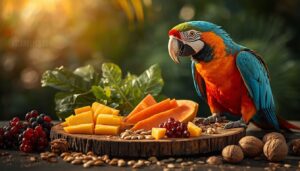
What your parrot eats directly shapes their energy, mood, and long-term health.
A poor diet can even trigger alarming symptoms, so if your bird seems off, understanding why parrots vomit and shake can help you catch problems early.
Getting the balance of protein, fat, carbs, and fresh produce right isn’t complicated once you know what to look for.
Here’s a breakdown of the core nutrition basics every parrot owner should understand.
Protein, Fat, Carbohydrate Balance
Your parrot’s energy depends on getting the macronutrient balance right. Crude protein builds tissue and promotes amino acid diversity, while crude fat delivers concentrated energy efficiently. Carbohydrates keep daily activity steady.
Think of it as metabolic load management — too much fat causes weight gain, too little protein weakens feathers. Nutrient balance across all three macronutrients keeps your bird thriving.
For balanced nutrition, aim for the acceptable macronutrient distribution range of 20–35% energy from fat and 10–15% from protein.
Pellets Versus Seed Mixes
Once macronutrients are balanced, the next choice shapes everything: pellets or seeds? Pellet diets win in nutrient consistency, delivering protein-rich pellets with predictable energy and growth support.
Seed mixes encourage natural feeding psychology but risk weight management issues when fatty seeds dominate. Adjustment strategies should be gradual.
Cost comparison favors seeds upfront, but a nutrient-dense diet long-term justifies pellets.
Fresh Produce for Energy
Seeds and pellets cover the foundation. Fresh produce for parrots elevates energy levels.
Think of it as nature’s quick charge: bananas deliver Natural Sugar Boost plus Potassium Muscle Support, while sweet potatoes offer Fiber Energy Release through complex carbs.
Bell peppers and leafy greens provide Vitamin B6 Metabolism support, giving your bird’s energy systems a lift.
High water content in these foods ensures Hydration Energy Benefits your parrot can truly feel.
Species and Life Stage Needs
Not every parrot eats the same way — and life stage changes everything.
- Juvenile protein needs peak during growth; a baby bird 18-oz handfeeding formula promotes early development
- Breeding calories and molting nutrients spike demand across multiple nutrients simultaneously
- Senior metabolism slows, making a nutrient-dense diet critical per bite
Large parrots require species-specific fats and higher crude protein, while a protein-rich, low-fat formula suits sensitive birds.
Avoiding Fatty Diet Risks
High-energy foods fuel your birds effectively — but excessive crude fat builds up quickly. Portion control and strategic treat scheduling help maintain balanced daily intake.
Lean on a protein-rich, low-fat formula as the foundational staple. Enhance this base by adding fiber and water through fresh vegetables, while avoiding fatty ingredients like nuts or oily seeds.
A nutrient-dense diet supports healthy weight management and provides steady energy for parrots, ensuring long-term vitality.
Top 10 High Energy Parrot Foods
Finding the right food for your parrot doesn’t have to be overwhelming. These ten picks cover a range of needs, from high-protein blends to convenient feeder systems.
Let’s look at what makes each one worth your attention.
1. Vitakraft Menu Parrot Food
Vitakraft Menu Parrot Food is a solid daily staple for large birds like macaws, Amazons, and African Greys. It blends seeds, grains, tropical fruits, and vegetables into one varied bowl — so your bird gets texture, color, and nutrition all at once.
Vitamins A, D3, and E support feather health and molting, while added calcium keeps bones and beaks strong.
Natural probiotics and DHA round out the formula for digestion and immune support.
It’s practical, well-rounded, and backed by over 180 years of pet-care expertise.
| Best For | Large parrot owners — macaws, Amazons, and conures — who want a nutritious, all-in-one daily feed that keeps feathers bright and birds mentally engaged. |
|---|---|
| Product Type | Seed & Fruit Blend |
| Primary Use | Daily parrot feeding |
| Target Bird Size | Large parrots |
| Key Benefit | Vitamin-fortified diet |
| Package Weight/Size | 5 lb |
| Life Stage | All life stages |
| Additional Features |
|
- Vitamins A, D3, and E actively support feather health and smoother molting cycles.
- Colorful, multi-textured pieces mimic foraging, which keeps birds stimulated and less bored.
- Added calcium and minerals help maintain strong beaks and healthy bones over time.
- High sunflower seed content can bump up fat intake, which is a concern for obesity-prone birds.
- The 5 lb bag runs out fast in multi-bird homes, so you’ll be reordering more often than you’d like.
- Some picky parrots — African Greys especially — may turn their beaks up at the blend entirely.
2. Leach Grain Premium Parrot Mix
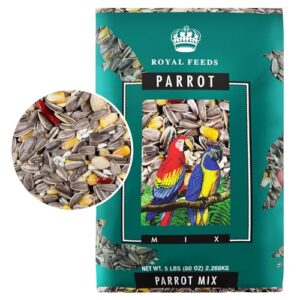
Leach Grain Premium Parrot Mix features five key ingredients: safflower, whole corn, sunflower, pumpkin seeds, and peppers. This variety mimics the foraging diversity your bird requires daily.
With 16.70% crude protein and 27% crude fat, the mix supports active lifestyles and enhances feather quality. Peanuts contribute additional plant-based protein, though portion control is advised for obesity-prone birds.
Priced at $23.99 for 5 lbs, this energy-dense option offers affordability and can be rotated with fresh produce for balanced nutrition.
| Best For | Bird owners with active parrots—macaws, cockatoos, African Greys—who want a varied, foraging-friendly diet that supports energy and feather health. |
|---|---|
| Product Type | Seed & Nut Blend |
| Primary Use | Daily parrot feeding |
| Target Bird Size | Large parrots |
| Key Benefit | Nutrient-dense blend |
| Package Weight/Size | 5 lb |
| Life Stage | All life stages |
| Additional Features |
|
- Packed with a solid mix of seeds, nuts, and peppers that keeps birds engaged and mimics natural foraging
- Good protein and fat levels make it a strong pick for active or breeding birds
- Easy to pair with fresh fruits and veggies for a more complete, balanced diet
- Heavy on sunflower seeds, so it may not be the best fit for birds that tend to gain weight easily
- Contains peanuts, which carry a small but real risk of aflatoxin—something worth keeping in mind for sensitive birds
- Seed-only formula means it’s missing some vitamins and minerals you’d get from a fortified pellet diet
3. Rypet Automatic Bird Feeder and Waterer
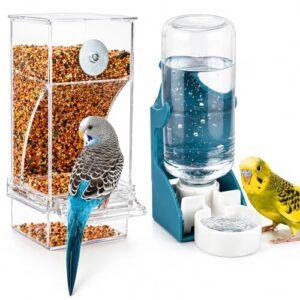
The Rypet Automatic Bird Feeder and Waterer manages both food and water in one compact, transparent setup. You can check seed and water levels at a glance — no guessing, no surprises.
The gravity-fed dispenser limits waste and keeps portions steady, while the spill-resistant waterer cuts down on soggy cage floors.
Built from clear, BPA-free acrylic, it’s easy to clean and ideal for parakeets, cockatiels, and small to medium parrots.
| Best For | Bird owners with parakeets, budgies, canaries, cockatiels, or small parrots who want an easy way to monitor and manage food and water without constant cage checks. |
|---|---|
| Product Type | Cage Feeder Set |
| Primary Use | Food & water delivery |
| Target Bird Size | Small to medium |
| Key Benefit | Reduces cage mess |
| Package Weight/Size | 2-unit set |
| Life Stage | All life stages |
| Additional Features |
|
- Clear acrylic design lets you see food and water levels instantly — no need to open the cage to check.
- Built-in catch tray collects husks and dropped seeds, so you’re not cleaning the cage floor as often.
- Snap-open top makes refilling quick and simple, and the generous water bottle holds up to 16 fl oz.
- Installation requires drilling into your cage, and the hole placement may not work with every cage style.
- The water bottle’s screw attachment is too wide for standard 5/8-inch cage bar spacing, so compatibility can be hit or miss.
- The feed opening on the front is a bit fragile — some users have reported cracking during installation or under pressure.
4. ZuPreem FruitBlend Bird Pellets
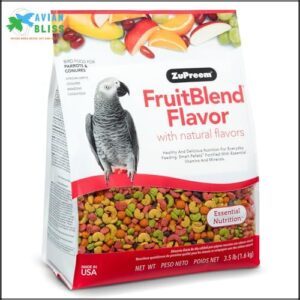
ZuPreem FruitBlend pellets make the switch from seeds to a balanced diet surprisingly easy. The fruit-shaped pieces — banana, apple, orange, grape — give picky eaters something familiar to grab onto.
Each pellet delivers around 14% protein, 4% fat, and a full vitamin-mineral blend, including calcium and vitamin D3 for strong bones and feathers.
It’s a solid daily diet for Amazons, African Greys, and conures.
Just know that artificial dyes can color droppings, so don’t panic when you see bright reds or yellows in the cage.
| Best For | Medium to large parrots like African Greys, Amazons, and conures — especially picky birds that need to transition off an all-seed diet. |
|---|---|
| Product Type | Fortified Pellets |
| Primary Use | Daily parrot feeding |
| Target Bird Size | Medium to large |
| Key Benefit | Balanced pellet diet |
| Package Weight/Size | 3.5 lb |
| Life Stage | All life stages |
| Additional Features |
|
- Fruit shapes and flavors make meals more engaging and encourage natural foraging behavior
- Packed with essential vitamins and minerals (A, D3, calcium) to support feathers, bones, and immune health
- Works as a complete daily diet, so no need to guess if your bird is getting balanced nutrition
- Artificial dyes pass through intact, causing brightly colored droppings that can stain fabrics
- Birds may play favorites with certain pellet colors, leaving the rest untouched
- Contains soy, corn, and possible peanut/tree nut traces — worth watching if your bird has sensitivities
5. Kaytee Forti Diet Safflower Parrot Food
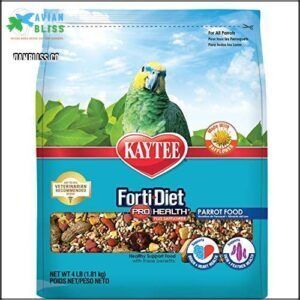
Kaytee Forti-Diet prioritizes safflower seeds — a smarter swap from fatty sunflower seeds that maintains steady energy without overloading a bird’s system. This formulation offers a sensible balance for adult indoor parrots, with approximately 14% protein and 9% fat.
Built-in prebiotics and probiotics support digestive health, while omega-3s from flaxseed promote vibrant feather condition. The diet is best paired with fresh produce to ensure nutritional completeness.
One consideration: the seed size runs small, which may lead larger parrots like Amazons to waste more than they consume.
| Best For | Adult indoor parrots — especially during breeding or molting seasons — who need a digestive and feather health boost without the heavy fat load of sunflower-based diets. |
|---|---|
| Product Type | Seed Blend |
| Primary Use | Daily parrot feeding |
| Target Bird Size | Adult indoor parrots |
| Key Benefit | Gut health support |
| Package Weight/Size | 4 lb |
| Life Stage | Adult birds |
| Additional Features |
|
- Safflower and flaxseed base keeps fat levels sensible while still delivering omega-3s for healthy skin and feathers.
- Built-in prebiotics and probiotics help maintain a balanced gut, which makes a real difference for digestive health.
- Solid vitamin and mineral blend supports brain function and overall wellbeing in one convenient bag.
- Seed size runs small, so larger birds like Amazons or African Grays may toss a lot of it aside.
- Not a standalone diet — you’ll still need to round things out with fresh foods or pellets.
- Contains peanuts, soy, and FD&C colorants, which could be a problem for birds with sensitivities or picky eaters.
6. Clear Acrylic Auto Bird Feeder
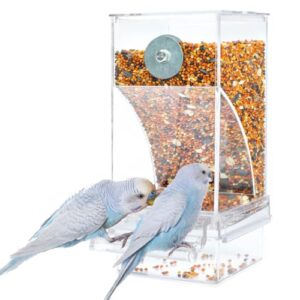
Good nutrition means nothing if seeds end up on the cage floor. That’s where the FONTSATTY Clear Acrylic Auto Bird Feeder earns its place. Its gravity-fed design keeps the slot filled continuously, while a bottom drawer catches overflow — so waste stays manageable. The transparent acrylic lets you check fill levels instantly, no guessing required.
At just under 7.5 inches tall, it fits neatly on square cage openings and refills without opening the door.
| Best For | Bird owners with parakeets, budgies, canaries, or lovebirds who are tired of cleaning up scattered seeds every day. |
|---|---|
| Product Type | Cage Feeder |
| Primary Use | Seed delivery |
| Target Bird Size | Small to medium |
| Key Benefit | Auto-feed design |
| Package Weight/Size | 1 unit |
| Life Stage | All life stages |
| Additional Features |
|
- The gravity-fed slot stays topped up on its own, so your bird always has food without you constantly refilling.
- Clear acrylic means you can see exactly how much seed is left with a quick glance — no surprises.
- The removable top lets you refill without opening the cage, which is a genuine time-saver if you have multiple birds.
- Only works with square cage openings — if your cage has rounded or curved bars, this won’t fit.
- It’s not fully mess-free; the bottom tray still collects seed and needs regular cleaning.
- The lid and slide mechanism can be finicky, and a few units arrive with cracked acrylic straight out of the box.
7. Kaytee Fiesta Parrot Food Blend
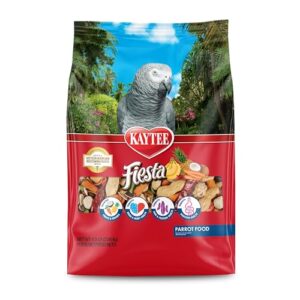
Once your feeder is sorted, the food inside matters just as much. Kaytee Fiesta Parrot Food Blend offers real variety — combining chunks of dried pineapple, carrot, coconut, seeds, and grains in one bag. At 4.5 lbs for under $20, it serves as a solid daily staple.
The blend includes added probiotics and prebiotics to support gut health, while its textured mix encourages natural foraging instincts.
Note: It contains peanuts and soy, so verify your bird’s sensitivities before use.
| Best For | Parrot owners who want a varied, nutrient-rich daily blend that keeps their bird mentally engaged and well-fed without breaking the bank. |
|---|---|
| Product Type | Seed & Fruit Mix |
| Primary Use | Daily parrot feeding |
| Target Bird Size | Adult parrots |
| Key Benefit | Foraging stimulation |
| Package Weight/Size | 4.5 lb |
| Life Stage | Adult parrots |
| Additional Features |
|
- Real mix of fruits, veggies, seeds, and grains gives your parrot actual variety instead of the same boring pellets every day.
- Probiotics, prebiotics, and omega-3s cover gut, brain, and heart health all in one bag.
- At $19.95 for 4.5 lbs, it’s good value and the resealable bag helps keep things fresh longer.
- High seed and nut content isn’t ideal for birds on low-fat or seed-restricted diets.
- Contains peanuts, soy, and tree nuts — a real concern if your bird has sensitivities or allergies.
- Artificial dyes (Red 40, Yellow 5, Blue 1) are in the mix, which some owners would rather avoid altogether.
8. KikiBirds Protein Rich Parrot Seed Mix
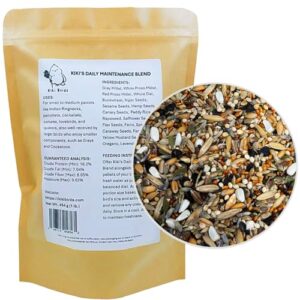
If your bird has sensitivities, KikiBirds Protein Rich Parrot Seed Mix is worth a close look. It’s corn-free, soy-free, and peanut-free — a clean option for birds that react to common fillers. This allergen-reduced profile makes it ideal for sensitive birds.
The 16% protein and 7% fat formula promotes muscle tone and feather health without excessive fat. This balanced nutrition supports overall well-being while avoiding overloading on fats.
Flaxseed, hemp, and hulled millet encourage natural foraging and beak work, engaging your bird’s instincts. These ingredients provide both physical and mental stimulation.
At $14.99 per pound, it is pricier than standard mixes. However, its specialized formulation makes it a smart daily blend for cockatiels, conures, and lovebirds.
| Best For | Bird owners with small to medium parrots — cockatiels, conures, lovebirds — especially birds with sensitivities to corn, soy, or peanuts. |
|---|---|
| Product Type | Seed Blend |
| Primary Use | Daily parrot feeding |
| Target Bird Size | Small to medium |
| Key Benefit | High protein formula |
| Package Weight/Size | 1 lb |
| Life Stage | All life stages |
| Additional Features |
|
- Clean, allergen-reduced formula with no corn, soy, or peanuts — great for sensitive birds
- 16% protein and omega-3s from flax and hemp support feather health and muscle tone
- Husked seeds encourage natural foraging and keep your bird mentally engaged
- At $14.99 per pound, it runs pricier than most standard seed mixes
- The 1 lb bag goes fast in multi-bird homes, so you’ll be reordering often
- Some birds are picky and may ignore the mix entirely, which is always a gamble
9. Suplklz Stainless Steel Bird Feeder Skewer
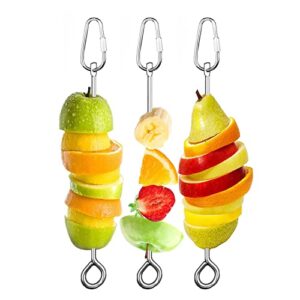
Once you’ve sorted out what goes into the bowl, think about how it gets to your bird. The Suplklz Stainless Steel Bird Feeder Skewer makes fresh produce easy to serve and hard to ignore.
Each 9-inch, 304 stainless steel skewer holds fruits, veggies, or leafy greens right at beak level.
The 3-pack at $9.99 gives you rotation flexibility — swap carrots for kale, or mango for sweet potato, without fuss.
It’s a simple tool that turns mealtime into a foraging session.
| Best For | Bird owners who want an easy, mess-free way to serve fresh fruits and veggies to small and medium-sized birds like parakeets, conures, or budgies. |
|---|---|
| Product Type | Skewer Feeder |
| Primary Use | Fresh food delivery |
| Target Bird Size | Small to medium |
| Key Benefit | Foraging enrichment |
| Package Weight/Size | 3-pack |
| Life Stage | All life stages |
| Additional Features |
|
- Three skewers for $9.99 is solid value — you can rotate different foods across the week without any extra hassle.
- The 304 stainless steel is bird-safe, easy to rinse, and won’t rust after a few uses.
- Hanging food at beak level turns a snack into a foraging activity, which keeps birds mentally engaged.
- The plastic cage clip can wear out or break faster than you’d expect, which gets annoying.
- Some birds — lovebirds especially — may just not care about it, so it depends on your bird’s personality.
- At 9 inches, it’s a bit short for larger parrots that need more room to work with their food.
10. Psittacus High Energy Parrot Pellet Food
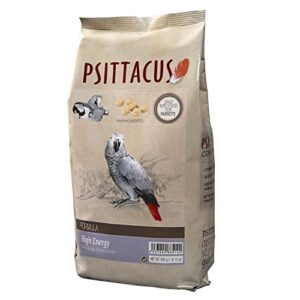
Psittacus High Energy Pellets deliver it cleanly. This extruded, grain-free pellet is designed for high-fat-diet species — African Greys, macaws, and Senegals — covering 70–80% of their daily nutritional needs.
With 17% protein and 11% fat, it maintains steady energy levels without the guesswork of seed mixes.
The formula contains non-GMO ingredients and avoids artificial colors or synthetic antioxidants, backed by over 20 years of avian research.
Add fresh produce on the side, and you’ve got a complete feeding plan.
| Best For | African Grey, macaw, and Senegal parrot owners who want a research-backed, high-energy pellet that takes the guesswork out of daily feeding. |
|---|---|
| Product Type | Extruded Pellets |
| Primary Use | Daily parrot feeding |
| Target Bird Size | African-type parrots |
| Key Benefit | High-energy pellet |
| Package Weight/Size | 1.76 lb |
| Life Stage | Adult birds |
| Additional Features |
|
- Formulated specifically for high-fat-diet African-type parrots, so their energy and fatty acid needs are actually met
- Clean ingredients — non-GMO, no artificial colors, no synthetic antioxidants, backed by 20 years of avian nutrition research
- Works as a near-complete diet, making meal planning simple when paired with fresh fruit and veggies
- Not a fit for every bird — seed-eating species or breeding parrots may need something different, and some birds simply won’t take to the pellet
- Fresh produce is still required to round out nutrition; it’s not quite a grab-and-go solution on its own
- Intake can drop in cooler temps, so you may need to keep an eye on how much your bird is actually eating
Best Ingredients for Parrot Energy
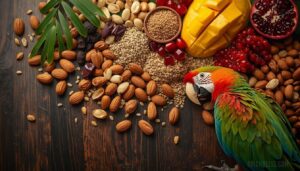
What your parrot eats matters more than most people realize. The right ingredients don’t just fill a bowl — they fuel every flight, every squawk, and every playful moment.
The right ingredients don’t just fill your parrot’s bowl — they fuel every flight, every squawk, and every joyful moment
Here are the best energy-boosting ingredients to look for in your parrot’s diet.
Safflower and Flax Seeds
Safflower seeds pack serious energy for parrots — nearly 570 calories per 100 grams — making them a cornerstone of any solid seed blend for parrots. Their high fat content fuels active birds effectively.
Flax seeds bring Omega-3 benefits and strong fiber content, supporting digestion and feather health.
For digestive tolerance, introduce both gradually. Follow proper storage guidelines — cool, dry, airtight — to protect their energy density and freshness.
Hemp and Pumpkin Seeds
Hemp and pumpkin seeds are two of the most calorie-dense additions you can make to any seed mix for parrots. Hemp delivers an impressive Omega Ratio of 1:3 and stands out as a reliable protein source for birds, while pumpkin seeds offer a serious Mineral Boost—zinc, magnesium, phosphorus.
Their Antioxidant Benefits and Caloric Density make both essential to a nutrient-dense diet.
Mind your Seed Preparation: keep them cool, dry, and airtight.
Quinoa, Barley, Millet
Think of quinoa, barley, and millet as your parrot’s grain trio for steady, clean energy. Quinoa’s complete Amino Acid Profile makes it a standout protein source for birds, and it’s a naturally Gluten-Free Grain.
Barley’s Beta-Glucan Benefits smooth out energy spikes, while millet’s Resistant Starch keeps smaller birds fueled evenly.
Smart Grain Rotation across all three delivers balanced, nutrient-rich seed-based nutrition your parrot will thrive on.
Mango, Banana, Papaya
Mango, banana, and papaya are nature’s energy trio for your parrot. Each fruit brings something unique to the table:
- Mango delivers a Vitamin A boost and beta-carotene for sharp vision and immunity
- Banana offers steady carbs for flight energy with natural sugar balance
- Papaya provides digestive enzymes and hydration benefits with antioxidant power
Together, they round out a nutrient-dense parrot diet beautifully.
Sweet Potato and Carrots
Sweet potatoes and carrots are a fiber-rich pairing your parrot will actually benefit from. Roasted sweet potatoes deliver complex carbs and beta-carotene for vitamin A synergy, while steamed carrot florets keep calories low at just 41 per 100g.
Both are calorie-smart snacks that support parrot health, offering essential nutrients without excess calories. Their natural composition ensures they fit seamlessly into a nutrient-dense diet.
These vegetables complement your parrot’s balanced mix of seeds, pellets, fruits, and vegetables, enhancing overall nutritional intake while maintaining dietary harmony.
Choosing Food by Parrot Type
Not every parrot eats the same way, and that is a good thing to know before you buy. Understanding these differences ensures you provide the best care for your bird from the start.
Your parrot’s size, age, and health all shape what kind of food will work best. Matching the right high-energy food to your specific parrot’s needs is key to supporting their well-being.
Macaws and Large Parrots
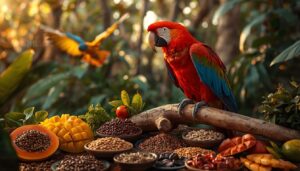
Macaws and large parrots need room to move — proper enclosure height and daily flight requirements aren’t optional. Their size demands a balanced mix of seeds, pellets, fruits, and vegetables to fuel energy and growth.
A protein-rich, low-fat formula protects beak health and aids social pairing without weight gain. Feeding them well ensures they’ll thrive.
Amazons and African Greys

Amazons and African Greys burn serious mental energy — vocal mimicry, tool use, and problem solving demand real nutritional support. A protein-rich low-fat formula keeps their weight steady while fueling cognitive enrichment and social bonding.
Your nutrient-dense diet should include a balanced mix of seeds, pellets, fruits, and vegetables.
That steady energy for parrots boosts sharper learning and stronger daily engagement.
Conures and Medium Parrots
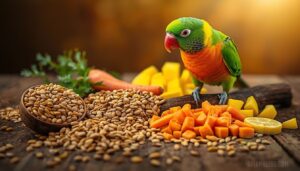
Conures bring non-stop energy to social interaction, vocal training, and playful behaviors — your feeding approach needs to match that pace.
A protein-rich low-fat formula works perfectly here:
- Pellets for steady energy for parrots
- Safflower seeds supporting tail feather care
- Fresh mango and carrots for vitamins
- Foraging skewers reinforcing bonding techniques
That nutrient-dense diet keeps medium to large parrots thriving daily.
Breeding and Molting Birds
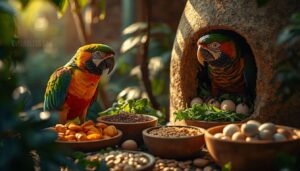
Breeding and molting birds have distinct nutritional needs compared to pet parrots. Hormonal shifts drive higher energy requirements for egg formation and chick feeding during breeding cycles. Then, seasonal changes trigger molting, where feather regeneration takes over.
Protein-rich pellets, a reliable calcium source for birds, and a nutrient-dense diet support both phases and maintain strong feather health year-round.
Sensitive or Restricted Diets
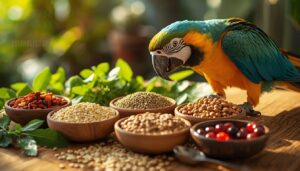
Some parrots need more careful handling at mealtime. If your bird has dietary restrictions, check allergen labeling on every bag — not just the front. Choose gluten‑free grains like quinoa or millet, lactose‑free treats, and additive‑free formulas to avoid gut flare-ups.
Practice cross‑contamination controls with separate scoops. A protein‑rich low‑fat formula built to bird food safety standards keeps sensitive birds on a nutrient‑dense diet safely.
Feeding, Storage, and Enrichment Tips
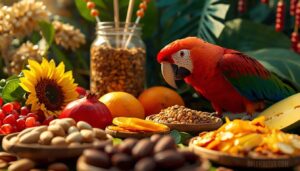
What you feed your parrot matters, but how you feed them matters just as much.
A few smart habits around portions, transitions, and storage can make a real difference in your bird’s energy and health. Here’s what you need to know before we get into the details.
Daily Portions and Rotation
Think of your parrot’s meals like a weekly schedule you actually stick to. For medium birds, start with a 2–3 tablespoon daily portion split across two meals. Consistent meal frequency and a smart rotation schedule keep your bird thriving.
- Rotate your balanced mix of seeds, pellets, fruits, and vegetables every 2–3 days
- Apply seasonal adjustments — increase energy-dense foods during molt or cold snaps
- Track weight weekly and shift portions by 5–10% if needed
Consistent meal frequency and a smart rotation schedule keep your bird thriving.
Gradual Food Transitions
Switching foods abruptly can stress your parrot’s gut — so don’t rush it. Use a 7–10 day adjustment timing plan built around ratio scheduling and portion consistency.
| Day Range | Old Food | New Food |
|---|---|---|
| Days 1–3 | 75% | 25% |
| Days 4–6 | 50% | 50% |
| Days 7–10 | 25% | 75% |
Watch for loose stools — symptom monitoring and texture adaptation keep your balanced diet on track.
Foraging Skewers and Feeders
A good skewer does more than hold food — it turns mealtime into a workout for your parrot’s brain.
- Skewer Materials range from stainless steel to food-grade silicone, each affecting durability and safety
- Design Variations include rotating drums and gravity-fed styles for different enrichment needs
- Dispensing Mechanisms control portion size, keeping intake consistent
- Placement Strategies matter — hang the Bird Cage Food Holder Parrot Fruit Vegetable Skewer at beak height
- Cleaning Protocols for the Rypet No Mess Bird Water Feeder Dispenser Set and automatic feeding dispenser keep bacteria away
Fresh Water and Hygiene
Clean water isn’t optional — it’s the foundation of your parrot’s health. Daily water changes prevent bacterial growth before it starts. Cloudy water or any odd smell means replace it immediately.
The Rypet No Mess Bird Water Feeder Dispenser Set limits contamination through its enclosed sipper system, simplifying biofilm prevention and hygiene maintenance.
| Hygiene Factor | Risk if Ignored | Best Practice |
|---|---|---|
| Daily water changes | Bacterial growth | Replace every 24 hours |
| Container cleaning | Biofilm buildup | Scrub all parts thoroughly |
| Sipper systems | Food contamination | Use enclosed no-mess feeder |
| Placement hygiene | Droppings in water | Keep away from perches |
| Drying before refill | Microbial growth | Air dry completely first |
Airtight Bulk Food Storage
Bulk storage done right protects every nutrient your parrot depends on.
- Choose a BPA-Free Food-Grade Container with a Gasket Seal Design to block air and lock in freshness
- Add Desiccant Management packs to shield fatty seeds from rancidity
- Use Light Blocking Containers to preserve vitamins in enriched pellets
- Build an Inventory Rotation System — first in, first out
Temperature monitoring near your parrot’s food storage container prevents condensation. Even your 5-lb seed bag deserves proper sealing — food storage and freshness directly shape how food and air affect your bird’s health.
Frequently Asked Questions (FAQs)
How much food should a parrot eat a day?
There’s no single magic number — but a solid rule of thumb is 1 tablespoon per 100g of body weight daily, adjusted for your bird’s metabolic rate, body condition, and vet guidance.
Which dry food is best for a medium & large parrot?
For medium to large parrots, a pelleted diet with a balanced mix of seeds, pellets, fruits, and vegetables works best. Look for a protein-rich, low-fat formula with strong nutrient bioavailability and allergen considerations.
How much food do psittacine birds eat a day?
Most parrots do well on roughly one tablespoon per 100 grams of body weight daily. Weight‑Based Ratios, activity level, and calorie density all shape how much your bird truly needs.
Do parrots need a high protein diet?
Not exactly. Your parrot needs adequate protein — around 10–15% daily — not an extreme high-protein diet. Protein requirement phases matter most: raise intake during moulting, breeding, or illness recovery.
What is a multi-species diet for a parrot?
Think of it as a rotating buffet — not a fixed plate.
A multi-species diet blends seeds, pellets, fruits, and vegetables daily, ensuring dietary diversity and nutrient complementarity adapted to your parrot’s species and life stage.
What is the best parrot food for a parrot?
The best parrot food is a balanced mix of seeds, pellets, fruits, and vegetables.
Prioritize nutrient density, vitamin fortification, and calcium sources to support gut health, the best possible nutrition, and cost-effective feeding.
What type of food gives birds the most energy?
Fat fuels the flight — oil-rich seeds, suet pellets, and nutrient-dense nuts top the energy chart.
A balanced mix of seeds, pellets, fruits, and vegetables keeps your parrot thriving all day.
Which food parrot likes the most?
Most parrots gravitate toward colorful fruits and crunchy seeds — think safflower seeds, mango, or banana.
Individual palate variations are real, so offer a balanced mix of seeds, pellets, fruits, and vegetables to discover what yours loves.
What bird food do birds like the most?
Most birds prefer sunflower seeds first—they’re hard to resist. Safflower seeds, peanuts, and fresh fruit are also highly favored.
A balanced mix of seeds, pellets, fruits, and vegetables ensures all birds are satisfied.
What are the ingredients in psittacus high energy?
Psittacus High Energy combines a cereal base, plant oil blend, brewer’s yeast, inulin fiber, and citrus flavoring.
This formula provides roughly 17% protein and 11% fat.
It delivers a clean, nutrient-dense diet your parrot will thrive on.
Conclusion
Your parrot’s dish tells the whole story—what goes in shapes everything that shows up on the outside. Choosing the right high-energy bird food for parrots isn’t just about filling a bowl; it’s about fueling a life worth watching.
Match the food to your bird’s size, stage, and demands, and you’ll see the difference in feather quality, activity, and mood. Feed with intention, and your parrot will show you exactly what good nutrition looks like.
- https://bestfriends.org/pet-care-resources/best-parrot-diet-and-toxic-foods-avoid
- https://www.psittacus.com/en/products/high-energy-hand-feeding
- https://topsparrotfood.com/pages/ingredient-highlights?srsltid=AfmBOoofOKtOnkQujsZniYUWILzBn1KgWajoxKuOWVWXsXiW0xwNRdw3
- https://www.parrot234.com/how-often-should-you-feed-your-parrot/
- https://www.answers.com/birds/How_much_food_does_a_parrot_need_in_a_day