This site is supported by our readers. We may earn a commission, at no cost to you, if you purchase through links.
 You can strengthen your bird’s immune system through targeted supplements to boost bird immunity, focusing on vitamin A for respiratory health, vitamin D3 with calcium for bone strength, and vitamin E as an antioxidant.
Zinc supports wound healing while selenium aids cellular protection.
Always choose bird-specific formulations since human supplements can be toxic to our feathered friends.
Start with high-quality pellets as your foundation, then add supplements only when needed, watching for signs like dull feathers or frequent infections that signal deficiencies.
The secret lies in understanding which nutrients work together and the precise timing that maximizes absorption, using targeted supplements to ensure the best results for your bird’s health, with a focus on boosting bird immunity.
Table Of Contents
- Key Takeaways
- Essential Bird Nutrients
- Choosing Quality Supplements
- Supplement Administration Tips
- Signs of Deficiency and Over-Supplementation
- Boosting Bird Immunity Naturally
- Frequently Asked Questions (FAQs)
- How to boost bird’s immune system?
- What supplements to take to increase immunity?
- What is a natural immune booster for poultry?
- Which foods boost immunity faster?
- Can birds overdose on vitamin supplements?
- How long before supplements show results?
- Are human vitamins safe for birds?
- Do different bird species need different supplements?
- Can supplements replace a poor diet?
- Conclusion
Key Takeaways
- Choose bird-specific supplements – You’ll need formulations designed for avian physiology, not human vitamins that can be toxic to your feathered friend.
- Focus on essential nutrients – Vitamin A supports respiratory health and immunity, while vitamin D3 with calcium strengthens bones and vitamin E provides antioxidant protection.
- Watch for deficiency signs – You’ll notice dull feathers, frequent infections, or lethargy, indicating your bird needs targeted supplementation to boost immunity.
- Start with quality pellets first – You can’t replace a poor diet with supplements, so establish a nutritious foundation before adding immunity boosters for maximum effectiveness.
Essential Bird Nutrients
You’ll need specific nutrients to keep your bird’s immune system strong and functioning properly.
Essential vitamins like A, D3, and E work alongside minerals such as calcium, zinc, and selenium to support your feathered friend’s natural defenses against illness and infection, with essential vitamins and minerals playing a crucial role.
Calcium and Vitamin D3
Calcium and vitamin D3 work together like a perfectly choreographed dance for your bird’s health.
These essential nutrients team up to keep your feathered friend’s defenses rock-solid.
You’ll find calcium strengthens bones and guarantees quality eggshells, while vitamin D3 enhances calcium absorption in the digestive system.
This mineral balance supports immune function and prevents deficiencies that cause egg binding or seizures.
Indoor birds especially need vitamin D3 supplements since they lack natural sunlight exposure for proper calcium utilization and to prevent health issues related to vitamin D3 deficiencies.
Vitamin a and E
Your bird’s vision and immune system depend on these two powerhouse vitamins.
Vitamin A supports vision, immunity, skin, and feathers, while Vitamin E boosts immunity with antioxidant properties that protect cells from damage.
Maintaining the right balance of vitamins is vital for maintaining essential vitamin levels in your bird’s diet.
- Bright orange carrots – rich in beta-carotene that converts to Vitamin A
- Leafy spinach leaves – packed with both vitamins for feather health
- Golden sunflower seeds – excellent Vitamin E source for immune boost
- Colorful bell peppers – loaded with Vitamin A for enhanced bird immunity
Iodine and Zinc
Your bird’s metabolism relies on two key minerals for ideal health.
Iodine regulates thyroid function and supports Bird Metabolism, while Zinc Supplements strengthen immune cell function and wound healing.
These vitamin supplements birds need work together to maintain Mineral Balance and serve as a natural immune booster.
Thyroid Health depends on adequate iodine intake, and zinc deficiency can compromise bird immunity.
Iodine Benefits include proper metabolic regulation throughout your feathered friend’s system.
Selenium and Amino Acids
Why settle for basic nutrition when selenium and amino acids can transform your bird’s immune defenses?
Selenium acts as a powerful antioxidant, protecting immune cells from oxidative stress, while amino acids build the protein foundation your feathered friend needs for peak health.
- Selenium benefits: This trace mineral strengthens your bird’s natural defense system by neutralizing harmful free radicals
- Amino acid role: These protein building blocks support antibody production and tissue repair for robust immunity
- Immune boosters: Together, selenium and amino acids create a synergistic effect that enhances overall avian nutrition and immune system support
Choosing Quality Supplements
You’ll need to select supplements specifically formulated for birds rather than human products, which often contain ingredients that can be harmful to avian species.
Look for reputable brands that specialize in bird nutrition and provide detailed guaranteed analysis of their vitamin and mineral content.
Bird-Specific Supplements

When you’re selecting bird health supplements, you’ll want products formulated specifically for avian species rather than generic pet vitamins.
Human-grade supplements often contain inappropriate dosages or toxic ingredients that can harm your feathered friend’s delicate system.
| Supplement Type | Key Benefits |
|---|---|
| DMG-based Immunity Enhancers | Supports glutathione synthesis and cellular oxygen use |
| Avian-Specific Probiotics | Contains 9+ bacterial strains for gut health |
| Vitamin Boosters | Precise dosing for small, medium, and large birds |
| Natural Herbal Blends | Echinacea and milk thistle for immune support |
Bird-specific formulations account for your pet’s unique metabolism and nutritional requirements.
These immunity enhancers and vitamin boosters provide targeted supplement safety that generic products can’t match for maximum avian wellness.
For maximum results, consider using a human grade supplement to guarantee the best for your bird.
Reputable Brands and Ingredients
When you’re shopping for supplements for parrots, trusted manufacturers with quality control standards make all the difference.
Look for companies that specialize in avian probiotics and vitamin supplements, using natural ingredients tested for purity.
These manufacturers understand bird immune system requirements and provide detailed supplement safety information, helping you choose the right immunity booster confidently.
Understanding the role of best supplements is essential for maintaining healthy bird feathers and overall immunity.
Avoiding Artificial Additives

Many artificial additives lurk in bird supplements, potentially harming your feathered friend’s health.
You’ll want to avoid products containing artificial colors, flavors, and preservatives that offer no nutritional value.
Choose Chemical Free options with Natural Ingredients to guarantee Supplement Safety and prevent vitamin toxicity from unnecessary artificial fillers.
Opting for Chemical Free Supplements is vital for your bird’s wellbeing.
Additives to avoid for your bird’s wellbeing:
- Artificial colors that can trigger allergic reactions
- Synthetic flavors that mask poor ingredient quality
- Chemical preservatives linked to digestive issues
- Artificial sweeteners toxic to avian systems
- Unnecessary fillers that dilute nutrient content
Guaranteed Analysis and Expert Advice
Check supplement labels for guaranteed analysis showing exact nutrient amounts rather than vague claims.
Look for third-party certifications and NASC membership indicating quality standards.
Consult avian veterinarians before starting vitamin supplements – they’ll recommend specific immunity booster formulas and probiotics for birds based on mineral analysis.
Expert consultation guarantees your avian health supplements match your bird’s unique nutritional needs.
When selecting supplements, consider the importance of bird health supplements to prevent deficiencies and promote overall well-being.
This approach ensures that you provide the best possible care for your birds, focusing on their specific nutritional needs and using only high-quality supplements with guaranteed analysis.
Supplement Administration Tips
Getting the dosage right can mean the difference between a healthy bird and a sick one, so you’ll want to use powder or liquid supplements for the most accurate measurements.
Always give water-soluble vitamins on an empty crop and fat-soluble vitamins with food to guarantee your bird gets the maximum benefit from each supplement.
Accurate Dosing and Timing
Getting your dosing guidelines right protects your bird from toxicity risks while maximizing supplement benefits.
Follow manufacturer instructions and consult your avian vet for accurate dosing based on your bird’s weight and species.
Most immune booster supplements work best when given daily at consistent times, creating reliable supplement schedules that support ideal absorption and effectiveness, which is crucial for the overall health of your bird, and helps to create a consistent daily routine that can aid in maximizing supplement benefits.
Water-Soluble and Fat-Soluble Vitamins
Understanding vitamin roles is essential for proper bird supplementation.
Water soluble vitamins like vitamin C flush out daily, requiring regular replenishment, while fat soluble vitamins (A and E) store in liver tissue.
Give water-soluble vitamins on empty crops for ideal bioavailability factors. Administer fat-soluble vitamins with food to prevent vitamin toxicity from accumulation.
Mixing With Food and Monitoring Response
Mixing supplements with soft foods like mashed fruits improves palatability and guarantees accurate dosing.
Monitor your bird’s droppings, energy levels, and behavior after introducing any immunity booster to gauge effectiveness and detect adverse reactions.
When selecting supplements, consider the importance of natural food supplements for overall bird health.
- Food Mixing Tips: Blend liquid supplements into favorite fruits or vegetables
- Health Monitoring: Watch for changes in droppings, feather quality, and activity levels
- Supplement Dosage: Track daily intake to maintain proper nutrition balance
Introducing Supplements Gradually
Think of supplement administration as easing a bird into a new pair of shoes—comfortable, not rushed.
Gradual supplementation helps you spot any reactions, allowing time for Bird Monitoring and Dose Adjustment.
Track health closely, especially with immunity boosters.
Schedule Supplement Timing thoughtfully, consulting an avian vet for guidance.
Gradual Introduction guarantees watersoluble supplements blend in, making Health Tracking straightforward and stress-free.
Signs of Deficiency and Over-Supplementation
Understanding when your bird needs more or less of certain nutrients can prevent serious health issues and keep your feathered friend thriving.
You’ll need to watch for specific warning signs that indicate deficiencies while also being careful not to overdo supplementation, which can be just as dangerous.
Calcium and Vitamin D3 Deficiency
Calcium and vitamin D3 deficiencies create serious bone health problems in birds.
You’ll notice egg binding in laying females, where eggs get stuck due to weakened muscles. Soft eggshells that crack easily signal poor calcium absorption.
Watch for seizures or trembling – these deficiency signs indicate your bird’s nervous system is struggling. Vitamin D3 role becomes clear when indoor birds develop rickets without proper calcium absorption.
These vitamin deficiency symptoms require immediate attention and immune booster shots.
Vitamin a and E Deficiency
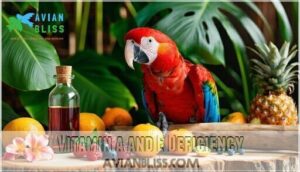
Your bird’s feathers tell a story about vitamin deficits.
Vitamin A shortages trigger frequent respiratory infections and dull plumage, while vitamin E deficiency weakens immune systems and fertility.
These antioxidant properties protect against disease, so watch for poor feather care and compromised nutrient absorption—clear signs your feathered friend needs immune booster shots.
Understanding essential vitamins is vital for maintaining healthy bird health and preventing deficiencies, which is crucial for your bird’s overall well-being and requires careful attention to nutrient absorption.
Iodine and Zinc Deficiency

Your bird’s thyroid health depends on proper iodine levels, which regulate avian metabolism and energy production.
Iodine deficiency causes goiter, lethargy, and metabolic disorders that weaken bird immunity.
Zinc benefits include wound healing and immune cell function, and without adequate zinc, your bird faces slow recovery from illness and compromised defense systems.
Mineral balance between these nutrients supports ideal thyroid health and strengthens overall immunity against infections, ensuring your bird has optimal metabolic health.
Toxicity and Over-Supplementation Risks
While supplements support bird health, vitamin toxicity and mineral overload pose serious risks.
Fat-soluble vitamins accumulate in body fat, causing chronic hypervitaminosis. Vitamin A overdose triggers liver damage, while excess D3 leads to kidney failure.
Dosage errors from supplement interactions can cause bird poisoning. Water-soluble vitamin overdose, particularly B6 toxicosis, proves fatal even at low doses, causing convulsions and organ damage through dangerous overconsumption.
Boosting Bird Immunity Naturally
You can strengthen your bird’s immune system naturally through targeted supplements that address specific nutritional gaps in their diet.
While a balanced diet forms the foundation of good health, strategic supplementation with vitamins, minerals, and probiotics can provide the extra support your feathered friend needs to fight off infections and maintain peak wellness.
Feather Health and Immune Support
During molting season, your bird’s immune system works overtime to produce new feathers.
Quality vitamin supplements containing B-complex vitamins, zinc, and amino acids support healthy plumage growth and strengthen immunity.
Regular bird hygiene practices prevent infections that compromise the molting process, ensuring vibrant feathers and resilient avian nutrition throughout seasonal changes.
Proper feather care includes maintaining ideal beak health through calcium-rich nutrition.
Environmental Management and Stress Reduction
Your bird’s environment directly impacts immune health through stress levels.
Poor air quality, excessive noise, and inadequate lighting create chronic stress that weakens natural defenses. Managing these factors prevents anxiety-related behaviors like feather plucking.
- Cage Cleaning: Maintain weekly deep cleaning schedules to prevent bacterial buildup and respiratory irritation
- Air Quality: Use HEPA filters and guarantee proper ventilation to reduce airborne contaminants
- Lighting Management: Provide 10-12 hours of natural spectrum light daily for hormonal balance and stress reduction
Premium Avian-Specific Multi-Vitamins
Think of multi-vitamins as your bird’s daily insurance policy against nutritional gaps.
Premium avian-specific formulas contain essential nutrients like vitamin A, D3, and antioxidants that standard seed diets can’t provide.
These targeted supplements support feather care, boost bird immunity, and enhance overall avian health through targeted bird nutrition that’s scientifically formulated for maximum absorption.
By utilizing high quality bird vitamin supplements, owners can guarantee their birds receive a balanced diet.
Probiotics and Gut Health for Birds
Your bird’s gut houses trillions of beneficial bacteria that act as immune system guardians.
Bird probiotics containing Lactobacillus and Bifidobacterium strains boost digestive balance while crowding out harmful pathogens like Salmonella and E. coli.
These supplements strengthen the avian microbiome, improving nutrient absorption and disease resistance.
Quality probiotic blends support gut health naturally, creating a fortress against infections.
Frequently Asked Questions (FAQs)
How to boost bird’s immune system?
Like a fortress needs strong walls, your bird’s immune system requires proper nutrition and care to ward off illness.
Provide vitamin A-rich foods, guarantee adequate vitamin D3 through sunlight or supplements, maintain clean living conditions, and offer stress-free environments for peak health.
What supplements to take to increase immunity?
Bird-specific vitamins A, D3, E, and C strengthen immunity naturally.
Add probiotics for gut health, zinc for wound healing, and calcium for overall wellness.
Choose reputable brands, follow dosing instructions, and consult your avian vet first.
What is a natural immune booster for poultry?
You’ll find powerful natural immune boosters in vitamin-rich foods like dark leafy greens, colorful vegetables, and herbs such as garlic and oregano. These nutrients strengthen your birds’ defenses naturally.
Which foods boost immunity faster?
Colorful fruits and vegetables packed with vitamin A work fastest – think carrots, sweet potatoes, and leafy greens.
You’ll see brighter feathers and better energy within weeks of adding these nutrient-dense foods.
Can birds overdose on vitamin supplements?
Yes, birds can overdose on vitamin supplements, especially fat-soluble vitamins A and D Excess amounts accumulate in their liver, causing lethargy, vomiting, and feather loss. Always follow dosing instructions carefully.
How long before supplements show results?
Ironically, your enthusiasm for quick fixes won’t be rewarded immediately.
Bird supplements typically show initial improvements in feather brightness and energy within 2-4 weeks.
But full immune system benefits require 6-8 weeks of consistent administration, which is a key factor in achieving the desired immune system benefits.
Are human vitamins safe for birds?
Human vitamins aren’t safe for birds.
They contain toxic ingredients like iron, artificial additives, and wrong dosages.
Bird-specific supplements are formulated for avian physiology and metabolism, ensuring proper nutrition without harmful side effects, making them a safer choice with the right dosages.
Do different bird species need different supplements?
One size doesn’t fit all in regard to bird supplements. Different species have unique nutritional needs based on their natural diets, metabolism, and physiology, requiring customized supplementation approaches.
Can supplements replace a poor diet?
Supplements can’t replace a poor diet—they’re meant to fill gaps, not fix fundamental nutritional problems. You’ll need a balanced foundation of fresh fruits, vegetables, and quality pellets first.
Conclusion
Surprisingly, many bird owners spend more on fancy toys than on the very supplements to boost bird immunity that could prevent costly vet visits.
You’ve learned that strategic supplementation isn’t about throwing vitamins at your feathered friend—it’s about understanding their unique needs and timing.
Quality bird-specific formulations, proper dosing, and careful monitoring create the foundation for robust health.
Remember, supplements complement good nutrition and care, not replace them.
Your bird’s vibrant feathers and energetic behavior will thank you for this thoughtful approach.