This site is supported by our readers. We may earn a commission, at no cost to you, if you purchase through links.
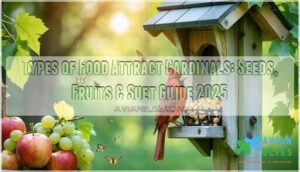 You’ll attract cardinals most effectively with black oil sunflower seeds – their thick, powerful beaks crack these large seeds easily while smaller birds struggle.
Safflower seeds work wonderfully too, since squirrels typically avoid them. Cardinals also love cardinal mix blends containing sunflower seeds, cracked corn, and peanuts.
Fresh fruits like grapes, apple slices, and berries make irresistible treats, especially during late summer. Don’t overlook suet during winter months – it provides essential fats when energy demands soar.
These vibrant red birds are surprisingly adaptable eaters, switching from protein-rich insects during breeding season to high-energy seeds and fruits year-round. Smart feeder placement and understanding their seasonal preferences can transform your backyard into cardinal central.
Table Of Contents
- Key Takeaways
- Cardinal Diet Basics
- Attracting Cardinals
- Food Types Cardinals Eat
- Seasonal Feeding Matters
- Creating Cardinal Friendly Yard
- Cardinal Hatchling Nutrition
- Foods Beyond Seeds
- Winter Attraction Methods
- Setting Up Cardinal Feeders
- Tracking Cardinal Visits
- Frequently Asked Questions (FAQs)
- Do cardinals prefer safflower or sunflower seeds?
- Why aren’t cardinals coming to my bird feeder?
- What is a cardinal’s favorite fruit?
- What cardinal feeding mistakes should I avoid?
- How much food do cardinals eat daily?
- Do cardinals eat the same foods year-round?
- What homemade cardinal food recipes work best?
- Should I stop feeding cardinals certain times?
- Conclusion
Key Takeaways
- You’ll attract cardinals most effectively with black oil sunflower seeds – their powerful beaks crack these easily while the high fat content provides essential energy year-round.
- You should offer safflower seeds as a squirrel-resistant option that cardinals love but most other animals avoid, making your feeders more efficient.
- You’ll need to adjust your offerings seasonally – provide protein-rich insects and mealworms during breeding season, then switch to high-energy suet and seed blends for winter survival.
- You can create a cardinal paradise by combining proper feeders with fresh water sources and dense shrubs for cover, since cardinals need to feel safe while eating.
Cardinal Diet Basics
You’ll discover that cardinals have surprisingly diverse eating habits that change throughout the year.
These striking red birds aren’t just seed-eaters—they’re actually opportunistic omnivores who adjust their menu based on what’s available and what their bodies need most.
Seed Preferences
Cardinals have three top seed preferences that’ll turn your yard into their favorite diner.
Offer the right seeds and watch cardinals transform your backyard into their personal buffet.
Black oil sunflower seeds pack the most nutrition, while safflower seeds offer a squirrel-resistant option that cardinals crack effortlessly.
- Black Oil Sunflower Seeds: Cardinals’ #1 choice due to high fat content and thin shells
- Safflower Seeds: Hard shells deter squirrels but cardinals handle them easily
- Striped Sunflower Seeds: Larger option that satisfies their strong beaks and appetites
Fruit Consumption
The secret to attracting these bright red visitors lies in understanding their fruit preferences.
Cardinals don’t just eat any berry—they have specific tastes that you can cater to in your backyard.
| Berry Preferences | Fruit Types | Feeding Habits |
|---|---|---|
| Mulberries, elderberries | Fresh berries, grapes | Discard pulp, eat seeds |
| Serviceberries, dogwood | Dark-colored berries | Seasonal consumption |
| Wild blackberries | Fruit-bearing shrubs | Extract nutrient value |
Cardinals practice "seed extraction," peeling away fruit flesh to reach the nutritious seeds inside.
This behavior makes native fruit-bearing shrubs perfect additions to your landscape.
Insect Eating
During breeding season, you’ll notice cardinals shift their insect preferences dramatically.
They hunt beetles, caterpillars, and grasshopper eating becomes common for protein-rich diet needs.
Butterflies, larva bugs, and various insects provide essential nutrition.
Mealworms offer concentrated protein sources that support reproductive health.
This proteinrich diet helps parents feed growing chicks, who need almost exclusively insect-based meals for rapid development and strength.
Attracting Cardinals
If you want cardinals to visit your yard, you’ll need the right mix of seeds, nuts, and suet.
Cardinals aren’t picky, but offer black oil sunflower seeds or safflower, and you might just see those red feathers show up before breakfast.
Sunflower Seeds
Black oil sunflower seeds are your best bet for attracting cardinals. These seeds contain 40% fat, providing essential energy for winter survival and breeding.
Cardinals’ powerful beaks easily crack the thin shells, making these seeds their top choice. Store seeds in cool, dry places to maintain freshness.
Position feeders near shrubs where cardinals feel safe while feeding. Cardinals are also attracted to feeders with high quality seeds that provide the necessary nutrients for winter survival and breeding.
Safflower Seeds
While sunflower seeds reign supreme, safflower seeds offer unique cardinal bird food advantages.
These white, tear-shaped seeds pack safflower nutrition that cardinals crave, yet squirrels typically ignore them. Cardinals’ powerful beaks easily crack safflower’s tough shell, making it perfect for attracting cardinals food strategy.
Here’s why safflower benefits your backyard birds:
- Squirrel-resistant design – Hard shells deter unwanted visitors while cardinals access the nutritious kernel inside
- High protein content – Essential fats and proteins support cardinal preferences during breeding season
- Long seed storage life – Maintains freshness longer than other seeds, reducing waste and costs
What cardinals eat matters for consistent visits. Best cardinal food choices include safflower seeds mixed with other favorites for ideal bird attraction results.
Peanuts and Suet
You’ll discover peanuts pack incredible nutrition for cardinals year-round.
Shelled peanuts offer high-energy protein and fat that’s perfect for winter survival. Cardinals crack these nutty delights with their powerful beaks, making peanuts a cardinal favorite food alongside sunflower seeds cardinals love.
Suet feeders provide essential winter foods when temperatures drop. Mix peanut butter with seeds for irresistible cardinal bird food that delivers sustained energy through harsh weather.
Food Types Cardinals Eat
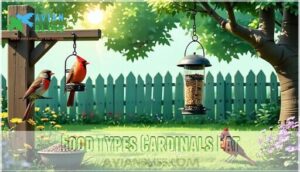
Understanding what cardinals eat helps you stock the right feeders to bring these vibrant red birds to your yard year-round.
Your food choices directly impact how often cardinals visit, with certain seeds and fruits acting like magnets for these beautiful songbirds.
Black Oil Sunflower Seeds
Cardinals absolutely love these nutrient-packed seeds for good reason.
Their strong beaks easily crack the thin shells, revealing the high-fat treasure inside that fuels their energy needs year-round.
Here’s why black oil sunflower seeds reign supreme:
- 40% oil content provides essential calories for winter survival
- Thin shells make cracking effortless compared to striped varieties
- Rich protein supports feather health and breeding success
- Universal appeal attracts cardinals consistently over other seed types
This cardinal favorite food should be your go-to choice for reliable visits.
Store seeds in airtight containers to maintain freshness, and you’ll notice cardinals prefer these sunflower varieties over mixed blends every time.
Nyjer Seeds
While nyjer seeds aren’t cardinals’ top choice, these tiny powerhouses pack impressive nutritional benefits.
With 35-40% oil content, they provide essential energy during harsh winters.
Cardinals will visit nyjer-filled finch feeders when sunflower supplies run low.
Store these seeds in dry containers to prevent spoilage.
Mix nyjer with cardinal seed varieties for diverse feeding options that attract multiple species, offering essential energy and a way to utilize nyjer seeds.
Fresh Fruits and Berries
Beyond nyjer seeds, fresh fruits and berries offer cardinals essential vitamins and antioxidants.
You’ll find these birds drawn to darkcolored berries like elderberries, mulberries, and serviceberries from fruitbearing shrubs.
Cardinals often discard fruit pulp, targeting the protein-rich seeds inside.
Berry supplements work best when offering native varieties rather than seedless fruits, creating a cardinalfriendly feeding station with native varieties.
Seasonal Feeding Matters
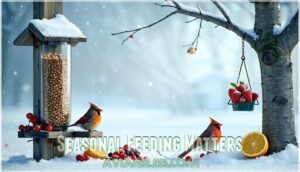
Cardinals adjust their feeding habits dramatically throughout the year, shifting from protein-rich insects during breeding season to high-fat seeds in winter months.
You’ll need to match your feeder offerings to these seasonal changes if you want to keep cardinals visiting your yard year-round, which involves understanding their feeding habits.
Spring and Summer Diets
During breeding season, your backyard becomes a bustling protein buffet for cardinal families.
Summer cardinal food shifts dramatically as adults hunt insects to fuel rapid chick growth. Cardinal parents feed nestlings nearly 80% insect diets, making protein sources absolutely critical for successful breeding nutrition.
Here’s what transforms your yard into cardinal paradise:
- Live mealworms – Watch parent cardinals snatch these protein-packed treats for hungry babies
- Native berry bushes – Fresh berries provide essential nutrients while supporting natural foraging behaviors
- Caterpillar-friendly plants – Soft-bodied insects become the ultimate insect foods for growing nestlings
- Cardinal seed mix with sunflower seeds – Adults still need energy-rich summer seeds between hunting trips
- Fresh water features – Hydration becomes vital during hot months of intense parenting duties
This seasonal shift means your typical foods cardinals love must expand beyond winter staples. The cardinal bird diet transforms into a carefully balanced combination of high-protein insects and energy-rich seeds, supporting both adult stamina and rapid chick development through successful breeding cycles.
Fall and Winter Diets
As temperatures drop, you’ll need to switch your feeding strategy.
Cold weather demands high energy foods that help cardinals survive harsh conditions.
Winter seeds become their lifeline – black oil sunflower seeds provide essential fats, while safflower seeds offer protein-rich nutrition.
| Food Type | Energy Benefits | Feeding Tips |
|---|---|---|
| Black Oil Sunflower | High fat content for warmth | Fill feeders daily |
| Safflower Seeds | Protein-rich nutrition | Mix with other seeds |
| Suet Blends | Maximum energy density | Use suet cages |
| Dried Fruits | Natural sugars for quick energy | Offer sparingly |
Your cardinal seed mix should focus on nutrient needs during winter’s harsh months.
Energy-dense foods like suet become essential fuel sources.
Fruit sources remain important but shift to dried options.
Foods cardinals love most during winter include anything that packs maximum calories per bite.
Seasonal feeding adjustments help these beautiful birds thrive when natural food becomes scarce.
Breeding Season Nutrition
During breeding season, Northern Cardinals shift their dietary focus dramatically.
Protein Sources become paramount as these birds require energy-dense foods for successful reproduction.
Cardinal feeding tips emphasize offering Insect Supplements like mealworms alongside traditional Seed Variety to support these essential Nutrient Needs and Dietary Shifts.
- Live caterpillars wriggling on branches provide essential amino acids
- Dried mealworms scattered near feeders supplement protein-rich diet requirements
- Fresh beetle larvae hidden under bark offer natural foraging opportunities
- Soft-bodied insects like aphids deliver easily digestible protein for growing chicks
Creating Cardinal Friendly Yard
Creating a cardinal-friendly yard starts with the right combination of food sources, shelter, and water features that meet their specific needs.
You’ll want to focus on dense shrubs for nesting cover, sturdy platform feeders filled with their favorite seeds, and a reliable fresh water source they can access year-round, which includes providing fresh water.
Dense Shrubs and Evergreens

Creating ideal cardinal bird habitat starts with strategic shrub planting and selecting the right evergreen types.
Dense plantings provide essential cover where cardinals feel secure while foraging and nesting.
| Shrub Category | Best Native Plants | Cardinal Benefits |
|---|---|---|
| Seed-bearing plants | Elderberry, Serviceberry, Dogwood | Year-round food source, natural foraging |
| Bird-friendly shrubs | Sumac, Wild grape, Hackberry | Dense cover, nesting sites, berry production |
| Bird-friendly evergreens | Juniper, Pine, Spruce | Winter shelter, roosting protection |
| Yard Landscaping | Holly, Winterberry, Crabapple | Four-season interest, continuous food supply |
Focus on creating layered plantings with varying heights. Cardinals prefer dense, thorny shrubs for protection from predators while accessing food sources nearby.
By incorporating native plants and considering bird friendly backyard elements, you can create a welcoming environment for these birds.
Platform Feeders and Hopper Styles

Cardinals thrive with thoughtful feeder selection that accommodates their size and feeding habits.
These robust birds prefer sturdy feeding stations that won’t wobble under their weight.
- Platform feeders offer open access for cardinals’ ground-feeding instincts
- Hopper feeders with wide perches accommodate their larger bodies comfortably
- Tube feeders with cardinal-sized ports prevent seed waste
- Tray-style dispensers allow easy access to birdseed mixtures
Choose cardinal bird feeder designs with weather protection to keep winter cardinal food dry during storms.
When selecting a feeder, consider the importance of proper cardinal feeders(cardinal feeders) to attract these birds to your yard.
Fresh Water Sources
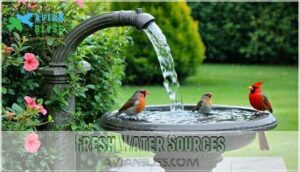
Water availability makes all the difference for attracting cardinals year-round.
Install birdbaths with fresh water supply, ensuring proper water quality through regular cleaning.
Consider fountain systems or rainwater collection for consistent availability.
Position water sources near dense shrubs where cardinals feel safe, and add squirrel-resistant features like smooth edges.
Follow basic birdbath tips: shallow depth, rough surfaces for grip, and daily maintenance keeps your backyard oasis welcoming.
Cardinal Hatchling Nutrition

When cardinal chicks hatch, their parents focus on feeding them a protein-packed diet that’s almost entirely insects.
You’ll see adult cardinals hunting soft-bodied caterpillars, beetles, and small spiders to fuel their babies’ rapid growth during those pivotal first weeks, which is crucial for their development.
Insect Rich Diets
Young cardinals need protein-packed meals to grow strong and healthy.
Baby birds receive 80-90% of their diet from insects during their first month. Parent cardinals hunt soft-bodied caterpillars, beetles, and spiders that provide essential amino acids for rapid development.
Why insect rich diets matter for cardinal chicks:
- Live Mealworms deliver 20% protein content that doubles daily requirements compared to seeds
- Caterpillar Feed offers soft texture and high moisture content for easy digestion
- Beetle Diets provide essential amino acids needed for healthy feather development
- Protein Sources from insects boost fledgling success rates when habitats offer diverse bug populations
Seed Based Foods
Between feedings and growth spurts, baby cardinals need specific seed-based nutrition that differs from adult preferences.
Adult cardinals regurgitate pre-digested seeds to feed their young.
You’ll want to offer parent birds high-quality options like black oil sunflower seeds and safflower seeds at feeders.
Understanding the best birdseed mix is essential for attracting cardinals, as they prefer high quality seeds.
| Seed Type | Protein Content | Cardinal Preference |
|---|---|---|
| Sunflower Seeds | 21% | Excellent |
| Safflower Seeds | 16% | Very Good |
| Seed Mixes | 12-18% | Good |
| Nyjer Seeds | 18% | Moderate |
These seedbearing plants and bird food preferences help parents gather nutrition for their chicks, which is crucial for their growth and development.
Fruits and Berries
Fresh fruits and berries pack essential nutrients for growing cardinal chicks.
You’ll find them munching on blueberry bushes and serviceberries during summer months.
These colorful treats contain antioxidants that boost immune systems.
Wild fruits like mulberries offer perfect seed extraction practice for young birds.
Berry types vary by region, but cardinals prefer red and purple varieties.
Harvest methods include plucking whole berries or stripping seeds directly from fruit pulp for maximum nutrient value.
The variety of berries and the method of harvesting them contribute to the overall health of the cardinal chicks, with essential nutrients being crucial for their development.
Foods Beyond Seeds

While seeds make up most of a cardinal’s diet, these colorful birds also enjoy suet, fresh fruits, and protein-rich insects throughout the year.
You’ll have better luck attracting cardinals when you offer this variety of foods that match their natural feeding habits.
Suet and Peanut Butter
Cardinals love high energy winter foods like suet and peanut butter. These nut butters pack essential fats that’ll keep your feathered friends warm during harsh months.
Here are five suet and peanut butter options that’ll have cardinals flocking to your yard:
- Plain suet cakes – Basic but effective winter energy
- Peanut butter suet blends – Double the fat content
- Seed-mixed suet feeders – Combines favorites with high-calorie boost
- Homemade peanut strips – Mix with cornmeal for safety
- Commercial nut butter blocks – Convenient, cardinal-approved options
Using suet cake products can provide the necessary energy for cardinals during winter. Remember, these rich foods work best in cooler weather when spoilage isn’t an issue.
Fresh Fruits and Vegetation
Nature’s candy awaits cardinals in your backyard!
Berry Types like mulberries, elderberries, and serviceberries provide essential nutrients.
Plant native Fruit Trees such as dogwood or crabapple for year-round attraction.
Garden Plants including sunflowers offer seeds within their blooms.
Native Greens like wild grapes satisfy cardinals’ natural cravings.
These birdfriendly plants create a buffet that supports their bird diet perfectly, with native plants.
Insects and Worms
Protein-rich insects and worms fuel your cardinal’s omnivorous appetite beyond typical bird diet staples.
Mealworms pack essential nutrition that breeding pairs crave during spring nesting season. You’ll find cardinals hunting caterpillars, beetle types, and various worm foods naturally in your yard.
These protein sources support healthy feather development and energy needs. Live or dried mealworms at feeders supplement their insect nutrition perfectly.
The presence of birds like the worm eating warbler exhibits forest ecosystem balance, where insect control is vital for maintaining a healthy environment.
Winter Attraction Methods

Winter’s harsh conditions make cardinals work harder to find food, so they’ll flock to yards that offer high-energy options like suet, fat-rich seed blends, and reliable water sources.
You’ll attract more cardinals by combining black oil sunflower seeds with suet cakes and keeping fresh water available even when temperatures drop.
High Energy Foods
When winter temperatures plummet, you’ll want to stock your feeders with high energy foods that pack serious caloric punch.
Black oil sunflower seeds deliver over 50% fat content, while safflower seeds provide 38% fat and 16% protein.
Suet options and peanut butter blends exceed 80% fat content, giving cardinals the energy-dense foods they need.
These protein-rich diet additions boost survival rates by 30% during harsh weather, providing a significant increase in survival rates.
Suet and Seed Blends
Combining suet with seed blends creates winter bird food that’s like a power bar for cardinals.
These high-fat mixtures keep our red friends warm during frigid months when natural food sources become scarce.
Here are the top suet and seed combinations:
- Sunflower seed suet cakes with black oil sunflower seeds
- Safflower seeds cardinals love mixed into rendered beef fat
- Peanut butter suet blends with cracked corn and millet
- Wild bird food suet containing multiple seed types and dried fruits
Proper feeder placement near dense shrubs helps cardinals feel secure while eating these nutrient-rich winter foods, which are essential for their survival during harsh weather conditions.
Fresh Water and Roosting Boxes
Beyond filling feeders with high-energy foods, you’ll need fresh Water Sources to complete your cardinal haven.
Bird Baths provide drinking and bathing opportunities that keep these vibrant birds healthy through harsh months.
Position shallow water features near dense shrubs that serve as natural Winter Shelters.
Roosting Boxes offer protected Nesting Sites where cardinals huddle together for warmth.
These bird friendly environments become magnets for northern cardinals seeking safe refuge during winter’s toughest days.
Setting Up Cardinal Feeders
Setting up the right feeders makes all the difference when attracting these bright red visitors to your yard.
You’ll want to focus on feeder placement, food selection, and keeping everything clean to create an irresistible cardinal dining experience.
This approach will help you attract cardinals by providing them with a clean environment.
Feeder Types and Placement
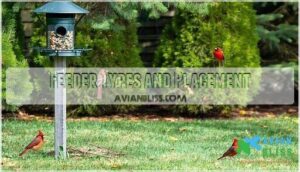
You’ll want to choose the right feeder type and spot for maximum cardinal visits.
Platform feeders work best since they offer sturdy perching space, while hopper styles provide seed protection.
Smart feeder placement near dense shrubs creates safety corridors cardinals crave.
Understanding the different bird feeder types is essential for attracting cardinals and other bird species to your yard.
Here’s your cardinal feeder setup checklist:
- Position platform feeders 4-5 feet above ground for ideal access
- Place within 10-15 feet of natural shelter like evergreens
- Choose squirrelproof feeders with metal guards and baffles
- Avoid open areas – cardinals prefer covered feeding spots
- Face feeders east to minimize wind exposure during meals
Seed and Suet Offerings
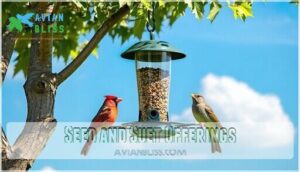
Fill your feeders with a premium seed blend featuring black oil sunflower seeds and safflower seeds—cardinals’ top picks.
Add cracked corn for budget-friendly variety. Hang suet feeders nearby with high-fat recipes containing nuts and seeds.
These seed and suet offerings create an irresistible buffet that’ll keep your red-feathered friends coming back for more throughout the seasons.
Using the right bird seed types is essential for attracting cardinals to your yard with the right seed blend.
Maintenance and Cleaning
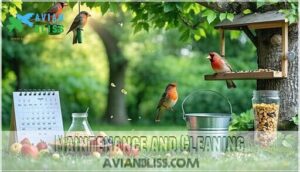
While cardinals appreciate consistent feeding, dirty feeders can harm their health and deter visits.
Clean feeders every two weeks with a mild bleach solution, rinse thoroughly, and dry completely before refilling.
- Feeder Sanitation: Use 1:9 bleach-to-water solution for thorough cleaning
- Seed Storage: Keep seeds dry in sealed containers to prevent mold growth
- Water Refresh: Change water sources every 2-3 days during warm weather
- Feeder Placement: Move feeders slightly between cleanings to reduce ground contamination
- Cleaning Schedules: Mark calendar reminders for regular bird feeder maintenance routines
Tracking Cardinal Visits

You’ll know cardinals are visiting when you spot empty seed hulls scattered beneath your feeders and catch glimpses of their bright red flashes during early morning or late afternoon feeding times.
Watching their feeding patterns and checking for telltale signs like cracked safflower shells helps you confirm which foods work best for attracting these beautiful birds to your yard, and understand what makes them visit, such as bright red flashes.
Feeder Observation
Once feeders are positioned correctly, you’ll want to watch for bird activity patterns.
Position yourself where you can see the feeding area without disturbing visitors.
Note when cardinals arrive, their seed preferences, and feeding patterns throughout the day.
| Observation Time | Cardinal Behavior |
|---|---|
| Early Morning | Most active feeding period |
| Midday | Brief visits between cover |
| Late Afternoon | Second peak activity time |
Track visitor frequency to understand how well your feeder placement and bird seed types work.
Cardinals often feed in pairs, so spotting one usually means another’s nearby.
Keep a simple log of feeding times – this helps you predict when they’ll return and adjust your bird feeding tips accordingly.
Seed Husk Analysis
Scattered seed husks beneath your feeders tell a detective story about cardinal visits.
Look for large sunflower seed hulls with clean crack patterns – cardinals’ powerful beaks create distinctive splits down the seed structure.
You’ll find fewer millet husks since cardinals prefer bigger seeds with higher nutrient content.
Shelled peanuts leave obvious remnants, while cracked corn seeds show jagged breaks.
This husk removal evidence helps you identify which types of bird seed attract your red visitors most effectively, based on the distinctive splits and obvious remnants.
Cardinal Behavior Patterns
Beyond simply counting husks, you’ll notice distinct behaviors that reveal cardinal preferences.
These birds show remarkable loyalty, returning to your feeders over 90% of the time once established.
Watch for their territorial chipping calls during Flock Dynamics disputes.
Cardinals prefer morning and late afternoon visits, spending 7-12 minutes per session.
Males demonstrate courtship through direct seed transfers to females during breeding season.
Their consistent Nesting Habits and Bird Socialization patterns help predict ideal feeding times for attracting these vibrant Cardinalis species.
Frequently Asked Questions (FAQs)
Do cardinals prefer safflower or sunflower seeds?
While you’ll find cardinals keenly eating both options, they show a strong preference for black oil sunflower seeds over safflower seeds.
Sunflower seeds pack more fat and protein, making them irresistible to these birds.
Why aren’t cardinals coming to my bird feeder?
Wondering where those red beauties went? You’re probably using the wrong seeds—cardinals need black oil sunflower seeds or safflower seeds, not cheap mixes with filler.
What is a cardinal’s favorite fruit?
Cardinals love mulberries most, followed by elderberries, serviceberries, and wild grapes.
They’ll peel away the pulp to eat the nutrient-rich seeds inside these dark, juicy fruits that boost their vibrant red coloring.
What cardinal feeding mistakes should I avoid?
Empty feeders are like broken promises to hungry visitors.
Don’t let seeds get moldy, place feeders too close together, or use cheap mixed seeds.
You’ll also want to avoid irregular refilling schedules and dirty feeding stations.
How much food do cardinals eat daily?
Cardinals eat about 1-2 tablespoons of seeds daily, roughly 8-12 grams. You’ll notice they’re steady snackers, visiting feeders multiple times throughout the day rather than eating one big meal.
Do cardinals eat the same foods year-round?
No, cardinals don’t eat the same foods year-round. They shift from a summer diet rich in insects and fruits to winter meals focused on seeds and nuts for energy.
What homemade cardinal food recipes work best?
Mix black oil sunflower seeds with dried fruits, crushed peanuts, and a bit of cracked corn.
You can also blend peanut butter with seeds and roll into balls for high-energy treats.
Should I stop feeding cardinals certain times?
Like clockwork, you shouldn’t stop feeding cardinals—they don’t rely entirely on feeders.
Continue year-round feeding since these non-migratory birds need consistent food sources, especially during harsh winters when natural seeds become scarce.
Conclusion
Successfully attracting cardinals requires understanding their diverse dietary needs, providing consistent food sources, and creating welcoming habitats.
Whether you’re offering black oil sunflower seeds, fresh berries, or protein-rich suet, the types of food attract cardinals will determine your backyard’s success.
Remember that patience pays off – these intelligent birds need time to discover and trust new feeding stations.
With proper planning and the right food combinations, you’ll soon enjoy watching these magnificent red visitors year-round.
- https://www.birdsandblooms.com/birding/attracting-birds/six-ways-attract-cardinals/
- https://www.perkypet.com/articles/how-to-attract-cardinals
- https://forthebirds.com/products/black-oil-sunflower
- https://georgiawildlife.com/out-my-backdoor-best-seeds-backyard-bird-feeders
- https://www.youtube.com/watch?v=wOy_N7Jg8WY